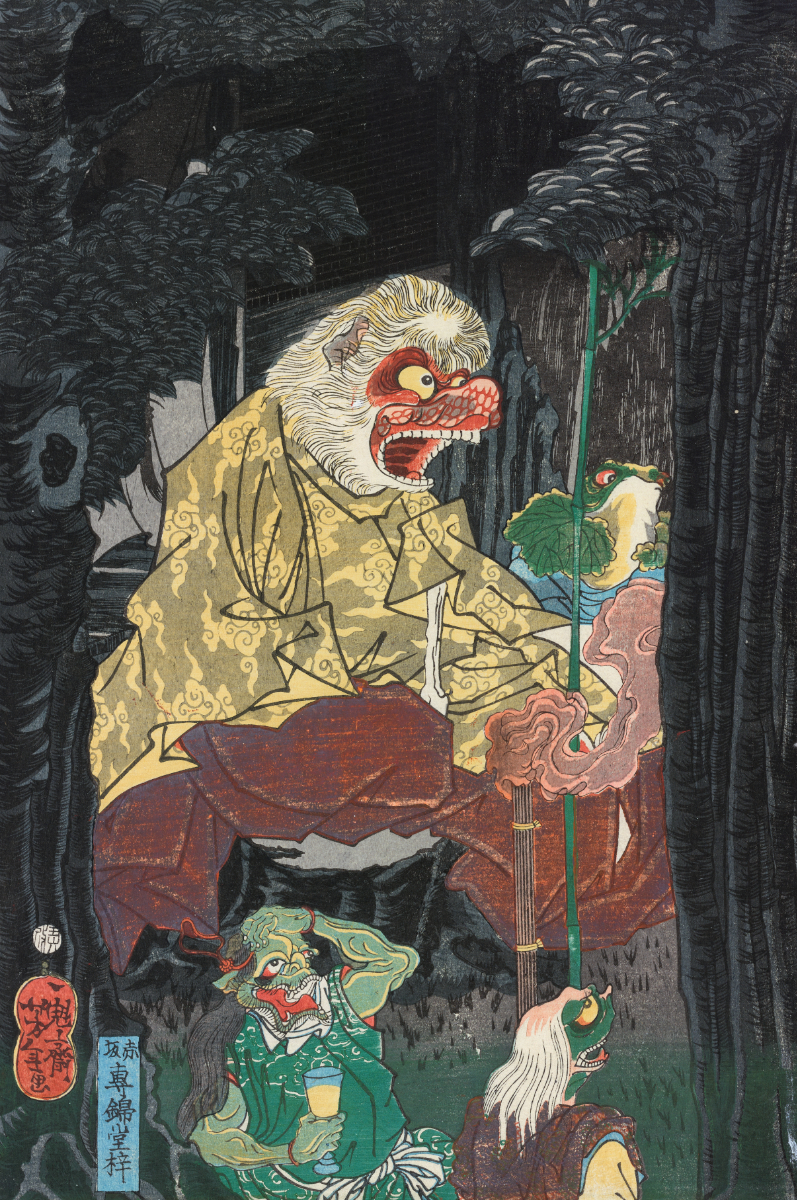
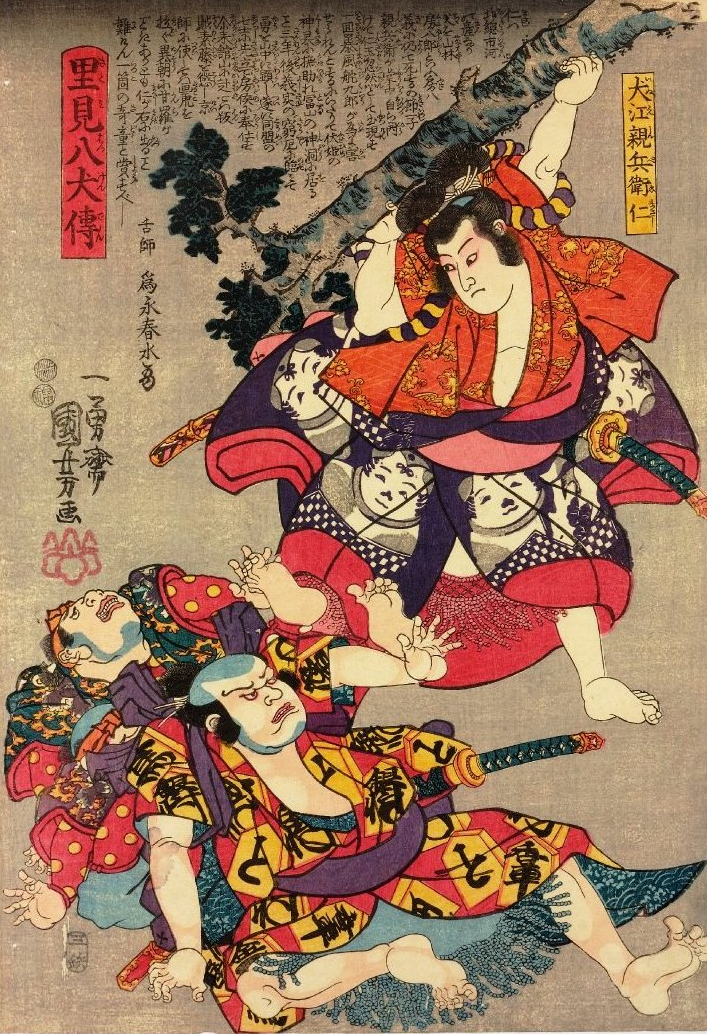
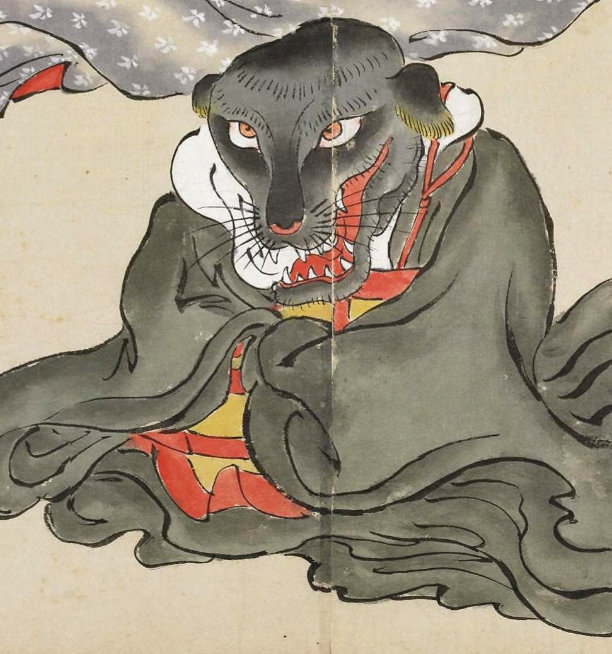
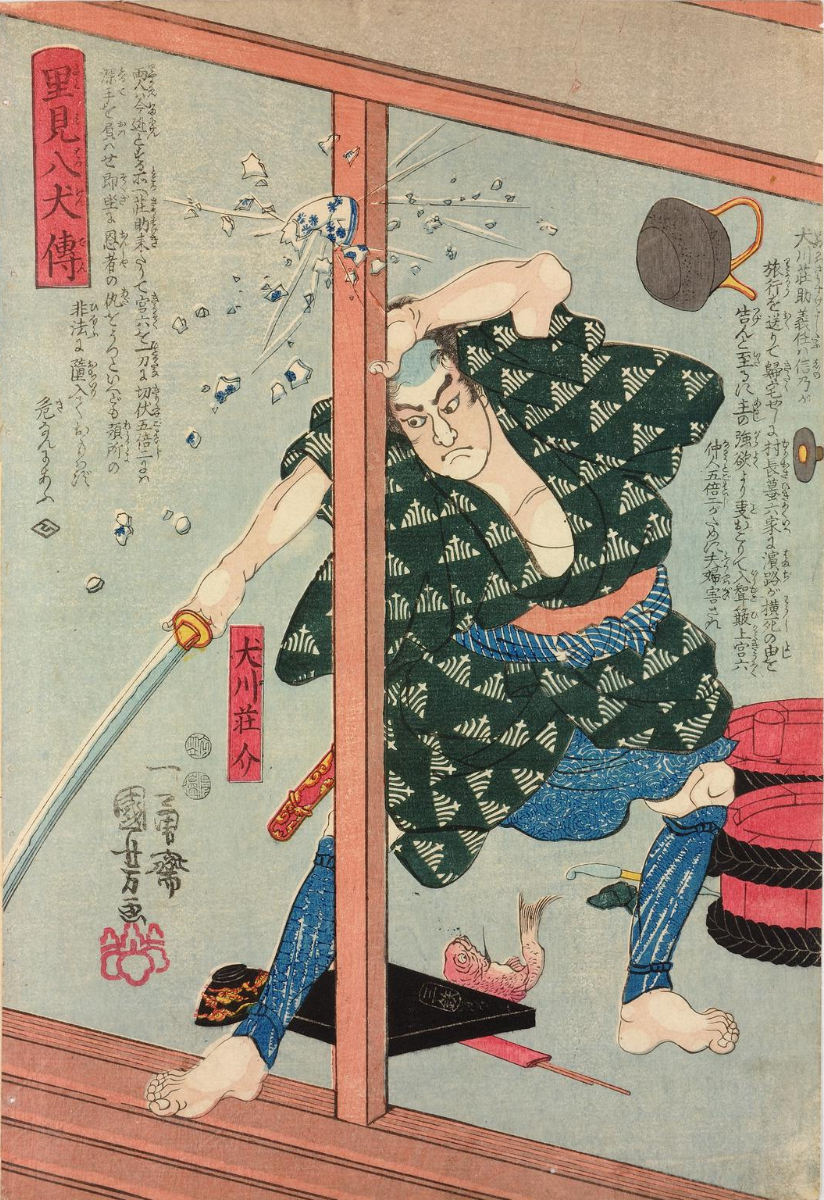
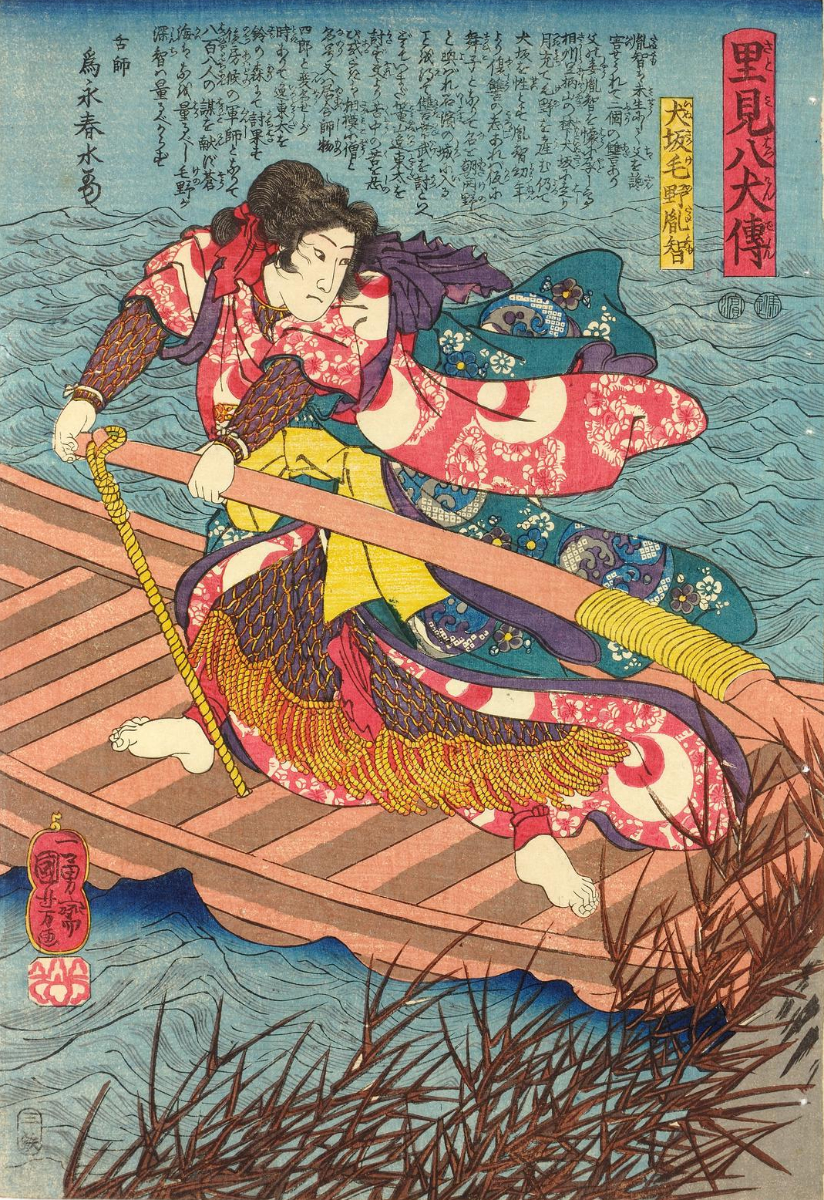
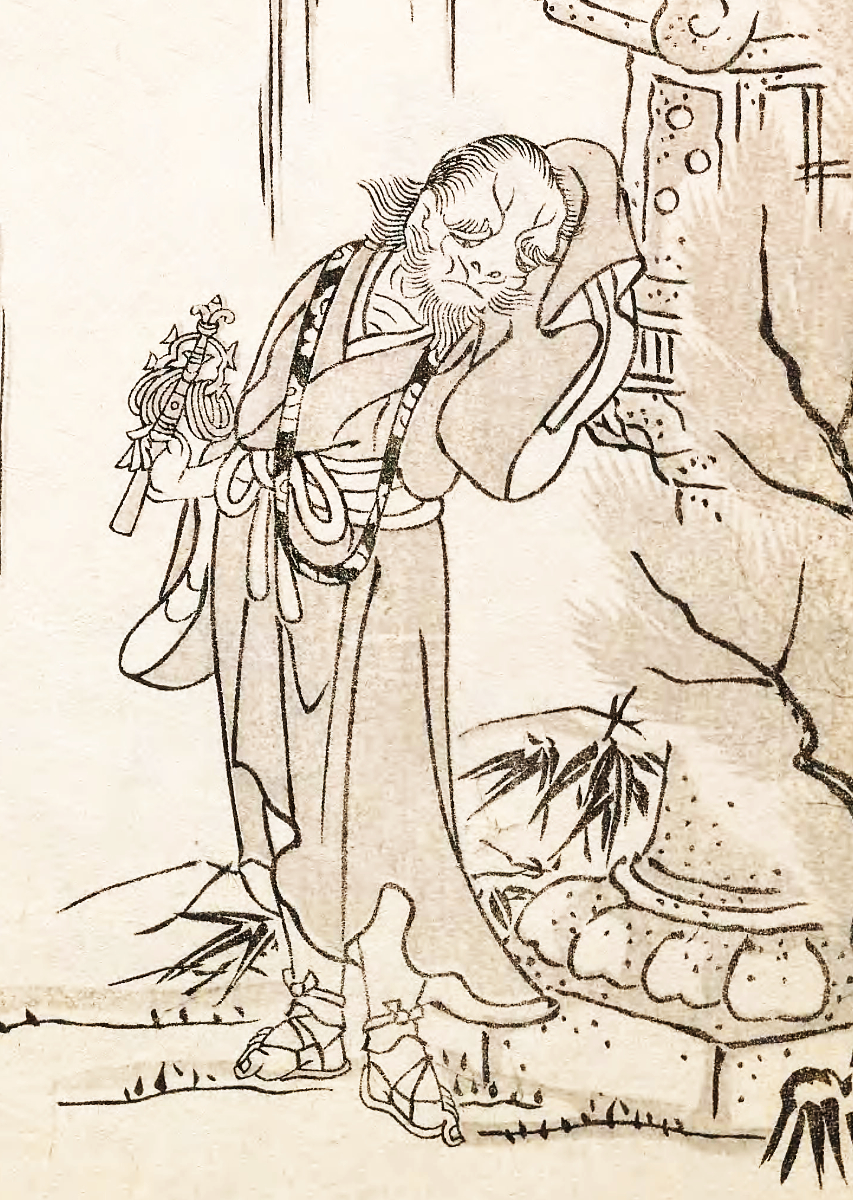
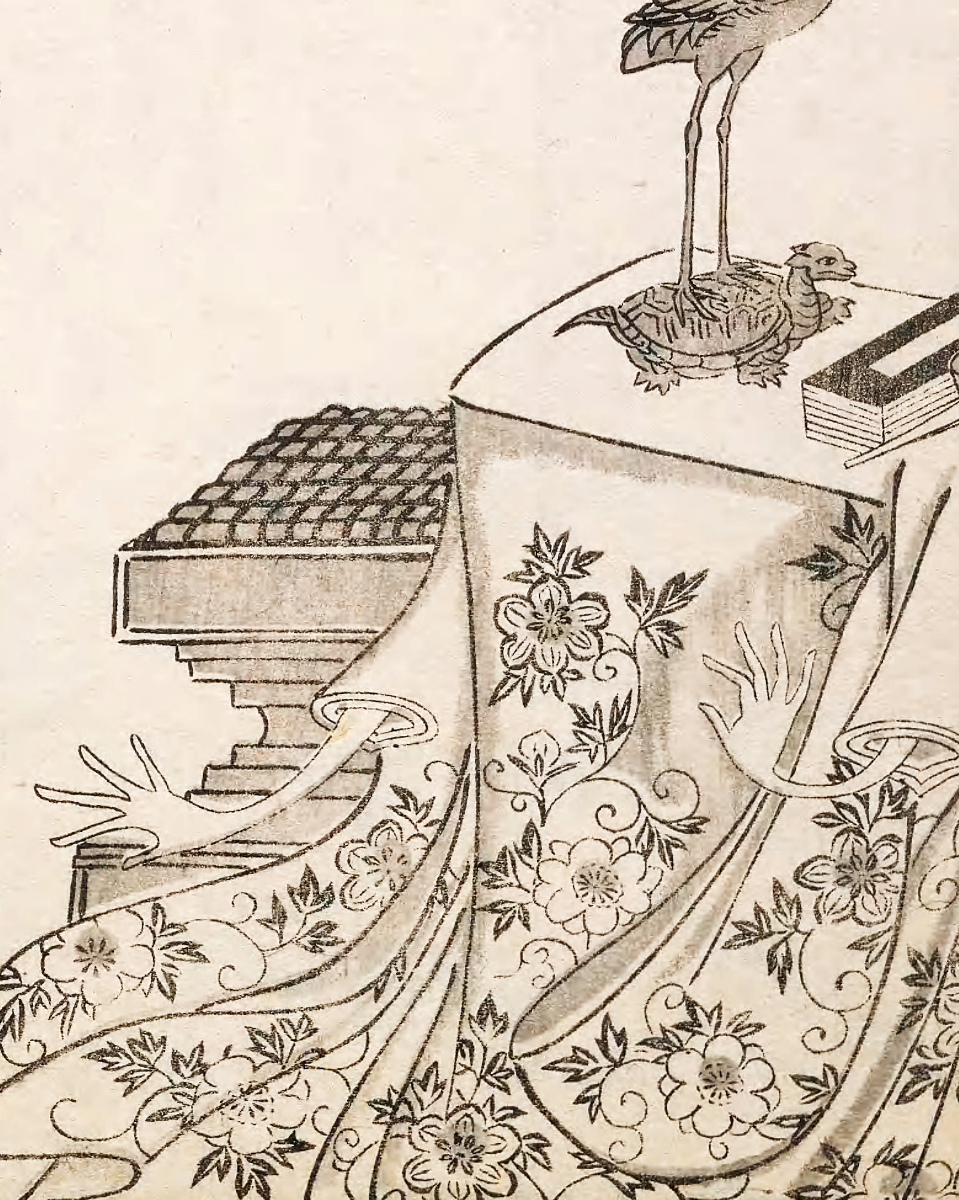
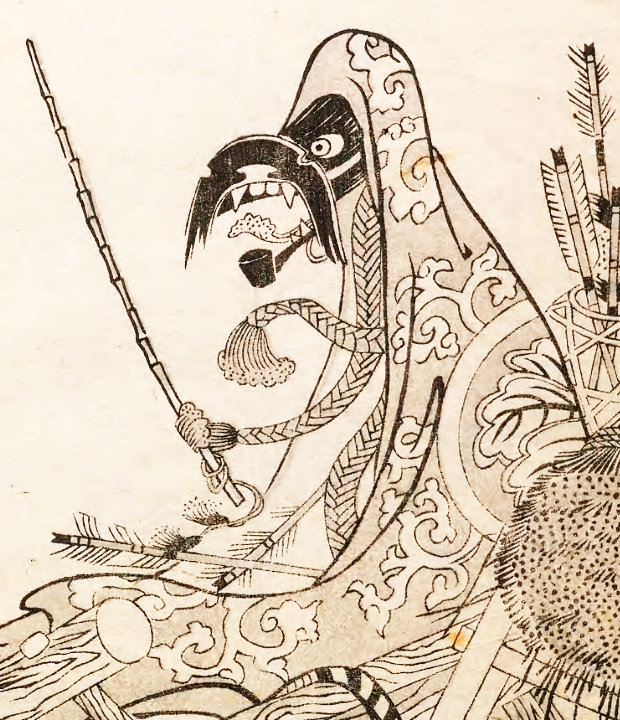
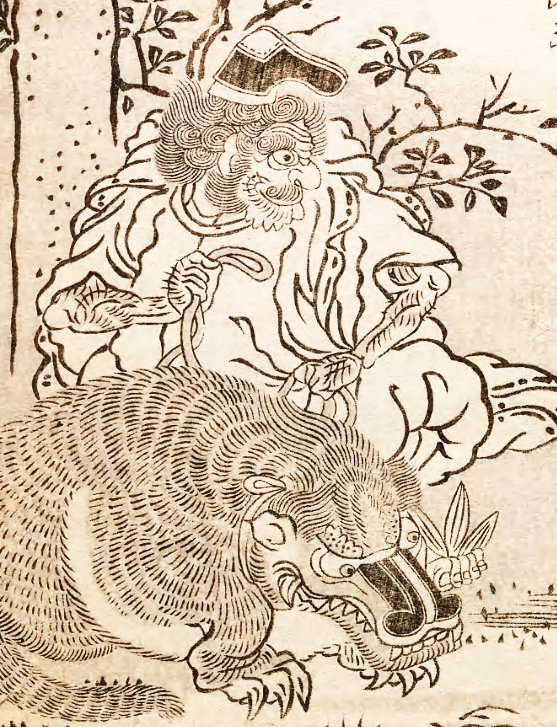
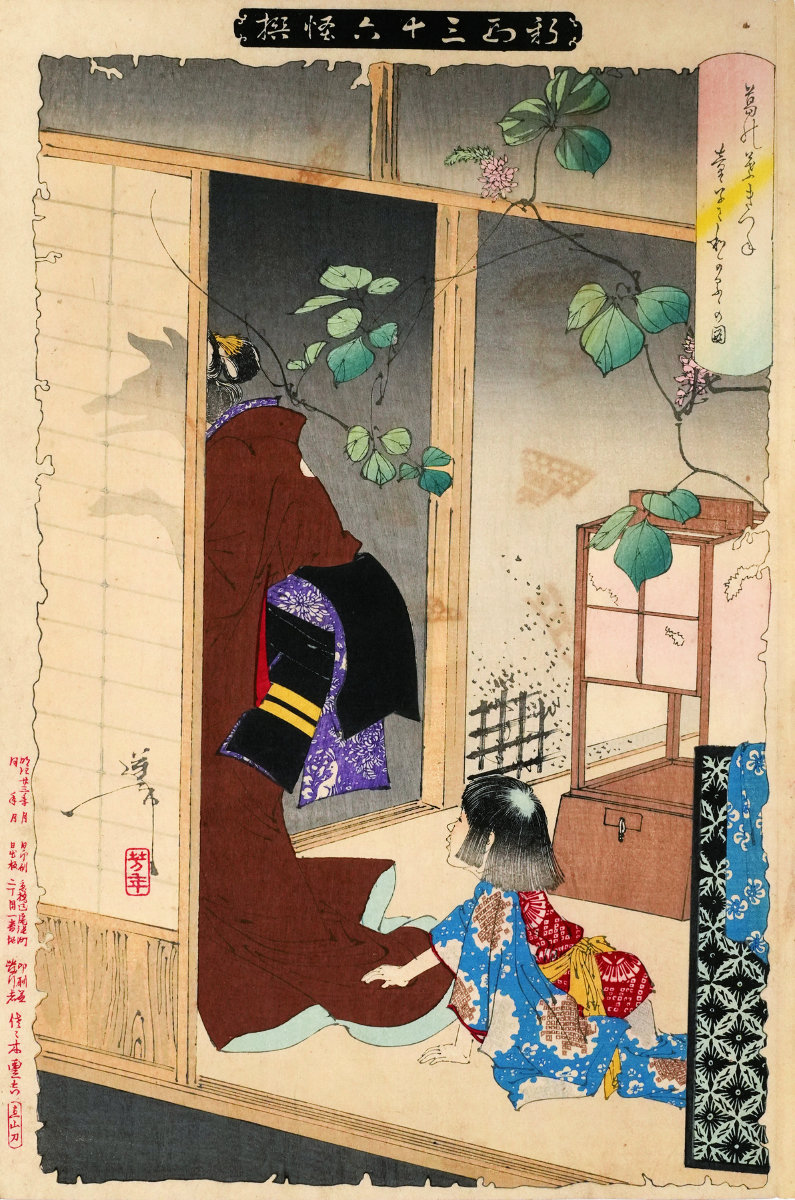
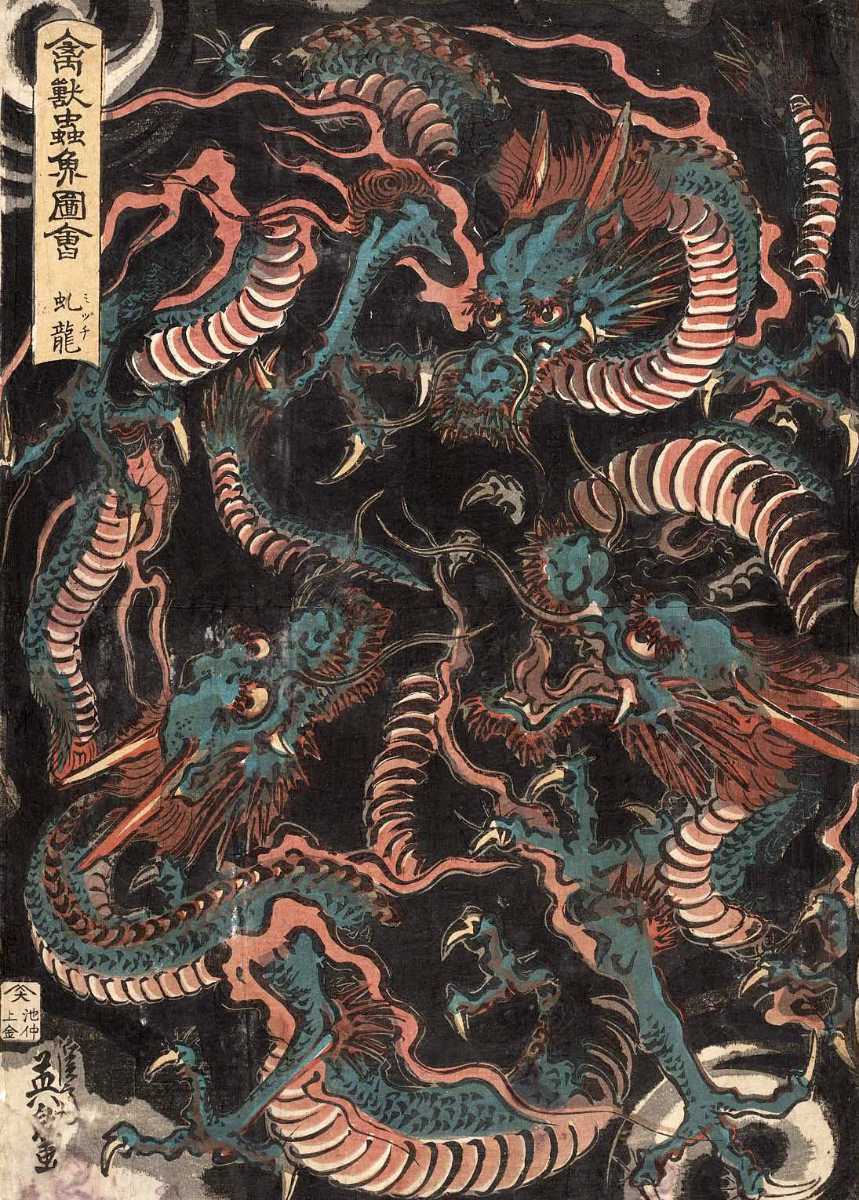
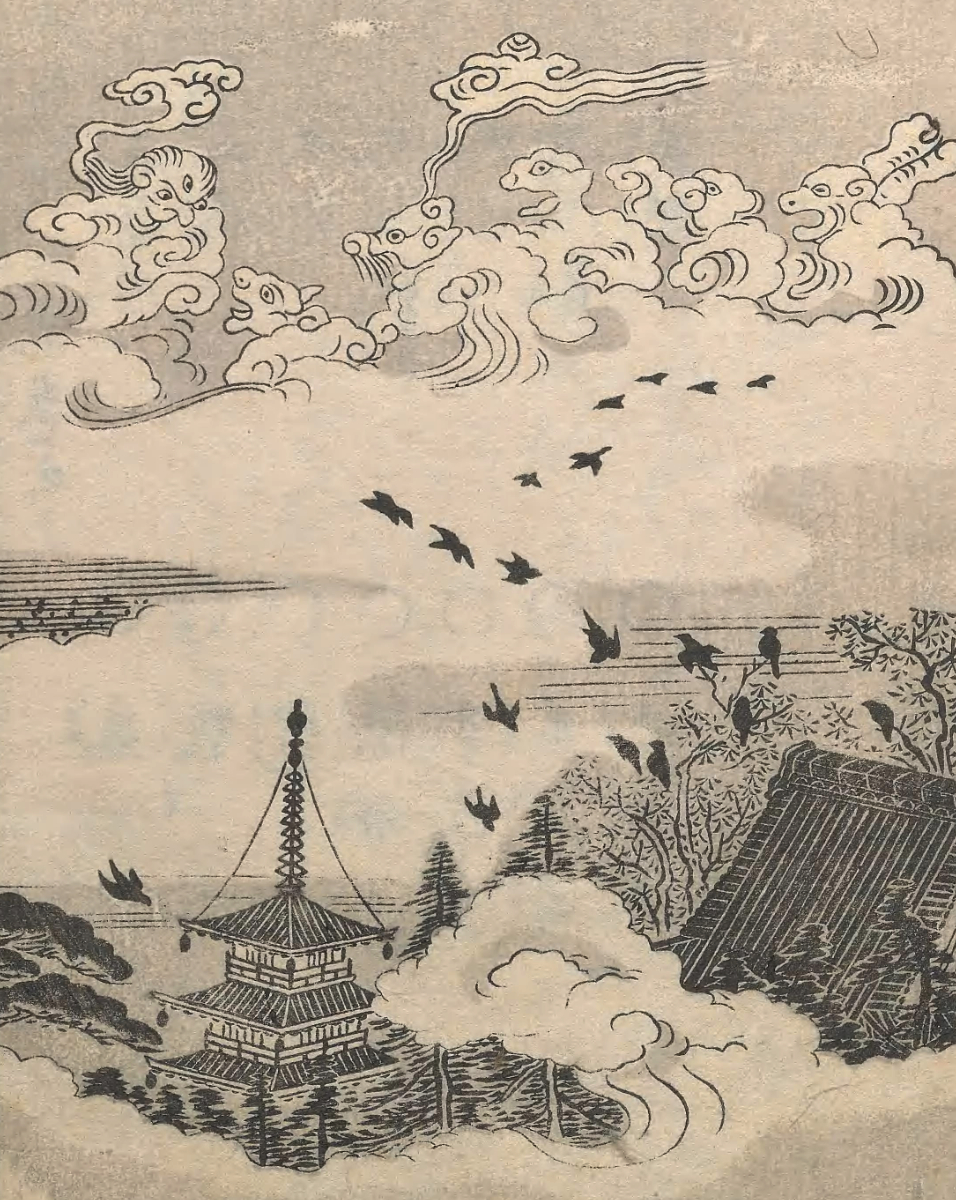
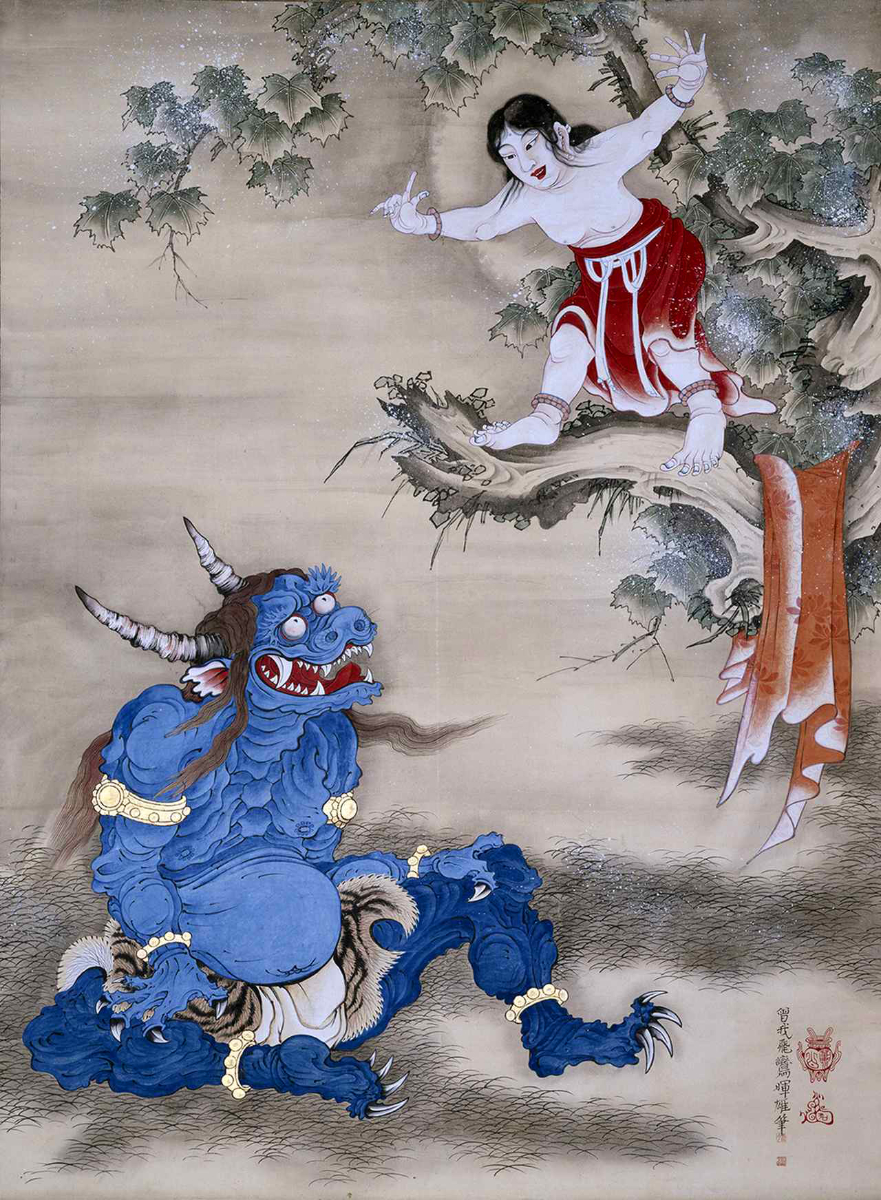
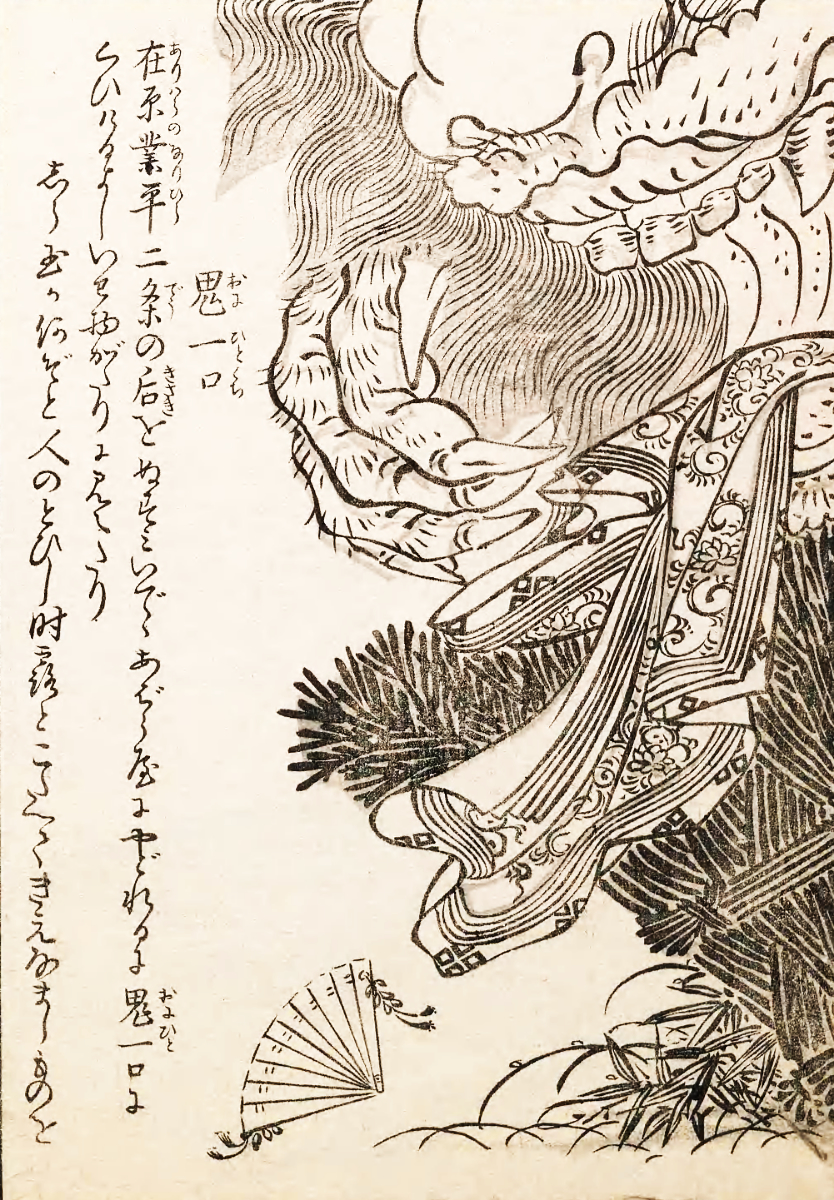
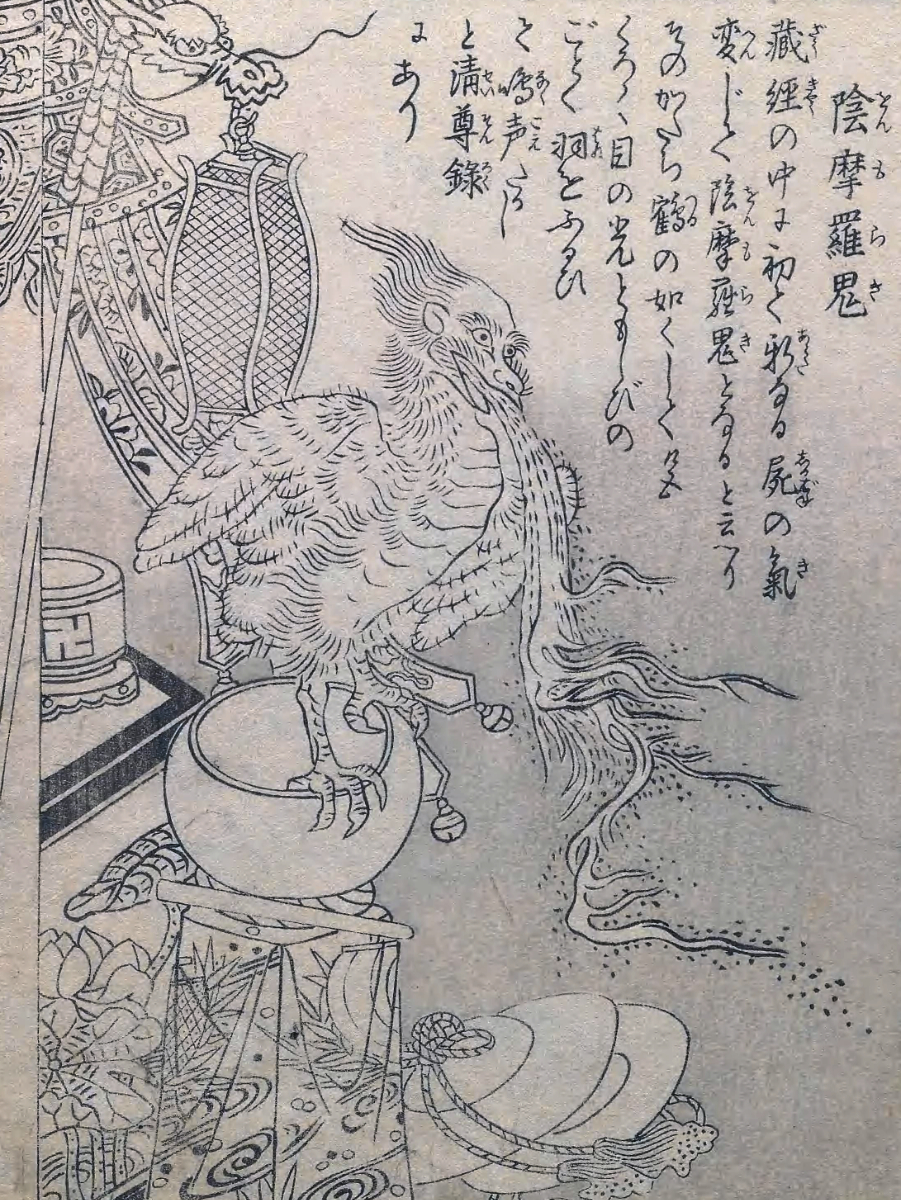
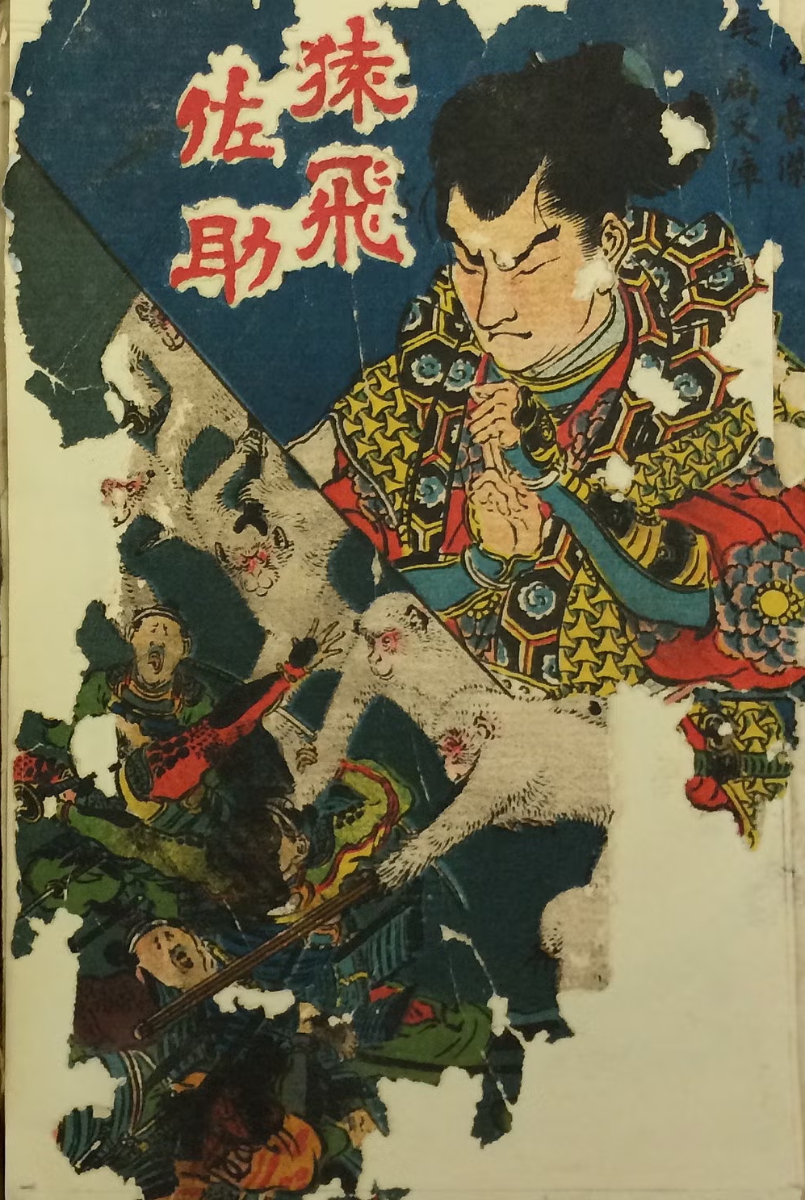
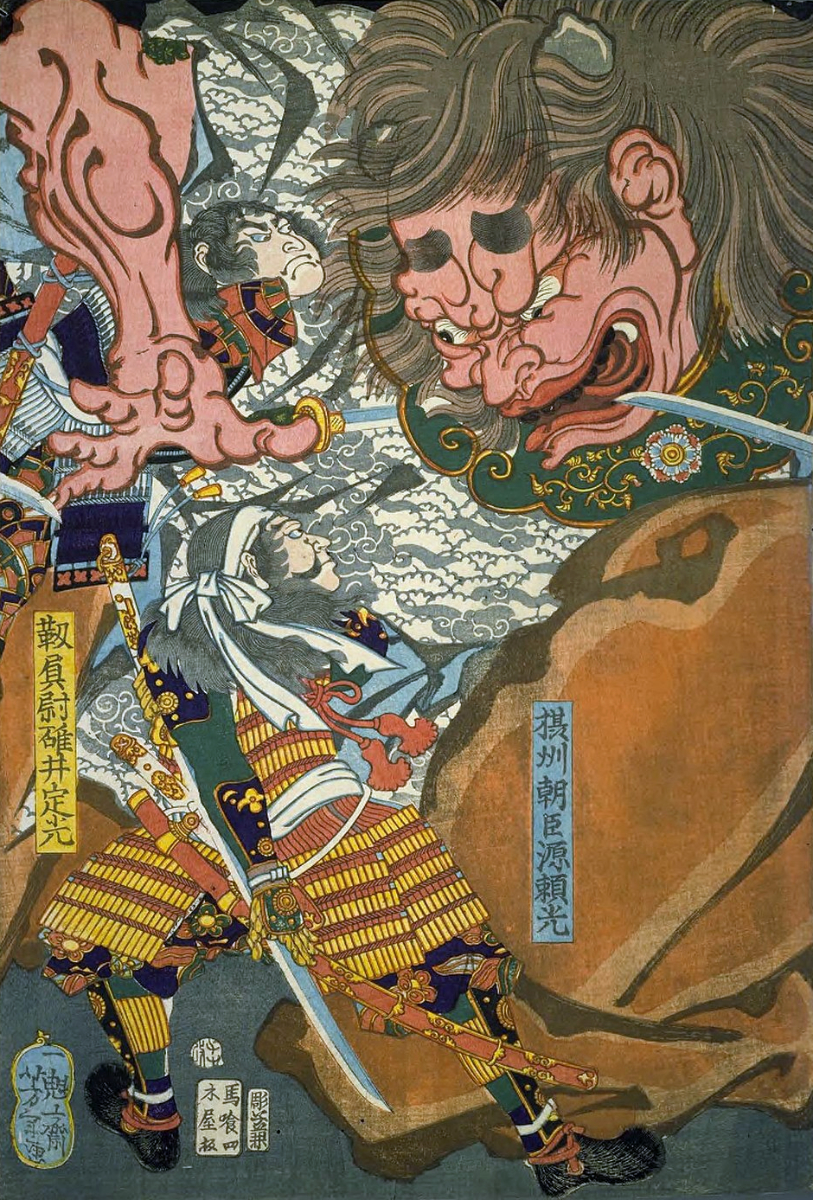
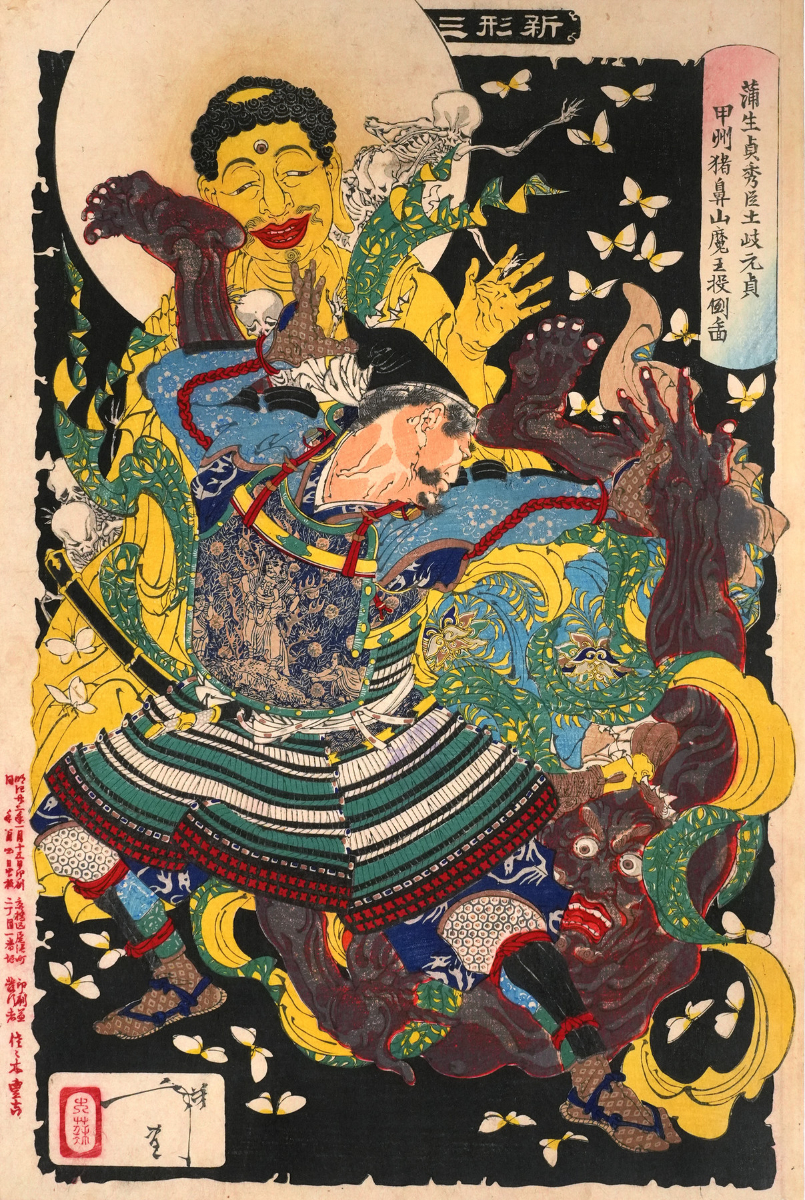
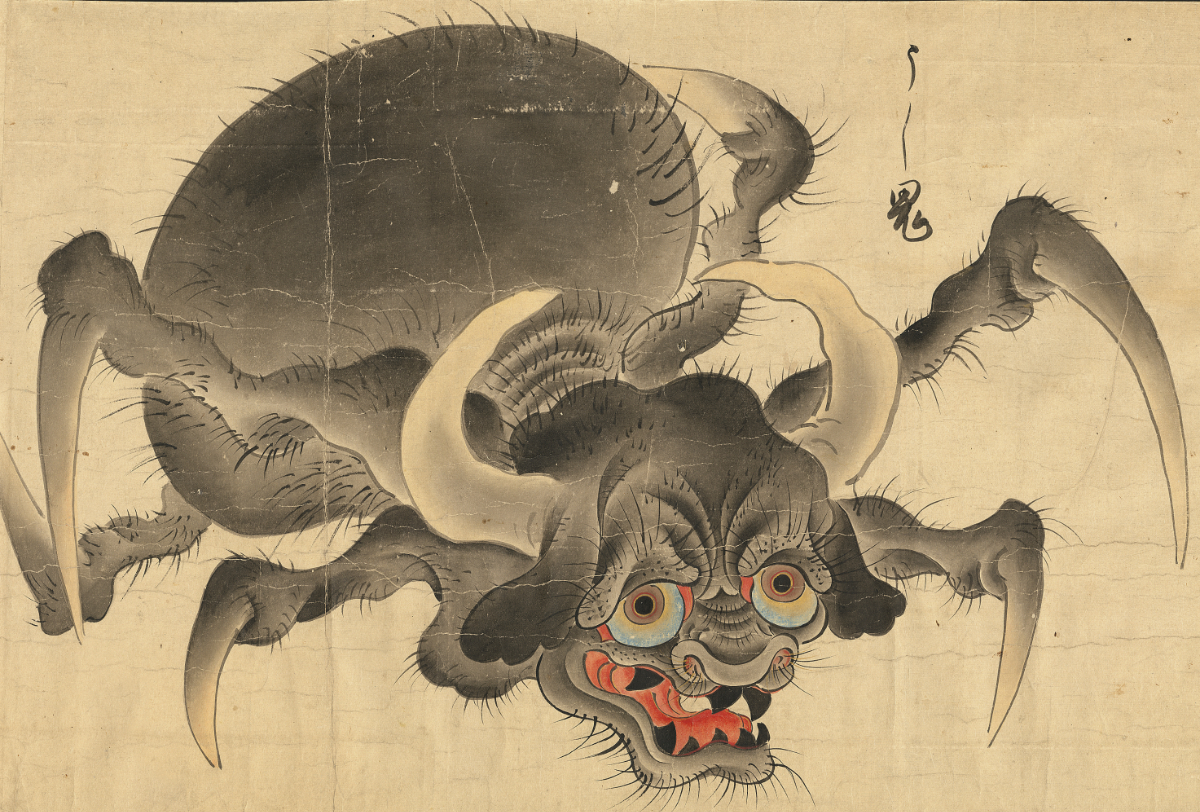
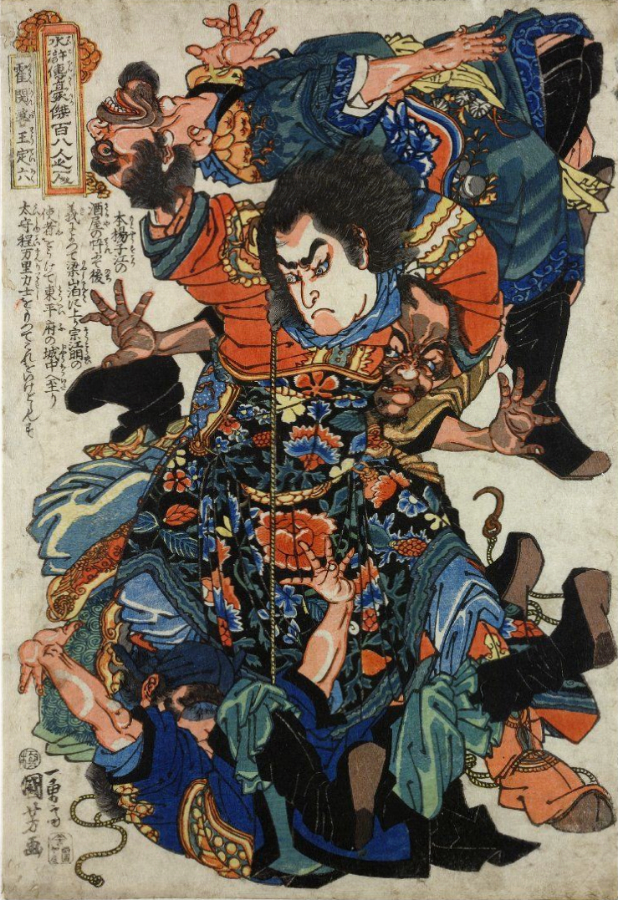
Image of Kidomaru

Japanese Mythos

Club Japanese Mythos
Total Entries 288
Representative Kidomaru
Japanese mythology is a collection of traditional stories, folktales, and beliefs that emerged in the islands of the Japanese archipelago. Shinto traditions are the cornerstones of Japanese mythology. The history of thousands of years of contact with Chinese and various Indian myths (such as Buddhist and Hindu mythology) are also key influences in Japanese religious belief. Japanese myths are tied to the topography of the archipelago as well as agriculturally-based folk religion, and the Shinto pantheon holds uncountable kami (“god(s)” or “spirits”). Two important sources for Japanese myths, as they are recognized today, are the Kojiki and the Nihon Shoki. The Kojiki, or “Record of Ancient Matters,” is the oldest surviving account of Japan’s myths, legends, and history. Additionally, the Shintōshū describes the origins of Japanese deities from a Buddhist perspective. ~ Japanese mythology – Wikipedia
Kidōmaru (c.1830 - c.1843) | Utagawa Kuniyoshi
Kidōmaru (c.1830 – c.1843) | Utagawa Kuniyoshi
Quick View

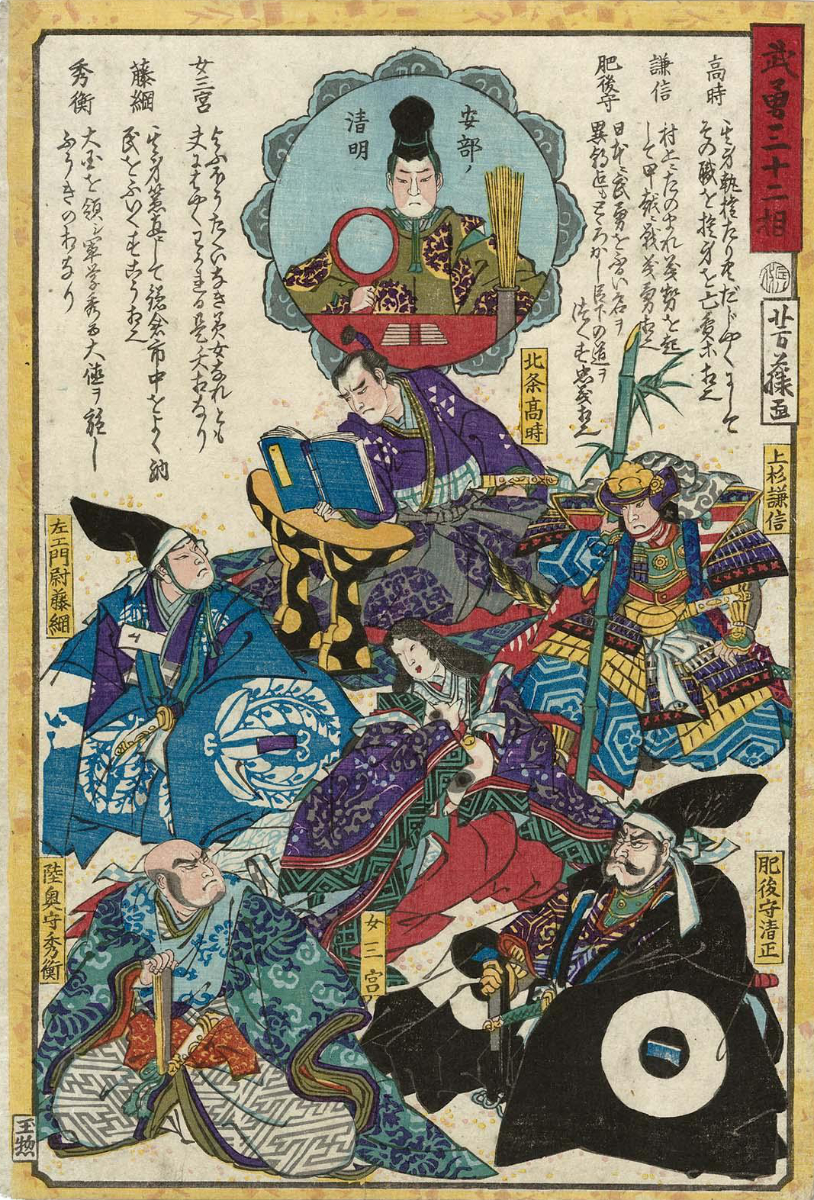
Abe no Seimei

Image of Abe no Seimei
Category Abe no Seimei
Includes 

Abe no Seimei (February 21, 921 AD – October 31, 1005), also known as Doujimaru, was a Japanese onmyōji, a court official and specialist of Onmyōdō, during the middle of the Heian period. In addition […]

Entry Abe no Seimei
Description 

Abe no Seimei (February 21, 921 AD – October 31, 1005), also known as Doujimaru, was a Japanese onmyōji, a court official and specialist of Onmyōdō, during the middle of the Heian period. In addition […]

Quick View

Abumiguchi

Image of Abumiguchi
Category Abumiguchi
Includes 

Abumiguchi were once stirrups belonging to a warrior who fell in battle. The stirrups were left on the battlefield, forgotten. Upset at losing their purpose, a soldier’s implements can transform into tsukumogami. Like faithful hounds, […]

Entry Abumiguchi
Description 

Abumiguchi were once stirrups belonging to a warrior who fell in battle. The stirrups were left on the battlefield, forgotten. Upset at losing their purpose, a soldier’s implements can transform into tsukumogami. Like faithful hounds, […]

Quick View

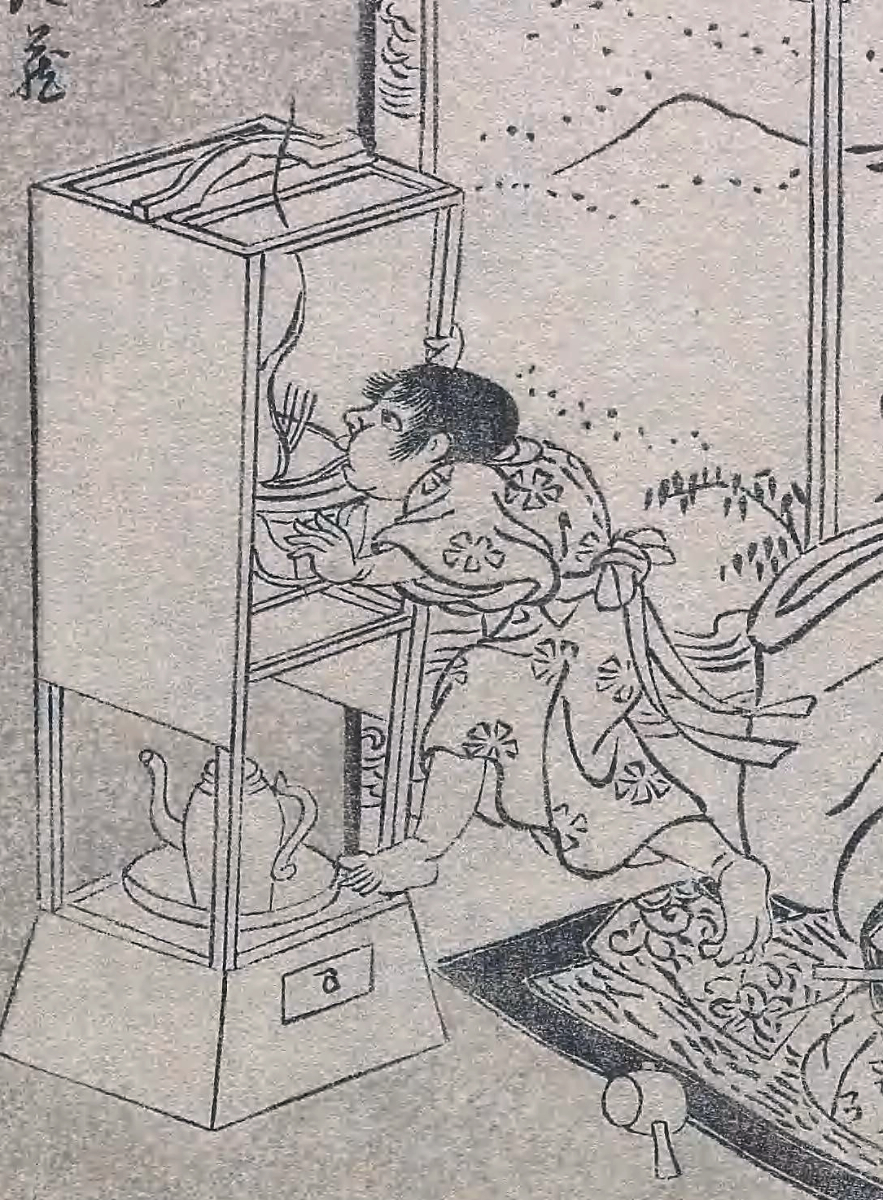
Abura-akago

Image of Abura-akago
Category Abura-akago
Includes 

Abura-akago is a type of Japanese infant spirit or ghost. It is a yōkai that appeared illustrated in Toriyama Sekien’s mid-Edo period Konjaku Gazu Zoku Hyakki, as an infant spirit lapping oil out of an […]

Entry Abura-akago
Description 

Abura-akago is a type of Japanese infant spirit or ghost. It is a yōkai that appeared illustrated in Toriyama Sekien’s mid-Edo period Konjaku Gazu Zoku Hyakki, as an infant spirit lapping oil out of an […]

Quick View

Akaguchi

Image of Akaguchi
Category Akaguchi
Includes 

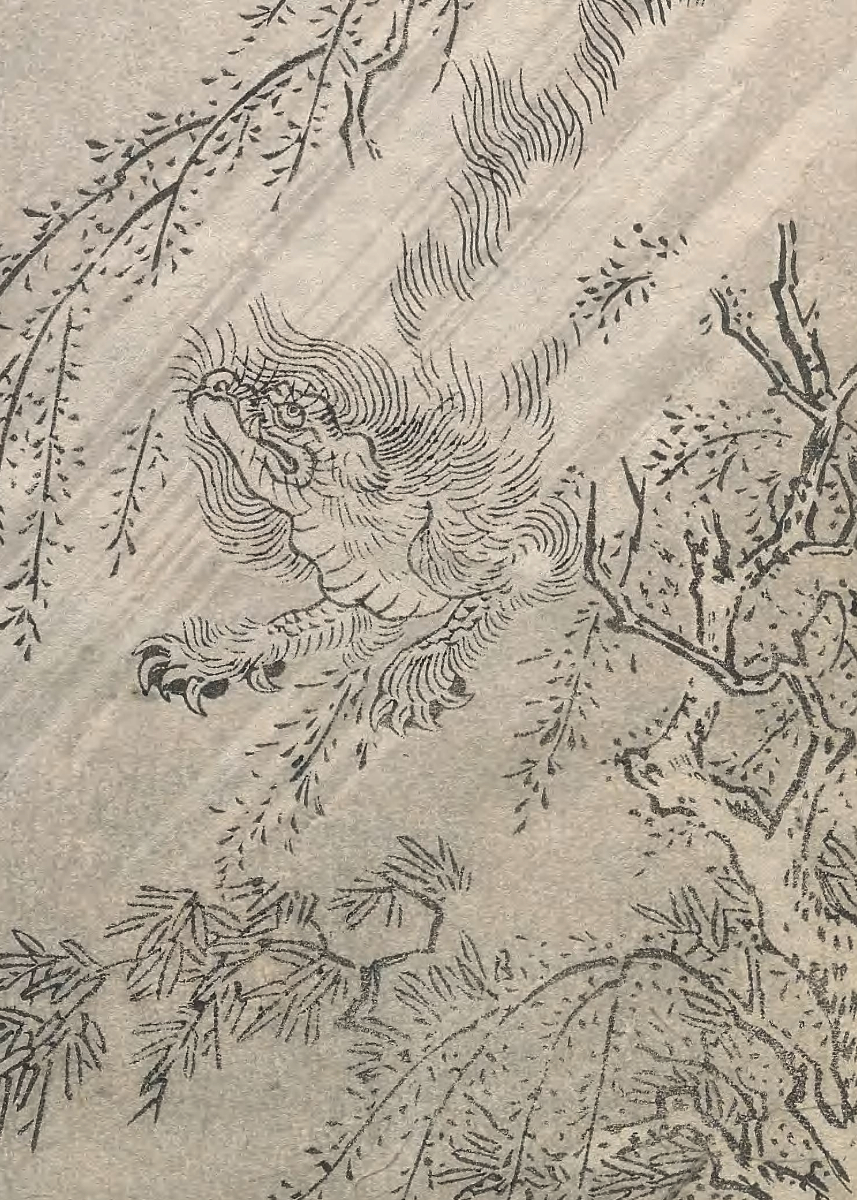
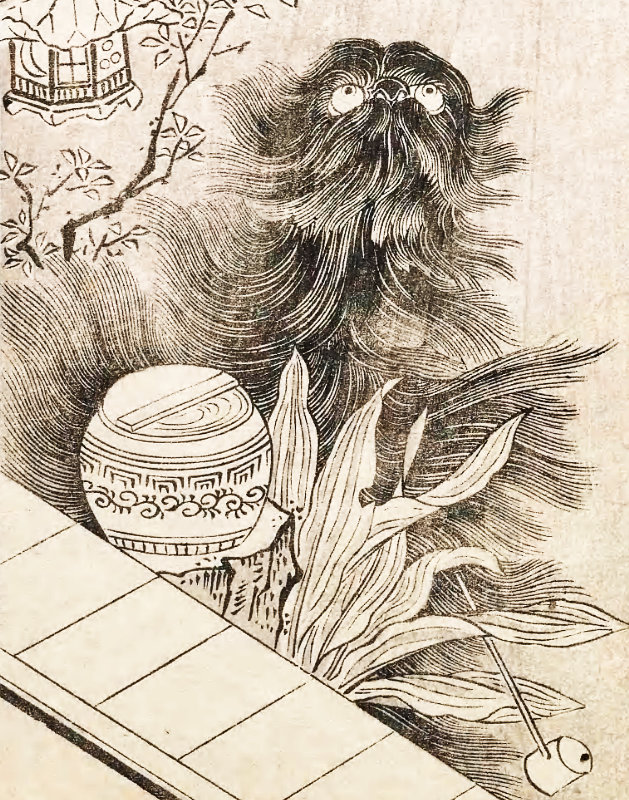
Akaguchi is a yōkai from the northwestern region of Aomori prefecture. This yōkai resides in an amorphous black cloud, baring visibly its komainu (Japanese lion-dog) face and large claws. Its face and claws are covered […]

Entry Akaguchi
Description 

Akaguchi is a yōkai from the northwestern region of Aomori prefecture. This yōkai resides in an amorphous black cloud, baring visibly its komainu (Japanese lion-dog) face and large claws. Its face and claws are covered […]

Quick View

Amanozako

Image of Amanozako
Category Amanozako
Includes 

Amanozako is a monstrous goddess mentioned in the Kujiki, which states that she originated when Susanoo let his own ferocious spirit (his ara-mitama) build up inside him until he vomited her out. Like her fellow […]

Entry Amanozako
Description 

Amanozako is a monstrous goddess mentioned in the Kujiki, which states that she originated when Susanoo let his own ferocious spirit (his ara-mitama) build up inside him until he vomited her out. Like her fellow […]

Quick View

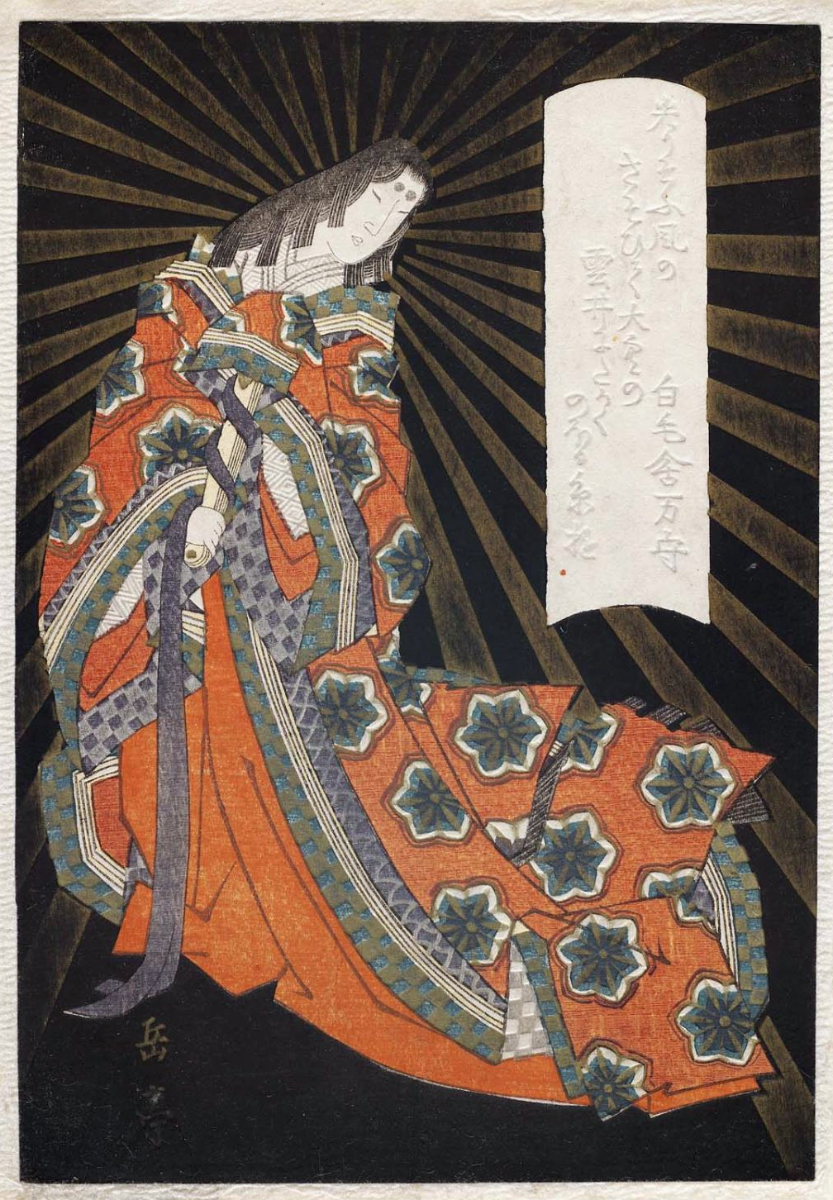
Amaterasu

Image of Amaterasu
Category Amaterasu
Includes 

Amaterasu Ōmikami (天照大(御)神), often called Amaterasu for short, also known as Amateru Kami (天照神) and Ōhirume no Muchi (大日孁貴), is the goddess of the sun in Japanese mythology. Often considered the chief deity (kami) of […]

Entry Amaterasu
Description 

Amaterasu Ōmikami (天照大(御)神), often called Amaterasu for short, also known as Amateru Kami (天照神) and Ōhirume no Muchi (大日孁貴), is the goddess of the sun in Japanese mythology. Often considered the chief deity (kami) of […]

Quick View

Amefurikozo

Image of Amefurikozo
Category Amefurikozo
Includes 

Amefurikozō is a type of Japanese yōkai. There is a depiction of this yōkai in Sekien Toriyama’s collection of yōkai drawing the Konjaku Gazu Zoku Hyakki, and they can also be seen in the kibyōshi […]

Entry Amefurikozo
Description 

Amefurikozō is a type of Japanese yōkai. There is a depiction of this yōkai in Sekien Toriyama’s collection of yōkai drawing the Konjaku Gazu Zoku Hyakki, and they can also be seen in the kibyōshi […]

Quick View

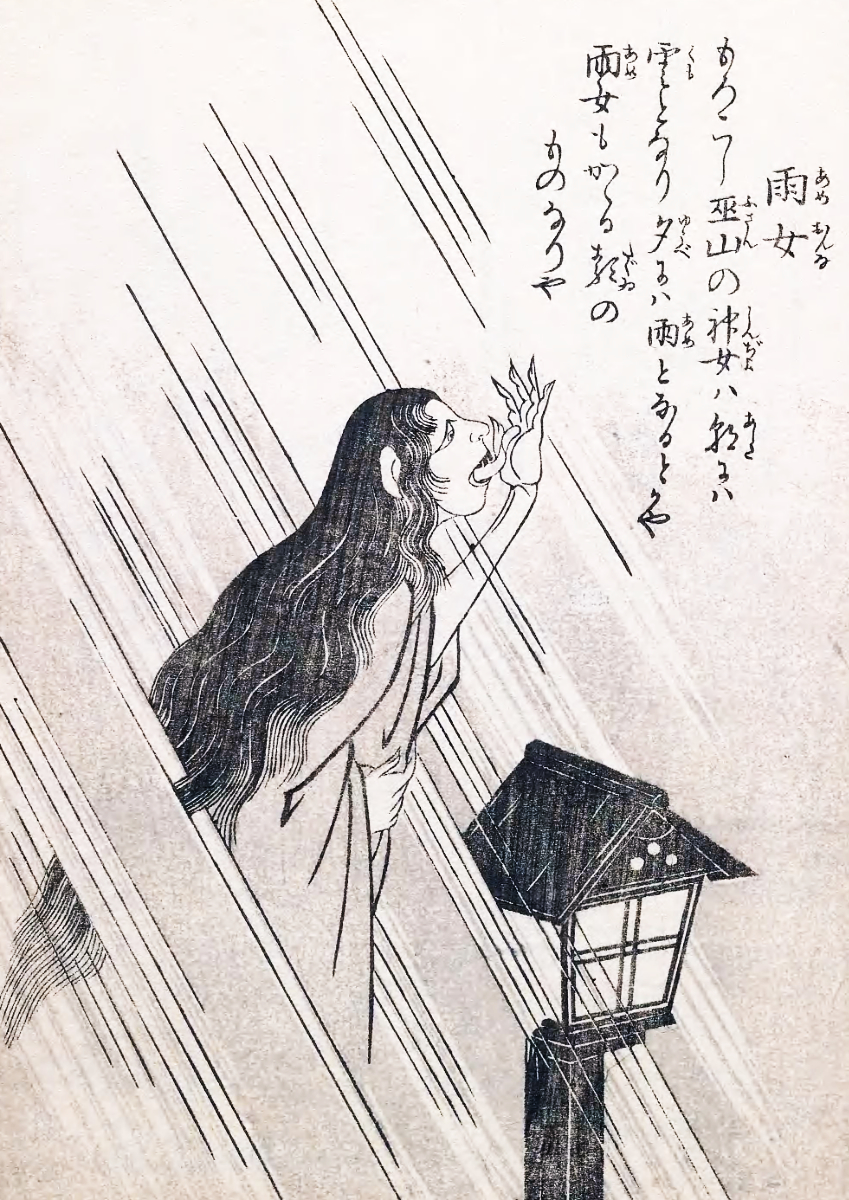
Ameonna

Image of Ameonna
Category Ameonna
Includes 

Ameonna is a Japanese yōkai thought to call forth rain, illustrated in Toriyama Sekien’s Konjaku Hyakki Shūi as a woman standing in the rain and licking her hand. In modern usage in Japan, “ameonna” (or […]

Entry Ameonna
Description 

Ameonna is a Japanese yōkai thought to call forth rain, illustrated in Toriyama Sekien’s Konjaku Hyakki Shūi as a woman standing in the rain and licking her hand. In modern usage in Japan, “ameonna” (or […]

Quick View

Amikiri

Image of Amikiri
Category Amikiri
Includes 

Amikiri is a Japanese yōkai depicted in the Gazu Hyakki Yagyō by Toriyama Sekien. It is depicted as a cross between a serpent, bird or a lobster. It has claws similar to that of a […]

Entry Amikiri
Description 

Amikiri is a Japanese yōkai depicted in the Gazu Hyakki Yagyō by Toriyama Sekien. It is depicted as a cross between a serpent, bird or a lobster. It has claws similar to that of a […]

Quick View

Aoandon

Image of Aoandon
Category Aoandon
Includes 

Aoandon is a creature illustrated by Toriyama Sekien in his Konjaku Hyakki Shūi. It was meant to represent the spirit that appeared during the game Hyakumonogatari Kaidankai, after the last story was told. The candles […]

Entry Aoandon
Description 

Aoandon is a creature illustrated by Toriyama Sekien in his Konjaku Hyakki Shūi. It was meant to represent the spirit that appeared during the game Hyakumonogatari Kaidankai, after the last story was told. The candles […]

Quick View

Aobozu

Image of Aobozu
Category Aobozu
Includes 

Aobōzu is a Japanese yōkai (spirit) found in a number of Japanese legends. Stories about aobōzu, in particular the exact details of the spirit, vary widely. As well as appearing in Japanese folklore, the aobōzu […]

Entry Aobozu
Description 

Aobōzu is a Japanese yōkai (spirit) found in a number of Japanese legends. Stories about aobōzu, in particular the exact details of the spirit, vary widely. As well as appearing in Japanese folklore, the aobōzu […]

Quick View

Aonyobo

Image of Aonyobo
Category Aonyobo
Includes 

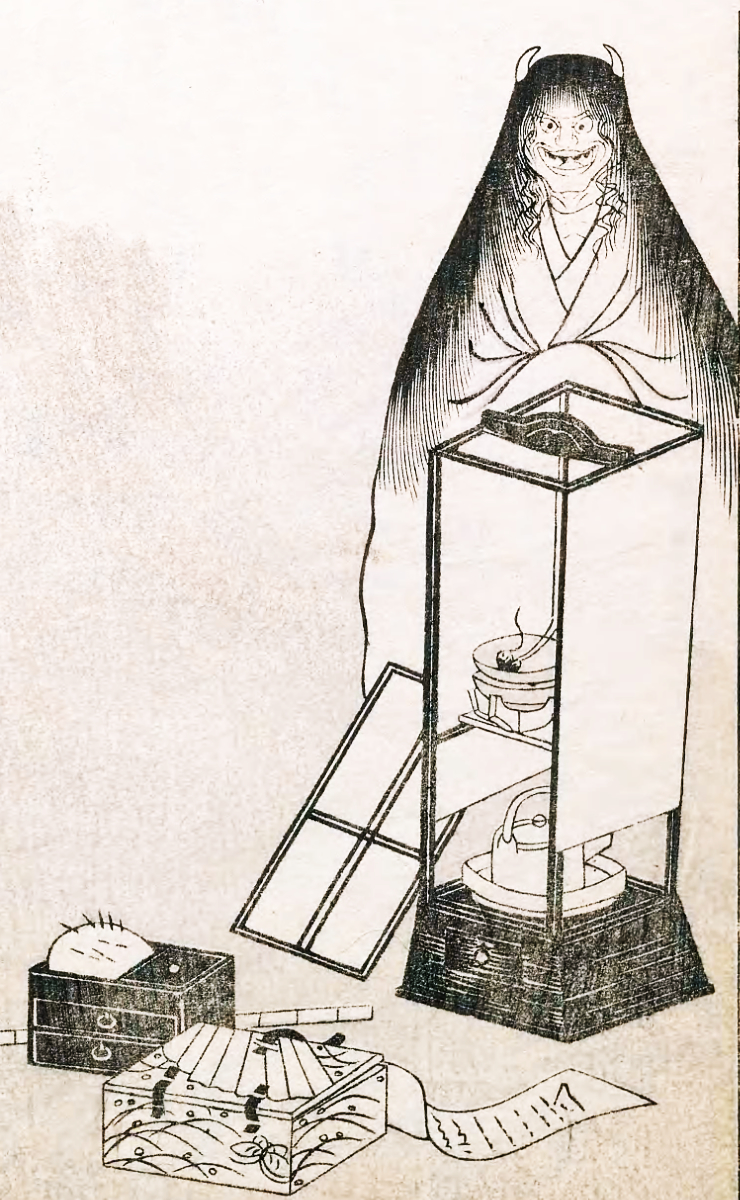
The Aonyōbō is a blue-skinned ogre-like spirit of poverty and misfortune who takes the appearance of an ancient court noblewoman. Covered in many kimono of older eras, that are now tattered and moth-ridden, she wears […]

Entry Aonyobo
Description 

The Aonyōbō is a blue-skinned ogre-like spirit of poverty and misfortune who takes the appearance of an ancient court noblewoman. Covered in many kimono of older eras, that are now tattered and moth-ridden, she wears […]

Quick View

Aosagibi

Image of Aosagibi
Category Aosagibi
Includes 

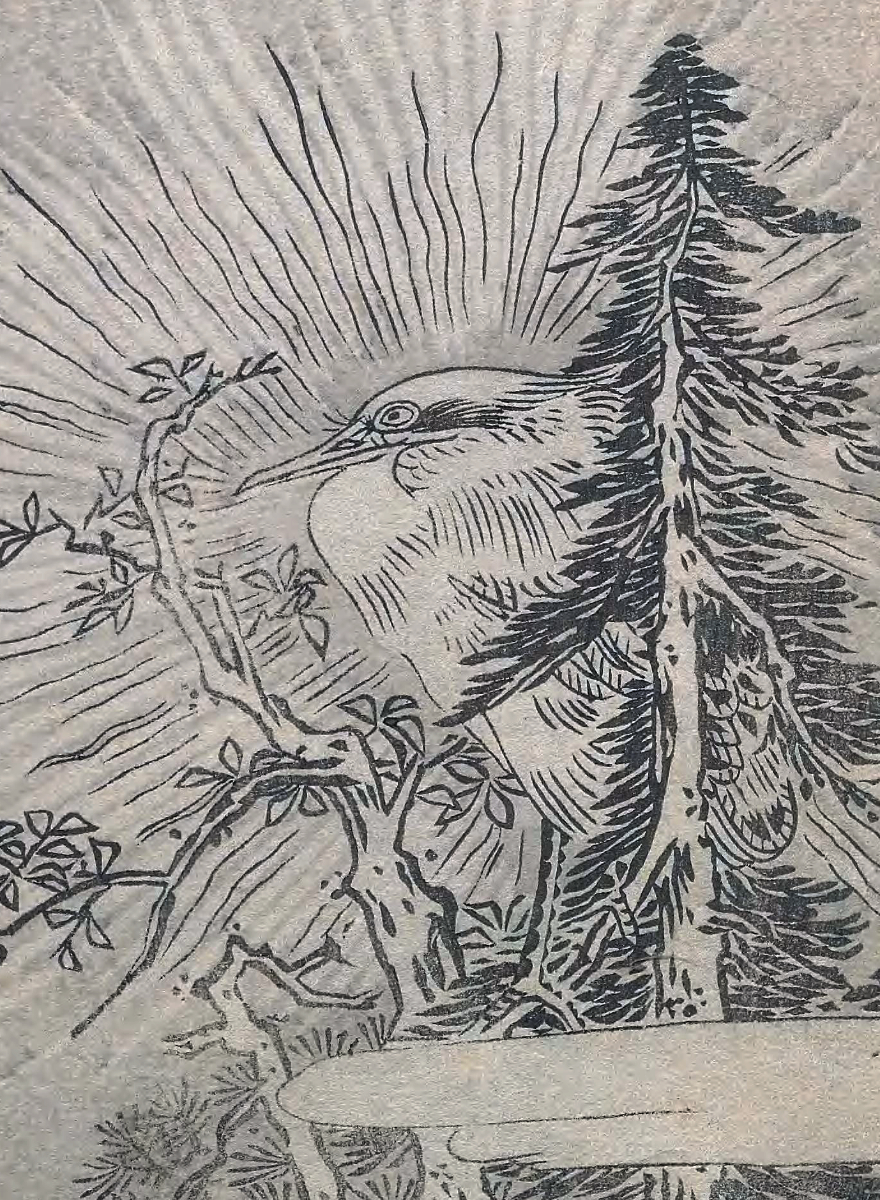
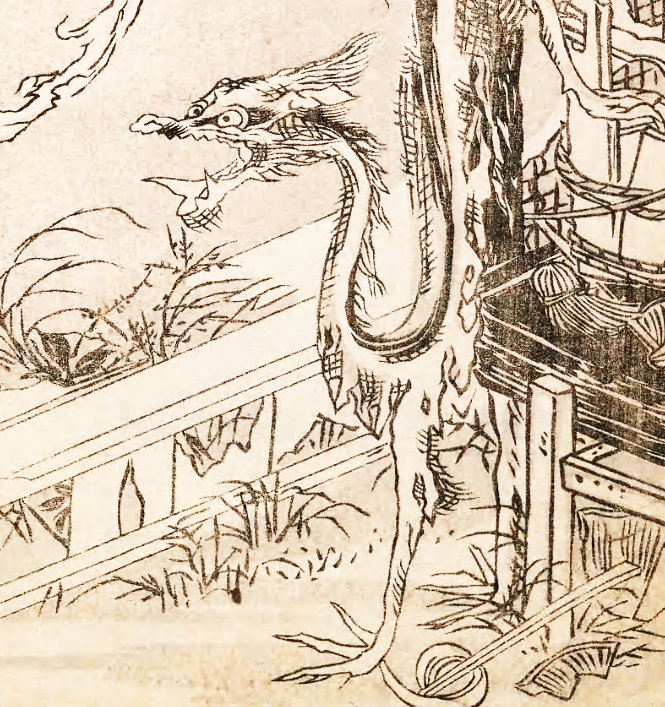
Aosaginohi is a phenomenon illustrated by Toriyama Sekien in his Konjaku Gazu Zoku Hyakki. It depicts a night heron with a mysteriously illuminated body. Folklore built around the phenomenon tells a story of an old […]

Entry Aosagibi
Description 

Aosaginohi is a phenomenon illustrated by Toriyama Sekien in his Konjaku Gazu Zoku Hyakki. It depicts a night heron with a mysteriously illuminated body. Folklore built around the phenomenon tells a story of an old […]

Quick View

Ayakashi

Image of Ayakashi
Category Ayakashi
Includes 

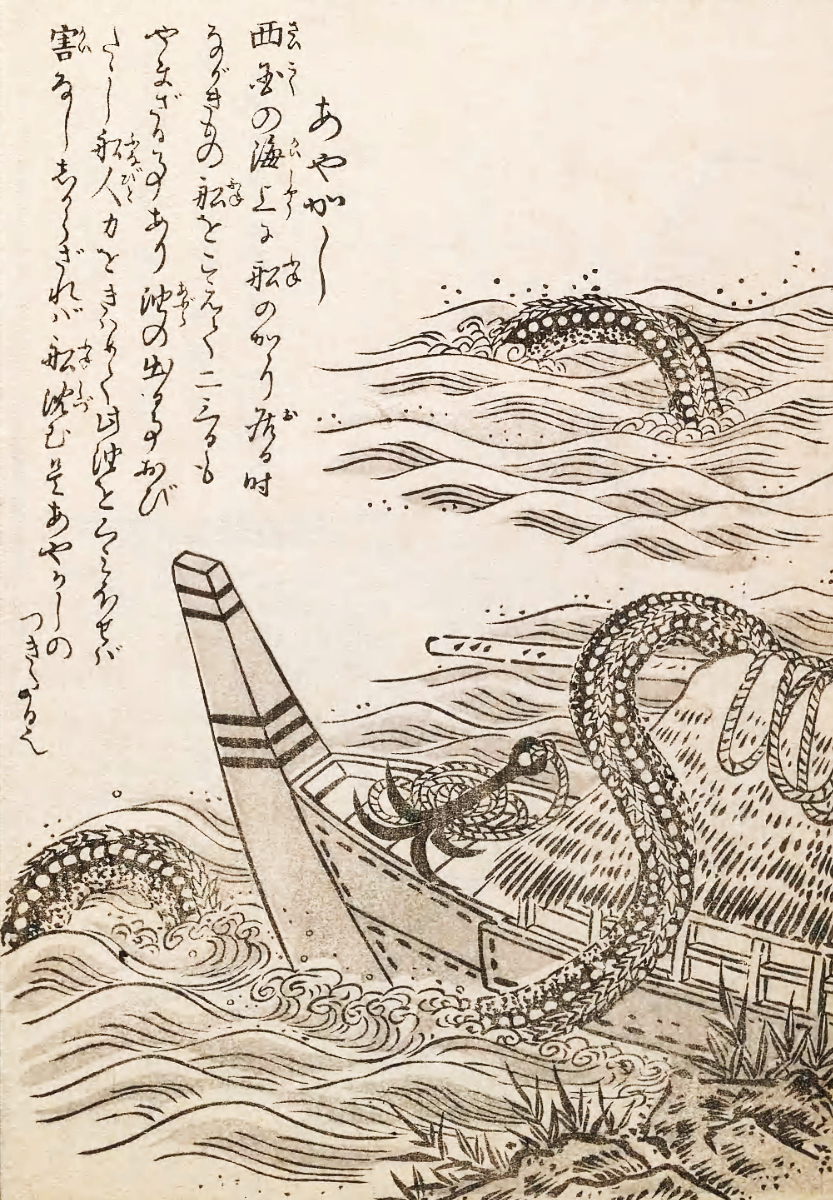
Ayakashi is the collective name for yōkai that appear above the surface of a body of water. In Nagasaki Prefecture, the atmospheric ghost lights that appear above water are called ayakashi, and so are the […]

Entry Ayakashi
Description 

Ayakashi is the collective name for yōkai that appear above the surface of a body of water. In Nagasaki Prefecture, the atmospheric ghost lights that appear above water are called ayakashi, and so are the […]

Quick View

Bake Jizo

Image of Bake Jizo
Category Bake Jizo
Includes 

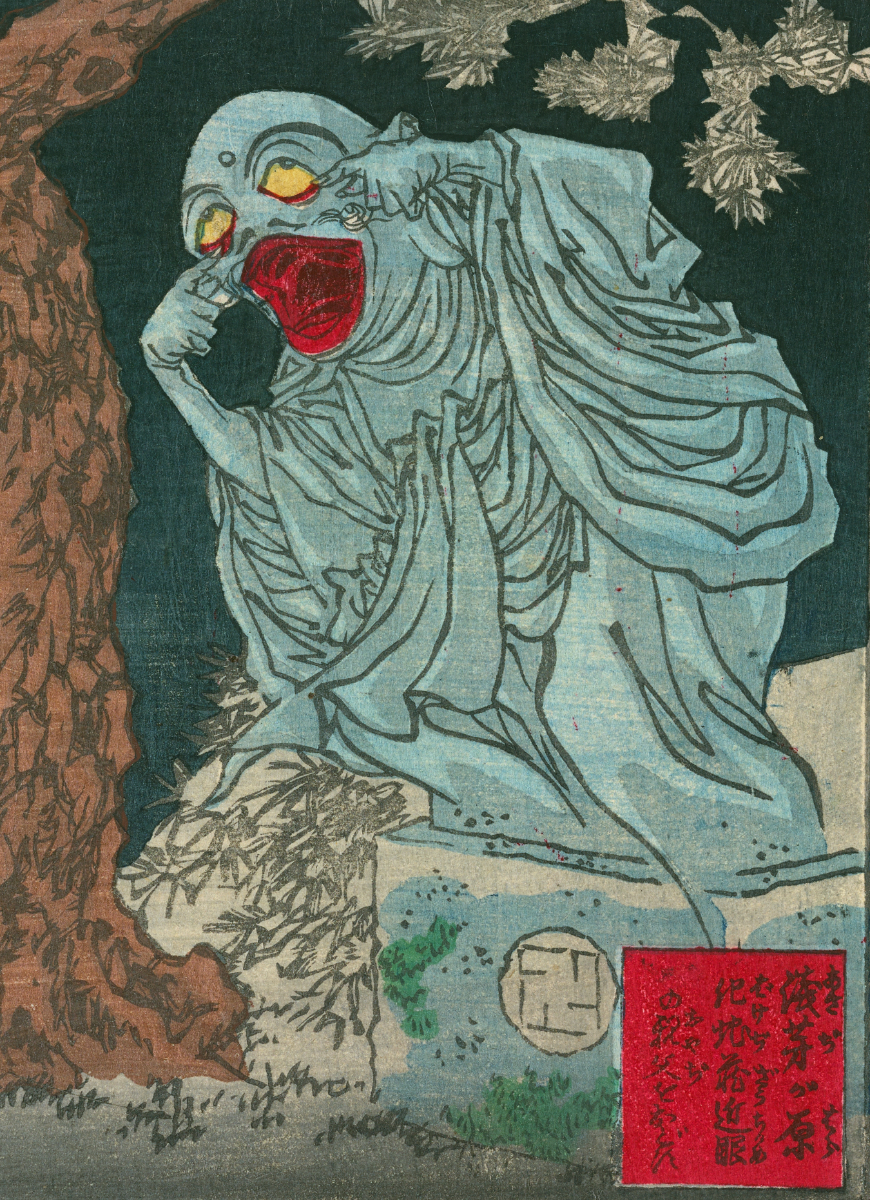
“The upper panel of the two has the caption ‘The bakejizō of the bleak field scares a short-sighted old man.’ This notorious ghostly jizō also features in Beautiful Places of Advanced Tokyo (Tokyō Kaika Meisho […]

Entry Bake Jizo
Description 

“The upper panel of the two has the caption ‘The bakejizō of the bleak field scares a short-sighted old man.’ This notorious ghostly jizō also features in Beautiful Places of Advanced Tokyo (Tokyō Kaika Meisho […]

Quick View

Bake-danuki

Image of Bake-danuki
Category Bake-danuki
Includes 

Bake-danuki are a kind of yōkai (supernatural beings) found in the classics and in the folklore and legends of various places in Japan, commonly associated with the Japanese raccoon dog or tanuki. Although the tanuki […]

Entry Bake-danuki
Description 

Bake-danuki are a kind of yōkai (supernatural beings) found in the classics and in the folklore and legends of various places in Japan, commonly associated with the Japanese raccoon dog or tanuki. Although the tanuki […]

Quick View

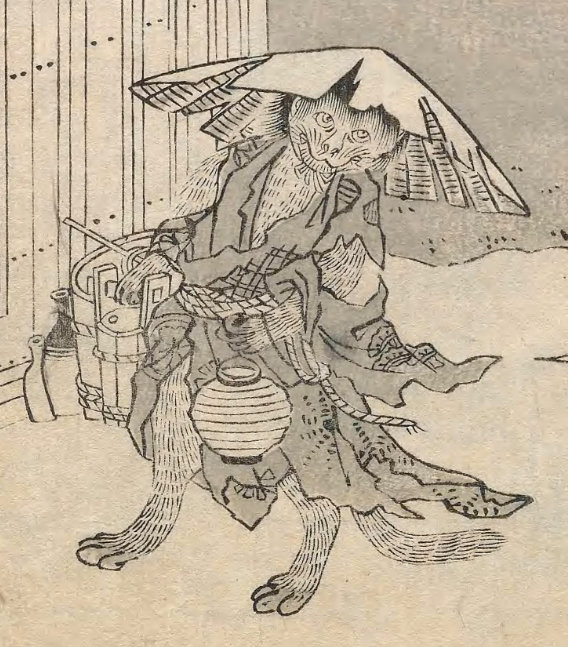
Bakeneko

Image of Bakeneko
Category Bakeneko
Includes 

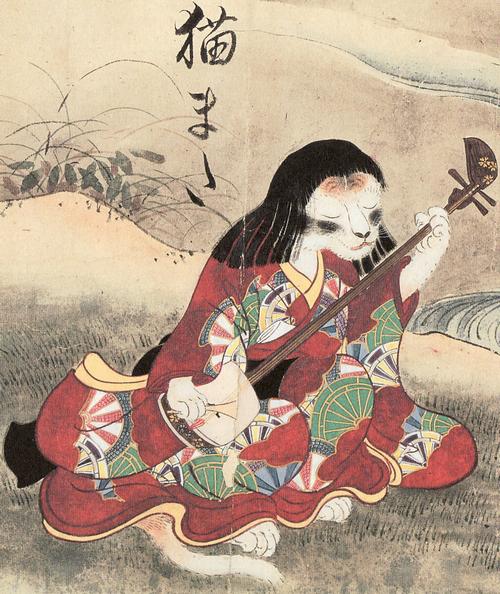
The bakeneko is a type of Japanese yōkai, or supernatural entity; more specifically, it is a kaibyō, or supernatural cat. It is often confused with the nekomata, another cat-like yōkai. The distinction between them is […]

Entry Bakeneko
Description 

The bakeneko is a type of Japanese yōkai, or supernatural entity; more specifically, it is a kaibyō, or supernatural cat. It is often confused with the nekomata, another cat-like yōkai. The distinction between them is […]

Quick View

Basho no sei

Image of Basho no sei
Category Basho no sei
Includes 

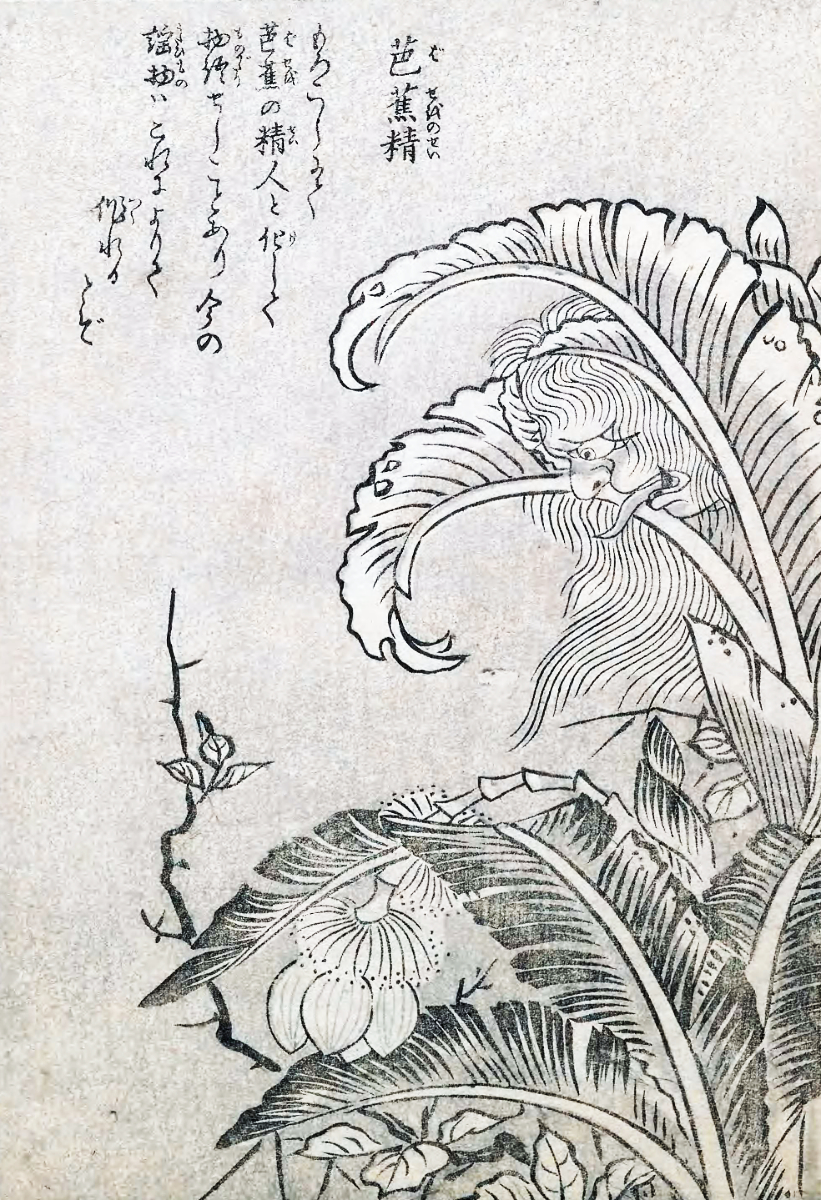
Bashō no sei are the spirits of Japanese banana trees (Musa basjoo). They are native to the islands of Okinawa, but are common in ornamental gardens across Asia. They usually appear as a human face […]

Entry Basho no sei
Description 

Bashō no sei are the spirits of Japanese banana trees (Musa basjoo). They are native to the islands of Okinawa, but are common in ornamental gardens across Asia. They usually appear as a human face […]

Quick View

Biwa bokuboku

Image of Biwa bokuboku
Category Biwa bokuboku
Includes 

A biwa is a kind of lute, frequently used to sing stories and poems. The biwa bokuboku is a biwa that has grown a human body and is dressed like a blind priest, wielding a […]

Entry Biwa bokuboku
Description 

A biwa is a kind of lute, frequently used to sing stories and poems. The biwa bokuboku is a biwa that has grown a human body and is dressed like a blind priest, wielding a […]

Quick View

Bunbuku Chagama

Image of Bunbuku Chagama
Category Bunbuku Chagama
Includes 

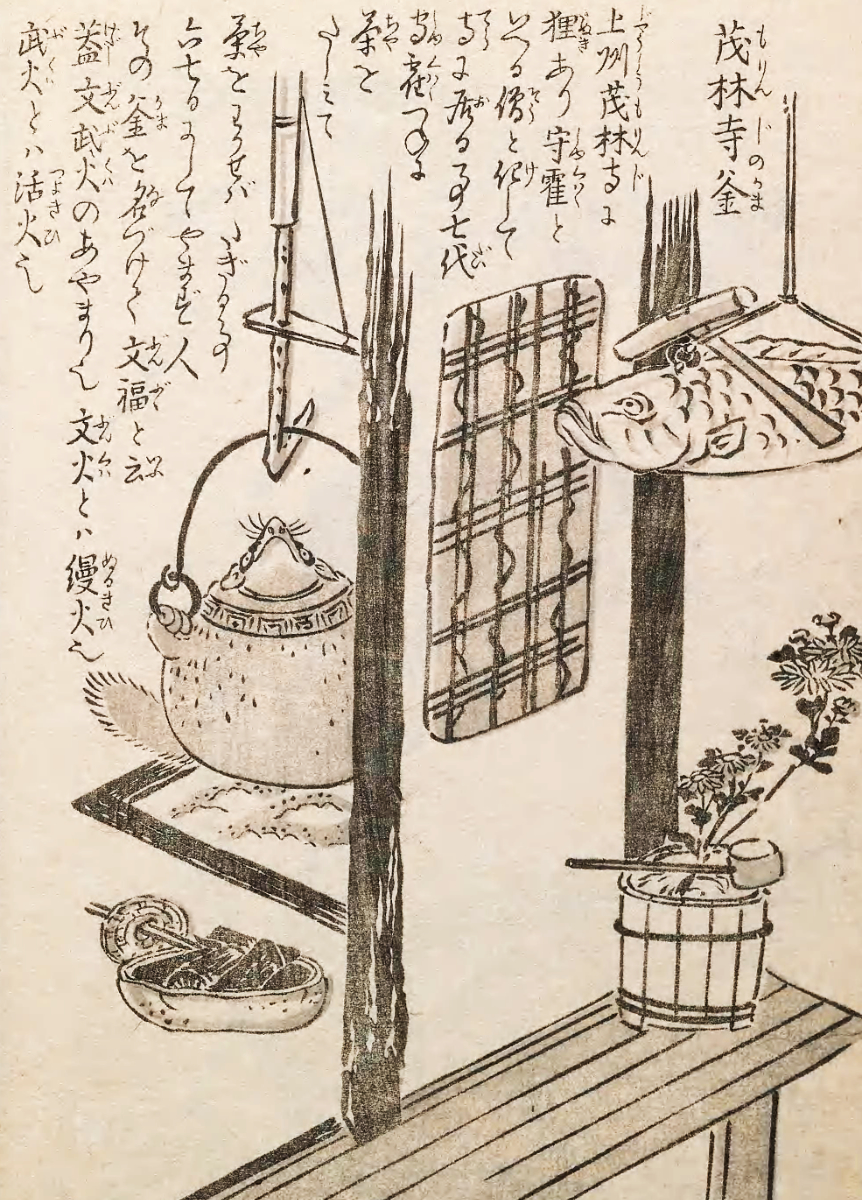
Morinji was founded in 1426 by a priest named Dairin Shōtsū. While he was traveling through various countries on pilgrimage, he befriended a priest named Shukaku, and they traveled together. After Morinji was built, Shukaku […]

Entry Bunbuku Chagama
Description 

Morinji was founded in 1426 by a priest named Dairin Shōtsū. While he was traveling through various countries on pilgrimage, he befriended a priest named Shukaku, and they traveled together. After Morinji was built, Shukaku […]

Quick View

Burabura

Image of Burabura
Category Burabura
Includes 

This yokai is named after the Japanese word for “wandering about”, “rambling”, or “strolling around”. Toriyama Sekien depicts a lantern with eyes and mouth, tied to bamboo, tilting toward the open road. While it looks […]

Entry Burabura
Description 

This yokai is named after the Japanese word for “wandering about”, “rambling”, or “strolling around”. Toriyama Sekien depicts a lantern with eyes and mouth, tied to bamboo, tilting toward the open road. While it looks […]

Quick View

Buruburu

Image of Buruburu
Category Buruburu
Includes 

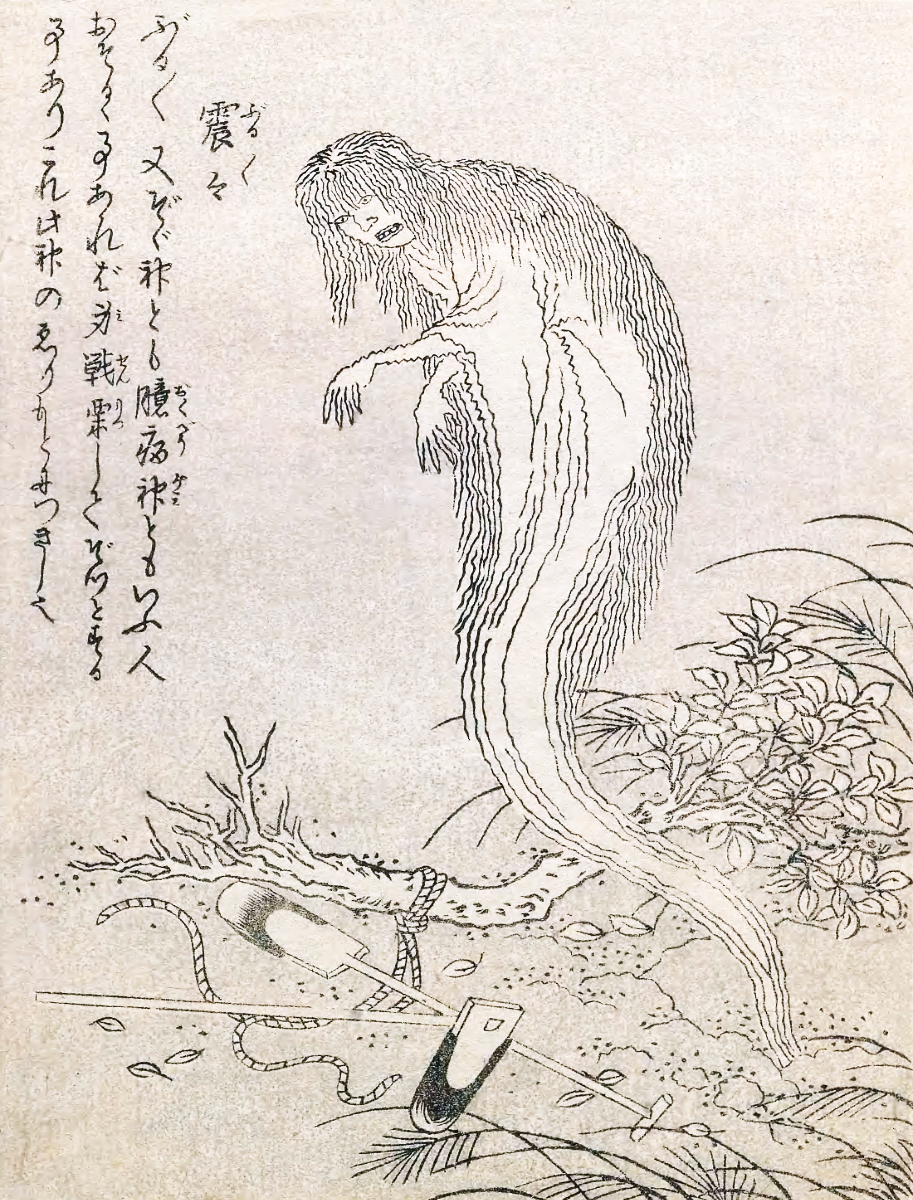
Buruburu are sometimes referred to as the spirit of cowardice. They follow people and cause them to shudder in fear. Buruburu are born when humans perform acts of cowardice, such as running away from battle. […]

Entry Buruburu
Description 

Buruburu are sometimes referred to as the spirit of cowardice. They follow people and cause them to shudder in fear. Buruburu are born when humans perform acts of cowardice, such as running away from battle. […]

Quick View

Chirizuka kaio

Image of Chirizuka kaio
Category Chirizuka kaio
Includes 

Chirizuka kaiō is a red, hairy demon who resembles a small oni. His clothing is old and tattered. He has wild hair and wears a crown on his head. He is the king of the […]

Entry Chirizuka kaio
Description 

Chirizuka kaiō is a red, hairy demon who resembles a small oni. His clothing is old and tattered. He has wild hair and wears a crown on his head. He is the king of the […]

Quick View

Chochinbi

Image of Chochinbi
Category Chochinbi
Includes 

Chōchinbi is a type of onibi, told in legends in each area of Japan. It is said to appear in footpaths between rice fields, floating about one meter above the ground, disappearing when humans get […]

Entry Chochinbi
Description 

Chōchinbi is a type of onibi, told in legends in each area of Japan. It is said to appear in footpaths between rice fields, floating about one meter above the ground, disappearing when humans get […]

Quick View

Chokuboron

Image of Chokuboron
Category Chokuboron
Includes 

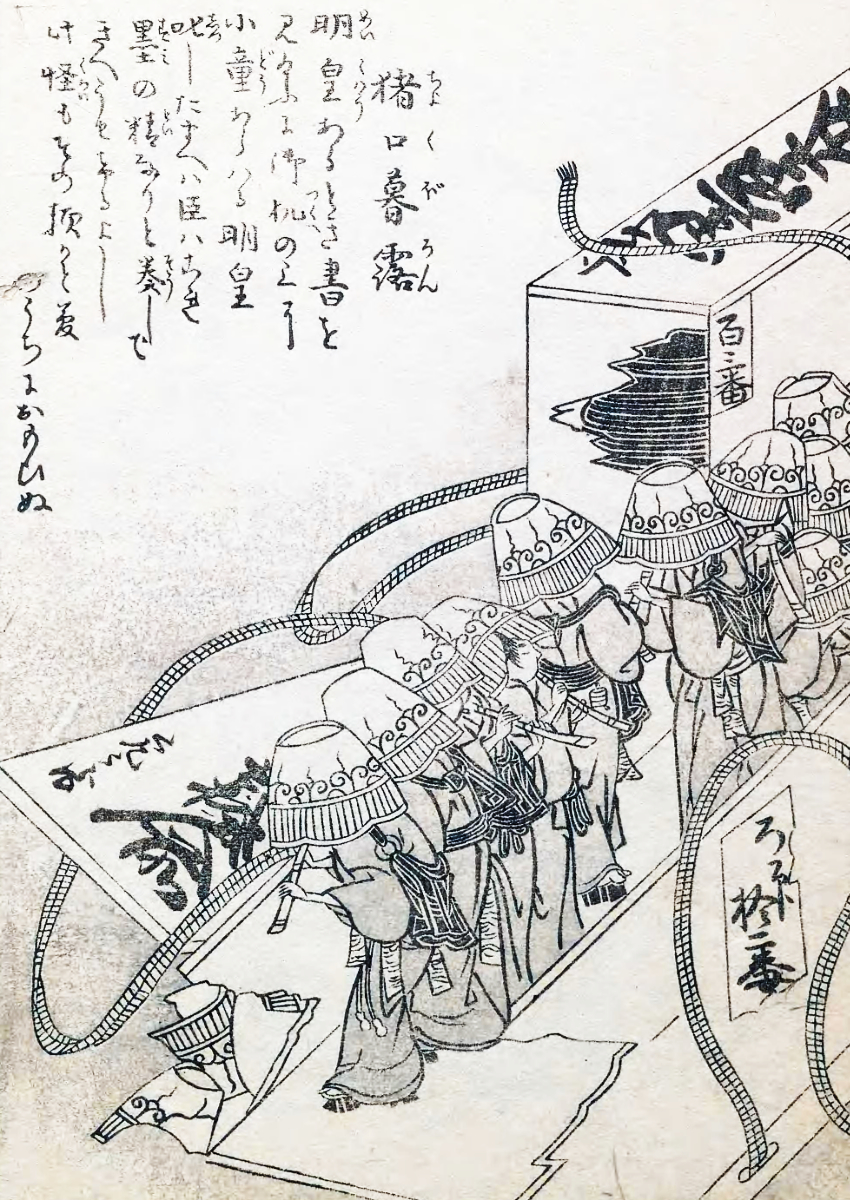
Chokuboron are formed from small sake cups called choko. They appear as komuso monks in people’s dreams to frighten them. Alias Chokuboron (猪口暮露) Real Names/Alt Names ○ Characteristics Japanese Mythos, Yōkai, Enlightenment and Neoclassicism, Public […]

Entry Chokuboron
Description 

Chokuboron are formed from small sake cups called choko. They appear as komuso monks in people’s dreams to frighten them. Alias Chokuboron (猪口暮露) Real Names/Alt Names ○ Characteristics Japanese Mythos, Yōkai, Enlightenment and Neoclassicism, Public […]

Quick View

Daichiuchi

Image of Daichiuchi
Category Daichiuchi
Includes 

A mallet-wielding yōkai appears in many of the earliest picture scrolls of the night parade of one hundred demons. In its oldest depictions, kanazuchibō appears with no name or description. Names like kanazuchibō and daichiuchi […]

Entry Daichiuchi
Description 

A mallet-wielding yōkai appears in many of the earliest picture scrolls of the night parade of one hundred demons. In its oldest depictions, kanazuchibō appears with no name or description. Names like kanazuchibō and daichiuchi […]

Quick View

Demon Omatsu

Image of Demon Omatsu
Category Demon Omatsu
Includes 

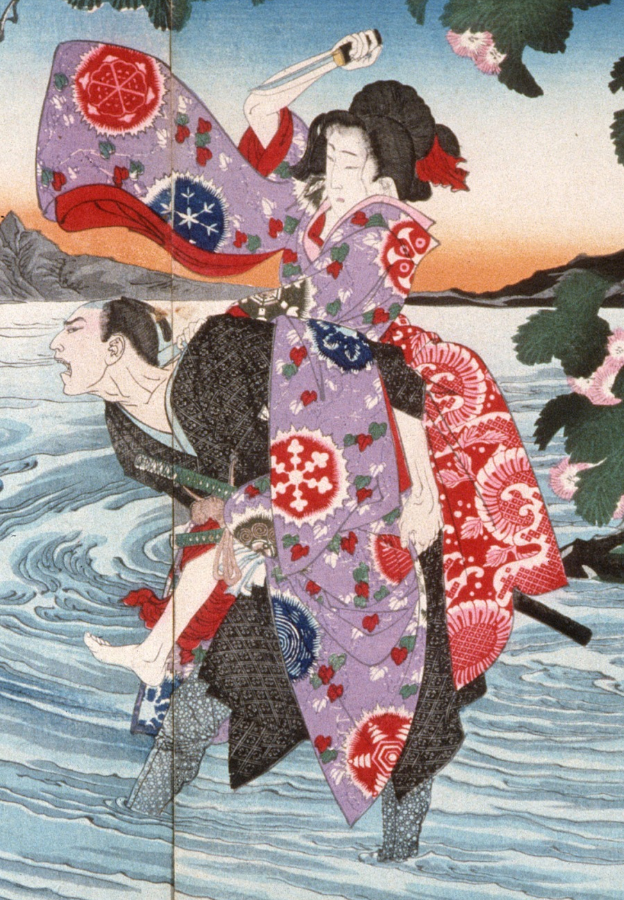
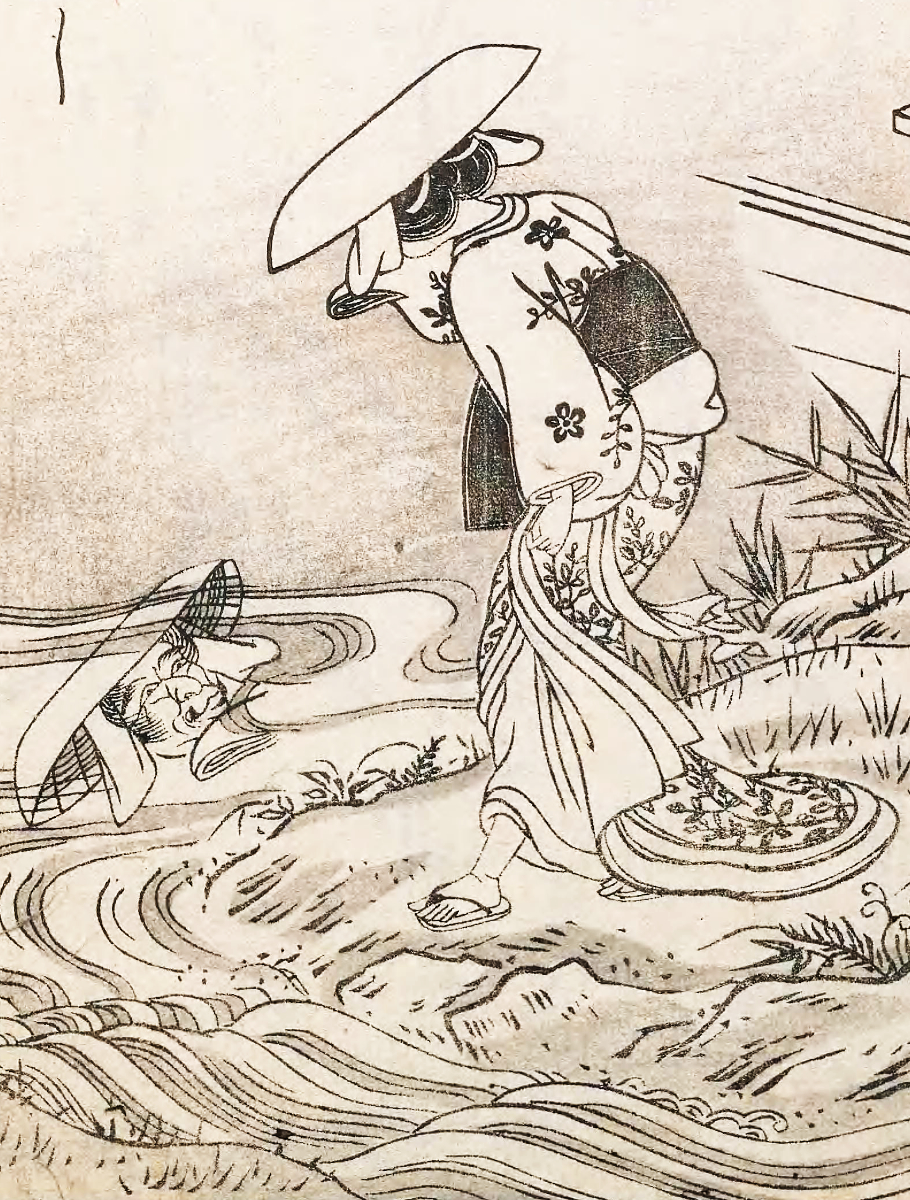
Originating from a 14th-century legend, the samurai Shirosaburo suffers treachery at the hands of the beauty Kishin (lit. devil) Omatsu who he carries on his back across a swiftly flowing river. Shirosaburo is based on […]

Entry Demon Omatsu
Description 

Originating from a 14th-century legend, the samurai Shirosaburo suffers treachery at the hands of the beauty Kishin (lit. devil) Omatsu who he carries on his back across a swiftly flowing river. Shirosaburo is based on […]

Quick View

Dodomeki

Image of Dodomeki
Category Dodomeki
Includes 

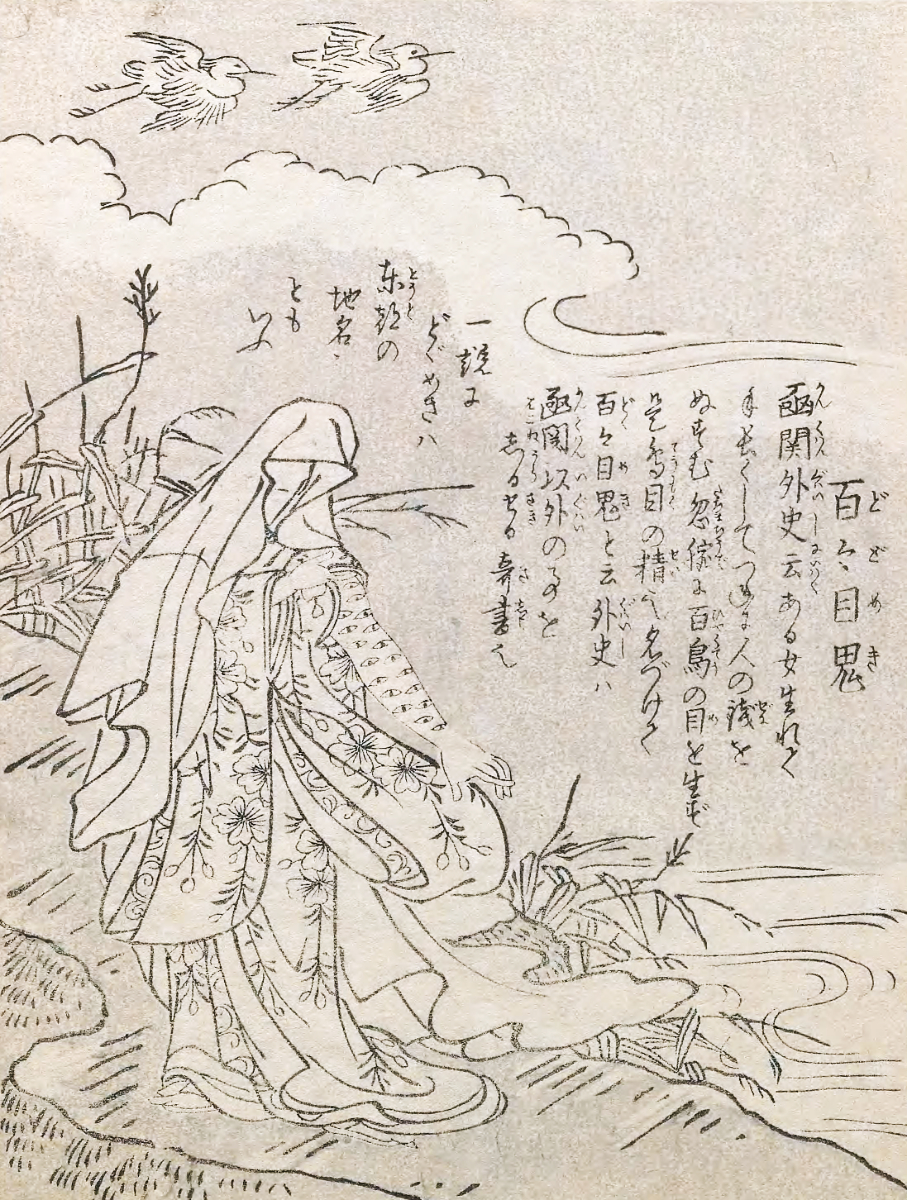
A dodomeki is a Japanese yōkai that’s depicted as a human woman who is cursed with having long arms covered with hundreds of bird eyes due to her habit of stealing money. It is also […]

Entry Dodomeki
Description 

A dodomeki is a Japanese yōkai that’s depicted as a human woman who is cursed with having long arms covered with hundreds of bird eyes due to her habit of stealing money. It is also […]

Quick View

Domokomo

Image of Domokomo
Category Domokomo
Includes 

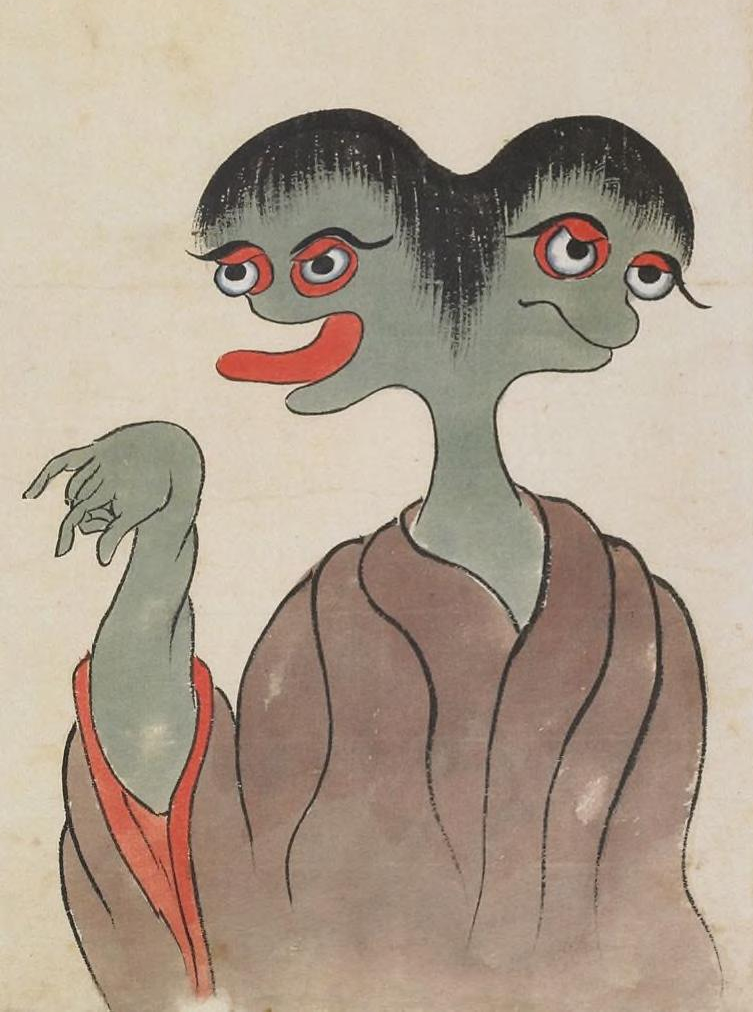
Dōmokōmo are mysterious, two-faced yōkai who wear kimono. They appear in numerous yōkai scrolls, however there are no folk tales detailing their history or origins. No story or explanation was written when dōmokōmo was first […]

Entry Domokomo
Description 

Dōmokōmo are mysterious, two-faced yōkai who wear kimono. They appear in numerous yōkai scrolls, however there are no folk tales detailing their history or origins. No story or explanation was written when dōmokōmo was first […]

Quick View

Dorotabo

Image of Dorotabo
Category Dorotabo
Includes 

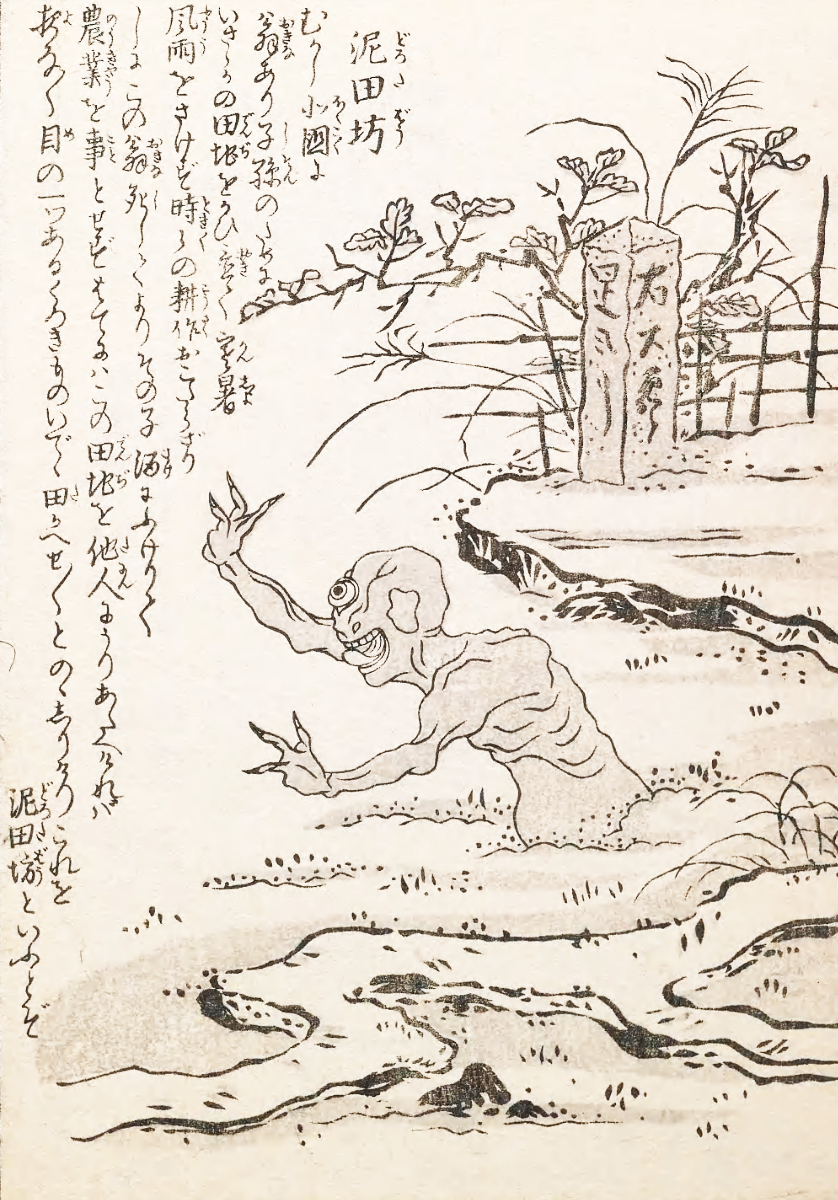
Dorotabō are the transformed ghosts of old men who toiled hard on their rice fields, only to see them lie in waste by neglectful owners after their death. They appear as one-eyed, three-fingered humanoid figures […]

Entry Dorotabo
Description 

Dorotabō are the transformed ghosts of old men who toiled hard on their rice fields, only to see them lie in waste by neglectful owners after their death. They appear as one-eyed, three-fingered humanoid figures […]

Quick View

Dragon (Japanese)

Image of Dragon (Japanese)
Category Dragon (Japanese)
Includes 

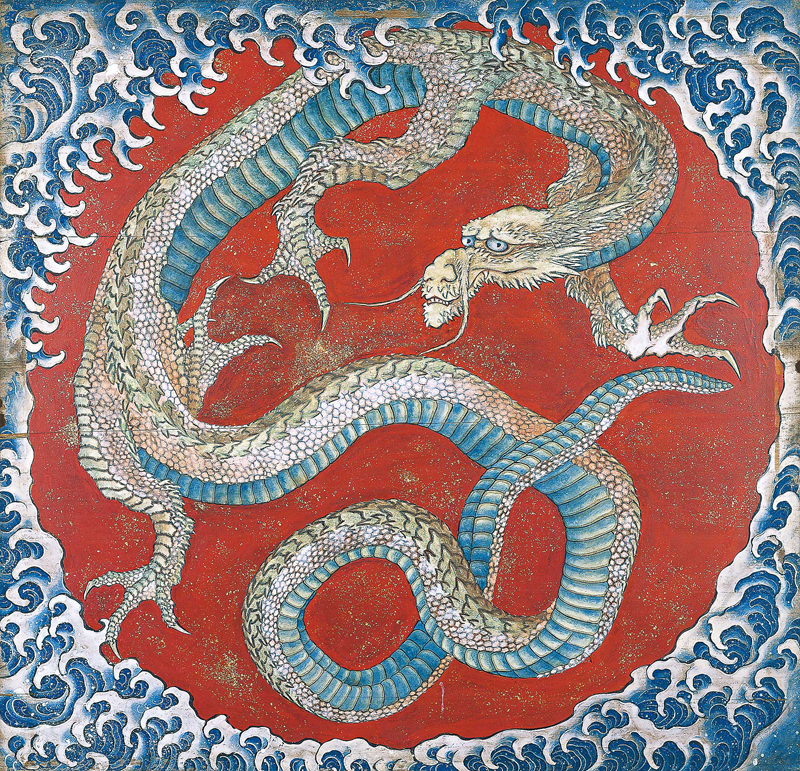
Like these other East Asian dragons, most Japanese dragons are water deities or kami, associated with rainfall and bodies of water, and are typically depicted as large, wingless, serpentine creatures with clawed feet. The c. […]

Entry Dragon (Japanese)
Description 

Like these other East Asian dragons, most Japanese dragons are water deities or kami, associated with rainfall and bodies of water, and are typically depicted as large, wingless, serpentine creatures with clawed feet. The c. […]

Quick View

Enenra

Image of Enenra
Category Enenra
Includes 

Enenra is a yōkai made up of wisps of smoke, which rise up into the sky from a fires, such as the takibi bonfires which farmers light to dispose of the remains of their harvests. […]

Entry Enenra
Description 

Enenra is a yōkai made up of wisps of smoke, which rise up into the sky from a fires, such as the takibi bonfires which farmers light to dispose of the remains of their harvests. […]

Quick View

Foxfire

Image of Foxfire
Category Foxfire
Includes 

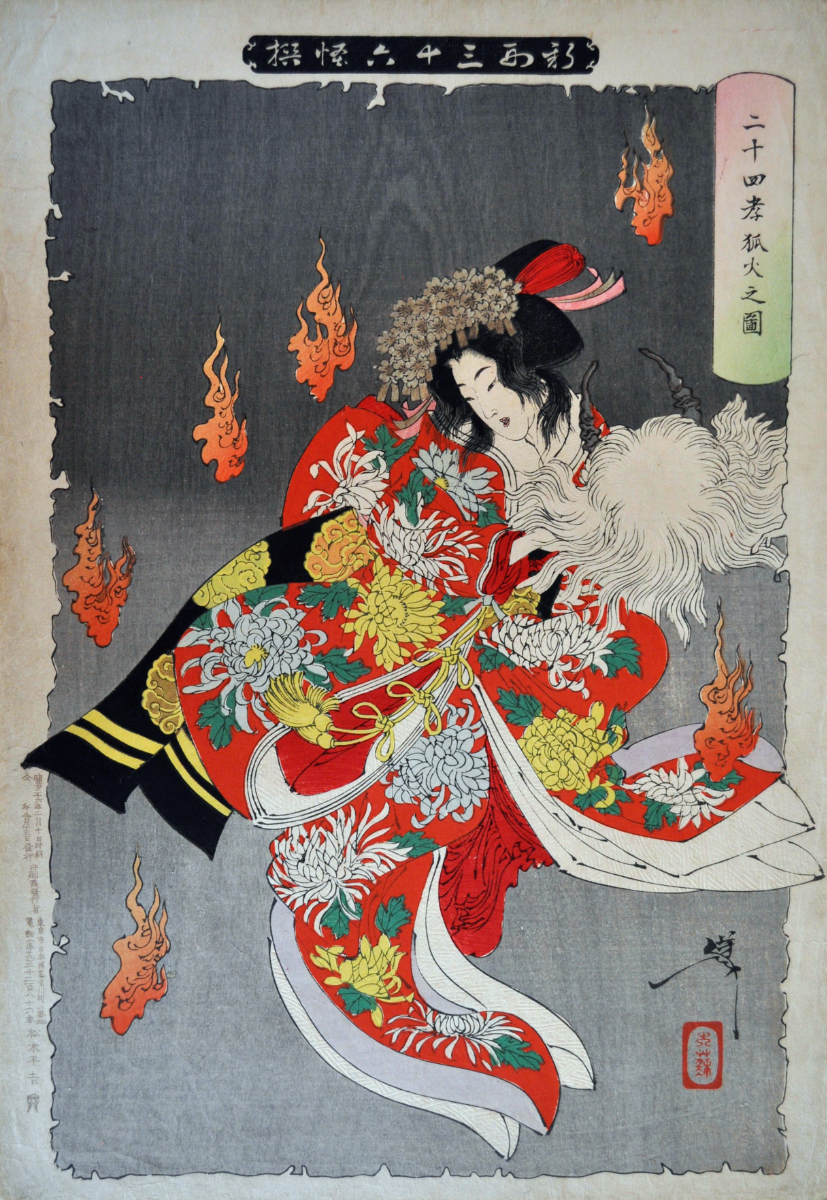
In the play Honcho Nijushiko, or Twenty-four Examples of Filial Piety (1766), “Princess Yaegaki learned of her lover’s danger but was prevented from warning him by an icy lake outside her father’s castle that she […]

Entry Foxfire
Description 

In the play Honcho Nijushiko, or Twenty-four Examples of Filial Piety (1766), “Princess Yaegaki learned of her lover’s danger but was prevented from warning him by an icy lake outside her father’s castle that she […]

Quick View

Fuguruma yohi

Image of Fuguruma yohi
Category Fuguruma yohi
Includes 

Fuguruma yōhi is a spirit which resembles an ogre-like human woman in tattered clothing. She is a kind of tsukumogami—an artifact spirit—which manifests out of old-fashioned book carts called fuguruma. In particular, it is the […]

Entry Fuguruma yohi
Description 

Fuguruma yōhi is a spirit which resembles an ogre-like human woman in tattered clothing. She is a kind of tsukumogami—an artifact spirit—which manifests out of old-fashioned book carts called fuguruma. In particular, it is the […]

Quick View

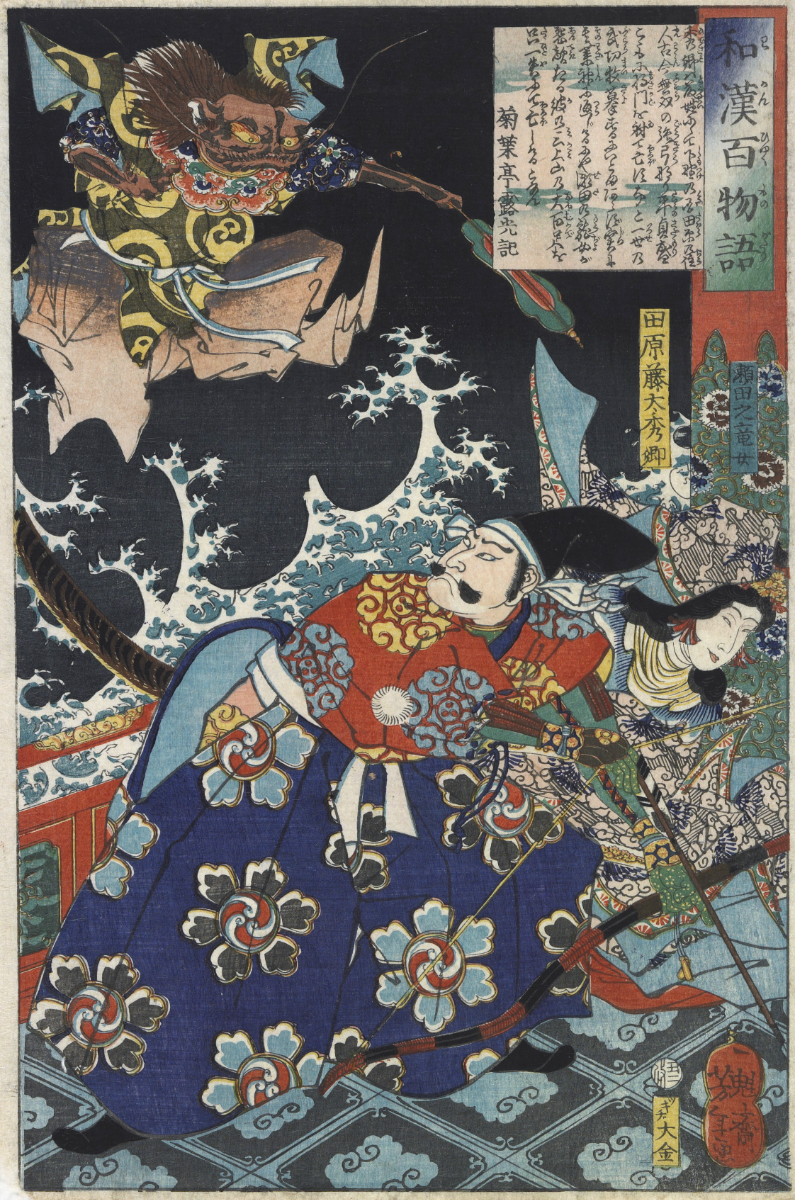
Fujiwara no Hidesato

Image of Fujiwara no Hidesato
Category Fujiwara no Hidesato
Includes 

Fujiwara no Hidesato was a Japanese aristocrat, courtier, folk hero and samurai lord of the tenth century in the Heian period. He is famous for his military exploits and courage, and is regarded as the […]

Entry Fujiwara no Hidesato
Description 

Fujiwara no Hidesato was a Japanese aristocrat, courtier, folk hero and samurai lord of the tenth century in the Heian period. He is famous for his military exploits and courage, and is regarded as the […]

Quick View

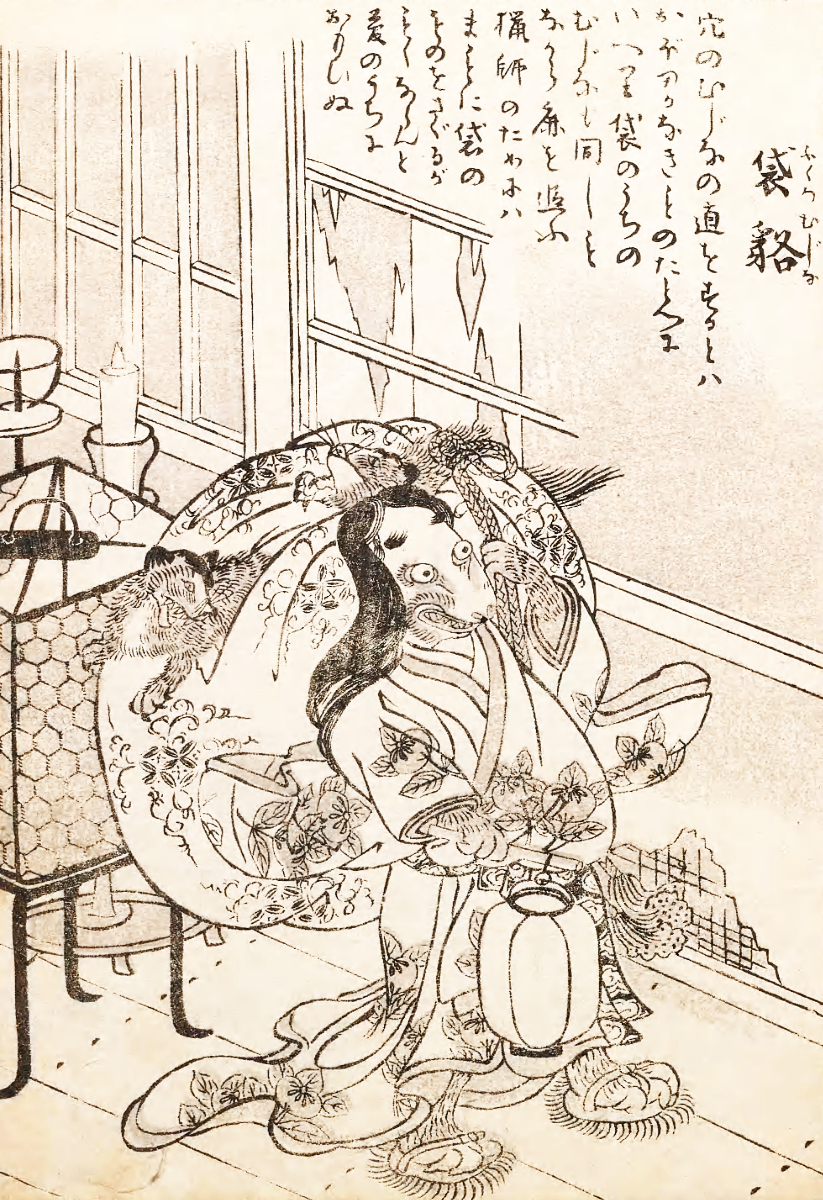
Fukuro mujina

Image of Fukuro mujina
Category Fukuro mujina
Includes 

Fukuro mujina look like mujina (badgers; however this word sometimes refers to tanuki as well) dressed in human clothes and make-up resembling ancient noblewomen. A very large sack is slung over their shoulder. Mujina are […]

Entry Fukuro mujina
Description 

Fukuro mujina look like mujina (badgers; however this word sometimes refers to tanuki as well) dressed in human clothes and make-up resembling ancient noblewomen. A very large sack is slung over their shoulder. Mujina are […]

Quick View

Furaribi

Image of Furaribi
Category Furaribi
Includes 

The furaribi is a fire yōkai that appears in Japanese classical yōkai pictures such as in the Gazu Hyakki Yagyō by Sekien Toriyama, the Hyakkai Zukan by Sawaki Suushi, and the Bakemonozukushi by an unknown […]

Entry Furaribi
Description 

The furaribi is a fire yōkai that appears in Japanese classical yōkai pictures such as in the Gazu Hyakki Yagyō by Sekien Toriyama, the Hyakkai Zukan by Sawaki Suushi, and the Bakemonozukushi by an unknown […]

Quick View

Furi

Image of Furi
Category Furi
Includes 

Fūri are wild beasts from the mountains of China. They are about the size of a tanuki or a river otter, and their shapes resembles a monkey. They have red eyes, short tails, black fur […]

Entry Furi
Description 

Fūri are wild beasts from the mountains of China. They are about the size of a tanuki or a river otter, and their shapes resembles a monkey. They have red eyes, short tails, black fur […]

Quick View

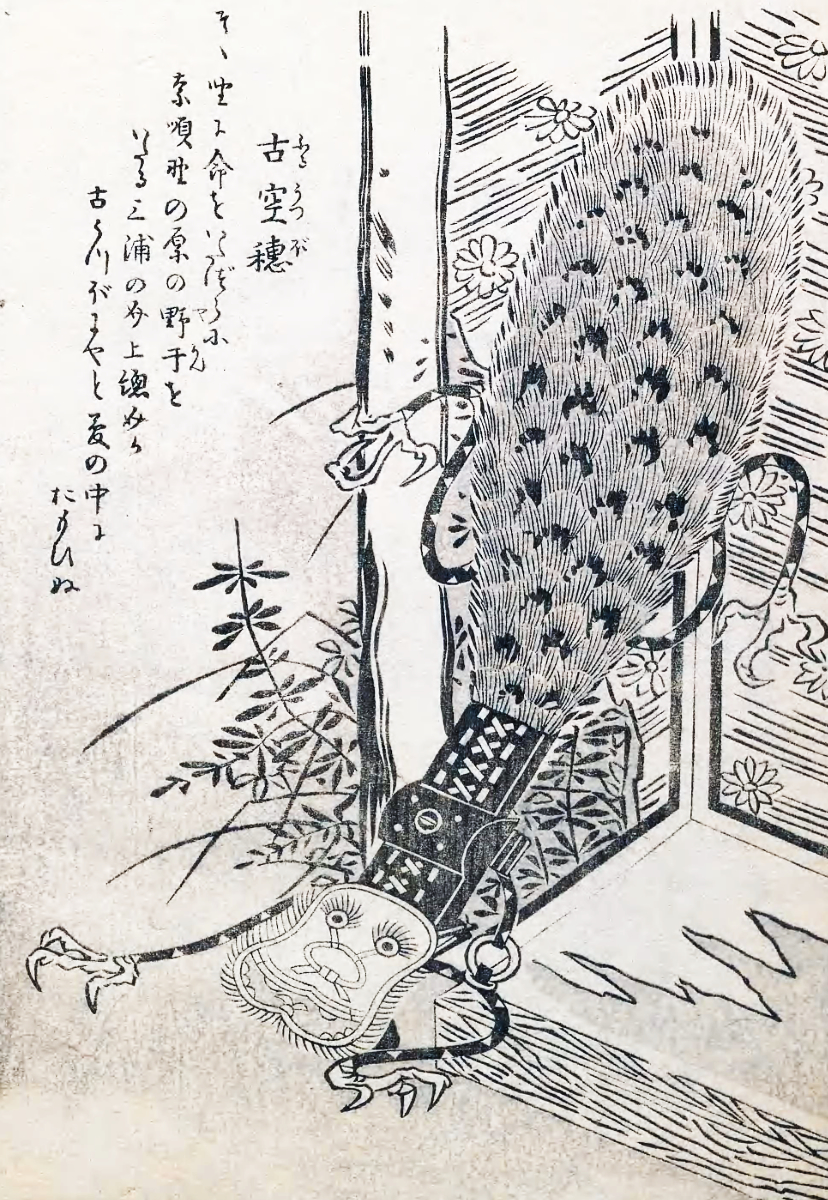
Furu-utsubo

Image of Furu-utsubo
Category Furu-utsubo
Includes 

Furuutsubo are the beloved quivers of slain archers who died particularly tragic deaths. These quivers—along with other arms and armor—develop life force due to the residual energies left behind by their owners. They begin to […]

Entry Furu-utsubo
Description 

Furuutsubo are the beloved quivers of slain archers who died particularly tragic deaths. These quivers—along with other arms and armor—develop life force due to the residual energies left behind by their owners. They begin to […]

Quick View

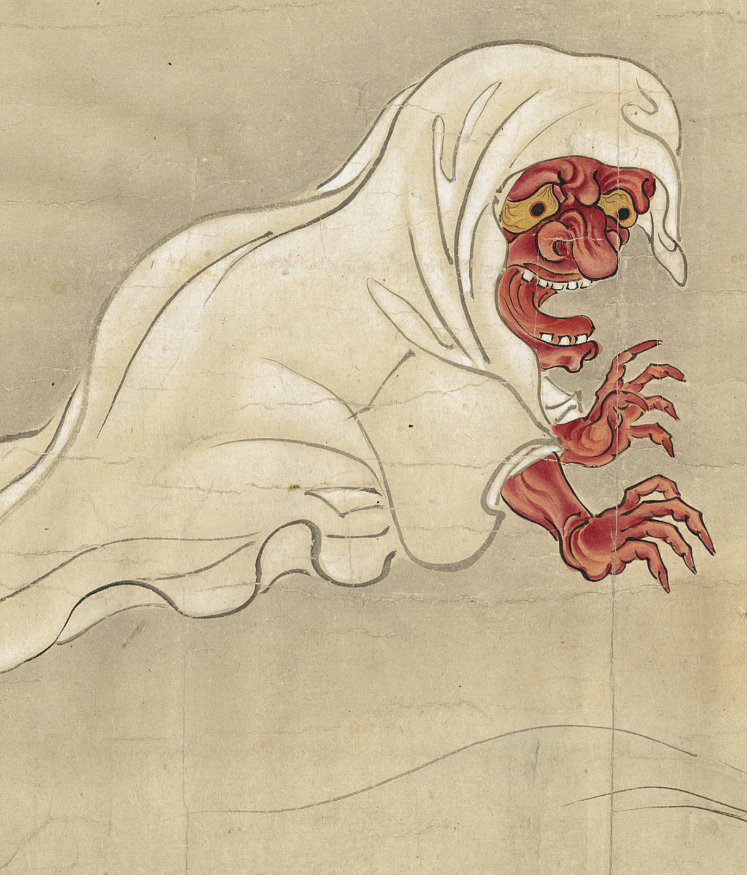
Gagoze

Image of Gagoze
Category Gagoze
Includes 

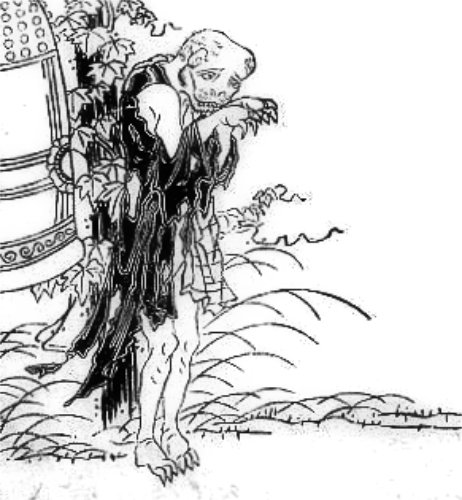
Gagō or Gagoze is a reiki, or demon ghost, which according to legend inhabited the bell tower of Gangō-ji, a temple in Nara Prefecture from which its name is derived. It wears a robe and […]

Entry Gagoze
Description 

Gagō or Gagoze is a reiki, or demon ghost, which according to legend inhabited the bell tower of Gangō-ji, a temple in Nara Prefecture from which its name is derived. It wears a robe and […]

Quick View

Gaikotsu

Image of Gaikotsu
Category Gaikotsu
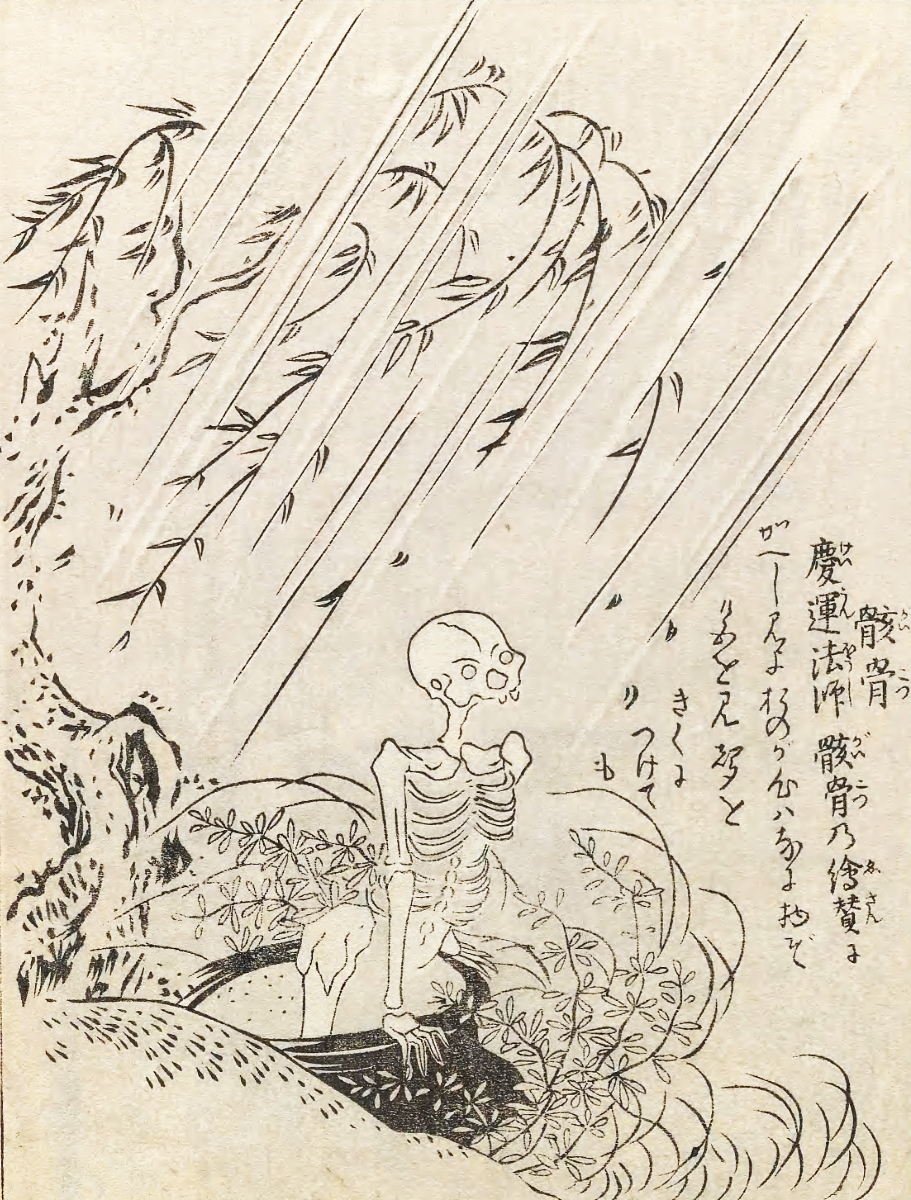
Includes 

Soldiers whose bodies rot in the fields and victims of famine who die unknown in the wilderness rarely receive proper funerary rites. Unable to pass on, their souls are reborn as ghosts, longing eternally for […]

Entry Gaikotsu
Description 

Soldiers whose bodies rot in the fields and victims of famine who die unknown in the wilderness rarely receive proper funerary rites. Unable to pass on, their souls are reborn as ghosts, longing eternally for […]

Quick View

Gangi kozo

Image of Gangi kozo
Category Gangi kozo
Includes 

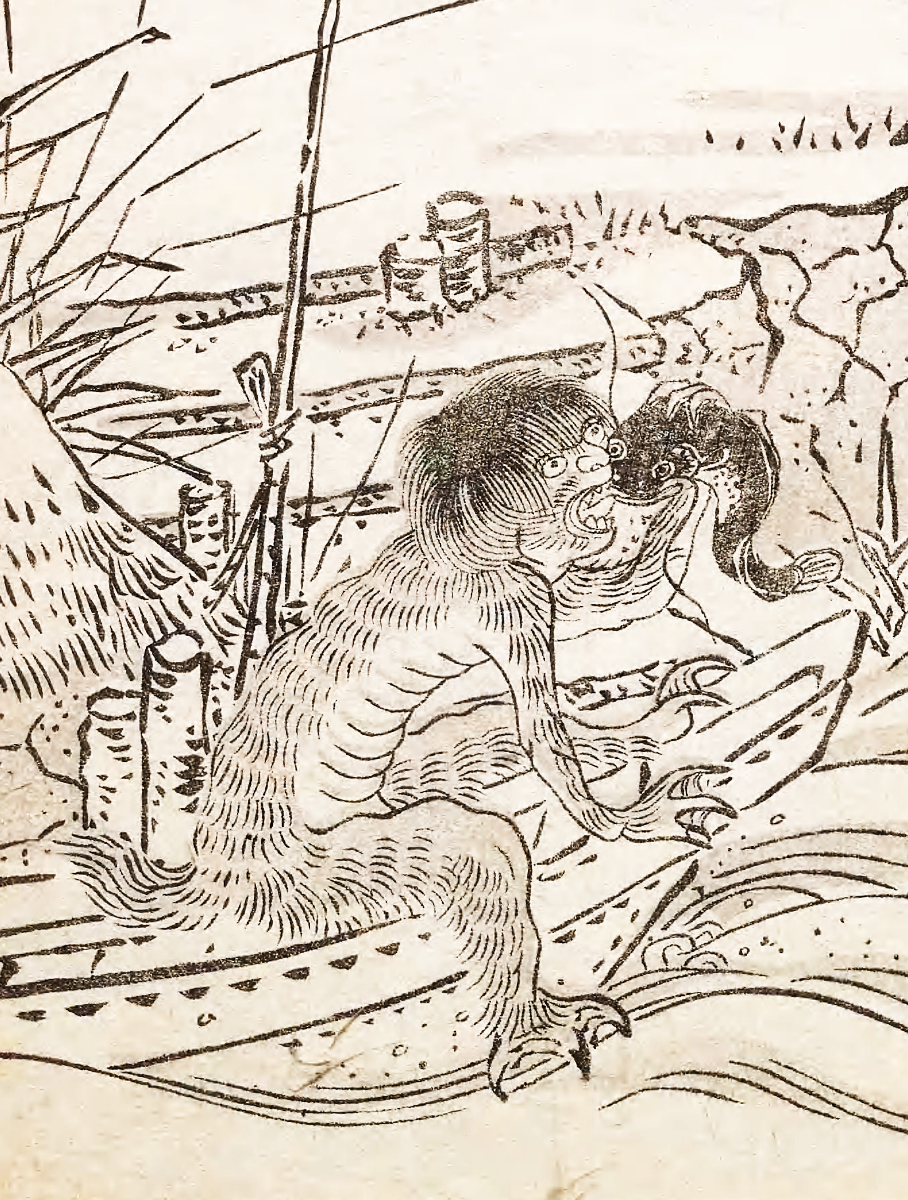
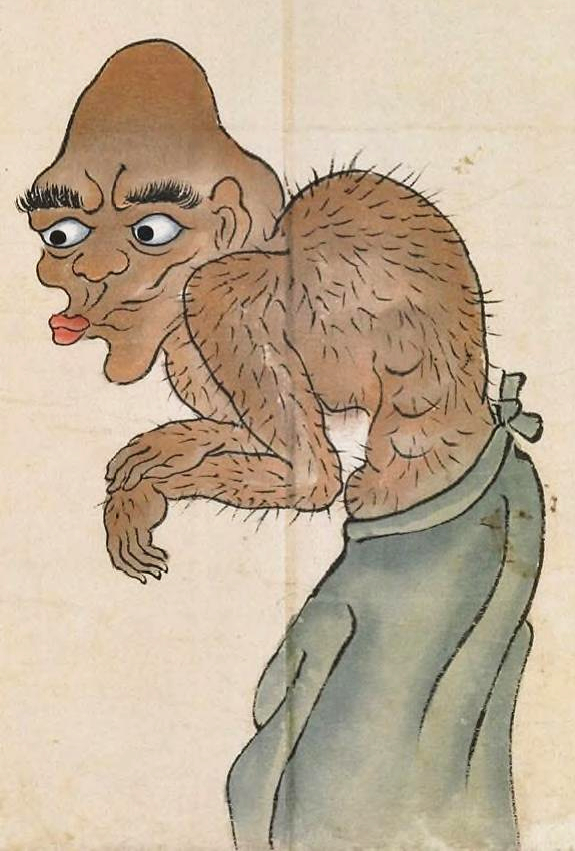
Gangi kozō are hairy, monkey-like water spirits which inhabit rivers. They live along the riverbanks, where they hunt fish. Their bodies are covered in hair, and the hair on their head resembles the bobbed okappa […]

Entry Gangi kozo
Description 

Gangi kozō are hairy, monkey-like water spirits which inhabit rivers. They live along the riverbanks, where they hunt fish. Their bodies are covered in hair, and the hair on their head resembles the bobbed okappa […]

Quick View

Ghost of Kiyotaka

Image of Ghost of Kiyotaka
Category Ghost of Kiyotaka
Includes 

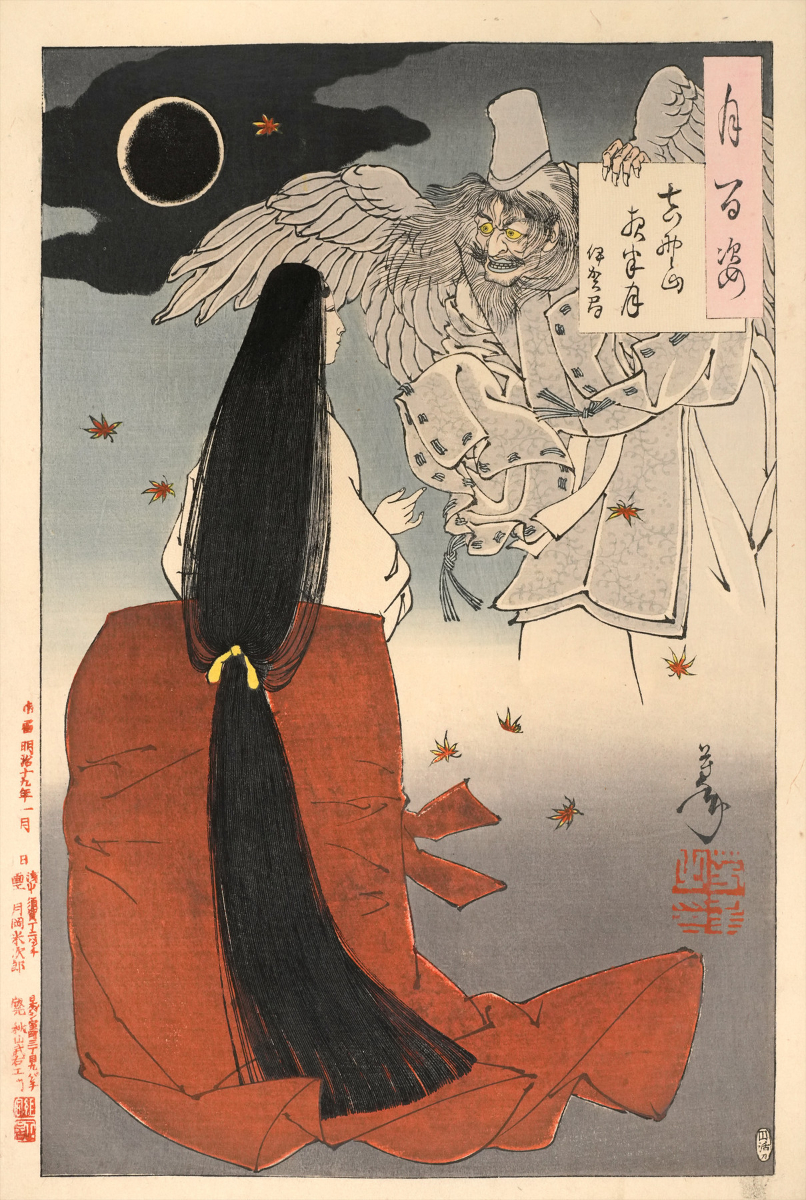
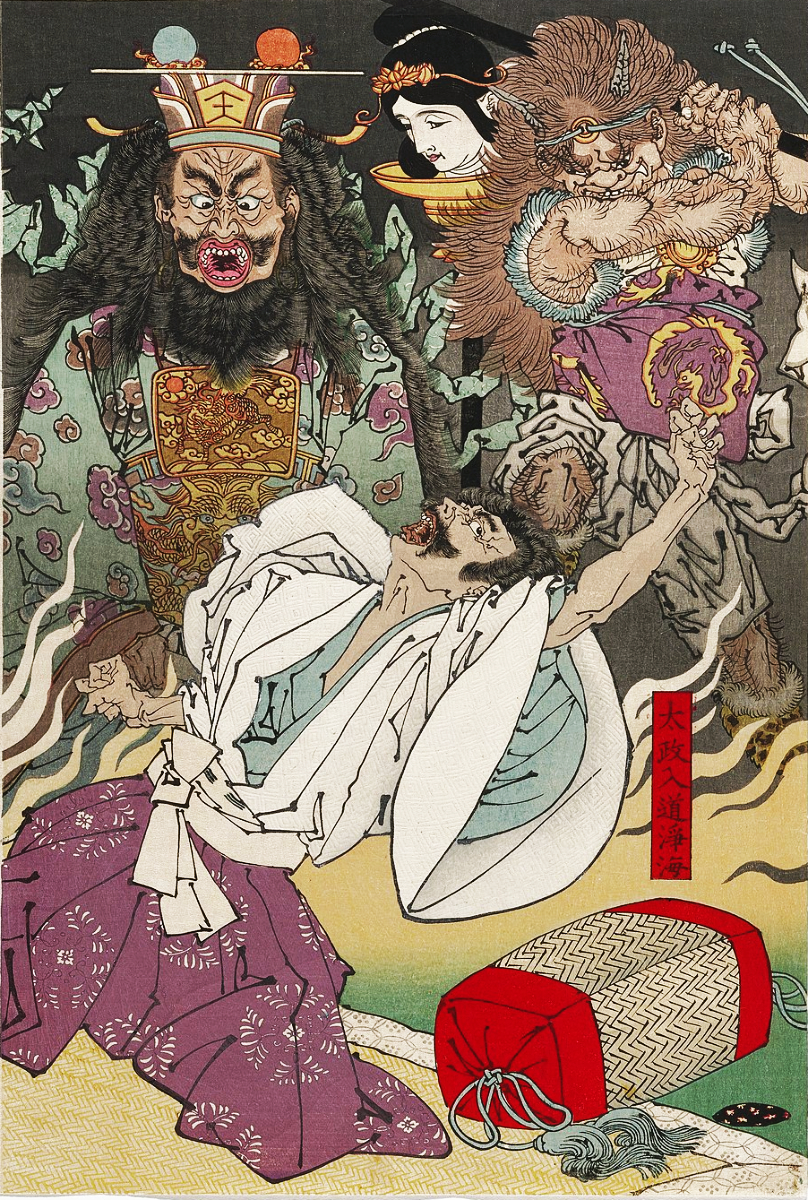
The ghost of Kiyotaka (a traitor to the emperor who had been ordered to commit seppuku) haunted the Imperial Palace at Yoshino. He terrorized the courtiers until the lady-in-waiting Iga-no Tsubone faced the ghost and […]

Entry Ghost of Kiyotaka
Description 

The ghost of Kiyotaka (a traitor to the emperor who had been ordered to commit seppuku) haunted the Imperial Palace at Yoshino. He terrorized the courtiers until the lady-in-waiting Iga-no Tsubone faced the ghost and […]

Quick View

Gosho no Goromaru

Image of Gosho no Goromaru
Category Gosho no Goromaru
Includes 

Gosho no Gorōmaru (御所 五郎丸) was a Japanese samurai lord and retainer of the Kamakura Shogunate in the late Heian and early Kamakura period. He is best known for saving the shogun Minamoto no Yoritomo […]

Entry Gosho no Goromaru
Description 

Gosho no Gorōmaru (御所 五郎丸) was a Japanese samurai lord and retainer of the Kamakura Shogunate in the late Heian and early Kamakura period. He is best known for saving the shogun Minamoto no Yoritomo […]

Quick View

Gotoku neko

Image of Gotoku neko
Category Gotoku neko
Includes 

Gotoku neko are a kind of nekomata–large yōkai cats with two tails. They wear an upside-down trivet on their heads like hats. The tips of their twin tails burn like torches. Just as ordinary cats […]

Entry Gotoku neko
Description 

Gotoku neko are a kind of nekomata–large yōkai cats with two tails. They wear an upside-down trivet on their heads like hats. The tips of their twin tails burn like torches. Just as ordinary cats […]

Quick View

Hahakigami

Image of Hahakigami
Category Hahakigami
Includes 

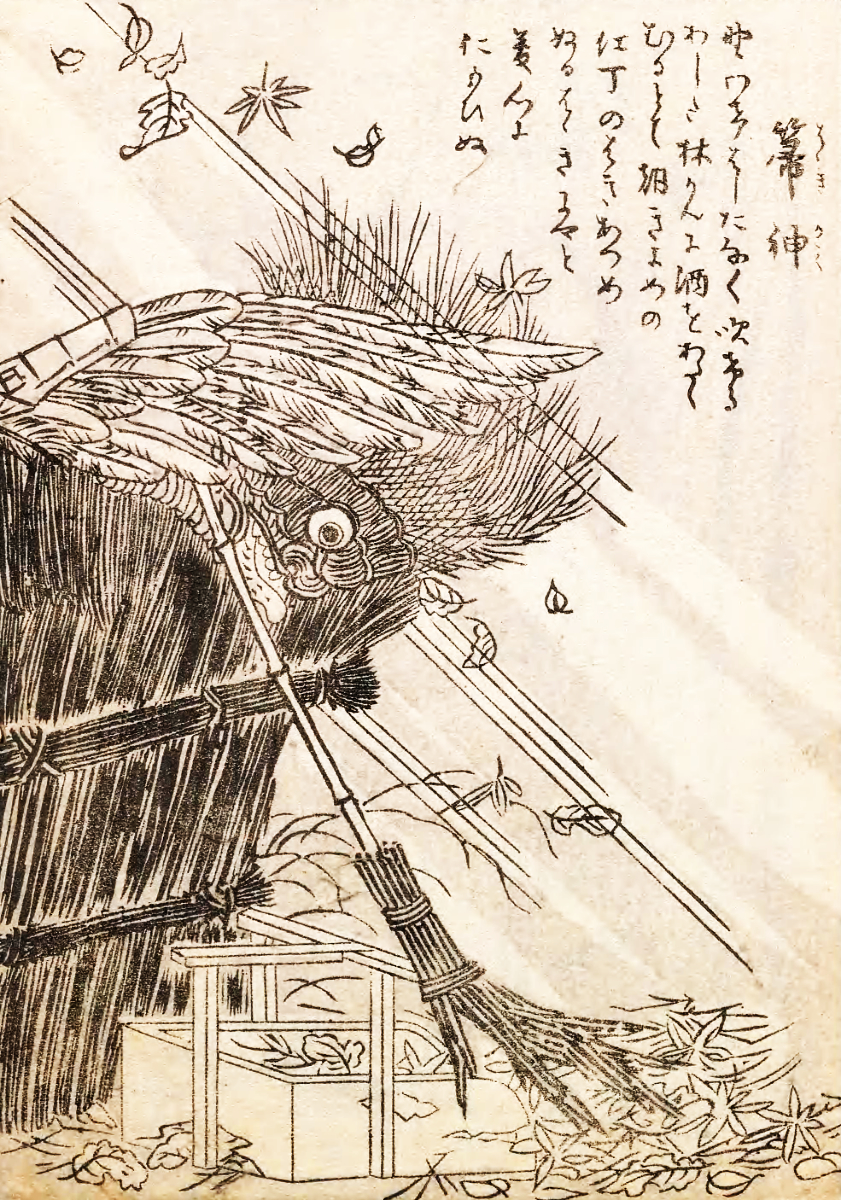
A hahakigami is a tsukumogami which takes up residence in a broom. They can sometimes be seen on cold, windy late autumn mornings, sweeping wildly at the blowing leaves. Long ago, brooms were not household […]

Entry Hahakigami
Description 

A hahakigami is a tsukumogami which takes up residence in a broom. They can sometimes be seen on cold, windy late autumn mornings, sweeping wildly at the blowing leaves. Long ago, brooms were not household […]

Quick View

Hajikkaki

Image of Hajikkaki
Category Hajikkaki
Includes 

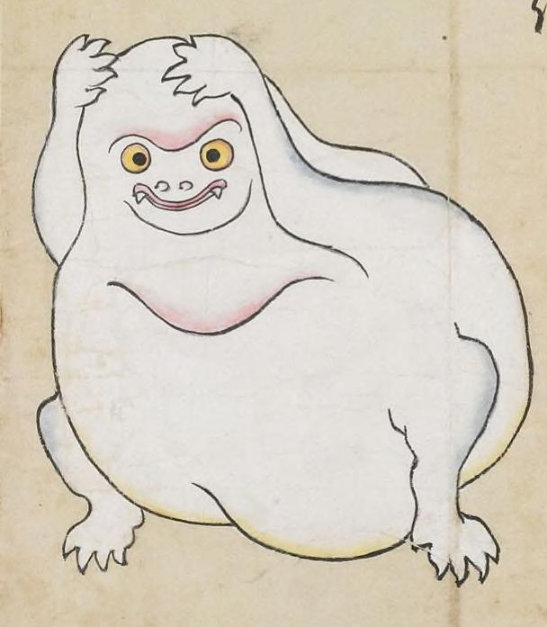
Hajikkaki are pathetic looking yōkai with plump, white, hairless blobby bodies. They have round eyes and protruding fangs. They frequently cover their heads with their hands in a display of shame or embarrassment. Hajikkaki appear […]

Entry Hajikkaki
Description 

Hajikkaki are pathetic looking yōkai with plump, white, hairless blobby bodies. They have round eyes and protruding fangs. They frequently cover their heads with their hands in a display of shame or embarrassment. Hajikkaki appear […]

Quick View

Hakutaku

Image of Hakutaku
Category Hakutaku
Includes 

The hakutaku is a wise chimerical beast that resembles a white ox. It has nine eyes — three on its head, and three on each of its broad sides — and six horns. Hakutaku live […]

Entry Hakutaku
Description 

The hakutaku is a wise chimerical beast that resembles a white ox. It has nine eyes — three on its head, and three on each of its broad sides — and six horns. Hakutaku live […]

Quick View

Hangonko

Image of Hangonko
Category Hangonko
Includes 

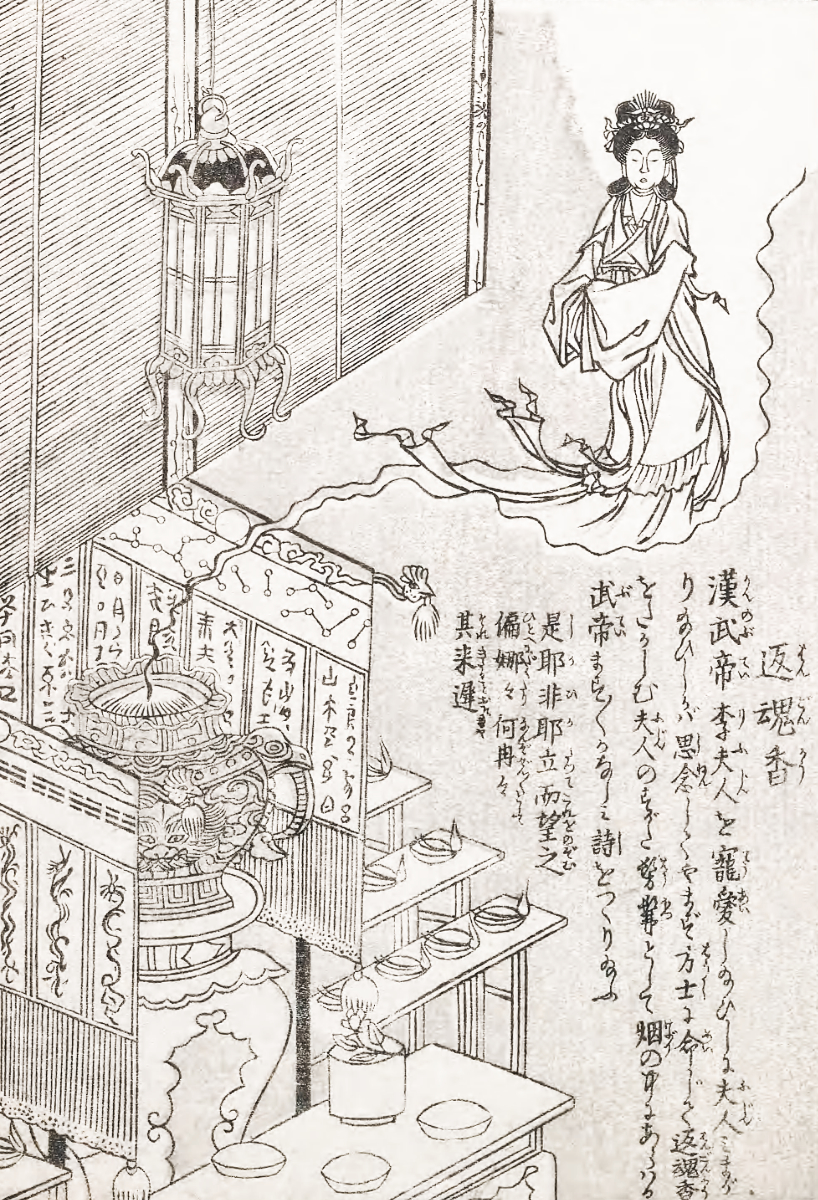
Hangonkō is a legendary incense from ancient China which has the power to bring forth the spirits of the dead before those who burn it. Those who burn the incense will see the spirits of […]

Entry Hangonko
Description 

Hangonkō is a legendary incense from ancient China which has the power to bring forth the spirits of the dead before those who burn it. Those who burn the incense will see the spirits of […]

Quick View

Hannya

Image of Hannya
Category Hannya
Includes 

The hannya is a mask used in a traditional Japanese Noh theater, representing a jealous female demon. It is characterized by two sharp bull-like horns, metallic eyes, and a leering mouth. In Noh plays, the […]

Entry Hannya
Description 

The hannya is a mask used in a traditional Japanese Noh theater, representing a jealous female demon. It is characterized by two sharp bull-like horns, metallic eyes, and a leering mouth. In Noh plays, the […]

Quick View

Hashihime

Image of Hashihime
Category Hashihime
Includes 

Hashihime is represented as a woman who spends lonely nights waiting for her lover to visit, and later as a fierce “oni” or demon fueled by jealousy. Very little is known about the origin of […]

Entry Hashihime
Description 

Hashihime is represented as a woman who spends lonely nights waiting for her lover to visit, and later as a fierce “oni” or demon fueled by jealousy. Very little is known about the origin of […]

Quick View

Hatahiro

Image of Hatahiro
Category Hatahiro
Includes 

Hatahiro is a type of yōkai depicted in the Konjaku Hyakki Shūi by Toriyama Sekien. This particular creature relates to a grudge which says: A woman’s husband left her and so she abandoned her loom. […]

Entry Hatahiro
Description 

Hatahiro is a type of yōkai depicted in the Konjaku Hyakki Shūi by Toriyama Sekien. This particular creature relates to a grudge which says: A woman’s husband left her and so she abandoned her loom. […]

Quick View

Heiroku

Image of Heiroku
Category Heiroku
Includes 

Heiroku is one of the Japanese yokai portrayed in Sekien Toriyama’s yokai art collection book Hyakki Tsurezure Bukuro. Heiroku is a strange yokai brandishing a gohei (wooden Shinto ritual wand with a pair of white […]

Entry Heiroku
Description 

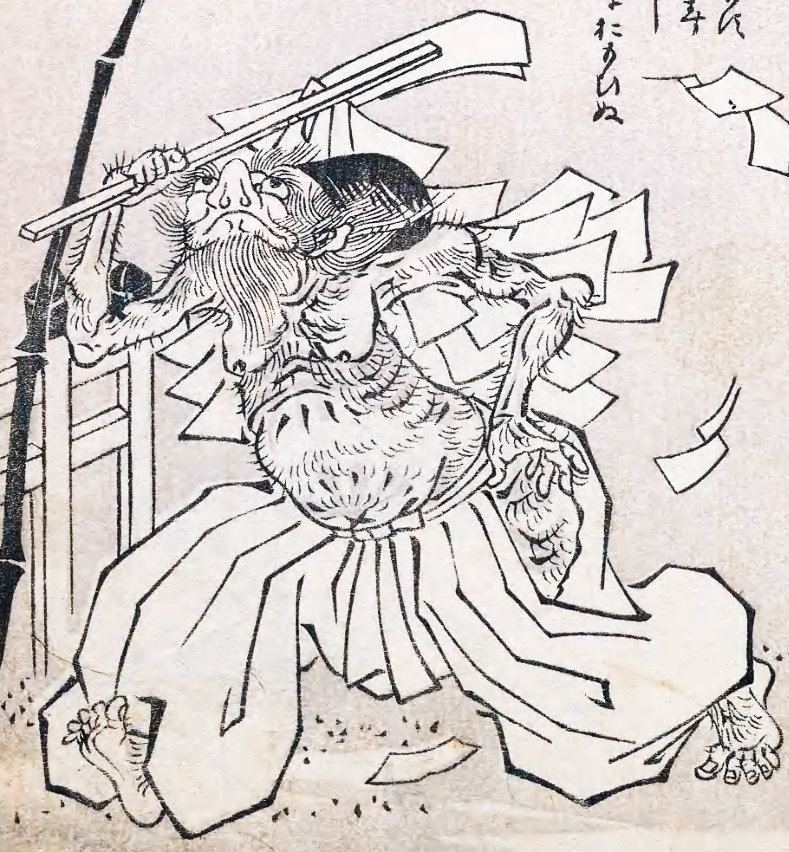
Heiroku is one of the Japanese yokai portrayed in Sekien Toriyama’s yokai art collection book Hyakki Tsurezure Bukuro. Heiroku is a strange yokai brandishing a gohei (wooden Shinto ritual wand with a pair of white […]

Quick View

Hell Courtesan

Image of Hell Courtesan
Category Hell Courtesan
Includes 

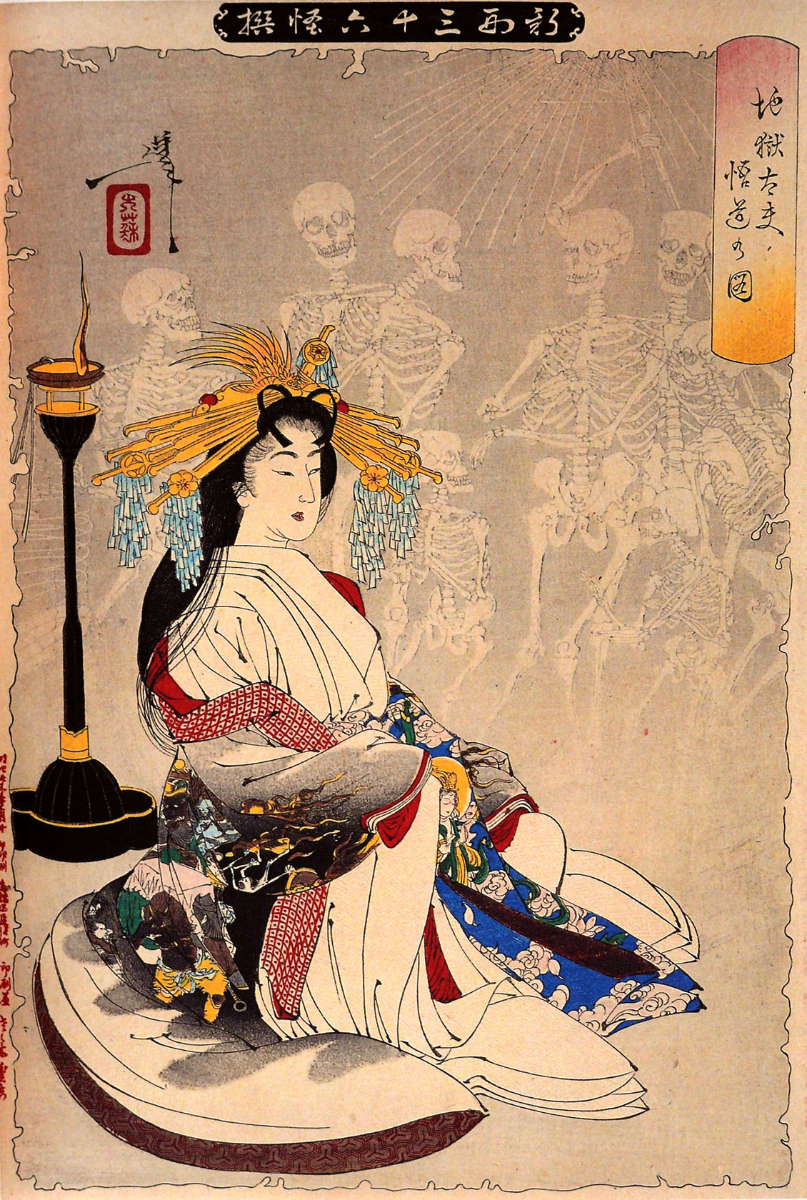
The Hell Courtesan is usually depicted in a dress with the images of hell, the souls of those she condemned, Emma-Ō (one of the kings of hell), horned demons, and bodhissatvas. Kawanabe Kyōsai is depicted […]

Entry Hell Courtesan
Description 

The Hell Courtesan is usually depicted in a dress with the images of hell, the souls of those she condemned, Emma-Ō (one of the kings of hell), horned demons, and bodhissatvas. Kawanabe Kyōsai is depicted […]

Quick View

Heron Maiden

Image of Heron Maiden
Category Heron Maiden
Includes 

The sweet visage of the Heron Maiden is emphasized by the radiating spires of the umbrella that she carries against the falling snow. She reaches out in greeting towards two herons that cross in front […]

Entry Heron Maiden
Description 

The sweet visage of the Heron Maiden is emphasized by the radiating spires of the umbrella that she carries against the falling snow. She reaches out in greeting towards two herons that cross in front […]

Quick View

Hiderigami

Image of Hiderigami
Category Hiderigami
Includes 

Hiderigami is a mythical species of yaoguai or yōkai in Chinese and Japanese folklore that holds the power to cause droughts. From early-Qin to Han, the hanba appears in a goddess form, with characteristics of […]

Entry Hiderigami
Description 

Hiderigami is a mythical species of yaoguai or yōkai in Chinese and Japanese folklore that holds the power to cause droughts. From early-Qin to Han, the hanba appears in a goddess form, with characteristics of […]

Quick View

Hihi

Image of Hihi
Category Hihi
Includes 

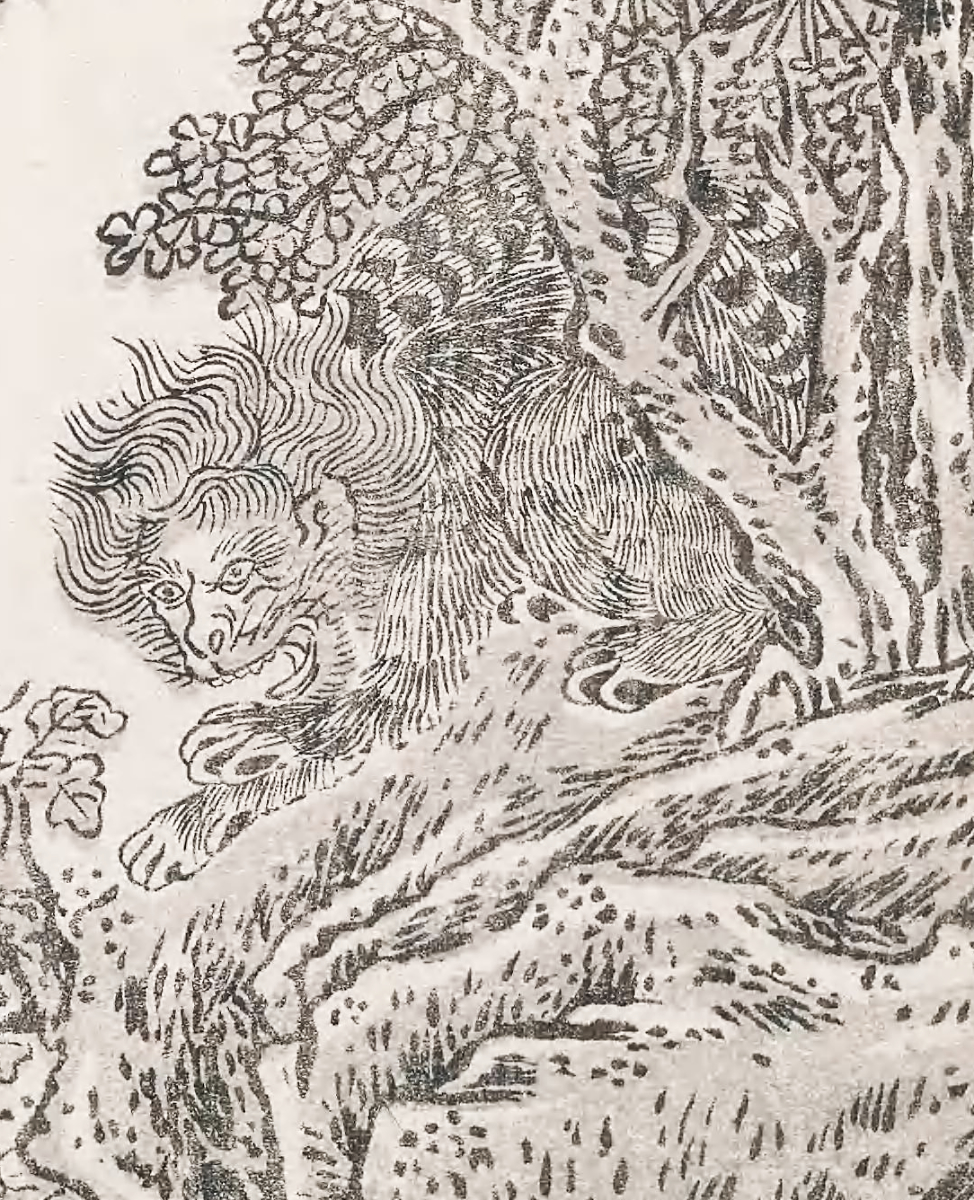
The hihi is a large, monkey-like beast which lives deep in the mountains. It has long, black hair and a wide mouth with long, flapping lips. Old legends say that a monkey which reaches a […]

Entry Hihi
Description 

The hihi is a large, monkey-like beast which lives deep in the mountains. It has long, black hair and a wide mouth with long, flapping lips. Old legends say that a monkey which reaches a […]

Quick View

Hikeshi baba

Image of Hikeshi baba
Category Hikeshi baba
Includes 

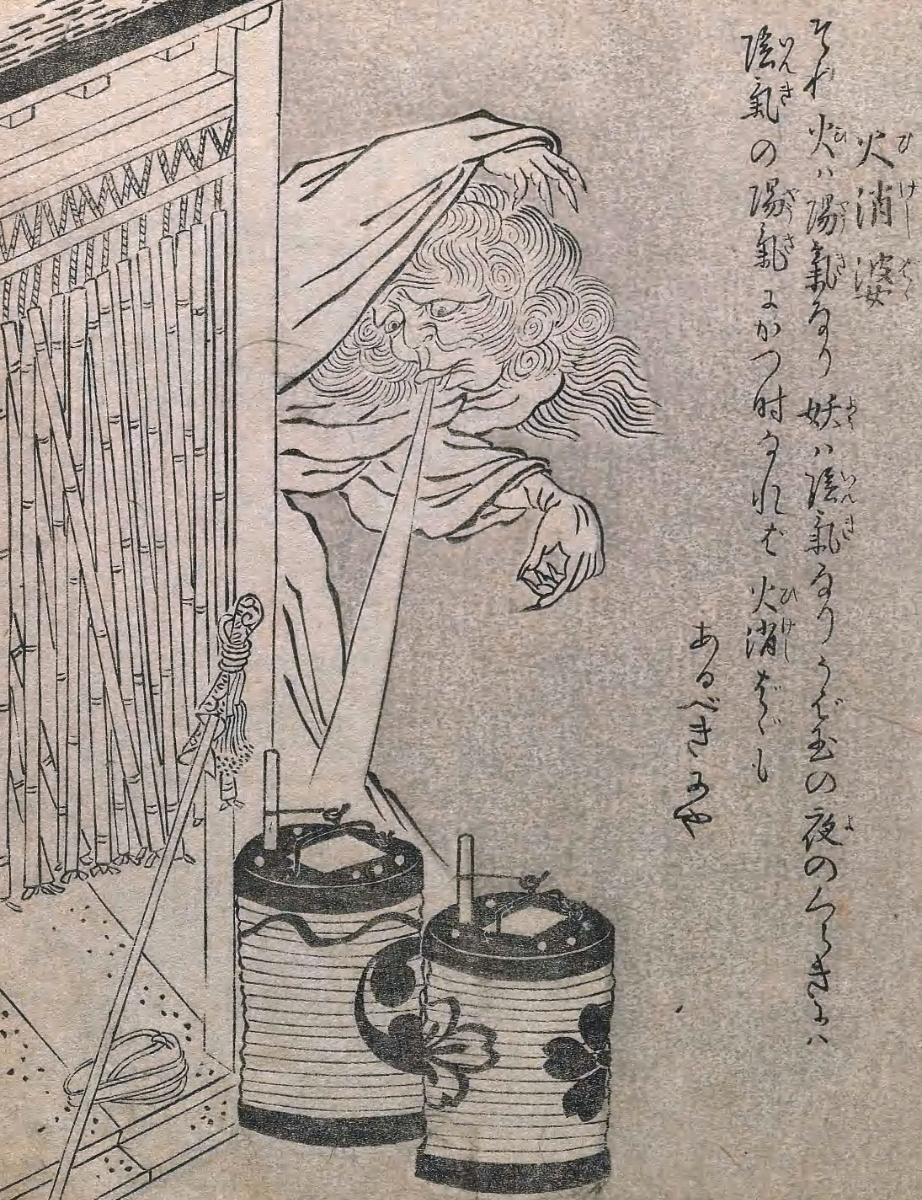
Hikeshi baba takes the form of a white-haired, grotesque-looking, old woman. She wanders from house to house blowing out lanterns. Hikeshi baba is not a dangerous yōkai herself, although her actions can indirectly harm people. […]

Entry Hikeshi baba
Description 

Hikeshi baba takes the form of a white-haired, grotesque-looking, old woman. She wanders from house to house blowing out lanterns. Hikeshi baba is not a dangerous yōkai herself, although her actions can indirectly harm people. […]

Quick View

Himamushi nyudo

Image of Himamushi nyudo
Category Himamushi nyudo
Includes 

Himamushi nyūdō is a grotesque yōkai which lives under floorboards and crawls out at night time. It vaguely resembles a Buddhist monk, but it has a long neck, sharp claws, a body covered in thick, […]

Entry Himamushi nyudo
Description 

Himamushi nyūdō is a grotesque yōkai which lives under floorboards and crawls out at night time. It vaguely resembles a Buddhist monk, but it has a long neck, sharp claws, a body covered in thick, […]

Quick View

Hinode

Image of Hinode
Category Hinode
Includes 

Hinode, the break of dawn, signals the end of the power of evil spirits over the waking world. The holy light of the sun banishes yōkai, ghosts, and demons back to the places from which […]

Entry Hinode
Description 

Hinode, the break of dawn, signals the end of the power of evil spirits over the waking world. The holy light of the sun banishes yōkai, ghosts, and demons back to the places from which […]

Quick View

Hirai Yasumasa

Image of Hirai Yasumasa
Category Hirai Yasumasa
Includes 

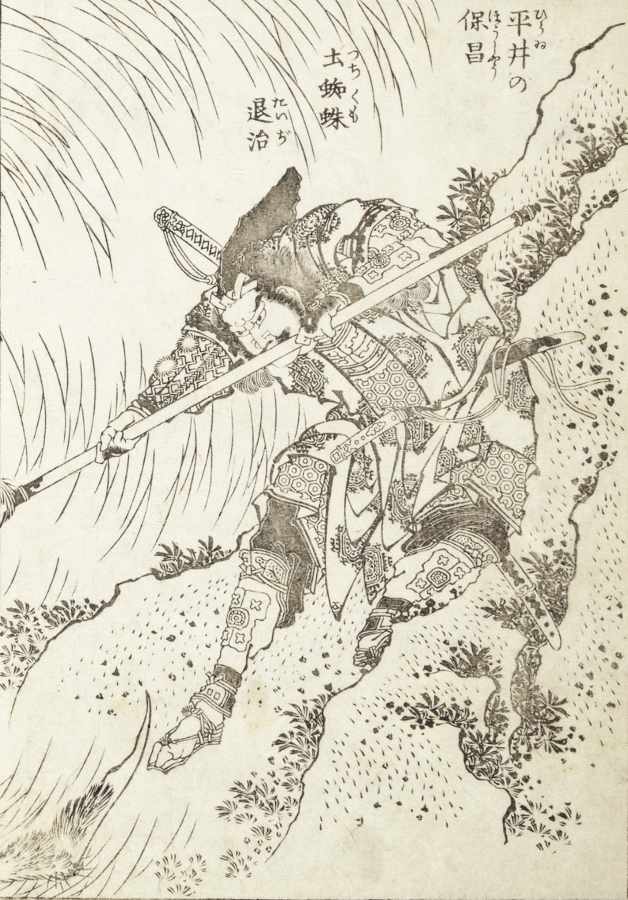
Seventy-six-year-old Hokusai drew a series of warrior images that included the figures above: Hirai Yasumasa (958–1036) subduing a monster spider, Tsuchigumo. Lines in the background trace the motion of the gigantic arachnid as it tumbles […]

Entry Hirai Yasumasa
Description 

Seventy-six-year-old Hokusai drew a series of warrior images that included the figures above: Hirai Yasumasa (958–1036) subduing a monster spider, Tsuchigumo. Lines in the background trace the motion of the gigantic arachnid as it tumbles […]

Quick View

Hojo Tokimune

Image of Hojo Tokimune
Category Hojo Tokimune
Includes 

Hōjō Tokimune (5 June 1251 – 20 April 1284) of the Hōjō clan was the eighth shikken (officially regent of the shōgun, but de facto ruler of Japan) of the Kamakura shogunate (reigned 1268–84), known […]

Entry Hojo Tokimune
Description 

Hōjō Tokimune (5 June 1251 – 20 April 1284) of the Hōjō clan was the eighth shikken (officially regent of the shōgun, but de facto ruler of Japan) of the Kamakura shogunate (reigned 1268–84), known […]

Quick View

Hoko

Image of Hoko
Category Hoko
Includes 

The Penghou is a tree spirit from Chinese mythology and folklore. Two Chinese classics record similar versions of the Penghou myth. The (c. 3rd century) Baize tu (白澤圖, “Diagrams of the White Marsh”), named after […]

Entry Hoko
Description 

The Penghou is a tree spirit from Chinese mythology and folklore. Two Chinese classics record similar versions of the Penghou myth. The (c. 3rd century) Baize tu (白澤圖, “Diagrams of the White Marsh”), named after […]

Quick View

Hone karakasa

Image of Hone karakasa
Category Hone karakasa
Includes 

Hone karakasa is a tsukumogami born from a tattered and torn up old Chinese-style paper umbrella. The “hone,” or bone, part of their name comes from the fact that without the paper covering, the wooden […]

Entry Hone karakasa
Description 

Hone karakasa is a tsukumogami born from a tattered and torn up old Chinese-style paper umbrella. The “hone,” or bone, part of their name comes from the fact that without the paper covering, the wooden […]

Quick View

Hone-onna

Image of Hone-onna
Category Hone-onna
Includes 

Hone-onna is a yōkai depicted in the Konjaku Gazu Zoku Hyakki (1779) by Toriyama Sekien. As its name implies, it depicts this yōkai as a woman in the form of bones. Sekien’s explanatory text in […]

Entry Hone-onna
Description 

Hone-onna is a yōkai depicted in the Konjaku Gazu Zoku Hyakki (1779) by Toriyama Sekien. As its name implies, it depicts this yōkai as a woman in the form of bones. Sekien’s explanatory text in […]

Quick View

Hososhi

Image of Hososhi
Category Hososhi
Includes 

In ancient times, a hōsōshi was an official government minister and a priest in the imperial court… The name also refers to a demon god which this priest would dress up as during yearly purification […]

Entry Hososhi
Description 

In ancient times, a hōsōshi was an official government minister and a priest in the imperial court… The name also refers to a demon god which this priest would dress up as during yearly purification […]

Quick View

Hossumori

Image of Hossumori
Category Hossumori
Includes 

Hossumori are the tsukumogami of hossu—wand-like brushes used by Buddhist priests. After many years of being handled by a Zen master, they have become enlightened themselves. Hossu are Buddhist tools originating in India. Flies and […]

Entry Hossumori
Description 

Hossumori are the tsukumogami of hossu—wand-like brushes used by Buddhist priests. After many years of being handled by a Zen master, they have become enlightened themselves. Hossu are Buddhist tools originating in India. Flies and […]

Quick View

Hyosube

Image of Hyosube
Category Hyosube
Includes 

Hyōsube is a Japanese yōkai. It is a child-sized river monster from Kyūshū that lives in underwater caves. It prefers to come out at night and loves to eat eggplants. It is a cousin of […]

Entry Hyosube
Description 

Hyōsube is a Japanese yōkai. It is a child-sized river monster from Kyūshū that lives in underwater caves. It prefers to come out at night and loves to eat eggplants. It is a cousin of […]

Quick View

Ibaraki-doji

Image of Ibaraki-doji
Category Ibaraki-doji
Includes 

Ibaraki-dōji is an oni (demon or ogre) featured in tales of the Heian period. In the tales, Ibaraki-dōji is based on Mount Ōe, and once went on a rampage in Kyoto. The “Ibaraki” in his […]

Entry Ibaraki-doji
Description 

Ibaraki-dōji is an oni (demon or ogre) featured in tales of the Heian period. In the tales, Ibaraki-dōji is based on Mount Ōe, and once went on a rampage in Kyoto. The “Ibaraki” in his […]

Quick View

Ikiryo

Image of Ikiryo
Category Ikiryo
Includes 

Ikiryō is a disembodied spirit or ghost in Japanese popular belief and fiction that leaves the body of a living person and subsequently haunts other people or places, sometimes across great distances. The term(s) are […]

Entry Ikiryo
Description 

Ikiryō is a disembodied spirit or ghost in Japanese popular belief and fiction that leaves the body of a living person and subsequently haunts other people or places, sometimes across great distances. The term(s) are […]

Quick View

Inari Okami

Image of Inari Okami
Category Inari Okami
Includes 

Inari Ōkami, also called Ō-Inari, is the Japanese kami of foxes, fertility, rice, tea, sake, agriculture and industry, and general prosperity and worldly success, and is one of the principal kami of Shinto. The name […]

Entry Inari Okami
Description 

Inari Ōkami, also called Ō-Inari, is the Japanese kami of foxes, fertility, rice, tea, sake, agriculture and industry, and general prosperity and worldly success, and is one of the principal kami of Shinto. The name […]

Quick View

Ino Hayata

Image of Ino Hayata
Category Ino Hayata
Includes 

In the closing years of the Heian period, at the place where the emperor (Emperor Konoe) lived, the Seiryō-den, there appeared a cloud of black smoke along with an eerie resounding crying voice, making Emperor […]

Entry Ino Hayata
Description 

In the closing years of the Heian period, at the place where the emperor (Emperor Konoe) lived, the Seiryō-den, there appeared a cloud of black smoke along with an eerie resounding crying voice, making Emperor […]

Quick View

Inue Shinbei

Image of Inue Shinbei
Category Inue Shinbei
Includes 

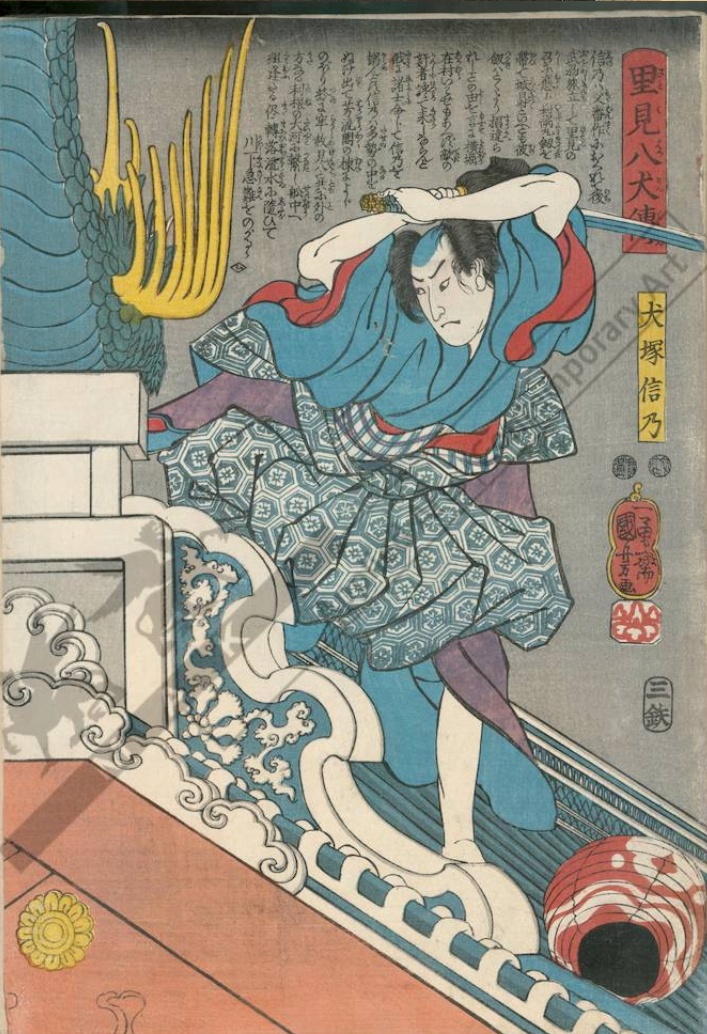
Inue Shinbei is a Dog Warrior, introduced in Chapter 31 of Hakkenden under the name Shinpei, nicknamed Daihachi. He is later renamed Inue Shinbei Masashi. He is the son of Yamabayashi Fusahachi and Nui. His […]

Entry Inue Shinbei
Description 

Inue Shinbei is a Dog Warrior, introduced in Chapter 31 of Hakkenden under the name Shinpei, nicknamed Daihachi. He is later renamed Inue Shinbei Masashi. He is the son of Yamabayashi Fusahachi and Nui. His […]

Quick View

Inugami

Image of Inugami
Category Inugami
Includes 

Inugami, like kitsunetsuki, is a spiritual possession by the spirit of a dog, widely known about in western Japan. The phenomenon of inugami spiritual possession was a kojutsu (also called “kodō” or “kodoku”, a greatly […]

Entry Inugami
Description 

Inugami, like kitsunetsuki, is a spiritual possession by the spirit of a dog, widely known about in western Japan. The phenomenon of inugami spiritual possession was a kojutsu (also called “kodō” or “kodoku”, a greatly […]

Quick View

Inukai Genpachi

Image of Inukai Genpachi
Category Inukai Genpachi
Includes 

Inukai Genpachi is a Dog Warrior, introduced in Chapter 30 of Hakkenden. When introduced he is called Kenpachi, but changes his name to Inukai Genpachi Nobumichi. He is the biological son of Nukasuke. His bead […]

Entry Inukai Genpachi
Description 

Inukai Genpachi is a Dog Warrior, introduced in Chapter 30 of Hakkenden. When introduced he is called Kenpachi, but changes his name to Inukai Genpachi Nobumichi. He is the biological son of Nukasuke. His bead […]

Quick View

Inukawa Sosuke

Image of Inukawa Sosuke
Category Inukawa Sosuke
Includes 

Inukawa Sosuke is a Dog Warrior, introduced in Chapter 18 of Hakkenden. When first introduced, he is a servant of Hikiroku’s known as Gakuzō. In Chapter 20, he renames himself Inukawa Sōsuke Yoshitō. His bead […]

Entry Inukawa Sosuke
Description 

Inukawa Sosuke is a Dog Warrior, introduced in Chapter 18 of Hakkenden. When first introduced, he is a servant of Hikiroku’s known as Gakuzō. In Chapter 20, he renames himself Inukawa Sōsuke Yoshitō. His bead […]

Quick View

Inumura Daikaku

Image of Inumura Daikaku
Category Inumura Daikaku
Includes 

Inumura Daikaku is a Dog Warrior in Hakkenden. His bead character is Rei (礼), propriety, courtesy, etiquette. Alias Inumura Daikaku (Eight Dog Warrior) Real Names/Alt Names Inumura Daikaku Masanori (犬村 大角 礼儀), Inugami Gennosuke Masanori […]

Entry Inumura Daikaku
Description 

Inumura Daikaku is a Dog Warrior in Hakkenden. His bead character is Rei (礼), propriety, courtesy, etiquette. Alias Inumura Daikaku (Eight Dog Warrior) Real Names/Alt Names Inumura Daikaku Masanori (犬村 大角 礼儀), Inugami Gennosuke Masanori […]

Quick View

Inusaka Keno

Image of Inusaka Keno
Category Inusaka Keno
Includes 

Inusaka Keno is a Dog Warrior in Hakkenden. His bead character is Chi (智), wisdom. Alias Inusaka Keno (Eight Dog Warrior) Real Names/Alt Names Inuzaka/Inukai Keno Tanetomo (犬阪 毛野 胤智) Characteristics Hero, Samurai, Eight Dog […]

Entry Inusaka Keno
Description 

Inusaka Keno is a Dog Warrior in Hakkenden. His bead character is Chi (智), wisdom. Alias Inusaka Keno (Eight Dog Warrior) Real Names/Alt Names Inuzaka/Inukai Keno Tanetomo (犬阪 毛野 胤智) Characteristics Hero, Samurai, Eight Dog […]

Quick View

Inuta Kobungo

Image of Inuta Kobungo
Category Inuta Kobungo
Includes 

Inuta Kobungo is a Dog Warrior, introduced in Chapter 31 of Hakkenden. Son of Konaya Bungobei; the name Inuta comes from a ruffian he bests and is applied by locals as a term of honor. […]

Entry Inuta Kobungo
Description 

Inuta Kobungo is a Dog Warrior, introduced in Chapter 31 of Hakkenden. Son of Konaya Bungobei; the name Inuta comes from a ruffian he bests and is applied by locals as a term of honor. […]

Quick View

Inuyama Dosetsu

Image of Inuyama Dosetsu
Category Inuyama Dosetsu
Includes 

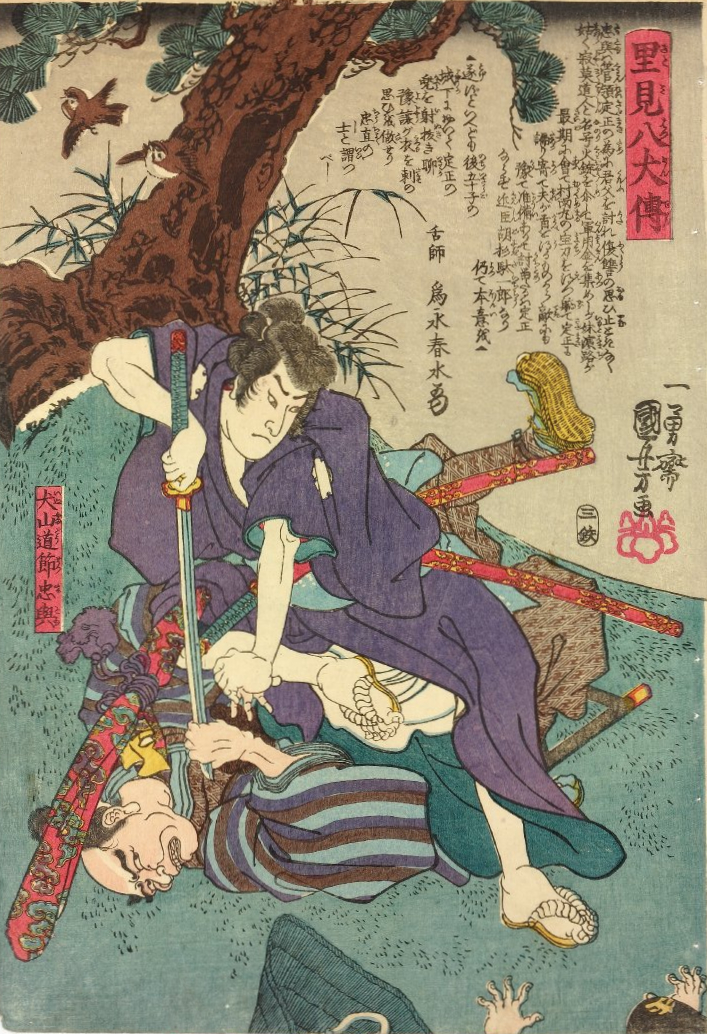
Inuyama Dōsetsu is a Dog Warrior, introduced in Chapter 27 of Hakkenden. When introduced, he is posing as a mystic named Kenryû. As a child he was known as Michimatsu, and when he reaches adulthood […]

Entry Inuyama Dosetsu
Description 

Inuyama Dōsetsu is a Dog Warrior, introduced in Chapter 27 of Hakkenden. When introduced, he is posing as a mystic named Kenryû. As a child he was known as Michimatsu, and when he reaches adulthood […]

Quick View

Inuzuka Shino

Image of Inuzuka Shino
Category Inuzuka Shino
Includes 

Inuzuka Shino is a Dog Warrior, introduced in Chapter 16 of Hakkenden. Son of Otsuka/Inuzuka Bansaku and Tatsuka, he inherits the sword Murasame. He is often seen as the central ronin or samurai figure. In […]

Entry Inuzuka Shino
Description 

Inuzuka Shino is a Dog Warrior, introduced in Chapter 16 of Hakkenden. Son of Otsuka/Inuzuka Bansaku and Tatsuka, he inherits the sword Murasame. He is often seen as the central ronin or samurai figure. In […]

Quick View

Ishikawa Goemon

Image of Ishikawa Goemon
Category Ishikawa Goemon
Includes 

Ishikawa Goemon (August 24, 1558 – October 8, 1594) was the leader of a group of bandits during the Azuchi-Momoyama period in Japan. Over time, and especially during the Edo period (1603-1867), his life and […]

Entry Ishikawa Goemon
Description 

Ishikawa Goemon (August 24, 1558 – October 8, 1594) was the leader of a group of bandits during the Azuchi-Momoyama period in Japan. Over time, and especially during the Edo period (1603-1867), his life and […]

Quick View

Itsumade

Image of Itsumade
Category Itsumade
Includes 

Itsumade is an eerie reptilian bird featured in the Japanese collection of Yōkai pictures, the Konjaku Gazu Zoku Hyakki by Toriyama Sekien published in 1779. Its picture has the explanatory text, “as explained more fully […]

Entry Itsumade
Description 

Itsumade is an eerie reptilian bird featured in the Japanese collection of Yōkai pictures, the Konjaku Gazu Zoku Hyakki by Toriyama Sekien published in 1779. Its picture has the explanatory text, “as explained more fully […]

Quick View

Iyaya

Image of Iyaya
Category Iyaya
Includes 

Iyaya is a slang expression meaning “No way!” From the back, iyaya look like attractive young women wearing beautiful clothing. When somebody calls out to them to get their attention, they turn around and reveal […]

Entry Iyaya
Description 

Iyaya is a slang expression meaning “No way!” From the back, iyaya look like attractive young women wearing beautiful clothing. When somebody calls out to them to get their attention, they turn around and reveal […]

Quick View

Izanagi

Image of Izanagi
Category Izanagi
Includes 

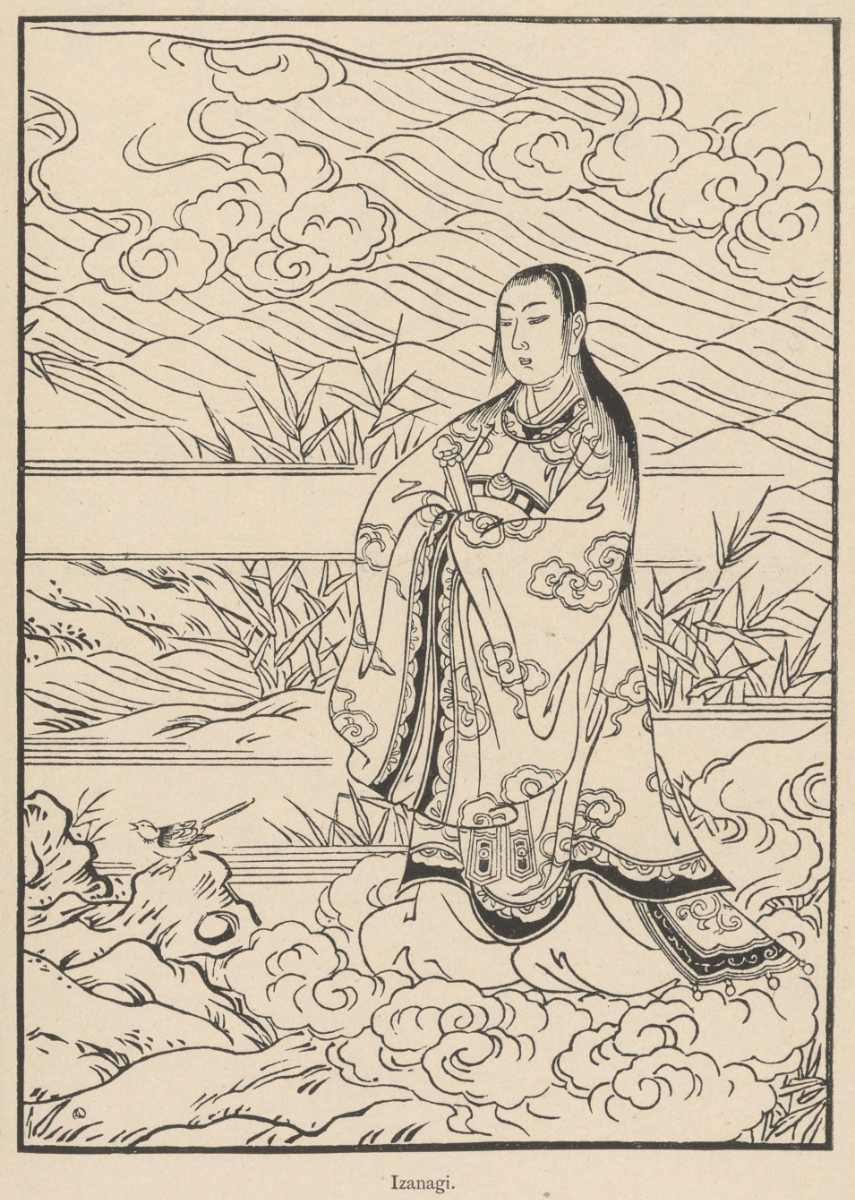
Izanagi (イザナギ/伊邪那岐/伊弉諾) or Izanaki (イザナキ), formally referred to with a divine honorific as Izanagi-no-Mikoto (伊邪那岐命/伊弉諾尊, meaning “He-who-invites” or the “Male-who-invites”), is the creator deity (kami) of both creation and life in Japanese mythology. He and […]

Entry Izanagi
Description 

Izanagi (イザナギ/伊邪那岐/伊弉諾) or Izanaki (イザナキ), formally referred to with a divine honorific as Izanagi-no-Mikoto (伊邪那岐命/伊弉諾尊, meaning “He-who-invites” or the “Male-who-invites”), is the creator deity (kami) of both creation and life in Japanese mythology. He and […]

Quick View

Izanami

Image of Izanami
Category Izanami
Includes 

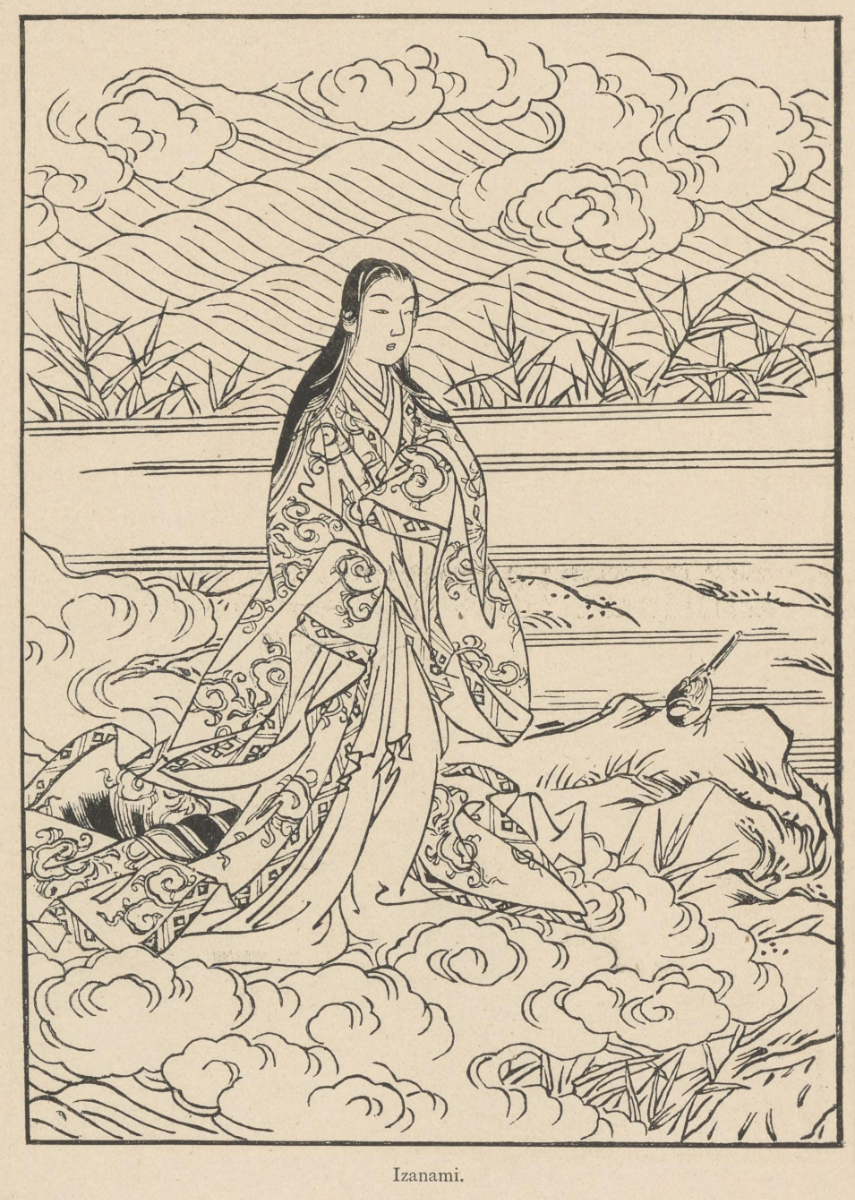
Izanami (イザナミ), formally referred to with the honorific Izanami-no-Mikoto (伊弉冉尊/伊邪那美命, meaning “She-who-invites” or the “Female-who-invites”), is the creator deity of both creation and death in Japanese mythology, as well as the Shinto mother goddess. She […]

Entry Izanami
Description 

Izanami (イザナミ), formally referred to with the honorific Izanami-no-Mikoto (伊弉冉尊/伊邪那美命, meaning “She-who-invites” or the “Female-who-invites”), is the creator deity of both creation and death in Japanese mythology, as well as the Shinto mother goddess. She […]

Quick View

Jakotsu baba

Image of Jakotsu baba
Category Jakotsu baba
Includes 

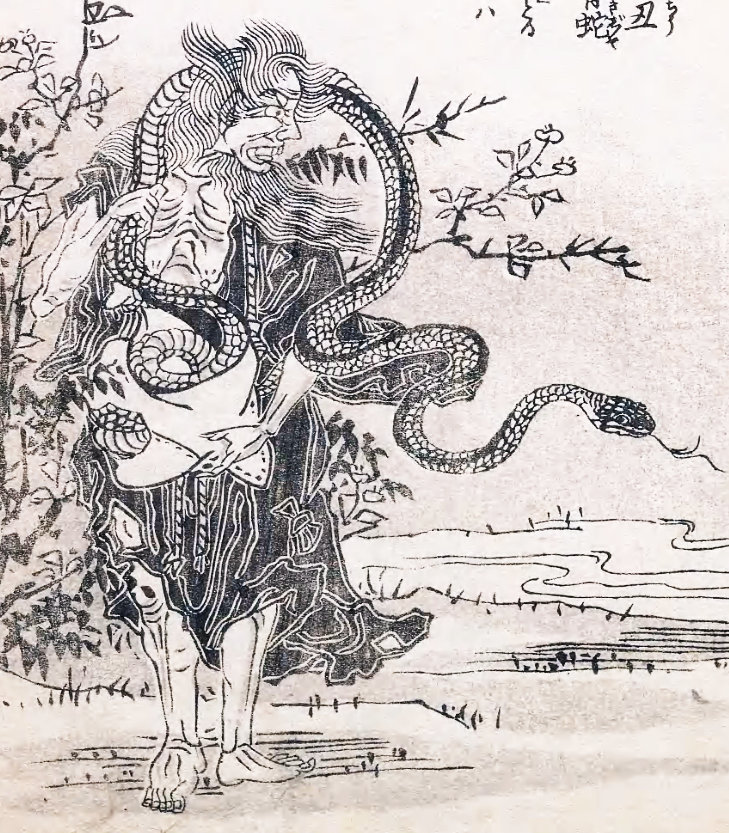
Jakotsu babā is a scary old hag and a shaman with the power to control snakes. She is described as carrying a blue snake in her right hand and a red snake in her left […]

Entry Jakotsu baba
Description 

Jakotsu babā is a scary old hag and a shaman with the power to control snakes. She is described as carrying a blue snake in her right hand and a red snake in her left […]

Quick View

Jami

Image of Jami
Category Jami
Includes 

Jami is a general term for evil spirits. They are a subset of chimi, or mountain spirit, though they are much more renowned for their nastiness. The term is not a clearly defined one, but […]

Entry Jami
Description 

Jami is a general term for evil spirits. They are a subset of chimi, or mountain spirit, though they are much more renowned for their nastiness. The term is not a clearly defined one, but […]

Quick View

Jatai

Image of Jatai
Category Jatai
Includes 

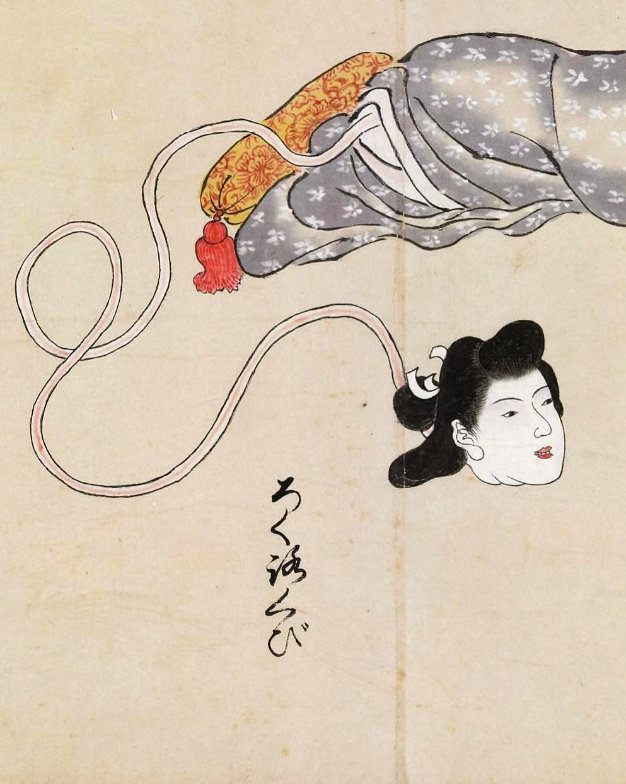
The jatai is an animated kimono sash that slithers around like a giant snake during the night. An old folk belief from Ehime Prefecture and other parts of Japan says that if you lay your […]

Entry Jatai
Description 

The jatai is an animated kimono sash that slithers around like a giant snake during the night. An old folk belief from Ehime Prefecture and other parts of Japan says that if you lay your […]

Quick View

Jiraiya

Image of Jiraiya
Category Jiraiya
Includes 

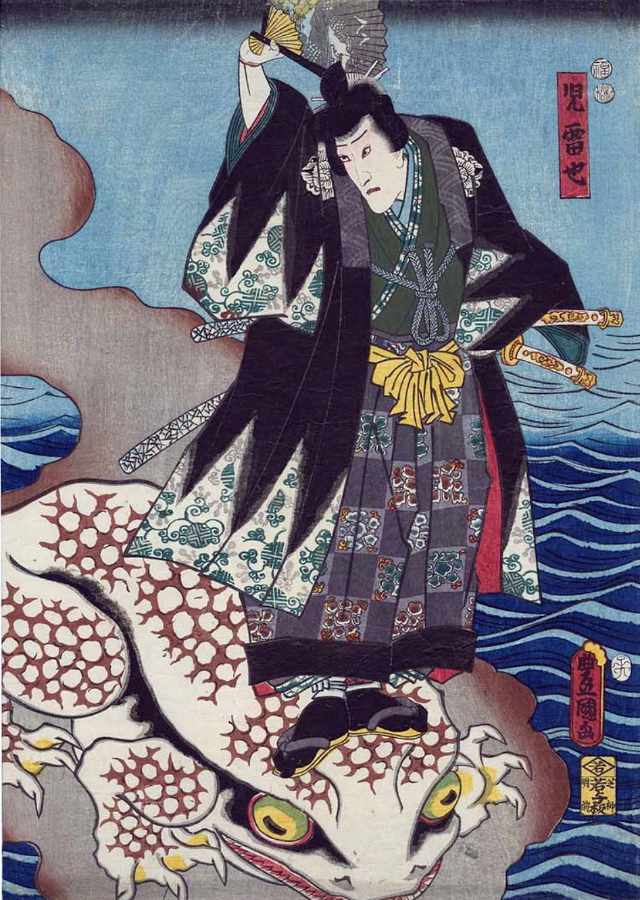
Jiraiya (自来也 or 児雷也, literally “Young Thunder”), originally known as Ogata Shuma Hiroyuki (尾形周馬寛行), is the toad-riding protagonist of the Japanese folk tale Katakiuchi Kidan Jiraiya Monogatari (報仇奇談自来也説話) “The Tale of the Gallant Jiraiya”). Jiraiya’s […]

Entry Jiraiya
Description 

Jiraiya (自来也 or 児雷也, literally “Young Thunder”), originally known as Ogata Shuma Hiroyuki (尾形周馬寛行), is the toad-riding protagonist of the Japanese folk tale Katakiuchi Kidan Jiraiya Monogatari (報仇奇談自来也説話) “The Tale of the Gallant Jiraiya”). Jiraiya’s […]

Quick View

Jorogumo

Image of Jorogumo
Category Jorogumo
Includes 

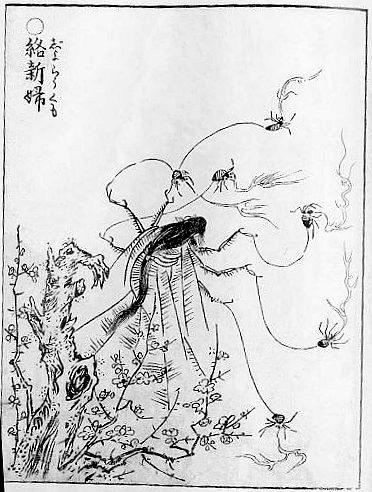
Jorōgumo is a type of yōkai, a creature of Japanese folklore. It can shapeshift into a beautiful woman, so the kanji that represent its actual meaning are 女郎蜘蛛 (lit. ’woman-spider’); the kanji which are used to […]

Entry Jorogumo
Description 

Jorōgumo is a type of yōkai, a creature of Japanese folklore. It can shapeshift into a beautiful woman, so the kanji that represent its actual meaning are 女郎蜘蛛 (lit. ’woman-spider’); the kanji which are used to […]

Quick View

Jujo Shakuhachi

Image of Jujo Shakuhachi
Category Jujo Shakuhachi
Includes 

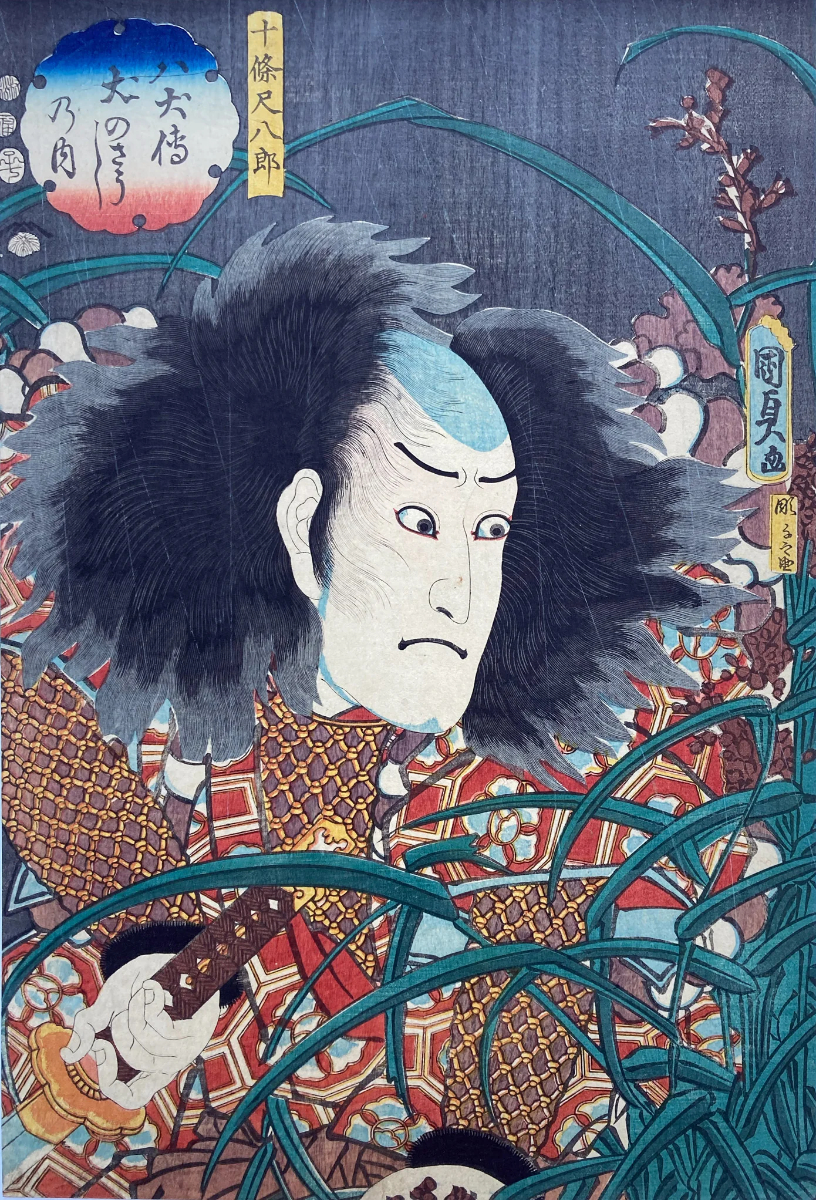
Jūjō Shakuhachi is an antagonist in Nansō Satomi Hakkenden. Alias Jūjō Shakuhachi (Eight Dog Warriors) Real Names/Alt Names Jūjō Shakuhachi (十条 灯八) Characteristics Villain, Eight Dog Warriors, Japanese Mythos, Medieval Age, Public Domain Creators/Key Contributors […]

Entry Jujo Shakuhachi
Description 

Jūjō Shakuhachi is an antagonist in Nansō Satomi Hakkenden. Alias Jūjō Shakuhachi (Eight Dog Warriors) Real Names/Alt Names Jūjō Shakuhachi (十条 灯八) Characteristics Villain, Eight Dog Warriors, Japanese Mythos, Medieval Age, Public Domain Creators/Key Contributors […]

Quick View

Kage onna

Image of Kage onna
Category Kage onna
Includes 

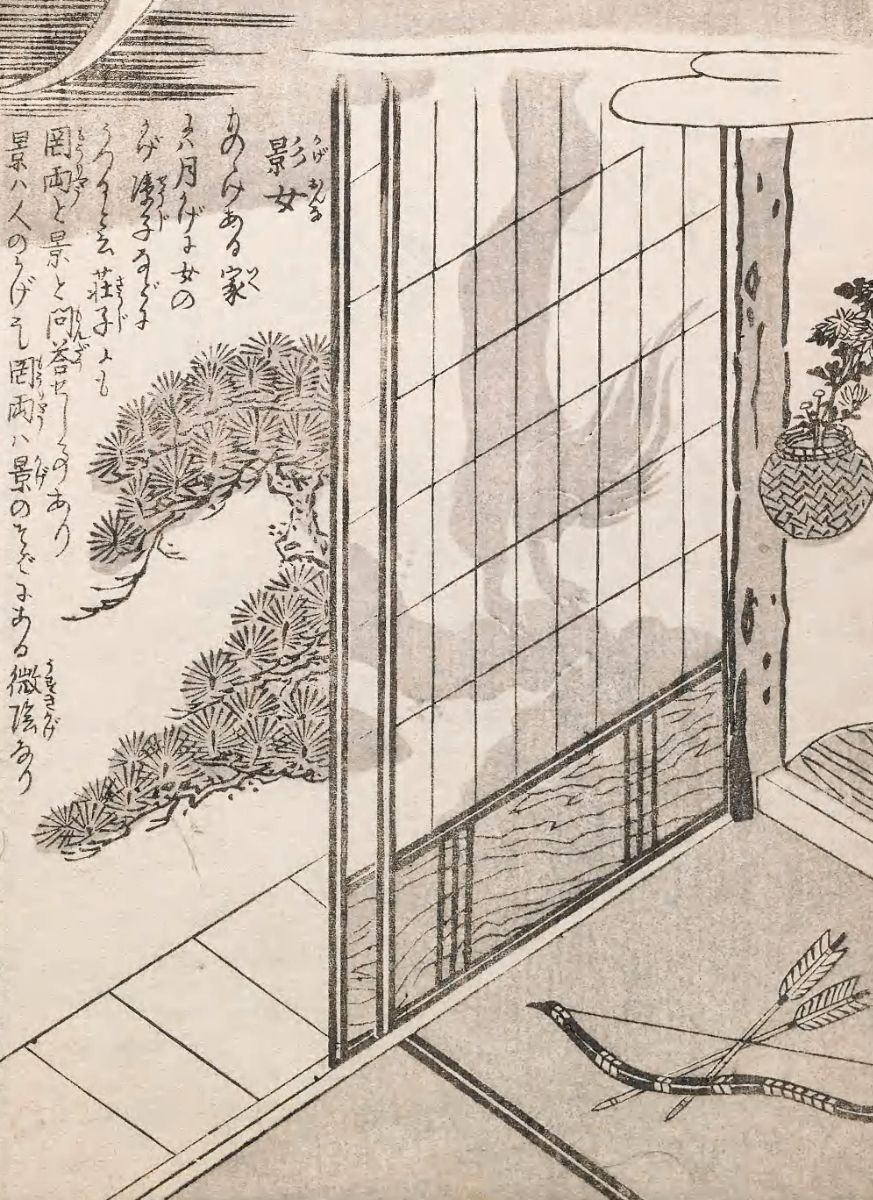
Kage onna are the shadows of women projected onto windows and doors when there is no one around to cast them. They usually take the form of young ladies, and occasionally they are accompanied by […]

Entry Kage onna
Description 

Kage onna are the shadows of women projected onto windows and doors when there is no one around to cast them. They usually take the form of young ladies, and occasionally they are accompanied by […]

Quick View

Kaichigo

Image of Kaichigo
Category Kaichigo
Includes 

Kaichigo is the spirit of a shell box come to life. It takes the form of a small, doll-like boy in a kimono. Kaichigo haunt the shell boxes used to store beautiful and expensive painted […]

Entry Kaichigo
Description 

Kaichigo is the spirit of a shell box come to life. It takes the form of a small, doll-like boy in a kimono. Kaichigo haunt the shell boxes used to store beautiful and expensive painted […]

Quick View

Kamaitachi

Image of Kamaitachi
Category Kamaitachi
Includes 

Kamaitachi is a Japanese yōkai from the oral tradition of the Kōshin’etsu region. It can also refer to the strange events that this creature causes. They appear riding on dust devils and cut people using […]

Entry Kamaitachi
Description 

Kamaitachi is a Japanese yōkai from the oral tradition of the Kōshin’etsu region. It can also refer to the strange events that this creature causes. They appear riding on dust devils and cut people using […]

Quick View

Kamakura Gongoro Kagemasa

Image of Kamakura Gongoro Kagemasa
Category Kamakura Gongoro Kagemasa
Includes 

Shibaraku, one of the most widely recognized of all kabuki and one most associated with the form… centers around the figure of Kamakura Gongorō Kagemasa, who has become the stereotypical bombastic hero of the kabuki […]

Entry Kamakura Gongoro Kagemasa
Description 

Shibaraku, one of the most widely recognized of all kabuki and one most associated with the form… centers around the figure of Kamakura Gongorō Kagemasa, who has become the stereotypical bombastic hero of the kabuki […]

Quick View

Kameosa

Image of Kameosa
Category Kameosa
Includes 

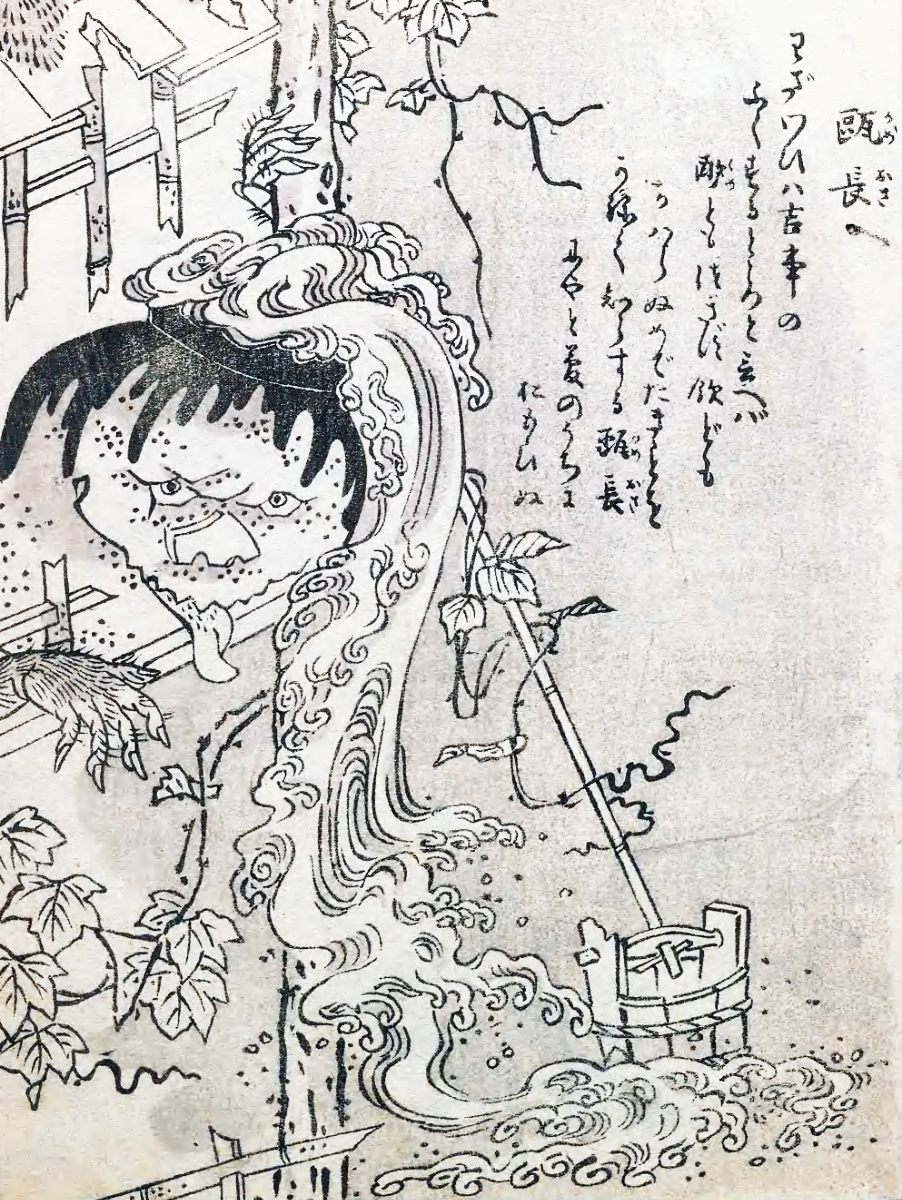
Kameosa are old earthenware jugs used to hold water or sake that have changed into tsukumogami—objects that have been around for so long that they develop a spirit. They look like ordinary jugs, except that […]

Entry Kameosa
Description 

Kameosa are old earthenware jugs used to hold water or sake that have changed into tsukumogami—objects that have been around for so long that they develop a spirit. They look like ordinary jugs, except that […]

Quick View

Kami-oni

Image of Kami-oni
Category Kami-oni
Includes 

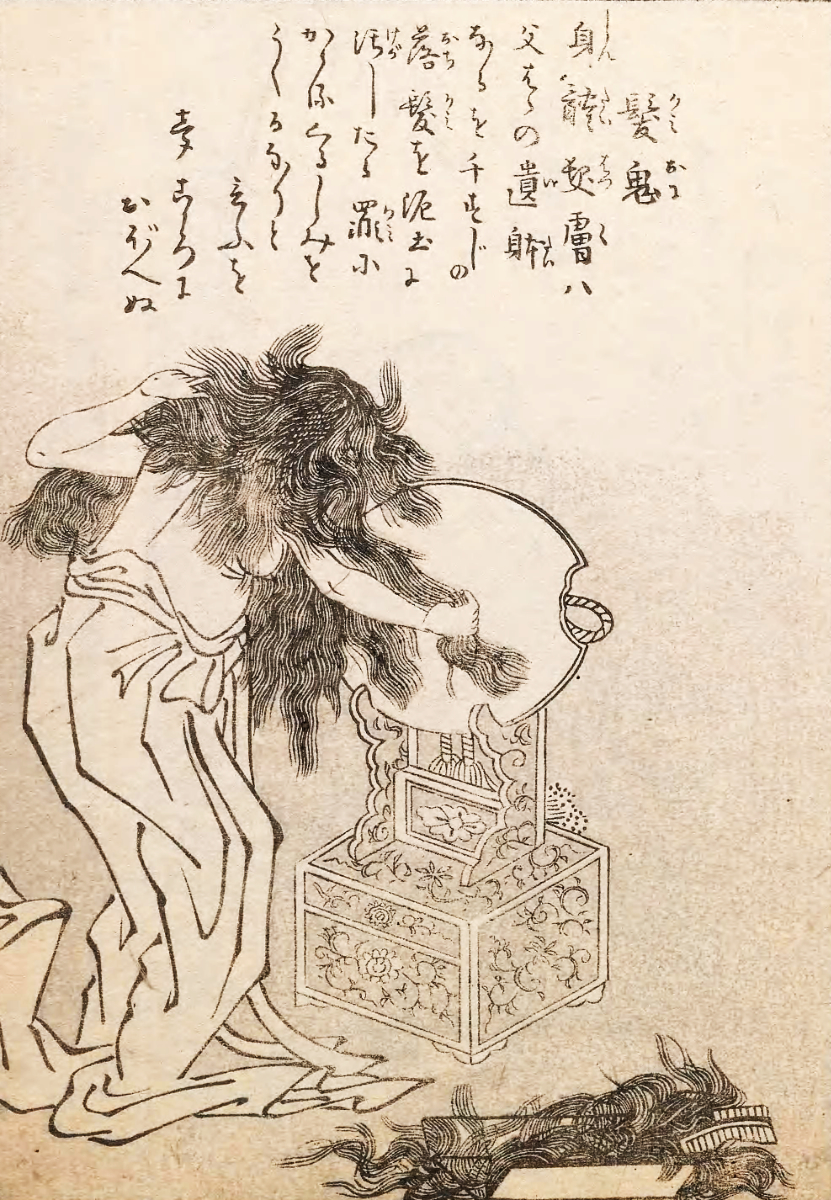
For the Hyakki Tsurezure Bukuro, Toriyama Sekien depicts a woman before a mirror. After cutting off a large amount of hair, she is seemingly watching new hair grow back in. Is she a spirit (kami) […]

Entry Kami-oni
Description 

For the Hyakki Tsurezure Bukuro, Toriyama Sekien depicts a woman before a mirror. After cutting off a large amount of hair, she is seemingly watching new hair grow back in. Is she a spirit (kami) […]

Quick View

Kamikiri

Image of Kamikiri
Category Kamikiri
Includes 

Kamikiri, the “hair-cutter”, is a Japanese yōkai said to secretly cut people’s hair on the head. They were rumored from time to time in the urban areas of the Edo Period, and can sporadically be […]

Entry Kamikiri
Description 

Kamikiri, the “hair-cutter”, is a Japanese yōkai said to secretly cut people’s hair on the head. They were rumored from time to time in the urban areas of the Edo Period, and can sporadically be […]

Quick View

Kanbari nyudo

Image of Kanbari nyudo
Category Kanbari nyudo
Includes 

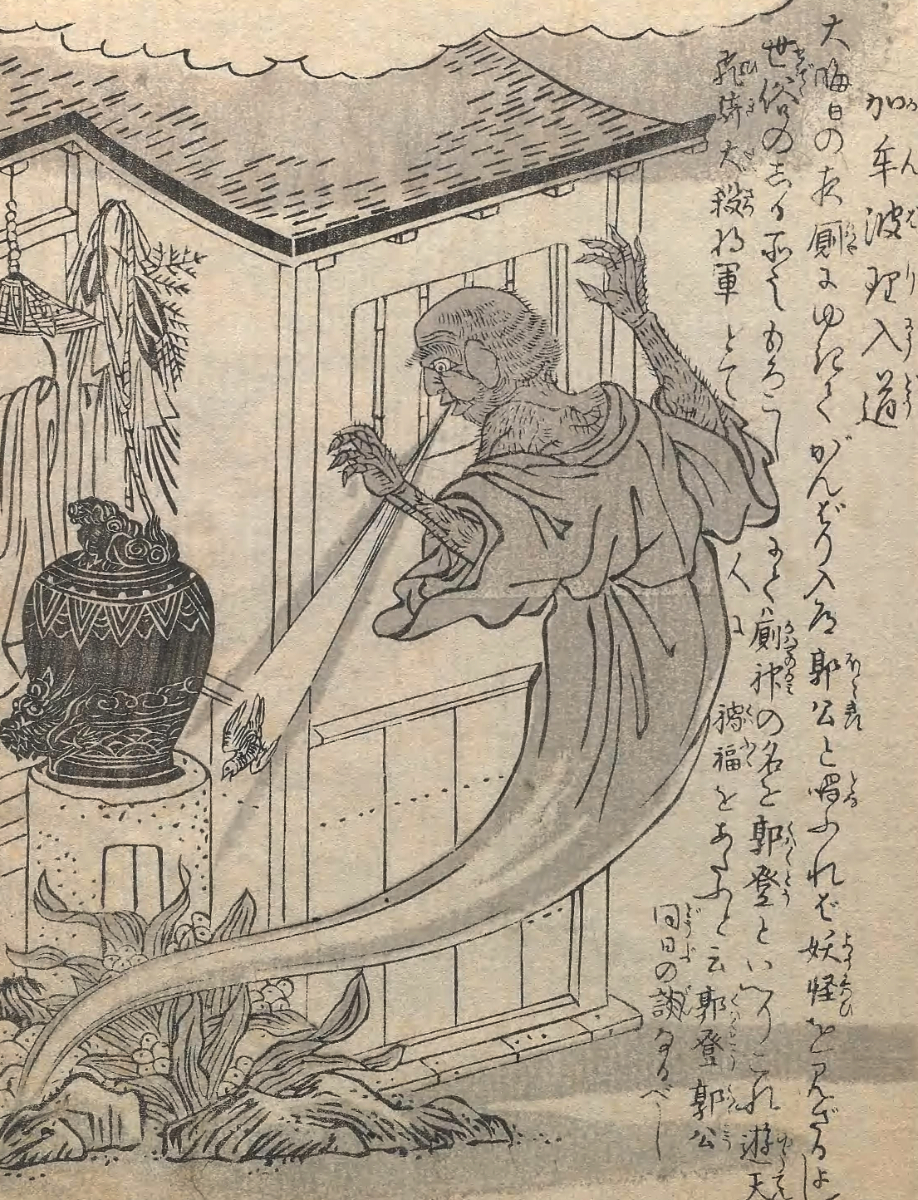
Kanbari nyūdō is a perverted ghost-like yōkai which lurks outside of bathrooms on New Year’s Eve. It has a roughly priest-like appearance, with robes and a tonsured haircut. Its body is covered in thick hairs. […]

Entry Kanbari nyudo
Description 

Kanbari nyūdō is a perverted ghost-like yōkai which lurks outside of bathrooms on New Year’s Eve. It has a roughly priest-like appearance, with robes and a tonsured haircut. Its body is covered in thick hairs. […]

Quick View

Kappa

Image of Kappa
Category Kappa
Includes 

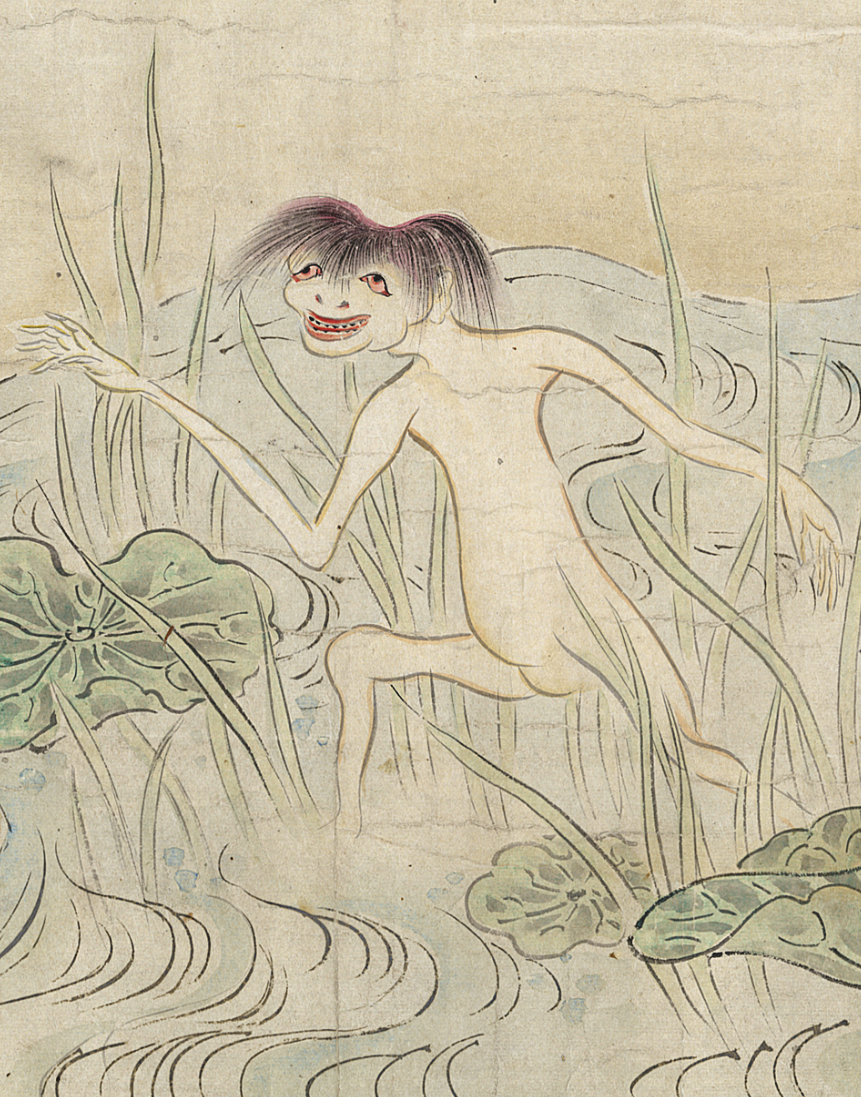
In traditional Japanese folklore a kappa, “river-child”… is a reptiloid kami with similarities to yōkai. Kappa can become harmful when not respected as gods. Accounts typically depict them as green, human-like beings with webbed hands […]

Entry Kappa
Description 

In traditional Japanese folklore a kappa, “river-child”… is a reptiloid kami with similarities to yōkai. Kappa can become harmful when not respected as gods. Accounts typically depict them as green, human-like beings with webbed hands […]

Quick View

Kasha

Image of Kasha
Category Kasha
Includes 

The kasha is a Japanese yōkai that steals the corpses of those who have died as a result of accumulating evil deeds. Kasha are yōkai that would steal corpses from funerals and cemeteries, and what […]

Entry Kasha
Description 

The kasha is a Japanese yōkai that steals the corpses of those who have died as a result of accumulating evil deeds. Kasha are yōkai that would steal corpses from funerals and cemeteries, and what […]

Quick View

Katawaguruma

Image of Katawaguruma
Category Katawaguruma
Includes 

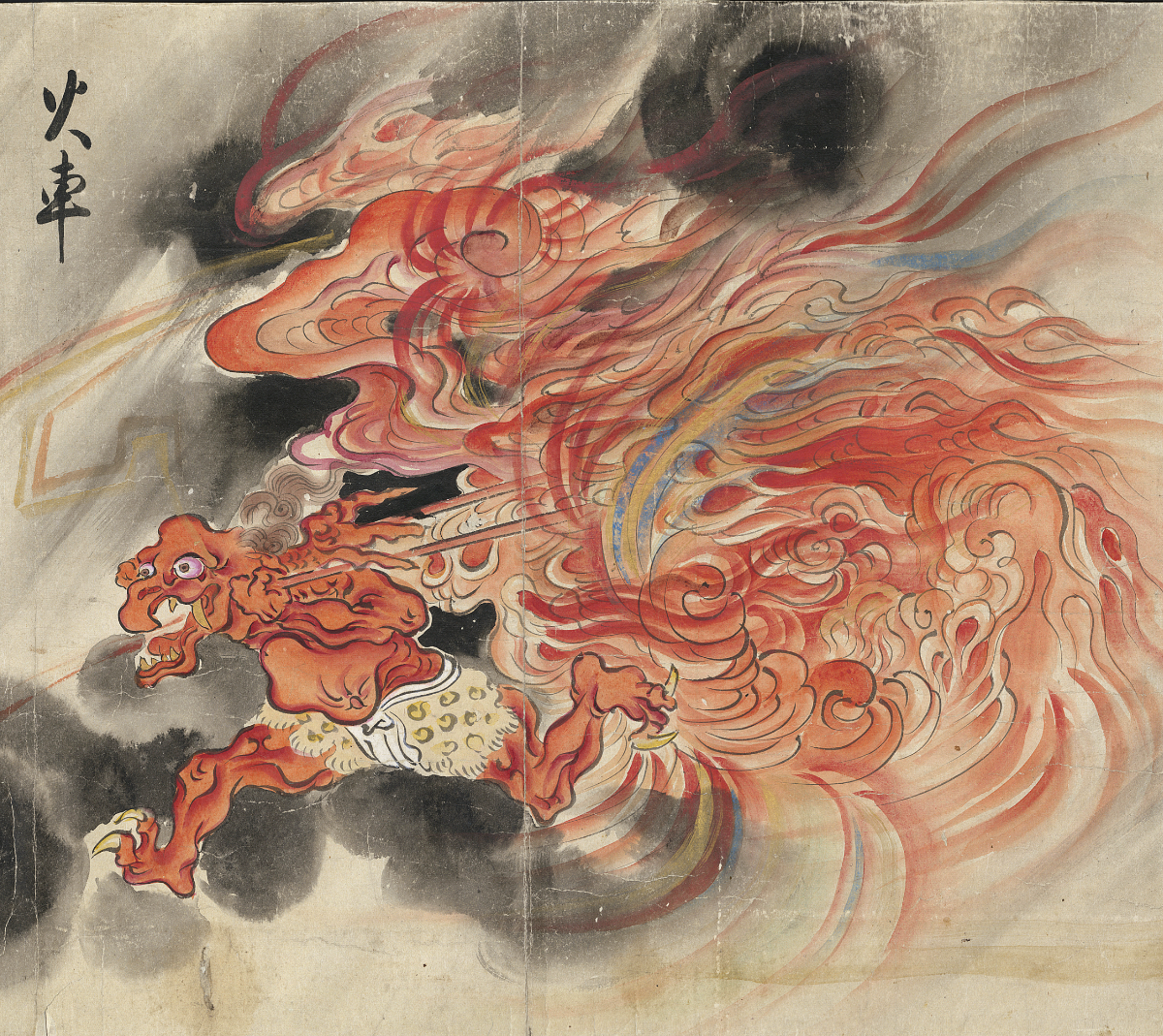
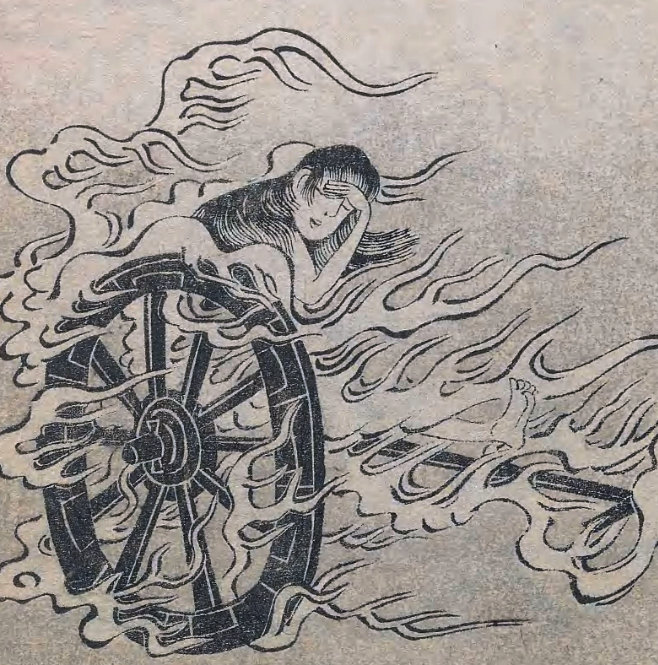
Instead of a giant monk’s head stuck in a wheel, katawaguruma appear as tormented, naked women riding single, flaming, ox-cart wheels. They suffer eternally, burning in pain. Katawaguruma look and act in much the same […]

Entry Katawaguruma
Description 

Instead of a giant monk’s head stuck in a wheel, katawaguruma appear as tormented, naked women riding single, flaming, ox-cart wheels. They suffer eternally, burning in pain. Katawaguruma look and act in much the same […]

Quick View

Kawauso

Image of Kawauso
Category Kawauso
Includes 

In Japanese, otters are called “kawauso”. In Japanese folklore, they fool humans in the same way as foxes (kitsune) and tanuki. In the Noto region, Ishikawa Prefecture, there are stories where they shapeshift into beautiful […]

Entry Kawauso
Description 

In Japanese, otters are called “kawauso”. In Japanese folklore, they fool humans in the same way as foxes (kitsune) and tanuki. In the Noto region, Ishikawa Prefecture, there are stories where they shapeshift into beautiful […]

Quick View

Kazenbo

Image of Kazenbo
Category Kazenbo
Includes 

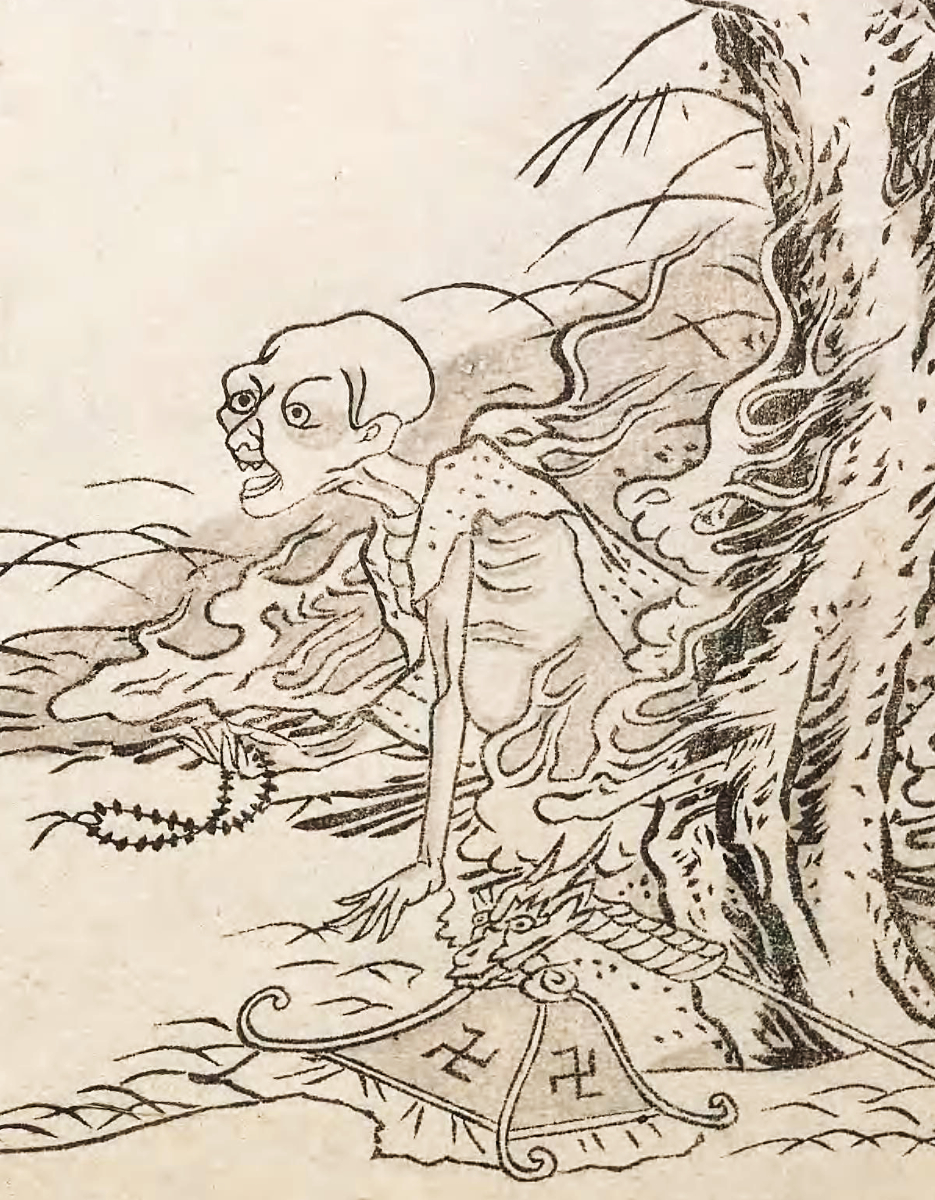
Kazenbō is a ghostly apparition which resembles a monk wreathed in flames, being burnt alive. They appear on a mountain in Kyoto called Toribeyama, which has been used as a grave site for many centuries. […]

Entry Kazenbo
Description 

Kazenbō is a ghostly apparition which resembles a monk wreathed in flames, being burnt alive. They appear on a mountain in Kyoto called Toribeyama, which has been used as a grave site for many centuries. […]

Quick View

Kejoro

Image of Kejoro
Category Kejoro
Includes 

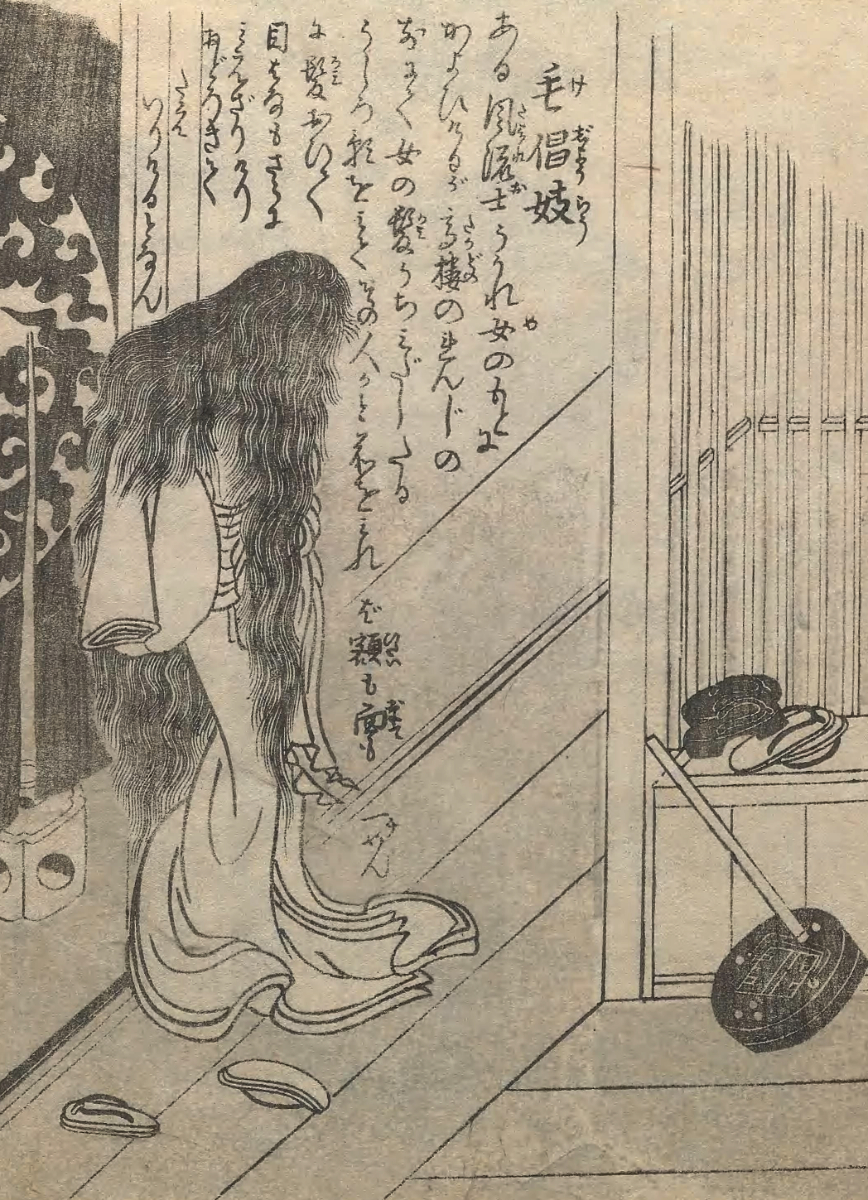
Kejōrō are prostitutes whose face and body are hidden behind a curtain of disturbingly thick, long, disheveled black hair. From behind they look just like normal women with their hair hanging down loosely. They appear […]

Entry Kejoro
Description 

Kejōrō are prostitutes whose face and body are hidden behind a curtain of disturbingly thick, long, disheveled black hair. From behind they look just like normal women with their hair hanging down loosely. They appear […]

Quick View

Kerakera onna

Image of Kerakera onna
Category Kerakera onna
Includes 

Kerakera onna are gigantic, horrid yōkai found in red light districts. Their name comes from the cackling sound of their laughter. Kerakera onna appear as enormous, middle-aged women in colorful brothel kimonos, with thick make-up […]

Entry Kerakera onna
Description 

Kerakera onna are gigantic, horrid yōkai found in red light districts. Their name comes from the cackling sound of their laughter. Kerakera onna appear as enormous, middle-aged women in colorful brothel kimonos, with thick make-up […]

Quick View

Keukegen

Image of Keukegen
Category Keukegen
Includes 

Keukegen are filthy monsters commonly found in populated areas. They are the size of a small dog and appear as a mass of long, dirty hair. Keukegen make their homes in cool, damp, dark places; […]

Entry Keukegen
Description 

Keukegen are filthy monsters commonly found in populated areas. They are the size of a small dog and appear as a mass of long, dirty hair. Keukegen make their homes in cool, damp, dark places; […]

Quick View

Kidomaru

Image of Kidomaru
Category Kidomaru
Includes 

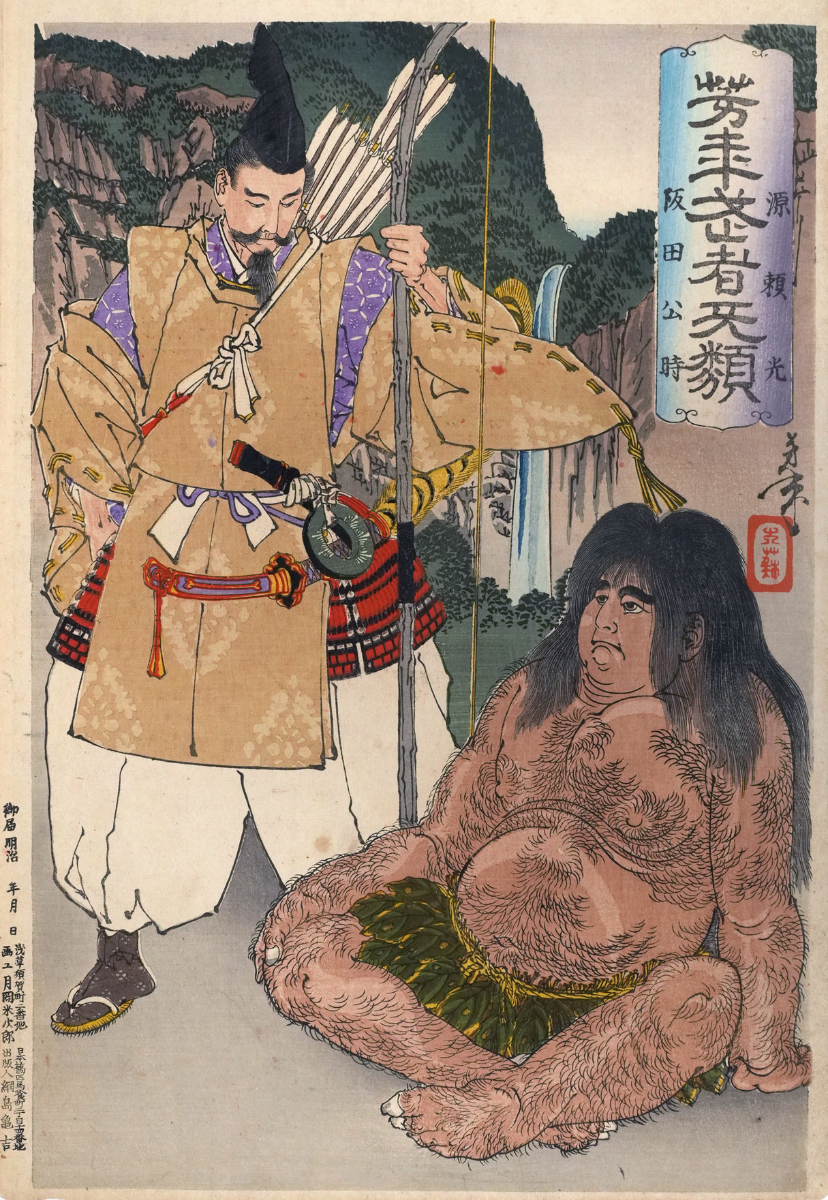
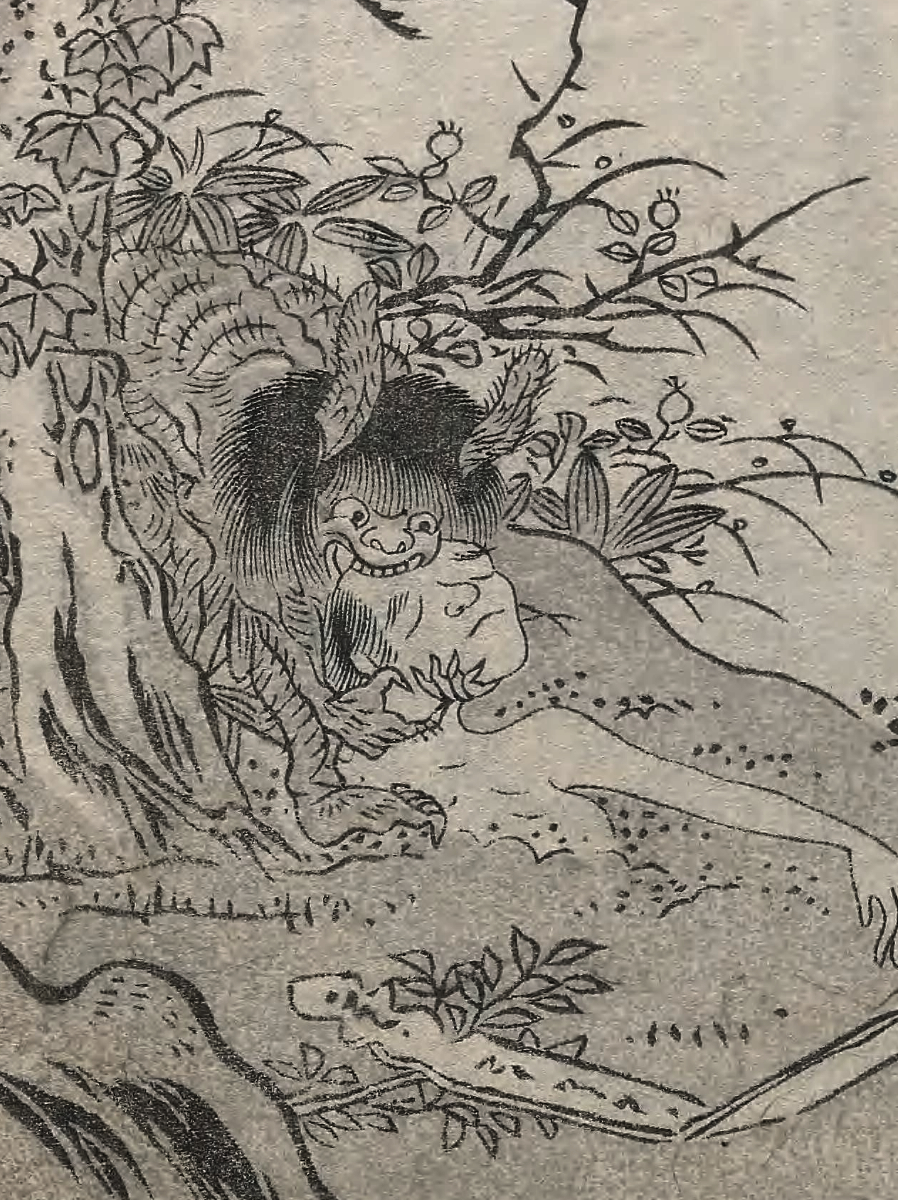
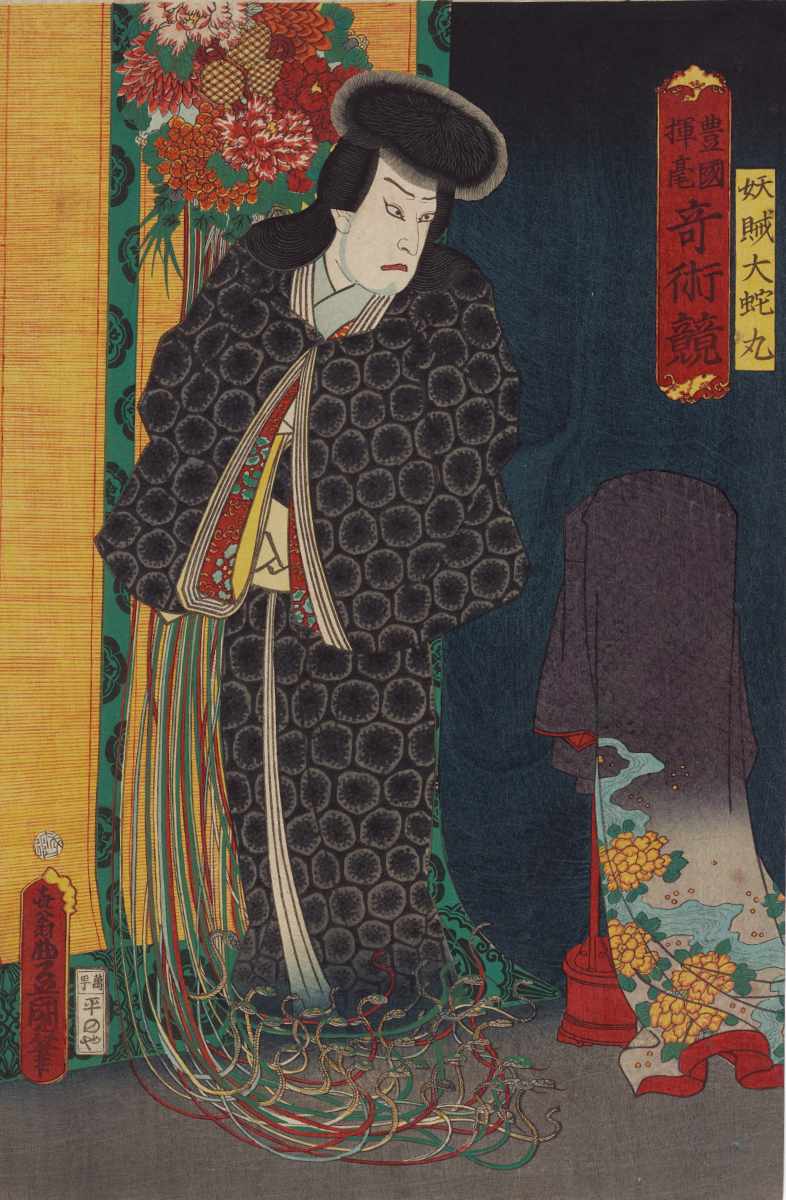
Kidōmaru is an “oni”, a kind of yōkai, demon, orc, ogre, or troll in Japanese folklore. As described in the Kokon Chomonjū, Minamoto no Yorimitsu is known for the slaying of Shuten-dōji. When he went […]

Entry Kidomaru
Description 

Kidōmaru is an “oni”, a kind of yōkai, demon, orc, ogre, or troll in Japanese folklore. As described in the Kokon Chomonjū, Minamoto no Yorimitsu is known for the slaying of Shuten-dōji. When he went […]

Quick View

Kijo

Image of Kijo
Category Kijo
Includes 

In Japanese lore, shadows and reflections show the true nature of a supernatural creature. In this design, a beautiful princess is revealed to be a hideous demon. Alias Kijo, Demon of Mount Togakushi Real Names/Alt […]

Entry Kijo
Description 

In Japanese lore, shadows and reflections show the true nature of a supernatural creature. In this design, a beautiful princess is revealed to be a hideous demon. Alias Kijo, Demon of Mount Togakushi Real Names/Alt […]

Quick View

Kinutanuki

Image of Kinutanuki
Category Kinutanuki
Includes 

Kinutanuki are silk products which have transformed into tsukumogami. They sprout heads, feet, and tails which resemble those of tanuki. Toriyama Sekien invented kinutanuki for his book Hyakki tsurezure bukuro. While tanuki are famous for […]

Entry Kinutanuki
Description 

Kinutanuki are silk products which have transformed into tsukumogami. They sprout heads, feet, and tails which resemble those of tanuki. Toriyama Sekien invented kinutanuki for his book Hyakki tsurezure bukuro. While tanuki are famous for […]

Quick View

Kirigakure Saizō

Image of Kirigakure Saizō
Category Kirigakure Saizō
Includes 

Kirigakure Saizō (霧隠才蔵) was a legendary ninja of the final phase of the Sengoku period of Japan. In the folklore he is one of the Sanada Ten Braves, and next to Sarutobi Sasuke, he is […]

Entry Kirigakure Saizō
Description 

Kirigakure Saizō (霧隠才蔵) was a legendary ninja of the final phase of the Sengoku period of Japan. In the folklore he is one of the Sanada Ten Braves, and next to Sarutobi Sasuke, he is […]

Quick View

Kitsune

Image of Kitsune
Category Kitsune
Includes 

The kitsune (狐, きつね) in popular Japanese tradition, are foxes or fox spirits that possess paranormal abilities such as shapeshifting, and capable of bewitching people. Kitsune, though literally a “fox”, becomes in folklore a “fox […]

Entry Kitsune
Description 

The kitsune (狐, きつね) in popular Japanese tradition, are foxes or fox spirits that possess paranormal abilities such as shapeshifting, and capable of bewitching people. Kitsune, though literally a “fox”, becomes in folklore a “fox […]

Quick View

Kitsunebi

Image of Kitsunebi
Category Kitsunebi
Includes 

Kitsunebi is an atmospheric ghost light told about in legends all across Japan outside Okinawa Prefecture. Kimimori Sarashina, a researcher of local stories, summarizes the features of the kitsunebi as follows: in places where there […]

Entry Kitsunebi
Description 

Kitsunebi is an atmospheric ghost light told about in legends all across Japan outside Okinawa Prefecture. Kimimori Sarashina, a researcher of local stories, summarizes the features of the kitsunebi as follows: in places where there […]

Quick View

Kiyo hime

Image of Kiyo hime
Category Kiyo hime
Includes 

Kiyo hime is one of the most famous antagonists in Japanese literature, and an example of a honnari hannya—a demon woman who has attained the maximum level of power. She appears in The Legend of […]

Entry Kiyo hime
Description 

Kiyo hime is one of the most famous antagonists in Japanese literature, and an example of a honnari hannya—a demon woman who has attained the maximum level of power. She appears in The Legend of […]

Quick View

Kodama

Image of Kodama
Category Kodama
Includes 

Kodama are spirits in Japanese folklore that inhabit trees. The term is also used to denote a tree in which a kodama supposedly resides. The phenomenon known as yamabiko, when sounds make a delayed echoing […]

Entry Kodama
Description 

Kodama are spirits in Japanese folklore that inhabit trees. The term is also used to denote a tree in which a kodama supposedly resides. The phenomenon known as yamabiko, when sounds make a delayed echoing […]

Quick View

Kohada Koheiji

Image of Kohada Koheiji
Category Kohada Koheiji
Includes 

This print shows a scene from a Japanese legend about a man who was drowned in a swamp by his wife and her lover. Kohada Koheiji was a kabuki actor for the Morita-za theater; as […]

Entry Kohada Koheiji
Description 

This print shows a scene from a Japanese legend about a man who was drowned in a swamp by his wife and her lover. Kohada Koheiji was a kabuki actor for the Morita-za theater; as […]

Quick View

Koinryo

Image of Zenfusho
Category Koinryo
Includes 

In a two-page spread starting off the Hyakki Tsurezure Bukuro, Toriyama Sekien drew three yokai: Yarikechō (槍毛長), Koinryō (虎隠良), and Zenfushō (禅釜尚). Zenfushō is a yokai with a pot on its head depicting the spirit […]

Entry Koinryo
Description 

In a two-page spread starting off the Hyakki Tsurezure Bukuro, Toriyama Sekien drew three yokai: Yarikechō (槍毛長), Koinryō (虎隠良), and Zenfushō (禅釜尚). Zenfushō is a yokai with a pot on its head depicting the spirit […]

Quick View

Kokuri baba

Image of Kokuri baba
Category Kokuri baba
Includes 

A kokuri babā is an old hag which inhabits temples deep in the mountains. She hides herself away in the back of the temple and feeds off of human corpses. A kokuri babā was once […]

Entry Kokuri baba
Description 

A kokuri babā is an old hag which inhabits temples deep in the mountains. She hides herself away in the back of the temple and feeds off of human corpses. A kokuri babā was once […]

Quick View

Konaki-jijii

Image of Konaki-jijii
Category Konaki-jijii
Includes 

Konaki jijii are mountain-dwelling spirits who look like old human men. They carry walking sticks and wear straw raincoats on top of over-sized baby clothes. Konaki jijii get their name from their distinctive habit of […]

Entry Konaki-jijii
Description 

Konaki jijii are mountain-dwelling spirits who look like old human men. They carry walking sticks and wear straw raincoats on top of over-sized baby clothes. Konaki jijii get their name from their distinctive habit of […]

Quick View

Koroka

Image of Koroka
Category Koroka
Includes 

A Will-o’-the-wisp of an old garden lantern, drawn by Toriyama Sekien for Hyakki Tsurezure Bukuro Volume 1 in 1781. Alias Korōka (古籠火) Real Names/Alt Names ○ Characteristics Japanese Mythos, Yōkai, Enlightenment and Neoclassicism, Public Domain […]

Entry Koroka
Description 

A Will-o’-the-wisp of an old garden lantern, drawn by Toriyama Sekien for Hyakki Tsurezure Bukuro Volume 1 in 1781. Alias Korōka (古籠火) Real Names/Alt Names ○ Characteristics Japanese Mythos, Yōkai, Enlightenment and Neoclassicism, Public Domain […]

Quick View

Kosamebo

Image of Kosamebo
Category Kosamebo
Includes 

Kosamebō are yōkai which look like Buddhist monks. They loiter about on empty mountain roads at night. As their name implies, they only appear during nights when light rain is falling. Kosamebō accost travelers and […]

Entry Kosamebo
Description 

Kosamebō are yōkai which look like Buddhist monks. They loiter about on empty mountain roads at night. As their name implies, they only appear during nights when light rain is falling. Kosamebō accost travelers and […]

Quick View

Kosode no te

Image of Kosode no te
Category Kosode no te
Includes 

Kosode no te appear in short sleeved kimonos formerly owned by prostitutes. This yōkai manifests as a pair of ghostly hands that emerge from the sleeves and assault welching clients—or whoever happens to be nearby. […]

Entry Kosode no te
Description 

Kosode no te appear in short sleeved kimonos formerly owned by prostitutes. This yōkai manifests as a pair of ghostly hands that emerge from the sleeves and assault welching clients—or whoever happens to be nearby. […]

Quick View

Koto furunushi

Image of Koto furunushi
Category Koto furunushi
Includes 

The Koto furunushi looks like a koto—a long, harp-like instrument that is the national instrument of Japan—transformed into a wild beast. A koto which was once played frequently but later forgotten about and stored away […]

Entry Koto furunushi
Description 

The Koto furunushi looks like a koto—a long, harp-like instrument that is the national instrument of Japan—transformed into a wild beast. A koto which was once played frequently but later forgotten about and stored away […]

Quick View

Kumasaka the Robber

Image of Kumasaka the Robber
Category Kumasaka the Robber
Includes 

Kumasaka (The Robber) is a Noh play from the 15th century… about the notable Heian period bandit Kumasaka no Chohan. The play takes the form of Mugen Noh – supernatural, or dream-time Noh. The samurai […]

Entry Kumasaka the Robber
Description 

Kumasaka (The Robber) is a Noh play from the 15th century… about the notable Heian period bandit Kumasaka no Chohan. The play takes the form of Mugen Noh – supernatural, or dream-time Noh. The samurai […]

Quick View

Kura yaro

Image of Kura yaro
Category Kura yaro
Includes 

Kura yarō are saddles whose masters have been slain. They take on lives of their own and act like warriors. The most famous kura yarō was once the saddle of Kamata Masakiyo, the first and […]

Entry Kura yaro
Description 

Kura yarō are saddles whose masters have been slain. They take on lives of their own and act like warriors. The most famous kura yarō was once the saddle of Kamata Masakiyo, the first and […]

Quick View

Kurozome

Image of Kurozome
Category Kurozome
Includes 

The evil Lord Kuronushi had a plan to usurp the power of the emperor. In order to ensure the success of his plan, he decided to build a shrine from the wood of an ancient […]

Entry Kurozome
Description 

The evil Lord Kuronushi had a plan to usurp the power of the emperor. In order to ensure the success of his plan, he decided to build a shrine from the wood of an ancient […]

Quick View

Kurozuka

Image of Kurozuka
Category Kurozuka
Includes 

Kurozuka is the most well-known demon woman in Japanese folklore, and a very popular subject in the arts, starring in everything from paintings to ukiyoe prints to noh plays. She has gone by many names. […]

Entry Kurozuka
Description 

Kurozuka is the most well-known demon woman in Japanese folklore, and a very popular subject in the arts, starring in everything from paintings to ukiyoe prints to noh plays. She has gone by many names. […]

Quick View

Kutsutsura

Image of Kutsutsura
Category Kutsutsura
Includes 

Kutsutsura are tsukumogami of shoes. They can take either a human form or an animal form. In human form, they look like a court noble wearing a shoe as a hat. In animal form, they […]

Entry Kutsutsura
Description 

Kutsutsura are tsukumogami of shoes. They can take either a human form or an animal form. In human form, they look like a court noble wearing a shoe as a hat. In animal form, they […]

Quick View

Kuzunoha

Image of Kuzunoha
Category Kuzunoha
Includes 

Kuzunoha is the name of a popular kitsune character in Japanese folklore. Her name means leaf of arrowroot. Legend states that she is the mother of Abe no Seimei, the famous onmyōji. A young nobleman, […]

Entry Kuzunoha
Description 

Kuzunoha is the name of a popular kitsune character in Japanese folklore. Her name means leaf of arrowroot. Legend states that she is the mother of Abe no Seimei, the famous onmyōji. A young nobleman, […]

Quick View

Kyokotsu

Image of Kyokotsu
Category Kyokotsu
Includes 

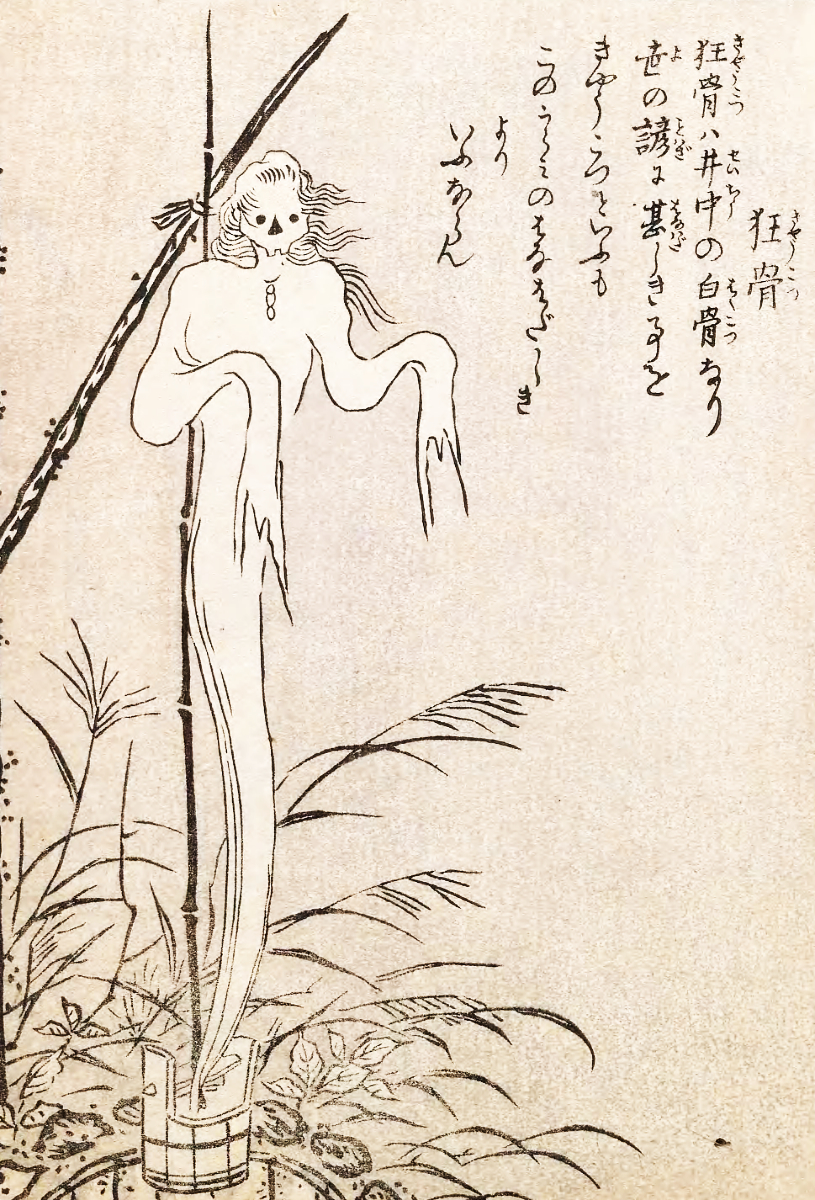
A kyōkotsu is a ghostly, skeletal spirit which rises out of wells to scare people. It is wrapped in a ragged shroud, with only its bleached skull and tangled hair emerging from its tattered clothes. […]

Entry Kyokotsu
Description 

A kyōkotsu is a ghostly, skeletal spirit which rises out of wells to scare people. It is wrapped in a ragged shroud, with only its bleached skull and tangled hair emerging from its tattered clothes. […]

Quick View

Kyorinrin

Image of Kyorinrin
Category Kyorinrin
Includes 

Kyōrinrin is a spirit of knowledge formed from ancient scrolls, books, and scriptures which have been left unstudied by their owners and gathering dust. Kyōrinrin are often extravagant; they decorates themselves with the most ornate […]

Entry Kyorinrin
Description 

Kyōrinrin is a spirit of knowledge formed from ancient scrolls, books, and scriptures which have been left unstudied by their owners and gathering dust. Kyōrinrin are often extravagant; they decorates themselves with the most ornate […]

Quick View

Makuragaeshi

Image of Makuragaeshi
Category Makuragaeshi
Includes 

The makuragaeshi is a kind of Japanese spirit or yōkai. They would come at night to one’s pillow side and flip over the pillow. They are also considered to change which direction one’s head or […]

Entry Makuragaeshi
Description 

The makuragaeshi is a kind of Japanese spirit or yōkai. They would come at night to one’s pillow side and flip over the pillow. They are also considered to change which direction one’s head or […]

Quick View

Mehitotsubo

Image of Mehitotsubo
Category Mehitotsubo
Includes 

Mehitotsubō means “Buddhist priest with one eye”. Everything about his appearance is like a normal priest, except for the one eye in the middle of his face. He wears the black-and-white robes of a priest. […]

Entry Mehitotsubo
Description 

Mehitotsubō means “Buddhist priest with one eye”. Everything about his appearance is like a normal priest, except for the one eye in the middle of his face. He wears the black-and-white robes of a priest. […]

Quick View

Mekurabe

Image of Mekurabe
Category Mekurabe
Includes 

Mekurabe are giant mounds of skulls and severed heads which stare at people. They begin as masses of individual skulls, which roll around and around. Eventually they clump together and form into a massive skull-shaped […]

Entry Mekurabe
Description 

Mekurabe are giant mounds of skulls and severed heads which stare at people. They begin as masses of individual skulls, which roll around and around. Eventually they clump together and form into a massive skull-shaped […]

Quick View

Menreiki

Image of Menreiki
Category Menreiki
Includes 

Menreiki is a type of monster in Japanese folklore, composed of Gigaku masks. It is listed within the 1781 compendium of Japanese supernatural entities, entitled Gazu Hyakki Tsurezure Bukuro. It is mentioned in folklore that […]

Entry Menreiki
Description 

Menreiki is a type of monster in Japanese folklore, composed of Gigaku masks. It is listed within the 1781 compendium of Japanese supernatural entities, entitled Gazu Hyakki Tsurezure Bukuro. It is mentioned in folklore that […]

Quick View

Mi-no-kedachi

Image of Mi-no-kedachi
Category Mi-no-kedachi
Includes 

Minokedachi are ugly spirits which resemble hairy old men. Their bodies are covered in short, bristly hairs which stand up on end–the feature which this yōkai is named for. Their backs are hunched over, their […]

Entry Mi-no-kedachi
Description 

Minokedachi are ugly spirits which resemble hairy old men. Their bodies are covered in short, bristly hairs which stand up on end–the feature which this yōkai is named for. Their backs are hunched over, their […]

Quick View

Mikoshi-nyudo

Image of Mikoshi-nyudo
Category Mikoshi-nyudo
Includes 

Mikoshi-nyūdō is a type of bald-headed yōkai “goblin” with an ever-extending neck. In Japanese folklore and Edo period (1603–1868) kaidan “ghost story” texts, mikoshi-nyūdō will frighten people who look over the top of things such […]

Entry Mikoshi-nyudo
Description 

Mikoshi-nyūdō is a type of bald-headed yōkai “goblin” with an ever-extending neck. In Japanese folklore and Edo period (1603–1868) kaidan “ghost story” texts, mikoshi-nyūdō will frighten people who look over the top of things such […]

Quick View

Minamoto no Tametomo

Image of Minamoto no Tametomo
Category Minamoto no Tametomo
Includes 

Minamoto no Tametomo (源 為朝, 1139 – April 23, 1170), also known as Chinzei Hachirō Tametomo (鎮西 八郎 為朝), was a samurai who fought in the Hōgen Rebellion of 1156. He was the son of […]

Entry Minamoto no Tametomo
Description 

Minamoto no Tametomo (源 為朝, 1139 – April 23, 1170), also known as Chinzei Hachirō Tametomo (鎮西 八郎 為朝), was a samurai who fought in the Hōgen Rebellion of 1156. He was the son of […]

Quick View

Minamoto no Yorimasa

Image of Minamoto no Yorimasa
Category Minamoto no Yorimasa
Includes 

Minamoto no Yorimasa (源 頼政, 1106 – 20 June 1180) was a Japanese poet, aristocrat and samurai lord. His poetry appeared in various anthologies. He served eight different emperors in his long career, holding posts […]

Entry Minamoto no Yorimasa
Description 

Minamoto no Yorimasa (源 頼政, 1106 – 20 June 1180) was a Japanese poet, aristocrat and samurai lord. His poetry appeared in various anthologies. He served eight different emperors in his long career, holding posts […]

Quick View

Minamoto no Yorimitsu

Image of Minamoto no Yorimitsu
Category Minamoto no Yorimitsu
Includes 

Minamoto no Yorimitsu (948 – August 29, 1021), also known as Minamoto no Raikō, was a Japanese samurai of the Heian period, who served the regents of the Fujiwara clan along with his brother Yorinobu, […]

Entry Minamoto no Yorimitsu
Description 

Minamoto no Yorimitsu (948 – August 29, 1021), also known as Minamoto no Raikō, was a Japanese samurai of the Heian period, who served the regents of the Fujiwara clan along with his brother Yorinobu, […]

Quick View

Minamoto no Yoshihira

Image of Minamoto no Yoshihira
Category Minamoto no Yoshihira
Includes 

Minamoto no Yoshihira (源 義平) (1140–1160), also known as “Akugenda”, was a Minamoto clan warrior who fought alongside his father, Minamoto no Yoshitomo, in the Heiji Rebellion. When he was slaughtered at a waterfall, his […]

Entry Minamoto no Yoshihira
Description 

Minamoto no Yoshihira (源 義平) (1140–1160), also known as “Akugenda”, was a Minamoto clan warrior who fought alongside his father, Minamoto no Yoshitomo, in the Heiji Rebellion. When he was slaughtered at a waterfall, his […]

Quick View

Minamoto no Yoshiie

Image of Minamoto no Yoshiie
Category Minamoto no Yoshiie
Includes 

As sung in the Ryōjin Hishō, Hachimantarō — or Minamoto no Yoshiie — was known for his exceptional skills as a warrior and was highly regarded as a hero of the Heian period. By other […]

Entry Minamoto no Yoshiie
Description 

As sung in the Ryōjin Hishō, Hachimantarō — or Minamoto no Yoshiie — was known for his exceptional skills as a warrior and was highly regarded as a hero of the Heian period. By other […]

Quick View

Minamoto no Yoshitsune

Image of Minamoto no Yoshitsune
Category Minamoto no Yoshitsune
Includes 

Minamoto no Yoshitsune (源 義経, c. 1159 – June 15, 1189) was a commander of the Minamoto clan of Japan in the late Heian and early Kamakura periods. During the Genpei War, he led a series […]

Entry Minamoto no Yoshitsune
Description 

Minamoto no Yoshitsune (源 義経, c. 1159 – June 15, 1189) was a commander of the Minamoto clan of Japan in the late Heian and early Kamakura periods. During the Genpei War, he led a series […]

Quick View

Minowaraji

Image of Minowaraji
Category Minowaraji
Includes 

Minowaraji or Minosoji is one of Japanese yokai (ghosts, spirits and monsters) which is portrayed in Sekien Toriyama’s yokai art collection book, “Gazu Hyakki Tsurezure Bukuro”. In the portrayal, the Minowaraji has a straw raincoat […]

Entry Minowaraji
Description 

Minowaraji or Minosoji is one of Japanese yokai (ghosts, spirits and monsters) which is portrayed in Sekien Toriyama’s yokai art collection book, “Gazu Hyakki Tsurezure Bukuro”. In the portrayal, the Minowaraji has a straw raincoat […]

Quick View

Miyamoto Musashi

Image of Miyamoto Musashi
Category Miyamoto Musashi
Includes 

Miyamoto Musashi (宮本 武蔵, c. 1584 – 13 June 1645) was a Japanese swordsman, strategist, artist, and writer who became renowned through stories of his unique double-bladed swordsmanship and undefeated record in his 62 duels. Miyamoto […]

Entry Miyamoto Musashi
Description 

Miyamoto Musashi (宮本 武蔵, c. 1584 – 13 June 1645) was a Japanese swordsman, strategist, artist, and writer who became renowned through stories of his unique double-bladed swordsmanship and undefeated record in his 62 duels. Miyamoto […]

Quick View

Mizuchi

Image of Mizuchi
Category Mizuchi
Includes 

The Mizuchi is a type of Japanese dragon or legendary serpent-like creature, either found in an aquatic habitat or otherwise connected to water. Some commentators perceived it to have been a water deity. It is […]

Entry Mizuchi
Description 

The Mizuchi is a type of Japanese dragon or legendary serpent-like creature, either found in an aquatic habitat or otherwise connected to water. Some commentators perceived it to have been a water deity. It is […]

Quick View

Mokugyo daruma

Image of Mokugyo daruma
Category Mokugyo daruma
Includes 

Mokugyo daruma are the tsukumogami of mokugyo—fish-shaped wooden gongs used in Buddhist temples. After years of service helping monks to focus on their meditations, these gongs have also achieved enlightenment. Mokugyo have multiple purposes in […]

Entry Mokugyo daruma
Description 

Mokugyo daruma are the tsukumogami of mokugyo—fish-shaped wooden gongs used in Buddhist temples. After years of service helping monks to focus on their meditations, these gongs have also achieved enlightenment. Mokugyo have multiple purposes in […]

Quick View

Mokumokuren

Image of Mokumokuren
Category Mokumokuren
Includes 

The Mokumokuren usually live in torn shoji (Japanese paper sliding walls), although they can also be found in tatami floor mats and in walls. The name “Mokumokuren” literally means “many eyes” or “continuous eyes”. The […]

Entry Mokumokuren
Description 

The Mokumokuren usually live in torn shoji (Japanese paper sliding walls), although they can also be found in tatami floor mats and in walls. The name “Mokumokuren” literally means “many eyes” or “continuous eyes”. The […]

Quick View

Momiji

Image of Momiji
Category Momiji
Includes 

The tale of Princess Sarashina/Momiji is famous in Japanese theater. The noh play Momijigari (“Hunting Momiji” or “Fall-Leaf Hunting”) first appeared hundreds of years ago, during the Muromachi period. Long ago a powerful witch named […]

Entry Momiji
Description 

The tale of Princess Sarashina/Momiji is famous in Japanese theater. The noh play Momijigari (“Hunting Momiji” or “Fall-Leaf Hunting”) first appeared hundreds of years ago, during the Muromachi period. Long ago a powerful witch named […]

Quick View

Momonji

Image of Momonji
Category Momonji
Includes 

A momonjii is born from a long-lived nobusuma, a yokai which was originally born from a long-lived bat. It is a mysterious yokai which takes the form of a hairy, bestial, old man who wanders […]

Entry Momonji
Description 

A momonjii is born from a long-lived nobusuma, a yokai which was originally born from a long-lived bat. It is a mysterious yokai which takes the form of a hairy, bestial, old man who wanders […]

Quick View

Momotaro

Image of Momotaro
Category Momotaro
Includes 

Momotarō (桃太郎, “Peach Boy”) is a popular hero of Japanese folklore. His name is often translated as Peach Boy, but is directly translated as Peach + Tarō, a common Japanese given name. Momotarō was born […]

Entry Momotaro
Description 

Momotarō (桃太郎, “Peach Boy”) is a popular hero of Japanese folklore. His name is often translated as Peach Boy, but is directly translated as Peach + Tarō, a common Japanese given name. Momotarō was born […]

Quick View

Moryo

Image of Moryo
Category Moryo
Includes 

Mōryō or mizuha is a collective term for spirits of mountains and rivers, trees and rocks, as well as mononoke that live in places like graveyards, or kappa and various other yōkai. There is also […]

Entry Moryo
Description 

Mōryō or mizuha is a collective term for spirits of mountains and rivers, trees and rocks, as well as mononoke that live in places like graveyards, or kappa and various other yōkai. There is also […]

Quick View

Mujina

Image of Mujina
Category Mujina
Includes 

Mujina is an old Japanese term primarily referring to the Japanese badger, but traditionally to the Japanese raccoon dog (tanuki), causing confusion. Adding to the confusion, it may also refer to the introduced masked palm […]

Entry Mujina
Description 

Mujina is an old Japanese term primarily referring to the Japanese badger, but traditionally to the Japanese raccoon dog (tanuki), causing confusion. Adding to the confusion, it may also refer to the introduced masked palm […]

Quick View

Mukumukabaki

Image of Mukumukabaki
Category Mukumukabaki
Includes 

Muku-mukabaki is a tsukumogami formed from a pair of chaps. These chaps were worn by Kawazu Saburo, who was assassinated at a hunting trip on a mountain. Alias Mukumukabaki (無垢行騰) Real Names/Alt Names “Empty Chaps” […]

Entry Mukumukabaki
Description 

Muku-mukabaki is a tsukumogami formed from a pair of chaps. These chaps were worn by Kawazu Saburo, who was assassinated at a hunting trip on a mountain. Alias Mukumukabaki (無垢行騰) Real Names/Alt Names “Empty Chaps” […]

Quick View

Narigama

Image of Narigama
Category Narigama
Includes 

Narigama are a tsukumogami of kama, iron kettles or cauldrons used to cook rice in old Japanese kitchens. They have long arms and legs. Their bodies are covered in dark hair as if wearing an […]

Entry Narigama
Description 

Narigama are a tsukumogami of kama, iron kettles or cauldrons used to cook rice in old Japanese kitchens. They have long arms and legs. Their bodies are covered in dark hair as if wearing an […]

Quick View

Nekomata

Image of Nekomata
Category Nekomata
Includes 

Nekomata are Japanese yōkai said to have transformed from old and large cats. Some of the defining physical characteristics of the nekomata are that when these cats transform from ordinary animals into yōkai, their tails […]

Entry Nekomata
Description 

Nekomata are Japanese yōkai said to have transformed from old and large cats. Some of the defining physical characteristics of the nekomata are that when these cats transform from ordinary animals into yōkai, their tails […]

Quick View

Nezumi Kozo

Image of Nezumi Kozo
Category Nezumi Kozo
Includes 

Nezumi Kozō (鼠小僧) is the nickname of Nakamura Jirokichi (仲村次郎吉, c. 1797–1831), a Japanese thief and folk hero who lived in Edo (present-day Tokyo) during the Edo period. His exploits have been commemorated in kabuki […]

Entry Nezumi Kozo
Description 

Nezumi Kozō (鼠小僧) is the nickname of Nakamura Jirokichi (仲村次郎吉, c. 1797–1831), a Japanese thief and folk hero who lived in Edo (present-day Tokyo) during the Edo period. His exploits have been commemorated in kabuki […]

Quick View

Nikki Danjo

Image of Nikki Danjo
Category Nikki Danjo
Includes 

Actor portraying Nikki Danjō, a villain from the kabuki play Sendai Hagi. Shown with hands in a kuji-in seal, which allows him to transform into a giant rat. Woodblock print on paper. Kunisada, 1857. Alias […]

Entry Nikki Danjo
Description 

Actor portraying Nikki Danjō, a villain from the kabuki play Sendai Hagi. Shown with hands in a kuji-in seal, which allows him to transform into a giant rat. Woodblock print on paper. Kunisada, 1857. Alias […]

Quick View

Ningyo

Image of Ningyo
Category Ningyo
Includes 

Mermaids are known as ningyo in Japanese, but they are very different from the mermaids of Western tradition. Unlike the mermaids of the Atlantic Ocean and Mediterranean Sea, ningyo from the Pacific Ocean and the […]

Entry Ningyo
Description 

Mermaids are known as ningyo in Japanese, but they are very different from the mermaids of Western tradition. Unlike the mermaids of the Atlantic Ocean and Mediterranean Sea, ningyo from the Pacific Ocean and the […]

Quick View

Ninmenju

Image of Ninmenju
Category Ninmenju
Includes 

Jinmenju or Ninmenju is a type of Yōkai and Yaoguai in Japanese and Chinese folklore. It is commonly depicted as a tree bearing flowers that resemble human heads. It notably appears in the Edo period […]

Entry Ninmenju
Description 

Jinmenju or Ninmenju is a type of Yōkai and Yaoguai in Japanese and Chinese folklore. It is commonly depicted as a tree bearing flowers that resemble human heads. It notably appears in the Edo period […]

Quick View

Nitta Tadatsune

Image of Nitta Tadatsune
Category Nitta Tadatsune
Includes 

Nitta Tadatsune (仁田 忠常, 1167 – October 12, 1203) was a Japanese samurai lord and retainer of the Kamakura shogunate in the late Heian and early Kamakura period. He served as a close retainer to […]

Entry Nitta Tadatsune
Description 

Nitta Tadatsune (仁田 忠常, 1167 – October 12, 1203) was a Japanese samurai lord and retainer of the Kamakura shogunate in the late Heian and early Kamakura period. He served as a close retainer to […]

Quick View

Nitta Yoshisada

Image of Nitta Yoshisada
Category Nitta Yoshisada
Includes 

In 1331, after being ordered by the bakufu (shogunate) to join an army at the Chihaya fortress, Nitta was ordered by Prince Morinaga and Emperor Go-Daigo to strike at the Hōjō, so he left his […]

Entry Nitta Yoshisada
Description 

In 1331, after being ordered by the bakufu (shogunate) to join an army at the Chihaya fortress, Nitta was ordered by Prince Morinaga and Emperor Go-Daigo to strike at the Hōjō, so he left his […]

Quick View

Nobusuma

Image of Nobusuma
Category Nobusuma
Includes 

A bat which lives to a very old age develops magical powers and changes into a yōkai known as a nobusuma. They look almost identical to musasabi, or Japanese giant flying squirrels, although they are […]

Entry Nobusuma
Description 

A bat which lives to a very old age develops magical powers and changes into a yōkai known as a nobusuma. They look almost identical to musasabi, or Japanese giant flying squirrels, although they are […]

Quick View

Noderabo

Image of Noderabo
Category Noderabo
Includes 

The noderabō is a Japanese yōkai from Toriyama Sekien’s Gazu Hyakki Yagyō and is thought to be a yōkai that appears at abandoned temples. The Gazu Hyakki Yagyō depicts a yōkai that looks like a […]

Entry Noderabo
Description 

The noderabō is a Japanese yōkai from Toriyama Sekien’s Gazu Hyakki Yagyō and is thought to be a yōkai that appears at abandoned temples. The Gazu Hyakki Yagyō depicts a yōkai that looks like a […]

Quick View

Nozuchi

Image of Nozuchi
Category Nozuchi
Includes 

Nozuchi are one of the earliest recorded yōkai in Japan. They are powerful and ancient snake-like spirits of the fields, known for their bizarre shape and habits. Short, fat creatures shaped like mallets, Nozuchi are […]

Entry Nozuchi
Description 

Nozuchi are one of the earliest recorded yōkai in Japan. They are powerful and ancient snake-like spirits of the fields, known for their bizarre shape and habits. Short, fat creatures shaped like mallets, Nozuchi are […]

Quick View

Nue

Image of Nue
Category Nue
Includes 

In the Tale of Heike, it is described as a Japanese Chimera having the head of a monkey, the limbs of a tiger, the body of a Japanese raccoon dog, and the front half of […]

Entry Nue
Description 

In the Tale of Heike, it is described as a Japanese Chimera having the head of a monkey, the limbs of a tiger, the body of a Japanese raccoon dog, and the front half of […]

Quick View

Nuppeppo

Image of Nuppeppo
Category Nuppeppo
Includes 

The nuppeppō is a yōkai that appears in Edo Period yōkai emaki such as the Gazu Hyakki Yagyō and the Hyakkai Zukan. It is depicted with indistinguishable wrinkles on its face and body as a […]

Entry Nuppeppo
Description 

The nuppeppō is a yōkai that appears in Edo Period yōkai emaki such as the Gazu Hyakki Yagyō and the Hyakkai Zukan. It is depicted with indistinguishable wrinkles on its face and body as a […]

Quick View

Nurarihyon

Image of Nurarihyon
Category Nurarihyon
Includes 

Nurarihyon is a Japanese yōkai. Generally, like the hyōtannamazu, they are considered a monster that cannot be caught. One can find that it often appears in the yōkai emaki of the Edo Period, but any […]

Entry Nurarihyon
Description 

Nurarihyon is a Japanese yōkai. Generally, like the hyōtannamazu, they are considered a monster that cannot be caught. One can find that it often appears in the yōkai emaki of the Edo Period, but any […]

Quick View

Nure-onna

Image of Nure-onna
Category Nure-onna
Includes 

Nure-onna, a “wet woman”, looks like a reptile with a snake-like body and a woman’s head. Nure-onna tends to be a combination of sea serpent and vampire. She roams open waters such as oceans, rivers, […]

Entry Nure-onna
Description 

Nure-onna, a “wet woman”, looks like a reptile with a snake-like body and a woman’s head. Nure-onna tends to be a combination of sea serpent and vampire. She roams open waters such as oceans, rivers, […]

Quick View

Nuribotoke

Image of Nuribotoke
Category Nuribotoke
Includes 

The Nuribotoke is a yōkai found in Japanese yōkai emaki such as the Hyakkai Zukan by Sawaki Suushi. They are also depicted in the Gazu Hyakki Yagyō by Toriyama Sekien. They are depicted as an […]

Entry Nuribotoke
Description 

The Nuribotoke is a yōkai found in Japanese yōkai emaki such as the Hyakkai Zukan by Sawaki Suushi. They are also depicted in the Gazu Hyakki Yagyō by Toriyama Sekien. They are depicted as an […]

Quick View

Nurikabe

Image of Nurikabe
Category Nurikabe
Includes 

The nurikabe is a yōkai, or spirit, from Japanese folklore. Its name translates to “plaster wall”, and it is said to manifest as an invisible wall that impedes or misdirects travelers walking at night. Sometimes […]

Entry Nurikabe
Description 

The nurikabe is a yōkai, or spirit, from Japanese folklore. Its name translates to “plaster wall”, and it is said to manifest as an invisible wall that impedes or misdirects travelers walking at night. Sometimes […]

Quick View

Nyoijizai

Image of Nyoijizai
Category Nyoijizai
Includes 

Nyoijizai is a nyoi, a kind of priest’s staff, which has turned into a yokai after existing for many many years. It also bears a very strong resemblance to a mago-no-te, (literally “granchild’s hand”) a […]

Entry Nyoijizai
Description 

Nyoijizai is a nyoi, a kind of priest’s staff, which has turned into a yokai after existing for many many years. It also bears a very strong resemblance to a mago-no-te, (literally “granchild’s hand”) a […]

Quick View

Nyunaisuzume

Image of Nyunaisuzume
Category Nyunaisuzume
Includes 

Nyūnai suzume has the appearance of an ordinary russet sparrow, but in reality it is the ghost of an imperial attendant named Fujiwara no Sanekata. During the reign of Emperor Ichijō (960-1011 CE) lived a […]

Entry Nyunaisuzume
Description 

Nyūnai suzume has the appearance of an ordinary russet sparrow, but in reality it is the ghost of an imperial attendant named Fujiwara no Sanekata. During the reign of Emperor Ichijō (960-1011 CE) lived a […]

Quick View

Obake

Image of Obake
Category Obake
Includes 

Obake and bakemono are a class of yōkai, preternatural creatures in Japanese folklore. Literally, the terms mean a thing that changes, referring to a state of transformation or shapeshifting. These words are often translated as […]

Entry Obake
Description 

Obake and bakemono are a class of yōkai, preternatural creatures in Japanese folklore. Literally, the terms mean a thing that changes, referring to a state of transformation or shapeshifting. These words are often translated as […]

Quick View

Oboroguruma

Image of Oboroguruma
Category Oboroguruma
Includes 

On misty, moonlit nights, residents of Kyōto occasionally hear the squeak of an oxcart in the street. Stepping outside to check and see, they discover a half-transparent, ghost-like oxcart with an enormous, grotesque face parked […]

Entry Oboroguruma
Description 

On misty, moonlit nights, residents of Kyōto occasionally hear the squeak of an oxcart in the street. Stepping outside to check and see, they discover a half-transparent, ghost-like oxcart with an enormous, grotesque face parked […]

Quick View

Oda Nobunaga

Image of Oda Nobunaga
Category Oda Nobunaga
Includes 

Oda Nobunaga (23 June 1534 – 21 June 1582) was a Japanese daimyō and one of the leading figures of the Sengoku and Azuchi-Momoyama periods. He was the Tenka-bito (天下人, lit. ”person under heaven”) and regarded […]

Entry Oda Nobunaga
Description 

Oda Nobunaga (23 June 1534 – 21 June 1582) was a Japanese daimyō and one of the leading figures of the Sengoku and Azuchi-Momoyama periods. He was the Tenka-bito (天下人, lit. ”person under heaven”) and regarded […]

Quick View

Oda Ujiharu

Image of Oda Ujiharu
Category Oda Ujiharu
Includes 

During Japan’s Sengoku (Warring States) period, there was one name that instantly struck fear into the hearts of even the most powerful feudal lords: “Oda,” as in the merciless master maneuverer Oda Nobunaga (1534–1582). Interestingly, […]

Entry Oda Ujiharu
Description 

During Japan’s Sengoku (Warring States) period, there was one name that instantly struck fear into the hearts of even the most powerful feudal lords: “Oda,” as in the merciless master maneuverer Oda Nobunaga (1534–1582). Interestingly, […]

Quick View

Odoroshi

Image of Odoroshi
Category Odoroshi
Includes 

Otoroshi are known by many regional names, most of them being wordplays denoting this monster’s fearsome appearance and wild, course mane that covers its body. Otoroshi appear as hairy, hunched, four-legged beasts with fierce claws […]

Entry Odoroshi
Description 

Otoroshi are known by many regional names, most of them being wordplays denoting this monster’s fearsome appearance and wild, course mane that covers its body. Otoroshi appear as hairy, hunched, four-legged beasts with fierce claws […]

Quick View

Oishi Yoshio

Image of Oishi Yoshio
Category Oishi Yoshio
Includes 

Ōishi Yoshio was the chamberlain (karō) of the Akō Domain in Harima Province (now Hyōgo Prefecture), Japan (1679 – 1701). He is known as the leader of the Forty-seven Rōnin in their 1703 vendetta and […]

Entry Oishi Yoshio
Description 

Ōishi Yoshio was the chamberlain (karō) of the Akō Domain in Harima Province (now Hyōgo Prefecture), Japan (1679 – 1701). He is known as the leader of the Forty-seven Rōnin in their 1703 vendetta and […]

Quick View

Oiwa

Image of Oiwa
Category Oiwa
Includes 

The story was originally a play for kabuki theater called Yotsuya Kaidan, and was written in 1825 by Tsuruya Nanboku IV. Several versions of this story exist. The one most commonly told begins with a […]

Entry Oiwa
Description 

The story was originally a play for kabuki theater called Yotsuya Kaidan, and was written in 1825 by Tsuruya Nanboku IV. Several versions of this story exist. The one most commonly told begins with a […]

Quick View

Okaburo

Image of Okaburo
Category Okaburo
Includes 

Ōkaburo are cross-dressing yōkai found in brothels. They take the appearance of oversized kamuro, little girls employed as a servants in brothels. Only they are much larger than a typical girl of 5. The origins […]

Entry Okaburo
Description 

Ōkaburo are cross-dressing yōkai found in brothels. They take the appearance of oversized kamuro, little girls employed as a servants in brothels. Only they are much larger than a typical girl of 5. The origins […]

Quick View

Okiku

Image of Okiku
Category Okiku
Includes 

The legend from 17th century tells the story of a maid named Okiku who breaks a valuable set of Korean plates. The tale varies slightly on the events that happen next. In one version, she […]

Entry Okiku
Description 

The legend from 17th century tells the story of a maid named Okiku who breaks a valuable set of Korean plates. The tale varies slightly on the events that happen next. In one version, she […]

Quick View

Okubi

Image of Okubi
Category Okubi
Includes 

Ōkubi is a Japanese yōkai. Its image is mostly a huge female head and has the characteristics of a married woman’s teeth painted black. Their true identities are said to be human vengeful spirits and […]

Entry Okubi
Description 

Ōkubi is a Japanese yōkai. Its image is mostly a huge female head and has the characteristics of a married woman’s teeth painted black. Their true identities are said to be human vengeful spirits and […]

Quick View

Omagatoki

Image of Omagatoki
Category Omagatoki
Includes 

Ōmagatoki is the twilight hour between when the sun sets and the sky goes dark. It is not quite day, but not quite night. Shadows swallow everything. Your eyes start to play tricks on your […]

Entry Omagatoki
Description 

Ōmagatoki is the twilight hour between when the sun sets and the sky goes dark. It is not quite day, but not quite night. Shadows swallow everything. Your eyes start to play tricks on your […]

Quick View

Oni

Image of Oni
Category Oni
Includes 

An oni (鬼) is a kind of yōkai, demon, orc, ogre, or troll in Japanese folklore. They are believed to live in caves or deep in the mountains or in the hell. Oni are known […]

Entry Oni
Description 

An oni (鬼) is a kind of yōkai, demon, orc, ogre, or troll in Japanese folklore. They are believed to live in caves or deep in the mountains or in the hell. Oni are known […]

Quick View

Onihitokuchi

Image of Onihitokuchi
Category Onihitokuchi
Includes 

Onihitokuchi refers to a Japanese setsuwa (legend) in which oni (ogres) eat humans in one mouthful. This in turn refers to something extremely dangerous and difficult, as well as the quick and easy handling of […]

Entry Onihitokuchi
Description 

Onihitokuchi refers to a Japanese setsuwa (legend) in which oni (ogres) eat humans in one mouthful. This in turn refers to something extremely dangerous and difficult, as well as the quick and easy handling of […]

Quick View

Onmoraki

Image of Onmoraki
Category Onmoraki
Includes 

Onmoraki are bird-like monsters with black feathers, bright eyes that shine like lanterns, and a ghastly human face. They are skilled mimics, and shake their feathers as they give off their shrill, terrifying call. Onmoraki […]

Entry Onmoraki
Description 

Onmoraki are bird-like monsters with black feathers, bright eyes that shine like lanterns, and a ghastly human face. They are skilled mimics, and shake their feathers as they give off their shrill, terrifying call. Onmoraki […]

Quick View

Ooka Tadasuke

Image of Ooka Tadasuke
Category Ooka Tadasuke
Includes 

Ōoka Tadasuke (Japanese: 大岡 忠相, 1677 – 3 February 1752) was a Japanese samurai in the service of the Tokugawa shogunate. During the reign of Tokugawa Yoshimune, as a magistrate (machi-bugyō) of Edo, his roles […]

Entry Ooka Tadasuke
Description 

Ōoka Tadasuke (Japanese: 大岡 忠相, 1677 – 3 February 1752) was a Japanese samurai in the service of the Tokugawa shogunate. During the reign of Tokugawa Yoshimune, as a magistrate (machi-bugyō) of Edo, his roles […]

Quick View

Orochimaru

Image of Orochimaru
Category Orochimaru
Includes 

Orochimaru (大蛇丸), featured in the Japanese folktale Jiraiya Gōketsu Monogatari (The Tale of the Gallant Jiraiya), is the archenemy of the ninja Jiraiya. He was once named Yashagorō (夜叉五郎) and was one of Jiraiya’s followers, […]

Entry Orochimaru
Description 

Orochimaru (大蛇丸), featured in the Japanese folktale Jiraiya Gōketsu Monogatari (The Tale of the Gallant Jiraiya), is the archenemy of the ninja Jiraiya. He was once named Yashagorō (夜叉五郎) and was one of Jiraiya’s followers, […]

Quick View

Osakabehime

Image of Osakabehime
Category Osakabehime
Includes 

Osakabehime is a figure in Japanese folklore. She is described as a yōkai inhabiting Himeji Castle. A Kabuki play based on her story is considered one of the Shin-Kabuki Jūhachiban. Osakabehime lives in the castle […]

Entry Osakabehime
Description 

Osakabehime is a figure in Japanese folklore. She is described as a yōkai inhabiting Himeji Castle. A Kabuki play based on her story is considered one of the Shin-Kabuki Jūhachiban. Osakabehime lives in the castle […]

Quick View

Osakoburi

Image of Osakoburi
Category Osakoburi
Includes 

Osakōburi are tsukumogami of kanmuri—ceremonial hats worn as part of imperial court dress—which belonged to corrupt or impious politicians. The kanmuri sprouts eyes and teeth which give it the look of a face. Beneath it […]

Entry Osakoburi
Description 

Osakōburi are tsukumogami of kanmuri—ceremonial hats worn as part of imperial court dress—which belonged to corrupt or impious politicians. The kanmuri sprouts eyes and teeth which give it the look of a face. Beneath it […]

Quick View

Oshiroi baba

Image of Oshiroi baba
Category Oshiroi baba
Includes 

Oshiroi babā are ghastly old hags who appear in mountainous areas near the end of the year. They are accompanied by a telltale jara jara sound, as if someone were dragging along a mirror as […]

Entry Oshiroi baba
Description 

Oshiroi babā are ghastly old hags who appear in mountainous areas near the end of the year. They are accompanied by a telltale jara jara sound, as if someone were dragging along a mirror as […]

Quick View

Otsuji

Image of Otsuji
Category Otsuji
Includes 

In the Kabuki version of the story, Gentazaemon arranged for Botaro to be sent to a remote temple where he intended to have him killed. Botaro’s nurse, Otsuji, was aware of the danger but could […]

Entry Otsuji
Description 

In the Kabuki version of the story, Gentazaemon arranged for Botaro to be sent to a remote temple where he intended to have him killed. Botaro’s nurse, Otsuji, was aware of the danger but could […]

Quick View

Otsuyu

Image of Otsuyu
Category Otsuyu
Includes 

In the Kabuki version of a Japanese ghost story (kaidan), a young student named Saburo falls in love with a beautiful woman named Otsuyu, the daughter of his father’s best friend. They meet secretly, and […]

Entry Otsuyu
Description 

In the Kabuki version of a Japanese ghost story (kaidan), a young student named Saburo falls in love with a beautiful woman named Otsuyu, the daughter of his father’s best friend. They meet secretly, and […]

Quick View

Ouni

Image of Ouni
Category Ouni
Includes 

Ouni looks like an ugly old woman with an angry face and a body covered in long, black hair. She is a kind of yamauba, or mountain hag. She lives deep in the mountains, away […]

Entry Ouni
Description 

Ouni looks like an ugly old woman with an angry face and a body covered in long, black hair. She is a kind of yamauba, or mountain hag. She lives deep in the mountains, away […]

Quick View

Oyajirome

Image of Oyajirome
Category Oyajirome
Includes 

Remember back in elementary school when your teacher used to say that she had eyes in the back of her head? Well, you might not be surprised by this, but there’s a yokai for that! […]

Entry Oyajirome
Description 

Remember back in elementary school when your teacher used to say that she had eyes in the back of her head? Well, you might not be surprised by this, but there’s a yokai for that! […]

Quick View

Ozato

Image of Ozato
Category Ozato
Includes 

Ōzatō are monsters which resemble zatō—blind entertainers under the patronage of the Edo Period shōgunate. They wear tattered robes and wooden sandals, and carry a cane and sometimes a musical instrument. They appear on rainy […]

Entry Ozato
Description 

Ōzatō are monsters which resemble zatō—blind entertainers under the patronage of the Edo Period shōgunate. They wear tattered robes and wooden sandals, and carry a cane and sometimes a musical instrument. They appear on rainy […]

Quick View

Priest Bungyu

Image of Priest Bungyu
Category Priest Bungyu
Includes 

Priest Bungyu is an antagonist in Nansō Satomi Hakkenden. Alias Priest Bungyu (Eight Dog Warriors) Real Names/Alt Names Bungyu Osho Characteristics Villain, Eight Dog Warriors, Japanese Mythos, Medieval Age, Public Domain Creators/Key Contributors Kyokutei Bakin […]

Entry Priest Bungyu
Description 

Priest Bungyu is an antagonist in Nansō Satomi Hakkenden. Alias Priest Bungyu (Eight Dog Warriors) Real Names/Alt Names Bungyu Osho Characteristics Villain, Eight Dog Warriors, Japanese Mythos, Medieval Age, Public Domain Creators/Key Contributors Kyokutei Bakin […]

Quick View

Princess Fuse

Image of Princess Fuse
Category Princess Fuse
Includes 

In Nansō Satomi Hakkenden (The Eight Dog Chronicles), eight samurai warriors each possess a magical prayer bead from their spirit ancestor Princess Fuse. Each bead is inscribed with one of eight Confucian virtues: Jin (仁), […]

Entry Princess Fuse
Description 

In Nansō Satomi Hakkenden (The Eight Dog Chronicles), eight samurai warriors each possess a magical prayer bead from their spirit ancestor Princess Fuse. Each bead is inscribed with one of eight Confucian virtues: Jin (仁), […]

Quick View

Raijin

Image of Raijin
Category Raijin
Includes 

Raijin is a god of lightning, thunder, and storms in Japanese mythology and the Shinto and buddhism religion. He is typically depicted with fierce and aggressive facial expressions, standing atop a cloud, beating on den-den […]

Entry Raijin
Description 

Raijin is a god of lightning, thunder, and storms in Japanese mythology and the Shinto and buddhism religion. He is typically depicted with fierce and aggressive facial expressions, standing atop a cloud, beating on den-den […]

Quick View

Rashomon no oni

Image of Rashomon no oni
Category Rashomon no oni
Includes 

Rashōmon no oni is an oni said to have nested at the front gate of Heian-kyō, Rashōmon. During a banquet after a battle, one samurai mentioned that there was an oni at Rashōmon. Another samurai, […]

Entry Rashomon no oni
Description 

Rashōmon no oni is an oni said to have nested at the front gate of Heian-kyō, Rashōmon. During a banquet after a battle, one samurai mentioned that there was an oni at Rashōmon. Another samurai, […]

Quick View

Rokurokubi

Image of Rokurokubi
Category Rokurokubi
Includes 

Rokurokubi is a type of Japanese yōkai (apparition). They look almost completely like humans with some differences. There is a type whose neck stretches and another whose head detaches and flies around freely (nukekubi). The […]

Entry Rokurokubi
Description 

Rokurokubi is a type of Japanese yōkai (apparition). They look almost completely like humans with some differences. There is a type whose neck stretches and another whose head detaches and flies around freely (nukekubi). The […]

Quick View

Saito Kuranosuke

Image of Saito Kuranosuke
Category Saito Kuranosuke
Includes 

Saito Kuranosuke was a 16th-century retainer of Akechi Mitsuhide, the warrior who killed Oda Nobunaga in 1582. Once Toyotomi Hideyoshi killed Mitsuhide and defeated his forces at Yamazaki, Saito Kuranosuke and his son, Toshimitsu, fled […]

Entry Saito Kuranosuke
Description 

Saito Kuranosuke was a 16th-century retainer of Akechi Mitsuhide, the warrior who killed Oda Nobunaga in 1582. Once Toyotomi Hideyoshi killed Mitsuhide and defeated his forces at Yamazaki, Saito Kuranosuke and his son, Toshimitsu, fled […]

Quick View

Sakabashira

Image of Sakabashira
Category Sakabashira
Includes 

Sakabashira is a folk belief about wooden structures in Japan, and it refers to reversing the vertical direction of a tree from its original direction of growth when using it to make a pillar in […]

Entry Sakabashira
Description 

Sakabashira is a folk belief about wooden structures in Japan, and it refers to reversing the vertical direction of a tree from its original direction of growth when using it to make a pillar in […]

Quick View

Sanada Yukimura

Image of Sanada Yukimura
Category Sanada Yukimura
Includes 

Sanada Nobushige (真田 信繁, 1567 – June 3, 1615), also known as Sanada Yukimura (真田 幸村), was a Japanese samurai warrior of the Sengoku period. He was especially known as the leading general on the […]

Entry Sanada Yukimura
Description 

Sanada Nobushige (真田 信繁, 1567 – June 3, 1615), also known as Sanada Yukimura (真田 幸村), was a Japanese samurai warrior of the Sengoku period. He was especially known as the leading general on the […]

Quick View

Sansei

Image of Sansei
Category Sansei
Includes 

Sansei are small humanoid spirits that live deep in the mountains. They range in size anywhere from about one foot tall, to three or four feet tall. Sansei’s most noticeable trait is their single leg, […]

Entry Sansei
Description 

Sansei are small humanoid spirits that live deep in the mountains. They range in size anywhere from about one foot tall, to three or four feet tall. Sansei’s most noticeable trait is their single leg, […]

Quick View

Sarakazoe

Image of Sarakazoe
Category Sarakazoe
Includes 

Sarakazoe is an onibi that appeared in the Konjaku Gazu Zoku Hyakki by Sekien Toriyama. In the Banchō Sarayashiki known from ghost stories, Okiku’s spirit became appeared as an inka (“shadow fire”) from the well, […]

Entry Sarakazoe
Description 

Sarakazoe is an onibi that appeared in the Konjaku Gazu Zoku Hyakki by Sekien Toriyama. In the Banchō Sarayashiki known from ghost stories, Okiku’s spirit became appeared as an inka (“shadow fire”) from the well, […]

Quick View

Sarutobi Sasuke

Image of Sarutobi Sasuke
Category Sarutobi Sasuke
Includes 

Sarutobi Sasuke is a ninja who appears in kōdan narrative art and fictional writings. The nickname is generally believed to have been concocted sometime between the Meiji to the Taishō periods. Some argue he is […]

Entry Sarutobi Sasuke
Description 

Sarutobi Sasuke is a ninja who appears in kōdan narrative art and fictional writings. The nickname is generally believed to have been concocted sometime between the Meiji to the Taishō periods. Some argue he is […]

Quick View

Satori

Image of Satori
Category Satori
Includes 

Satori in Japanese folklore are mind-reading monkey-like monsters (“yōkai”) said to dwell within the mountains of Hida and Mino (presently Gifu Prefecture). People are said to meet them while walking along mountain paths or resting […]

Entry Satori
Description 

Satori in Japanese folklore are mind-reading monkey-like monsters (“yōkai”) said to dwell within the mountains of Hida and Mino (presently Gifu Prefecture). People are said to meet them while walking along mountain paths or resting […]

Quick View

Sazae oni

Image of Sazae oni
Category Sazae oni
Includes 

Sazae oni are monstrous turban snails which haunt the seas. They appear on moonlit nights, dancing on the water’s surface like exotic dancers or dragons. Sazae oni are monstrous and deadly creatures, fully deserving the […]

Entry Sazae oni
Description 

Sazae oni are monstrous turban snails which haunt the seas. They appear on moonlit nights, dancing on the water’s surface like exotic dancers or dragons. Sazae oni are monstrous and deadly creatures, fully deserving the […]

Quick View

Sessho-seki

Image of Sessho-seki
Category Sessho-seki
Includes 

The Sessho-seki, or “Killing Stone”, is a stone in the volcanic mountains of Nasu, an area of Tochigi Prefecture, Japan, that is famous for sulphurous hot springs. In Japanese mythology, the stone is… associated with […]

Entry Sessho-seki
Description 

The Sessho-seki, or “Killing Stone”, is a stone in the volcanic mountains of Nasu, an area of Tochigi Prefecture, Japan, that is famous for sulphurous hot springs. In Japanese mythology, the stone is… associated with […]

Quick View

Seto taisho

Image of Seto taisho
Category Seto taisho
Includes 

Seto taishō is a tiny little soldier pieced together out of chipped teacups, cracked dishes, and other miscellaneous utensils that have fallen out of household use. Its face is a sake bottle and its armor […]

Entry Seto taisho
Description 

Seto taishō is a tiny little soldier pieced together out of chipped teacups, cracked dishes, and other miscellaneous utensils that have fallen out of household use. Its face is a sake bottle and its armor […]

Quick View

Shami choro

Image of Shami choro
Category Shami choro
Includes 

A shami chōrō looks exactly like the shamisen it transformed from, a three-stringed guitar-like instrument. Musical instruments, because of their high value, are often kept around long enough to turn into tsukumogami. Instruments which were […]

Entry Shami choro
Description 

A shami chōrō looks exactly like the shamisen it transformed from, a three-stringed guitar-like instrument. Musical instruments, because of their high value, are often kept around long enough to turn into tsukumogami. Instruments which were […]

Quick View

Shinkiro

Image of Shinkiro
Category Shinkiro
Includes 

Shinkirō are not yōkai, but kaii—supernatural phenomenon. They take the appearance of distant, fantastic cities with tall towers and giant pagodas. Shinkirō appear out at sea on still nights, far off in the distance near […]

Entry Shinkiro
Description 

Shinkirō are not yōkai, but kaii—supernatural phenomenon. They take the appearance of distant, fantastic cities with tall towers and giant pagodas. Shinkirō appear out at sea on still nights, far off in the distance near […]

Quick View

Shiro uneri

Image of Shiro uneri
Category Shiro uneri
Includes 

Born out of a dish towel or kitchen rag which has seen too many years of usage, the shiro uneri looks like a ferocious, yet tiny cloth dragon. Shiro uneri flies through the air, chasing […]

Entry Shiro uneri
Description 

Born out of a dish towel or kitchen rag which has seen too many years of usage, the shiro uneri looks like a ferocious, yet tiny cloth dragon. Shiro uneri flies through the air, chasing […]

Quick View

Shiryo

Image of Shiryo
Category Shiryo
Includes 

Shiryō are the souls of the dead in Japanese folklore. This contrasts with ikiryō, which are souls of the living. Classical literature and folklore material has left many mentions of shiryō, and they have various […]

Entry Shiryo
Description 

Shiryō are the souls of the dead in Japanese folklore. This contrasts with ikiryō, which are souls of the living. Classical literature and folklore material has left many mentions of shiryō, and they have various […]

Quick View

Shogoro

Image of Shogoro
Category Shogoro
Includes 

A shōgorō is a kind of tsukumogami, a spirit which inhabits a household item. In this case, it is an animated shōgo (鉦吾) — a small, bowl-shaped gong that is struck with a mallet and […]

Entry Shogoro
Description 

A shōgorō is a kind of tsukumogami, a spirit which inhabits a household item. In this case, it is an animated shōgo (鉦吾) — a small, bowl-shaped gong that is struck with a mallet and […]

Quick View

Shokera

Image of Shokera
Category Shokera
Includes 

The shōkera is a large, dark-skinned, three-toed demon which spends most of its time lurking about on rooftops. Not much is known about this fearsome beast aside from its hunting practices. The shōkera is believed […]

Entry Shokera
Description 

The shōkera is a large, dark-skinned, three-toed demon which spends most of its time lurking about on rooftops. Not much is known about this fearsome beast aside from its hunting practices. The shōkera is believed […]

Quick View

Shoki, The Demon Queller

Image of Shoki
Category Shoki, The Demon Queller
Includes 

Zhong Kui is a Taoist deity in Chinese mythology, traditionally regarded as a vanquisher of ghosts and evil beings. He is depicted as a large man with a big black beard, bulging eyes, and a […]

Entry Shoki, The Demon Queller
Description 

Zhong Kui is a Taoist deity in Chinese mythology, traditionally regarded as a vanquisher of ghosts and evil beings. He is depicted as a large man with a big black beard, bulging eyes, and a […]

Quick View

Shokuin

Image of Shokuin
Category Shokuin
Includes 

Shokuin is a mighty god with the face of a human and the body of a red dragon. His body is said to be 1000 ri long (an ancient unit of distance which varies quite […]

Entry Shokuin
Description 

Shokuin is a mighty god with the face of a human and the body of a red dragon. His body is said to be 1000 ri long (an ancient unit of distance which varies quite […]

Quick View

Shuten-doji

Image of Shuten-doji
Category Shuten-doji
Includes 

Shuten-dōji is a mythical oni or demon leader of Japan, who according to legend was killed by the hero Minamoto no Raikō. Although decapitated, the demon’s detached head still took a bite at the hero, […]

Entry Shuten-doji
Description 

Shuten-dōji is a mythical oni or demon leader of Japan, who according to legend was killed by the hero Minamoto no Raikō. Although decapitated, the demon’s detached head still took a bite at the hero, […]

Quick View

Soga Sukenari

Image of Soga Sukenari
Category Soga Sukenari
Includes 

Soga Monogatari (曽我物語) is a Japanese military chronicle-tale based on the vengeance incident, Revenge of Soga Brothers. The story is often known as The (illustrated) Tale of the Soga Brothers or The Revenge of the […]

Entry Soga Sukenari
Description 

Soga Monogatari (曽我物語) is a Japanese military chronicle-tale based on the vengeance incident, Revenge of Soga Brothers. The story is often known as The (illustrated) Tale of the Soga Brothers or The Revenge of the […]

Quick View

Soga Tokimune

Image of Soga Tokimune
Category Soga Tokimune
Includes 

Soga Monogatari (曽我物語) is a Japanese military chronicle-tale based on the vengeance incident, Revenge of Soga Brothers. The story is often known as The (illustrated) Tale of the Soga Brothers or The Revenge of the […]

Entry Soga Tokimune
Description 

Soga Monogatari (曽我物語) is a Japanese military chronicle-tale based on the vengeance incident, Revenge of Soga Brothers. The story is often known as The (illustrated) Tale of the Soga Brothers or The Revenge of the […]

Quick View

Sogenbi

Image of Sogenbi
Category Sogenbi
Includes 

The sōgenbi was an onibi in Kyoto in Sekien Toriyama’s Gazu Hyakki Yagyō. It was stated to be a monk who once stole from the Jizōdō in Mibu-dera who received Buddhist punishment and became an […]

Entry Sogenbi
Description 

The sōgenbi was an onibi in Kyoto in Sekien Toriyama’s Gazu Hyakki Yagyō. It was stated to be a monk who once stole from the Jizōdō in Mibu-dera who received Buddhist punishment and became an […]

Quick View

Suiko

Image of Suiko
Category Suiko
Includes 

Suiko are found in both China and Japan and are often confused with kappa, which they closely resemble. However, suiko are far more dangerous, violent, and hot-tempered than their kappa cousins. Suiko have the body […]

Entry Suiko
Description 

Suiko are found in both China and Japan and are often confused with kappa, which they closely resemble. However, suiko are far more dangerous, violent, and hot-tempered than their kappa cousins. Suiko have the body […]

Quick View

Susanoo-no-Mikoto

Image of Susanoo-no-Mikoto
Category Susanoo-no-Mikoto
Includes 

Susanoo, often referred to by the honorific title Susanoo-no-Mikoto, is a kami in Japanese mythology. The younger brother of Amaterasu, goddess of the sun and mythical ancestress of the Japanese imperial line, he is a […]

Entry Susanoo-no-Mikoto
Description 

Susanoo, often referred to by the honorific title Susanoo-no-Mikoto, is a kami in Japanese mythology. The younger brother of Amaterasu, goddess of the sun and mythical ancestress of the Japanese imperial line, he is a […]

Quick View

Suzuhiko hime

Image of Suzuhiko hime
Category Suzuhiko hime
Includes 

Suzuhiko hime are tsukumogami which possess kagurasuzu—the bells used in Shintō rituals. They look like young women wearing the robes of an ancient princess or a shrine maiden. They are decked with bells, and have […]

Entry Suzuhiko hime
Description 

Suzuhiko hime are tsukumogami which possess kagurasuzu—the bells used in Shintō rituals. They look like young women wearing the robes of an ancient princess or a shrine maiden. They are decked with bells, and have […]

Quick View

Suzuri-no-tamashii

Image of Suzuri-no-tamashii
Category Suzuri-no-tamashii
Includes 

An ink stone which has been used to copy the same manuscript over and over again for many generations begins to take on aspects of the story itself. Suzuri no tamashii can manifest phantom sounds […]

Entry Suzuri-no-tamashii
Description 

An ink stone which has been used to copy the same manuscript over and over again for many generations begins to take on aspects of the story itself. Suzuri no tamashii can manifest phantom sounds […]

Quick View

Taira no Kiyomori

Image of Taira no Kiyomori
Category Taira no Kiyomori
Includes 

Taira no Kiyomori (1118 – March 20, 1181) was a military leader and kugyō of the late Heian period of Japan. He established the first samurai-dominated administrative government in the history of Japan. In 1156, […]

Entry Taira no Kiyomori
Description 

Taira no Kiyomori (1118 – March 20, 1181) was a military leader and kugyō of the late Heian period of Japan. He established the first samurai-dominated administrative government in the history of Japan. In 1156, […]

Quick View

Taira no Tomomori

Image of Taira no Tomomori
Category Taira no Tomomori
Includes 

Taira no Tomomori (平 知盛) (1152–1185) was the son of Taira no Kiyomori, and one of the Taira Clan’s chief commanders in the Genpei War at the end of the Heian period of Japanese history. […]

Entry Taira no Tomomori
Description 

Taira no Tomomori (平 知盛) (1152–1185) was the son of Taira no Kiyomori, and one of the Taira Clan’s chief commanders in the Genpei War at the end of the Heian period of Japanese history. […]

Quick View

Takaonna

Image of Takaonna
Category Takaonna
Includes 

Takaonna was a Japanese yōkai that appeared in the Gazu Hyakki Yagyō by Toriyama Sekien. The Gazu (illustrated reference) above depicts a woman with an elongated lower body next to what appears to be a […]

Entry Takaonna
Description 

Takaonna was a Japanese yōkai that appeared in the Gazu Hyakki Yagyō by Toriyama Sekien. The Gazu (illustrated reference) above depicts a woman with an elongated lower body next to what appears to be a […]

Quick View

Takarabune

Image of Takarabune
Category Takarabune
Includes 

Takarabune are splendid sailing ships laden with treasures such as gold and silver, gems, coral, and other precious cargo. The sails are often decorated with auspicious kanji or other symbols. Spirits of good luck like […]

Entry Takarabune
Description 

Takarabune are splendid sailing ships laden with treasures such as gold and silver, gems, coral, and other precious cargo. The sails are often decorated with auspicious kanji or other symbols. Spirits of good luck like […]

Quick View

Takeda Shingen

Image of Takeda Shingen
Category Takeda Shingen
Includes 

Takeda Shingen (武田 信玄, December 1, 1521 – May 13, 1573) was daimyo of Kai Province during the Sengoku period of Japan. Known as “the Tiger of Kai”, he was one of the most powerful […]

Entry Takeda Shingen
Description 

Takeda Shingen (武田 信玄, December 1, 1521 – May 13, 1573) was daimyo of Kai Province during the Sengoku period of Japan. Known as “the Tiger of Kai”, he was one of the most powerful […]

Quick View

Taki reio

Image of Taki reio
Category Taki reio
Includes 

Taki reiō are apparitions which are found in the basins of holy waterfalls across East Asia. These apparitions take the form of deities, most commonly Fudō Myōō. The images are so powerful that all types […]

Entry Taki reio
Description 

Taki reiō are apparitions which are found in the basins of holy waterfalls across East Asia. These apparitions take the form of deities, most commonly Fudō Myōō. The images are so powerful that all types […]

Quick View

Tamamo no Mae

Image of Tamamo no Mae
Category Tamamo no Mae
Includes 

Stories of Tamamo-no-Mae being a legendary kitsune fox spirit appear during the Muromachi period as otogizōshi (prose narratives), and were also mentioned by Toriyama Sekien in Konjaku Hyakki Shūi. Edo period folklore then conflated the […]

Entry Tamamo no Mae
Description 

Stories of Tamamo-no-Mae being a legendary kitsune fox spirit appear during the Muromachi period as otogizōshi (prose narratives), and were also mentioned by Toriyama Sekien in Konjaku Hyakki Shūi. Edo period folklore then conflated the […]

Quick View

Ten

Image of Ten
Category Ten
Includes 

In the Iga region, Mie Prefecture, is a saying, “The fox has seven disguises, the tanuki has eight, and the marten has nine,” and a legend relates how the marten has greater ability in shapeshifting […]

Entry Ten
Description 

In the Iga region, Mie Prefecture, is a saying, “The fox has seven disguises, the tanuki has eight, and the marten has nine,” and a legend relates how the marten has greater ability in shapeshifting […]

Quick View

Tengu

Image of Tengu
Category Tengu
Includes 

Tengu are a type of legendary creature found in Shinto belief. They are considered a type of yōkai (supernatural beings) or Shinto kami (gods or spirits). The Tengu were originally thought to take the forms […]

Entry Tengu
Description 

Tengu are a type of legendary creature found in Shinto belief. They are considered a type of yōkai (supernatural beings) or Shinto kami (gods or spirits). The Tengu were originally thought to take the forms […]

Quick View

Tengu of Mount Hiko

Image of Tengu of Mount Hiko
Category Tengu of Mount Hiko
Includes 

The tengu in art appears in a variety of shapes. It usually falls somewhere in between a large, monstrous bird and a wholly anthropomorphized being, often with a red face or an unusually large or […]

Entry Tengu of Mount Hiko
Description 

The tengu in art appears in a variety of shapes. It usually falls somewhere in between a large, monstrous bird and a wholly anthropomorphized being, often with a red face or an unusually large or […]

Quick View

Tengubi

Image of Tengubi
Category Tengubi
Includes 

Tengubi is a fireball phenomenon seen near rivers in Aichi, Shizuoka, Yamanashi, and Kanagawa Prefectures. It appears as one or more (up to several hundred) reddish flames which float about in the sky. These supernatural […]

Entry Tengubi
Description 

Tengubi is a fireball phenomenon seen near rivers in Aichi, Shizuoka, Yamanashi, and Kanagawa Prefectures. It appears as one or more (up to several hundred) reddish flames which float about in the sky. These supernatural […]

Quick View

Tengutsubute

Image of Tengutsubute
Category Tengutsubute
Includes 

The tengutsubute is a phenomenon in which stones suddenly fall from the sky. They appear to be thrown from somewhere, but it’s unknown where they are flung from, so they are said to perhaps be […]

Entry Tengutsubute
Description 

The tengutsubute is a phenomenon in which stones suddenly fall from the sky. They appear to be thrown from somewhere, but it’s unknown where they are flung from, so they are said to perhaps be […]

Quick View

Tenjo kudari

Image of Tenjo kudari
Category Tenjo kudari
Includes 

Tenjō kudari has the appearance of a naked, ugly, old woman with a long tongue, and long, disheveled hair. This yokai was first documented by Toriyama Sekien, and aside from his illustration, little else is […]

Entry Tenjo kudari
Description 

Tenjō kudari has the appearance of a naked, ugly, old woman with a long tongue, and long, disheveled hair. This yokai was first documented by Toriyama Sekien, and aside from his illustration, little else is […]

Quick View

Tenjoname

Image of Tenjoname
Category Tenjoname
Includes 

Tenjōname is a tall yōkai with a very long tongue. It appears in houses with tall ceilings, particularly in the cold months when light cannot reach all the way to ceiling and casts weird shadows […]

Entry Tenjoname
Description 

Tenjōname is a tall yōkai with a very long tongue. It appears in houses with tall ceilings, particularly in the cold months when light cannot reach all the way to ceiling and casts weird shadows […]

Quick View

Tenome

Image of Tenome
Category Tenome
Includes 

Tenome is a Japanese yōkai that appeared in the Gazu Hyakki Yagyō by Toriyama Sekien. They appear as a zatō (a kind of member of the blind persons’ guild such as the tōdōza or a […]

Entry Tenome
Description 

Tenome is a Japanese yōkai that appeared in the Gazu Hyakki Yagyō by Toriyama Sekien. They appear as a zatō (a kind of member of the blind persons’ guild such as the tōdōza or a […]

Quick View

Teratsutsuki

Image of Teratsutsuki
Category Teratsutsuki
Includes 

Teratsutsuki is the onryō of a man who lived in the 6th century CE, Mononobe no Moriya. It was sighted at Hōryū-ji and Shitennō-ji temples, where it took the form of ghostly woodpecker and tried […]

Entry Teratsutsuki
Description 

Teratsutsuki is the onryō of a man who lived in the 6th century CE, Mononobe no Moriya. It was sighted at Hōryū-ji and Shitennō-ji temples, where it took the form of ghostly woodpecker and tried […]

Quick View

Tesso

Image of Tesso
Category Tesso
Includes 

Tesso is a Japanese yōkai related to the vengeful spirit (onryō) of the Heian period monk Raigō and a mouse. The name “tesso” is a name given by Toriyama Sekien in the Edo period collection […]

Entry Tesso
Description 

Tesso is a Japanese yōkai related to the vengeful spirit (onryō) of the Heian period monk Raigō and a mouse. The name “tesso” is a name given by Toriyama Sekien in the Edo period collection […]

Quick View

Toda Hanbei Shigeyuki

Image of Toda Hanbei Shigeyuki
Category Toda Hanbei Shigeyuki
Includes 

The warrior Toda Hanbei Shigeyuki stands on a hill as the 1575 Battle of Mount Tobisu rages between the forces of the Takeda clan and Oda Nobunaga. The flags below bear the mon (crests) of […]

Entry Toda Hanbei Shigeyuki
Description 

The warrior Toda Hanbei Shigeyuki stands on a hill as the 1575 Battle of Mount Tobisu rages between the forces of the Takeda clan and Oda Nobunaga. The flags below bear the mon (crests) of […]

Quick View

Todaiki

Image of Todaiki
Category Todaiki
Includes 

A tōdaiki is a magical lamp created using black magic and a living human being. Stories about people visiting strange lands and being transformed, or disappearing into another world and never returning are not uncommon […]

Entry Todaiki
Description 

A tōdaiki is a magical lamp created using black magic and a living human being. Stories about people visiting strange lands and being transformed, or disappearing into another world and never returning are not uncommon […]

Quick View

Toki Motosada

Image of Toki Motosada
Category Toki Motosada
Includes 

Dramatic depiction of Toki Daishiro, an officer of Gamo Sadahide, battling demons at an old temple on Mount Inohana. Having heard that the temple was haunted, Daishiro investigated one night and saw ghostly apparitions dancing […]

Entry Toki Motosada
Description 

Dramatic depiction of Toki Daishiro, an officer of Gamo Sadahide, battling demons at an old temple on Mount Inohana. Having heard that the temple was haunted, Daishiro investigated one night and saw ghostly apparitions dancing […]

Quick View

Tokugawa Ieyasu

Image of Tokugawa Ieyasu
Category Tokugawa Ieyasu
Includes 

Tokugawa Ieyasu (born Matsudaira Takechiyo; January 31, 1543 – June 1, 1616) was the founder and first shōgun of the Tokugawa shogunate of Japan, which ruled from 1603 until the Meiji Restoration in 1868. He […]

Entry Tokugawa Ieyasu
Description 

Tokugawa Ieyasu (born Matsudaira Takechiyo; January 31, 1543 – June 1, 1616) was the founder and first shōgun of the Tokugawa shogunate of Japan, which ruled from 1603 until the Meiji Restoration in 1868. He […]

Quick View

Tomoe Gozen

Image of Tomoe Gozen
Category Tomoe Gozen
Includes 

Tomoe Gozen was an onna-musha from the late Heian period of Japanese history. She served Minamoto no Yoshinaka during the Genpei War and was a part of the conflict that led to the first shogunate. […]

Entry Tomoe Gozen
Description 

Tomoe Gozen was an onna-musha from the late Heian period of Japanese history. She served Minamoto no Yoshinaka during the Genpei War and was a part of the conflict that led to the first shogunate. […]

Quick View

Toyotomi Hideyoshi

Image of Toyotomi Hideyoshi
Category Toyotomi Hideyoshi
Includes 

Toyotomi Hideyoshi (March 27, 1537 – September 18, 1598) was a Japanese samurai and daimyō (feudal lord) of the late Sengoku and Azuchi-Momoyama periods and regarded as the second “Great Unifier” of Japan. Although he […]

Entry Toyotomi Hideyoshi
Description 

Toyotomi Hideyoshi (March 27, 1537 – September 18, 1598) was a Japanese samurai and daimyō (feudal lord) of the late Sengoku and Azuchi-Momoyama periods and regarded as the second “Great Unifier” of Japan. Although he […]

Quick View

Tsuchigumo

Image of Tsuchigumo
Category Tsuchigumo
Includes 

Tsuchigumo is a historical Japanese derogatory term for renegade local clans, and also the name for a race of spider-like yōkai in Japanese folklore. The name Tsuchigumo is believed to be derived from tuchigomori (土隠); […]

Entry Tsuchigumo
Description 

Tsuchigumo is a historical Japanese derogatory term for renegade local clans, and also the name for a race of spider-like yōkai in Japanese folklore. The name Tsuchigumo is believed to be derived from tuchigomori (土隠); […]

Quick View

Tsunade

Image of Tsunade
Category Tsunade
Includes 

Jiraiya’s father was a castle laird in Kisushiu but is killed when he is young. Jiraiya becomes a bandit who uses his frog magic arts to help the poor and needy. Jiraiya fell in love […]

Entry Tsunade
Description 

Jiraiya’s father was a castle laird in Kisushiu but is killed when he is young. Jiraiya becomes a bandit who uses his frog magic arts to help the poor and needy. Jiraiya fell in love […]

Quick View

Tsunohanzo

Image of Tsunohanzo
Category Tsunohanzo
Includes 

Tsuno-darai refers to any lacquered washbowl. The tsuno-darai used particularly for rinsing mouth and throat is called a tsuno-hanzo (a lacquered washbowl with two pairs of long horn-like handles on the both sides). Tsunohanzo as […]

Entry Tsunohanzo
Description 

Tsuno-darai refers to any lacquered washbowl. The tsuno-darai used particularly for rinsing mouth and throat is called a tsuno-hanzo (a lacquered washbowl with two pairs of long horn-like handles on the both sides). Tsunohanzo as […]

Quick View

Tsurubebi

Image of Tsurubebi
Category Tsurubebi
Includes 

The tsurubebi is a fire yōkai that appears in the Gazu Hyakki Yagyō by Toriyama Sekien. The illustration does not give any explanatory text, but according to Toriyama Sekien Gazu Hyakki Yagyō, (editor-in-chief, the literary […]

Entry Tsurubebi
Description 

The tsurubebi is a fire yōkai that appears in the Gazu Hyakki Yagyō by Toriyama Sekien. The illustration does not give any explanatory text, but according to Toriyama Sekien Gazu Hyakki Yagyō, (editor-in-chief, the literary […]

Quick View

Ubagabi

Image of Ubagabi
Category Ubagabi
Includes 

The ubagabi is an atmospheric ghost light in legends of Kawachi Province (now Osaka Prefecture) and Tanba Province (now northern Kyoto Prefecture). They are mentioned in old literature, such as the Tenpō period book the […]

Entry Ubagabi
Description 

The ubagabi is an atmospheric ghost light in legends of Kawachi Province (now Osaka Prefecture) and Tanba Province (now northern Kyoto Prefecture). They are mentioned in old literature, such as the Tenpō period book the […]

Quick View

Ubume

Image of Ubume
Category Ubume
Includes 

Ubume are Japanese yōkai of pregnant women. Throughout folk stories and literature the identity and appearance of ubume varies. However, she is most commonly depicted as the spirit of a woman who has died during […]

Entry Ubume
Description 

Ubume are Japanese yōkai of pregnant women. Throughout folk stories and literature the identity and appearance of ubume varies. However, she is most commonly depicted as the spirit of a woman who has died during […]

Quick View

Uesugi Kenshin

Image of Uesugi Kenshin
Category Uesugi Kenshin
Includes 

Nagao Kagetora (長尾 景虎, February 18, 1530 – April 19, 1578), later known as Uesugi Kenshin (上杉 謙信), was a Japanese daimyō. He was born in Nagao clan, and after adoption into the Uesugi clan, […]

Entry Uesugi Kenshin
Description 

Nagao Kagetora (長尾 景虎, February 18, 1530 – April 19, 1578), later known as Uesugi Kenshin (上杉 謙信), was a Japanese daimyō. He was born in Nagao clan, and after adoption into the Uesugi clan, […]

Quick View

Uma-shika

Image of Uma-shika
Category Uma-shika
Includes 

Mumashika are comical-looking yōkai with the body of a deer and the head of a horse. They have only one eye. A single horn sprouts from the back of their skull while fangs protrude from […]

Entry Uma-shika
Description 

Mumashika are comical-looking yōkai with the body of a deer and the head of a horse. They have only one eye. A single horn sprouts from the back of their skull while fangs protrude from […]

Quick View

Umi zato

Image of Umi zato
Category Umi zato
Includes 

Umi zatō is a Japanese yōkai, or supernatural being, in the Gazu Hyakki Yagyō by Toriyama Sekien and in various emakimono such as the Matsui Library’s Hyakki Yagyō Emaki. In yōkai depictions, they are depicted […]

Entry Umi zato
Description 

Umi zatō is a Japanese yōkai, or supernatural being, in the Gazu Hyakki Yagyō by Toriyama Sekien and in various emakimono such as the Matsui Library’s Hyakki Yagyō Emaki. In yōkai depictions, they are depicted […]

Quick View

Umibozu

Image of Umibozu
Category Umibozu
Includes 

Umibōzu is a giant, black, human-like being and is the figure of a yōkai from Japanese folklore. Little is known of the origin of umibōzu but it is a mythical sea-spirit creature and as such […]

Entry Umibozu
Description 

Umibōzu is a giant, black, human-like being and is the figure of a yōkai from Japanese folklore. Little is known of the origin of umibōzu but it is a mythical sea-spirit creature and as such […]

Quick View

Ungaikyo

Image of Ungaikyo
Category Ungaikyo
Includes 

Ungaikyō is a haunted mirror which shows demons and monsters reflected in its surface. The spirit which haunts this mirror, as well as the countless spirits which have been reflected in it over the years, […]

Entry Ungaikyo
Description 

Ungaikyō is a haunted mirror which shows demons and monsters reflected in its surface. The spirit which haunts this mirror, as well as the countless spirits which have been reflected in it over the years, […]

Quick View

Ushi no toki mairi

Image of Ushi no toki mairi
Category Ushi no toki mairi
Includes 

Ushi no toki mairi refers to a prescribed method of laying a curse upon a target that is traditional to Japan, so-called because it is conducted during the hours of the Ox (between 1 and […]

Entry Ushi no toki mairi
Description 

Ushi no toki mairi refers to a prescribed method of laying a curse upon a target that is traditional to Japan, so-called because it is conducted during the hours of the Ox (between 1 and […]

Quick View

Ushi-oni

Image of Ushi-oni
Category Ushi-oni
Includes 

The ushi-oni (牛鬼, ox oni; ox demon), or gyūki, is a yōkai from the folklore of western Japan.[1] The folklore describes more than one kind of ushi-oni, but the depiction of a bovine-headed monster occurs […]

Entry Ushi-oni
Description 

The ushi-oni (牛鬼, ox oni; ox demon), or gyūki, is a yōkai from the folklore of western Japan.[1] The folklore describes more than one kind of ushi-oni, but the depiction of a bovine-headed monster occurs […]

Quick View

Ushirogami

Image of Ushirogami
Category Ushirogami
Includes 

Ushirogami looks like a ghost with long black hair and a large single eyeball located on the top of its head. It doesn’t have feet, but instead has a long, twisting body which allows it […]

Entry Ushirogami
Description 

Ushirogami looks like a ghost with long black hair and a large single eyeball located on the top of its head. It doesn’t have feet, but instead has a long, twisting body which allows it […]

Quick View

Uwan

Image of Uwan
Category Uwan
Includes 

An uwan is a Japanese yōkai depicted in Edo Period pictures such as the Hyakkai Zukan by Sawaki Suushi and the Gazu Hyakki Yagyō by Sekien Toriyama. They were depicted to be a teeth-blackened yōkai […]

Entry Uwan
Description 

An uwan is a Japanese yōkai depicted in Edo Period pictures such as the Hyakkai Zukan by Sawaki Suushi and the Gazu Hyakki Yagyō by Sekien Toriyama. They were depicted to be a teeth-blackened yōkai […]

Quick View

Waira

Image of Waira
Category Waira
Includes 

The waira is a Japanese yōkai from Japanese emaki… depicted with the body of a giant ox and thick sharp claws growing on each of its front legs. Each of these emaki have no explanatory […]

Entry Waira
Description 

The waira is a Japanese yōkai from Japanese emaki… depicted with the body of a giant ox and thick sharp claws growing on each of its front legs. Each of these emaki have no explanatory […]

Quick View

Wang Dingliu

Image of Wang Dingliu
Category Wang Dingliu
Includes 

Wang Dingliu is a fictional character in Water Margin, one of the Four Great Classical Novels in Chinese literature. Nicknamed “Living Goddess of Lightning”, he ranks 104th among the 108 Stars of Destiny and 68th […]

Entry Wang Dingliu
Description 

Wang Dingliu is a fictional character in Water Margin, one of the Four Great Classical Novels in Chinese literature. Nicknamed “Living Goddess of Lightning”, he ranks 104th among the 108 Stars of Destiny and 68th […]

Quick View

Wanyudo

Image of Wanyudo
Category Wanyudo
Includes 

Wanyūdō is a yōkai depicted in Toriyama Sekien’s collection of yōkai illustrations, Konjaku Gazu Zoku Hyakki. He is a relatively well-known yōkai; the earliest reports of him date back to the Heian period. Wanyūdō takes […]

Entry Wanyudo
Description 

Wanyūdō is a yōkai depicted in Toriyama Sekien’s collection of yōkai illustrations, Konjaku Gazu Zoku Hyakki. He is a relatively well-known yōkai; the earliest reports of him date back to the Heian period. Wanyūdō takes […]

Quick View

Watanabe no Tsuna

Image of Watanabe no Tsuna
Category Watanabe no Tsuna
Includes 

Watanabe no Tsuna (渡辺 綱) (953–1025) was a Japanese samurai of the Heian period and a companion in arms of Minamoto no Yorimitsu (also known as Raikō), one of the earliest samurai to be famed […]

Entry Watanabe no Tsuna
Description 

Watanabe no Tsuna (渡辺 綱) (953–1025) was a Japanese samurai of the Heian period and a companion in arms of Minamoto no Yorimitsu (also known as Raikō), one of the earliest samurai to be famed […]

Quick View

Weaver Maiden

Image of Weaver Maiden
Category Weaver Maiden
Includes 

The Cowherd and the Weaver Girl are characters found in Chinese mythology and appear eponymously in a romantic Chinese folk tale. The story tells of the romance between Zhinü (織女; the weaver girl, symbolized by […]

Entry Weaver Maiden
Description 

The Cowherd and the Weaver Girl are characters found in Chinese mythology and appear eponymously in a romantic Chinese folk tale. The story tells of the romance between Zhinü (織女; the weaver girl, symbolized by […]

Quick View

Yako

Image of Yako
Category Yako
Includes 

Yako or nogitsune is a type of kitsune (fox spirit), as told in Kyūshū. To be possessed by it is called “yako-tsuki”. The word 野狐, lit. ’field fox’ or ‘wild fox’, is also used for foxes […]

Entry Yako
Description 

Yako or nogitsune is a type of kitsune (fox spirit), as told in Kyūshū. To be possessed by it is called “yako-tsuki”. The word 野狐, lit. ’field fox’ or ‘wild fox’, is also used for foxes […]

Quick View

Yama oroshi

Image of Yama oroshi
Category Yama oroshi
Includes 

The yama oroshi is a metal grater which has been improperly cared for and has grown too dull to grate anything. It sprouts a body, and the dull slicers on the grater stick out like […]

Entry Yama oroshi
Description 

The yama oroshi is a metal grater which has been improperly cared for and has grown too dull to grate anything. It sprouts a body, and the dull slicers on the grater stick out like […]

Quick View

Yama-uba

Image of Yama-uba
Category Yama-uba
Includes 

Mostly said to resemble women, yamauba may be depicted as predatory monsters or benevolent beings. Depending on the text and translator, the yamauba often appears as a monstrous crone, “her unkempt hair long and golden […]

Entry Yama-uba
Description 

Mostly said to resemble women, yamauba may be depicted as predatory monsters or benevolent beings. Depending on the text and translator, the yamauba often appears as a monstrous crone, “her unkempt hair long and golden […]

Quick View

Yamabiko

Image of Yamabiko
Category Yamabiko
Includes 

Yamabiko is a mountain god, spirit, and yōkai in Japanese folklore; the term “yamabiko” also refers to the echo that occurs in mountains, after which the yōkai is named. Literally translated, the term means “mountain […]

Entry Yamabiko
Description 

Yamabiko is a mountain god, spirit, and yōkai in Japanese folklore; the term “yamabiko” also refers to the echo that occurs in mountains, after which the yōkai is named. Literally translated, the term means “mountain […]

Quick View

Yamata no Orochi

Image of Yamata no Orochi
Category Yamata no Orochi
Includes 

Yamata no Orochi is a legendary eight-headed and eight-tailed Japanese dragon/serpent. Yamata no Orochi legends are originally recorded in two ancient texts about Japanese mythology and history. The 712 AD Kojiki transcribes this dragon name […]

Entry Yamata no Orochi
Description 

Yamata no Orochi is a legendary eight-headed and eight-tailed Japanese dragon/serpent. Yamata no Orochi legends are originally recorded in two ancient texts about Japanese mythology and history. The 712 AD Kojiki transcribes this dragon name […]

Quick View

Yamato Takeru

Image of Yamato Takeru
Category Yamato Takeru
Includes 

Yamato Takeru was a Japanese folk hero and semi-legendary prince of the imperial dynasty, son of Emperor Keikō, who is traditionally counted as the 12th Emperor of Japan. The story of his life and death […]

Entry Yamato Takeru
Description 

Yamato Takeru was a Japanese folk hero and semi-legendary prince of the imperial dynasty, son of Emperor Keikō, who is traditionally counted as the 12th Emperor of Japan. The story of his life and death […]

Quick View

Yamawaro

Image of Yamawaro
Category Yamawaro
Includes 

Yamawaro is a yōkai (spirit) said to appear in mountains in Western Japan, starting in the Kyūshū region. According to mythology, it is sometimes said that they are kappa that have come to dwell in […]

Entry Yamawaro
Description 

Yamawaro is a yōkai (spirit) said to appear in mountains in Western Japan, starting in the Kyūshū region. According to mythology, it is sometimes said that they are kappa that have come to dwell in […]

Quick View

Yanari

Image of Yanari
Category Yanari
Includes 

Yanari is a paranormal phenomenon told about in legends in various places in Japan where the house or furniture would start shaking for no reason. In the Gazu Hyakki Yagyō by Toriyama Sekien, there is […]

Entry Yanari
Description 

Yanari is a paranormal phenomenon told about in legends in various places in Japan where the house or furniture would start shaking for no reason. In the Gazu Hyakki Yagyō by Toriyama Sekien, there is […]

Quick View

Yatsufusa

Image of Yatsufusa
Category Yatsufusa
Includes 

In Nansō Satomi Hakkenden (The Eight Dog Chronicles), eight samurai warriors each possess a magical prayer bead from their spirit ancestor Princess Fuse. Each Dog Warrior has “犬” (inu, dog) in their surname, and also […]

Entry Yatsufusa
Description 

In Nansō Satomi Hakkenden (The Eight Dog Chronicles), eight samurai warriors each possess a magical prayer bead from their spirit ancestor Princess Fuse. Each Dog Warrior has “犬” (inu, dog) in their surname, and also […]

Quick View

Yokai (Folklore)

Image of Yokai (Folklore)
Category Yokai (Folklore)
Includes 

Yōkai (“strange apparition”) are a class of supernatural entities and spirits in Japanese folklore. The word yōkai is composed of the kanji for “attractive; calamity” and “apparition; mystery; suspicious.” Yōkai are also referred to as […]

Entry Yokai (Folklore)
Description 

Yōkai (“strange apparition”) are a class of supernatural entities and spirits in Japanese folklore. The word yōkai is composed of the kanji for “attractive; calamity” and “apparition; mystery; suspicious.” Yōkai are also referred to as […]

Quick View

Yugao

Image of Yugao
Category Yugao
Includes 

Yugao is a Noh play, sometimes attributed to Zeami, based on the story of Yūgao (Lady Moonflower) from the Tale of Genji. A travelling priest is drawn to the decayed villa where Yūgao had died. […]

Entry Yugao
Description 

Yugao is a Noh play, sometimes attributed to Zeami, based on the story of Yūgao (Lady Moonflower) from the Tale of Genji. A travelling priest is drawn to the decayed villa where Yūgao had died. […]

Quick View

Yuki-onna

Image of Yuki-onna
Category Yuki-onna
Includes 

Yuki-onna, “snow woman”, is a spirit or yōkai in Japanese folklore that is often depicted in Japanese literature, films, or animation. In legends from the Ojiya region of Niigata Prefecture, a beautiful woman came to […]

Entry Yuki-onna
Description 

Yuki-onna, “snow woman”, is a spirit or yōkai in Japanese folklore that is often depicted in Japanese literature, films, or animation. In legends from the Ojiya region of Niigata Prefecture, a beautiful woman came to […]

Quick View

Yume-no-seirei

Image of Yume-no-seirei
Category Yume-no-seirei
Includes 

Yume-no-seirei is a mysterious yōkai in Japanese mythology believed to cause nightmares. Belief in the supernatural was particularly strong during the Heian and Edo periods. During this time, many believed that the spirits of the […]

Entry Yume-no-seirei
Description 

Yume-no-seirei is a mysterious yōkai in Japanese mythology believed to cause nightmares. Belief in the supernatural was particularly strong during the Heian and Edo periods. During this time, many believed that the spirits of the […]

Quick View

Yurei

Image of Yurei
Category Yurei
Includes 

Yūrei are figures in Japanese folklore analogous to the Western concept of ghosts. Like their Western counterparts, they are thought to be spirits barred from a peaceful afterlife. According to traditional Japanese beliefs, all humans […]

Entry Yurei
Description 

Yūrei are figures in Japanese folklore analogous to the Western concept of ghosts. Like their Western counterparts, they are thought to be spirits barred from a peaceful afterlife. According to traditional Japanese beliefs, all humans […]

Quick View

Zenfusho

Image of Zenfusho
Category Zenfusho
Includes 

In a two-page spread starting off the Hyakki Tsurezure Bukuro, Toriyama Sekien drew three yokai: Yarikechō (槍毛長), Koinryō (虎隠良), and Zenfushō (禅釜尚). Zenfushō is a yokai with a pot on its head depicting the spirit […]

Entry Zenfusho
Description 

In a two-page spread starting off the Hyakki Tsurezure Bukuro, Toriyama Sekien drew three yokai: Yarikechō (槍毛長), Koinryō (虎隠良), and Zenfushō (禅釜尚). Zenfushō is a yokai with a pot on its head depicting the spirit […]