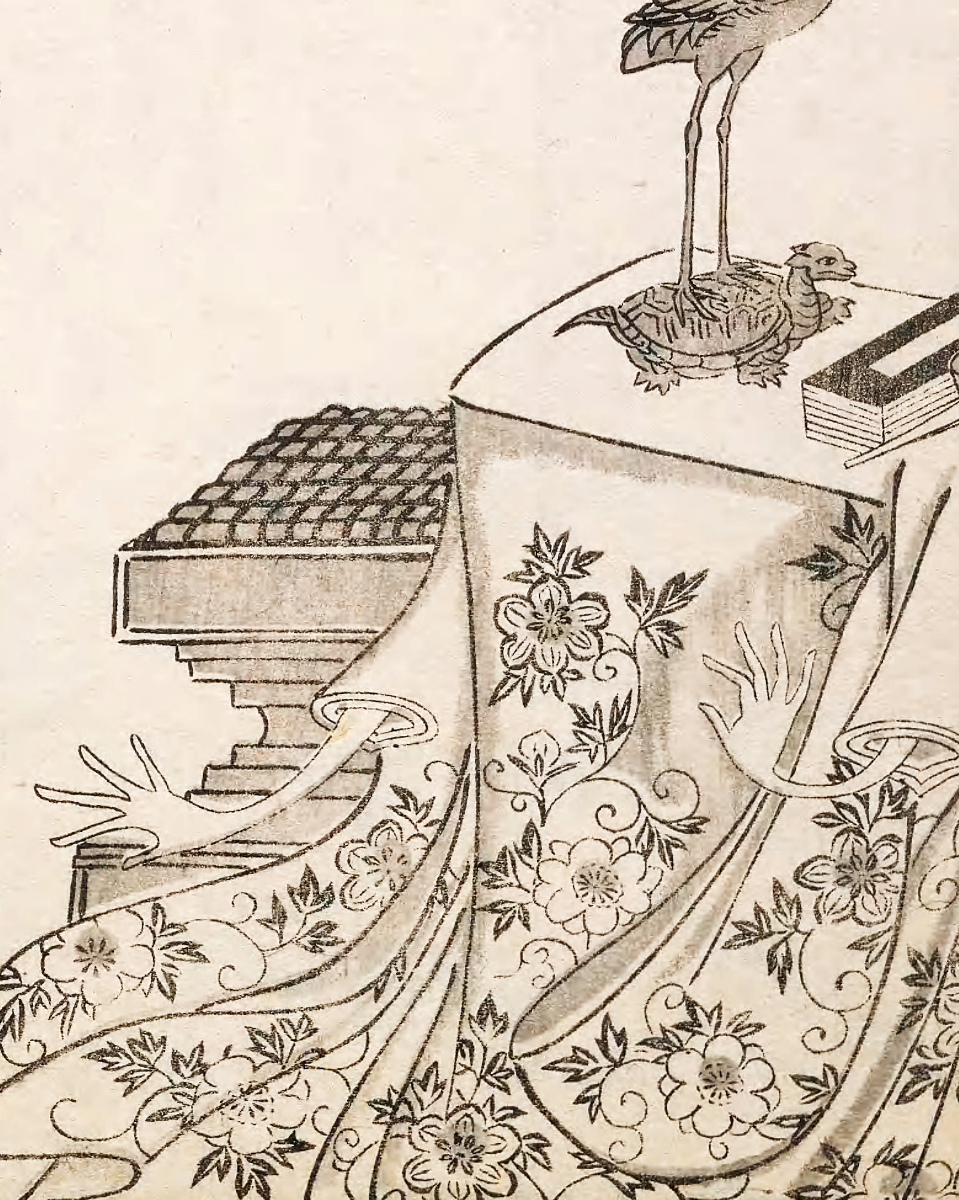
Kosode no te appear in short sleeved kimonos formerly owned by prostitutes. This yōkai manifests as a pair of ghostly hands that emerge from the sleeves and assault welching clients—or whoever happens to be nearby. Kosode no te can occur for several reasons, but a common origin happens when a prostitute dies in vain after working for many years to save up the money to buy her freedom. Upon death, these women’s clothes were customarily donated to a temple in exchange for a funeral and prayers. However, if the woman died still owing money to the brothel keeper, her kimono might be sold for cash instead of being donated to a temple. Then, unable to properly pass on to the afterlife, her spirit might instead attach to her cherished clothing and haunt it.
Description Kosode no te appear in short sleeved kimonos formerly owned by prostitutes. This yōkai manifests as a pair of ghostly hands that emerge from the sleeves and assault welching clients—or whoever happens to be nearby. Kosode no te can occur for several reasons, but a common origin happens when a prostitute dies in vain after working for many years to save up the money to buy her freedom. Upon death, these women’s clothes were customarily donated to a temple in exchange for a funeral and prayers. However, if the woman died still owing money to the brothel keeper, her kimono might be sold for cash instead of being donated to a temple. Then, unable to properly pass on to the afterlife, her spirit might instead attach to her cherished clothing and haunt it.