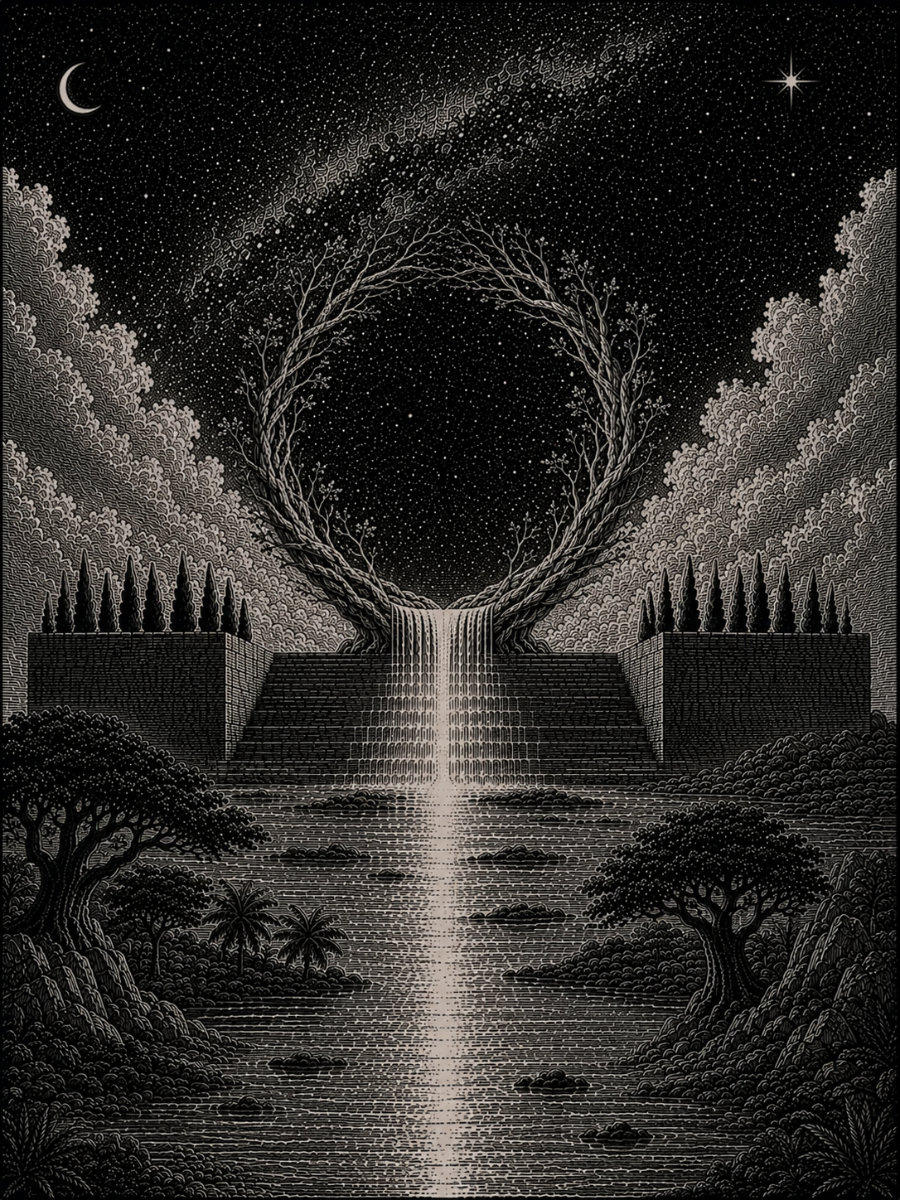
Ọlọrun is the ruler of (or in) the Heavens, creator of the universe, and the Supreme Deity or Supreme Being in the Yoruba religion and related syncretic religions… Ọlọrun is frequently perceived as a compassionate entity who protects its creations and is thought to be omnipotent, omniscient, and omnipresent. People do not worship Olorun directly; there are no sacred areas of worship, no iconography… Ọlọrun’s ordained are known to be Oriṣa, divine beings of whom Obatala is King, who govern, regulate and sustain the physical realm (Ayé). Olorun is outlying, distant, and does not partake in human rituals. There are no shrines or sacrifices dedicated directly to them, although followers can send prayers in their direction… For Yoruba traditions, there is no centralized authority; because of this, there are many different ways that Yoruba people and their descendants or orisha-based faiths can understand the idea of Ọlọrun. Historically, the Yoruba worship Ọlọrun through the agency of the oriṣa; thus there is no direct image, shrine or sacrifice for the deity. It is generally believed that Ọlọrun is manifest in all of existence, and the believer is therefore bound to be grateful and loving towards all beings. However, there are those who also worship them directly, believing the deity to be the origin of virtue and mortality, and bestower of the knowledge of things upon all persons when they are born. Ọlọrun is omnipotent, transcendent, unique, all knowing, good, and evil. The Yoruba have a dialectical view and understanding of evil, and believe its existence is necessary for cosmic balance; without evil (ìbì), there cannot be good (ìré). Thus, the Yoruba thought does not face the problem of evil. The deity’s manifestations are supernatural beings, both good (oriṣa) and bad (ajogun), who represent human activity and natural forces, and who maintain universal equilibrium… Ọlọrun has no gender in the Ifá Literary Corpus, and is always referred to as an entity who exists in spiritual form only…
Alias Ọlọrun
Real Names/Alt Names Olódùmarè, Eledumare, Eleduwa, Eledua, Ɔlɔrun (Ede)
Appearance List The voice of Africa v. 1 (1913) by Leo Frobenius — valued for early observations and visual documentation despite controversial diffusionist interpretations of African civilization [Smithsonian]; The history of the Yorubas : from the earliest times to the beginning of the British Protectorate (1921) by Rev. Samuel Johnson, Paster of Oyo; ed. Dr. O. (Obadiah) Johnson, Lagos [Internet Archive]; Os africanos no Brasil (1932) by Raymundo Nina Rodrigues; The Religion of the Yorùbá (1948) by J. Olumide Luca; Candomblés da Bahia (first ed. 1948; 2nd ed. 1954) by Edison Carneiro; West African Religion (1949) by Geoffrey Parrinder; Dieux d’Afrique (1954) by Pierre Verger (original edition; later reissued); Olódùmarè: God in Yoruba Belief (1962) by E. Bolaji Idowu; Three Yoruba Plays (1964) by Duro Ladipo; The Shango Cult in Trinidad (1965) by George Eaton Simpson (monograph; first ed. 1965); African Religions in Brazil (French: Les religions africaines au Brésil, 1960) by Roger Bastide; Ifa Divination: Communication Between Gods and Men in West Africa (1969) by William Bascom; Yoruba Beliefs and Sacrificial Rites (1979) by J. Ọmọṣade Awolalu.
Sample Read Yoruba Beliefs and Sacrificial Rites (1979) [Internet Archive]
Description Ọlọrun is the ruler of (or in) the Heavens, creator of the universe, and the Supreme Deity or Supreme Being in the Yoruba religion and related syncretic religions… Ọlọrun is frequently perceived as a compassionate entity who protects its creations and is thought to be omnipotent, omniscient, and omnipresent. People do not worship Olorun directly; there are no sacred areas of worship, no iconography… Ọlọrun’s ordained are known to be Oriṣa, divine beings of whom Obatala is King, who govern, regulate and sustain the physical realm (Ayé). Olorun is outlying, distant, and does not partake in human rituals. There are no shrines or sacrifices dedicated directly to them, although followers can send prayers in their direction… For Yoruba traditions, there is no centralized authority; because of this, there are many different ways that Yoruba people and their descendants or orisha-based faiths can understand the idea of Ọlọrun. Historically, the Yoruba worship Ọlọrun through the agency of the oriṣa; thus there is no direct image, shrine or sacrifice for the deity. It is generally believed that Ọlọrun is manifest in all of existence, and the believer is therefore bound to be grateful and loving towards all beings. However, there are those who also worship them directly, believing the deity to be the origin of virtue and mortality, and bestower of the knowledge of things upon all persons when they are born. Ọlọrun is omnipotent, transcendent, unique, all knowing, good, and evil. The Yoruba have a dialectical view and understanding of evil, and believe its existence is necessary for cosmic balance; without evil (ìbì), there cannot be good (ìré). Thus, the Yoruba thought does not face the problem of evil. The deity’s manifestations are supernatural beings, both good (oriṣa) and bad (ajogun), who represent human activity and natural forces, and who maintain universal equilibrium… Ọlọrun has no gender in the Ifá Literary Corpus, and is always referred to as an entity who exists in spiritual form only…