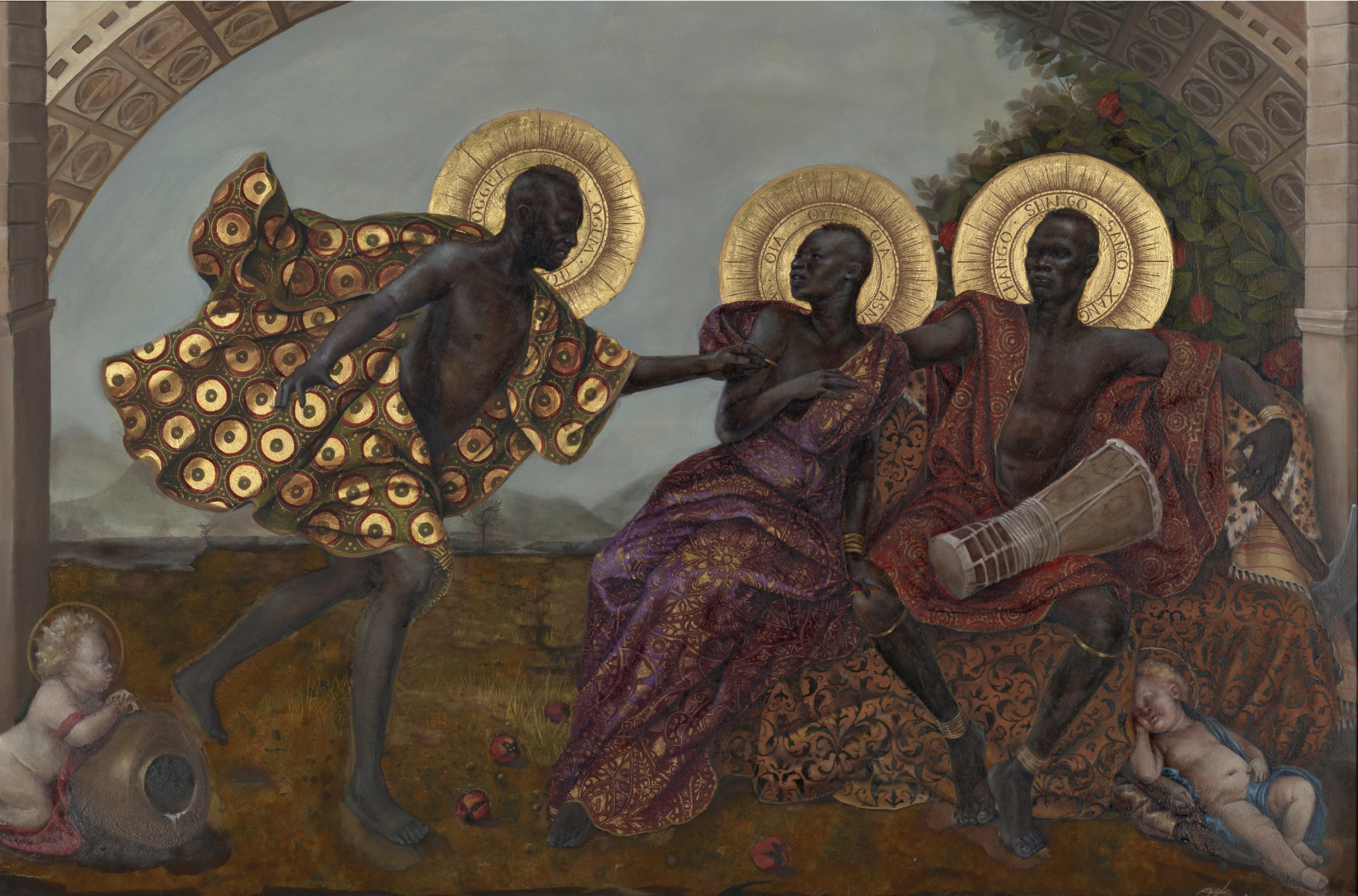
Ogun is a major Orisha in the Yoruba religion that is also adopted in several other African religions. Ògún is revered as a powerful deity of war, iron, hunting, metalworking, metallurgy, blacksmiths, technology, innovation, and divine judgement, as well as of rum and rum-making. He is present in Yoruba religion, Santería, Haitian Vodou, West African Vodun, Candomblé, Umbanda and the folk religion of the Gbe people. According to some legends, as a human, he attempted to seize the throne of Ife Empire after the demise of Ọbàtálá, who reigned twice, before and after Oduduwa, but was ousted by Obalufon Ogbogbodirin and sent on an exile — an event that serves as the core of the Ọlọ́jọ́ Festival. In Yoruba religion, Ogun is an Irunmọlẹ (primordial orisha) in Yorubaland. In some traditions, he is said to have cleared a path for the other orisha to enter Earth, using a metal machete and with the assistance of a dog. To commemorate this, one of his oriki, or epithets, is Osin Imole or the “first of the primordial Orisha to come to Earth”. He is the god of war and metals… The primary symbols of Ogun are iron, the dog, and the palm frond. They symbolize Ogun’s role in transformation, mediation, and function. Iron is the primary emblem of Ogun. Ogun altars and ceremonies display and use iron objects both in Yoruba areas and across the African diaspora. Followers of Ogun wear chains of iron implements; Ogun festivals feature the display of knives, guns, blacksmith implements, scissors, wrenches, and other iron implements from daily life…
Alias Ògún
Real Names/Alt Names Ògún (Yoruba), Ogoun, Ogún, Oggun
Appearance List The voice of Africa v. 1 (1913) by Leo Frobenius — valued for early observations and visual documentation despite controversial diffusionist interpretations of African civilization [Smithsonian]; The history of the Yorubas : from the earliest times to the beginning of the British Protectorate (1921) by Rev. Samuel Johnson, Paster of Oyo; ed. Dr. O. (Obadiah) Johnson, Lagos [Internet Archive]; Os africanos no Brasil (1932) by Raymundo Nina Rodrigues; The Religion of the Yorùbá (1948) by J. Olumide Luca; Candomblés da Bahia (first ed. 1948; 2nd ed. 1954) by Edison Carneiro; West African Religion (1949) by Geoffrey Parrinder; Dieux d’Afrique (1954) by Pierre Verger (original edition; later reissued); Olódùmarè: God in Yoruba Belief (1962) by E. Bolaji Idowu; Three Yoruba Plays (1964) by Duro Ladipo; The Shango Cult in Trinidad (1965) by George Eaton Simpson (monograph; first ed. 1965); African Religions in Brazil (French: Les religions africaines au Brésil, 1960) by Roger Bastide; Ifa Divination: Communication Between Gods and Men in West Africa (1969) by William Bascom; Yoruba Beliefs and Sacrificial Rites (1979) by J. Ọmọṣade Awolalu.
Sample Read Yoruba Beliefs and Sacrificial Rites (1979) [Internet Archive]
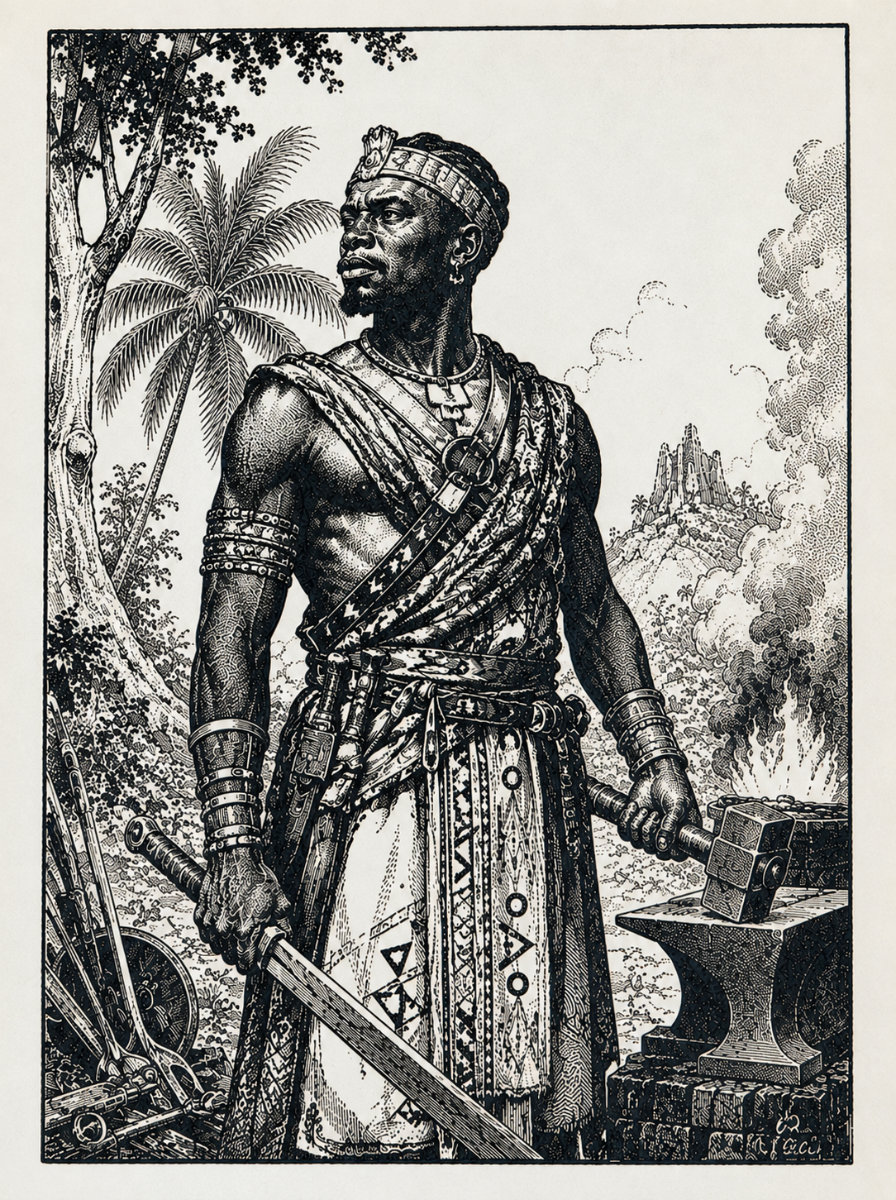
Description Ogun is a major Orisha in the Yoruba religion that is also adopted in several other African religions. Ògún is revered as a powerful deity of war, iron, hunting, metalworking, metallurgy, blacksmiths, technology, innovation, and divine judgement, as well as of rum and rum-making. He is present in Yoruba religion, Santería, Haitian Vodou, West African Vodun, Candomblé, Umbanda and the folk religion of the Gbe people. According to some legends, as a human, he attempted to seize the throne of Ife Empire after the demise of Ọbàtálá, who reigned twice, before and after Oduduwa, but was ousted by Obalufon Ogbogbodirin and sent on an exile — an event that serves as the core of the Ọlọ́jọ́ Festival. In Yoruba religion, Ogun is an Irunmọlẹ (primordial orisha) in Yorubaland. In some traditions, he is said to have cleared a path for the other orisha to enter Earth, using a metal machete and with the assistance of a dog. To commemorate this, one of his oriki, or epithets, is Osin Imole or the “first of the primordial Orisha to come to Earth”. He is the god of war and metals… The primary symbols of Ogun are iron, the dog, and the palm frond. They symbolize Ogun’s role in transformation, mediation, and function. Iron is the primary emblem of Ogun. Ogun altars and ceremonies display and use iron objects both in Yoruba areas and across the African diaspora. Followers of Ogun wear chains of iron implements; Ogun festivals feature the display of knives, guns, blacksmith implements, scissors, wrenches, and other iron implements from daily life…

 ,
,