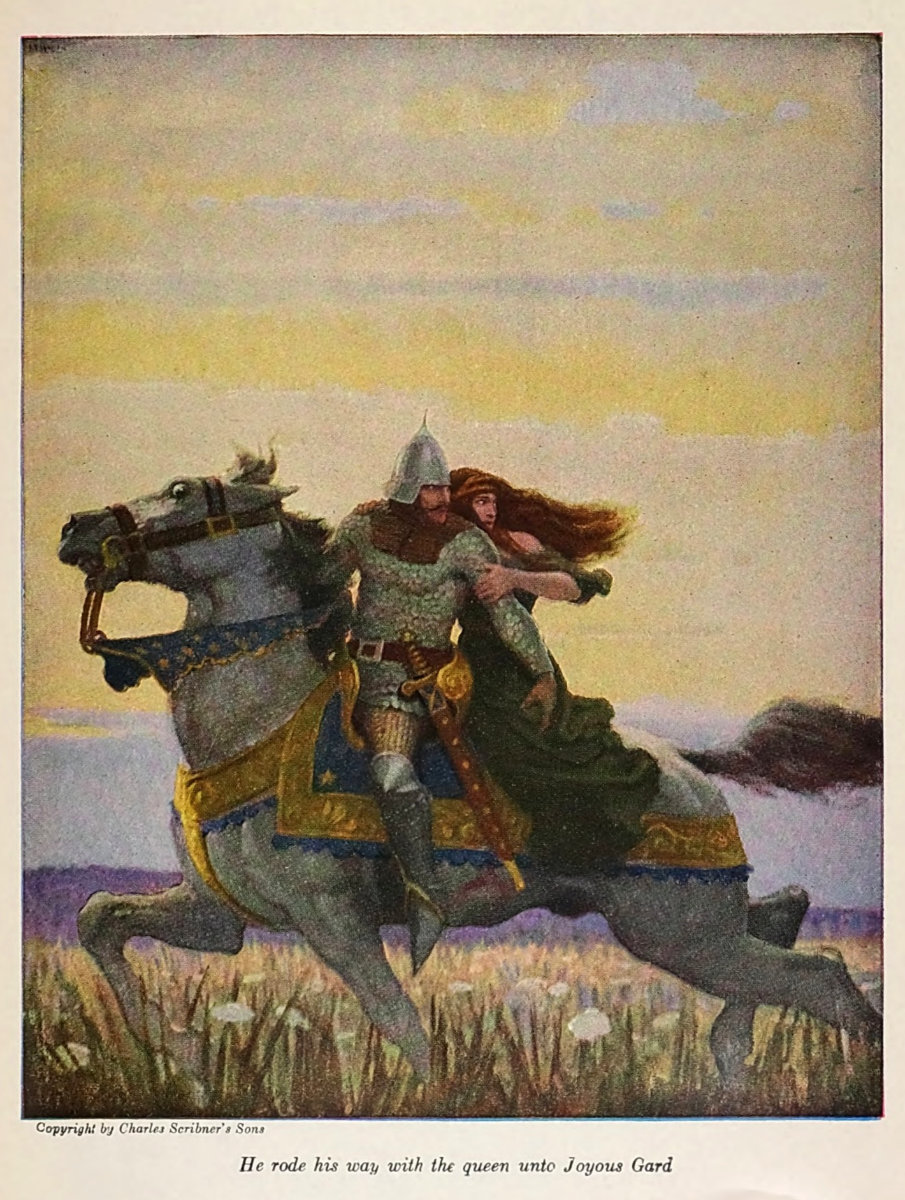
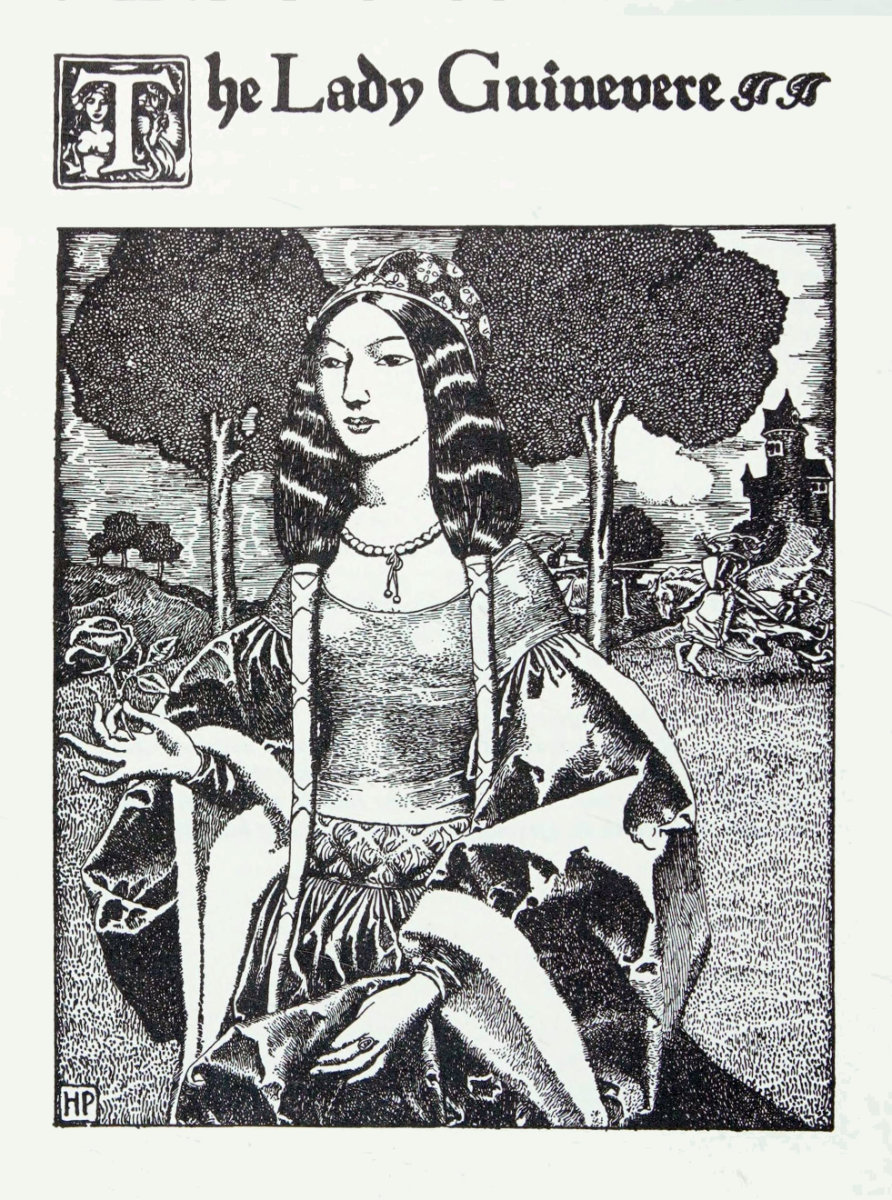
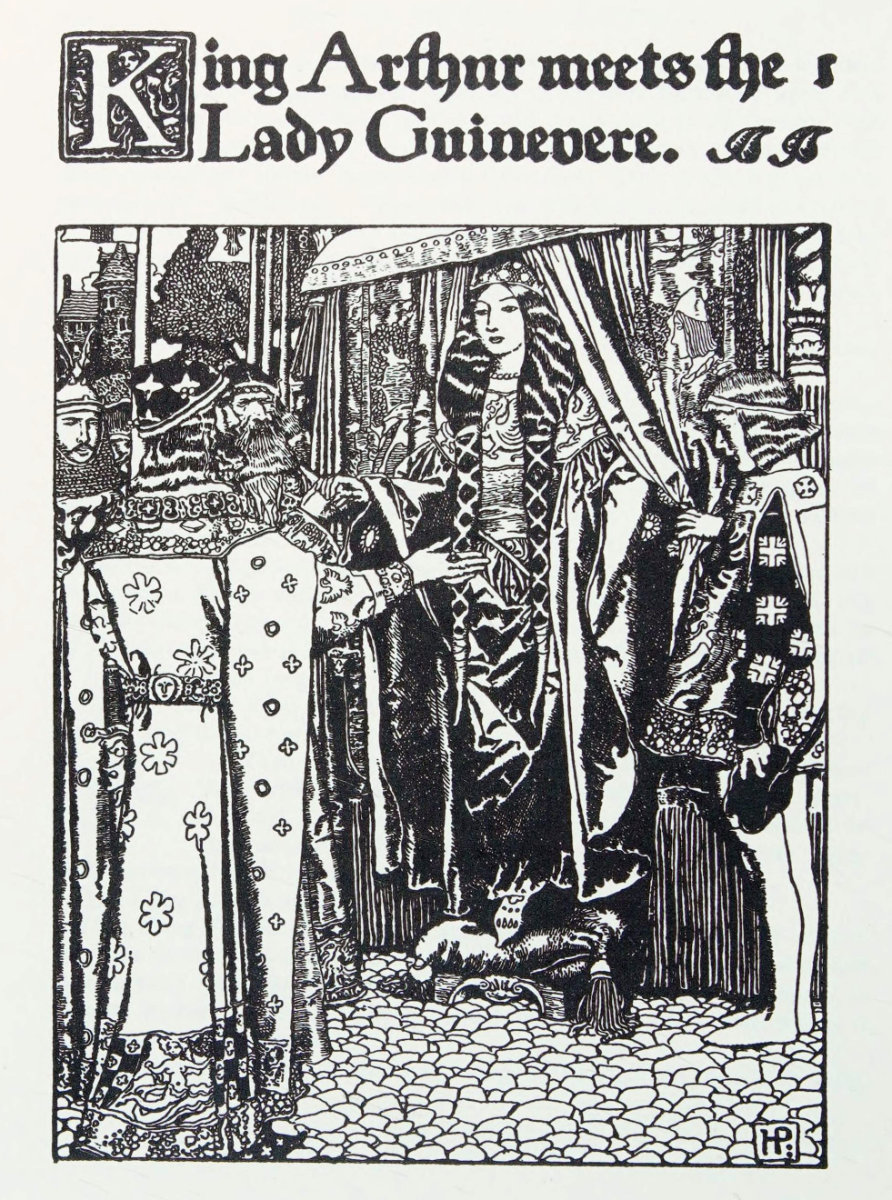
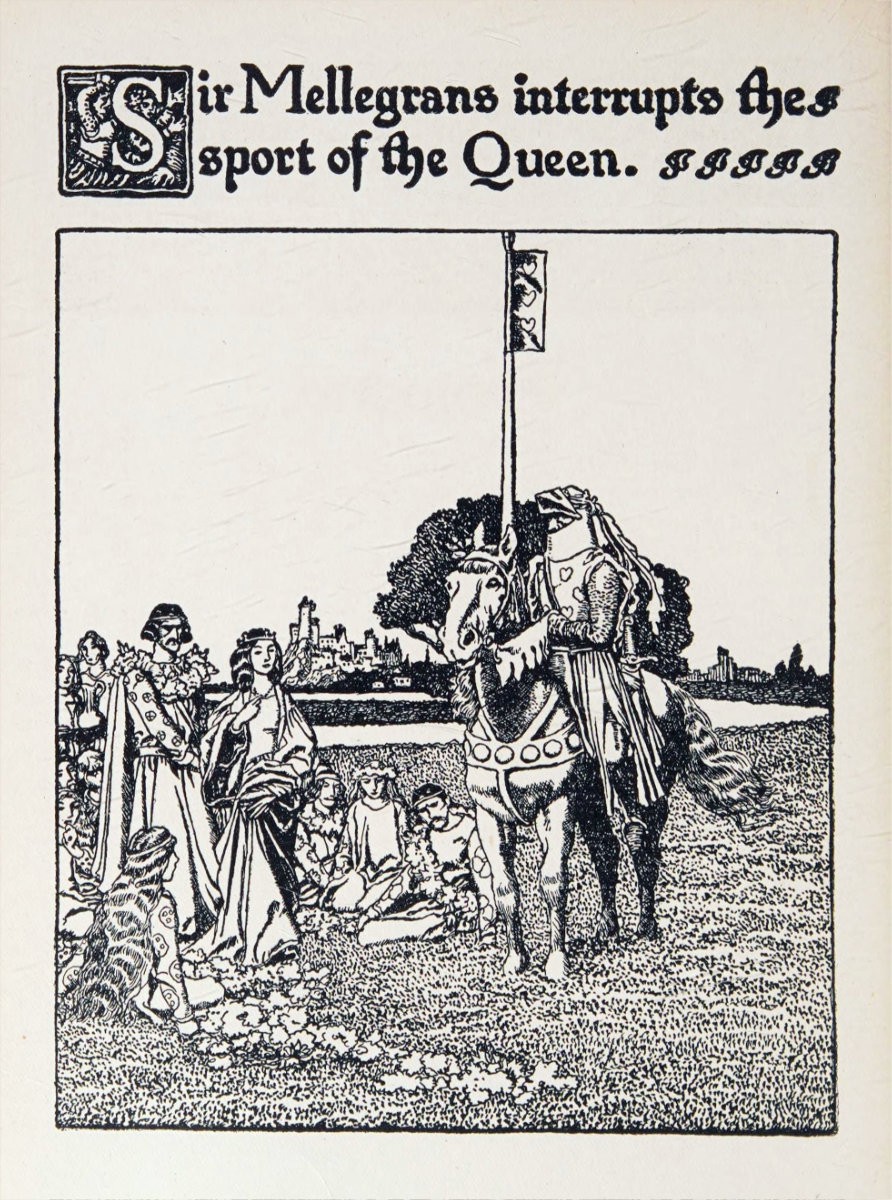
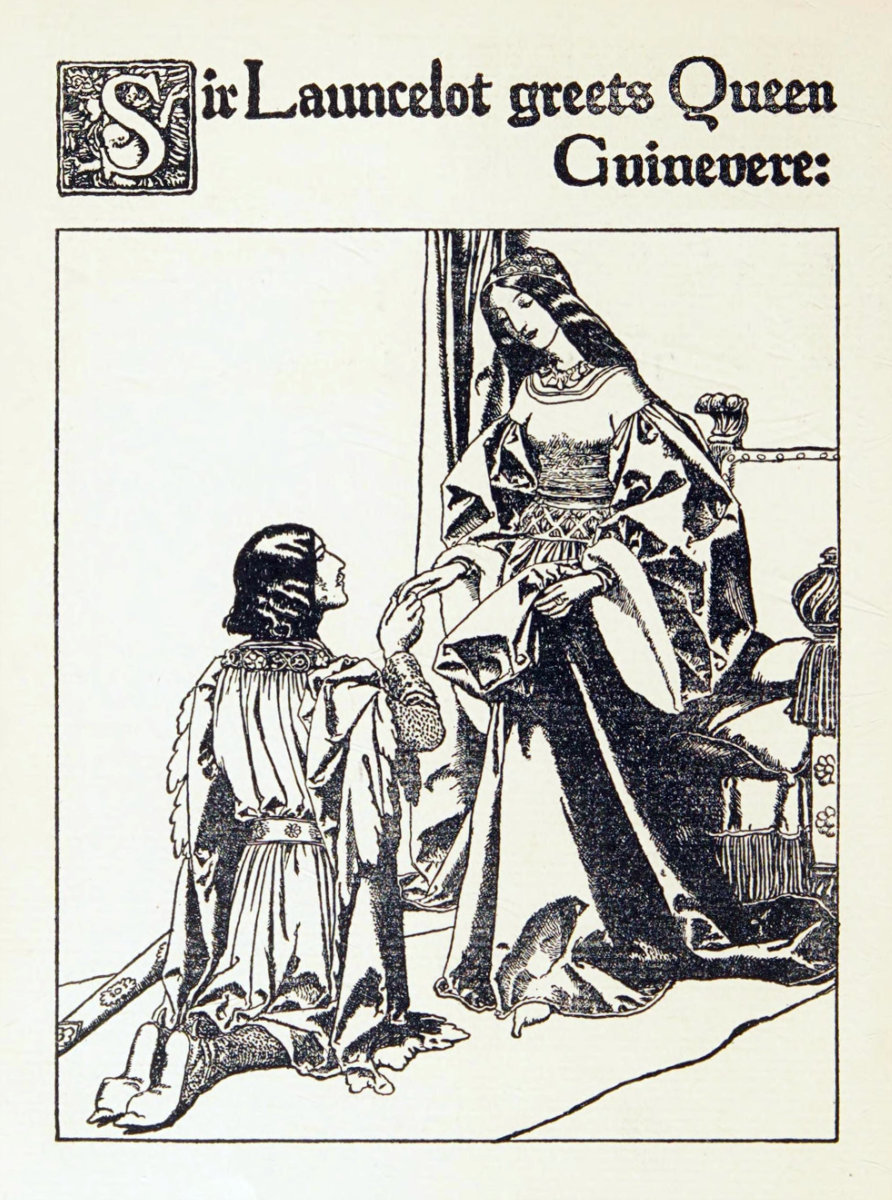
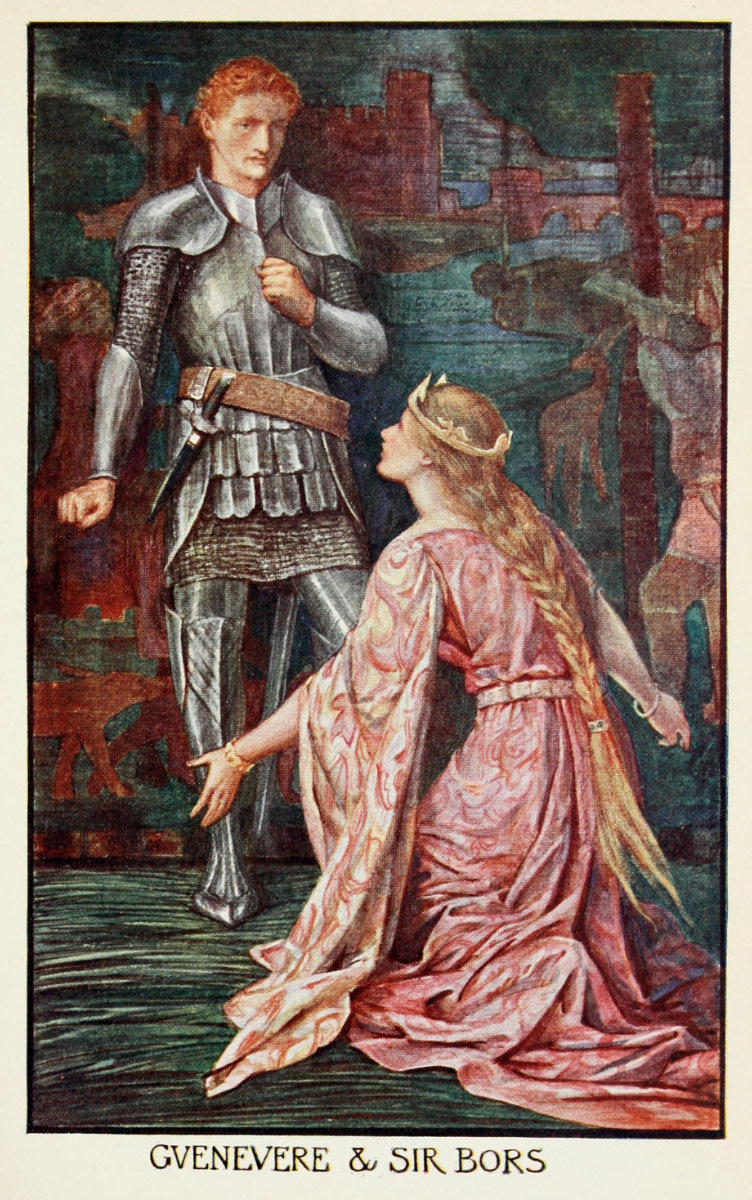
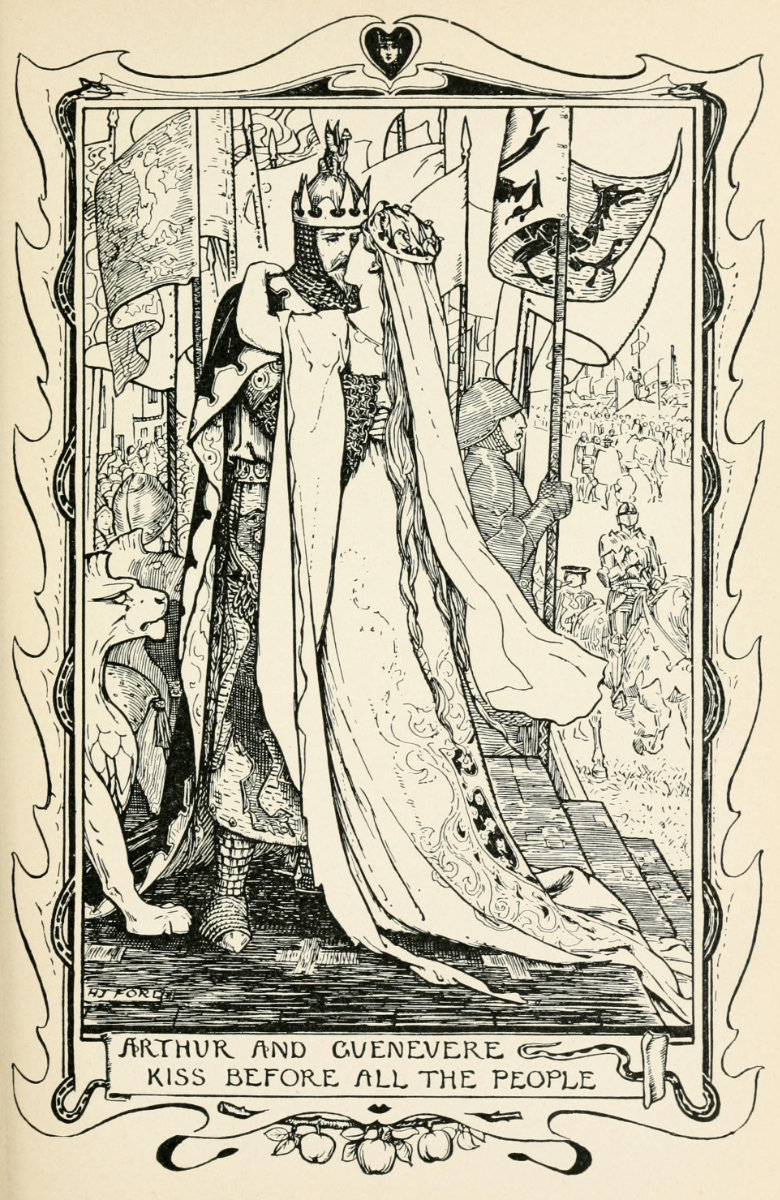
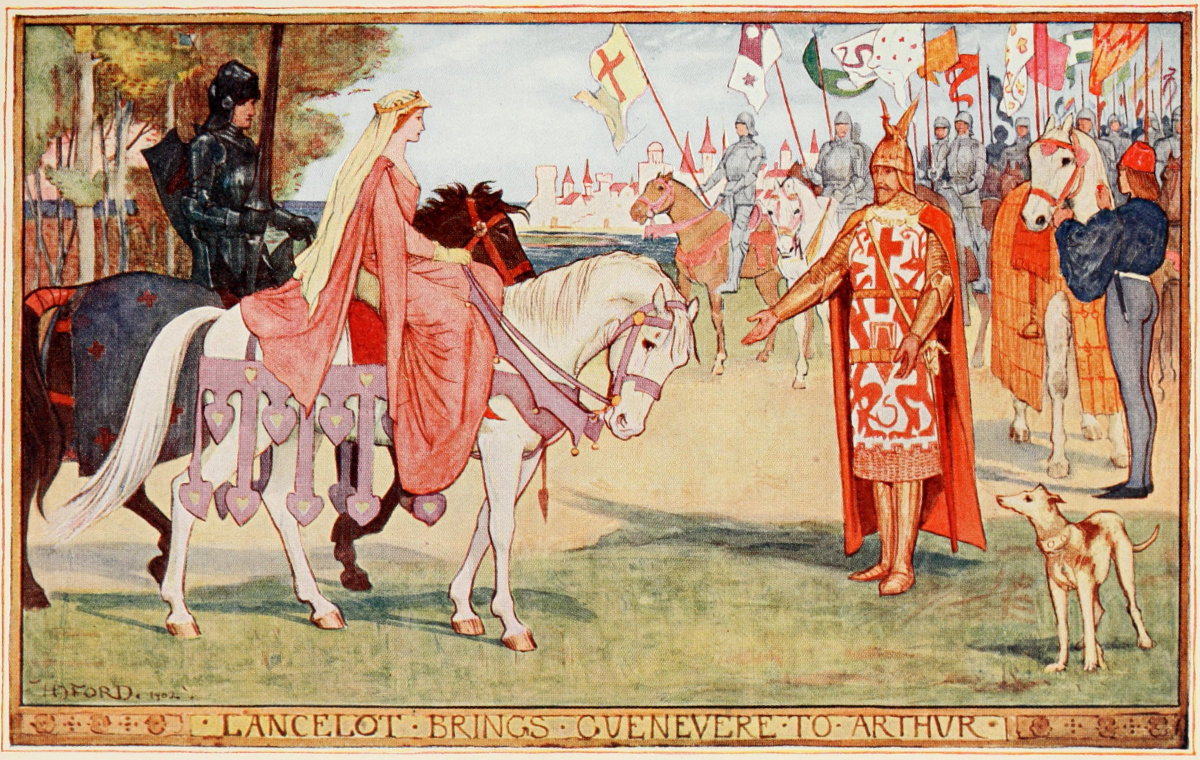
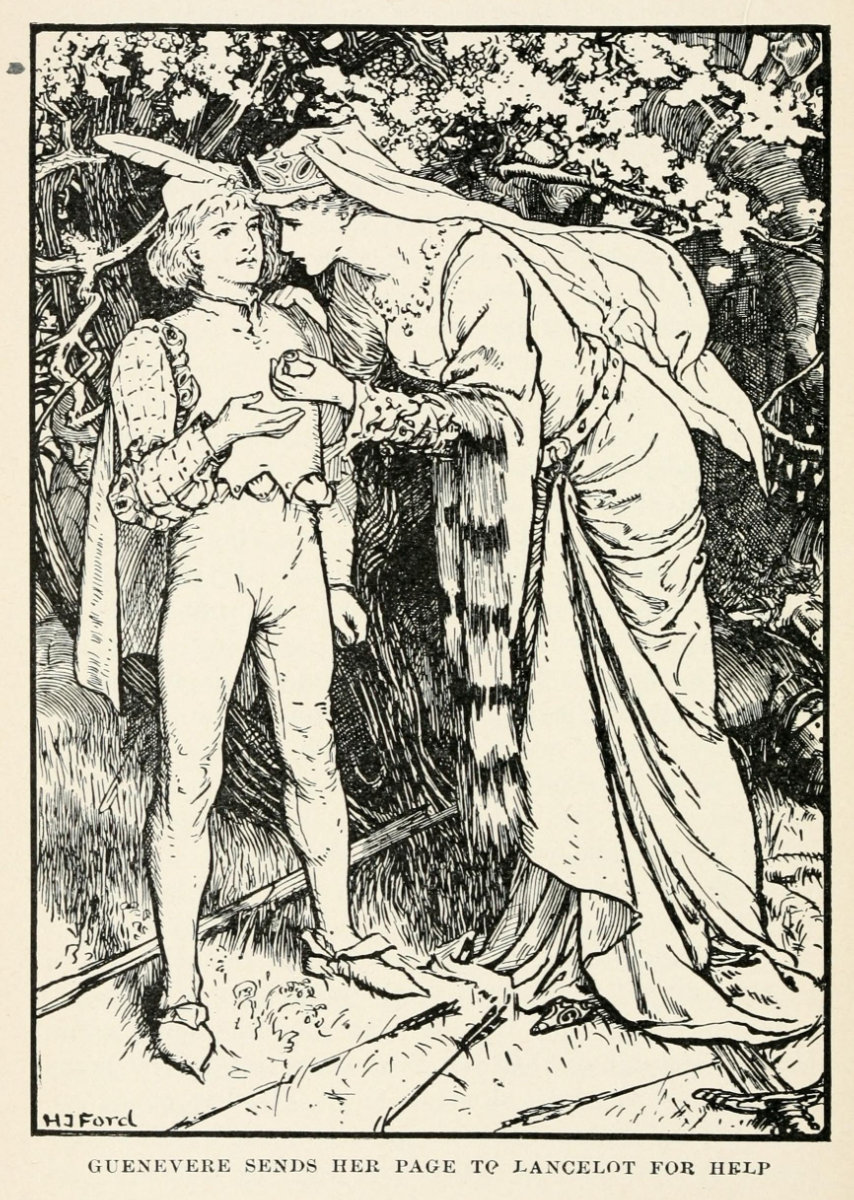
Guinevere, also often written in Modern English as Guenevere or Guenever, was, according to Arthurian legend, an early-medieval queen of Great Britain and the wife of King Arthur. First mentioned in literature in the early 12th century, nearly 700 years after the purported times of Arthur, Guinevere has since been portrayed as everything from a fatally flawed, villainous, and opportunistic traitor to a noble and virtuous lady. The variably told motif of abduction of Guinevere, or of her being rescued from some other peril, features recurrently and prominently in many versions of the legend. The earliest datable appearance of Guinevere is in Geoffrey of Monmouth’s pseudo-historical British chronicle Historia Regum Britanniae, in which she is seduced by Mordred during his ill-fated rebellion against Arthur. In a later medieval Arthurian romance tradition from France, a major story arc is the queen’s tragic love affair with her husband’s best knight and trusted friend, Lancelot, indirectly causing the death of Arthur and the downfall of the kingdom. This concept had originally appeared in nascent form in Chrétien de Troyes’s poem Lancelot, the Knight of the Cart prior to its vast expansion in the prose cycle Lancelot-Grail, consequently forming much of the narrative core of Thomas Malory’s seminal English compilation Le Morte d’Arthur. Other themes found in Malory and other texts include Guinevere’s usual barrenness, the scheme of Guinevere’s evil twin to replace her, and the particular hostility displayed towards Guinevere by her sister-in-law Morgan le Fay.
Appearance List Annales Cambriae (10th century); Historia Regum Britanniae (1136); Merlin by Robert de Boron (late 12th–early 13th c.); The Vulgate Lancelot (13th c.); Le Morte d’Arthur (1485) by Thomas Malory; Ballads of Bravery (1877); The Boy’s King Arthur: Sir Thomas Malory’s History of King Arthur and His Knights of the Round Table by Sidney Lanier (Charles Scribner’s Sons, 1880); The Story of King Arthur and His Knights (1903) by Howard Pyle [Internet Archive]; The Story of the Champions of the Round Table (1905, 1911) by Howard Pyle [Internet Archive]; The Story of Sir Launcelot and His Companions (1907) by Howard Pyle [Internet Archive]; The Story of the Grail and the Passing of King Arthur (1910) by Howard Pyle [Internet Archive]; Tales of the Round Table (1908) by Andrew Lang [Internet Archive]; Myths and Legends of the Celtic Race (1910) by T. W. Rolleston [Internet Archive]; The Legends of King Arthur and His Knights (1912) [Internet Archive]; Idylls of the King (1859) by Alfred Lord Tennyson – 1913 illustrated edition: [Internet Archive]; Legends and Romances of Brittany (1917) by Lewis Spence. Film: Knights of the Round Table (1926) by Rex Ingram (silent, partially lost); Knights of the Round Table (1953) by Richard Thorpe; Lancelot and Guinevere (1963) by Cornel Wilde; The Sword in the Stone (1963) by Walt Disney Productions; Camelot (1967) by Joshua Logan; Excalibur (1981).
Description Guinevere, also often written in Modern English as Guenevere or Guenever, was, according to Arthurian legend, an early-medieval queen of Great Britain and the wife of King Arthur. First mentioned in literature in the early 12th century, nearly 700 years after the purported times of Arthur, Guinevere has since been portrayed as everything from a fatally flawed, villainous, and opportunistic traitor to a noble and virtuous lady. The variably told motif of abduction of Guinevere, or of her being rescued from some other peril, features recurrently and prominently in many versions of the legend. The earliest datable appearance of Guinevere is in Geoffrey of Monmouth’s pseudo-historical British chronicle Historia Regum Britanniae, in which she is seduced by Mordred during his ill-fated rebellion against Arthur. In a later medieval Arthurian romance tradition from France, a major story arc is the queen’s tragic love affair with her husband’s best knight and trusted friend, Lancelot, indirectly causing the death of Arthur and the downfall of the kingdom. This concept had originally appeared in nascent form in Chrétien de Troyes’s poem Lancelot, the Knight of the Cart prior to its vast expansion in the prose cycle Lancelot-Grail, consequently forming much of the narrative core of Thomas Malory’s seminal English compilation Le Morte d’Arthur. Other themes found in Malory and other texts include Guinevere’s usual barrenness, the scheme of Guinevere’s evil twin to replace her, and the particular hostility displayed towards Guinevere by her sister-in-law Morgan le Fay.

 ,
,  ,
,  ,
,  ,
,  ,
,  ,
,  ,
,  ,
,  ,
,  ,
,  ,
,  ,
,  ,
,  ,
,  ,
, 