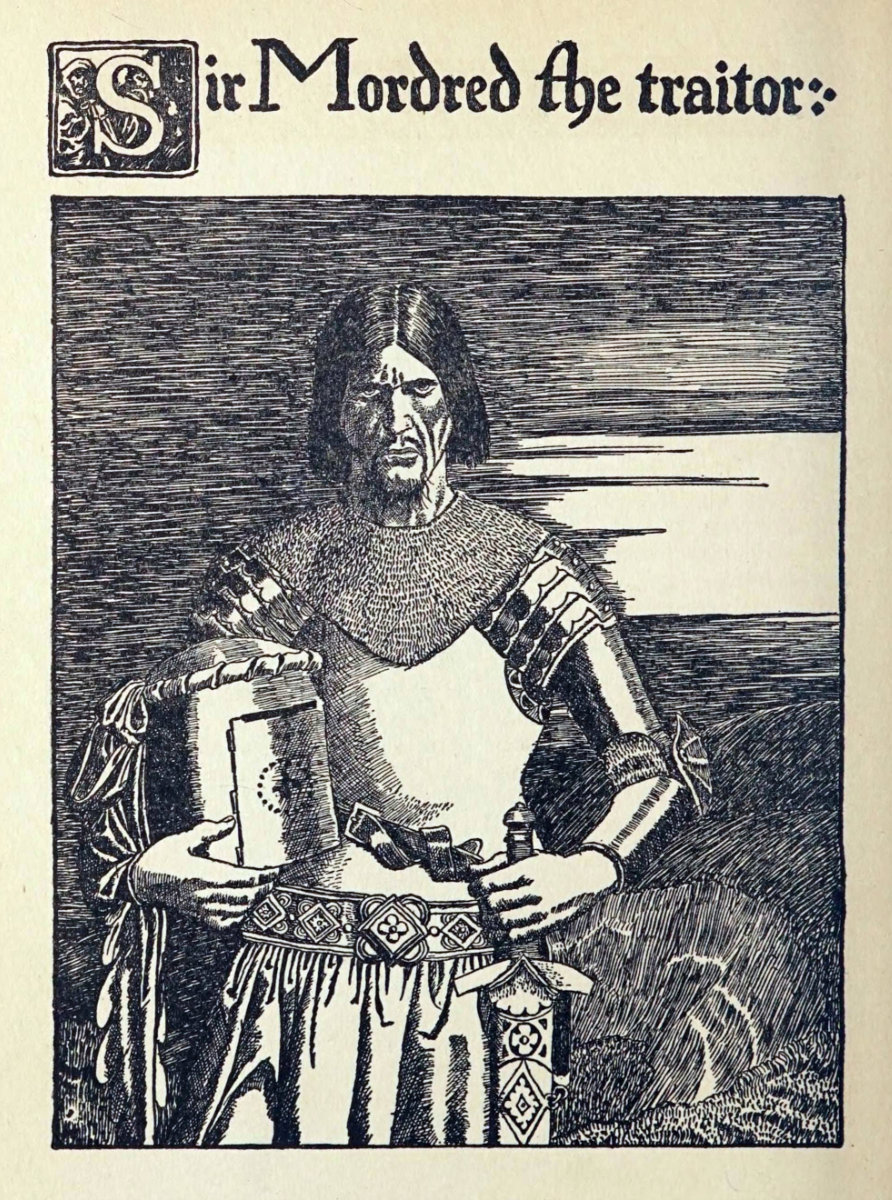
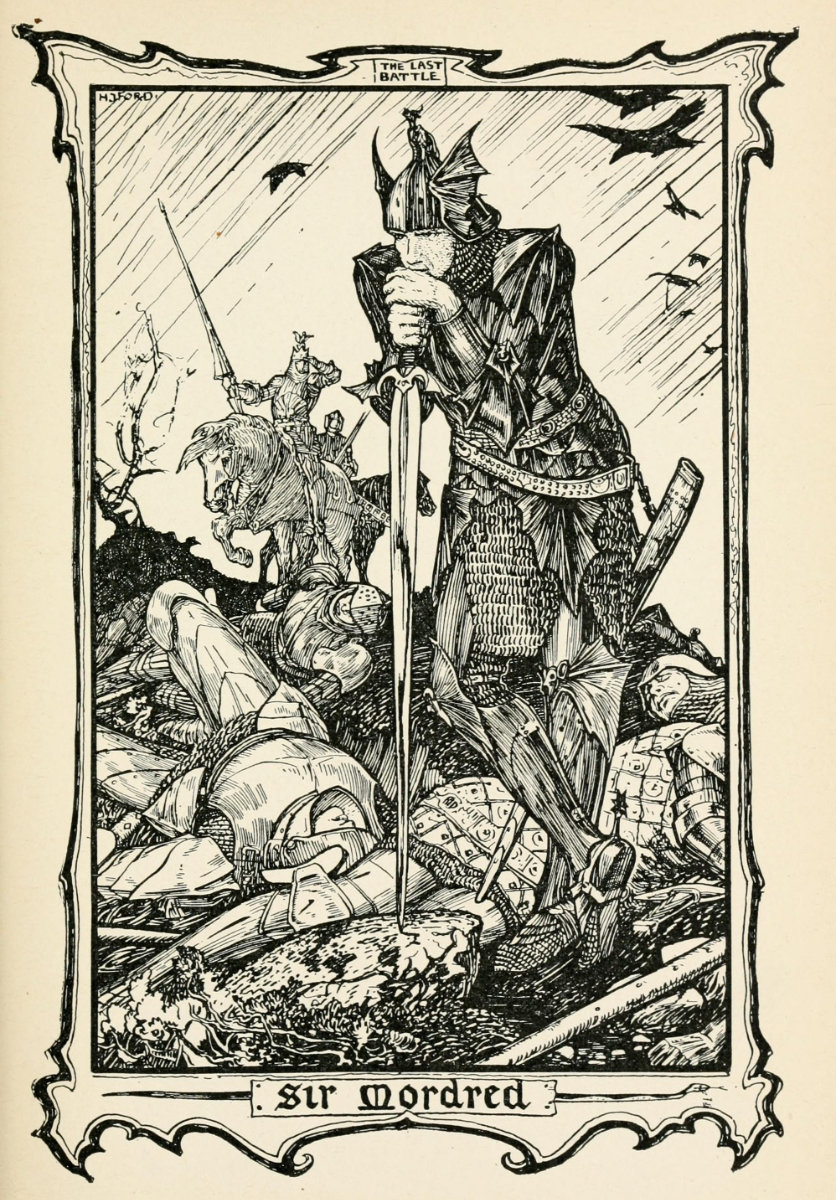
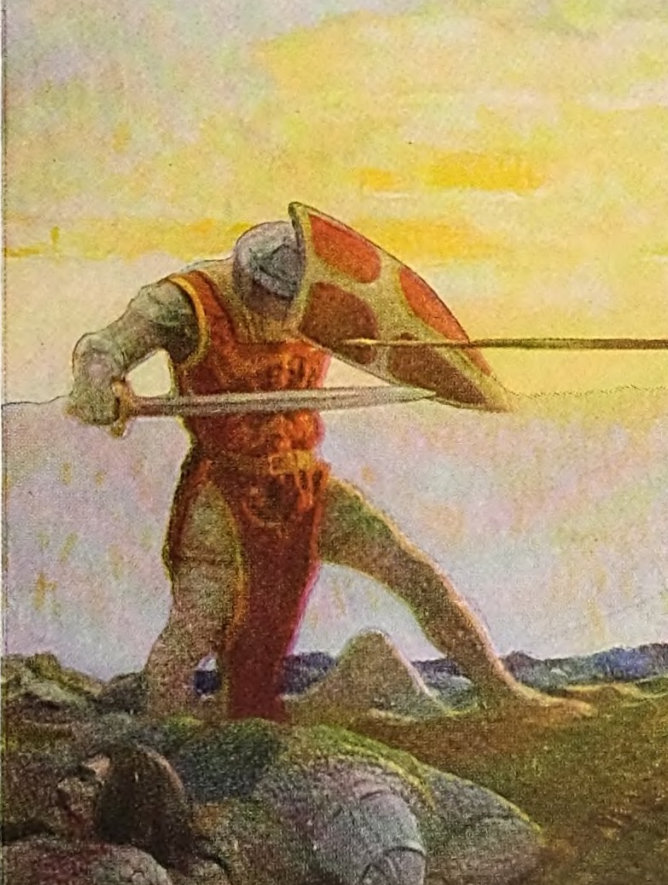
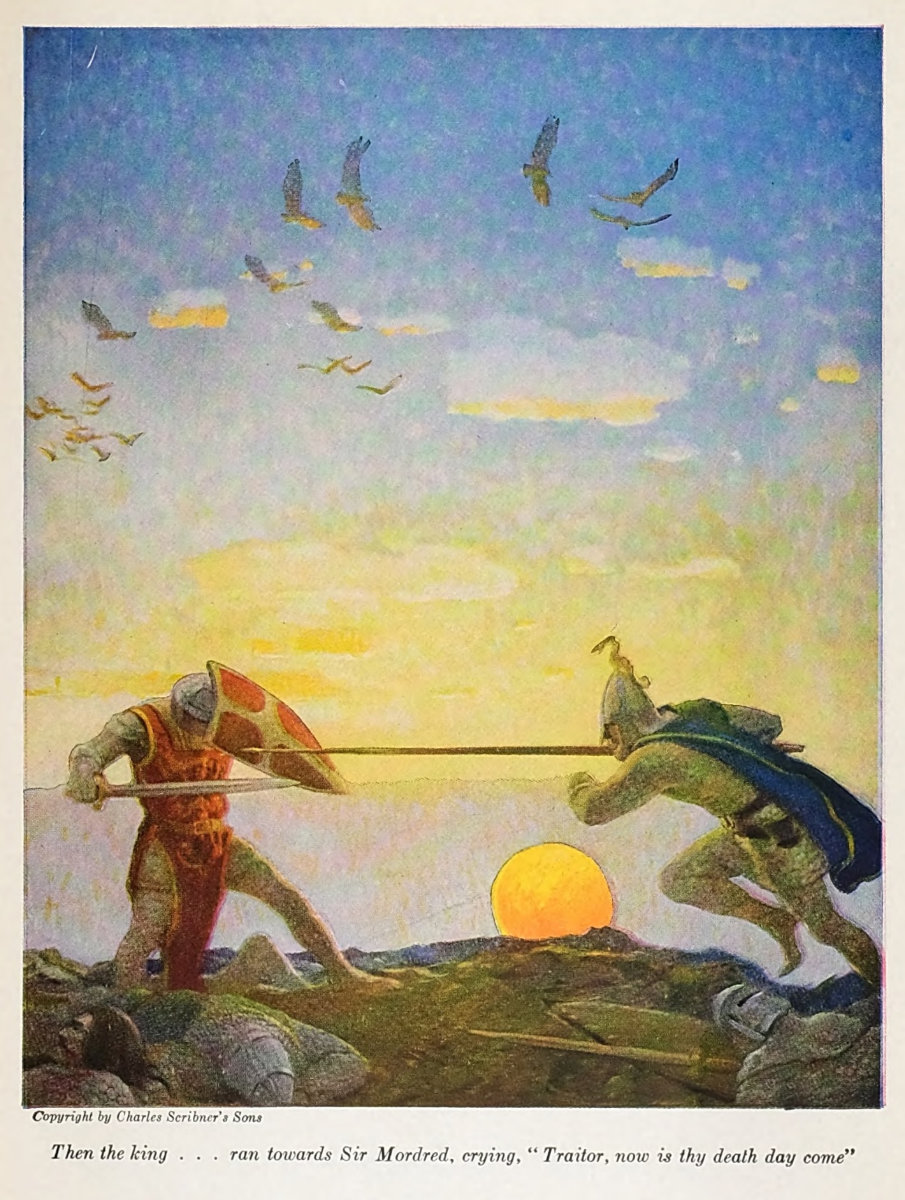
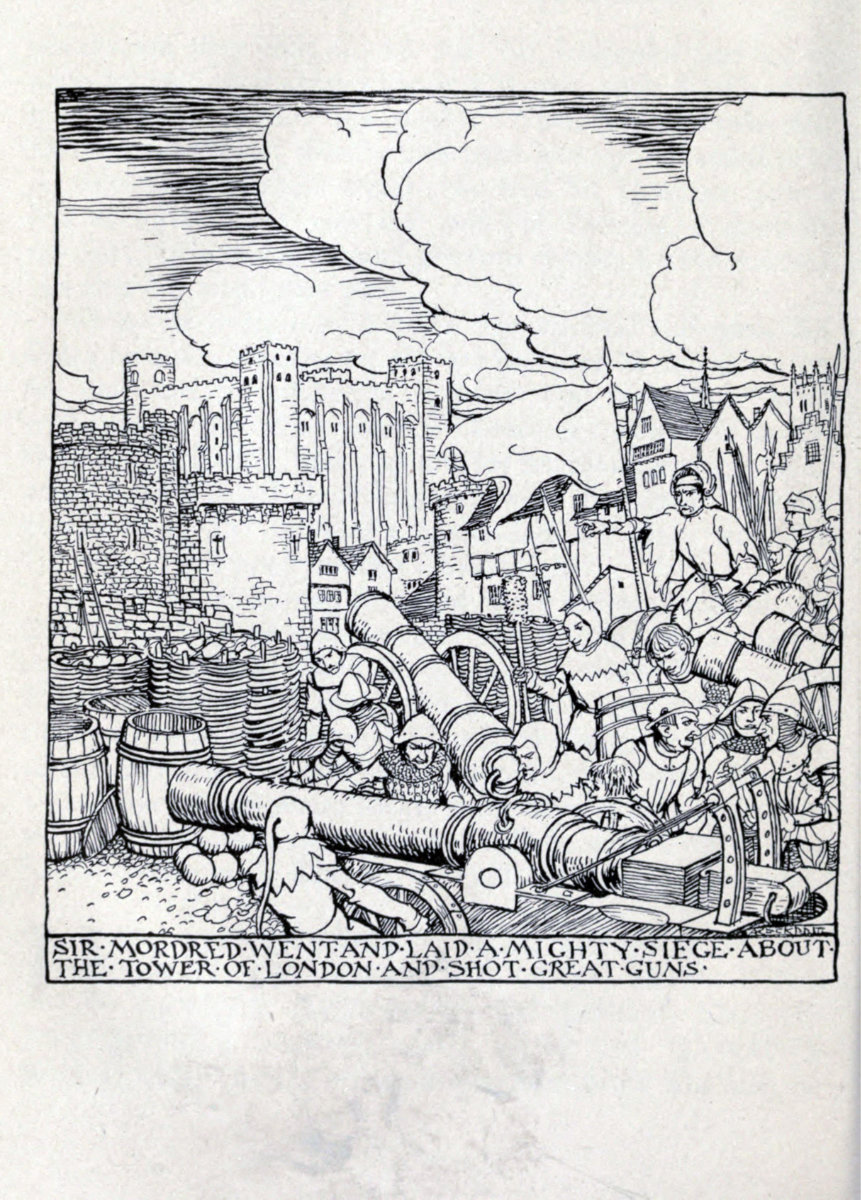
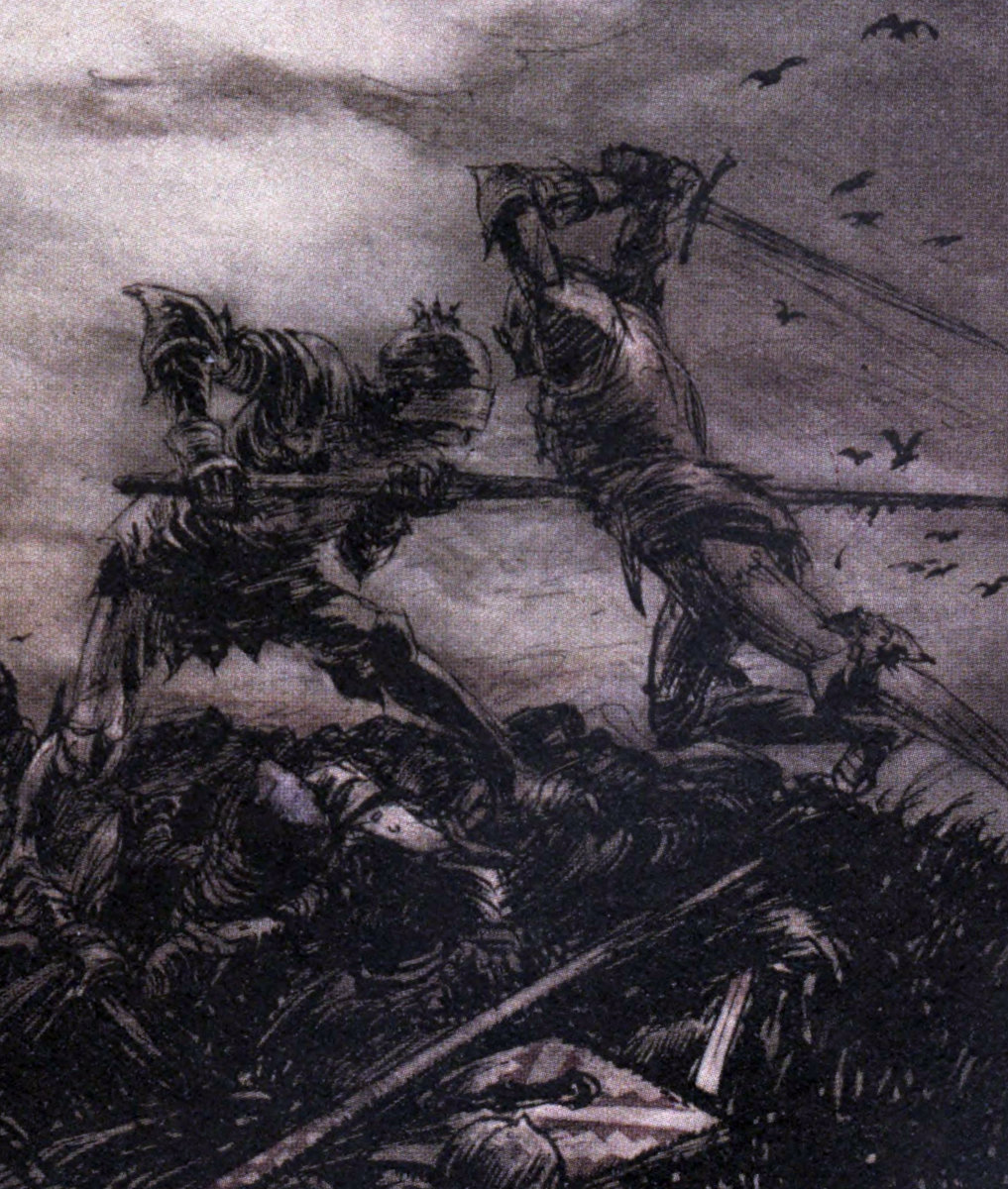
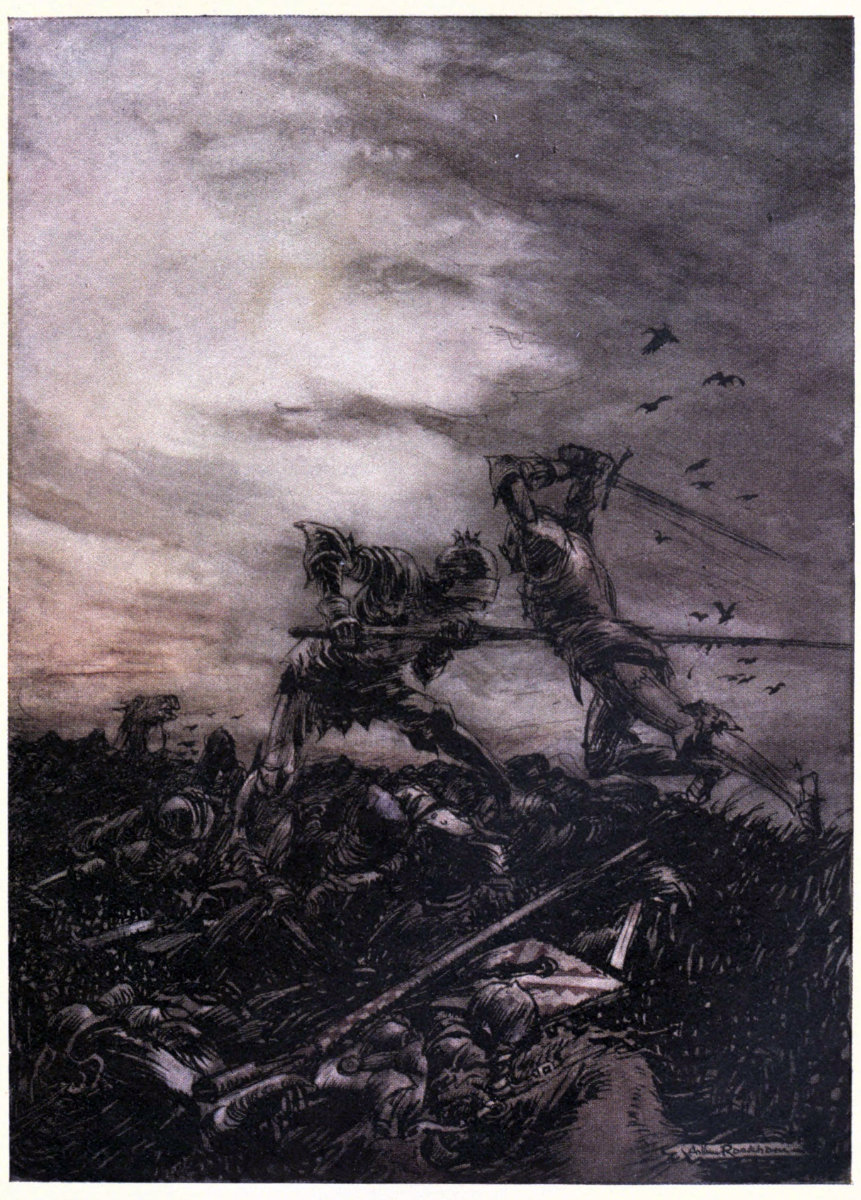
Mordred or Modred is a figure who is variously portrayed in the legend of King Arthur. The earliest known mention of a possibly historical Medraut is in the Welsh chronicle Annales Cambriae, wherein he and Arthur are ambiguously associated with the Battle of Camlann in a brief entry for the year 537. His figure seemed to have been regarded positively in the early Welsh tradition and may have been related to that of Arthur’s son. As Modredus, Mordred was depicted as Arthur’s traitorous nephew and a legitimate son of King Lot in Geoffrey of Monmouth’s pseudo-historical work Historia Regum Britanniae which then served as the basis for the following evolution of the legend from the 12th century. Later variants most often characterized him as Arthur’s villainous bastard son, born of an incestuous relationship with his half-sister, the queen of Lothian or Orkney named either Anna, Orcades, or Morgause. The accounts presented in the Historia and most other versions include Mordred’s death at Camlann, typically in a final duel, during which he manages to mortally wound his slayer, Arthur. Mordred is usually a brother or half-brother to Gawain; however, his other family relations, as well as his relationships with Arthur’s wife Guinevere, vary greatly. In a popular telling originating from the French chivalric romances of the 13th century, and made prominent today through its inclusion in Le Morte d’Arthur, Mordred is knighted by Arthur and joins the fellowship of the Round Table. In this narrative, he eventually becomes the main actor in Arthur’s downfall: he helps his half-brother Agravain to expose the affair between Guinevere and Lancelot, and then takes advantage of the resulting civil war to make himself the high king of Britain.
Appearance List Annales Cambriae (10th century); Historia Regum Britanniae (1136); Merlin by Robert de Boron (late 12th–early 13th c.); The Vulgate Lancelot (13th c.); Le Morte d’Arthur (1485) by Thomas Malory; Ballads of Bravery (1877); The Boy’s King Arthur: Sir Thomas Malory’s History of King Arthur and His Knights of the Round Table by Sidney Lanier (Charles Scribner’s Sons, 1880); The Story of King Arthur and His Knights (1903) by Howard Pyle [Internet Archive]; The Story of the Champions of the Round Table (1905, 1911) by Howard Pyle [Internet Archive]; The Story of Sir Launcelot and His Companions (1907) by Howard Pyle [Internet Archive]; The Story of the Grail and the Passing of King Arthur (1910) by Howard Pyle [Internet Archive]; Tales of the Round Table (1908) by Andrew Lang [Internet Archive]; Myths and Legends of the Celtic Race (1910) by T. W. Rolleston [Internet Archive]; The Legends of King Arthur and His Knights (1912) [Internet Archive]; Idylls of the King (1859) by Alfred Lord Tennyson – 1913 illustrated edition: [Internet Archive]; Legends and Romances of Brittany (1917) by Lewis Spence. Film: Knights of the Round Table (1926) by Rex Ingram (silent, partially lost); Knights of the Round Table (1953) by Richard Thorpe; Lancelot and Guinevere (1963) by Cornel Wilde; The Sword in the Stone (1963) by Walt Disney Productions; Camelot (1967) by Joshua Logan; Excalibur (1981).
Description Mordred or Modred is a figure who is variously portrayed in the legend of King Arthur. The earliest known mention of a possibly historical Medraut is in the Welsh chronicle Annales Cambriae, wherein he and Arthur are ambiguously associated with the Battle of Camlann in a brief entry for the year 537. His figure seemed to have been regarded positively in the early Welsh tradition and may have been related to that of Arthur’s son. As Modredus, Mordred was depicted as Arthur’s traitorous nephew and a legitimate son of King Lot in Geoffrey of Monmouth’s pseudo-historical work Historia Regum Britanniae which then served as the basis for the following evolution of the legend from the 12th century. Later variants most often characterized him as Arthur’s villainous bastard son, born of an incestuous relationship with his half-sister, the queen of Lothian or Orkney named either Anna, Orcades, or Morgause. The accounts presented in the Historia and most other versions include Mordred’s death at Camlann, typically in a final duel, during which he manages to mortally wound his slayer, Arthur. Mordred is usually a brother or half-brother to Gawain; however, his other family relations, as well as his relationships with Arthur’s wife Guinevere, vary greatly. In a popular telling originating from the French chivalric romances of the 13th century, and made prominent today through its inclusion in Le Morte d’Arthur, Mordred is knighted by Arthur and joins the fellowship of the Round Table. In this narrative, he eventually becomes the main actor in Arthur’s downfall: he helps his half-brother Agravain to expose the affair between Guinevere and Lancelot, and then takes advantage of the resulting civil war to make himself the high king of Britain.

 ,
,  ,
,  ,
,  ,
,  ,
,