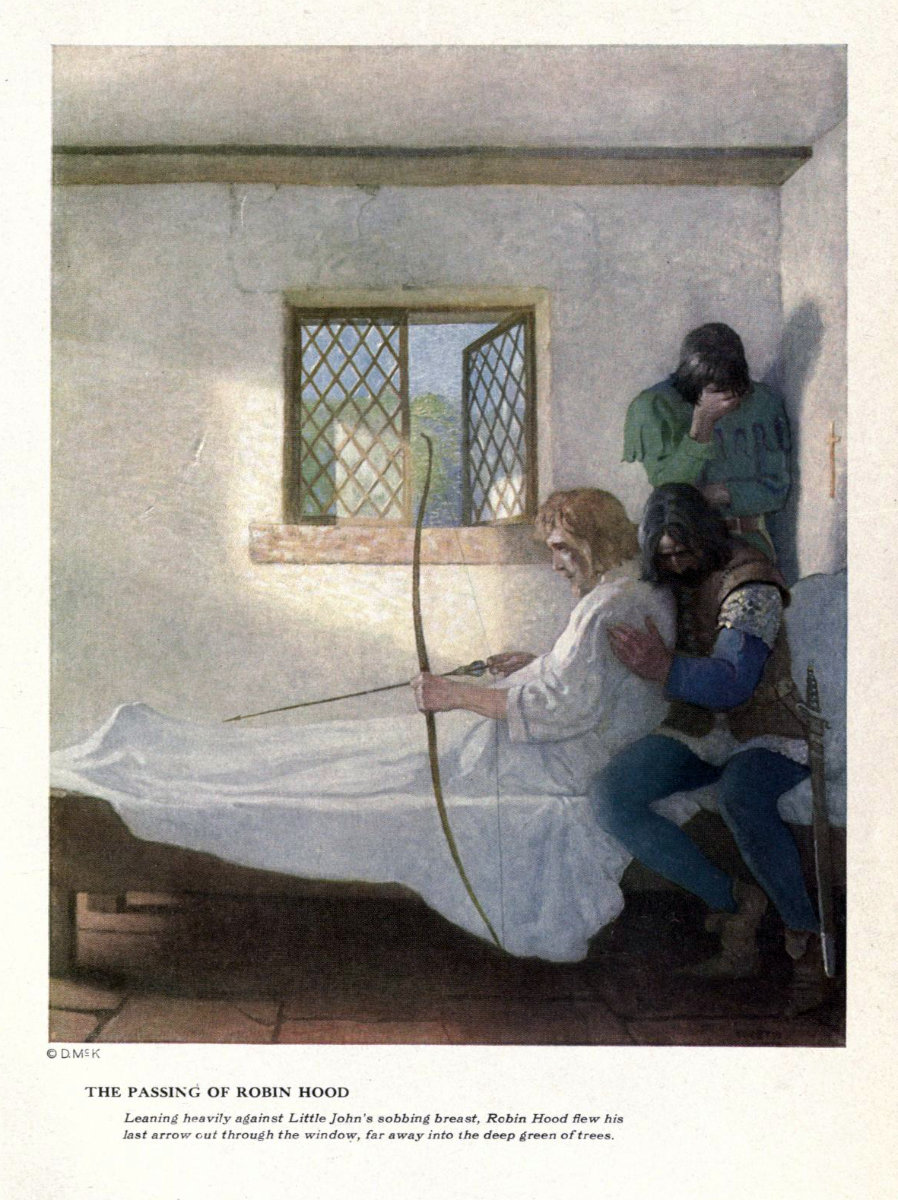
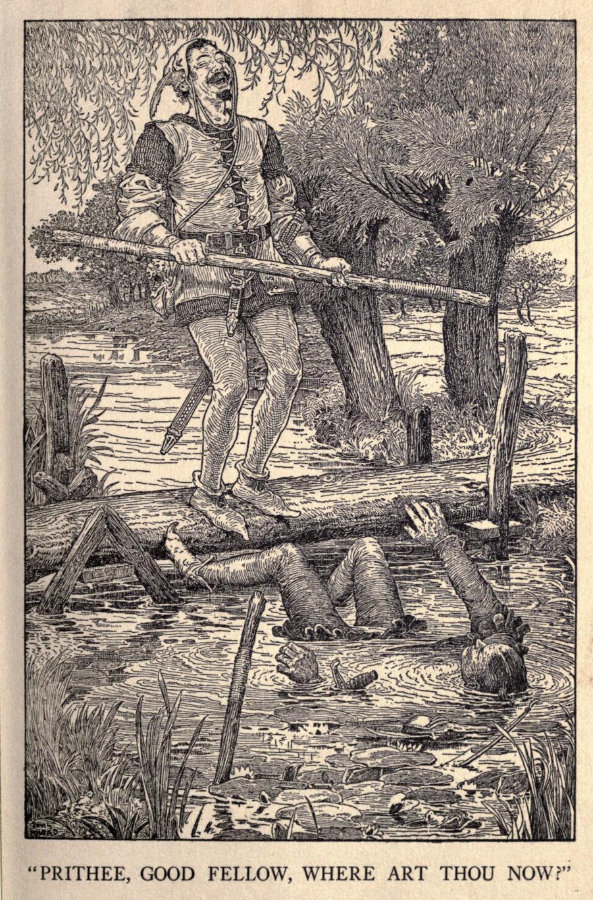
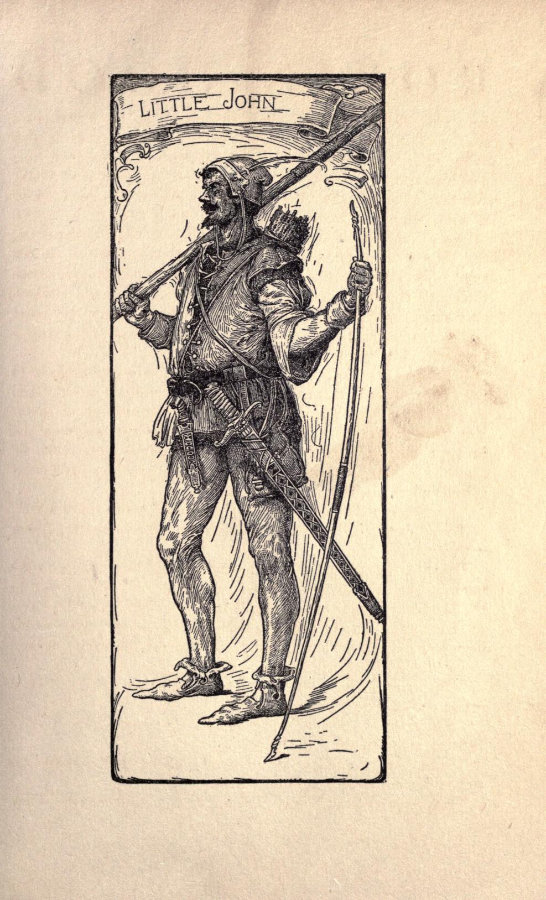
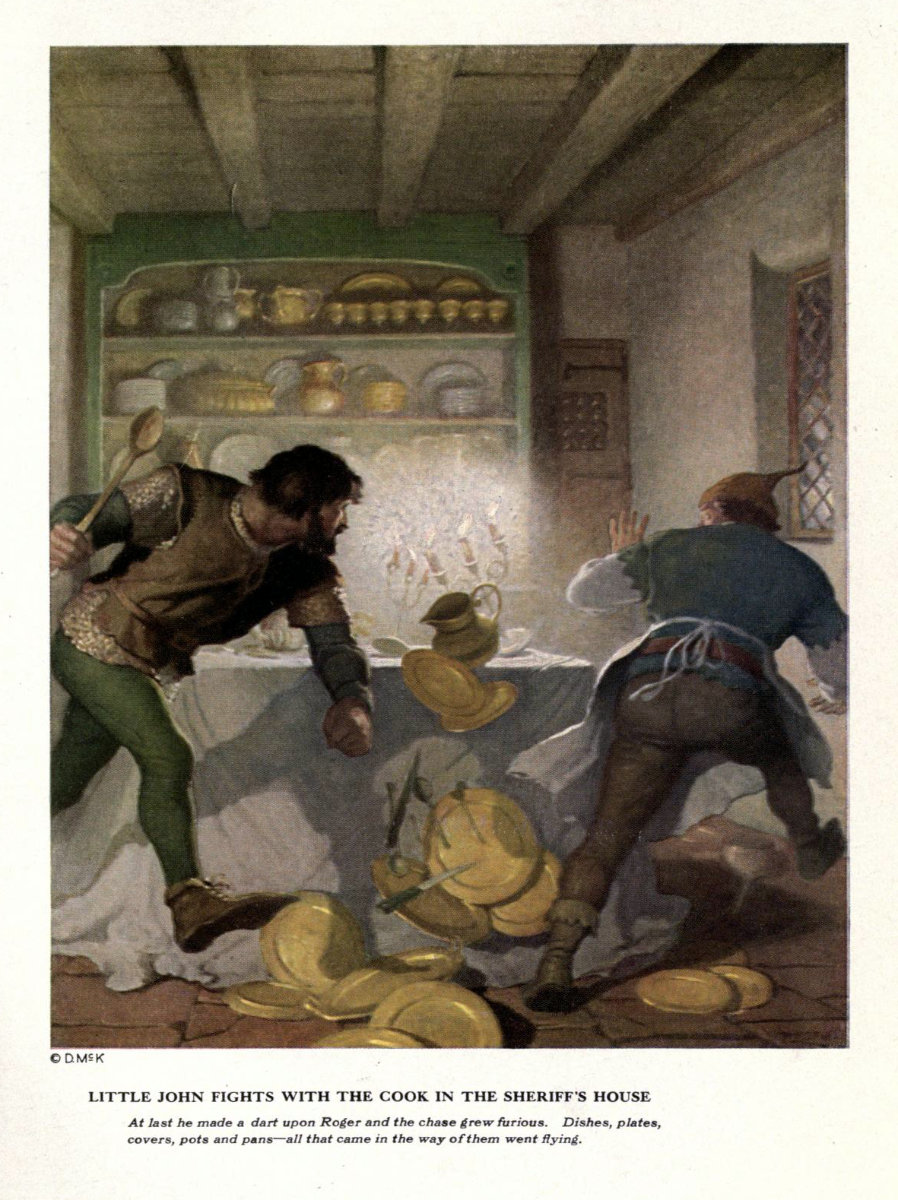
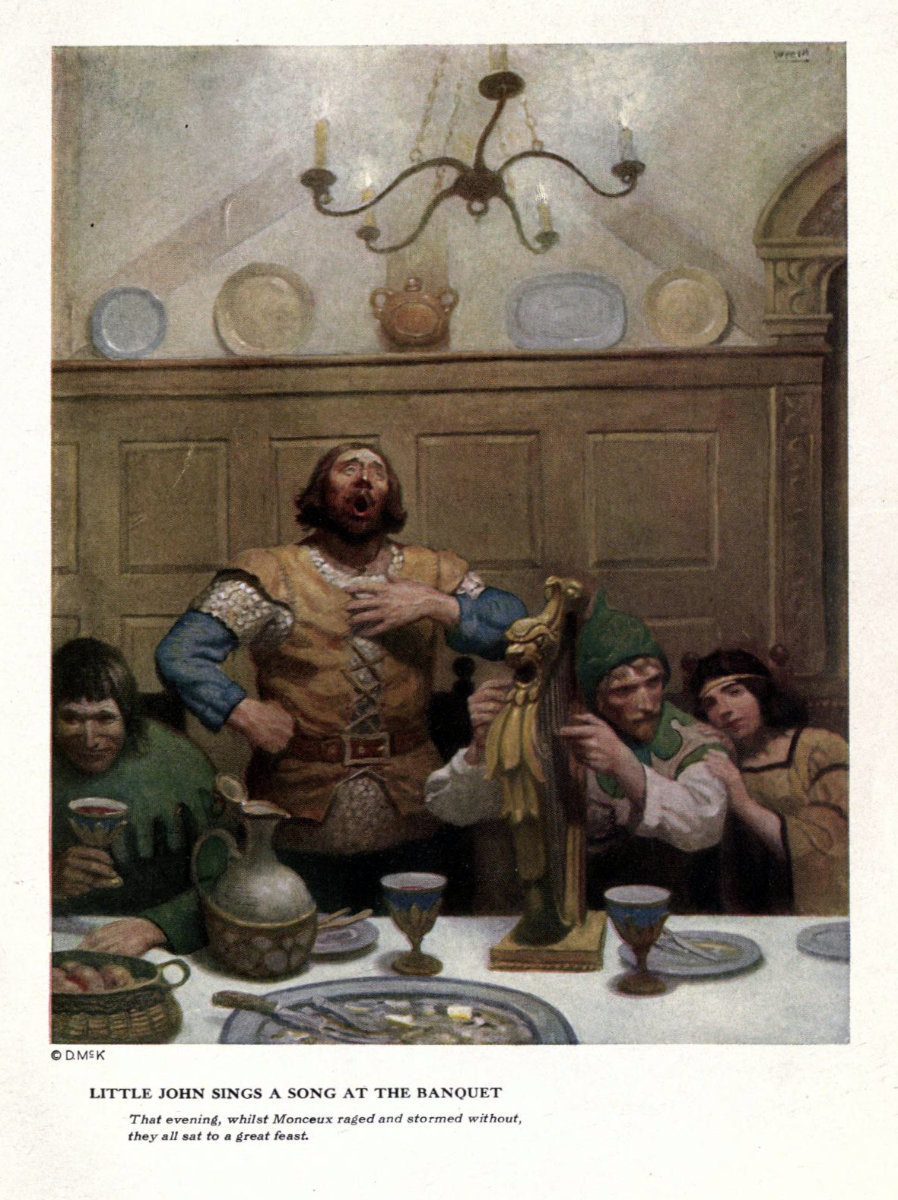
Little John is a companion of Robin Hood who serves as his chief lieutenant and second-in-command of the Merry Men. He is one of only a handful of consistently named characters who relate to Robin Hood and one of the two oldest Merry Men, alongside Much the Miller’s Son. His name is an ironic reference to his giant frame, as he is usually portrayed in legend as a huge warrior – a 7-foot-tall (2.1-metre) master of the quarterstaff. The first known mention of Robin Hood and Little John is found in the Scotichronicon which includes a reference to “the famous murderer, Robin Hood, as well as Little John”. The reference is found, in Latin, under year 1266. Little John appears in the earliest recorded Robin Hood ballads and stories, and in one of the earliest references to Robin Hood by Andrew of Wyntoun in 1420 and by Walter Bower in 1440. In the early tales, Little John is shown to be intelligent and highly capable. In “A Gest of Robyn Hode”, he captures the sorrowful knight and, when Robin Hood decides to pay the knight’s mortgage for him, accompanies him as a servant. In “Robin Hood’s Death”, he is the only one of the Merry Men that Robin takes with him. In the 15th-century ballad commonly called “Robin Hood and the Monk”, Little John leaves in anger after a dispute with Robin. When Robin Hood is captured, it is Little John who plans his leader’s rescue. In thanks, Robin offers Little John leadership of the band, but John refuses. Later depictions of Little John portray him as less cunning. The earliest ballads do not feature an origin story for this character. According to a 17th-century ballad, he was at least seven feet tall and introduced when he tried to prevent Robin from crossing a narrow bridge, whereupon they fought with quarterstaves, and Robin was overcome. Despite having won the duel, John agreed to join his band and fight alongside him. From then on he was called Little John in whimsical reference to his size. This scene is almost always re-enacted in film and television versions of the story. In some modern film versions, Little John loses the duel to Robin.
Appearance List Short list of general Robin Hood media includes Ballads: A Gest of Robyn Hode; Robin Hood and the Monk; Robin Hood and the Curtal Friar; Robin Hood and Allin a Dalem; Robin Hood and Queen Catherin; Robin Hood and the Golden Arrow; Robin Hood and the Tanner of Blyth. Literature: The Merry Adventures of Robin Hood by Howard Pyle (1883) [PG]; Robin Hood by Anonymous [PG]; Bold Robin Hood And His Outlaw Band by Louis Rhead (1912) [Internet Archive]; Robin Hood by Paul Creswick, illustrated by N. C. Wyeth (David McRay Publishers, 1917) [Internet Archive]; Robin Hood and the Men of the Greenwood (1920) [Internet Archive]; Robin Hood: His Deeds and Adventures as Recounted in the Old English Ballads (1923) [Internet Archive]. Comics: Arrow #2; Green Hornet Comics #7-10; Hit Comics #26, 51; Kid Eternity #2; Smash Comics #27; Jumbo Comics #67; Cat-Man Comics #26; Young Heroes #35-37; Treasure Chest of Fun & Facts vol. 3 #14-17; Boy Comics #3-32; Buster Brown #3, 9; Thriller Comics Library #4, 27, 29, 80, 91, 106, 114, 118, 122, 126, 130, 134, 138, 142, 154, 162, 186, 202, 214, 218; Robin Hood Tales #1-6 (Quality) [CB+]; Robin Hood and Company Comics vol. 3 #31-34 (Anglo-American) [CB+]; Robin Hood and His Merry Men #28-38 (Charlton) [CB+]; The Adventures of Robin Hood #1-8 (reprint) (Brown Shoe Co.) [CB+]; Robin Hood (Dell One-Shot) [CB+]; Robin Hood #1-8 (Magazine Enterprises) [CB+]; Robin Hood #1-2, 9-10, 15 (reprint) (I. W. Publishing / Super Comics) [CB+]. Film: At least five silent shorts from 1908-1913, Robin Hood (1922), The Adventures of Robin Hood (1938), The Bandit of Sherwood Forest (1946), The Prince of Thieves (1948), Rogues of Sherwood Forest (1950), Tales of Robin Hood (1951), et. al. TV: The Adventures of Robin Hood (1956, 143 episodes).
Sample Read The Merry Adventures of Robin Hood [PG]
Description Little John is a companion of Robin Hood who serves as his chief lieutenant and second-in-command of the Merry Men. He is one of only a handful of consistently named characters who relate to Robin Hood and one of the two oldest Merry Men, alongside Much the Miller’s Son. His name is an ironic reference to his giant frame, as he is usually portrayed in legend as a huge warrior – a 7-foot-tall (2.1-metre) master of the quarterstaff. The first known mention of Robin Hood and Little John is found in the Scotichronicon which includes a reference to “the famous murderer, Robin Hood, as well as Little John”. The reference is found, in Latin, under year 1266. Little John appears in the earliest recorded Robin Hood ballads and stories, and in one of the earliest references to Robin Hood by Andrew of Wyntoun in 1420 and by Walter Bower in 1440. In the early tales, Little John is shown to be intelligent and highly capable. In “A Gest of Robyn Hode”, he captures the sorrowful knight and, when Robin Hood decides to pay the knight’s mortgage for him, accompanies him as a servant. In “Robin Hood’s Death”, he is the only one of the Merry Men that Robin takes with him. In the 15th-century ballad commonly called “Robin Hood and the Monk”, Little John leaves in anger after a dispute with Robin. When Robin Hood is captured, it is Little John who plans his leader’s rescue. In thanks, Robin offers Little John leadership of the band, but John refuses. Later depictions of Little John portray him as less cunning. The earliest ballads do not feature an origin story for this character. According to a 17th-century ballad, he was at least seven feet tall and introduced when he tried to prevent Robin from crossing a narrow bridge, whereupon they fought with quarterstaves, and Robin was overcome. Despite having won the duel, John agreed to join his band and fight alongside him. From then on he was called Little John in whimsical reference to his size. This scene is almost always re-enacted in film and television versions of the story. In some modern film versions, Little John loses the duel to Robin.

 ,
,  ,
,  ,
,  ,
,