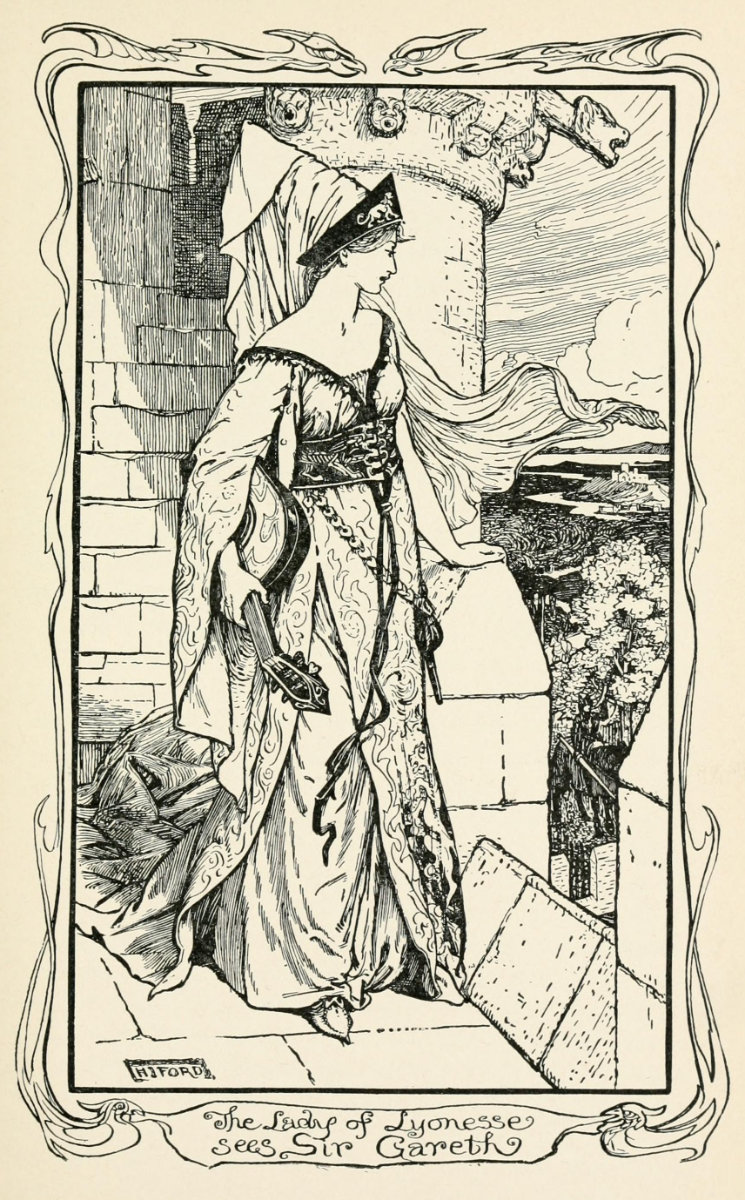
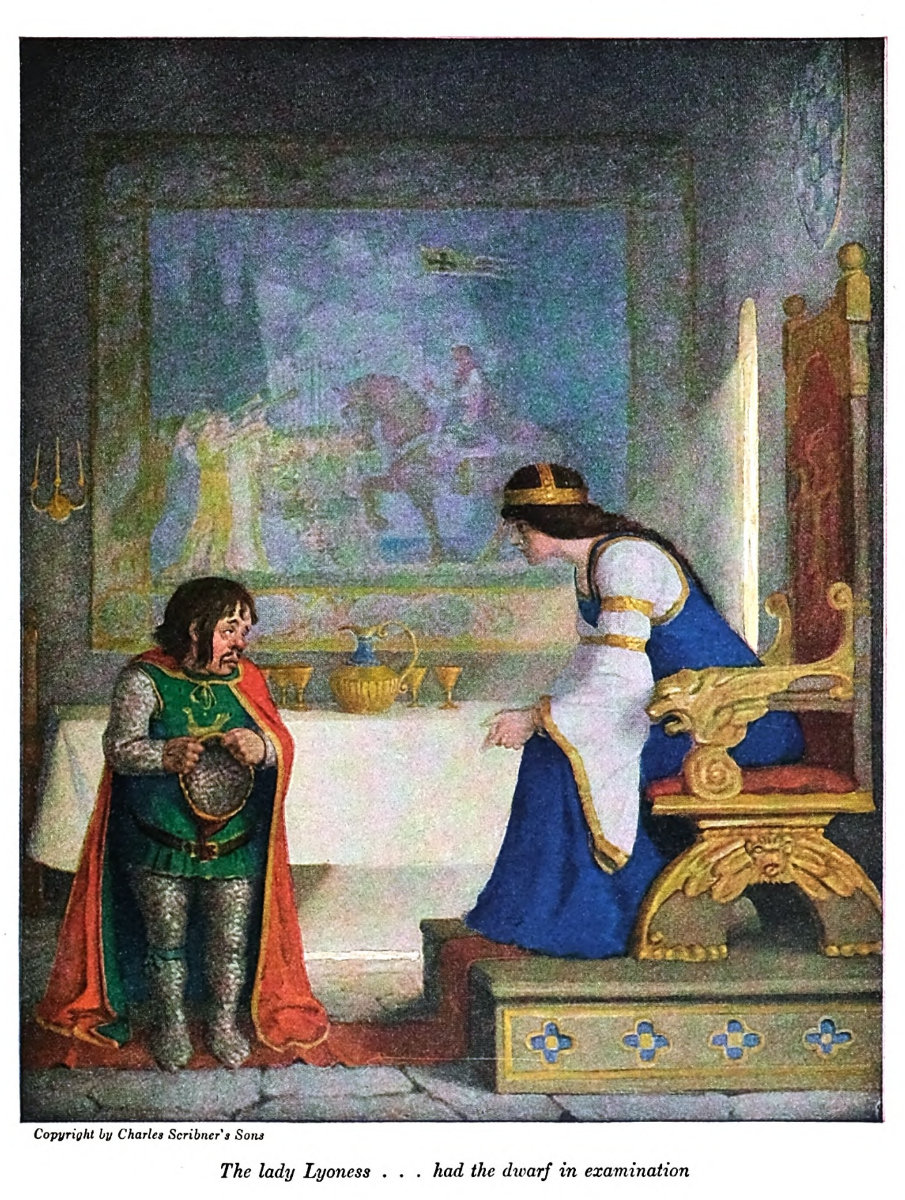
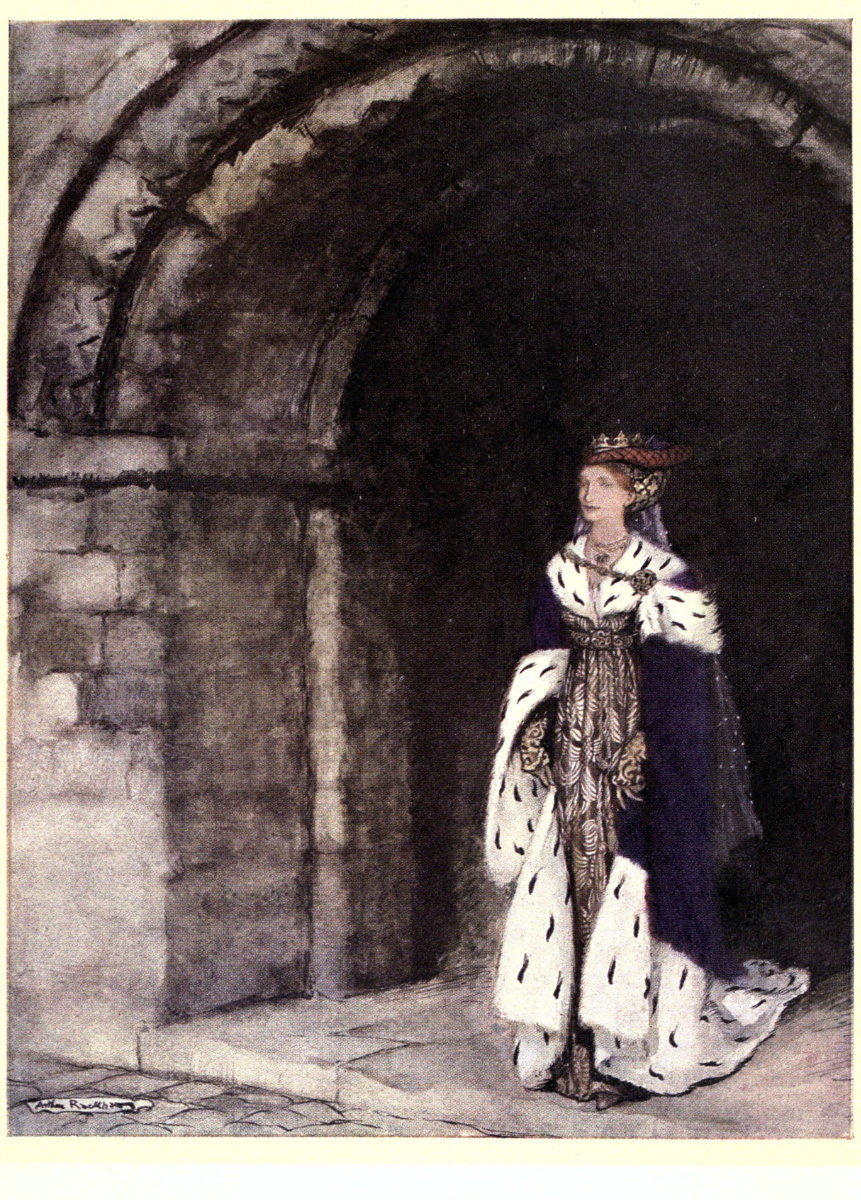
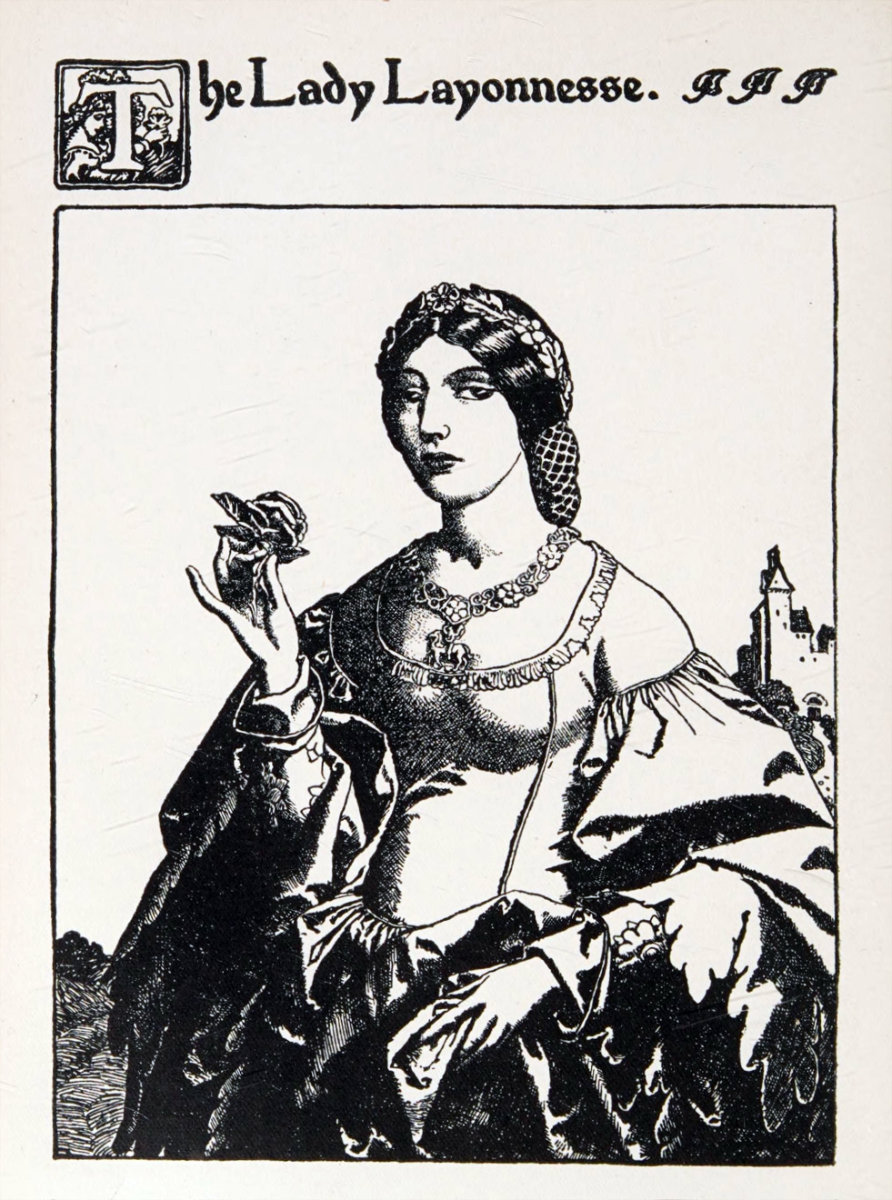
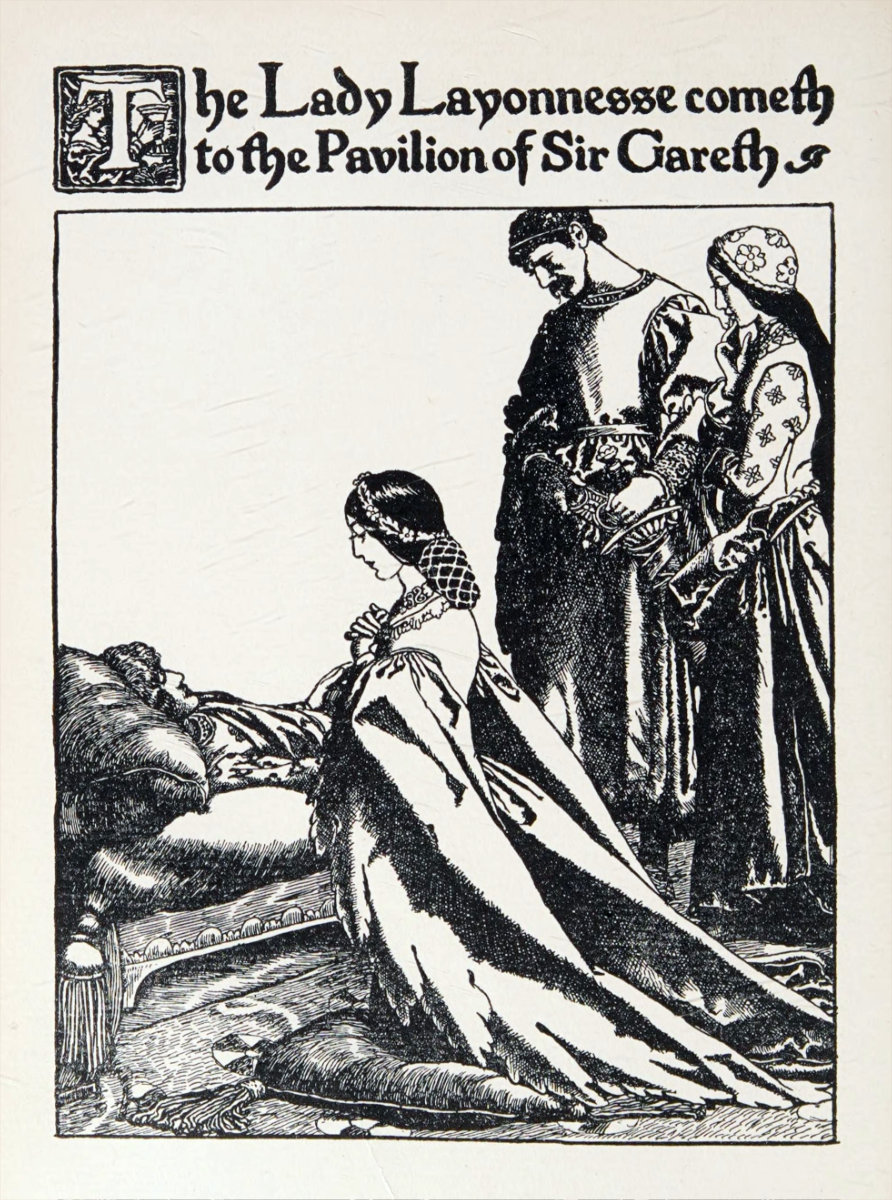
In Thomas Malory’s original story included in his medieval Arthurian compilation Le Morte d’Arthur, Lynette (alternatively known as Linet, Linnet, Linette, Lynet, Lyonet) is a haughty noble lady who travels to King Arthur’s court seeking help for her beautiful sister Lyonesse (also Linesse, Lioness, Lionesse, Lyones, Lyonorr, Lyonors), whose lands are besieged by the Red Knight. The young knight candidate Gareth picks up the quest, eventually marrying Lyonesse upon its completion, while Lynette becomes the lady of his brother Gaheris. The two are sisters of Gringamore (Guinguemar) from Avalon. In Book IV: The Tale of Sir Gareth of Orkney, Dame Lynette comes to court asking for assistance against the Red Knight of the Red Lands. Since Lynette refuses to reveal her name for reasons which are not explained, she is presented with a kitchen servant instead of a champion. He says his name is Beaumains, but he is really King Arthur’s nephew Gareth of Orkney in disguise. On their journey, the pair encounters the Black, Green, and Blue Knights, and finally the Red Knight of the Red Lands (Sir Ironside). Gareth slays the Black Knight, incorporates the others into Arthur’s court, and rescues Lynette’s sister Lyonesse. Lustily in love with Lyonesse, Gareth conspires to consummate their relationship before marrying. Only by the magical intervention of Lynette is their tryst unsuccessful, thus preserving Gareth’s virginity and, presumably, his standing with God. Gareth later counsels Lyonesse to report to King Arthur and pretend she does not know where he is; instead, he tells her to announce a tournament of his knights against the Round Table. This allows Gareth to disguise himself and win honor by defeating his brother knights. The heralds eventually acknowledge that he is Gareth right as he strikes down Gawain, his brother, in a joust. The book ends with Gareth rejoining his fellow knights and marrying Lyonesse in a joint wedding ceremony in which Gareth’s other brother Gaheris marries Lynette, and their yet another brother Agravain marries Laurel, a niece of Lyonesse and Lynette.
Alias Lady of Lyonesse
Real Names/Alt Names Lady Lyoness, Linesse, Lioness, Lionesse, Lyones, Lyonorr, Lyonors
Appearance List Tristan (c. 1150–1170) by Thomas of Britain; Le Roman de Tristan (late 12th c.) by Béroul; Tristrant und Isalde (late 12th c.) by Eilhart von Oberg; Tristan und Isolde (c. 1210) by Gottfried von Strassburg; Le Roman de Tristan en prose (13th c.) by Anonymous — integrates Tristan into the Arthurian world; Le Morte d’Arthur (1485) by Thomas Malory; Tristan und Isolde (1865) by Richard Wagner — opera; The Boy’s King Arthur: Sir Thomas Malory’s History of King Arthur and His Knights of the Round Table by Sidney Lanier (Charles Scribner’s Sons, 1880); Tristram of Lyonesse, and Other Poems (1882) by Algernon Charles Swinburne; Le Roman de Tristan et Iseut (1900) by Joseph Bédier; The Romance of Tristram and Iseult (1910) by Joseph Bédier — illustrated edition; The Story of the Champions of the Round Table (1905, 1911) by Howard Pyle [Internet Archive]. Film: Tristan et Yseult (1920) by Maurice Mariaud; L’Éternel retour / The Eternal Return (1943) by Jean Delannoy, screenplay by Jean Cocteau.
Description In Thomas Malory’s original story included in his medieval Arthurian compilation Le Morte d’Arthur, Lynette (alternatively known as Linet, Linnet, Linette, Lynet, Lyonet) is a haughty noble lady who travels to King Arthur’s court seeking help for her beautiful sister Lyonesse (also Linesse, Lioness, Lionesse, Lyones, Lyonorr, Lyonors), whose lands are besieged by the Red Knight. The young knight candidate Gareth picks up the quest, eventually marrying Lyonesse upon its completion, while Lynette becomes the lady of his brother Gaheris. The two are sisters of Gringamore (Guinguemar) from Avalon. In Book IV: The Tale of Sir Gareth of Orkney, Dame Lynette comes to court asking for assistance against the Red Knight of the Red Lands. Since Lynette refuses to reveal her name for reasons which are not explained, she is presented with a kitchen servant instead of a champion. He says his name is Beaumains, but he is really King Arthur’s nephew Gareth of Orkney in disguise. On their journey, the pair encounters the Black, Green, and Blue Knights, and finally the Red Knight of the Red Lands (Sir Ironside). Gareth slays the Black Knight, incorporates the others into Arthur’s court, and rescues Lynette’s sister Lyonesse. Lustily in love with Lyonesse, Gareth conspires to consummate their relationship before marrying. Only by the magical intervention of Lynette is their tryst unsuccessful, thus preserving Gareth’s virginity and, presumably, his standing with God. Gareth later counsels Lyonesse to report to King Arthur and pretend she does not know where he is; instead, he tells her to announce a tournament of his knights against the Round Table. This allows Gareth to disguise himself and win honor by defeating his brother knights. The heralds eventually acknowledge that he is Gareth right as he strikes down Gawain, his brother, in a joust. The book ends with Gareth rejoining his fellow knights and marrying Lyonesse in a joint wedding ceremony in which Gareth’s other brother Gaheris marries Lynette, and their yet another brother Agravain marries Laurel, a niece of Lyonesse and Lynette.

 ,
,  ,
,  ,
,  ,
,  ,
,