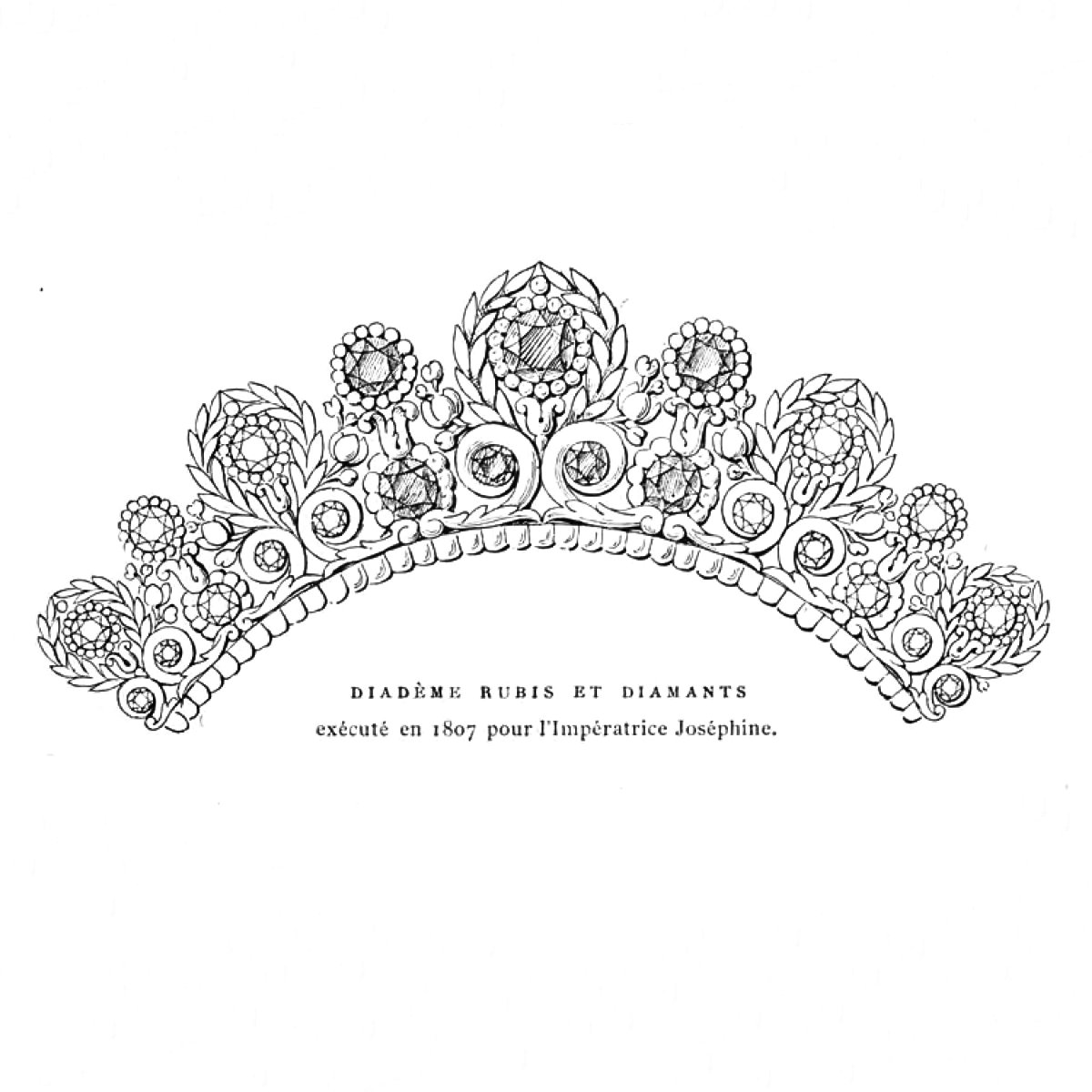
Hermann Lebenstein, a lapidary of great reputation in Genoa, possesses ten extraordinary rubies of identical form and brilliance, which he keeps secured and refuses to sell. His servant Smaragd, troubled by their origin and by his master’s secretive habits, observes that the stones appear one by one without any known acquisition and that Hermann works at night with instruments and substances whose purpose remains unclear. Smaragd tests several hypotheses about the rubies, including whether their color depends on Hermann’s presence, but abandons these explanations after observing variations in their appearance, notably that the tenth ruby emits a yellowish light. Angela Calderini, a Venetian woman of striking presence and ambiguous reputation, visits Hermann’s shop and becomes intensely attracted to the rubies. She attempts to purchase them, but Hermann refuses, declaring that no wealth would suffice and that he values them above all. Angela continues to visit, gaining Hermann’s trust while also motivating Lebenstein’s daughter and son-in-law, who begin to see profit in the possible sale of the stones. At the same time, Angela and her associate Pietro Pisco form a plan to obtain the rubies by force. She persuades Hermann to lend them to her for a single evening, promising to return them after wearing them at a public celebration hosted by Andrea Doria. Angela arranges for the rubies to be mounted into a diadem and instructs Pisco to murder Hermann that same evening before he can reveal that the stones were only lent. As the city gathers for the fête, Angela appears in the great hall adorned with the ten rubies, drawing universal attention for the brilliance of her appearance. At the moment of Hermann’s death, the rubies lose their light, their brilliance fades. One of the stones detaches and falls, altered, and the others darken in the same way. The transformation completes before the assembled guests: “The rubies were nothing more than clots of blood.”
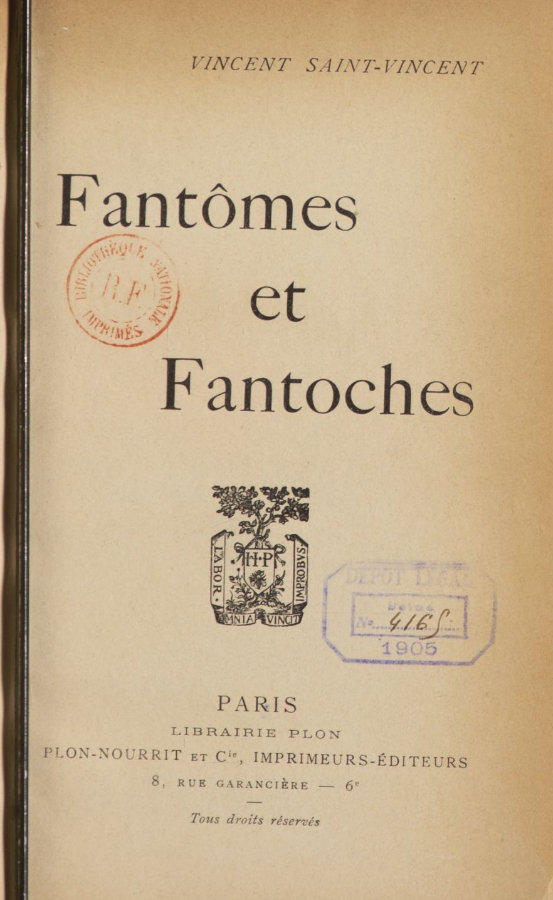
First Appearance “Le lapidaire” included in Fantômes et fantoches (1905) by Vincent Saint-Vincent (pseud. of Maurice Renard)
First Publisher Plon-Nourrit
Appearance List “Le lapidaire” included in Fantômes et fantoches (1905) by Vincent Saint-Vincent (pseud. of Maurice Renard), Paris: Plon-Nourrit [Gallica BnF]; “Le lapidaire” included in Romans et contes fantastiques (1990) by Maurice Renard — collected reissue, Robert Laffont, collection “Bouquins”
Description Hermann Lebenstein, a lapidary of great reputation in Genoa, possesses ten extraordinary rubies of identical form and brilliance, which he keeps secured and refuses to sell. His servant Smaragd, troubled by their origin and by his master’s secretive habits, observes that the stones appear one by one without any known acquisition and that Hermann works at night with instruments and substances whose purpose remains unclear. Smaragd tests several hypotheses about the rubies, including whether their color depends on Hermann’s presence, but abandons these explanations after observing variations in their appearance, notably that the tenth ruby emits a yellowish light. Angela Calderini, a Venetian woman of striking presence and ambiguous reputation, visits Hermann’s shop and becomes intensely attracted to the rubies. She attempts to purchase them, but Hermann refuses, declaring that no wealth would suffice and that he values them above all. Angela continues to visit, gaining Hermann’s trust while also motivating Lebenstein’s daughter and son-in-law, who begin to see profit in the possible sale of the stones. At the same time, Angela and her associate Pietro Pisco form a plan to obtain the rubies by force. She persuades Hermann to lend them to her for a single evening, promising to return them after wearing them at a public celebration hosted by Andrea Doria. Angela arranges for the rubies to be mounted into a diadem and instructs Pisco to murder Hermann that same evening before he can reveal that the stones were only lent. As the city gathers for the fête, Angela appears in the great hall adorned with the ten rubies, drawing universal attention for the brilliance of her appearance. At the moment of Hermann’s death, the rubies lose their light, their brilliance fades. One of the stones detaches and falls, altered, and the others darken in the same way. The transformation completes before the assembled guests: “The rubies were nothing more than clots of blood.”
Source Eidolon Station
La Bijouterie française au XIXe siècle, vol. 1 (1906) by Henri Vever (p. 48)