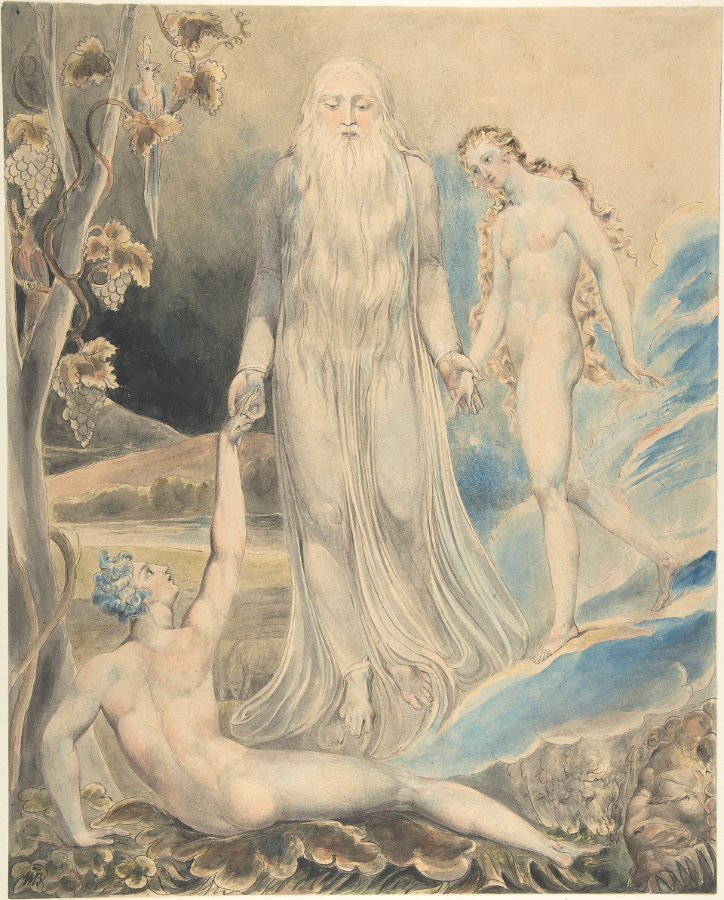
Eve is a figure from the Book of Genesis in the Old Testament. According to the origin story of the Abrahamic religions, she was the first woman to be created by God. Eve is known also as Adam’s wife. Her name means “living one” or “source of life”. The name has been compared to that of the Hurrian goddess Ḫepat, who was worshipped in Jerusalem during the Late Bronze Age. It has been suggested that the Hebrew name Eve (חַוָּה) bears resemblance to an Aramaic word for “snake” (Old Aramaic language חוה; Aramaic חִוְיָא)… According to the second chapter of Genesis, Eve was created by God (Yahweh) taking a rib of Adam and creating her out of that, to be Adam’s companion, which has led some people to believe that men have one less rib than women. Adam is charged with guarding and keeping the garden before her creation; she is not present when God commands Adam not to eat the forbidden fruit – although it is clear that she was aware of the command. She decides to eat the forbidden fruit from the tree of the knowledge of good and evil after she hears the serpent’s argument that it would not kill her but bring her benefits. She shares the fruit with Adam, and before they could eat of the tree of life, which would bestow eternal life to the one who eats thereof, they are expelled from the Garden of Eden, with Eve herself suffering imprecations, with her being subjected to additional agony during childbirth, as well as her subjecting to her husband Adam.
Appearance List Book of Genesis (c. 6th–5th century BCE; earlier traditions) [Internet Archive]; Antiquities of the Jews (c. 93 CE) by Flavius Josephus [Internet Archive]; Paradise Lost (1667) by John Milton [Internet Archive]; Cain (1821) by Lord Byron [Internet Archive]; East of Eden (1952) by John Steinbeck (Cain and Abel retelling)
Sample Read The King James Version of the Bible [PG]
Description Eve is a figure from the Book of Genesis in the Old Testament. According to the origin story of the Abrahamic religions, she was the first woman to be created by God. Eve is known also as Adam’s wife. Her name means “living one” or “source of life”. The name has been compared to that of the Hurrian goddess Ḫepat, who was worshipped in Jerusalem during the Late Bronze Age. It has been suggested that the Hebrew name Eve (חַוָּה) bears resemblance to an Aramaic word for “snake” (Old Aramaic language חוה; Aramaic חִוְיָא)… According to the second chapter of Genesis, Eve was created by God (Yahweh) taking a rib of Adam and creating her out of that, to be Adam’s companion, which has led some people to believe that men have one less rib than women. Adam is charged with guarding and keeping the garden before her creation; she is not present when God commands Adam not to eat the forbidden fruit – although it is clear that she was aware of the command. She decides to eat the forbidden fruit from the tree of the knowledge of good and evil after she hears the serpent’s argument that it would not kill her but bring her benefits. She shares the fruit with Adam, and before they could eat of the tree of life, which would bestow eternal life to the one who eats thereof, they are expelled from the Garden of Eden, with Eve herself suffering imprecations, with her being subjected to additional agony during childbirth, as well as her subjecting to her husband Adam.
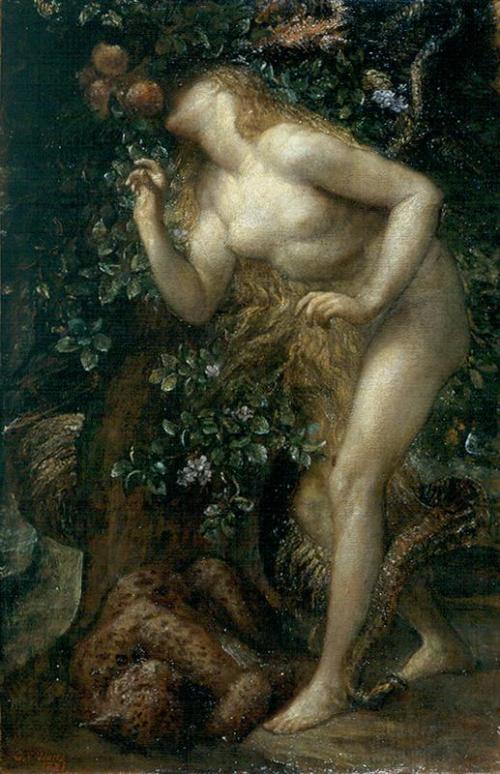

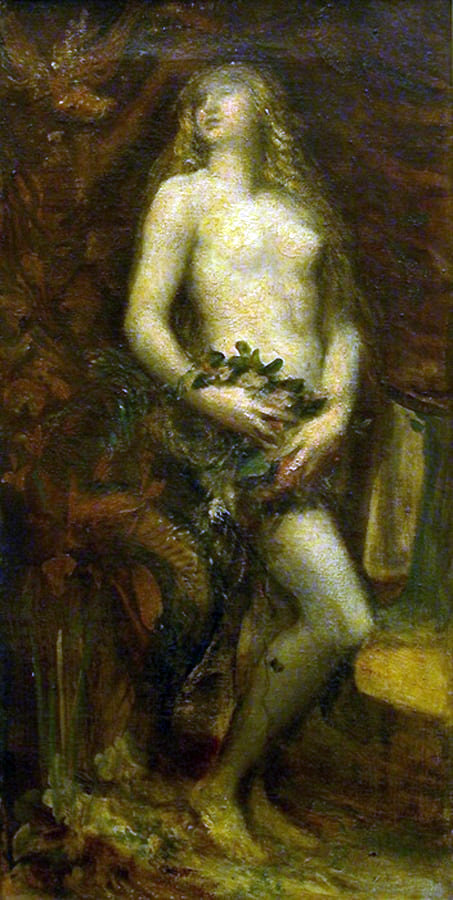 ,
, 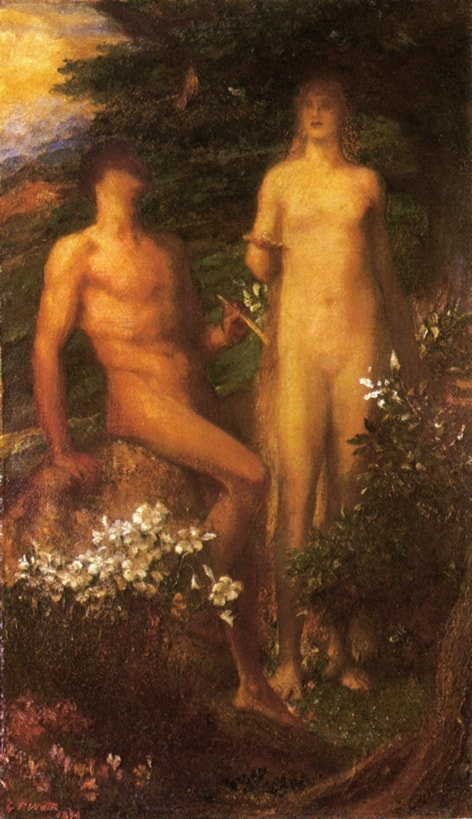 ,
,  ,
,  ,
,  ,
,  ,
,