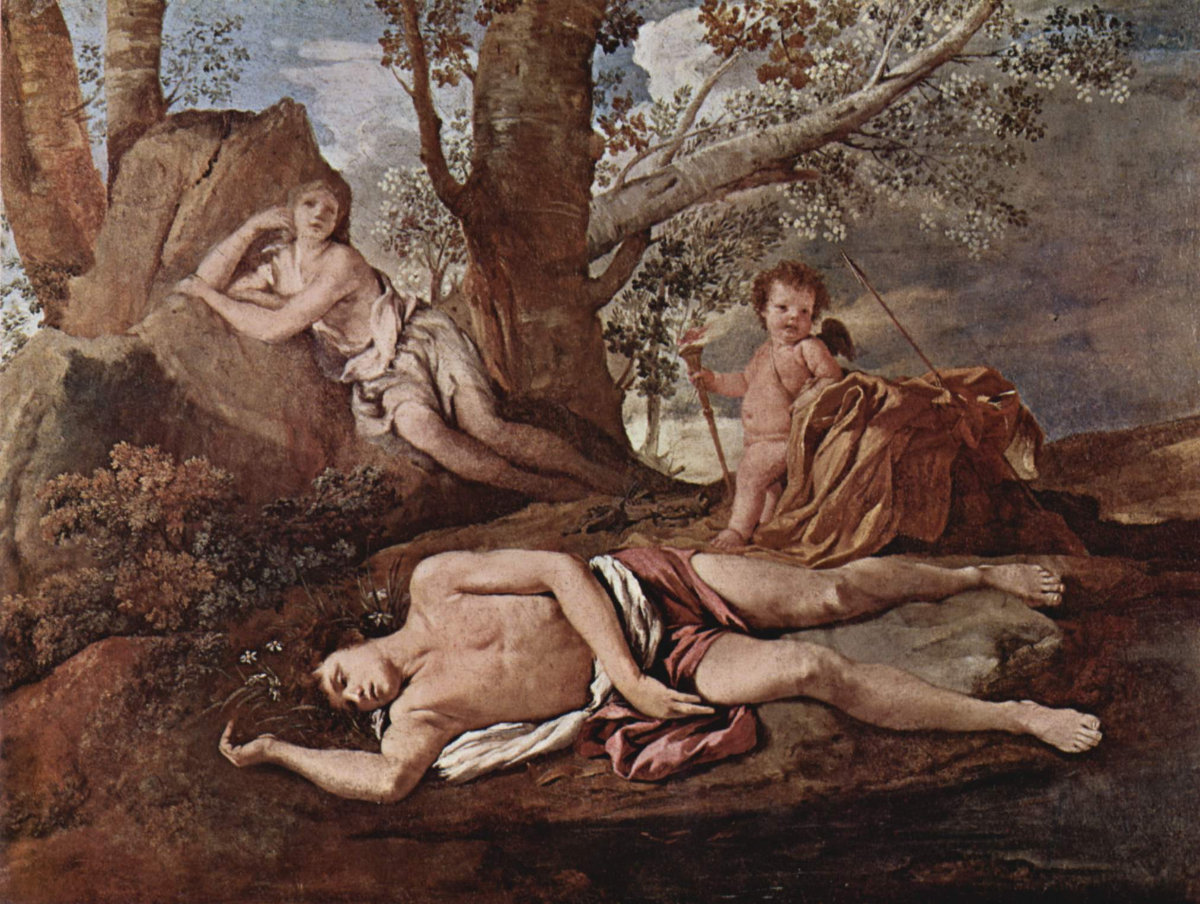
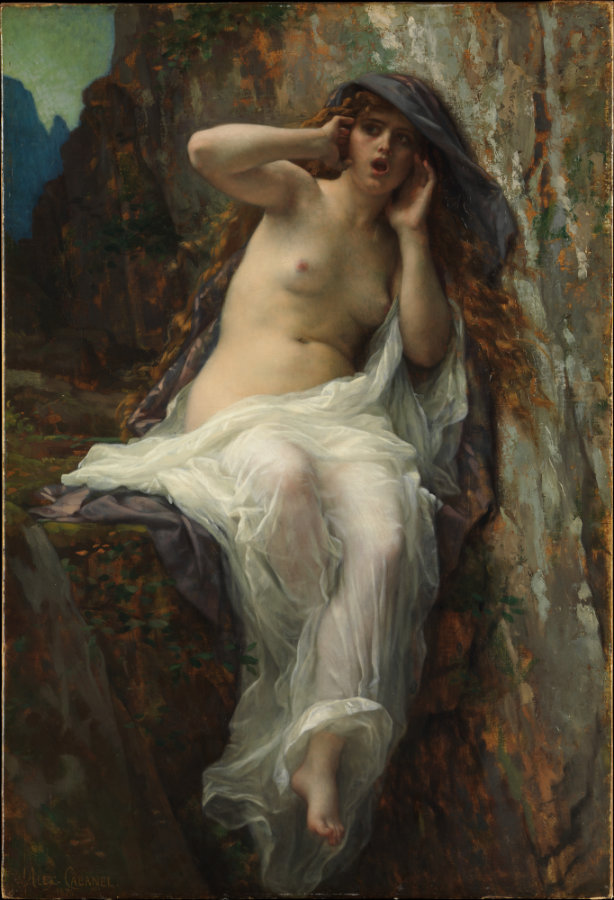
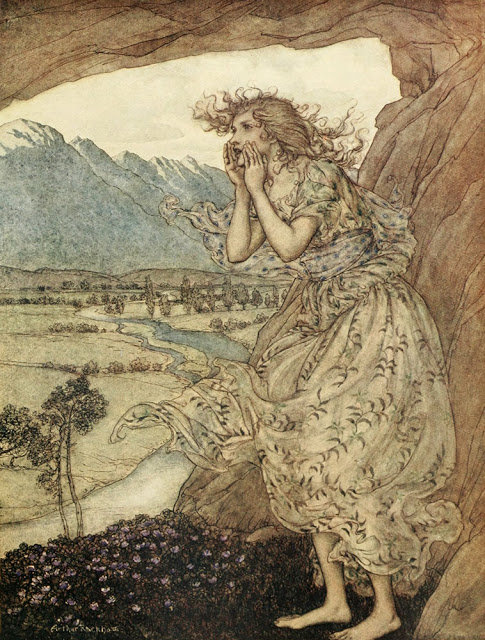
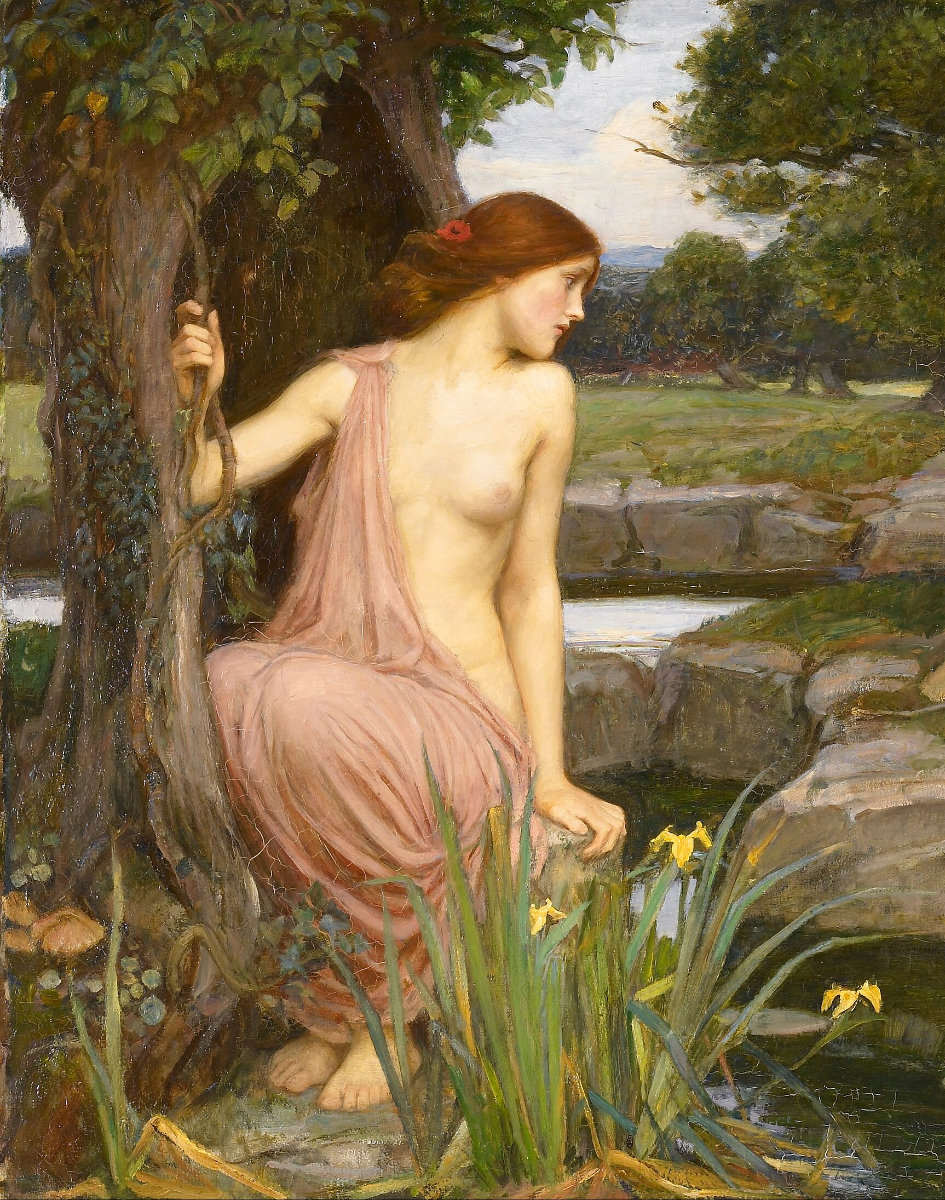
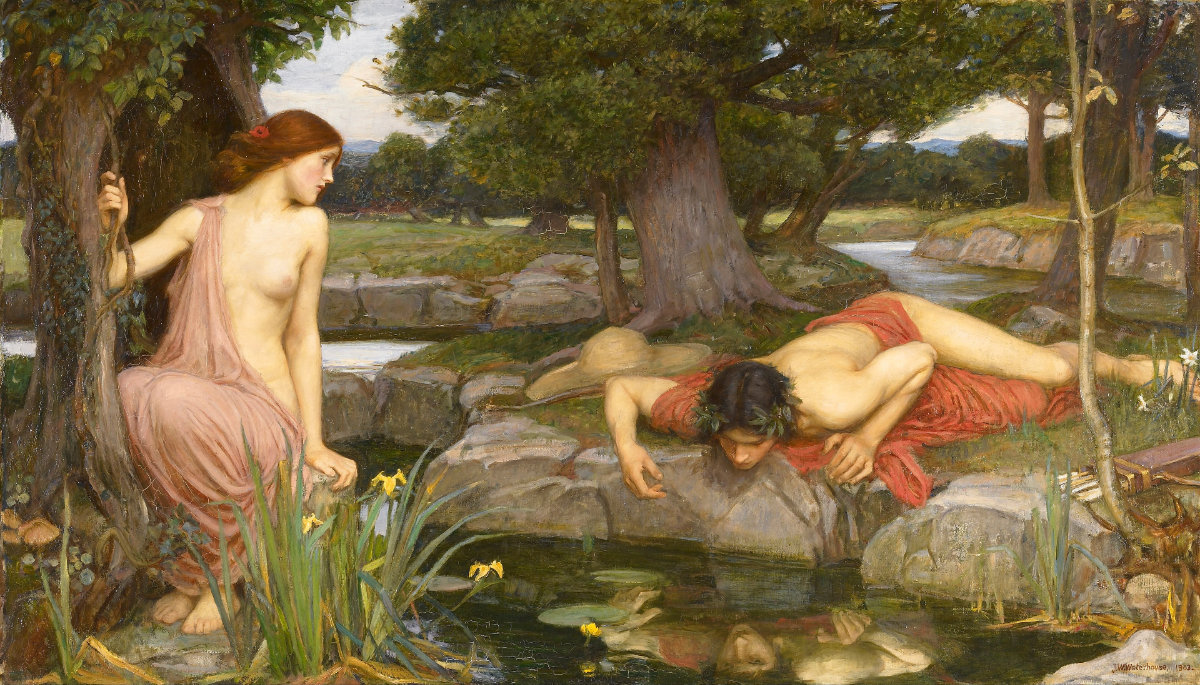
In Greek mythology, Echo was an Oread who resided on Mount Cithaeron. Zeus loved consorting with beautiful nymphs and often visited them on Earth. Eventually, Zeus’s wife, Hera, became suspicious, and came from Mount Olympus in an attempt to catch Zeus with the nymphs. Echo, by trying to protect Zeus (as he had ordered her to do), endured Hera’s wrath, and Hera made her only able to speak the last words spoken to her. When Echo met Narcissus and fell in love with him, she was unable to tell him how she felt and was forced to watch him as he fell in love with himself.
First Appearance Metamorphoses (c. 8 CE) by Ovid, Book III
First Publisher ○
Appearance List Metamorphoses (c. 8 CE) by Ovid, Book III (Echo and Narcissus episode); Daphnis and Chloe (2nd century CE) by Longus; Suda (10th century CE) — entry “Echo (Ēkhō)”; Le lai de Narcisse (late 12th century, anon.) — Echo is adapted or replaced (often as Dané); The Faerie Queene (1590–1596) by Edmund Spenser — Uses Echo in allegorical and poetic echo-dialogue contexts; Comus (1634) by John Milton — Includes Echo as a lyrical/choric figure; Dictionary of Greek and Roman Biography and Mythology (1849) edited by William Smith; The Age of Fable; or, Stories of Gods and Heroes (1855) by Thomas Bulfinch; The Metamorphoses of Ovid (1858) translated by Henry T. Riley; Metamorphoses (1916; rev. eds.) by Ovid (trans. Frank Justus Miller); Echo and Narcissus (c. 1627–28) in Blunt’s The Paintings of Nicolas Poussin (1966); The Homeric Hymns by Apostolos N. Athanassakis (Johns Hopkins University Press, 1976).
Sample Read Bulfinch’s Mythology by Thomas Bulfinch [Internet Archive]
Description In Greek mythology, Echo was an Oread who resided on Mount Cithaeron. Zeus loved consorting with beautiful nymphs and often visited them on Earth. Eventually, Zeus’s wife, Hera, became suspicious, and came from Mount Olympus in an attempt to catch Zeus with the nymphs. Echo, by trying to protect Zeus (as he had ordered her to do), endured Hera’s wrath, and Hera made her only able to speak the last words spoken to her. When Echo met Narcissus and fell in love with him, she was unable to tell him how she felt and was forced to watch him as he fell in love with himself.

 ,
,  ,
,  ,
,