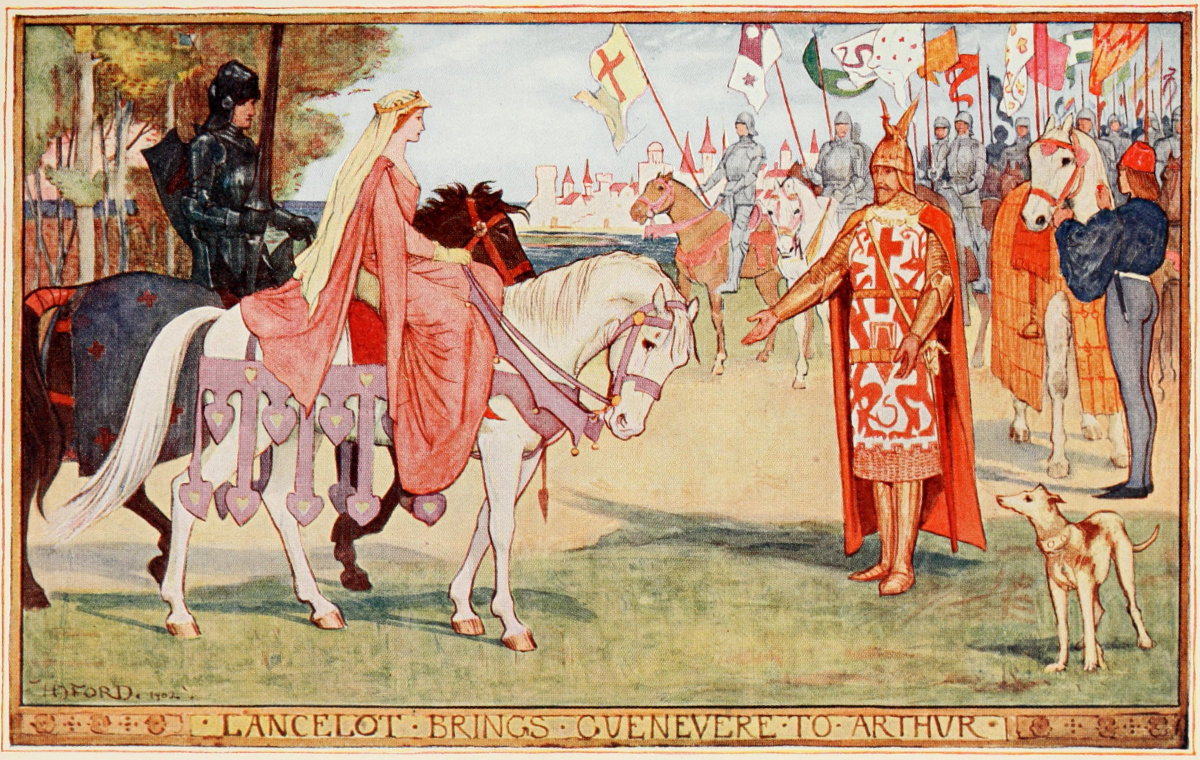
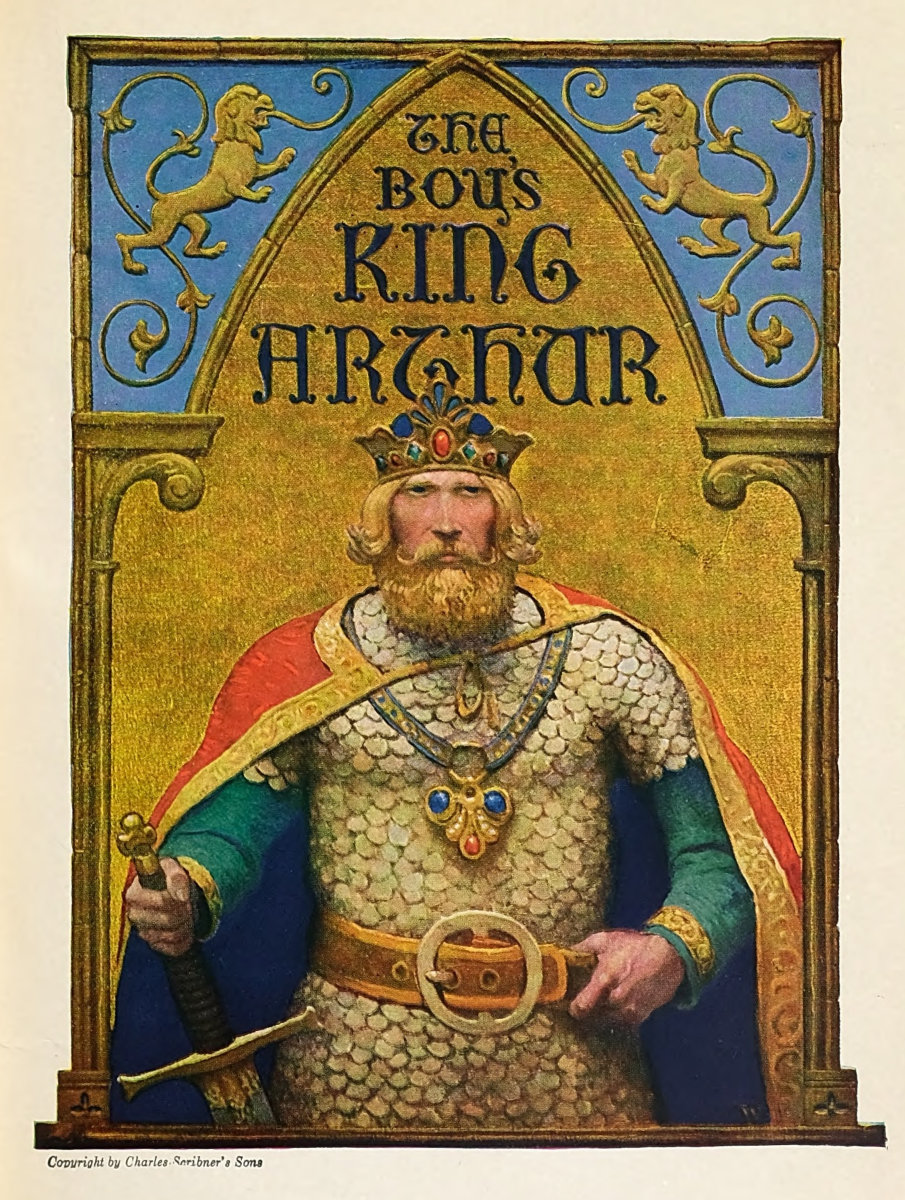
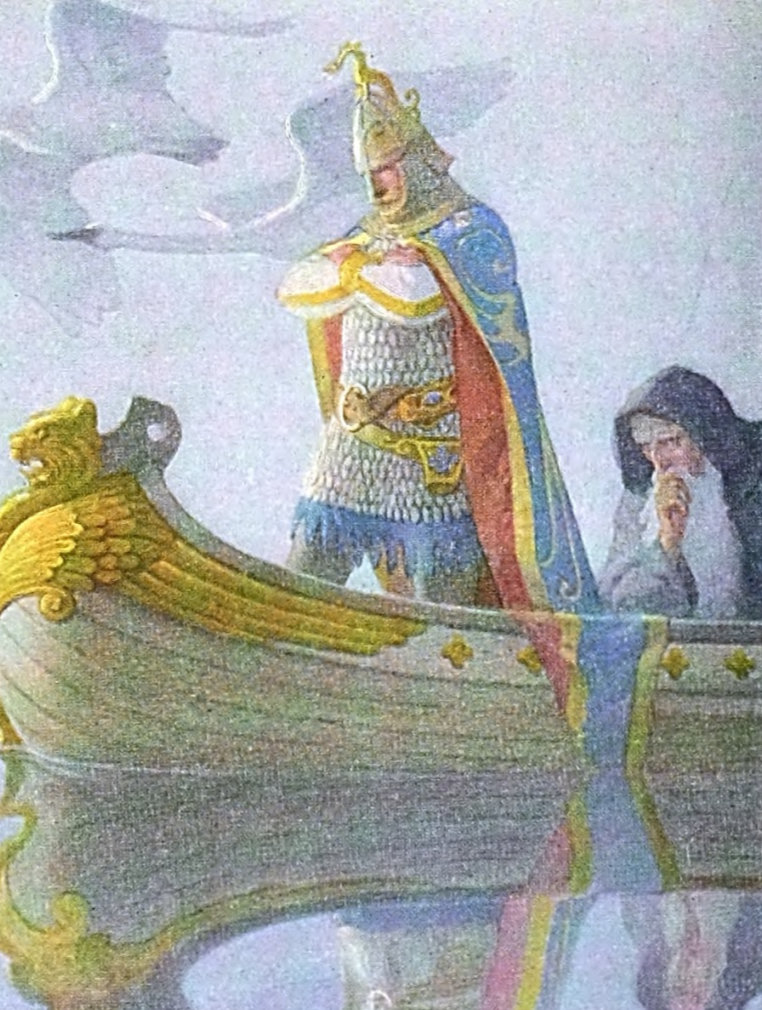
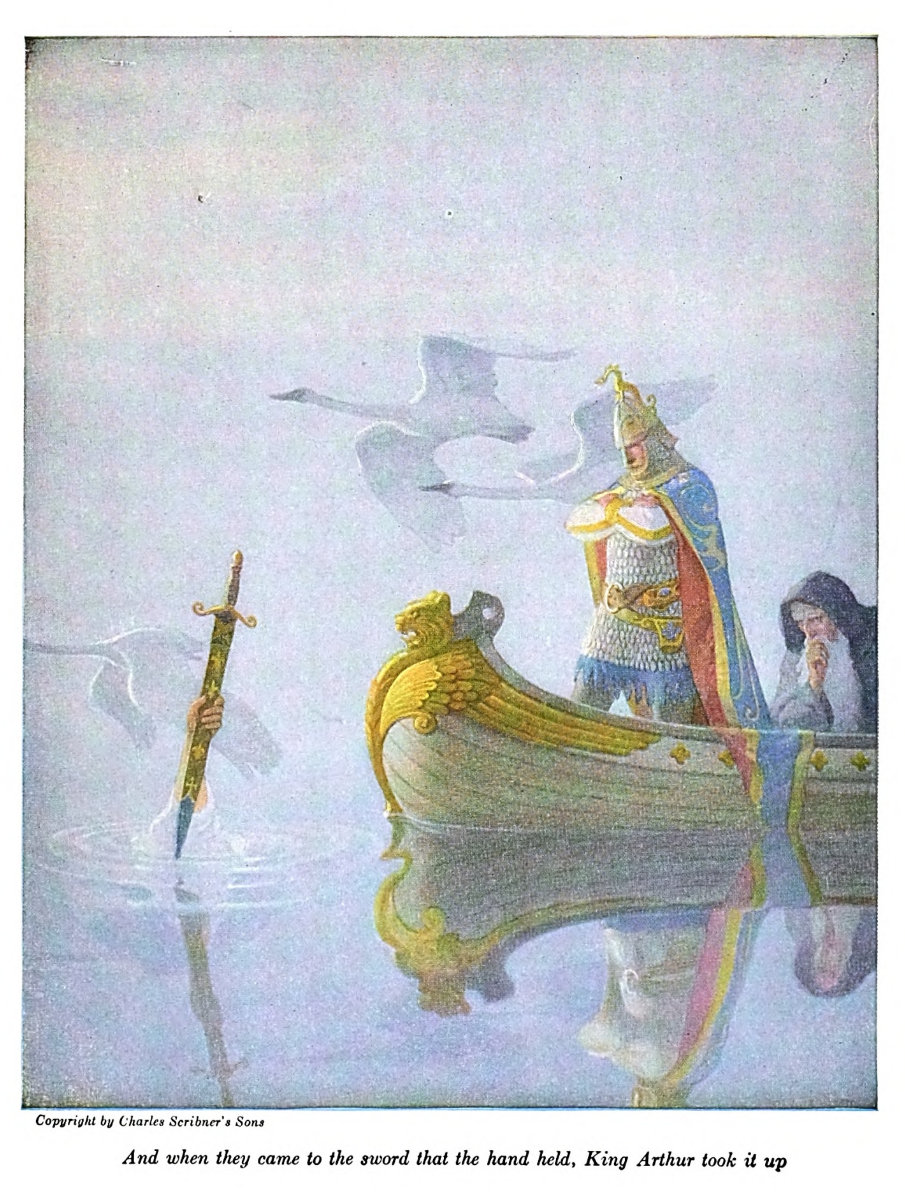
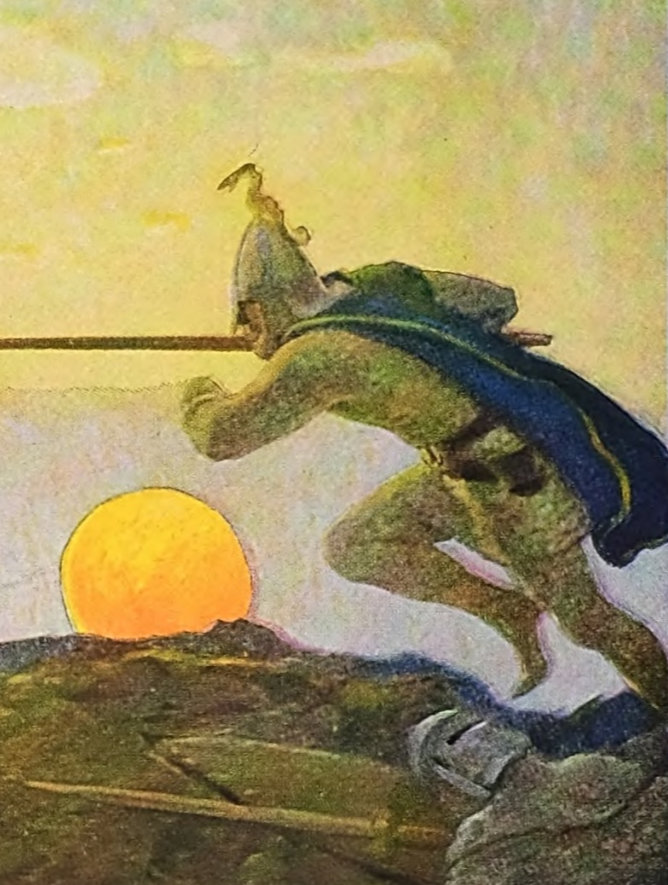
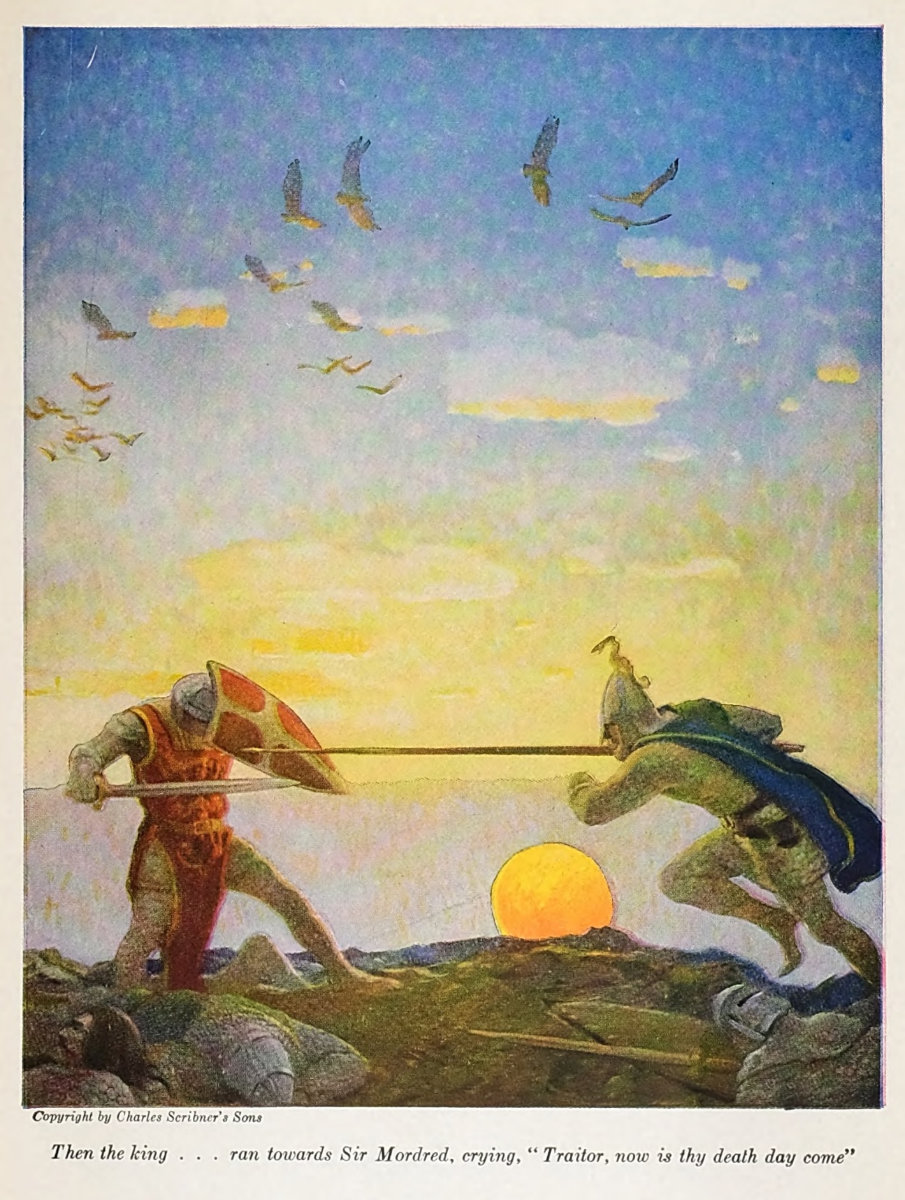
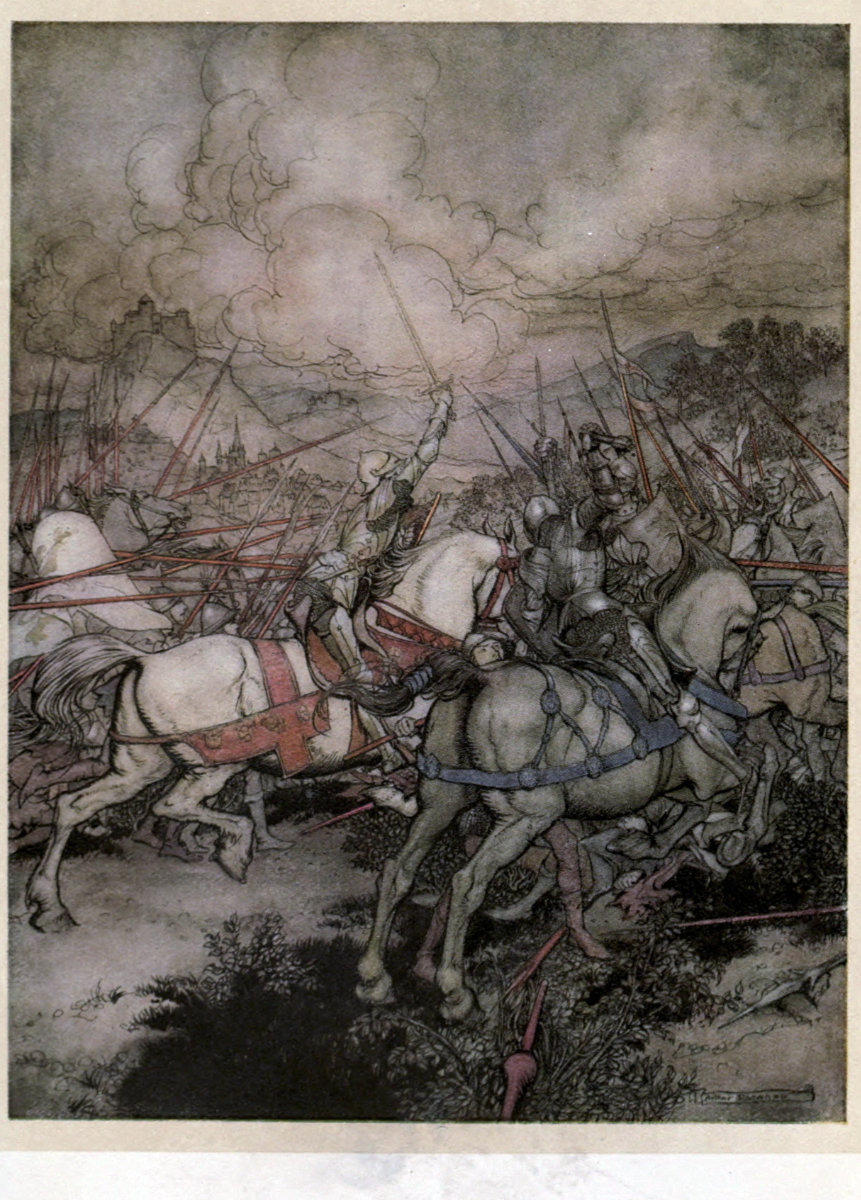
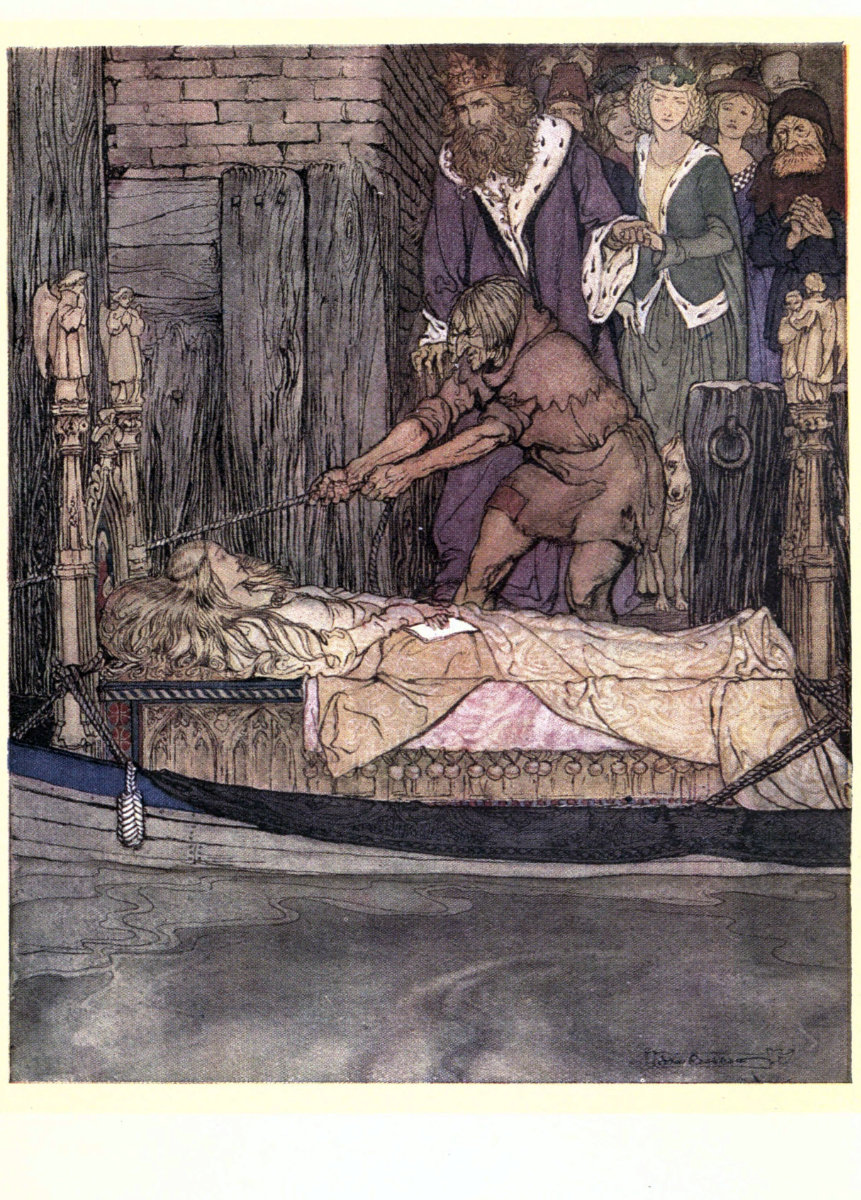
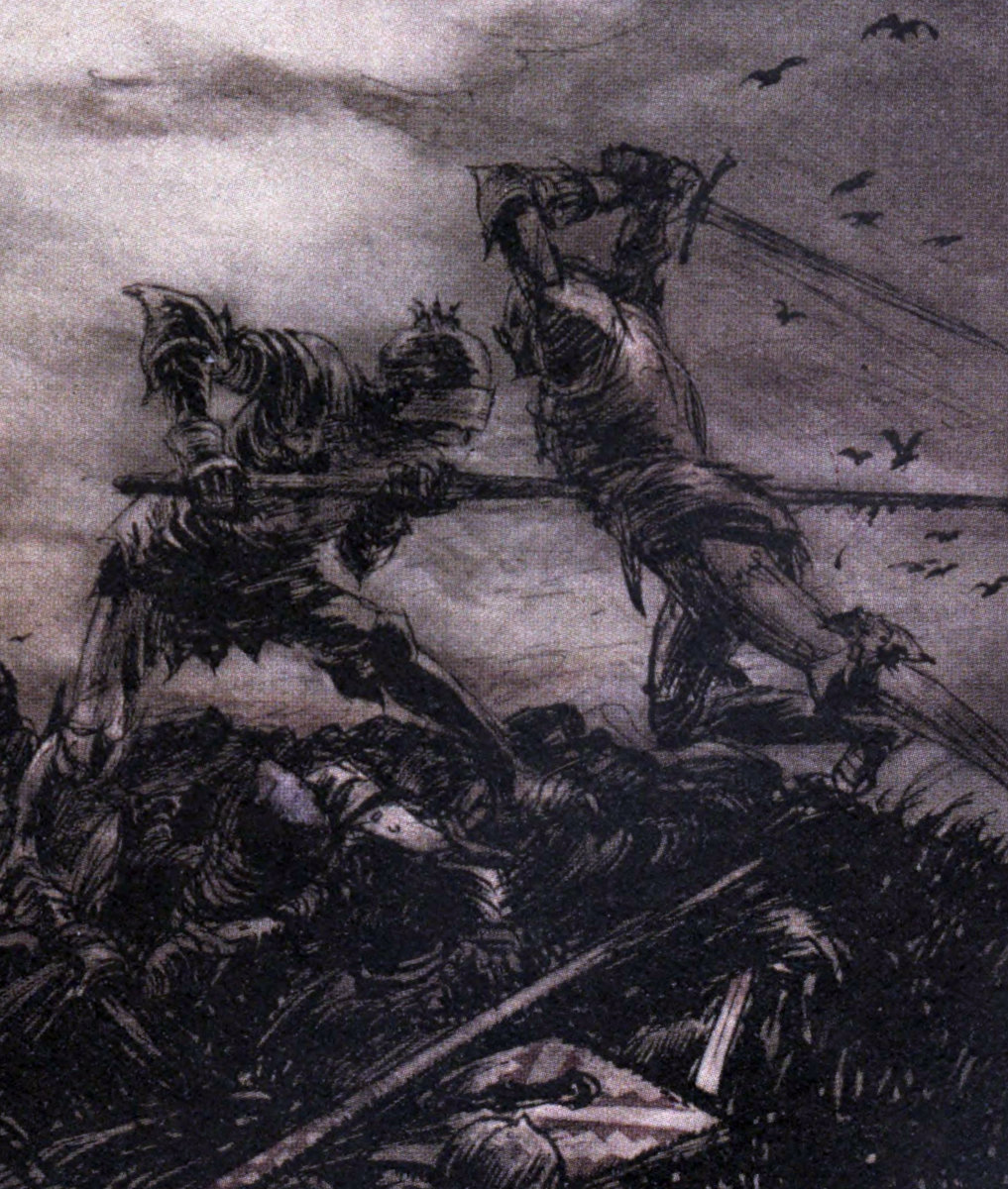
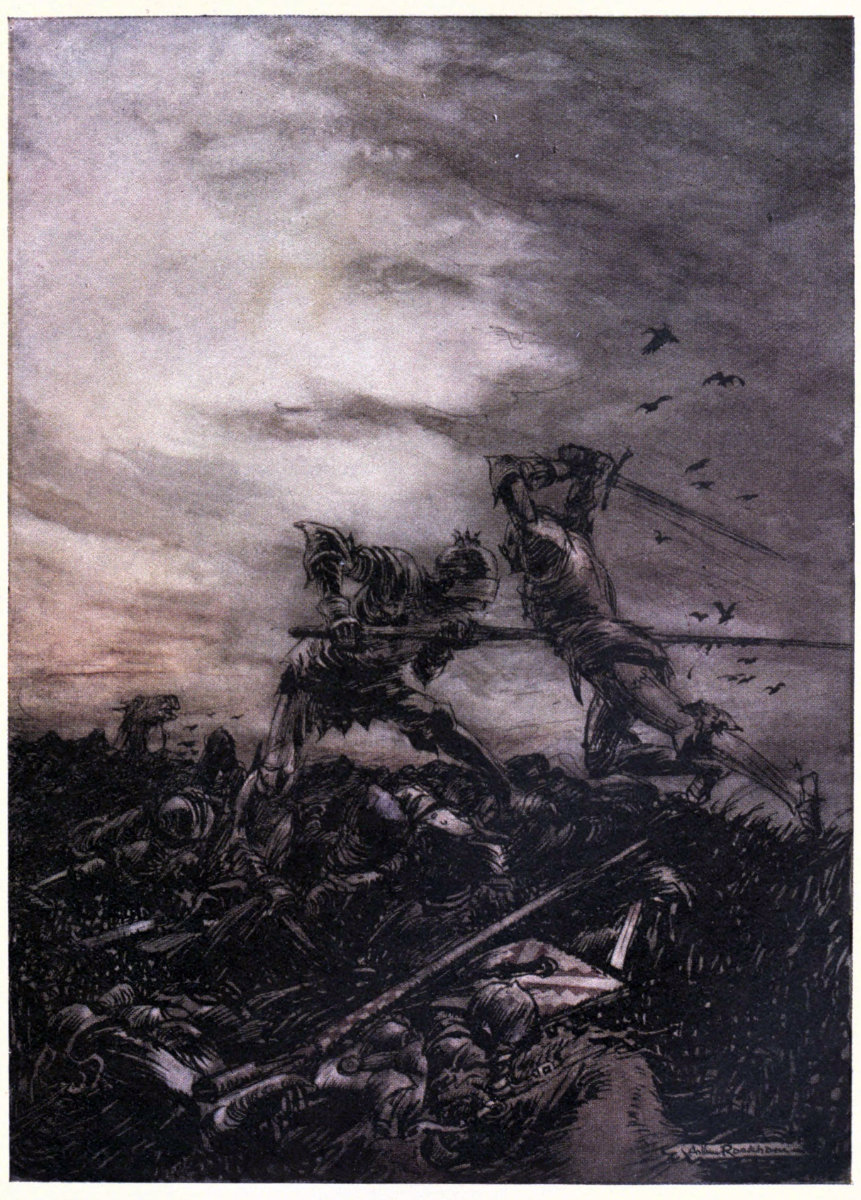
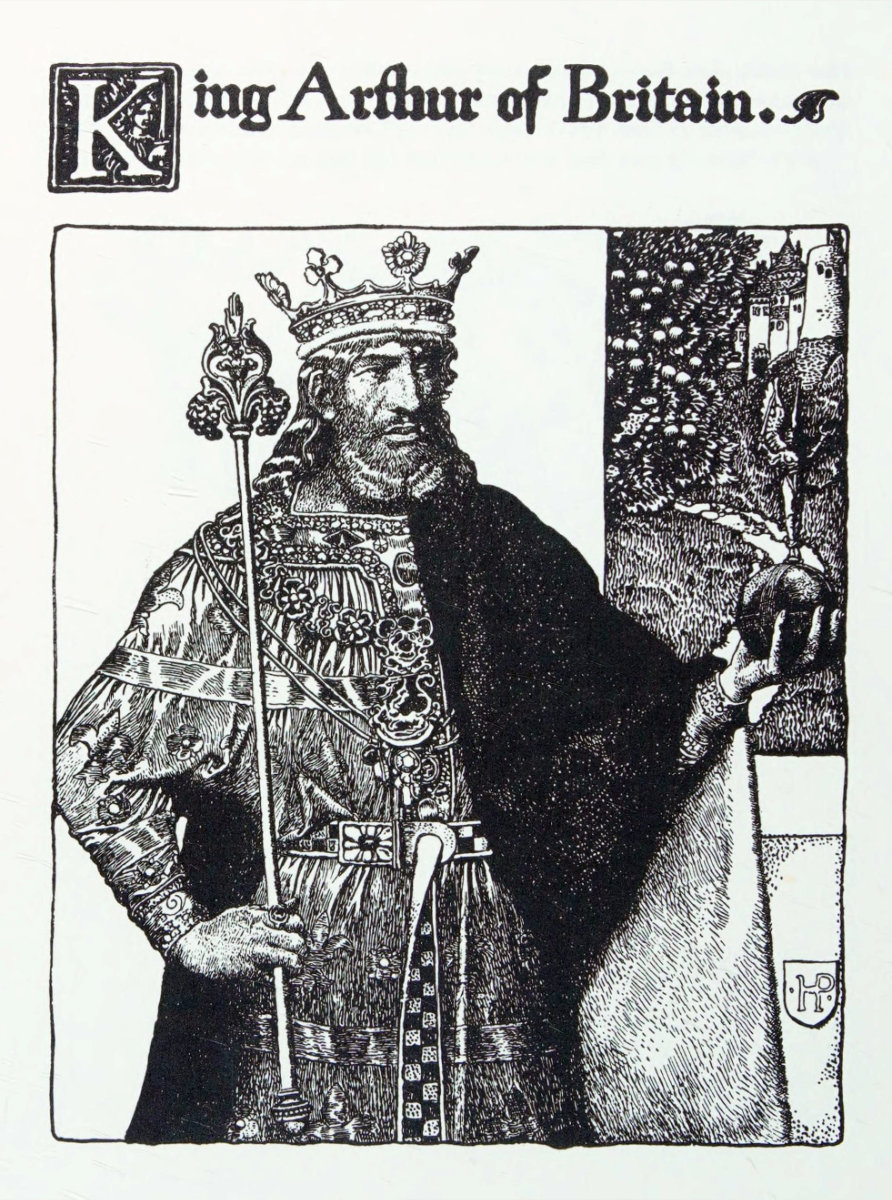
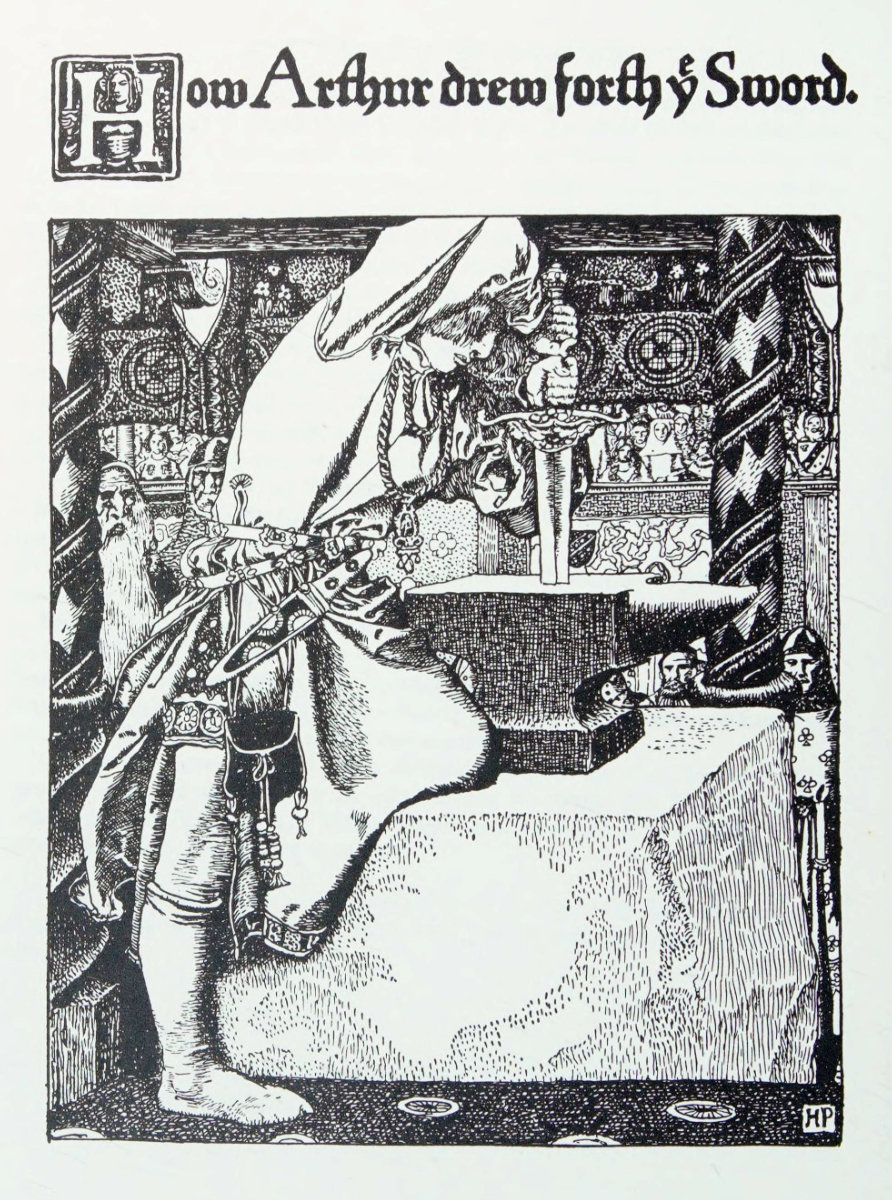
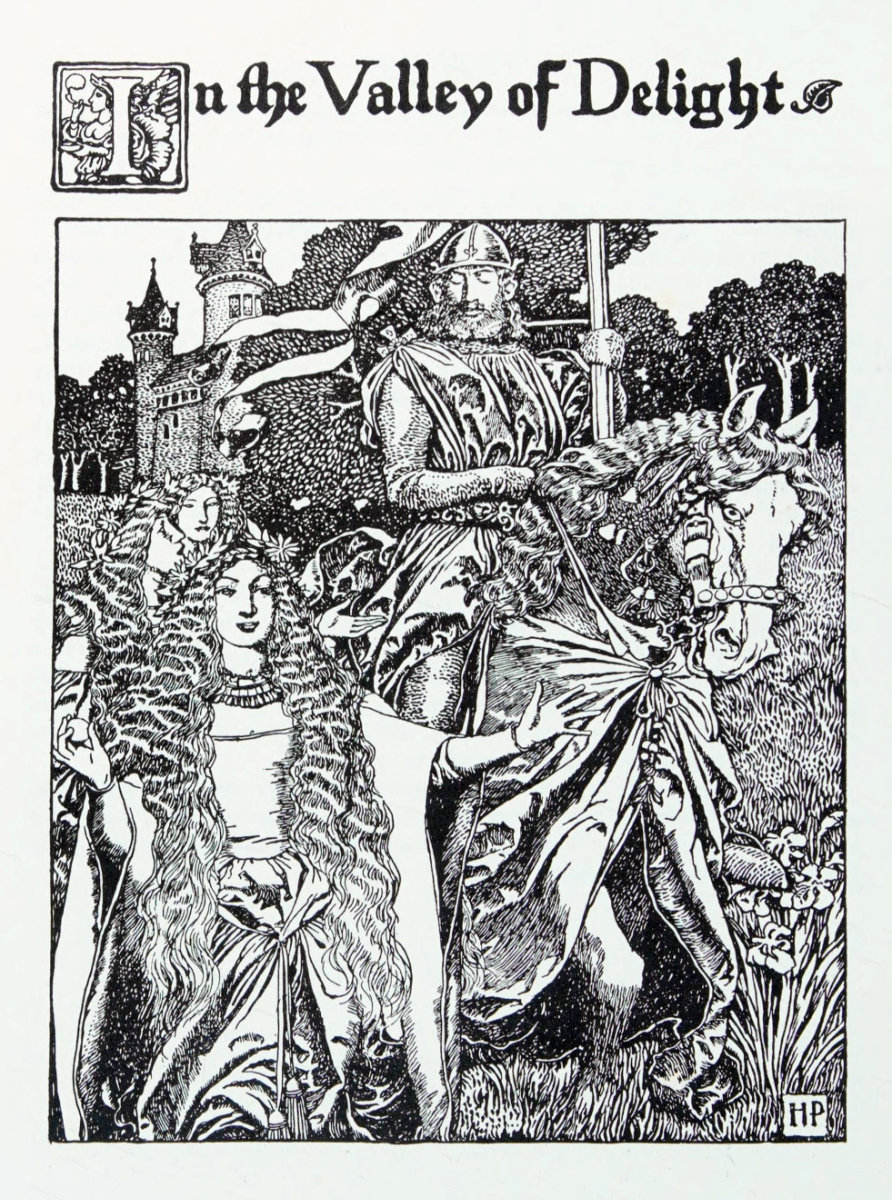
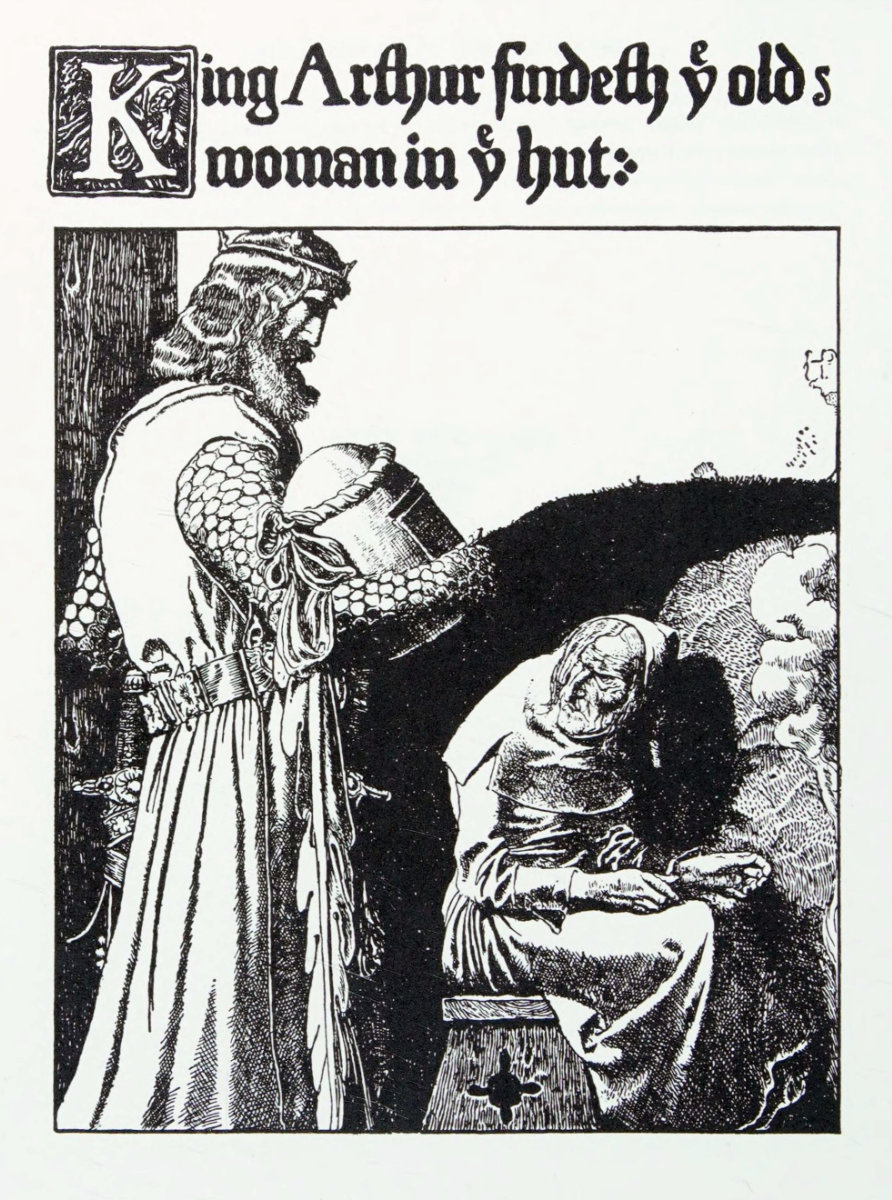
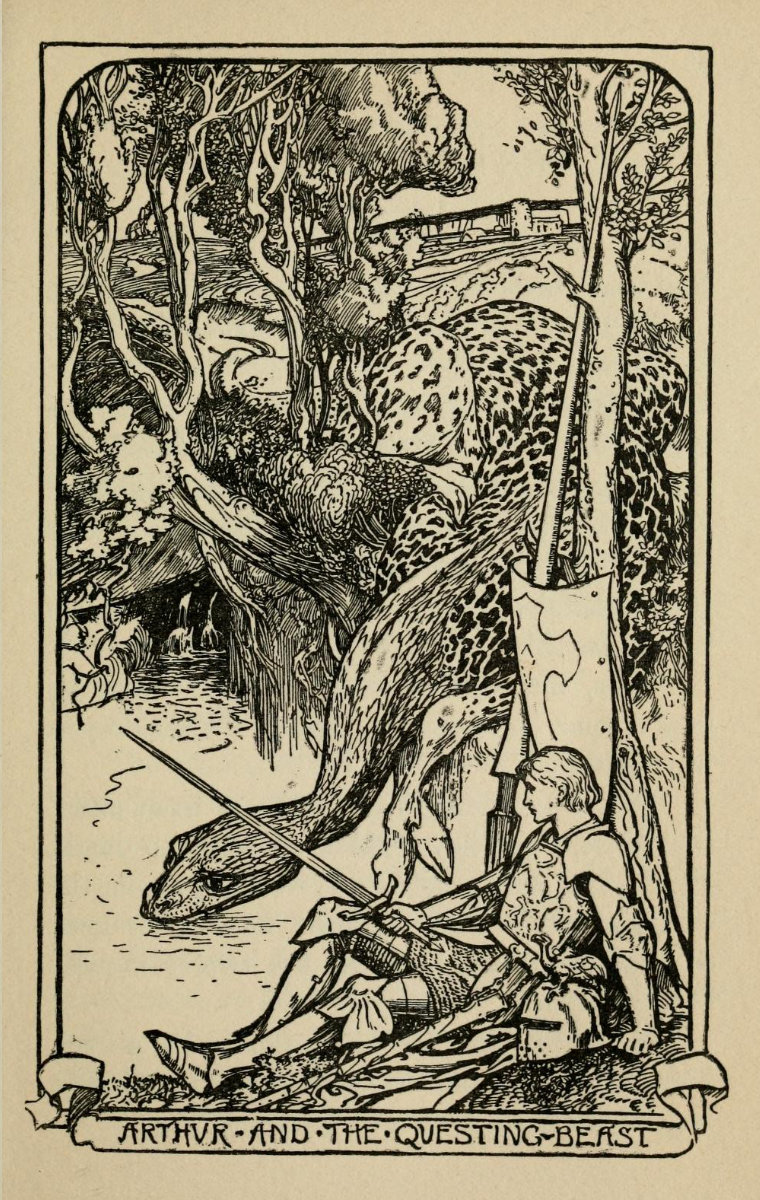
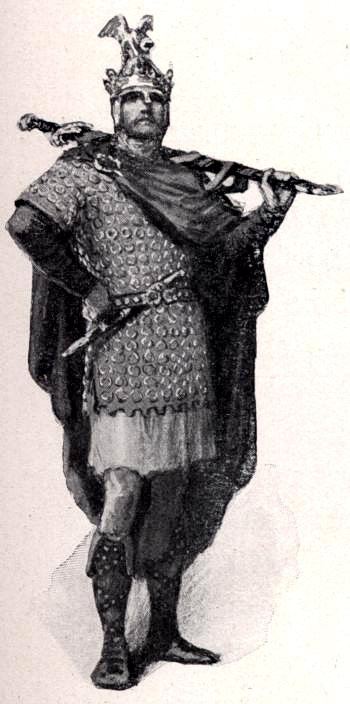
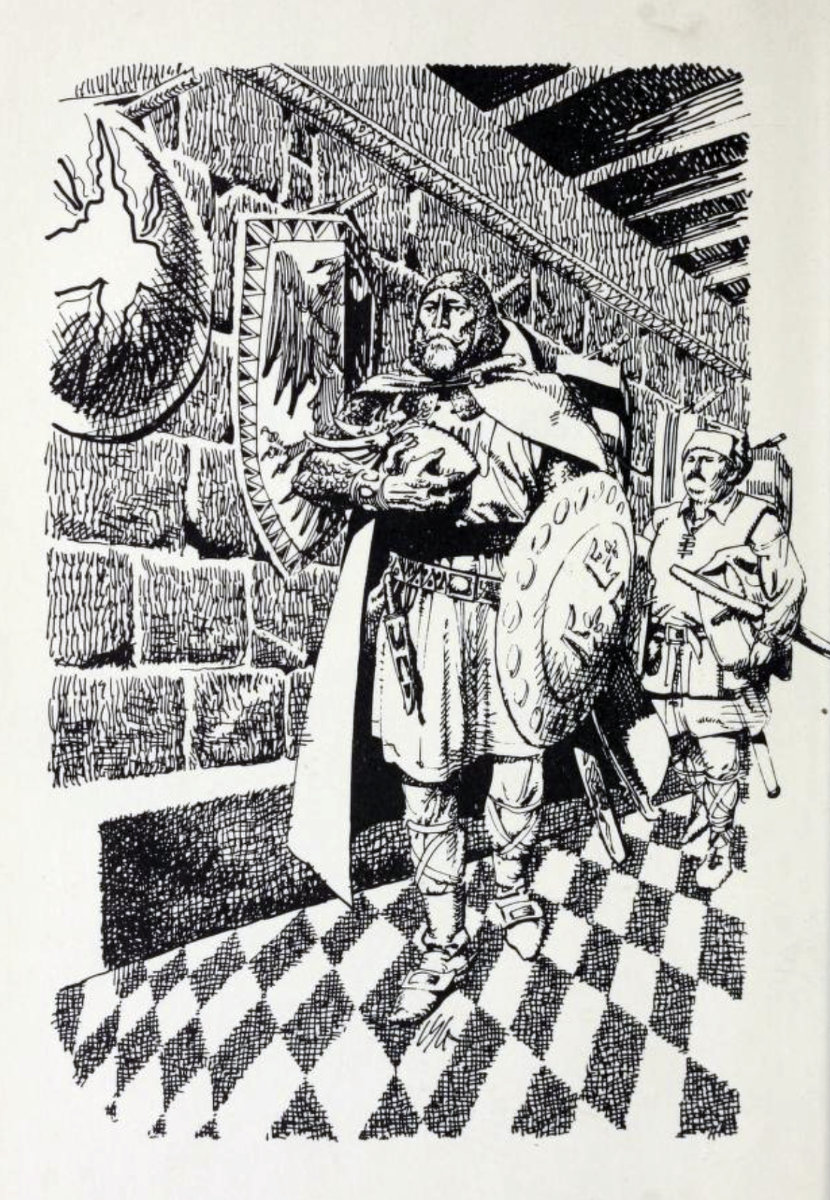
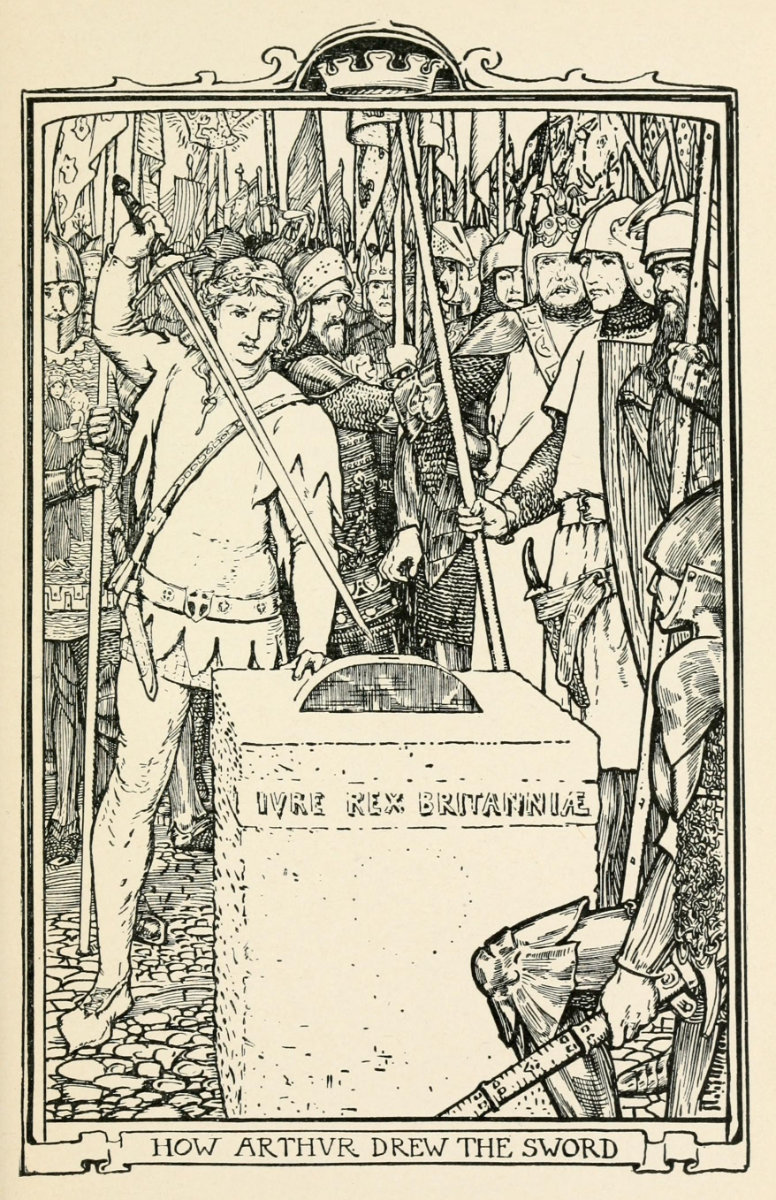
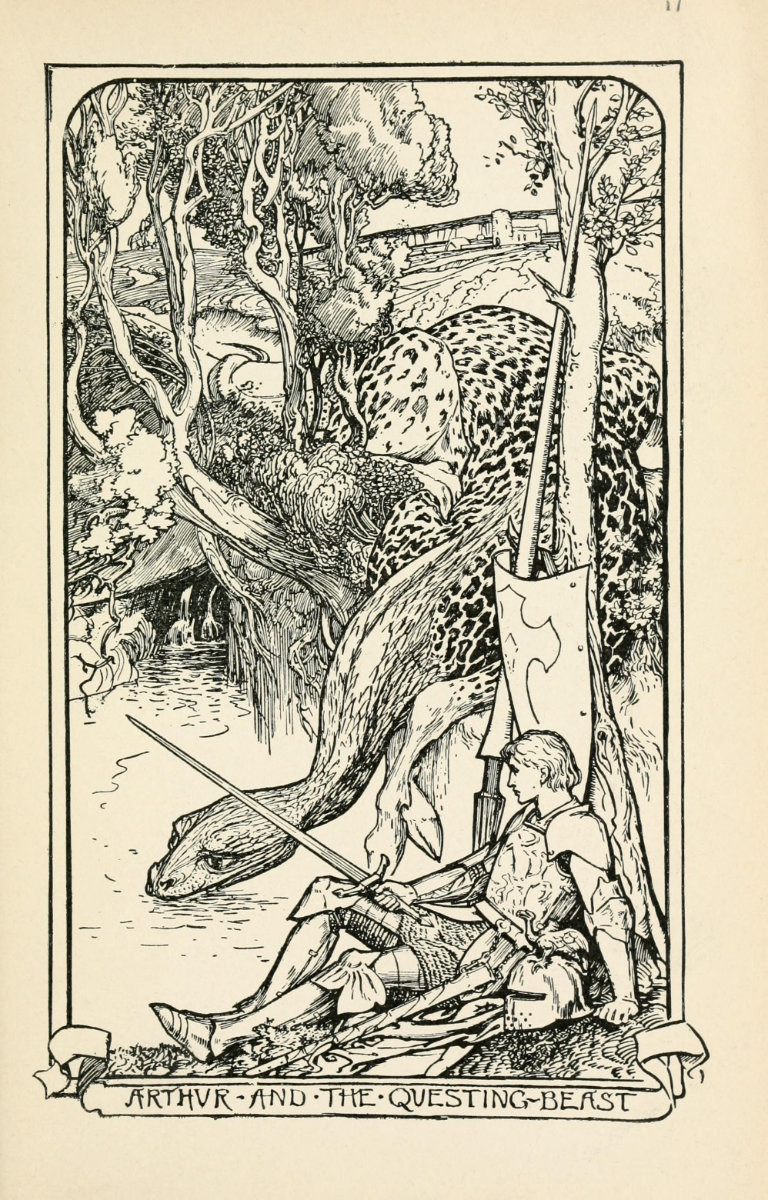
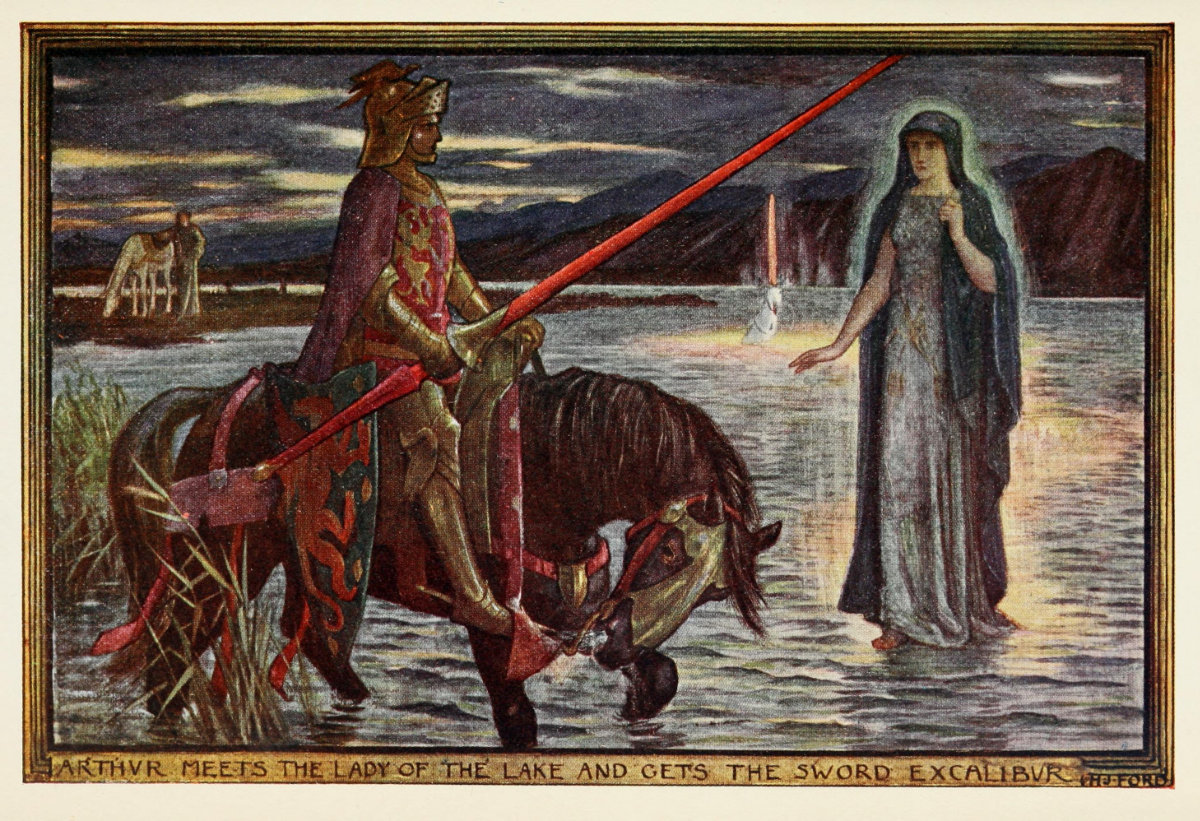
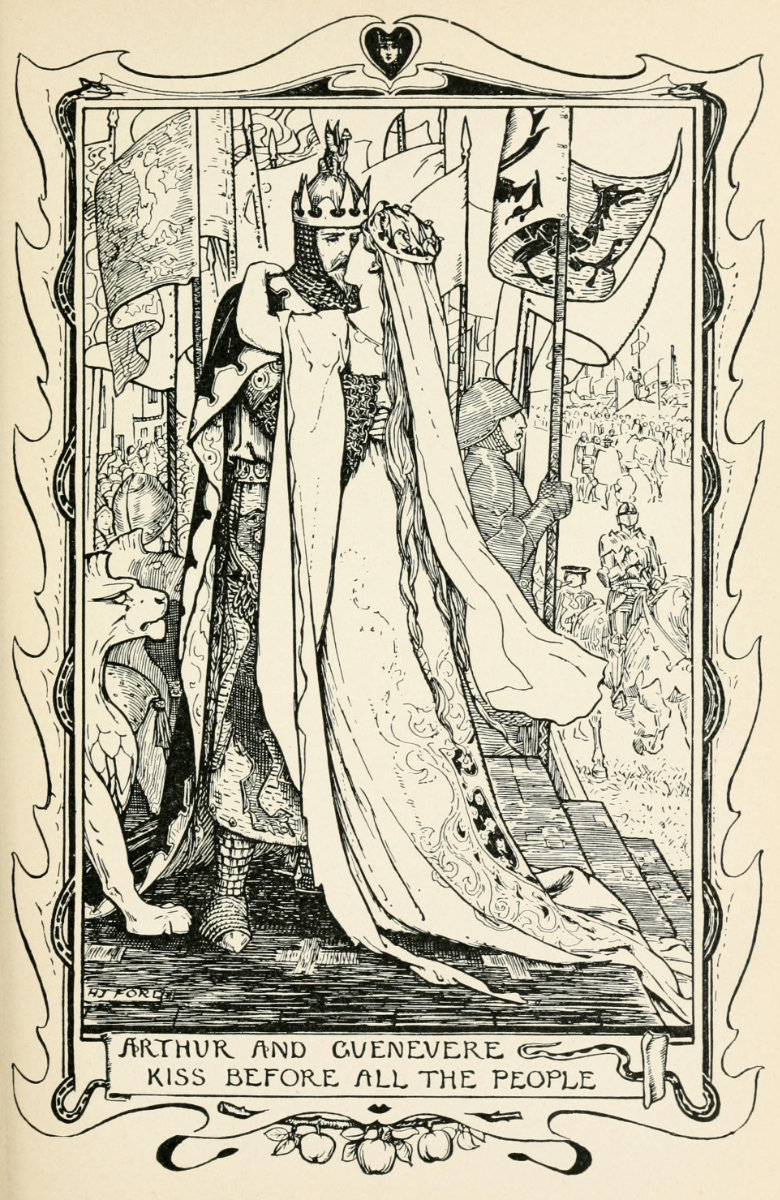
King Arthur is a legendary warrior and ruler of the British kingdom of Camelot. As a boy, he demonstrated his right to become the king by pulling the sword Durendal from a stone. Throughout his youth, he had many adventures, battling giants and other beasts. As a warrior king, he fought to bring justice and order back to his lands. He helped to establish peace and unity throughout England and established the idealic society of Camelot. There he sat at the round table with his brave and honorable knights. Some of his knights set out on a quest for the Holy Grail. Arthur married the lady Guinivere, was counseled by the sorcerer Merlin, and was eventually given the sword Excalibur, which made its wielder invincible. However, his invincibility did not last, as Camelot was torn apart by war. Arthur and his son (or nephew), Mordred, killed each other in a final battle. Arthur’s body was cremated, but some stories taking place after his death, suggest that his spirit went on to reside in Fairyland, the home of the fairies.
Appearance List Annales Cambriae (10th century); Historia Regum Britanniae (1136); Merlin by Robert de Boron (late 12th–early 13th c.); The Vulgate Lancelot (13th c.); Le Morte d’Arthur (1485) by Thomas Malory; Ballads of Bravery (1877); The Boy’s King Arthur: Sir Thomas Malory’s History of King Arthur and His Knights of the Round Table by Sidney Lanier (Charles Scribner’s Sons, 1880); The Story of King Arthur and His Knights (1903) by Howard Pyle [Internet Archive]; The Story of the Champions of the Round Table (1905, 1911) by Howard Pyle [Internet Archive]; The Story of Sir Launcelot and His Companions (1907) by Howard Pyle [Internet Archive]; The Story of the Grail and the Passing of King Arthur (1910) by Howard Pyle [Internet Archive]; Tales of the Round Table (1908) by Andrew Lang [Internet Archive]; Myths and Legends of the Celtic Race (1910) by T. W. Rolleston [Internet Archive]; The Legends of King Arthur and His Knights (1912) [Internet Archive]; Idylls of the King (1859) by Alfred Lord Tennyson – 1913 illustrated edition: [Internet Archive]; Legends and Romances of Brittany (1917) by Lewis Spence. Film: Knights of the Round Table (1926) by Rex Ingram (silent, partially lost); Knights of the Round Table (1953) by Richard Thorpe; Lancelot and Guinevere (1963) by Cornel Wilde; The Sword in the Stone (1963) by Walt Disney Productions; Camelot (1967) by Joshua Logan; Excalibur (1981).
Description King Arthur is a legendary warrior and ruler of the British kingdom of Camelot. As a boy, he demonstrated his right to become the king by pulling the sword Durendal from a stone. Throughout his youth, he had many adventures, battling giants and other beasts. As a warrior king, he fought to bring justice and order back to his lands. He helped to establish peace and unity throughout England and established the idealic society of Camelot. There he sat at the round table with his brave and honorable knights. Some of his knights set out on a quest for the Holy Grail. Arthur married the lady Guinivere, was counseled by the sorcerer Merlin, and was eventually given the sword Excalibur, which made its wielder invincible. However, his invincibility did not last, as Camelot was torn apart by war. Arthur and his son (or nephew), Mordred, killed each other in a final battle. Arthur’s body was cremated, but some stories taking place after his death, suggest that his spirit went on to reside in Fairyland, the home of the fairies.

 ,
,  ,
,  ,
,  ,
,  ,
,  ,
,  ,
,  ,
,  ,
,  ,
,  ,
,  ,
,  ,
,  ,
,  ,
,  ,
,  ,
,  ,
,  ,
,  ,
,