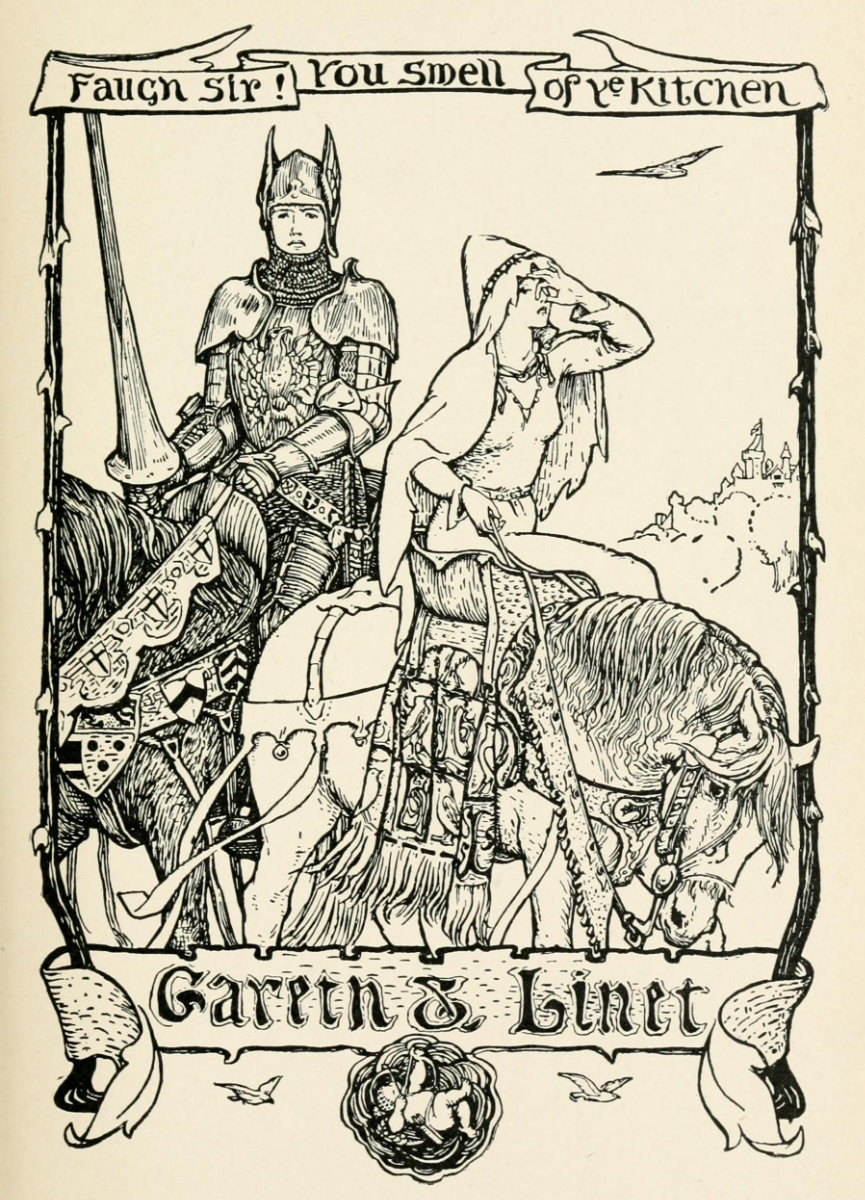
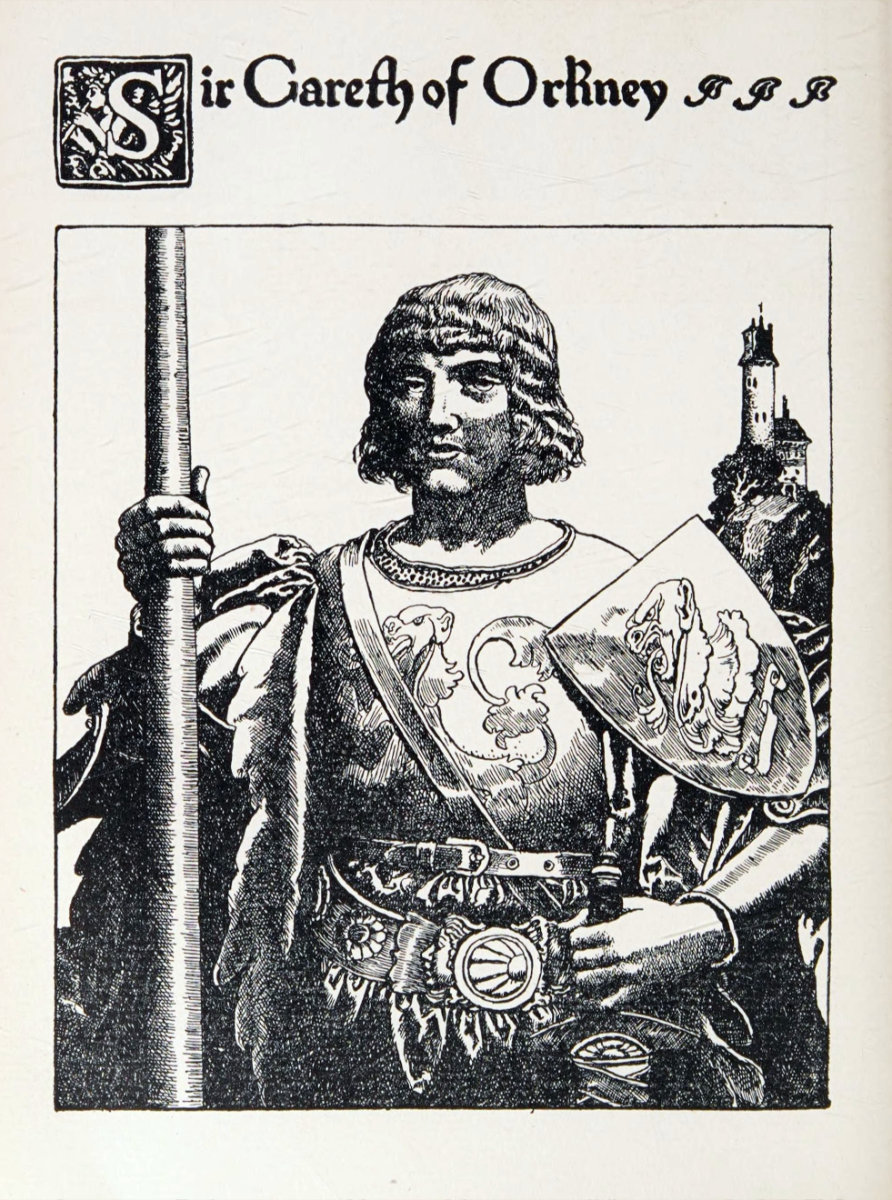
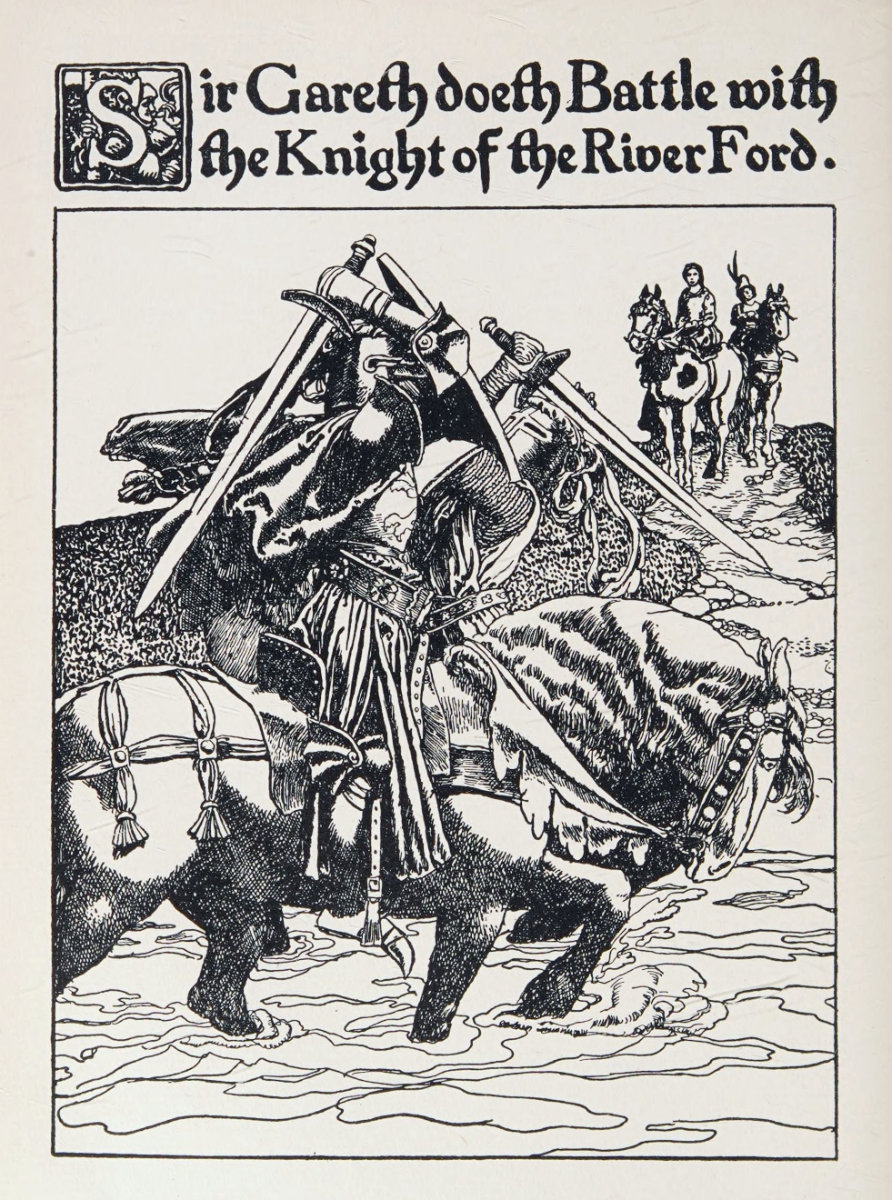
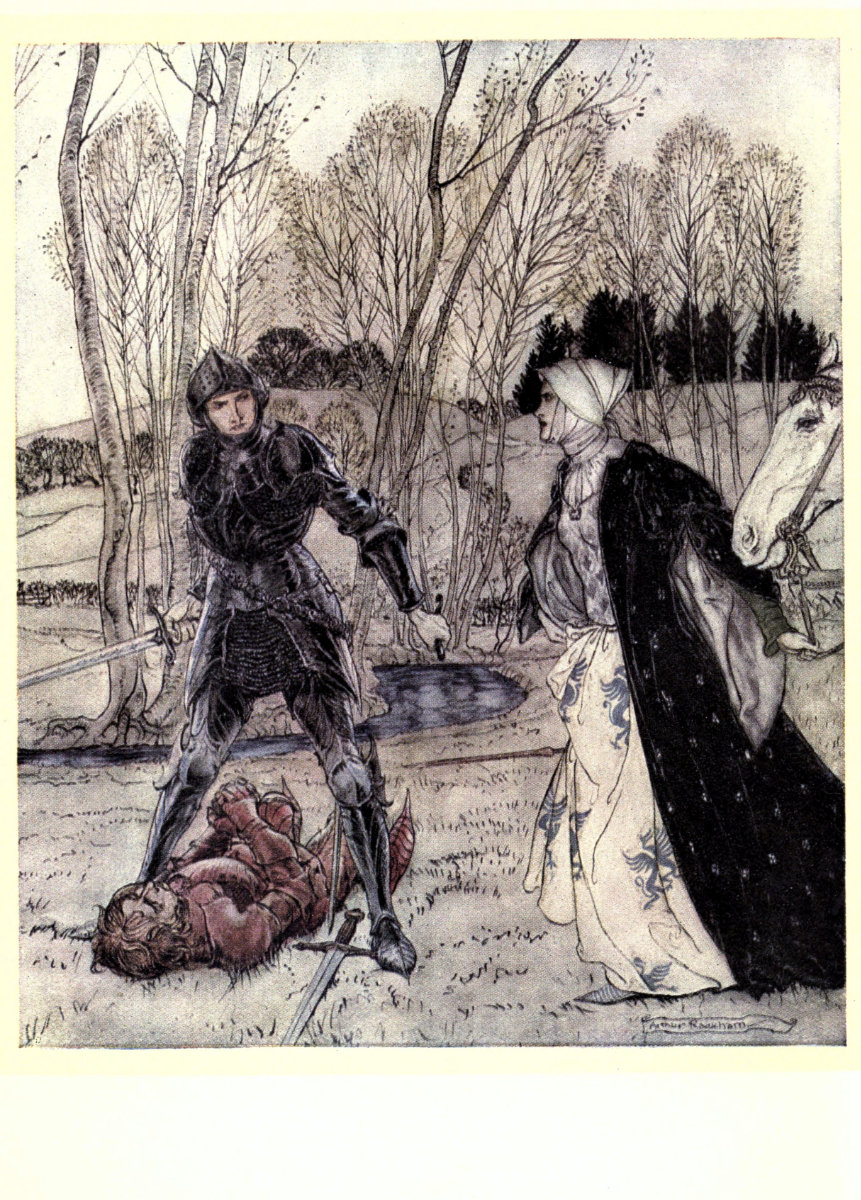
Gareth of Orkney is a Knight of the Round Table in the Le Morte d’Arthur version of the Arthurian legend and many modern works based on it. He is depicted as the youngest son of King Lot and the Queen of Orkney, King Arthur’s half-sister, thus making him Arthur’s nephew, as well as the youngest brother to Gawain, Agravain and Gaheris. The author Thomas Malory created (and named) his composite character of Gareth by combining elements of similar figures from French sources (appearing under various names, but originally having been known as Chrétien’s Gaheriet and Guerrehet), specifically constructing him as the ‘good’ Orkney brother… In Le Morte d’Arthur, one of its eight volumes is named after and largely dedicated to a young Gareth, where he is also known by his nickname Beaumains. The story tells, Fair Unknown-style, of his quest on the behalf of the sisters Lynette and Lyonesse, ending in his marriage with the latter and earning his knighthood through both his martial prowess and humility. At the end of Le Morte, Gareth is accidentally killed by his mentor and friend, Lancelot, during the rescue of Guinevere from the stake, an event that leads to the doom of Arthur’s kingdom.
Appearance List Annales Cambriae (10th century); Historia Regum Britanniae (1136); Merlin by Robert de Boron (late 12th–early 13th c.); The Vulgate Lancelot (13th c.); Le Morte d’Arthur (1485) by Thomas Malory; Ballads of Bravery (1877); The Boy’s King Arthur: Sir Thomas Malory’s History of King Arthur and His Knights of the Round Table by Sidney Lanier (Charles Scribner’s Sons, 1880); The Story of King Arthur and His Knights (1903) by Howard Pyle [Internet Archive]; The Story of the Champions of the Round Table (1905, 1911) by Howard Pyle [Internet Archive]; The Story of Sir Launcelot and His Companions (1907) by Howard Pyle [Internet Archive]; The Story of the Grail and the Passing of King Arthur (1910) by Howard Pyle [Internet Archive]; Tales of the Round Table (1908) by Andrew Lang [Internet Archive]; Myths and Legends of the Celtic Race (1910) by T. W. Rolleston [Internet Archive]; The Legends of King Arthur and His Knights (1912) [Internet Archive]; Idylls of the King (1859) by Alfred Lord Tennyson – 1913 illustrated edition: [Internet Archive]; Legends and Romances of Brittany (1917) by Lewis Spence. Film: Knights of the Round Table (1926) by Rex Ingram (silent, partially lost); Knights of the Round Table (1953) by Richard Thorpe; Lancelot and Guinevere (1963) by Cornel Wilde; The Sword in the Stone (1963) by Walt Disney Productions; Camelot (1967) by Joshua Logan; Excalibur (1981).
Description Gareth of Orkney is a Knight of the Round Table in the Le Morte d’Arthur version of the Arthurian legend and many modern works based on it. He is depicted as the youngest son of King Lot and the Queen of Orkney, King Arthur’s half-sister, thus making him Arthur’s nephew, as well as the youngest brother to Gawain, Agravain and Gaheris. The author Thomas Malory created (and named) his composite character of Gareth by combining elements of similar figures from French sources (appearing under various names, but originally having been known as Chrétien’s Gaheriet and Guerrehet), specifically constructing him as the ‘good’ Orkney brother… In Le Morte d’Arthur, one of its eight volumes is named after and largely dedicated to a young Gareth, where he is also known by his nickname Beaumains. The story tells, Fair Unknown-style, of his quest on the behalf of the sisters Lynette and Lyonesse, ending in his marriage with the latter and earning his knighthood through both his martial prowess and humility. At the end of Le Morte, Gareth is accidentally killed by his mentor and friend, Lancelot, during the rescue of Guinevere from the stake, an event that leads to the doom of Arthur’s kingdom.

 ,
,  ,
,  ,
,