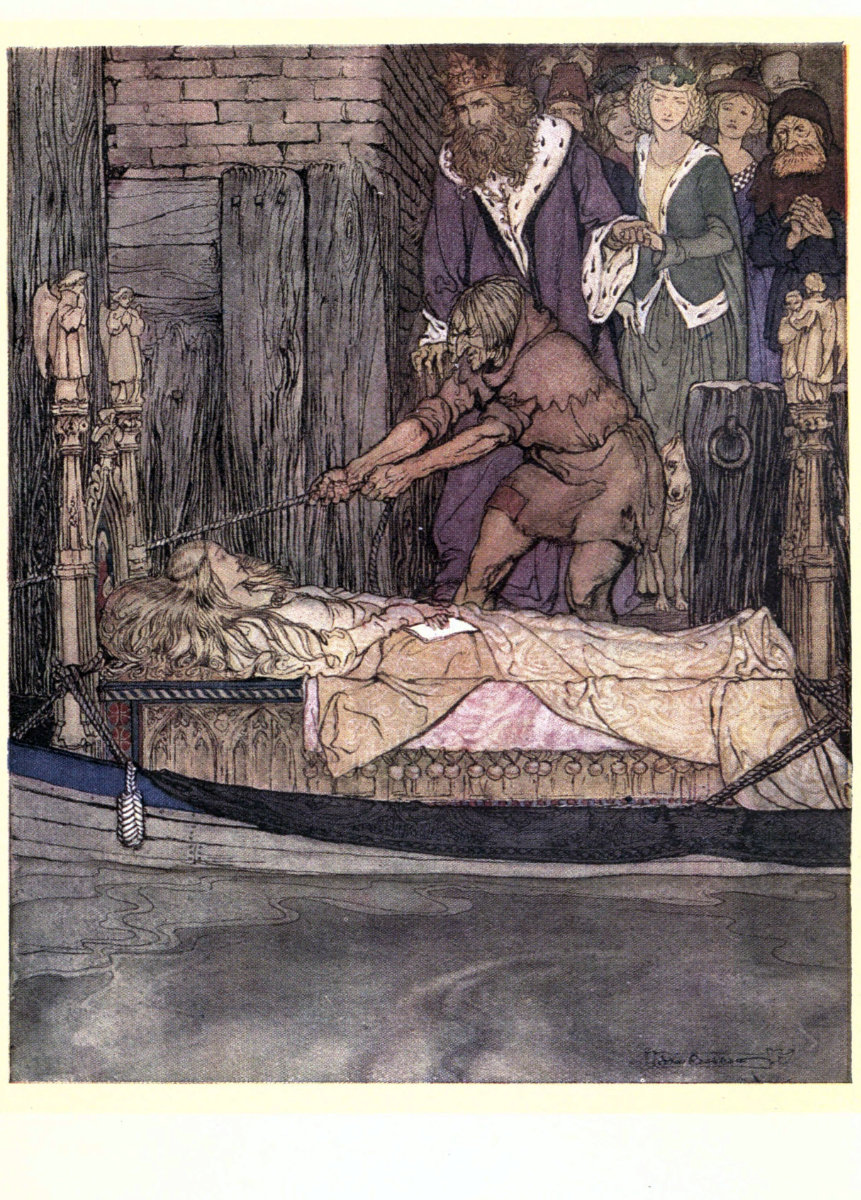
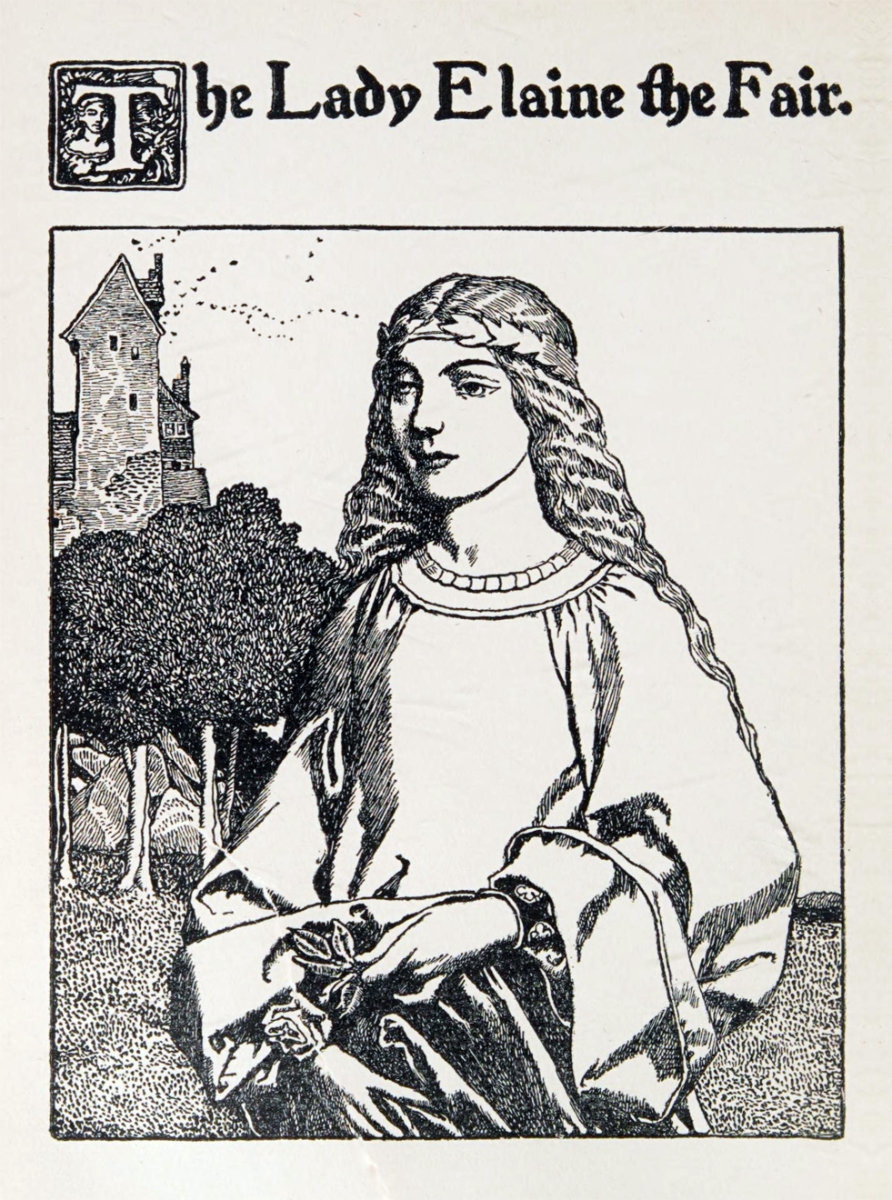
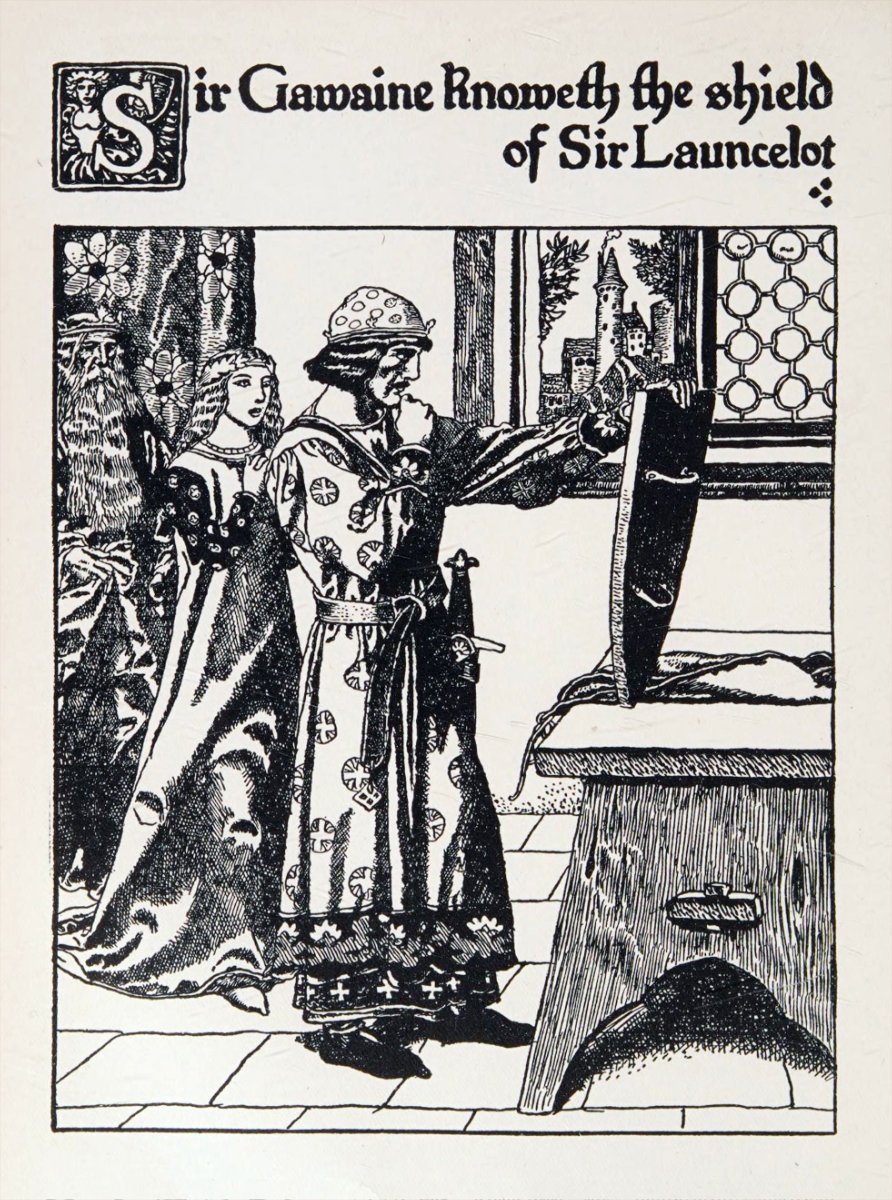
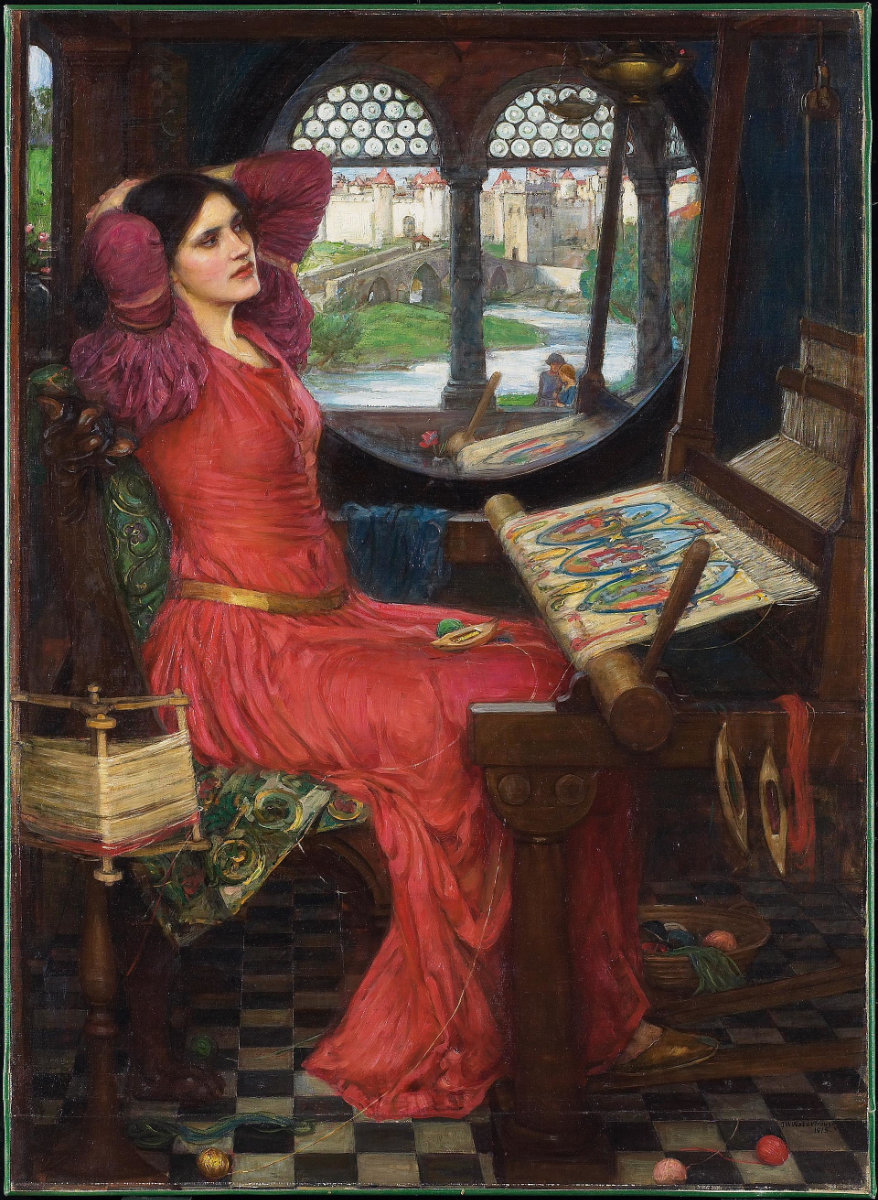
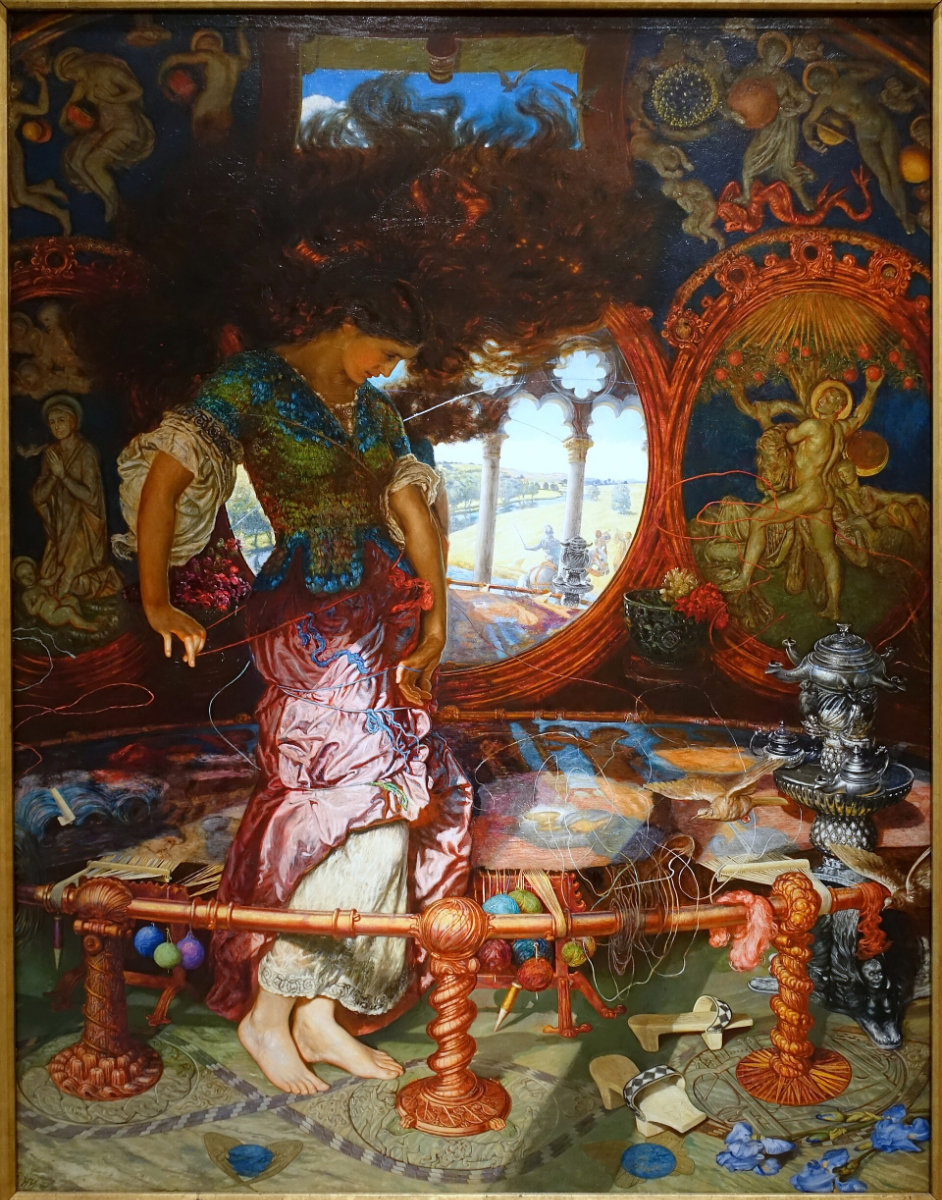
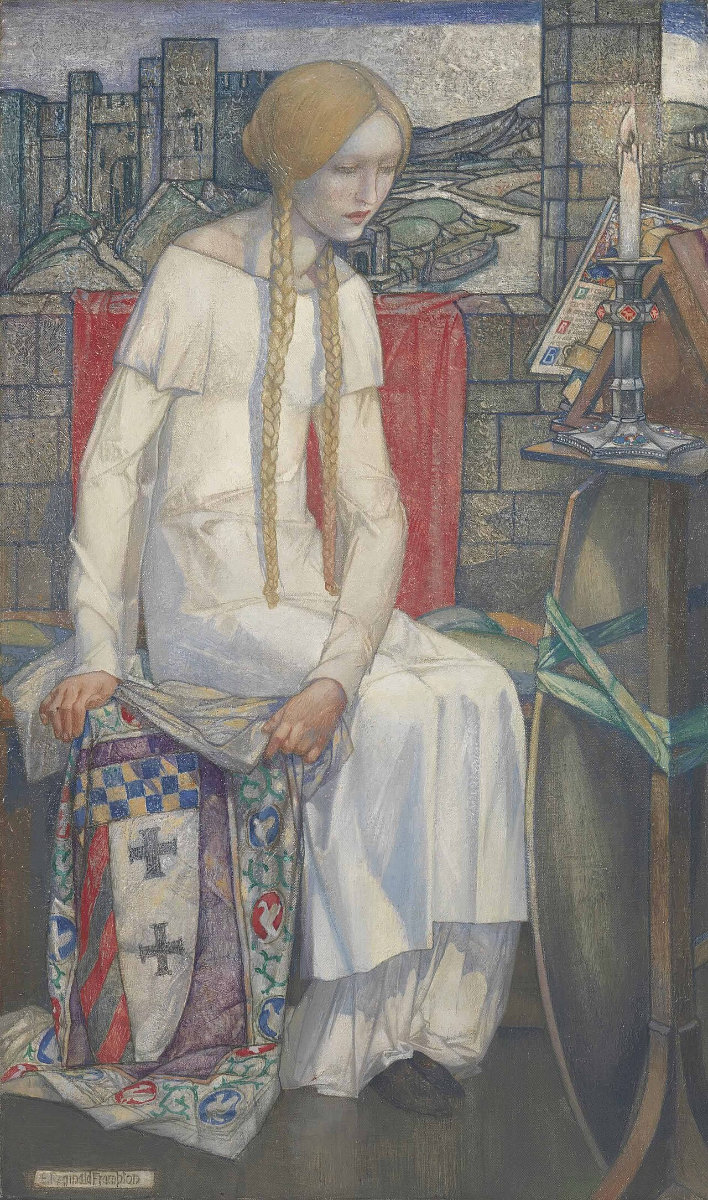
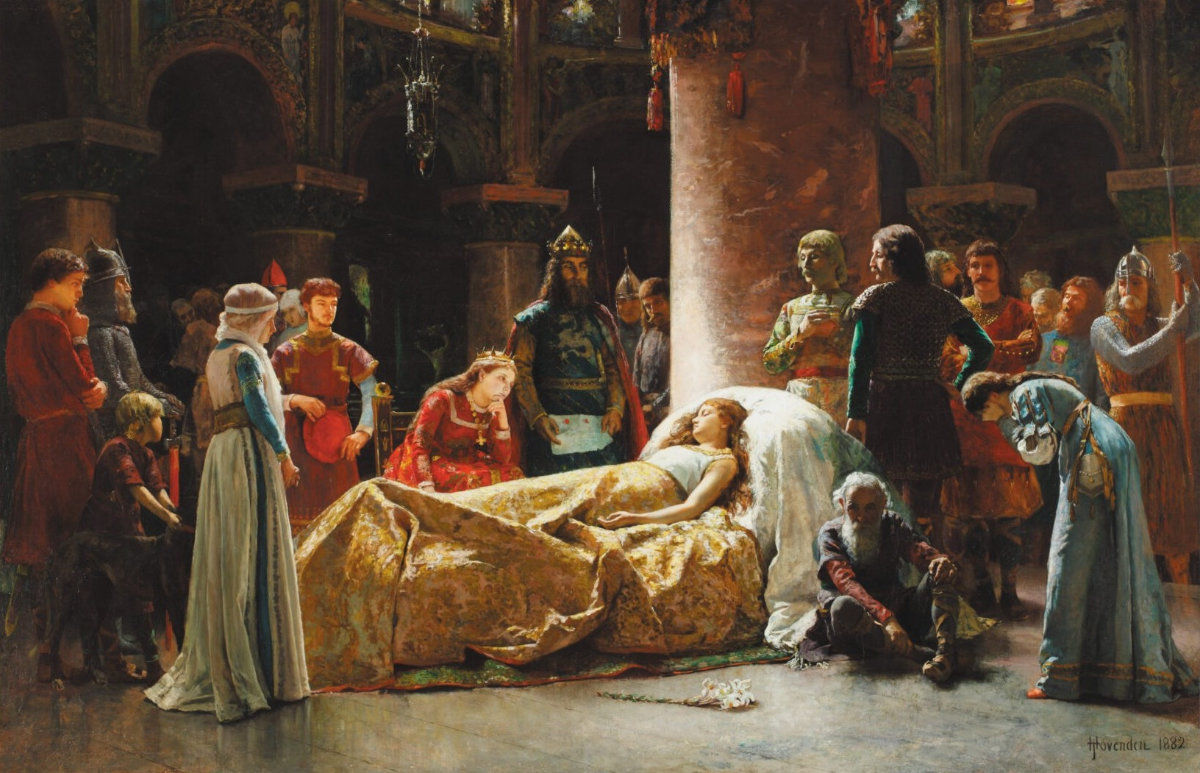
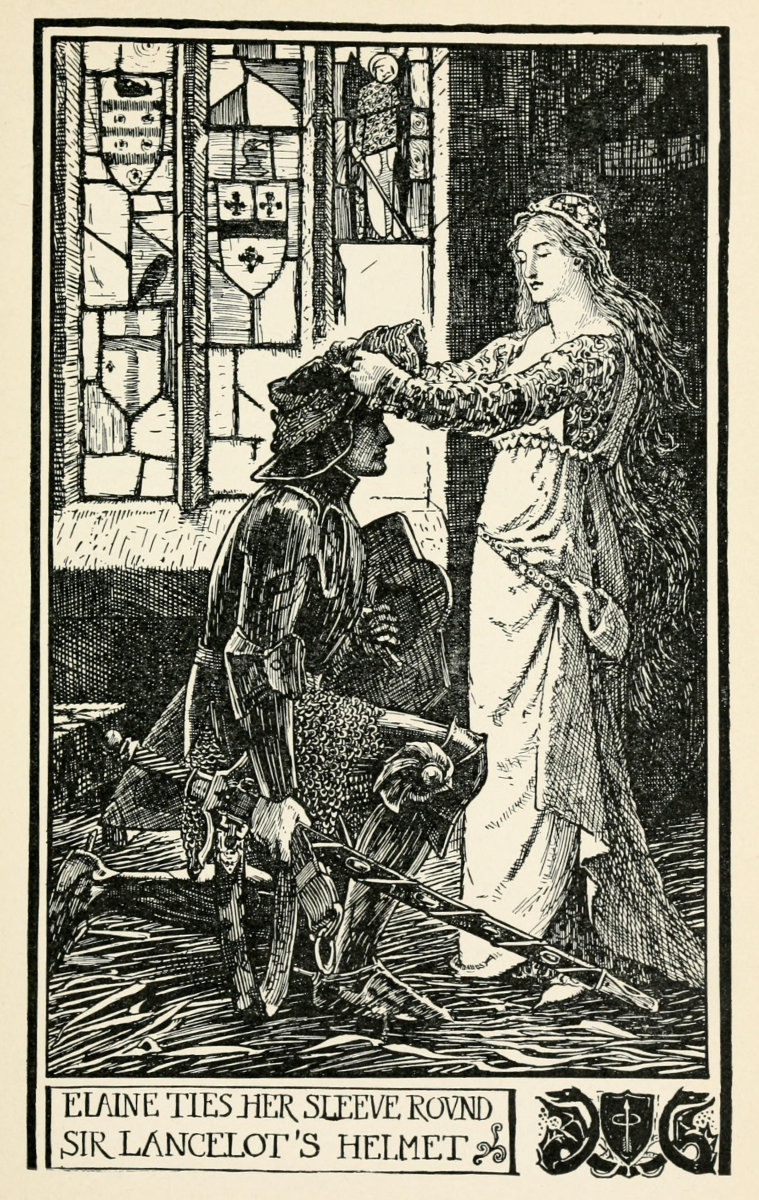
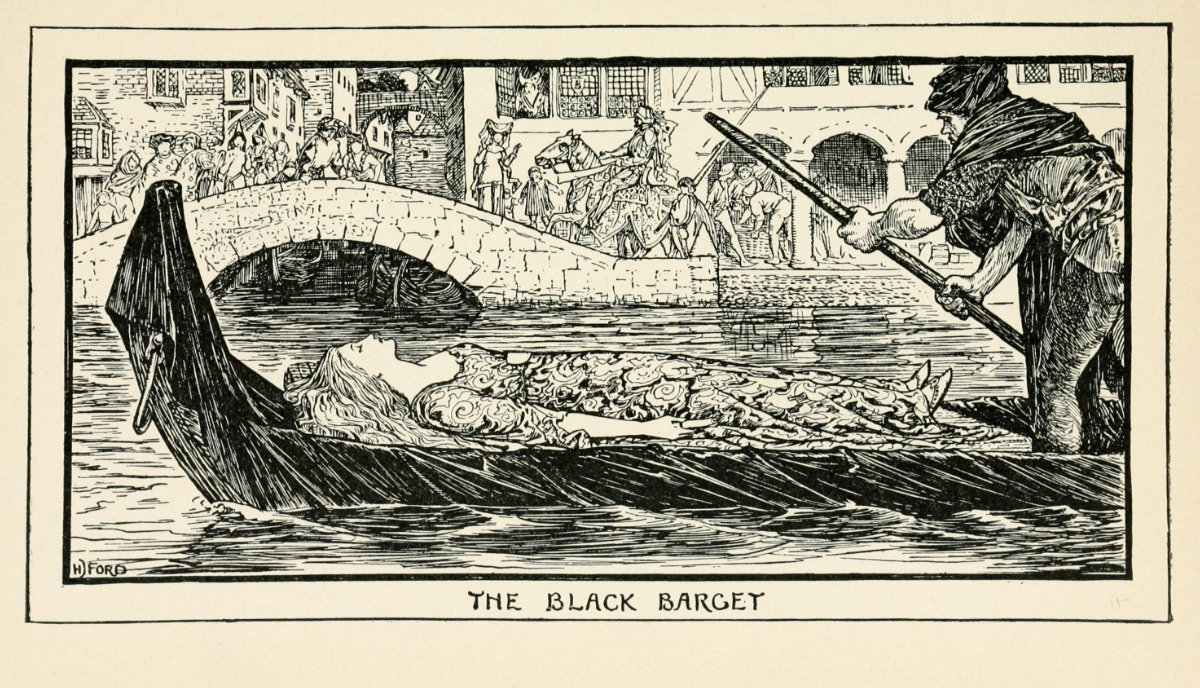
Elaine of Astolat, also known as Elayne of Ascolat and other variants of the name, is a figure in Arthurian legend. She is a lady from the castle of Astolat who dies of her unrequited love for Sir Lancelot. Well-known versions of her story appear in Sir Thomas Malory’s 1485 book Le Morte d’Arthur, Alfred, Lord Tennyson’s mid-19th-century Idylls of the King, and Tennyson’s poem “The Lady of Shalott”. She should not be confused with Elaine of Corbenic, the mother of Sir Galahad… In Malory’s telling, Elaine’s episode begins when her father Bernard, the lord of Astolat (William Caxton’s misread of Malory’s original Ascolat), organises a tournament attended by King Arthur and his knights. While Sir Lancelot was not originally planning to attend, he is persuaded otherwise and visits Bernard and his two sons before the tournament. While Lancelot is in her family’s household, Elaine becomes enamoured of him and begs him to wear her token at the coming tournament. Explaining that Queen Guinevere would be at the tournament, he consents to wear the token but says that he will have to fight in disguise so as not to be recognized. He asks Bernard if he can leave his recognizable shield with him and borrow another. Bernard agrees and lends him the plain-white shield of Sir Torre, Elaine’s brother…
Alias Elaine of Astolat
Real Names/Alt Names Elayne, Elaine the Fair, Lady Elaine the Fair, Elayne le Whyte, Fair Maid of Astolat, Elaine the White, Lily Maid of Astolat, The Lady of Shalott
Appearance List Mort Artu / La Mort le Roi Artu (c. 1230) — Anonymous; La Damigella di Scalot in Il Novellino (13th century) — Anonymous; Le Morte d’Arthur (1485) by Thomas Malory; The Lady of Shalott (1832; revised 1842) by Alfred, Lord Tennyson; Idylls of the King (1859) by Alfred, Lord Tennyson; The Boy’s King Arthur (1880) by Sidney Lanier; The Story of Elaine, the Lily Maid of Astolat (c. 1879) by Alfred, Lord Tennyson, illustrated by Gustave Doré; The Legends of King Arthur and His Knights (1912) by Sir James Knowles K.C.V.O. [Internet Archive]; The Once and Future King (1958) by T. H. White.
Description Elaine of Astolat, also known as Elayne of Ascolat and other variants of the name, is a figure in Arthurian legend. She is a lady from the castle of Astolat who dies of her unrequited love for Sir Lancelot. Well-known versions of her story appear in Sir Thomas Malory’s 1485 book Le Morte d’Arthur, Alfred, Lord Tennyson’s mid-19th-century Idylls of the King, and Tennyson’s poem “The Lady of Shalott”. She should not be confused with Elaine of Corbenic, the mother of Sir Galahad… In Malory’s telling, Elaine’s episode begins when her father Bernard, the lord of Astolat (William Caxton’s misread of Malory’s original Ascolat), organises a tournament attended by King Arthur and his knights. While Sir Lancelot was not originally planning to attend, he is persuaded otherwise and visits Bernard and his two sons before the tournament. While Lancelot is in her family’s household, Elaine becomes enamoured of him and begs him to wear her token at the coming tournament. Explaining that Queen Guinevere would be at the tournament, he consents to wear the token but says that he will have to fight in disguise so as not to be recognized. He asks Bernard if he can leave his recognizable shield with him and borrow another. Bernard agrees and lends him the plain-white shield of Sir Torre, Elaine’s brother…

 ,
,  ,
,  ,
,  ,
,  ,
,  ,
,  ,
,