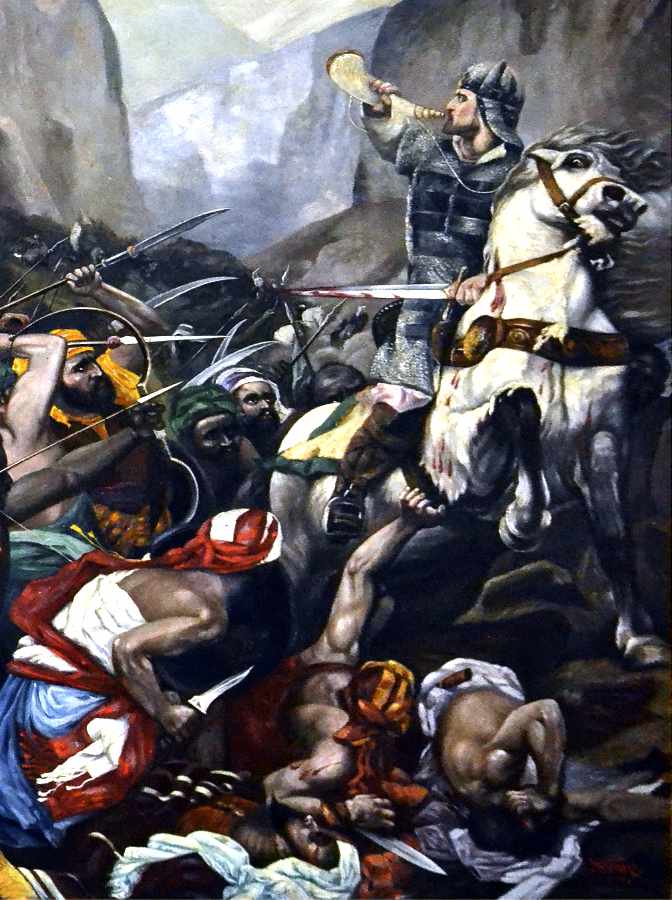
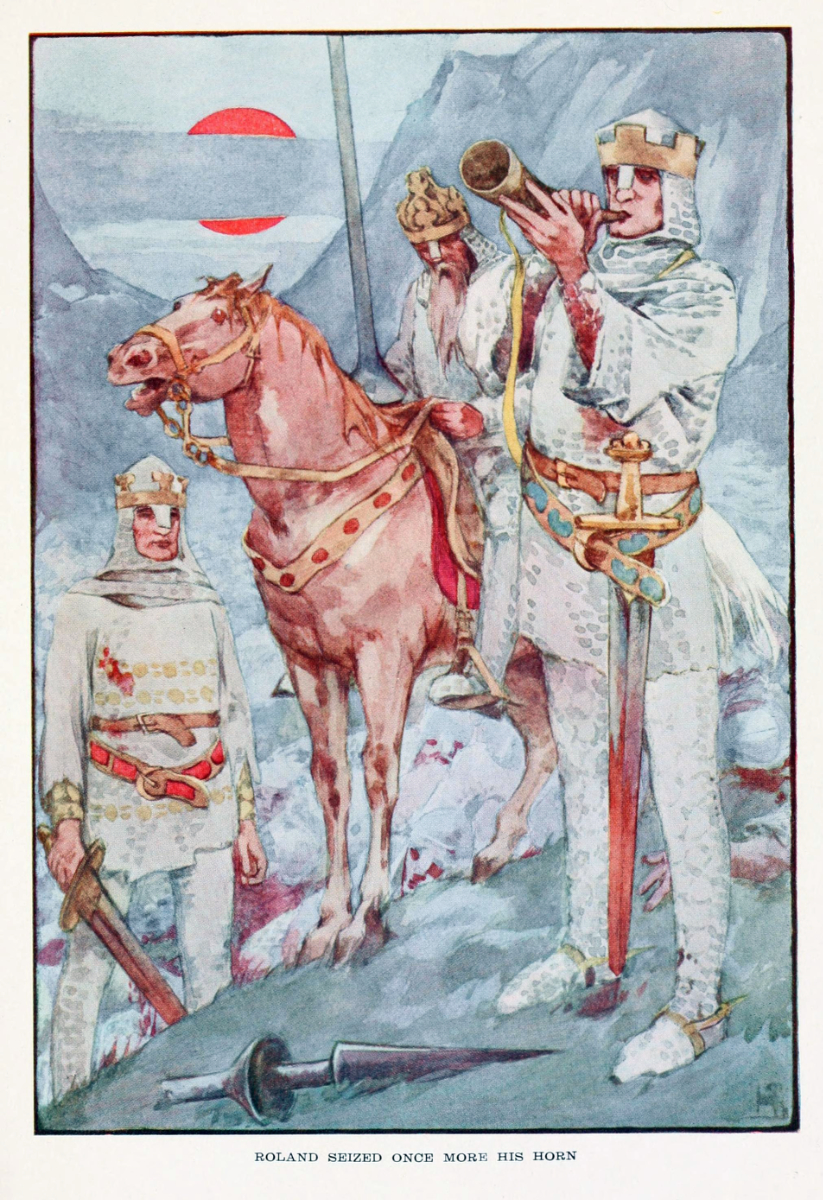
Roland was a Frankish military leader under Charlemagne who became one of the principal figures in the literary cycle known as the Matter of France. Characters based on him appear in The Song of Roland (French: La Chanson de Roland), an 11th-century chanson de geste, Orlando Furioso (The Frenzy of Orlando, more literally Raging Roland), an Italian epic poem by Ludovico Ariosto (1532), and Orlando Innamorato (in English as “Orlando in Love”), an epic poem written by the Italian Renaissance author Matteo Maria Boiardo, published between 1483 (first two books) and 1495, a romance concerning the heroic knight Orlando (Roland). Orlando Furioso centers on Orlando, the Christian knight known in French (and subsequently English) as Roland. The story takes place against the background of the war between Charlemagne’s Christian paladins and the Saracen army that has invaded Europe and is attempting to overthrow the Christian empire. The poem is about war and love and the romantic ideal of chivalry. It mixes realism and fantasy, humor and tragedy. The stage is the entire world, plus a trip to the Moon. The large cast of characters features Christians and Saracens, soldiers and sorcerers, and fantastic creatures including a gigantic sea monster called the Orc and a flying horse called the hippogriff. Many themes are interwoven in its complicated episodic structure, but the most important are the paladin Orlando’s unrequited love for the pagan princess Angelica, which drives him mad; the love between the female Christian warrior Bradamante and the Saracen Ruggiero, who are supposed to be the ancestors of Ariosto’s patrons, the House of Este of Ferrara; and the war between Christian and Infidel.
Creators/Key Contributors Gustave Doré, Ludovico Ariosto
First Appearance The Song of Roland (French: La Chanson de Roland, between 1129 and 1165)
First Publisher ○
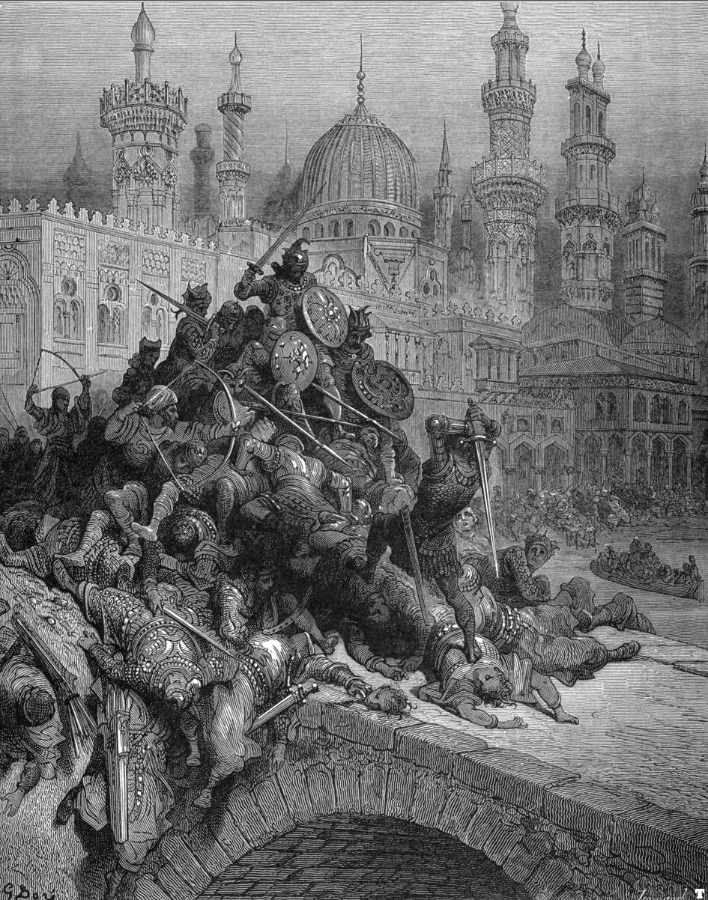
Appearance List Literature: The Song of Roland (French: La Chanson de Roland, between 1129 and 1165), Historia Caroli Magni (History of the life of Charlemagne, or Turpin Chronicle, or Pseudo-Turpin Chronicle, 12th-century), Karlamagnús saga (13th century), Orlando Innamorato (English: “Orlando in Love”, 1483/1495) by Matteo Maria Boiardo, Orlando Furioso by Arioto (The Frenzy of Orlando, or Raging Roland, 1532), The History of Orlando Furioso by Robert Greene (1594), Gustave Doré’s Illustrations for Ariosto’s ‘Orlando Furioso’ (1879) [Wikimedia Commons], La Chanson de Roland; Translated from the Seventh Edition of Léon Gautier by Léonce Rabillon (1885), The Song of Roland; Translated into English Verse by Leonard Bacon (1914), The Song of Roland by C. K. Scott-Moncrieff (?). Comics: Young Heroes #35.
Sample Read Roland furieux: poème héroïque / Arioste; traduit par A.-J. du Pays; et illustré par Gustave Doré [Internet Archive]
Description Roland was a Frankish military leader under Charlemagne who became one of the principal figures in the literary cycle known as the Matter of France. Characters based on him appear in The Song of Roland (French: La Chanson de Roland), an 11th-century chanson de geste, Orlando Furioso (The Frenzy of Orlando, more literally Raging Roland), an Italian epic poem by Ludovico Ariosto (1532), and Orlando Innamorato (in English as “Orlando in Love”), an epic poem written by the Italian Renaissance author Matteo Maria Boiardo, published between 1483 (first two books) and 1495, a romance concerning the heroic knight Orlando (Roland). Orlando Furioso centers on Orlando, the Christian knight known in French (and subsequently English) as Roland. The story takes place against the background of the war between Charlemagne’s Christian paladins and the Saracen army that has invaded Europe and is attempting to overthrow the Christian empire. The poem is about war and love and the romantic ideal of chivalry. It mixes realism and fantasy, humor and tragedy. The stage is the entire world, plus a trip to the Moon. The large cast of characters features Christians and Saracens, soldiers and sorcerers, and fantastic creatures including a gigantic sea monster called the Orc and a flying horse called the hippogriff. Many themes are interwoven in its complicated episodic structure, but the most important are the paladin Orlando’s unrequited love for the pagan princess Angelica, which drives him mad; the love between the female Christian warrior Bradamante and the Saracen Ruggiero, who are supposed to be the ancestors of Ariosto’s patrons, the House of Este of Ferrara; and the war between Christian and Infidel.
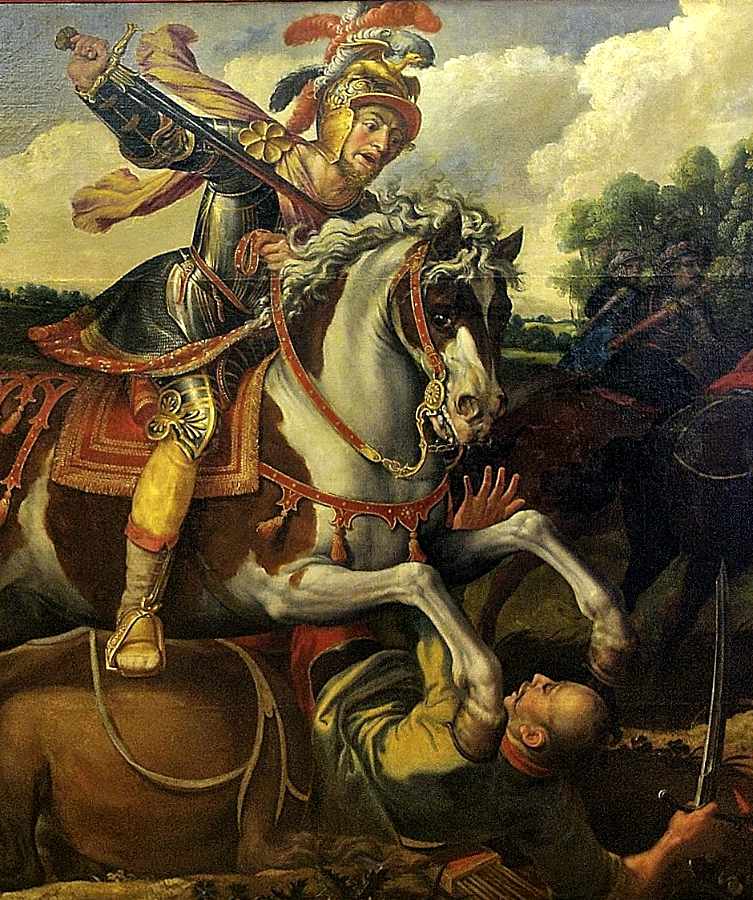
Detail of Roland Furieux à Effiat (Orlando Furioso at Effiat) from a series of paintings at the Château d’Effiat (1625-1632) now at MARQ / Musée d’art Roger-Quilliot | Antonio Tempesta

 ,
,  ,
,