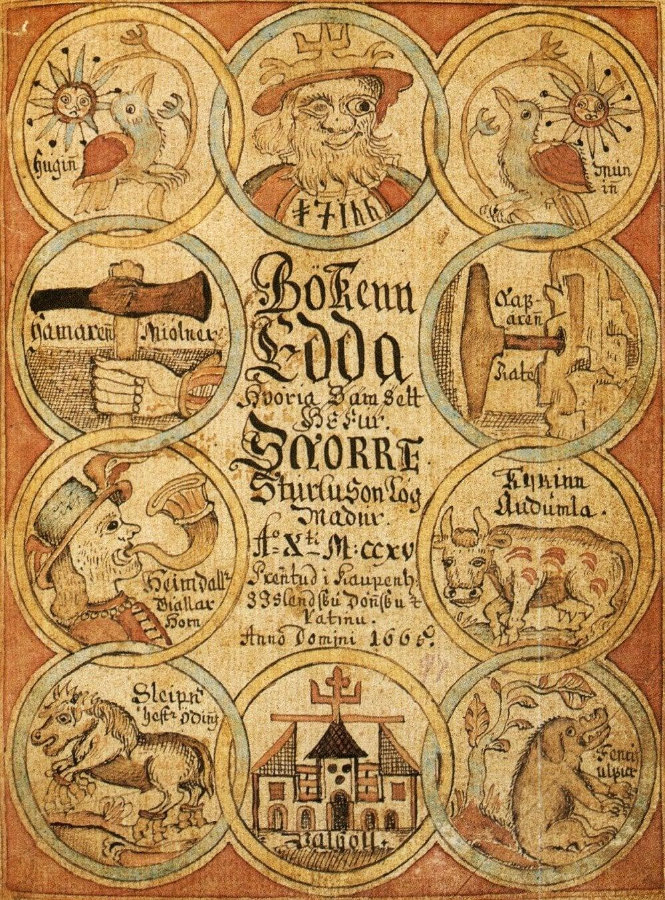
In Norse mythology, Víðarr is a god among the Æsir associated with vengeance. Víðarr is described as the son of Odin and the jötunn Gríðr and is foretold to avenge his father’s death by killing the wolf Fenrir at Ragnarök, a conflict he is described as surviving. Víðarr is attested in the Poetic Edda, compiled in the 13th century from earlier traditional sources, the Prose Edda, written in the 13th century by Snorri Sturluson, and is interpreted as depicted with Fenrir on the Gosforth Cross. A number of theories surround the figure, including theories around potential ritual silence and a Proto-Indo-European basis. In the Poetic Edda, Víðarr is mentioned in the poems Völuspá, Vafthrúdnismál, Grímnismál, and Lokasenna.
Alias Víðarr
Real Names/Alt Names Víðarr, Vithar, Vidarr, Vitharr
Appearance List Literary: Prose Edda (c. 1220 CE) by Snorri Sturluson; Poetic Edda (c. 1270 CE); Northern Mythology (1851–1852) by Benjamin Thorpe [Internet Archive]; Asgard Stories: Tales from Norse Mythology (1901) by Mary H. Foster and Mabel H. Cummings [Internet Archive]; In the Days of Giants: A Book of Norse Tales by Abbie Farwell Brown (1902) [Internet Archive]; The Elder or Poetic Edda (1908) [Internet Archive]; The Heroes of Asgard: Tales from Scandinavian Mythology by Keary and Keary (1909) [Internet Archive]; Teutonic Myths and Legends (1912) by Donald A. Mackenzie [Internet Archive]; The Children of Odin (1920) by Padraic Colum [Internet Archive].
Sample Read The Heroes of Asgard: Tales from Scandinavian Mythology [Internet Archive]
Description In Norse mythology, Víðarr is a god among the Æsir associated with vengeance. Víðarr is described as the son of Odin and the jötunn Gríðr and is foretold to avenge his father’s death by killing the wolf Fenrir at Ragnarök, a conflict he is described as surviving. Víðarr is attested in the Poetic Edda, compiled in the 13th century from earlier traditional sources, the Prose Edda, written in the 13th century by Snorri Sturluson, and is interpreted as depicted with Fenrir on the Gosforth Cross. A number of theories surround the figure, including theories around potential ritual silence and a Proto-Indo-European basis. In the Poetic Edda, Víðarr is mentioned in the poems Völuspá, Vafthrúdnismál, Grímnismál, and Lokasenna.
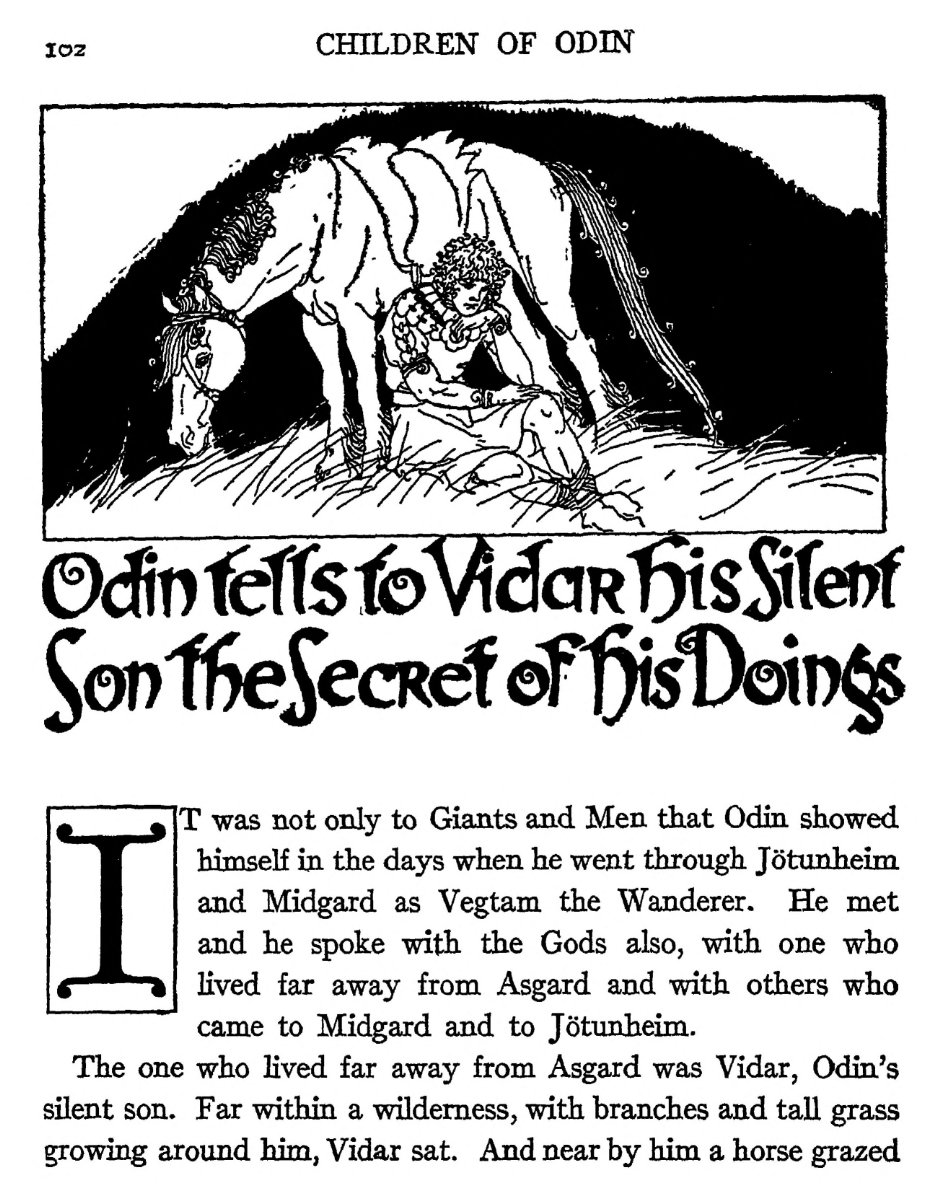

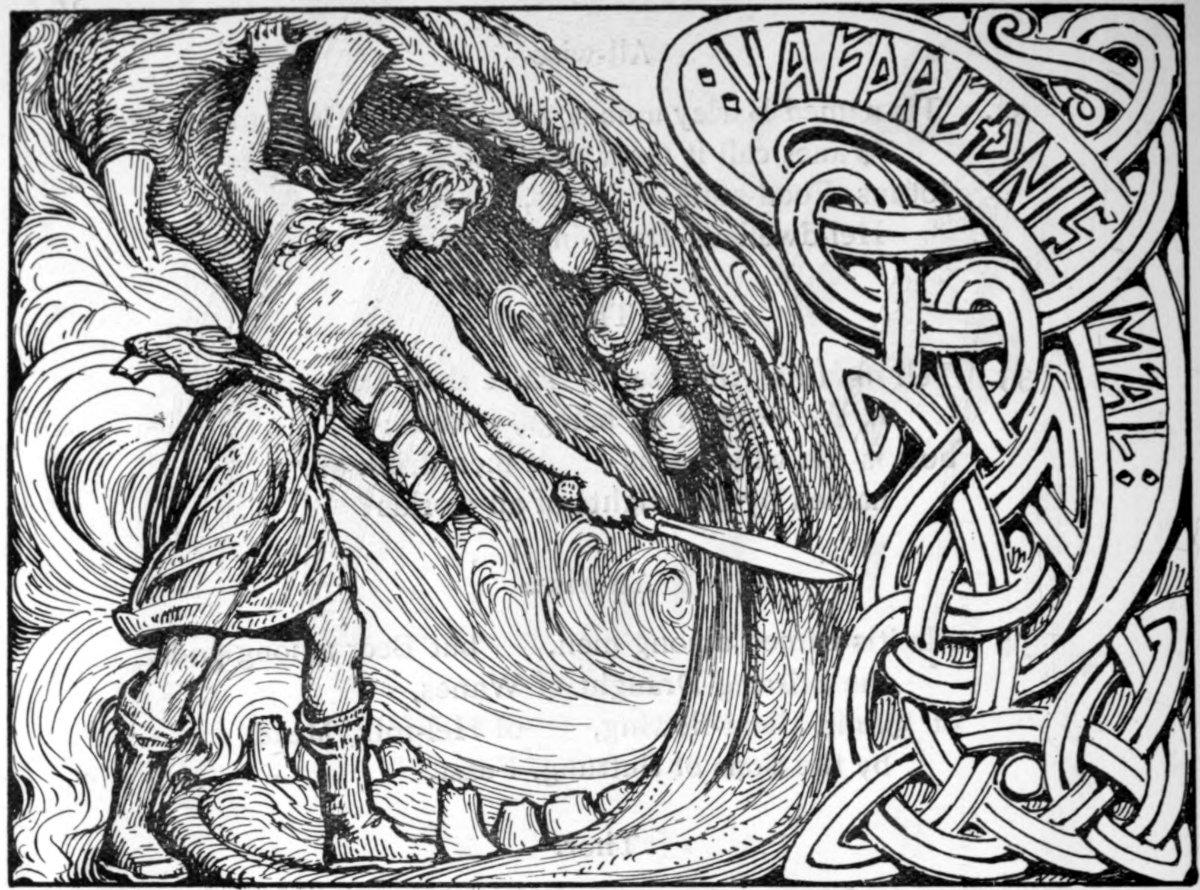 ,
, 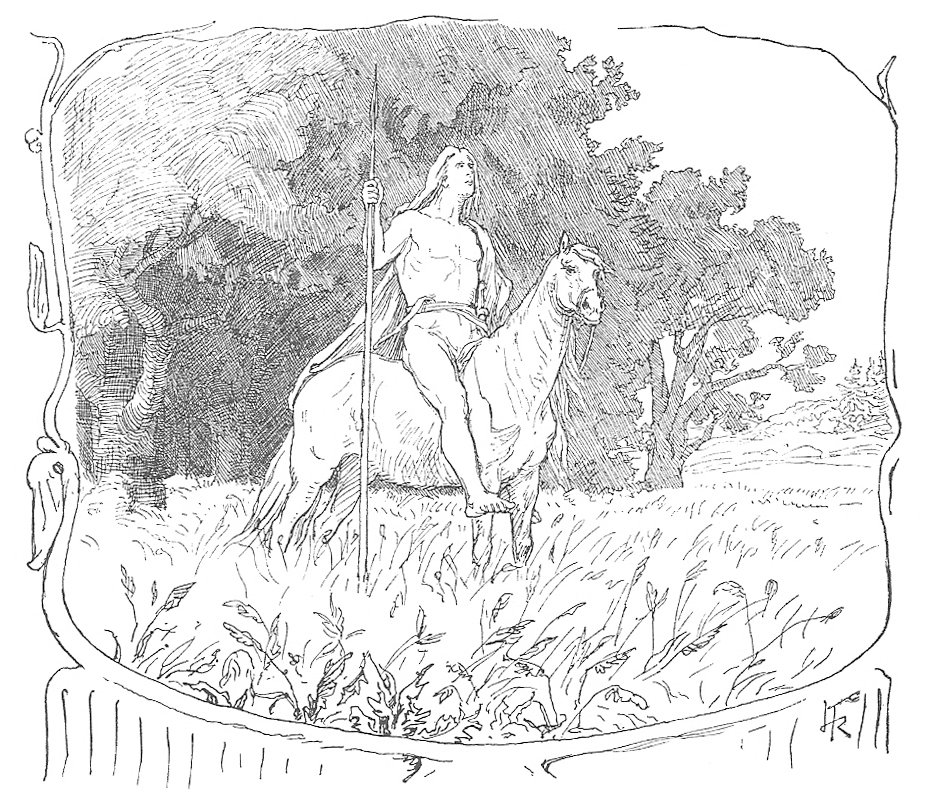 ,
,