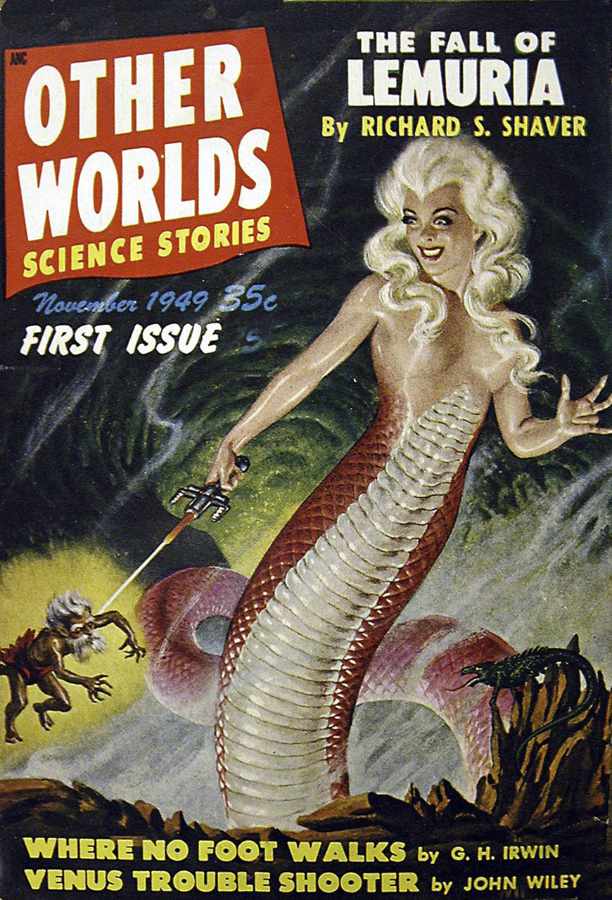
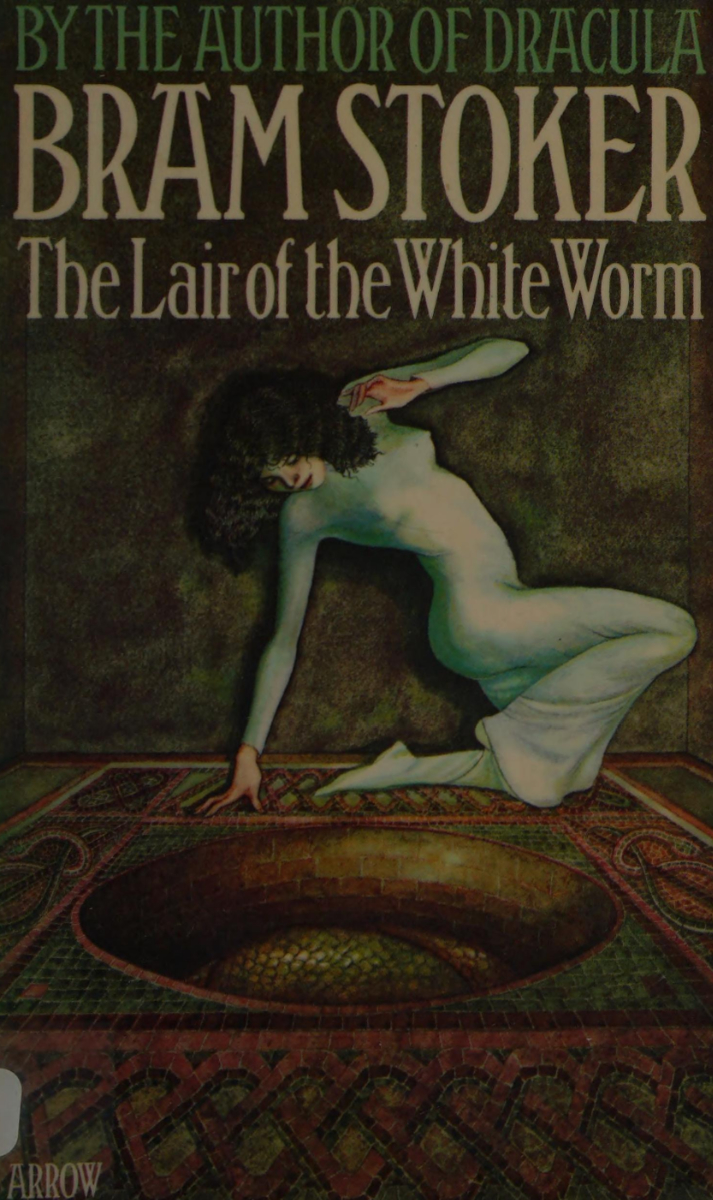
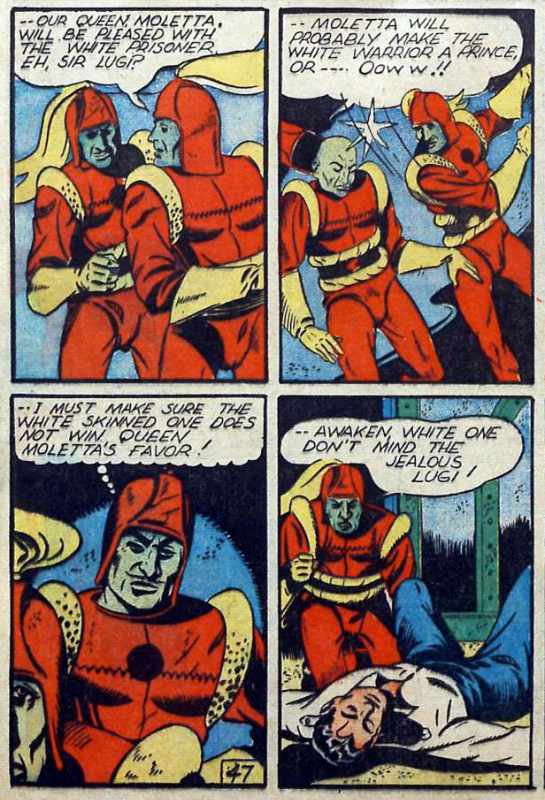
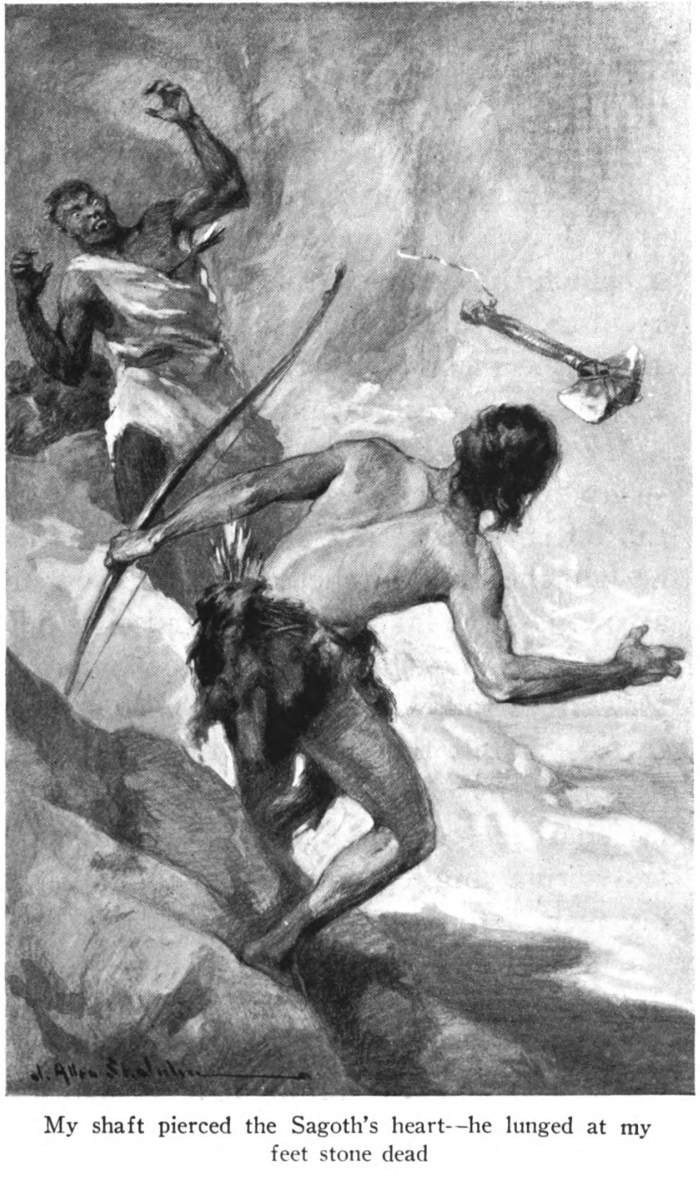
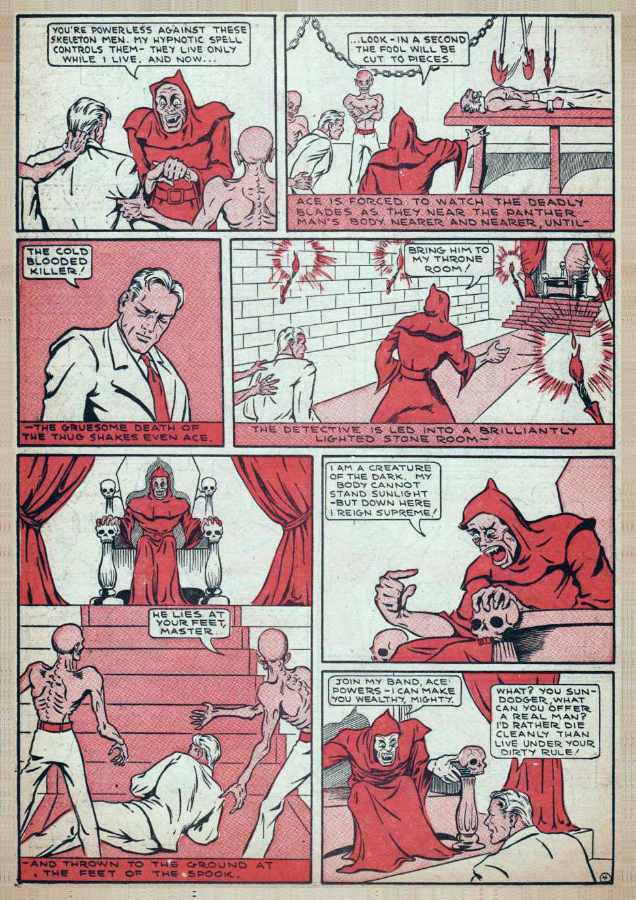
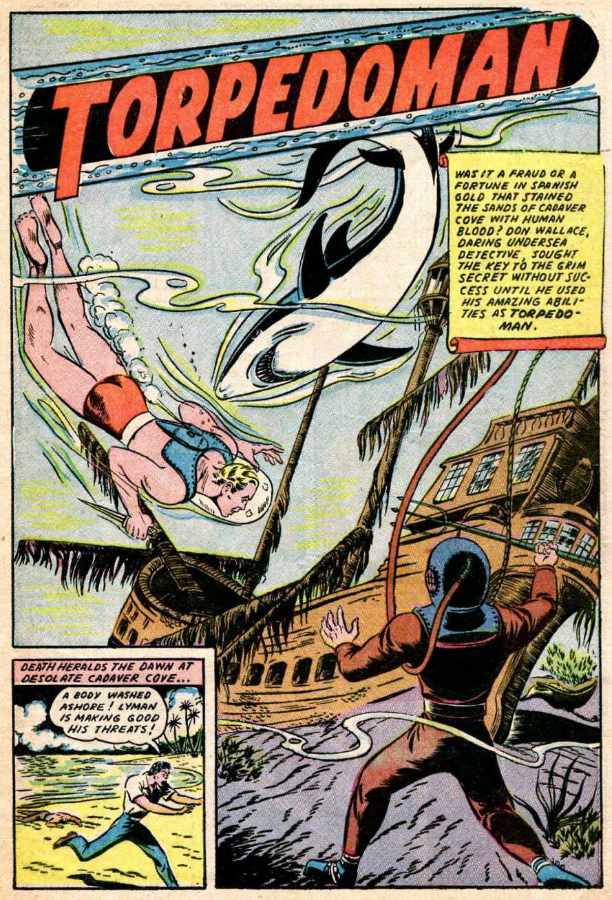
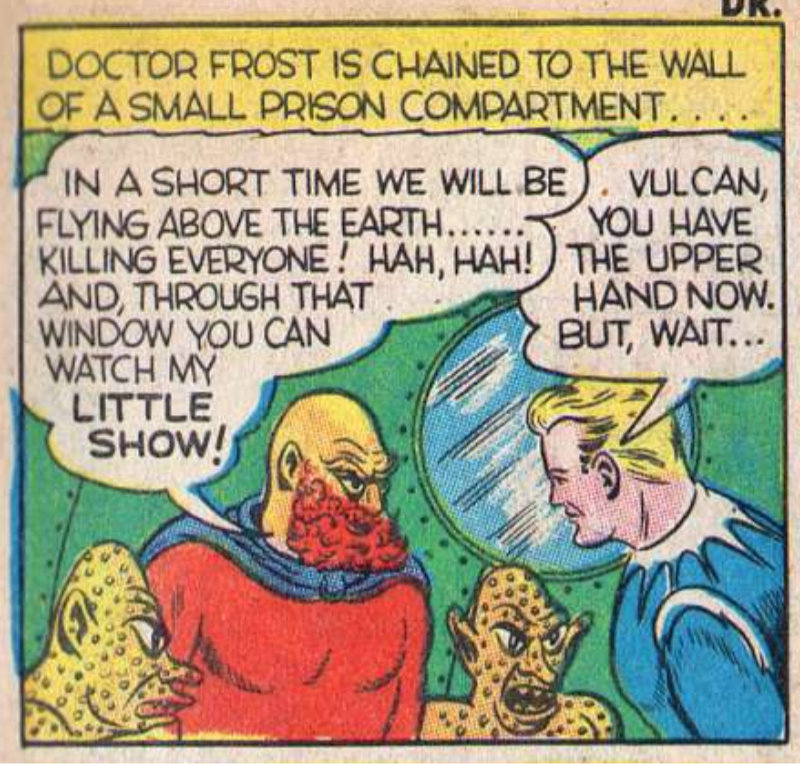
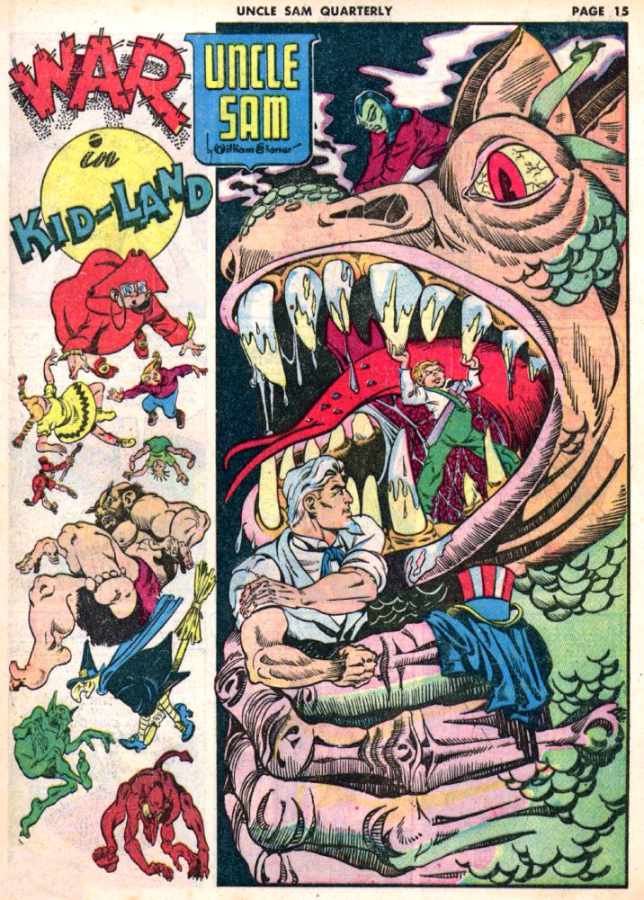
In real life, even the largest caves are by necessity fairly localized things, as they require specific conditions to form — you will usually only find them in soft, easily eroded rocks and following the movement of rivers or at least aquifers, which means that most exist close to the surface and within bounded geographic areas. Not so in fiction, where it often appears that the Earth’s crust and depths alike are often filled with vast networks of spacious caverns. The landscape typically starts out as a magnified version of a regular cave, with miles of winding tunnels, caves, and abysses of craggy stone. More unusual sights usually lie further in and deeper down. Forests of giant crystals, great underground rivers, lakes, and seas, rivers and waterfalls of lava, and ancient ruined cities are all common features down here. Growths of crystals, gems, and immense geodes may produce entire “Crystal Landscapes”. Fungi, often of incredible size, replace plants and may form extensive fungal jungles, although tropical or alien vegetation may also appear in areas with some form of lighting. Darkness and gloom are usually the order of the day, but light may be provided by lava, “Glowing Gems” in the cavern walls, electromagnetic phenomena, or the like. “Lost Worlds” are also common sights, usually in the form of valley-like caverns or underground seas lit by some sort of false sun at their roofs. They are often filled with jungles of lush vegetation, and home to dinosaurs, sea monsters, and primitive cavemen. As a rule, deeper caverns will contain stranger sights and natives than shallower ones. It is not uncommon for an explicit “layering” to occur, with distinct strata of underground lands that grow increasingly strange and perilous as one heads deeper down. If this is the case, the very bottom-most layer will usually be a roiling, seething sea of lava, a home of unimaginable terrors, or both. “Mole Men”, “The Morlocks”, and fungus people are common inhabitants of these regions. In fantasy, expect instead to find dwarves, goblins, dark elves and “Bat People” making their homes down here. Entire “Underground Cities” can be found down here, filled with life or long in ruins, unless the locals live as primitive tribes in the stony wilderness. In most settings, “Big Creepy-Crawlies”, huge, monstrous bats, and strange, pale relatives of surface animals are common parts of the local fauna, as are “Living Dinosaurs” in a lost world. Narratively, this is almost always an exotic and perilous landscape. Stories rarely start down here, although getting to or navigating through this underworld may be the meat of an adventure story — indeed, this is a staple of the subterranean fiction genre. This is also a part of why the people and creatures living down here are usually so strange and unusual — whatever may make its home miles beneath the light of the sun certainly won’t be anything like what you’d encounter on the surface world or a shallow tunnel. If this subterranean landscape is so vast and habitable that it effectively has a sky, it qualifies as a “Hollow World”. Compare “Mega Dungeon”, as a sufficiently large or deep example of that trope can overlap with this one. Compare “Underground Alien Civilization”, for when an alien culture lives in subterranean areas of another planet. Definitely not to be confused with “The Underworld”, which has more to do with the afterlife than with anything underground… ~ Fantastic Underworld – TV Tropes
|