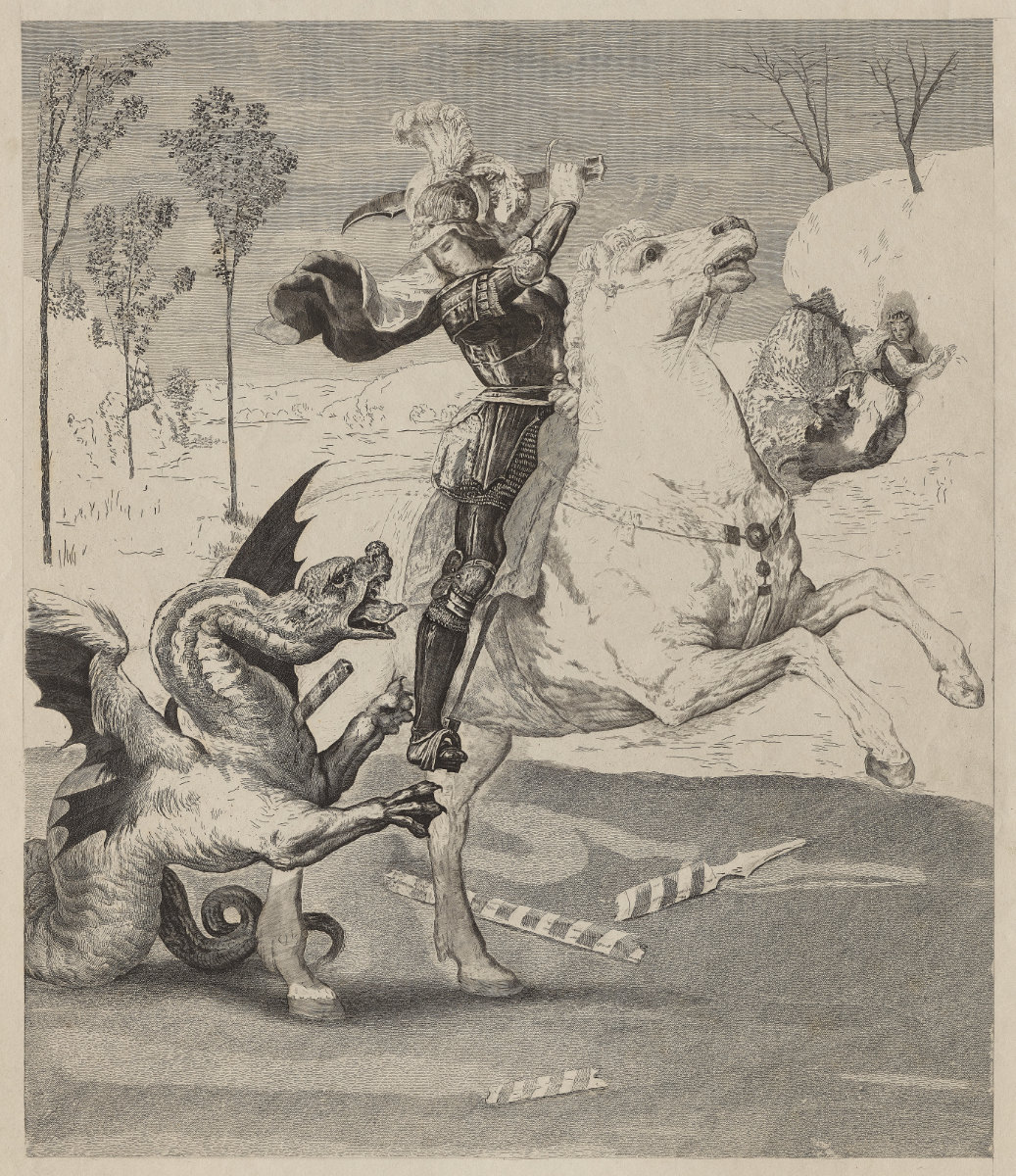
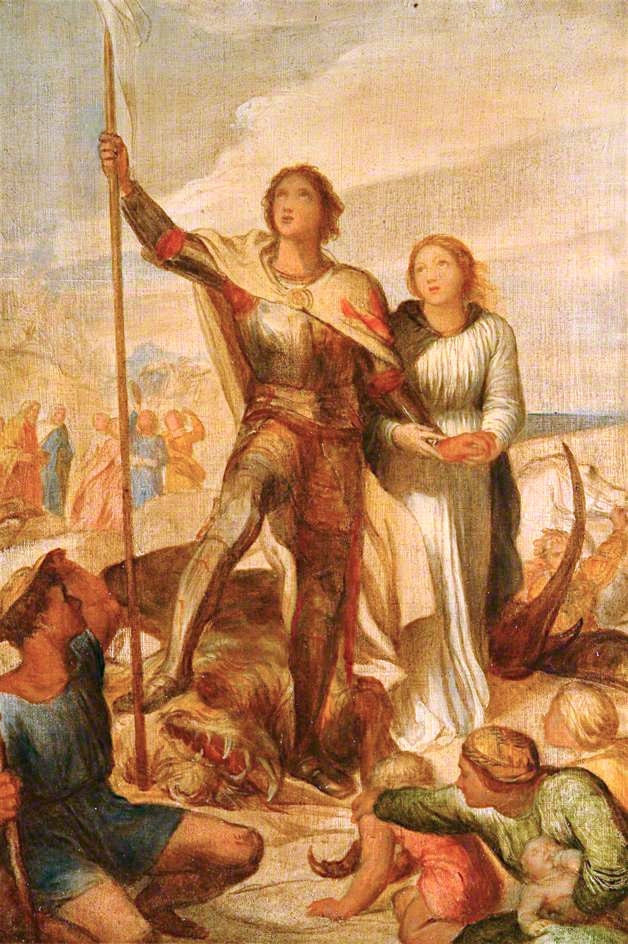
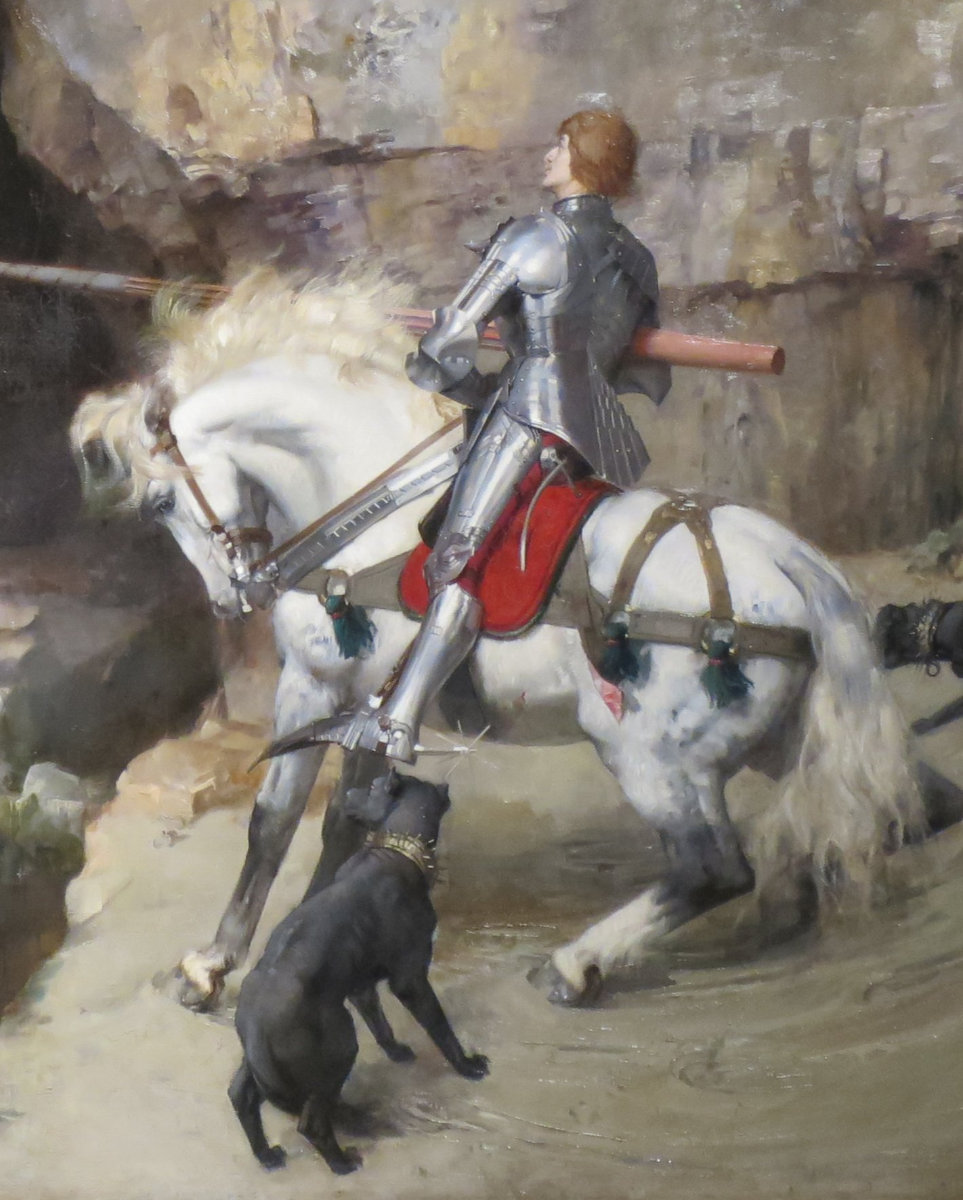
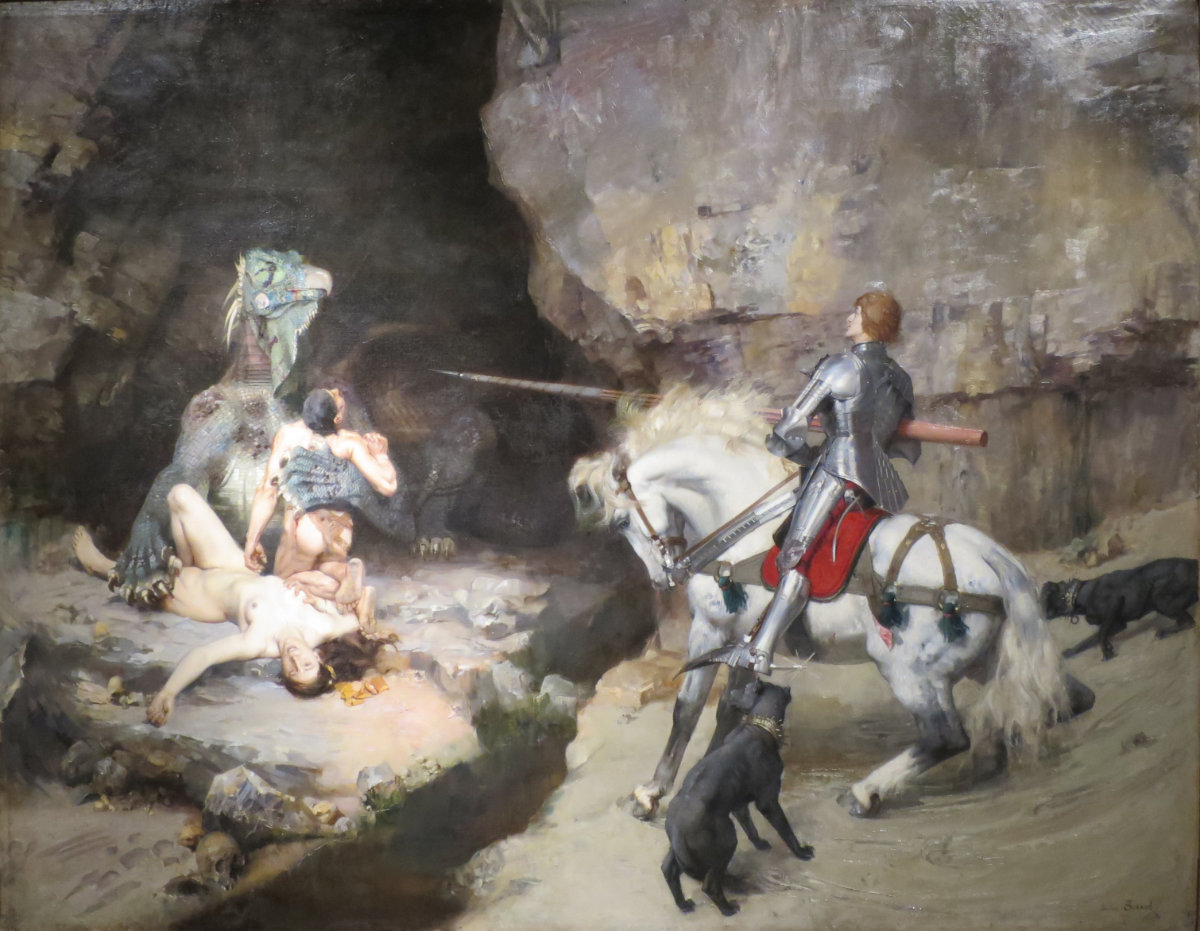
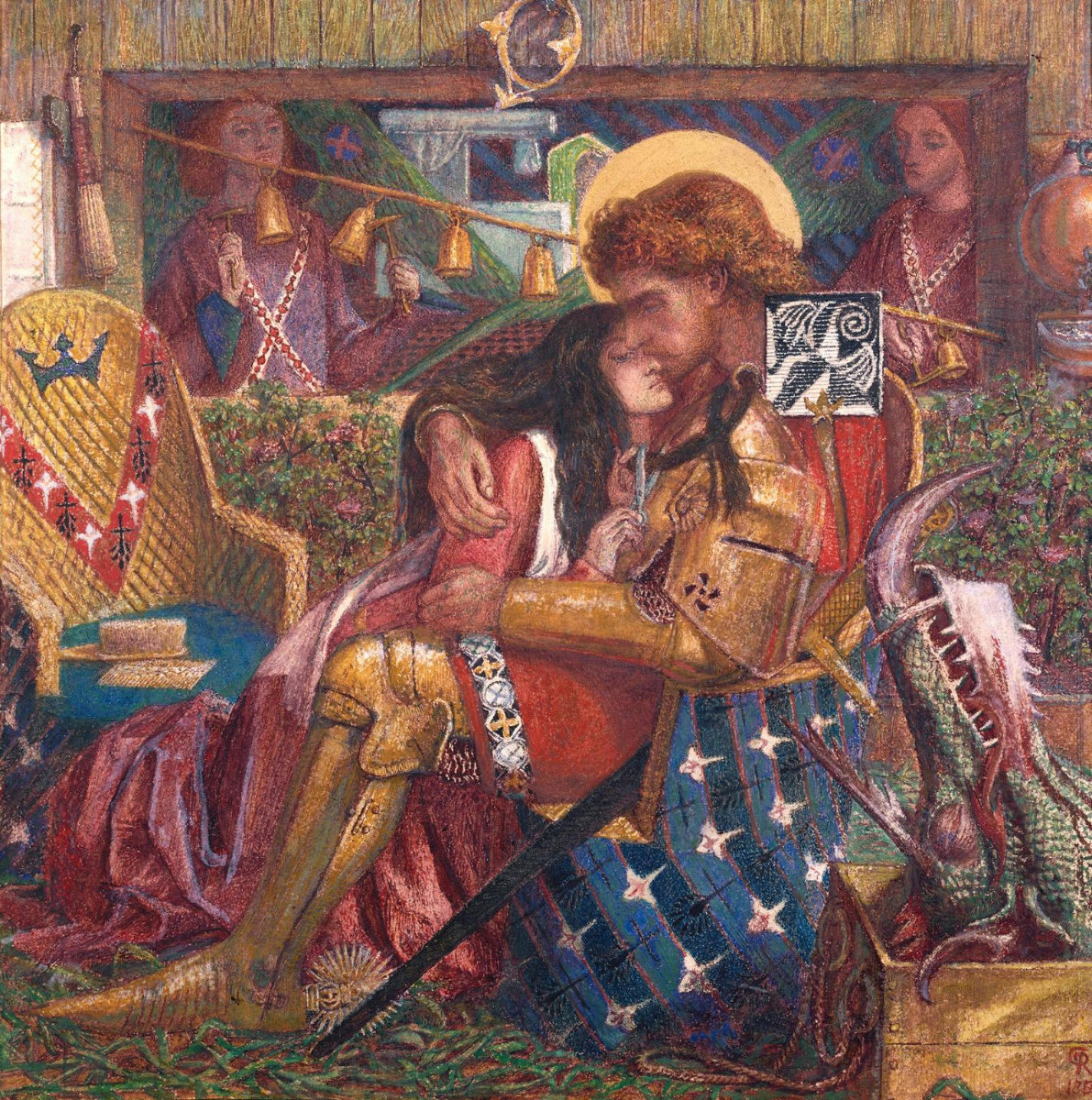
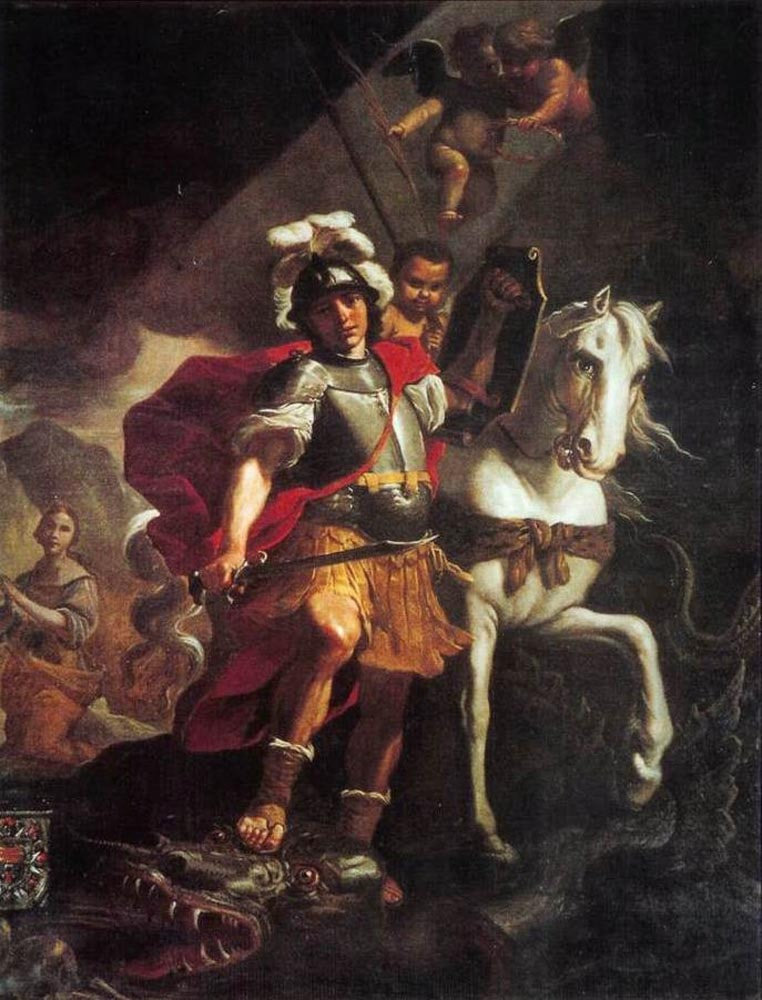
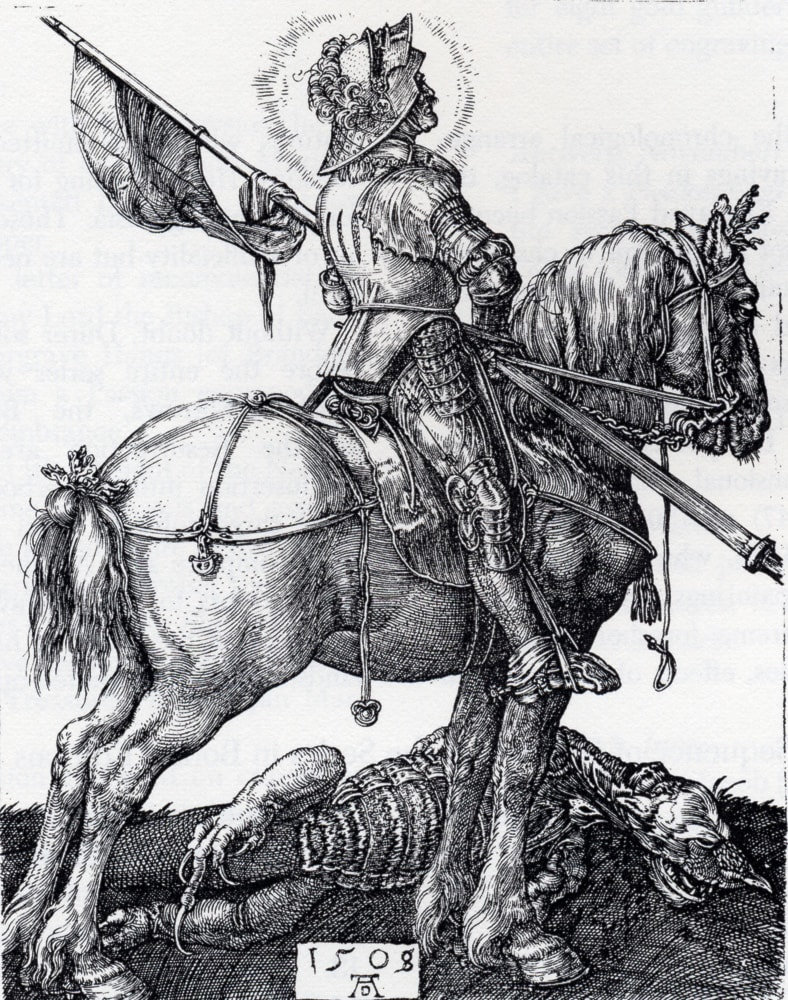
Saint George and the Dragon is a legend in which Saint George—a soldier venerated in Christianity and among the Druze— defeats a dragon. The story goes that the dragon originally extorted tribute from villagers. When they ran out of livestock and trinkets for the dragon, they started giving up a human tribute once a day. One day, the princess herself was chosen as the next offering. As she was walking toward the dragon’s cave, St. George saw her and asked her why she was crying. The princess told the saint about the dragon’s atrocities and asked him to flee immediately, in fear that he might be killed too. But the saint refused to flee, slew the dragon, and rescued the princess. The narrative was first set in Cappadocia in the earliest sources of the 11th and 12th centuries, but transferred to Libya in the 13th-century Golden Legend. The narrative has pre-Christian origins (Jason and Medea, Perseus and Andromeda, Typhon, etc.), and is recorded in various saints’ lives prior to its attribution to Saint George specifically…
Appearance List Legenda Aurea (c. 1260) by Jacobus de Voragine — Contains the canonical dragon episode; “The Golden Legend” (1483, English trans. by William Caxton) — First English printed version; “Redcrosse Knight” in The Faerie Queene (1590–1596) by Edmund Spenser; “St. George and the Dragon” (17th-century broadside ballad); “The Reluctant Dragon” in Dream Days (1898) by Kenneth Grahame; The Banner of St George (1879) by Edward Elgar (ballad); “St. George and the Dragon” (1935) by Stanley Holloway (comedy retelling); “St. George and the Dragon-Net” (1950s radio sketch comedy) by Freberg & Butler; The Dragon and the George (1976) by Gordon R. Dickson. Film: St. George and the Dragon (1910); St. George and the Dragon (1912).
Sample Read The Legend of Saint George, abstracted from The Golden Legend; or, Lives of the Saints by D. L. Ashliman [Web]
Description Saint George and the Dragon is a legend in which Saint George—a soldier venerated in Christianity and among the Druze— defeats a dragon. The story goes that the dragon originally extorted tribute from villagers. When they ran out of livestock and trinkets for the dragon, they started giving up a human tribute once a day. One day, the princess herself was chosen as the next offering. As she was walking toward the dragon’s cave, St. George saw her and asked her why she was crying. The princess told the saint about the dragon’s atrocities and asked him to flee immediately, in fear that he might be killed too. But the saint refused to flee, slew the dragon, and rescued the princess. The narrative was first set in Cappadocia in the earliest sources of the 11th and 12th centuries, but transferred to Libya in the 13th-century Golden Legend. The narrative has pre-Christian origins (Jason and Medea, Perseus and Andromeda, Typhon, etc.), and is recorded in various saints’ lives prior to its attribution to Saint George specifically…

 ,
,  ,
,  ,
,  ,
,  ,
,  ,
,  ,
,  ,
,