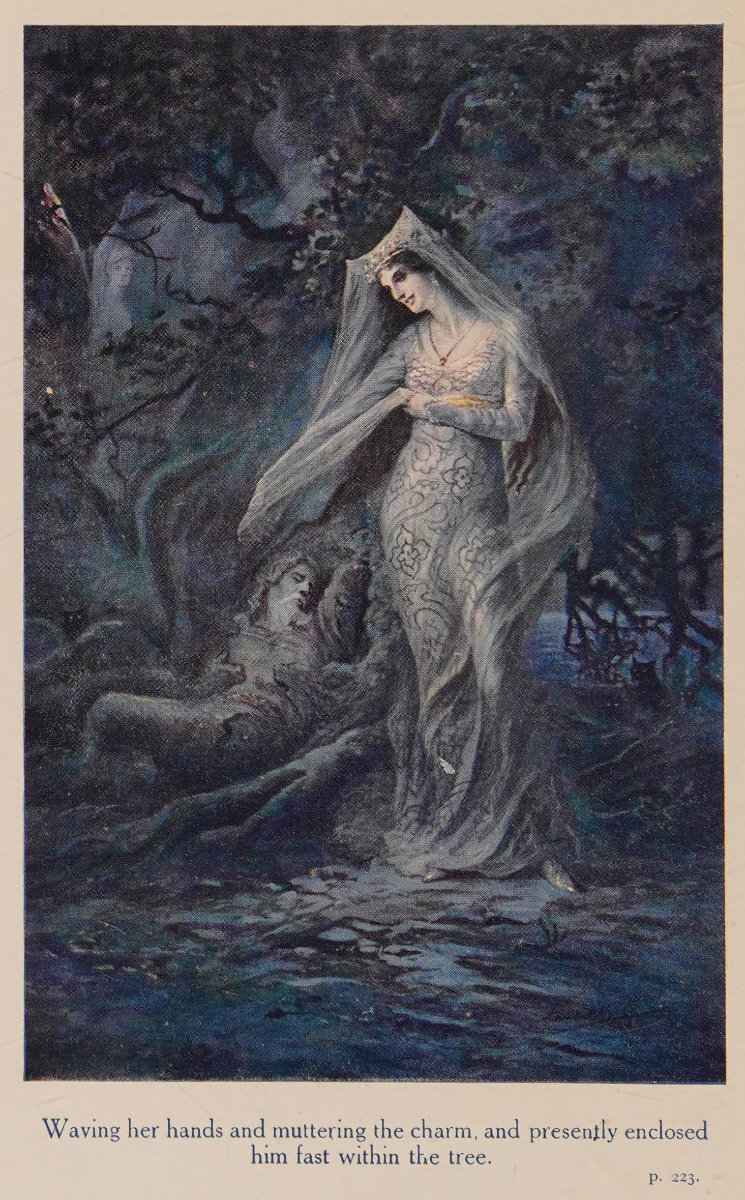
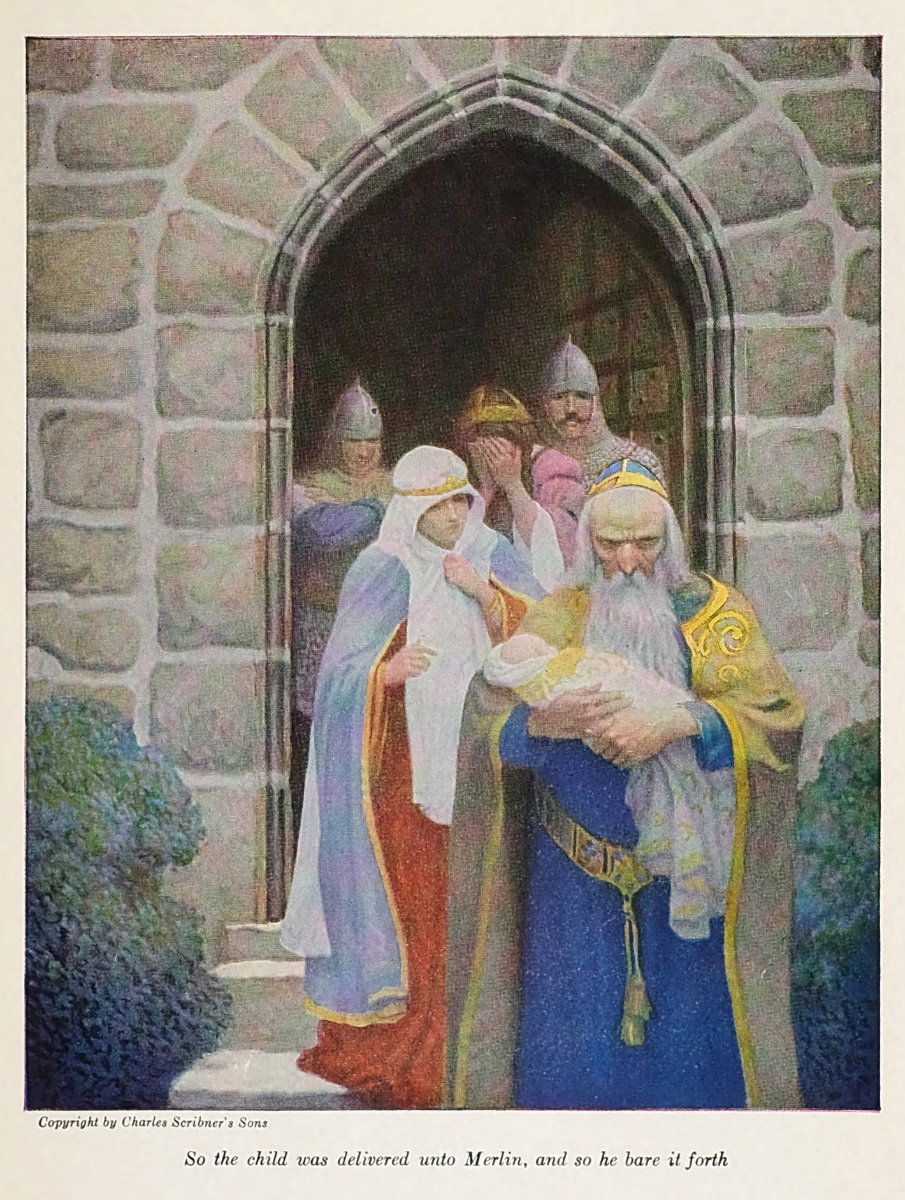
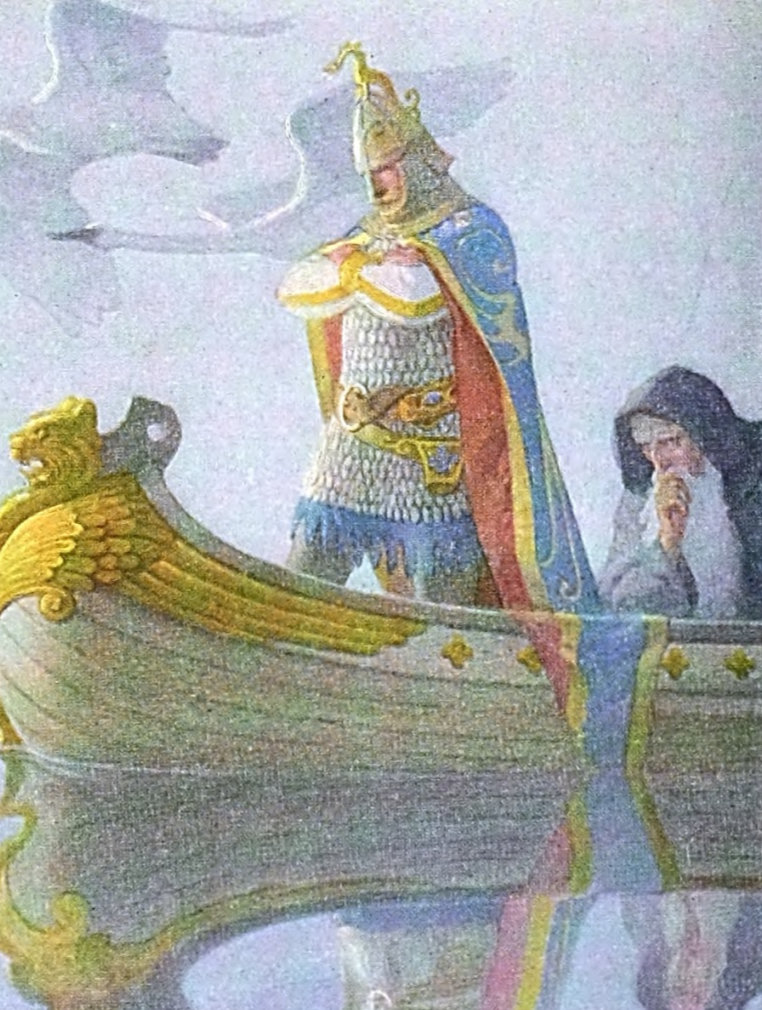
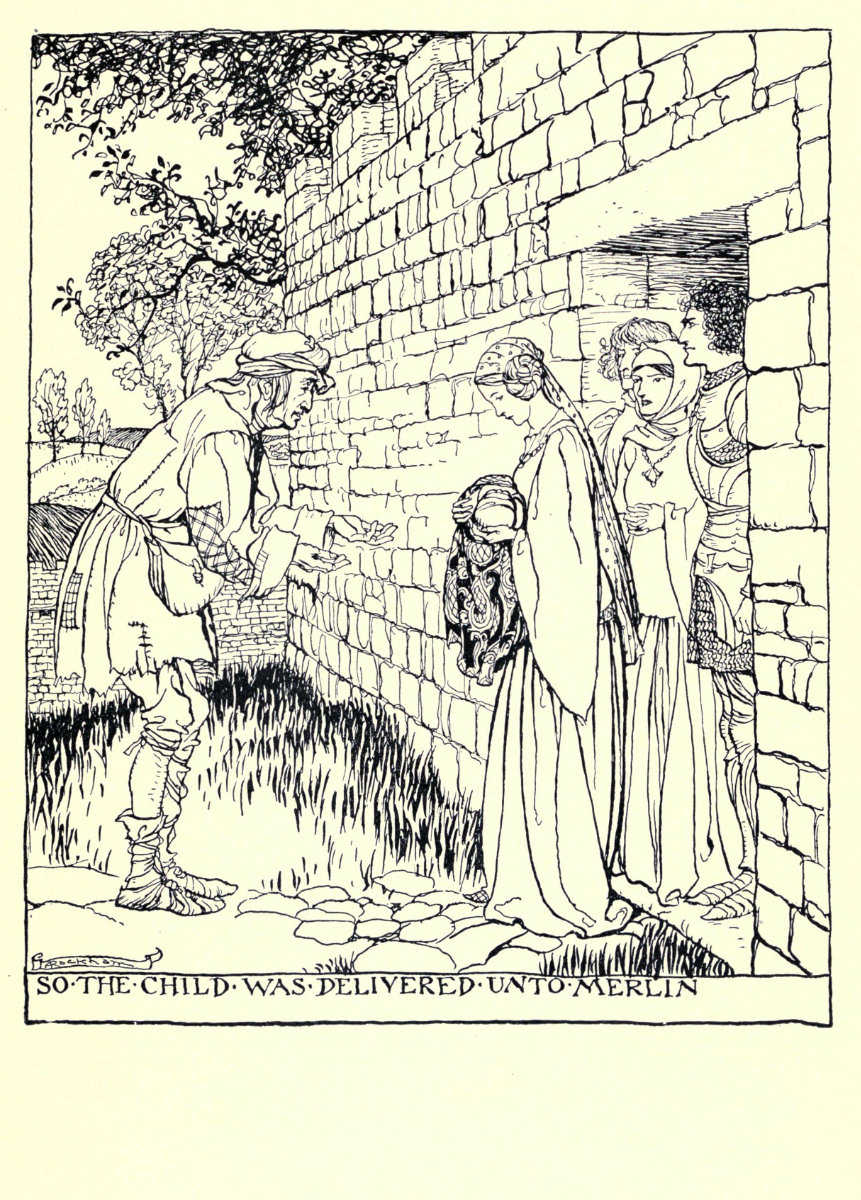
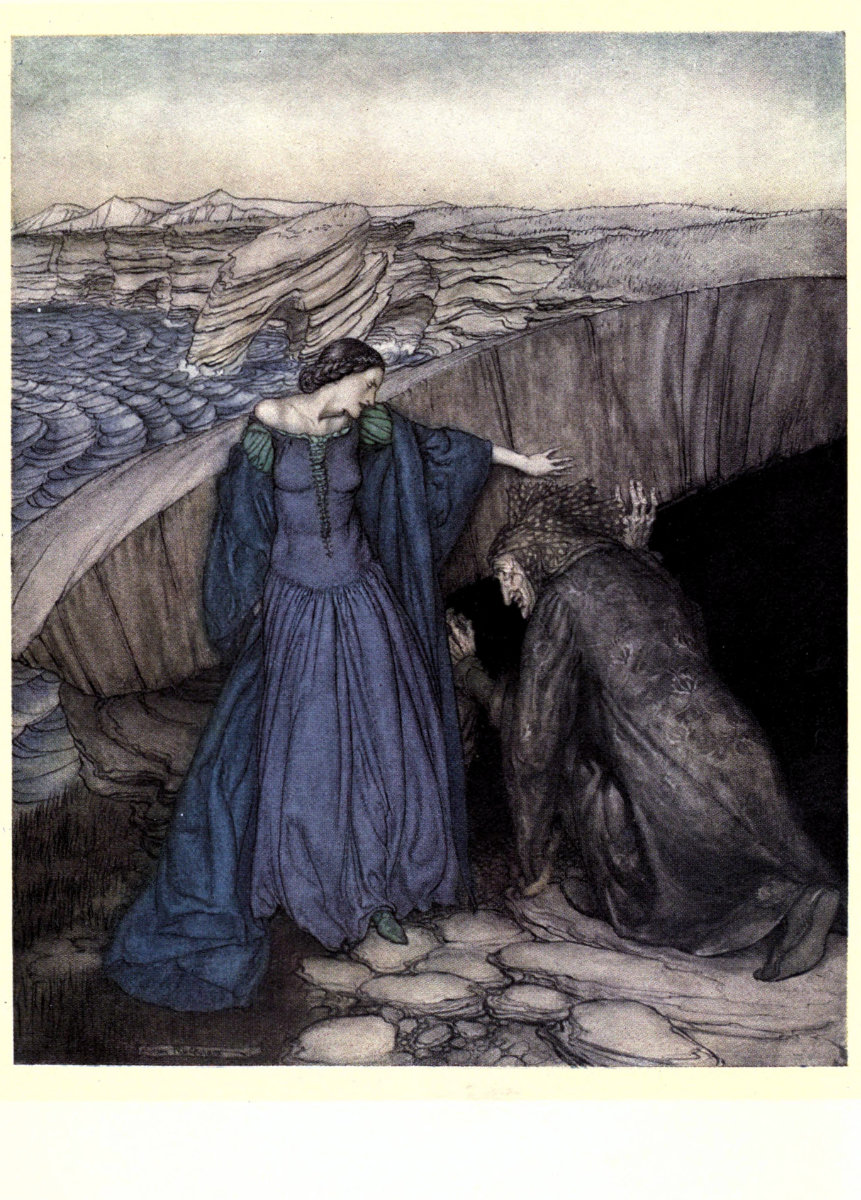
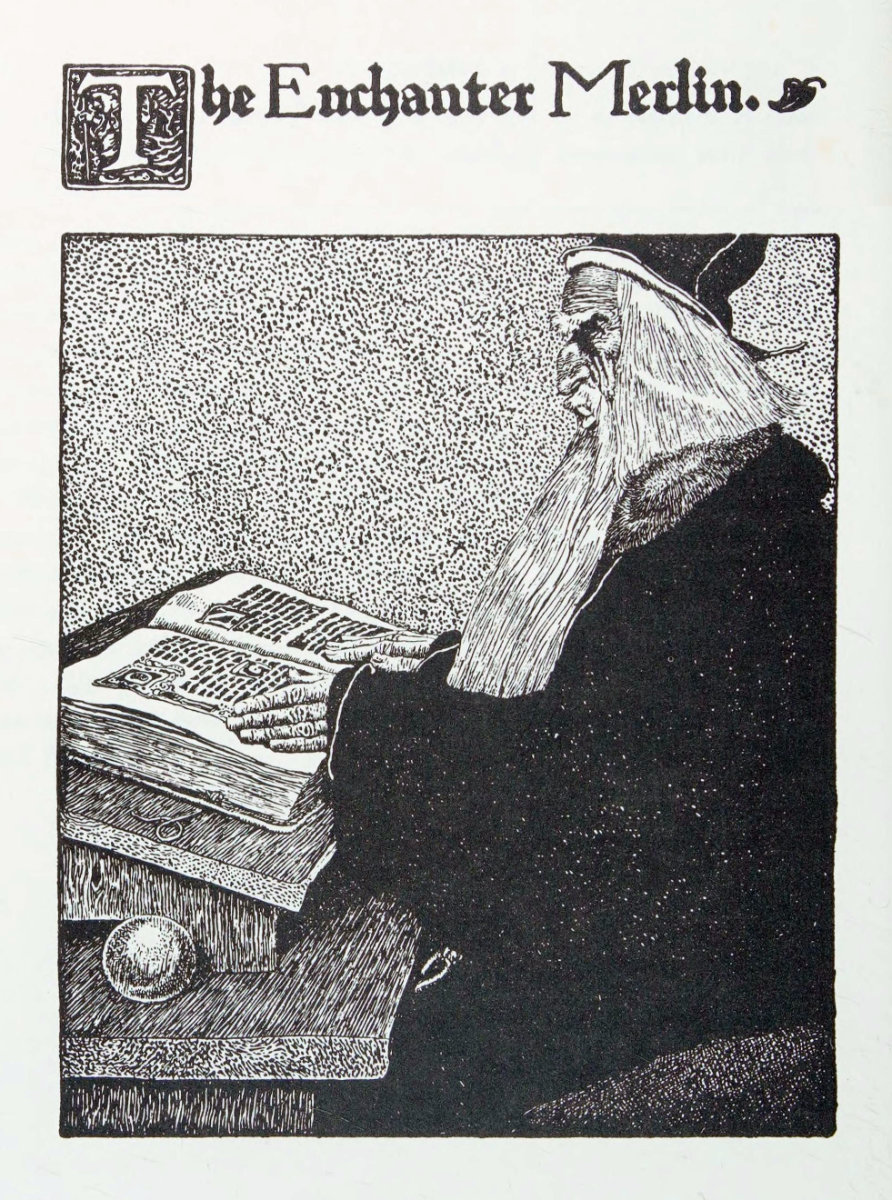
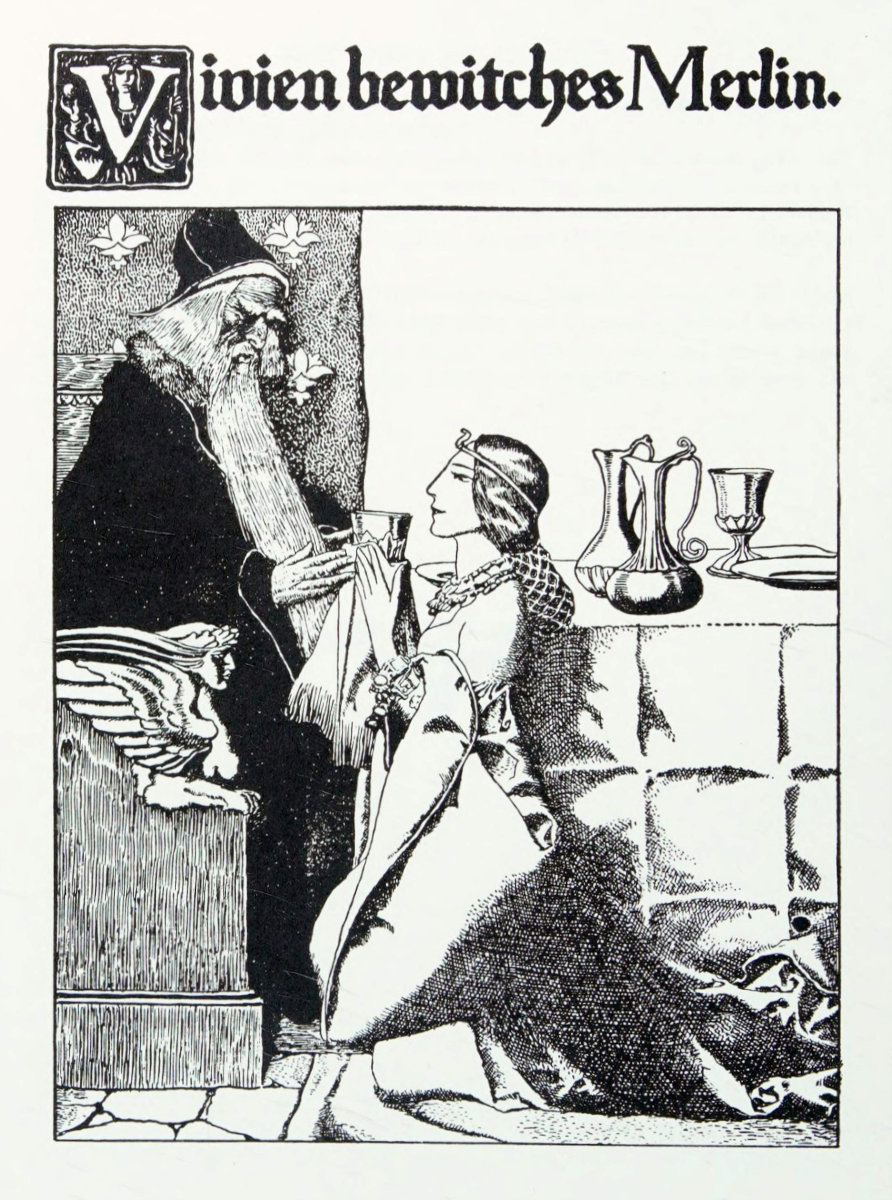
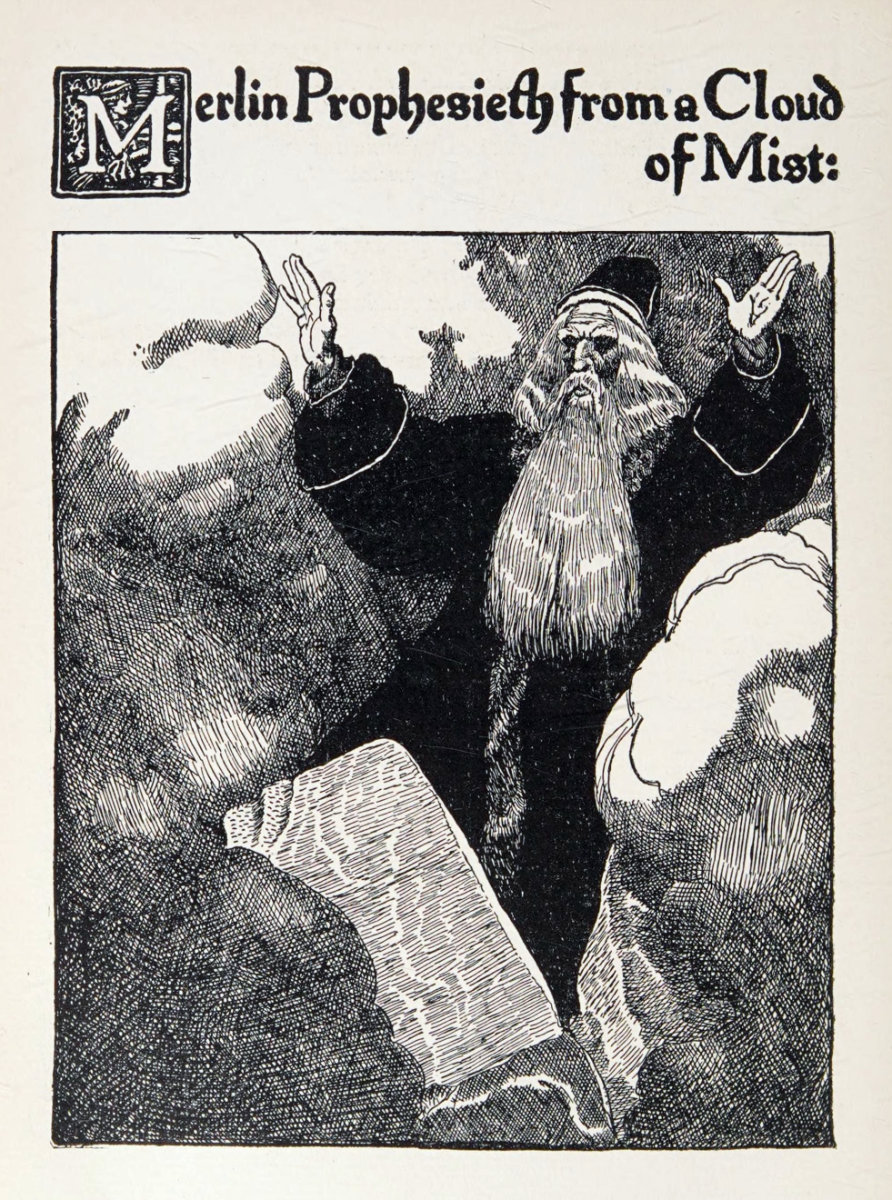
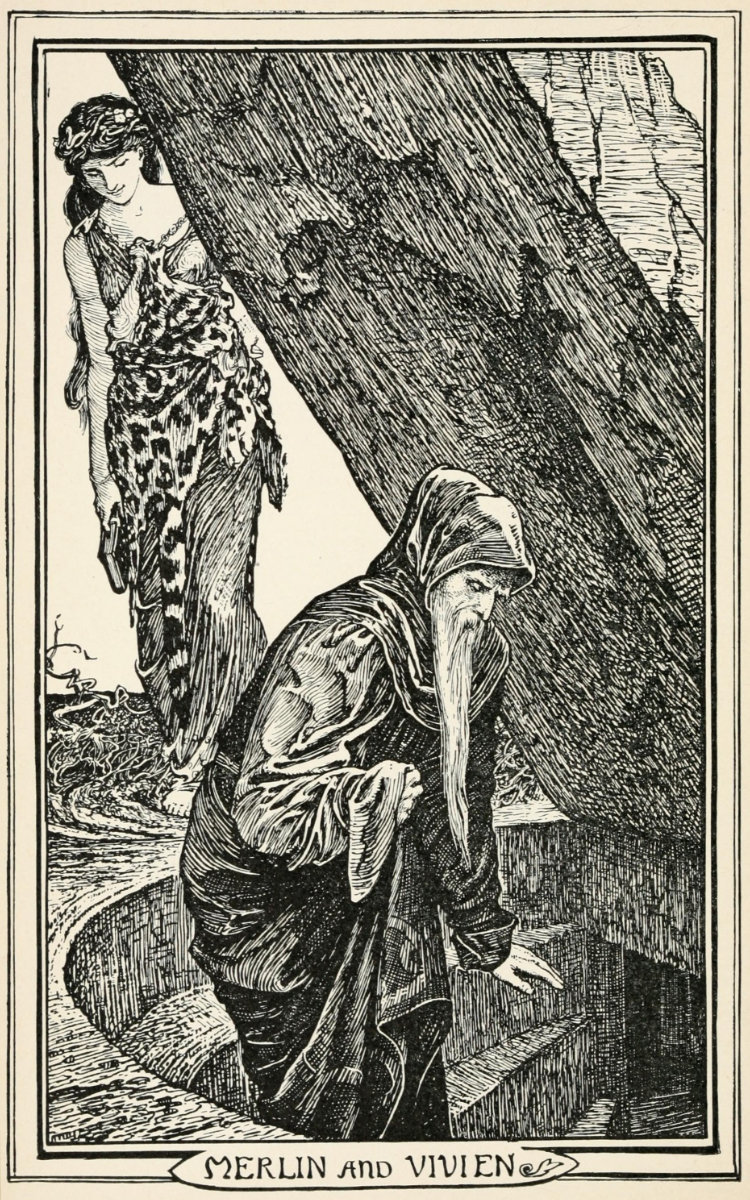
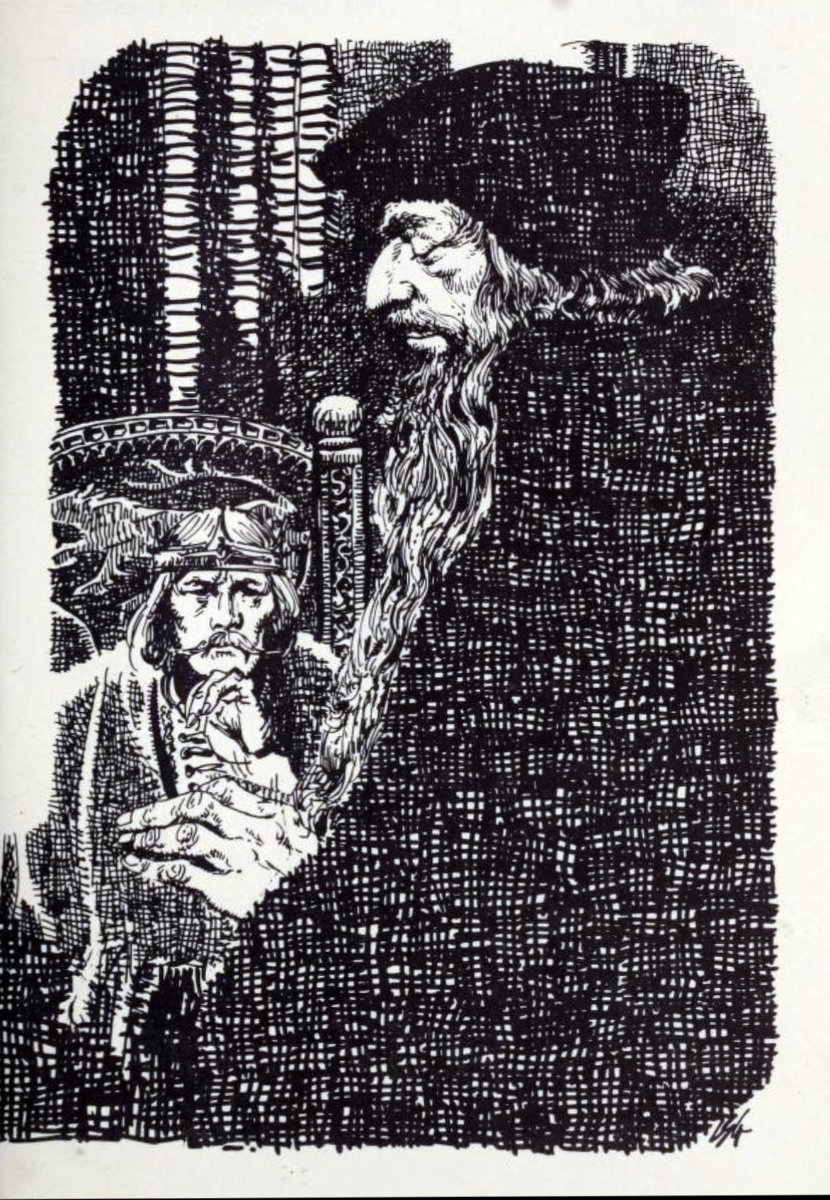
Merlin is a mythical figure prominently featured in the legend of King Arthur and best known as an enchanter or wizard, among his various other roles. His usual depiction, based on an amalgamation of historic and legendary figures, was introduced by the 12th-century British author Geoffrey of Monmouth. It is believed that Geoffrey combined earlier tales of Myrddin and Ambrosius, two legendary Briton prophets with no connection to Arthur, to form the composite figure called Merlinus Ambrosius. Geoffrey’s rendering of the character became immediately popular, especially in Wales Later writers in France and elsewhere expanded the account to produce a fuller image, creating one of the most important figures in the imagination and literature of the Middle Ages. Merlin’s traditional biography casts him as a being born of a mortal woman, sired by an incubus, from whom he inherits his supernatural powers and abilities, most commonly and notably prophecy and shapeshifting. Merlin matures to an ascendant sagehood and engineers the birth of Arthur through magic and intrigue. Later authors have Merlin serve as the king’s advisor and mentor until he disappears from the story after having been bewitched and forever sealed or killed by his student known as the Lady of the Lake after falling madly in love with her, leaving behind a series of prophecies foretelling the events yet to come. He is popularly said to be buried in the magical forest of Brocéliande.
Appearance List Annales Cambriae (10th century); Historia Regum Britanniae (1136); Merlin by Robert de Boron (late 12th–early 13th c.); The Vulgate Lancelot (13th c.); Le Morte d’Arthur (1485) by Thomas Malory; Ballads of Bravery (1877); The Boy’s King Arthur: Sir Thomas Malory’s History of King Arthur and His Knights of the Round Table by Sidney Lanier (Charles Scribner’s Sons, 1880); The Story of King Arthur and His Knights (1903) by Howard Pyle [Internet Archive]; The Story of the Champions of the Round Table (1905, 1911) by Howard Pyle [Internet Archive]; The Story of Sir Launcelot and His Companions (1907) by Howard Pyle [Internet Archive]; The Story of the Grail and the Passing of King Arthur (1910) by Howard Pyle [Internet Archive]; Tales of the Round Table (1908) by Andrew Lang [Internet Archive]; Myths and Legends of the Celtic Race (1910) by T. W. Rolleston [Internet Archive]; The Legends of King Arthur and His Knights (1912) [Internet Archive]; Idylls of the King (1859) by Alfred Lord Tennyson – 1913 illustrated edition: [Internet Archive]; Legends and Romances of Brittany (1917) by Lewis Spence. Film: Knights of the Round Table (1926) by Rex Ingram (silent, partially lost); Knights of the Round Table (1953) by Richard Thorpe; Lancelot and Guinevere (1963) by Cornel Wilde; The Sword in the Stone (1963) by Walt Disney Productions; Camelot (1967) by Joshua Logan; Excalibur (1981).
Description Merlin is a mythical figure prominently featured in the legend of King Arthur and best known as an enchanter or wizard, among his various other roles. His usual depiction, based on an amalgamation of historic and legendary figures, was introduced by the 12th-century British author Geoffrey of Monmouth. It is believed that Geoffrey combined earlier tales of Myrddin and Ambrosius, two legendary Briton prophets with no connection to Arthur, to form the composite figure called Merlinus Ambrosius. Geoffrey’s rendering of the character became immediately popular, especially in Wales Later writers in France and elsewhere expanded the account to produce a fuller image, creating one of the most important figures in the imagination and literature of the Middle Ages. Merlin’s traditional biography casts him as a being born of a mortal woman, sired by an incubus, from whom he inherits his supernatural powers and abilities, most commonly and notably prophecy and shapeshifting. Merlin matures to an ascendant sagehood and engineers the birth of Arthur through magic and intrigue. Later authors have Merlin serve as the king’s advisor and mentor until he disappears from the story after having been bewitched and forever sealed or killed by his student known as the Lady of the Lake after falling madly in love with her, leaving behind a series of prophecies foretelling the events yet to come. He is popularly said to be buried in the magical forest of Brocéliande.

 ,
,  ,
,  ,
,  ,
,  ,
,  ,
,  ,
,  ,
,  ,
,  ,
,  ,
,