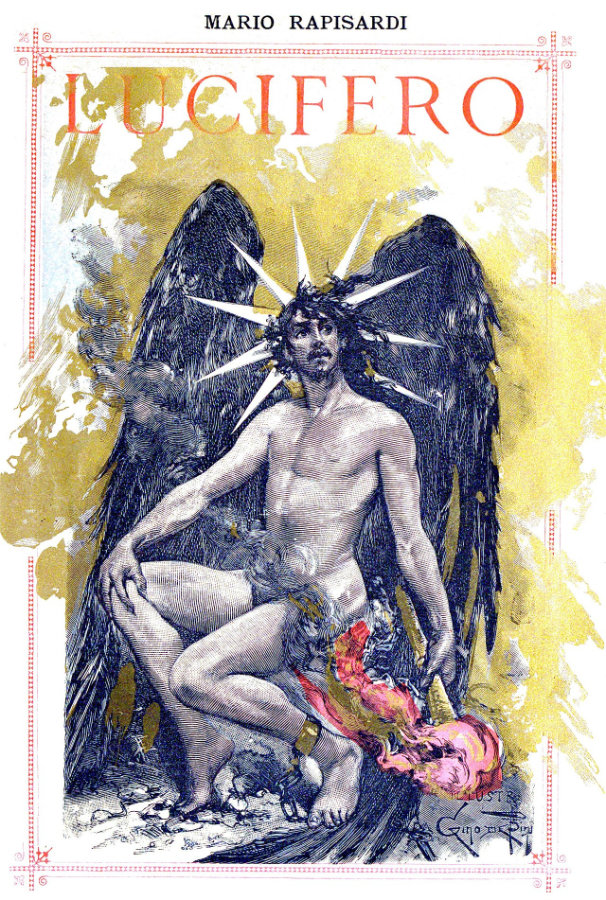
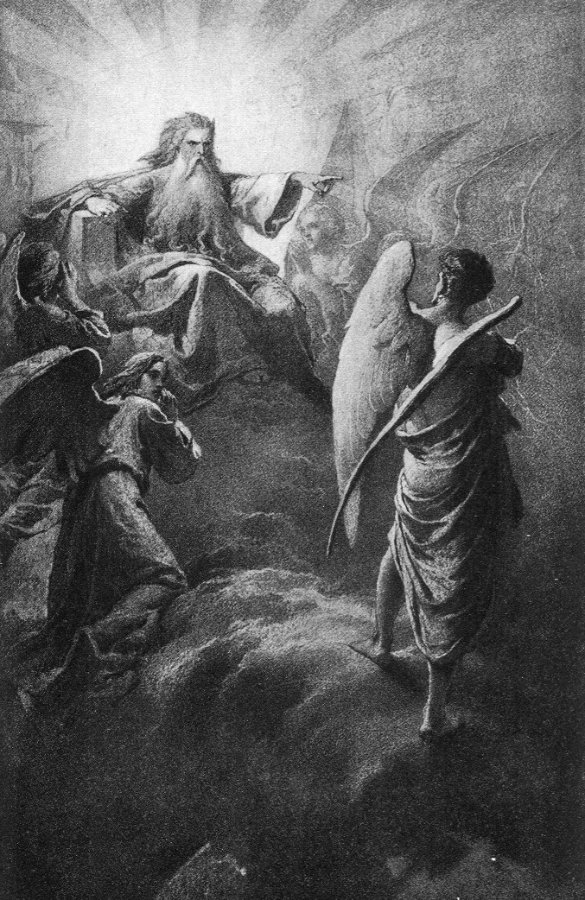
The most common meaning for Lucifer in English is as a name for the Devil in Christian theology. He appeared in the King James Version of the Bible in Isaiah and before that in the Vulgate (the late-4th-century Latin translation of the Bible), not as the name of a devil but as the Latin word lucifer (uncapitalized), meaning “the morning star”, “the planet Venus”, or, as an adjective, “light-bringing”. In Roman folklore, Lucifer (“light-bringer” in Latin) was the name of the planet Venus, though he was often personified as a male figure bearing a torch. The Greek name for this planet was variously Phosphoros (also meaning “light-bringer”) or Heosphoros (meaning “dawn-bringer”). Lucifer was said to be “the fabled son of Aurora and Cephalus, and father of Ceyx”. He was often presented in poetry as heralding the dawn. The motif of a heavenly being striving for the highest seat of heaven only to be cast down to the underworld has its origins in the motions of the planet Venus, known as the morning star.
Appearance List Literature: Hebrew Bible (Tanakh), Quran, The King James Version of the Bible, et. al. Comics: Weird Comics #6, Fantastic Comics #6, 15, 16, 20, The Bouncer #12, The Spirit #4, Jumbo Comics #1-4, 5, 6, 111, Quality Comics #14, 59, Prize vol. 3 #5, 7 (29, 31), et. al.
Sample Read The King James Version of the Bible [PG]
Description The most common meaning for Lucifer in English is as a name for the Devil in Christian theology. He appeared in the King James Version of the Bible in Isaiah and before that in the Vulgate (the late-4th-century Latin translation of the Bible), not as the name of a devil but as the Latin word lucifer (uncapitalized), meaning “the morning star”, “the planet Venus”, or, as an adjective, “light-bringing”. In Roman folklore, Lucifer (“light-bringer” in Latin) was the name of the planet Venus, though he was often personified as a male figure bearing a torch. The Greek name for this planet was variously Phosphoros (also meaning “light-bringer”) or Heosphoros (meaning “dawn-bringer”). Lucifer was said to be “the fabled son of Aurora and Cephalus, and father of Ceyx”. He was often presented in poetry as heralding the dawn. The motif of a heavenly being striving for the highest seat of heaven only to be cast down to the underworld has its origins in the motions of the planet Venus, known as the morning star.