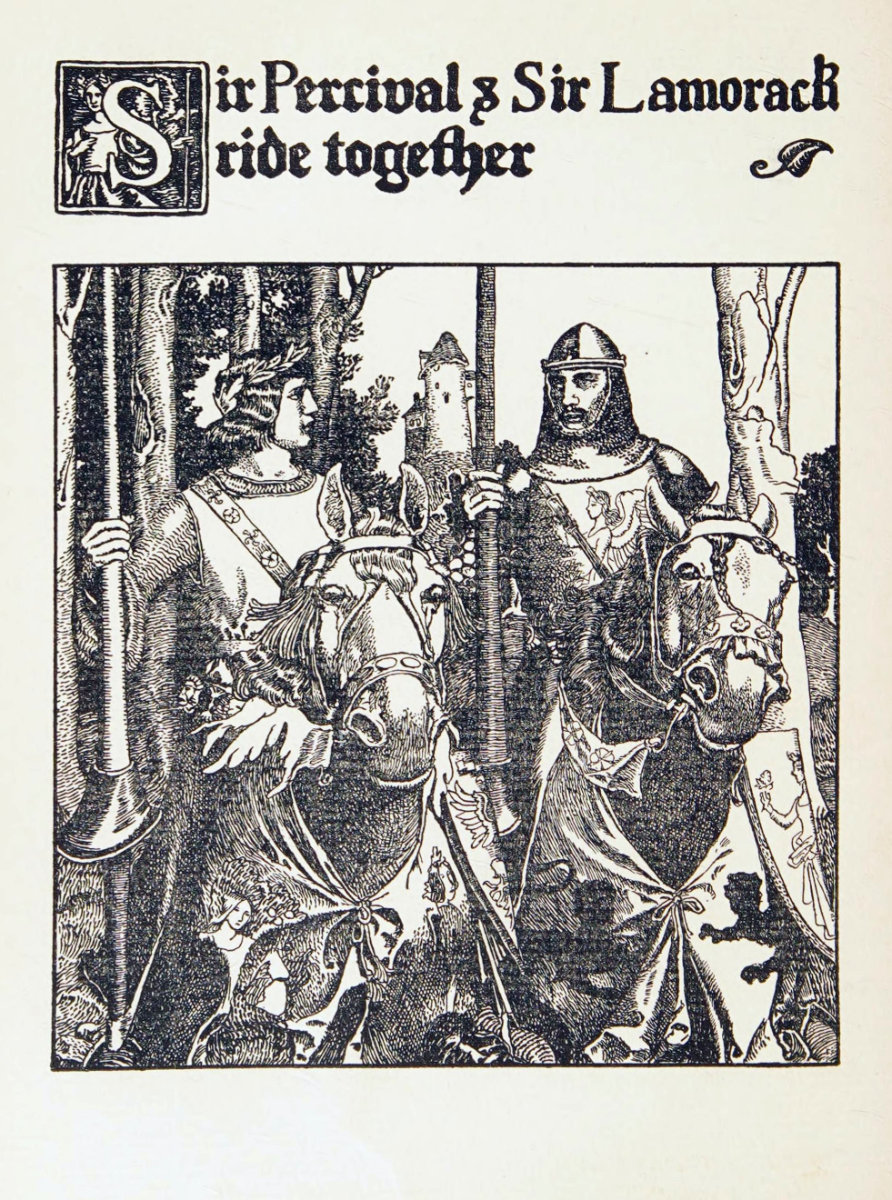
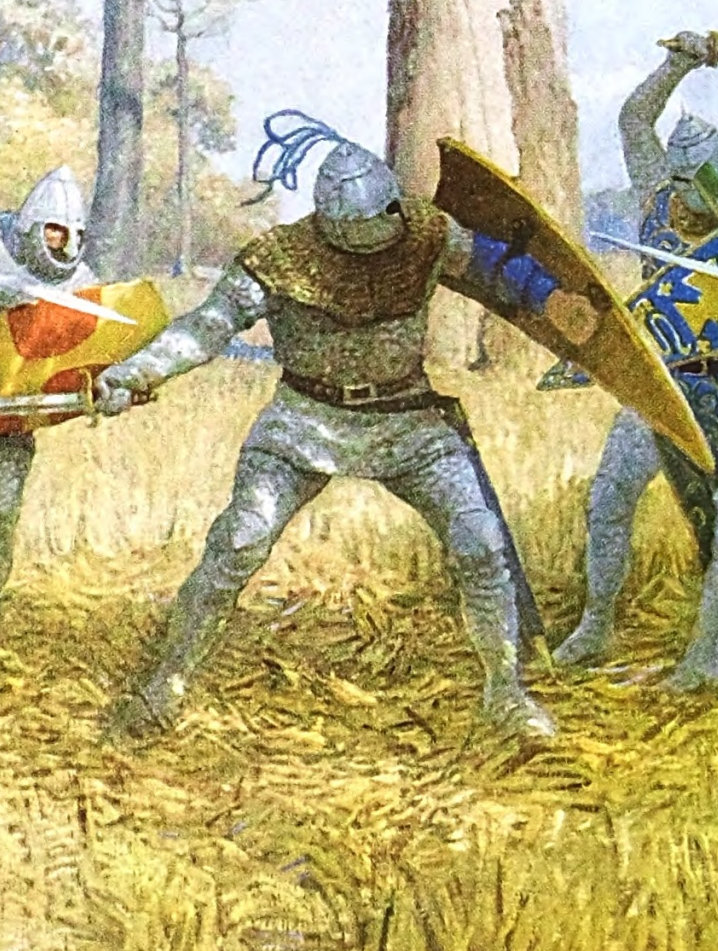
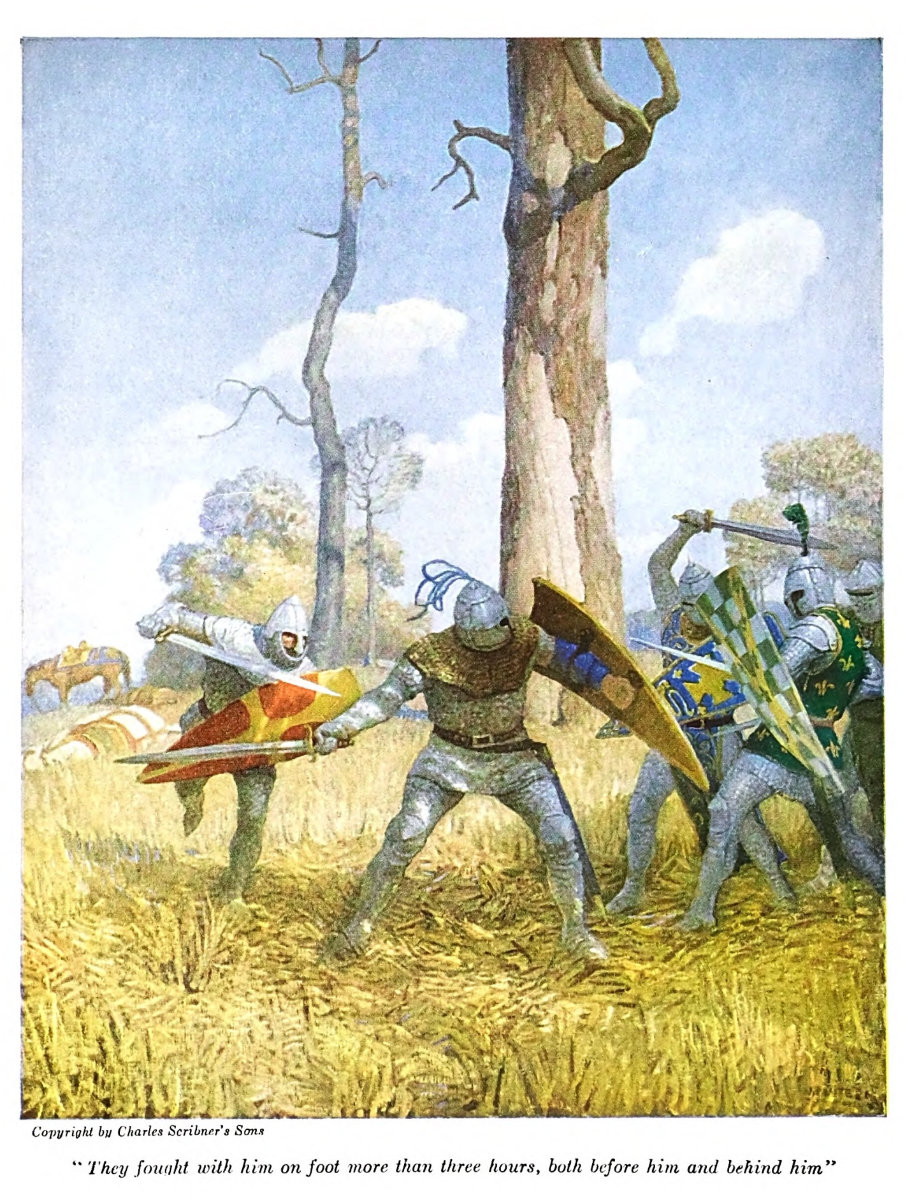
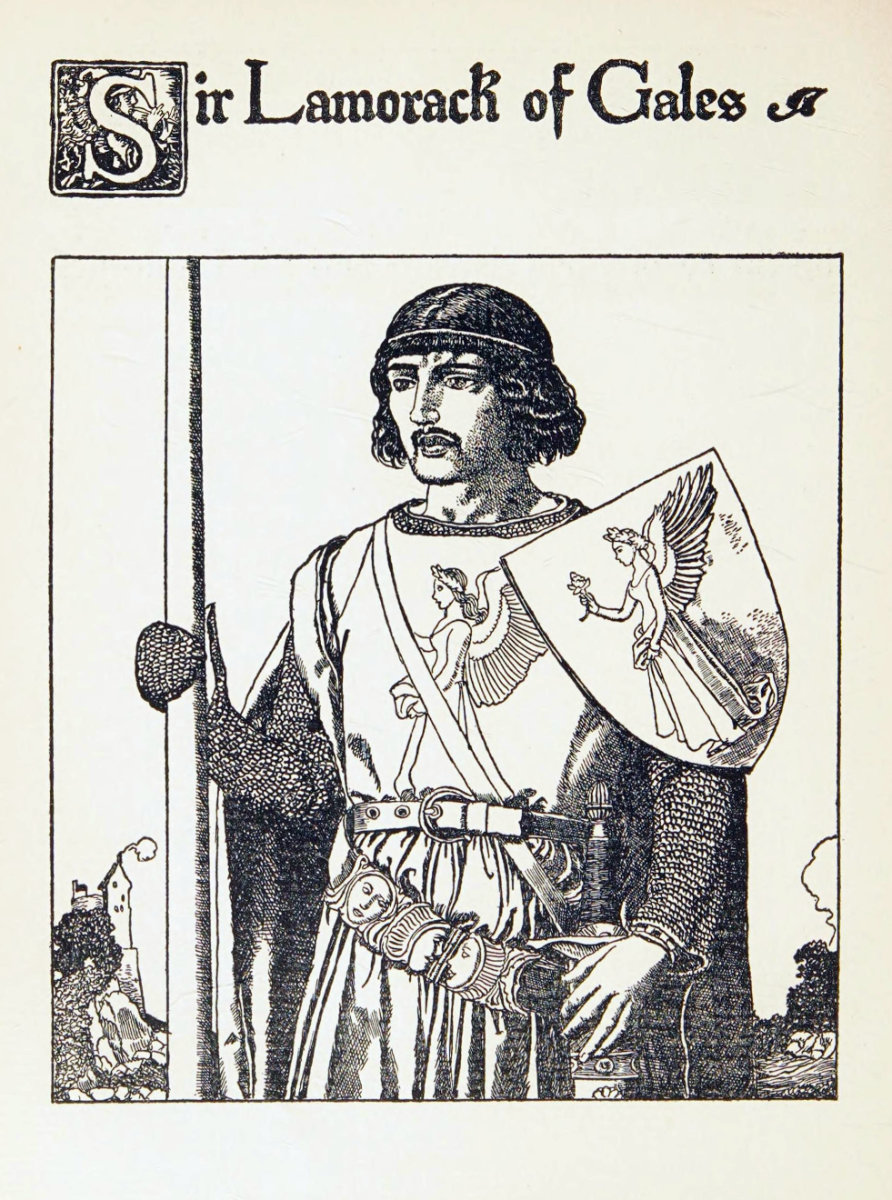
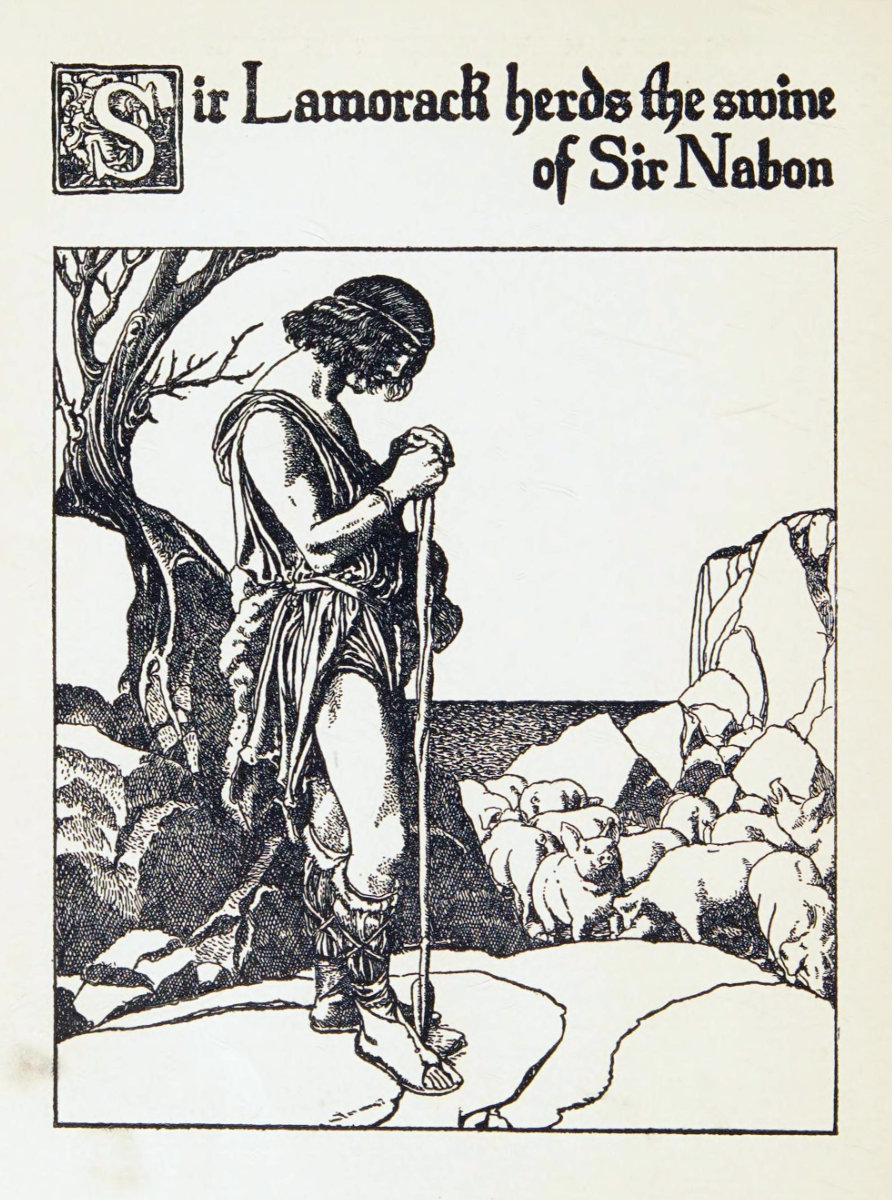
Lamorak de Galis (of Wales) is a Knight of the Round Table in the Arthurian legend. Originally known as Lamorat le Gallois in French, he was introduced in the Prose Tristan as a son of King Pellinore. Another Lamorat (de Listenois) appears in only one romance as his father’s brother. In his English compilation Le Morte d’Arthur, Thomas Malory refers to him as King Arthur’s third best knight, only inferior to Lancelot and Tristan, while the Prose Tristan names him as one of the top five. Nevertheless, Lamorak was not exceptionally popular in the chivalric romance tradition, confined to the cyclical material and subordinate to more prominent characters. Today, he is best known for his tragic love affair with Arthur’s sister, the Queen of Orkney (named Morgause in Malory), resulting in their deaths… In the version made popular by Le Morte d’Arthur, when Lamorak rides off alone, he is ambushed in a wood by Gawain and Gaheris along with their brothers Agravain and Mordred, who had just murdered Drian. Together, the four unfairly fight him all at once for hours. Ultimately, it is Mordred who delivers a fatal blow on Lamorak from behind, after which Gawain beheads Lamorak…
Alias Sir Lamorak
Real Names/Alt Names Lamorak de Galis, Lamorat le Gallois
Appearance List Annales Cambriae (10th century); Historia Regum Britanniae (1136); Merlin by Robert de Boron (late 12th–early 13th c.); The Vulgate Lancelot (13th c.); Le Morte d’Arthur (1485) by Thomas Malory; Ballads of Bravery (1877); The Boy’s King Arthur: Sir Thomas Malory’s History of King Arthur and His Knights of the Round Table by Sidney Lanier (Charles Scribner’s Sons, 1880); The Story of King Arthur and His Knights (1903) by Howard Pyle [Internet Archive]; The Story of the Champions of the Round Table (1905, 1911) by Howard Pyle [Internet Archive]; The Story of Sir Launcelot and His Companions (1907) by Howard Pyle [Internet Archive]; The Story of the Grail and the Passing of King Arthur (1910) by Howard Pyle [Internet Archive]; Tales of the Round Table (1908) by Andrew Lang [Internet Archive]; Myths and Legends of the Celtic Race (1910) by T. W. Rolleston [Internet Archive]; The Legends of King Arthur and His Knights (1912) [Internet Archive]; Idylls of the King (1859) by Alfred Lord Tennyson – 1913 illustrated edition: [Internet Archive]; Legends and Romances of Brittany (1917) by Lewis Spence. Film: Knights of the Round Table (1926) by Rex Ingram (silent, partially lost); Knights of the Round Table (1953) by Richard Thorpe; Lancelot and Guinevere (1963) by Cornel Wilde; The Sword in the Stone (1963) by Walt Disney Productions; Camelot (1967) by Joshua Logan; Excalibur (1981).
Description Lamorak de Galis (of Wales) is a Knight of the Round Table in the Arthurian legend. Originally known as Lamorat le Gallois in French, he was introduced in the Prose Tristan as a son of King Pellinore. Another Lamorat (de Listenois) appears in only one romance as his father’s brother. In his English compilation Le Morte d’Arthur, Thomas Malory refers to him as King Arthur’s third best knight, only inferior to Lancelot and Tristan, while the Prose Tristan names him as one of the top five. Nevertheless, Lamorak was not exceptionally popular in the chivalric romance tradition, confined to the cyclical material and subordinate to more prominent characters. Today, he is best known for his tragic love affair with Arthur’s sister, the Queen of Orkney (named Morgause in Malory), resulting in their deaths… In the version made popular by Le Morte d’Arthur, when Lamorak rides off alone, he is ambushed in a wood by Gawain and Gaheris along with their brothers Agravain and Mordred, who had just murdered Drian. Together, the four unfairly fight him all at once for hours. Ultimately, it is Mordred who delivers a fatal blow on Lamorak from behind, after which Gawain beheads Lamorak…

 ,
,  ,
,  ,
,