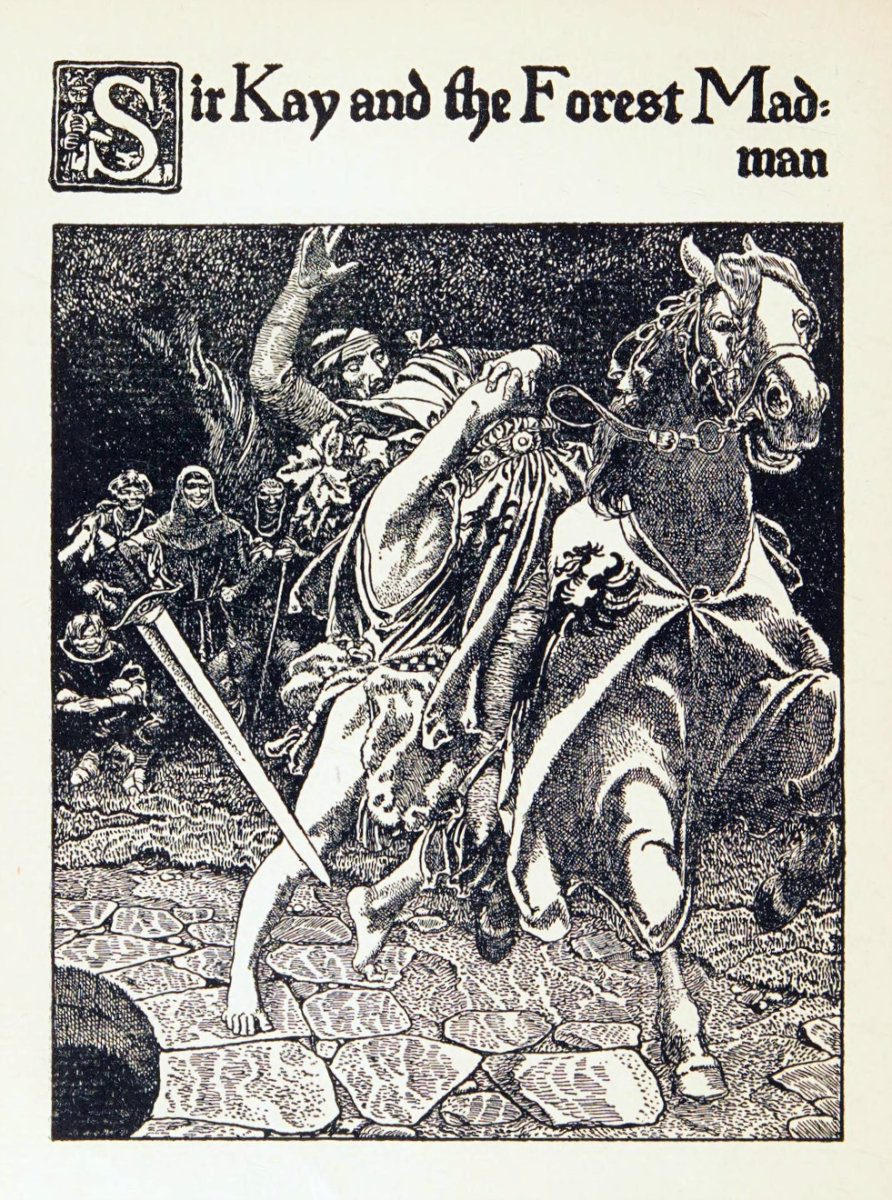
In Arthurian legend, Sir Kay is King Arthur’s foster brother and later seneschal, as well as one of the first Knights of the Round Table. In later literature he is known for his acid tongue and bullying, boorish behaviour, but in earlier accounts he was one of Arthur’s premier warriors. Along with Bedivere, with whom he is frequently associated, Kay is one of the earliest characters associated with Arthur. Kay is ubiquitous in Arthurian literature but he rarely serves as anything but a foil for other characters. Although he manipulates the king to get his way, his loyalty to Arthur is usually unquestioned. In the Vulgate Cycle, the Post-Vulgate and Thomas Malory’s Le Morte d’Arthur, Kay’s father Ector adopts the infant Arthur after Merlin takes him away from his birth parents, Uther and Igraine. Ector raises the future king and Kay as brothers, but Arthur’s parentage is revealed when he draws the Sword in the Stone at a tournament in London. Arthur, serving as squire to the newly knighted Kay, is locked out of the house and cannot get to his brother’s sword, so he uses the Sword in the Stone to replace it. Kay shows his characteristic opportunism when he tries to claim it was in fact he that pulled the sword from the stone, not Arthur, making Kay the true King of the Britons, but he ultimately relents and admits it was Arthur. He becomes one of the first Knights of the Round Table, described as “best worthy to be a knight of the Round Table of any”, and serves his foster-brother throughout his life.
Appearance List Annales Cambriae (10th century); Historia Regum Britanniae (1136); Merlin by Robert de Boron (late 12th–early 13th c.); The Vulgate Lancelot (13th c.); Le Morte d’Arthur (1485) by Thomas Malory; Ballads of Bravery (1877); The Boy’s King Arthur: Sir Thomas Malory’s History of King Arthur and His Knights of the Round Table by Sidney Lanier (Charles Scribner’s Sons, 1880); The Story of King Arthur and His Knights (1903) by Howard Pyle [Internet Archive]; The Story of the Champions of the Round Table (1905, 1911) by Howard Pyle [Internet Archive]; The Story of Sir Launcelot and His Companions (1907) by Howard Pyle [Internet Archive]; The Story of the Grail and the Passing of King Arthur (1910) by Howard Pyle [Internet Archive]; Tales of the Round Table (1908) by Andrew Lang [Internet Archive]; Myths and Legends of the Celtic Race (1910) by T. W. Rolleston [Internet Archive]; The Legends of King Arthur and His Knights (1912) [Internet Archive]; Idylls of the King (1859) by Alfred Lord Tennyson – 1913 illustrated edition: [Internet Archive]; Legends and Romances of Brittany (1917) by Lewis Spence. Film: Knights of the Round Table (1926) by Rex Ingram (silent, partially lost); Knights of the Round Table (1953) by Richard Thorpe; Lancelot and Guinevere (1963) by Cornel Wilde; The Sword in the Stone (1963) by Walt Disney Productions; Camelot (1967) by Joshua Logan; Excalibur (1981).
Description In Arthurian legend, Sir Kay is King Arthur’s foster brother and later seneschal, as well as one of the first Knights of the Round Table. In later literature he is known for his acid tongue and bullying, boorish behaviour, but in earlier accounts he was one of Arthur’s premier warriors. Along with Bedivere, with whom he is frequently associated, Kay is one of the earliest characters associated with Arthur. Kay is ubiquitous in Arthurian literature but he rarely serves as anything but a foil for other characters. Although he manipulates the king to get his way, his loyalty to Arthur is usually unquestioned. In the Vulgate Cycle, the Post-Vulgate and Thomas Malory’s Le Morte d’Arthur, Kay’s father Ector adopts the infant Arthur after Merlin takes him away from his birth parents, Uther and Igraine. Ector raises the future king and Kay as brothers, but Arthur’s parentage is revealed when he draws the Sword in the Stone at a tournament in London. Arthur, serving as squire to the newly knighted Kay, is locked out of the house and cannot get to his brother’s sword, so he uses the Sword in the Stone to replace it. Kay shows his characteristic opportunism when he tries to claim it was in fact he that pulled the sword from the stone, not Arthur, making Kay the true King of the Britons, but he ultimately relents and admits it was Arthur. He becomes one of the first Knights of the Round Table, described as “best worthy to be a knight of the Round Table of any”, and serves his foster-brother throughout his life.
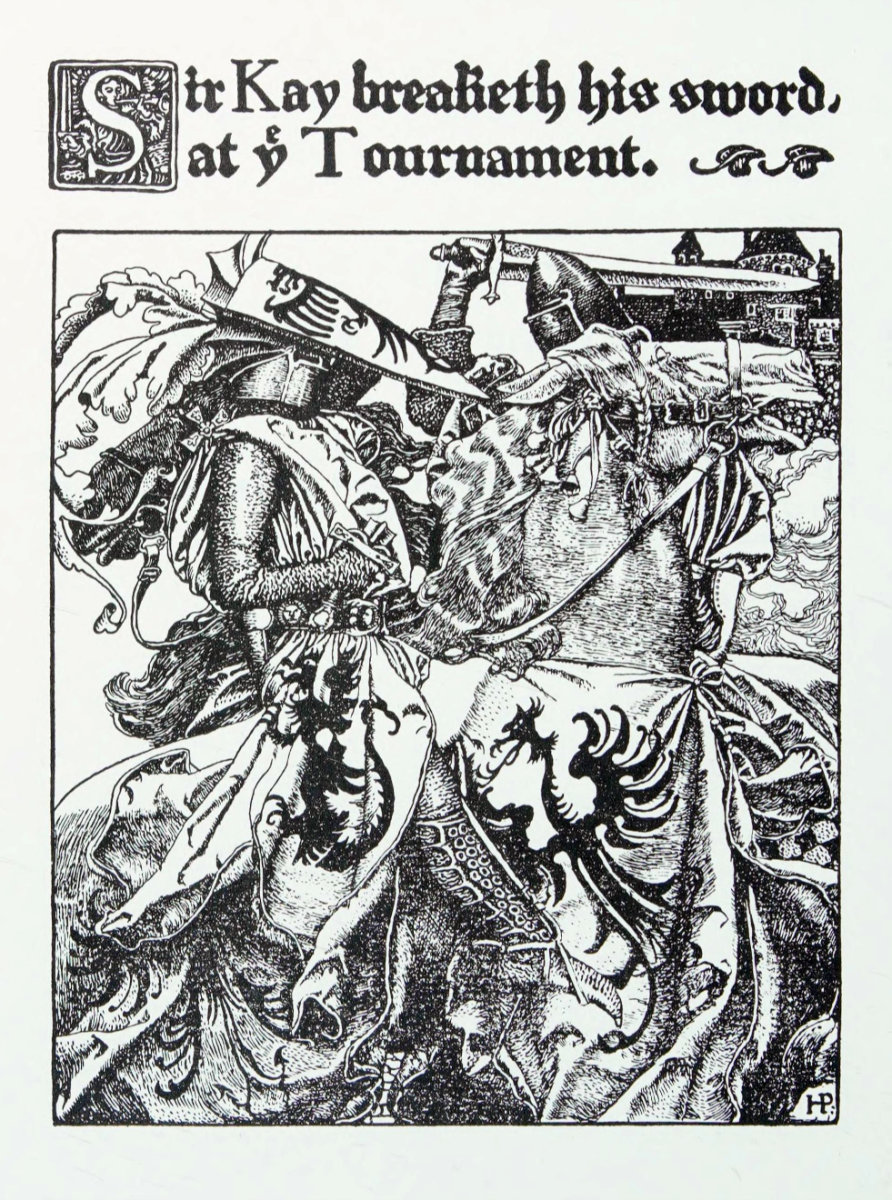

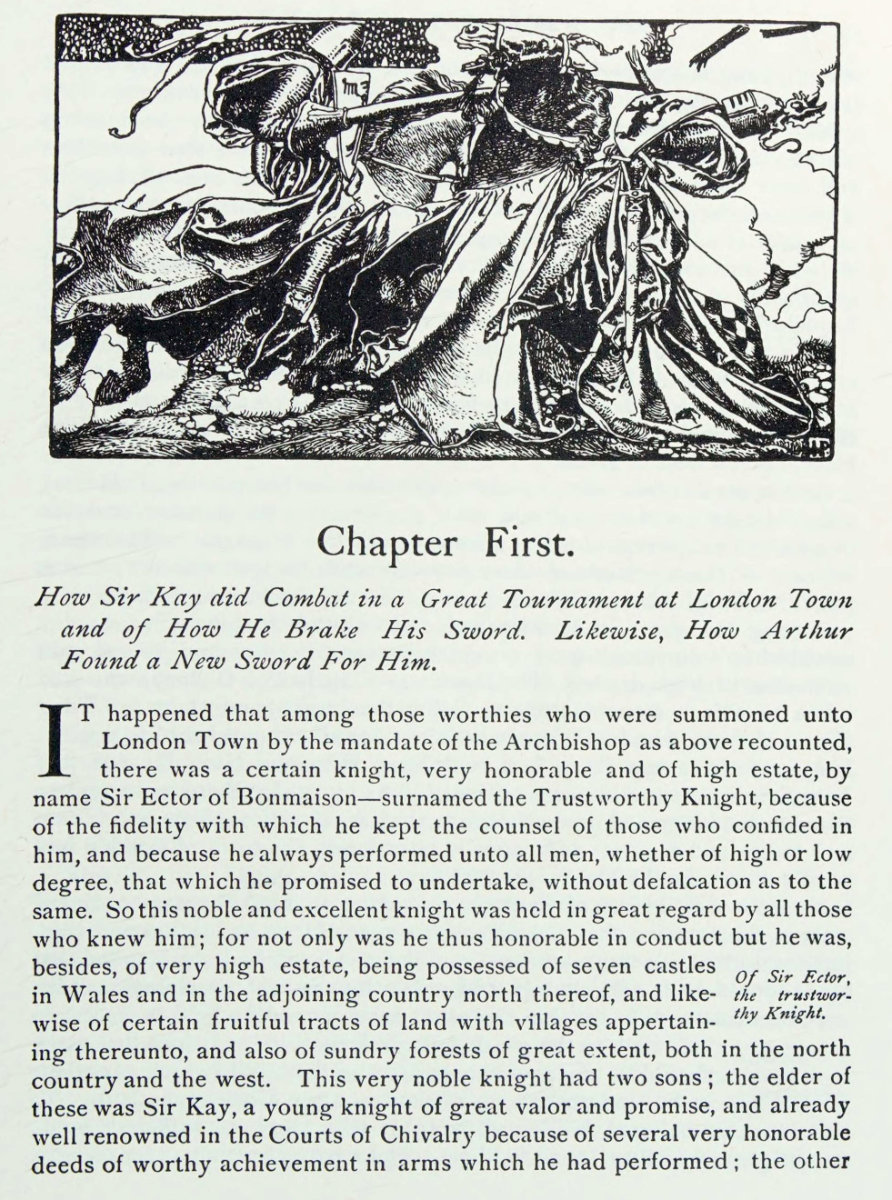 ,
, 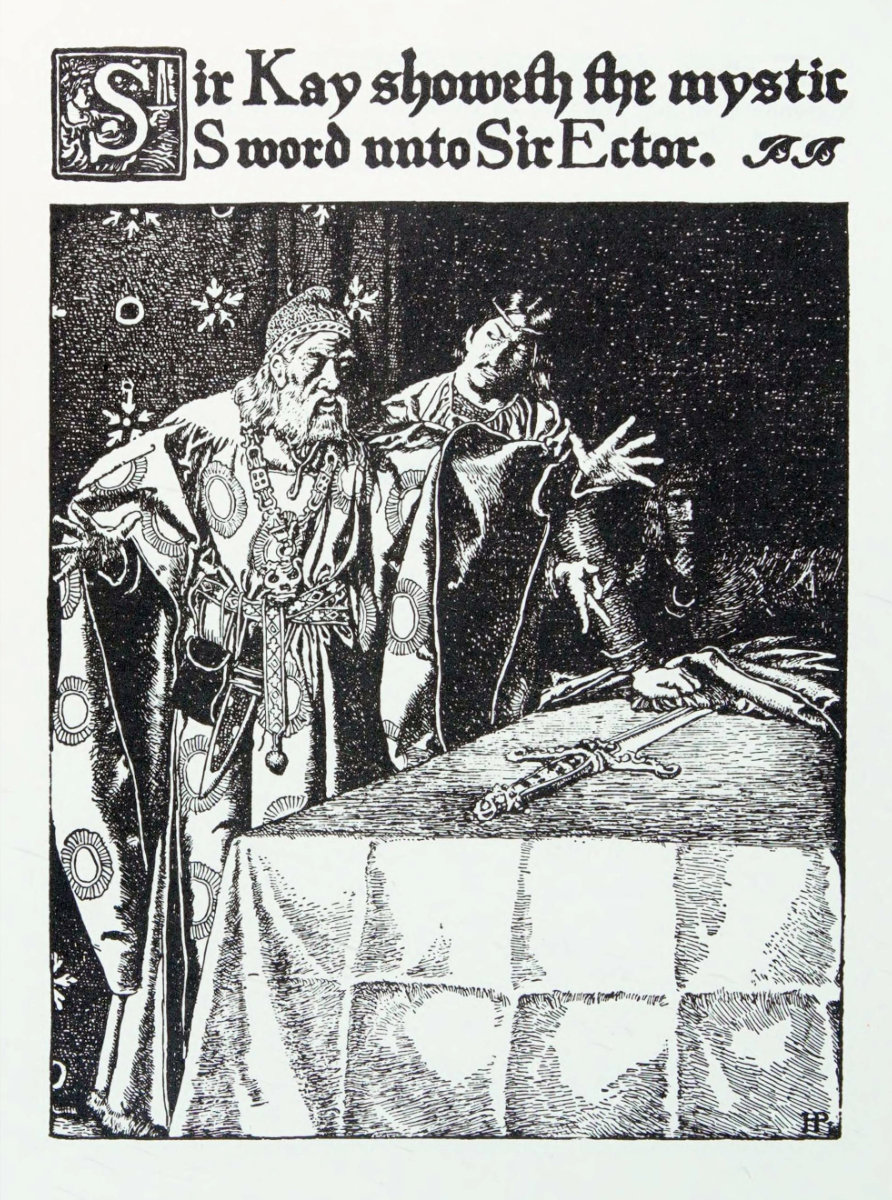 ,
,