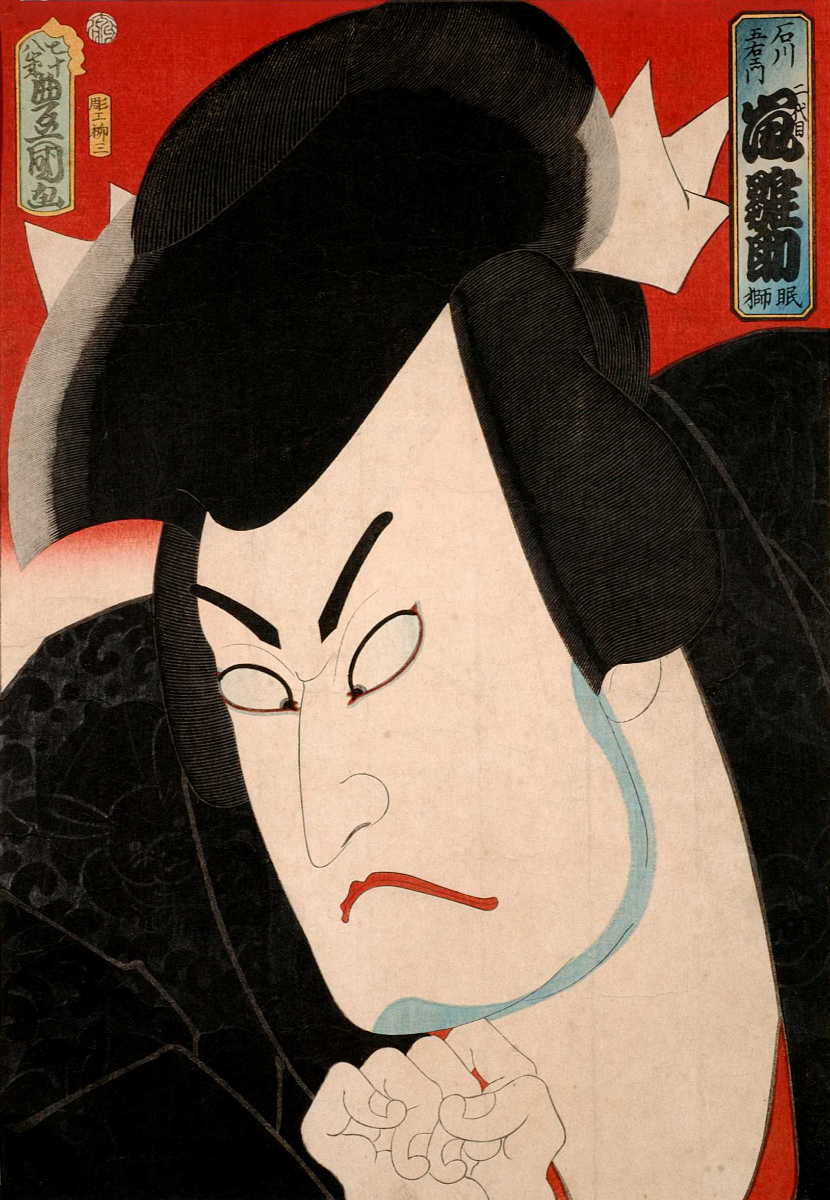
Ishikawa Goemon (August 24, 1558 – October 8, 1594) was the leader of a group of bandits during the Azuchi-Momoyama period in Japan. Over time, and especially during the Edo period (1603-1867), his life and deeds became a center of attention, and he became known as a legendary Japanese outlaw hero who stole gold and other valuables to give to the poor. He and his son were boiled alive in public after their failed assassination attempt on the Sengoku period warlord Toyotomi Hideyoshi. His legend lives on in contemporary Japanese popular culture, often giving him greatly exaggerated ninja skills. There are generally two ways in which Goemon has been most often portrayed in the modern popular culture: either a young, slender ninja, or a powerfully-built, hulking Japanese bandit.
First Appearance Historical figure (b. 1558 – d. 1594)
First Publisher ○
Appearance List Plays: Kinmon Gosan no Kiri (The Golden Gate and the Paulownia Crest) by Namiki Gohei in 1778. Literature: Many versions of the Chūshingura (忠臣蔵, The Treasury of Loyal Retainers, or Tale of the Forty-Seven Ronin), Shinobi no Mono (忍びの者) by Tomoyoshi Murayama (serialized November 1960 to May 1962). Film: Ishikawa Goemon Ichidaiki, Ishikawa Goemon no Hoji, Ninjutsu gozen-jiai (Torawakamaru the Koga Ninja, 1957).
Sample Read Chushingura, or the Treasury Loyal Retainers (1910) [Internet Archive]
Description Ishikawa Goemon (August 24, 1558 – October 8, 1594) was the leader of a group of bandits during the Azuchi-Momoyama period in Japan. Over time, and especially during the Edo period (1603-1867), his life and deeds became a center of attention, and he became known as a legendary Japanese outlaw hero who stole gold and other valuables to give to the poor. He and his son were boiled alive in public after their failed assassination attempt on the Sengoku period warlord Toyotomi Hideyoshi. His legend lives on in contemporary Japanese popular culture, often giving him greatly exaggerated ninja skills. There are generally two ways in which Goemon has been most often portrayed in the modern popular culture: either a young, slender ninja, or a powerfully-built, hulking Japanese bandit.