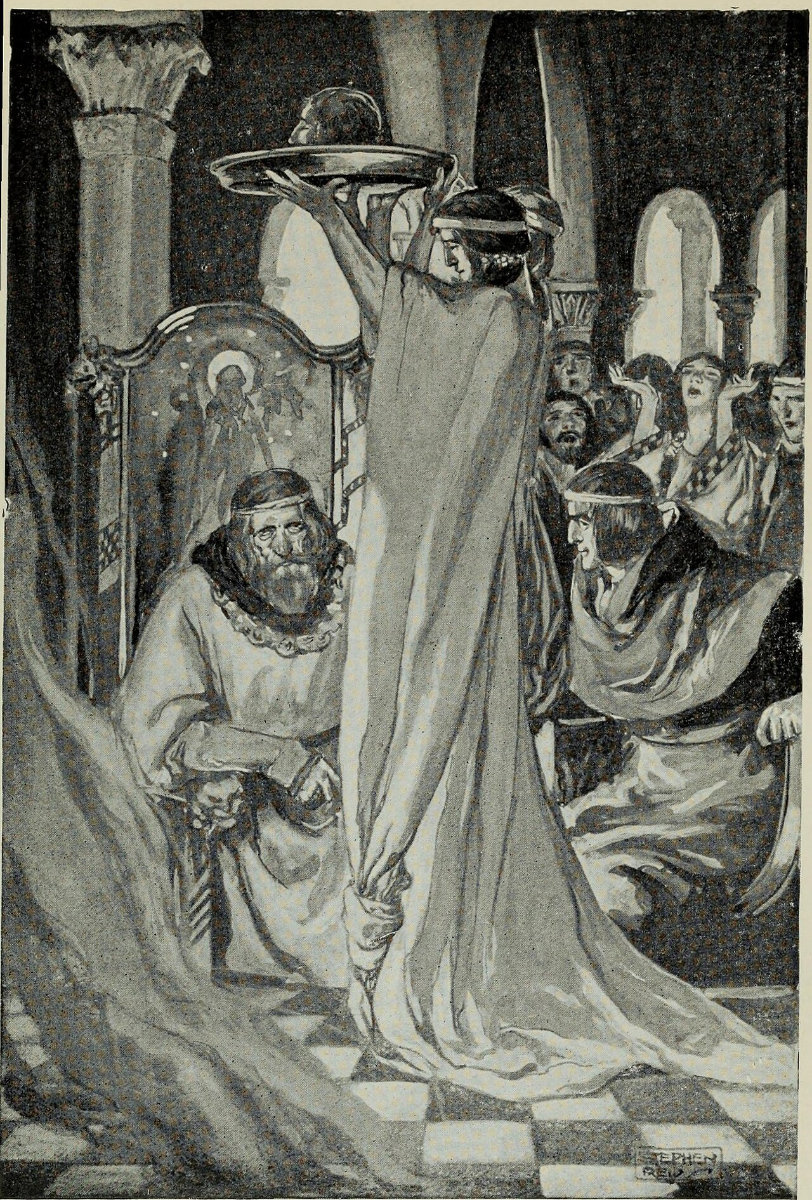
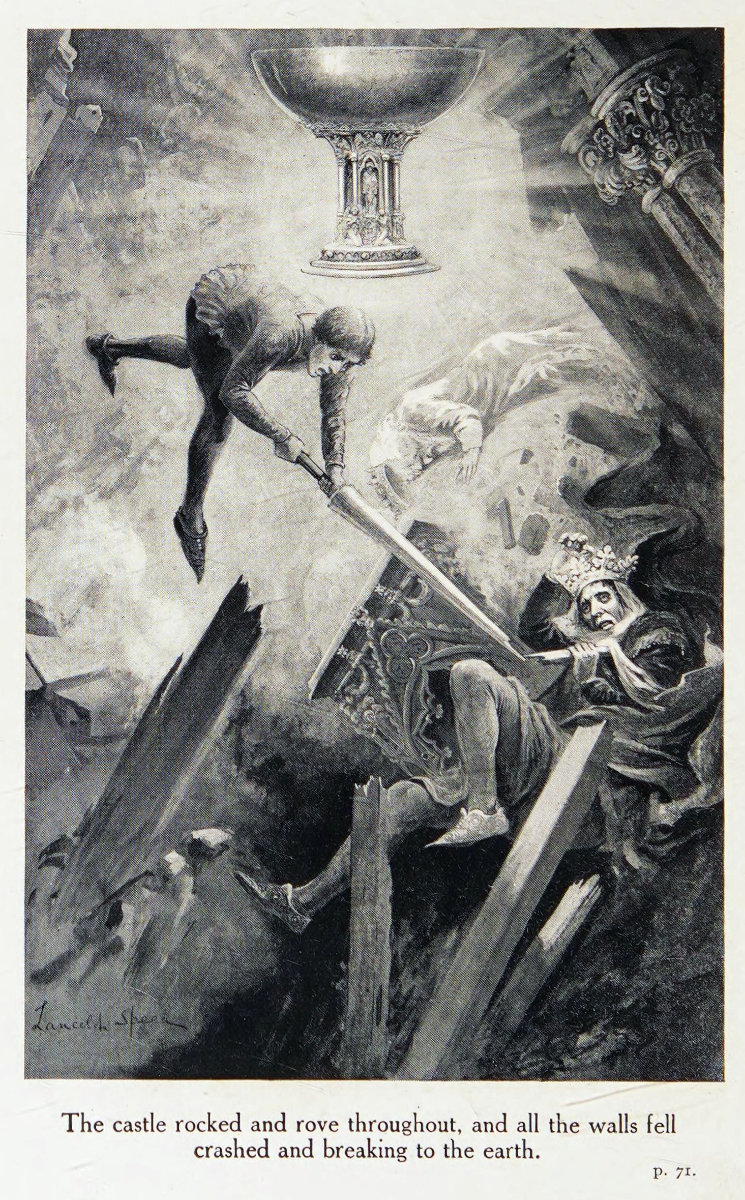
The Fisher King is a figure in Arthurian legend, the last in a long line of British kings tasked with guarding the Holy Grail. The Fisher King is both the protector and physical embodiment of his lands, but a wound renders him impotent and his kingdom barren. Unable to walk or ride a horse, he is sometimes depicted as spending his time fishing while he awaits a “chosen one” who can heal him. Versions of the story vary widely, but the Fisher King is typically depicted as being wounded in the groin, legs, or thigh. The healing of these wounds always depends upon the completion of a hero-knight’s task. Most versions of the story contain the Holy Grail and the Lance of Longinus as plot elements. In some versions, a third character is introduced; this individual, unlike the hero-knight archetype, is ignorant of the King’s power, but has the ability to save the king and land, or to doom it. Variations of this third party produce divergent legends. As a literary character, the Fisher King originates in Chrétien de Troyes’ unfinished writings of the adventures of Perceval…
Alias The Fisher King
Real Names/Alt Names King Pelles, Maimed King, Wounded King
Appearance List Perceval, the Story of the Grail (c. 1180) by Chrétien de Troyes; Parzival (c. 1200–1210) by Wolfram von Eschenbach; Perlesvaus (early 13th c.); Queste del Saint Graal (c. 1220–1230); Vulgate Cycle (13th c.); Le Morte d’Arthur (1485) by Thomas Malory; Parzival (1833) — scholarly for modern Grail studies; Idylls of the King (1859–1885) by Alfred Lord Tennyson; The Story of the Champions of the Round Table (1905, 1911) by Howard Pyle [Internet Archive]; The Story of the Grail and the Passing of King Arthur (1910) by Howard Pyle [Internet Archive]; From Ritual to Romance (1920) by Jessie L. Weston. Film: Parsifal (1912) by Mario Caserini; Monty Python and the Holy Grail (1975) by Monty Python.
Sample Read Myths and Legends of the Celtic Race (1917) by T. W. Rolleston [Internet Archive]
Description The Fisher King is a figure in Arthurian legend, the last in a long line of British kings tasked with guarding the Holy Grail. The Fisher King is both the protector and physical embodiment of his lands, but a wound renders him impotent and his kingdom barren. Unable to walk or ride a horse, he is sometimes depicted as spending his time fishing while he awaits a “chosen one” who can heal him. Versions of the story vary widely, but the Fisher King is typically depicted as being wounded in the groin, legs, or thigh. The healing of these wounds always depends upon the completion of a hero-knight’s task. Most versions of the story contain the Holy Grail and the Lance of Longinus as plot elements. In some versions, a third character is introduced; this individual, unlike the hero-knight archetype, is ignorant of the King’s power, but has the ability to save the king and land, or to doom it. Variations of this third party produce divergent legends. As a literary character, the Fisher King originates in Chrétien de Troyes’ unfinished writings of the adventures of Perceval…