When Nicolas Vermont entered the greenhouse, he would make a gruesome discovery. It was the early 20th century in rural France, and Nicolas was visiting his uncle – a scientist and surgeon called Dr. Frédéric Lerne – after 15 years apart. However, he had soon grown suspicious about his uncle’s odd behaviour, so for answers had decided to explore the grounds of his relative’s estate late at night. Inside a greenhouse in the garden, Nicolas discovered that Dr. Lerne had been conducting disturbing scientific experiments. At first, he saw plants grafted onto one another: a cactus growing a geranium flower, and an oak tree sprouting cherries and walnuts. His uneasy curiosity, though, soon turned to dread. “It was then that I touched the hairy plant. Having felt the two treated leaves, so like ears, I felt them warm and quivering,” he recalled. Grafted onto the stem were the parts of an animal: the ears of a dead rabbit. “My hand, clenched with repugnance, shook off the memory of the contact as it would have shaken off some hideous spider.” Dr. Lerne was in fact an impostor. His assistant Otto Klotz had stolen the true uncle’s body through a brain swap, and would not hesitate to punish Nicolas for his ill-placed curiosity… by transplanting his consciousness into the body of a bull. Le docteur Lerne, sous-dieu (1908), or “Dr Lerne, Demi-God”, was a celebrated novel by Maurice Renard, hailed by the poet Guillaume Apollinaire as a “subdivine novel of metamorphoses”. Published in English as New Bodies for Old, it heralded the dawn of a new French literary genre – one that ventured boldly into the uncertain and the unknown. Renard called it “merveilleux-scientifique” (“scientific-marvellous”) and its ambition was to help the reader speculate on what could be, and on what exists beyond the reach of our senses, rather than what will be. In other words, allowing a better understanding of what Renard poetically called “the imminent threats of the possible”. As he wrote in 1914, the goal was to “patrol the margins of certainty, not to acquire knowledge of the future, but to gain a greater understanding of the present”. Perhaps more importantly, the lesser-known stories of merveilleux-scientifique allow us to question the official history of science fiction – a term that did not even exist in France at the time as it as it would be popularised in English by Hugo Gernsback only in the 1920s. Whereas today it is sci-fi writers like Jules Verne or H G Wells who are most remembered from this period, the merveilleux-scientifique novels were just as imaginative and visionary, but often far more provocative, daring and strange. It was in October 1909, in the symbolist journal Le Spectateur, that Renard, who nicknamed himself the ‘scribe of miracles’, laid the foundations of his new genre, merveilleux-scientifique, with the publication of a manifesto-like text titled Du roman merveilleux-scientifique et de son action sur l’intelligence du progress, or ‘On the Scientific Marvellous and Its Influence on the Understanding of Progress’. Renard did not claim to have invented the merveilleux-scientifique genre, nor did he seek to assume its paternity; rather, he attempted to trace its lineage and establish its rules of composition in order to ensure its wider dissemination within the literary world. He wanted to mark a clear break from Verne (written down in his archives, his main purpose is to ‘demolish Jules Verne’), a highly symbolic act of patricide. Departing from works such as Around the World in Eighty Days (1872) or Michel Strogoff (1876), which recount journeys of peril and discovery, Renard distanced himself from the model of the scientific adventure novel…
Alias Dr. Lerne – Undergod
Real Names/Alt Names Dr. Frédéric Lerne, Otto Klotz, Undergod
First Appearance Le docteur Lerne, sous-dieu (1908)
First Publisher Société du Mercure de France
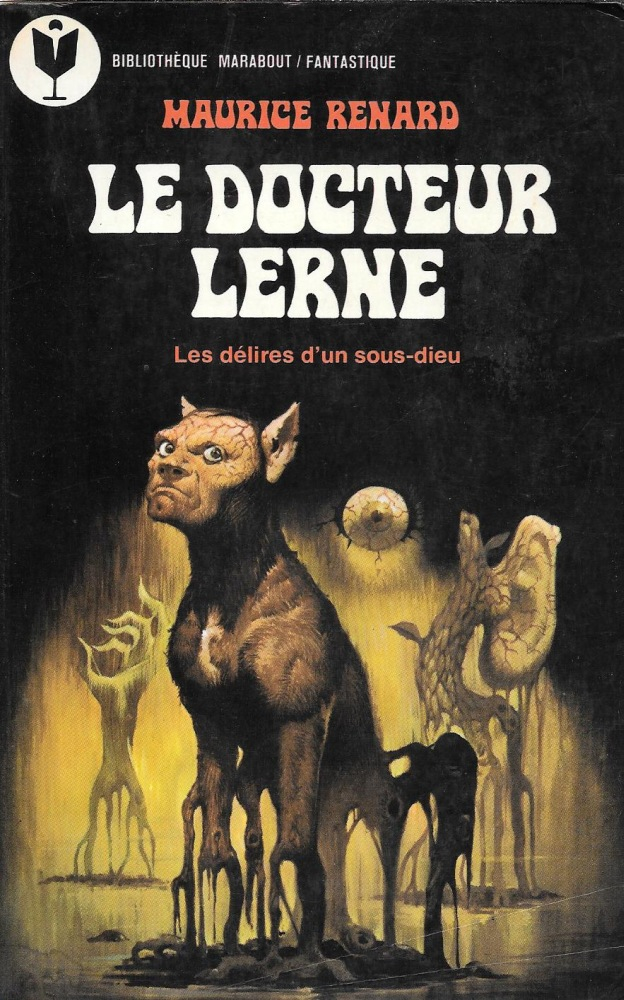
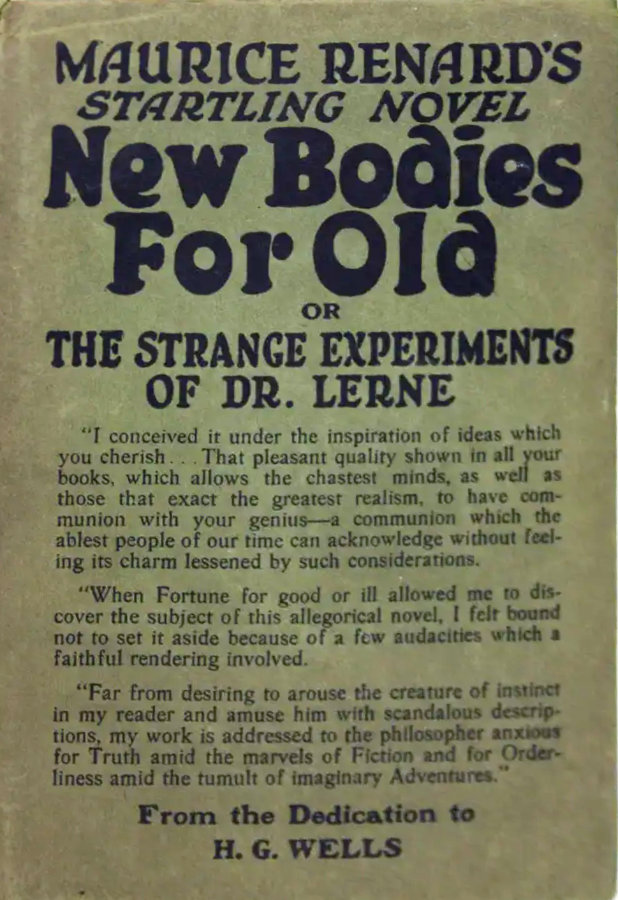
Appearance List Le docteur Lerne, sous-dieu (1908) by Maurice Renard [Internet Archive]; L’île d’épouvante (1911) (short film) — Directed by Joë Hamman; Le docteur Lerne: sous-dieu (1919) — L’édition française illustrée (illustrated reissue); New Bodies for Old (1923) — English translation; Le docteur Lerne (demi-dieu) (1958); Le docteur Lerne, sous-dieu (1970) — collection “Domaine fantastique” (reissue); Le docteur Lerne: sous-dieu (1976) — “Marabout Fantastique” #567 (reissue).
Sample Read Le docteur Lerne, sous-dieu (1908) [Internet Archive]
Description When Nicolas Vermont entered the greenhouse, he would make a gruesome discovery. It was the early 20th century in rural France, and Nicolas was visiting his uncle – a scientist and surgeon called Dr. Frédéric Lerne – after 15 years apart. However, he had soon grown suspicious about his uncle’s odd behaviour, so for answers had decided to explore the grounds of his relative’s estate late at night. Inside a greenhouse in the garden, Nicolas discovered that Dr. Lerne had been conducting disturbing scientific experiments. At first, he saw plants grafted onto one another: a cactus growing a geranium flower, and an oak tree sprouting cherries and walnuts. His uneasy curiosity, though, soon turned to dread. “It was then that I touched the hairy plant. Having felt the two treated leaves, so like ears, I felt them warm and quivering,” he recalled. Grafted onto the stem were the parts of an animal: the ears of a dead rabbit. “My hand, clenched with repugnance, shook off the memory of the contact as it would have shaken off some hideous spider.” Dr. Lerne was in fact an impostor. His assistant Otto Klotz had stolen the true uncle’s body through a brain swap, and would not hesitate to punish Nicolas for his ill-placed curiosity… by transplanting his consciousness into the body of a bull. Le docteur Lerne, sous-dieu (1908), or “Dr Lerne, Demi-God”, was a celebrated novel by Maurice Renard, hailed by the poet Guillaume Apollinaire as a “subdivine novel of metamorphoses”. Published in English as New Bodies for Old, it heralded the dawn of a new French literary genre – one that ventured boldly into the uncertain and the unknown. Renard called it “merveilleux-scientifique” (“scientific-marvellous”) and its ambition was to help the reader speculate on what could be, and on what exists beyond the reach of our senses, rather than what will be. In other words, allowing a better understanding of what Renard poetically called “the imminent threats of the possible”. As he wrote in 1914, the goal was to “patrol the margins of certainty, not to acquire knowledge of the future, but to gain a greater understanding of the present”. Perhaps more importantly, the lesser-known stories of merveilleux-scientifique allow us to question the official history of science fiction – a term that did not even exist in France at the time as it as it would be popularised in English by Hugo Gernsback only in the 1920s. Whereas today it is sci-fi writers like Jules Verne or H G Wells who are most remembered from this period, the merveilleux-scientifique novels were just as imaginative and visionary, but often far more provocative, daring and strange. It was in October 1909, in the symbolist journal Le Spectateur, that Renard, who nicknamed himself the ‘scribe of miracles’, laid the foundations of his new genre, merveilleux-scientifique, with the publication of a manifesto-like text titled Du roman merveilleux-scientifique et de son action sur l’intelligence du progress, or ‘On the Scientific Marvellous and Its Influence on the Understanding of Progress’. Renard did not claim to have invented the merveilleux-scientifique genre, nor did he seek to assume its paternity; rather, he attempted to trace its lineage and establish its rules of composition in order to ensure its wider dissemination within the literary world. He wanted to mark a clear break from Verne (written down in his archives, his main purpose is to ‘demolish Jules Verne’), a highly symbolic act of patricide. Departing from works such as Around the World in Eighty Days (1872) or Michel Strogoff (1876), which recount journeys of peril and discovery, Renard distanced himself from the model of the scientific adventure novel…