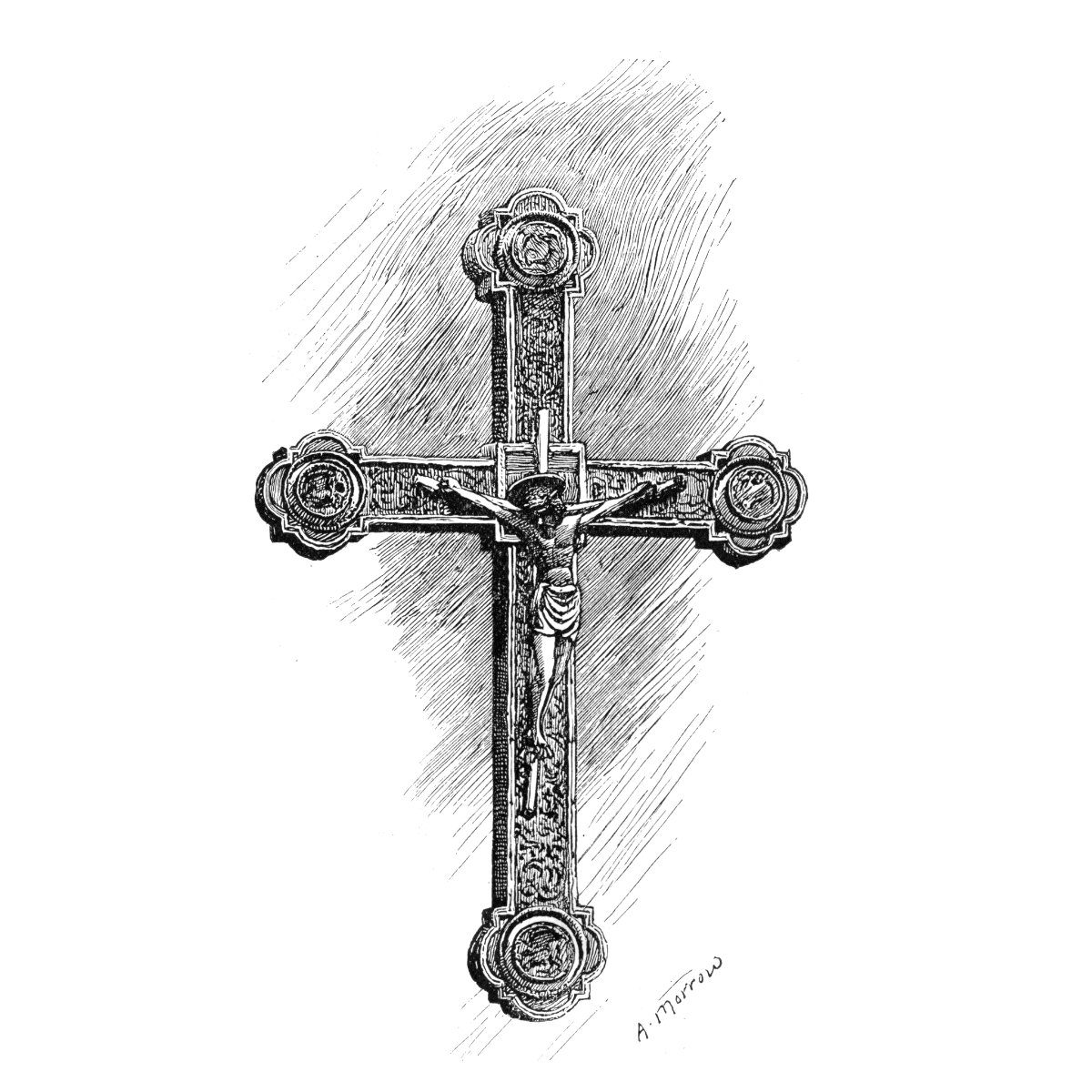
In “Le bourreau de Dieu” (“The Executioner of God” in English) a monk finds an abandoned infant in a remote mountain region and brings him to a monastery, where the prior interprets the event as divine will and keeps the child, naming him Christophe, meaning “one who carries Christ.” The boy grows into a devout young man, but one fearful of the world. After becoming intoxicated on the monks’ liqueur, he is expelled from the monastery. Cast out, Christophe wanders through villages, first as a beggar and then as a maker of wooden shoes. He also begins carving small crucifixes and develops skill in this craft. Over time, his religious feelings diminish as his work becomes more mechanical and commercial. He settles in a mountain dwelling, where he sells crucifixes to travelers and increasingly drinks the same liqueur that led to his downfall. He comes to be associated with Marcoux, a feared smuggler and criminal, though the two are openly hostile to each other. After a religious procession installs a large cross on the mountain, Christophe’s profits increase, but he continues to drift further from sincere belief. He undertakes carving a life-sized Christ figure. Upon completing it and nailing it to a cross, he perceives the figure as alive: it speaks and declares that Christ suffers continuously in every representation made by humans, enduring endless crucifixion through their works. Christophe, overwhelmed, repents. The next day, he destroys his stock of crucifixes and preserves the figures, especially the one that spoke. His behavior changes: he abandons his trade, becomes intensely devout, spends long hours in church, and forms an unexpected association with Marcoux, frequently paying for his drinking. Villagers consider him mad. On Good Friday, both Christophe and Marcoux disappear. Christophe leaves a note giving all his possessions to Marcoux in gratitude for a “service” that would aid his atonement. Authorities investigate but find no immediate explanation. A magistrate climbing the mountain later discovers, on the large cross erected during the procession, a crucified corpse, partly consumed by birds, still dressed in remnants of a monk’s clothing. The figure is identified as Christophe, who has arranged his own crucifixion.
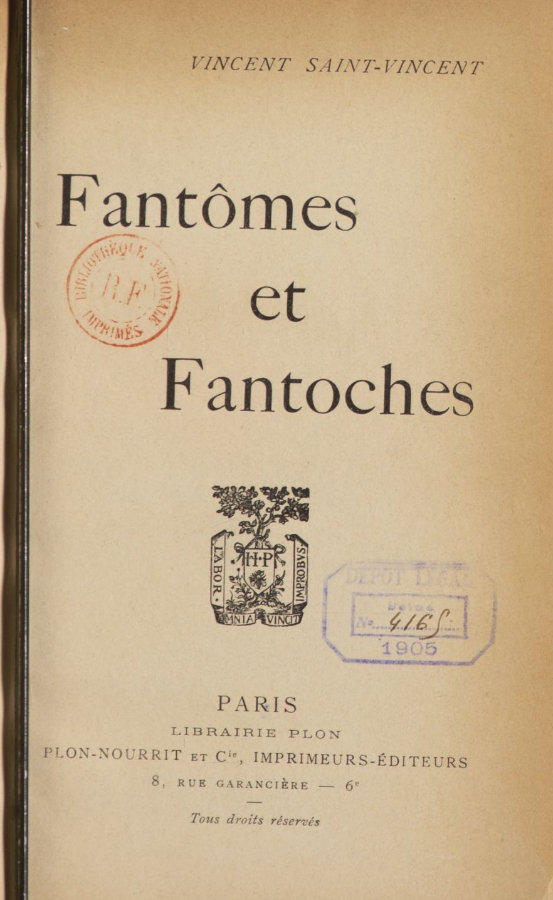
First Appearance “Le bourreau de Dieu” included in Fantômes et fantoches (1905) by Vincent Saint-Vincent (pseud. of Maurice Renard)
First Publisher Plon-Nourrit
Appearance List “Le bourreau de Dieu” included in Fantômes et fantoches (1905) by Vincent Saint-Vincent (pseud. of Maurice Renard), Paris: Plon-Nourrit [Gallica BnF]; “Le bourreau de Dieu” included in Romans et contes fantastiques (1990) by Maurice Renard — collected reissue, Robert Laffont, collection “Bouquins”
Description In “Le bourreau de Dieu” (“The Executioner of God” in English) a monk finds an abandoned infant in a remote mountain region and brings him to a monastery, where the prior interprets the event as divine will and keeps the child, naming him Christophe, meaning “one who carries Christ.” The boy grows into a devout young man, but one fearful of the world. After becoming intoxicated on the monks’ liqueur, he is expelled from the monastery. Cast out, Christophe wanders through villages, first as a beggar and then as a maker of wooden shoes. He also begins carving small crucifixes and develops skill in this craft. Over time, his religious feelings diminish as his work becomes more mechanical and commercial. He settles in a mountain dwelling, where he sells crucifixes to travelers and increasingly drinks the same liqueur that led to his downfall. He comes to be associated with Marcoux, a feared smuggler and criminal, though the two are openly hostile to each other. After a religious procession installs a large cross on the mountain, Christophe’s profits increase, but he continues to drift further from sincere belief. He undertakes carving a life-sized Christ figure. Upon completing it and nailing it to a cross, he perceives the figure as alive: it speaks and declares that Christ suffers continuously in every representation made by humans, enduring endless crucifixion through their works. Christophe, overwhelmed, repents. The next day, he destroys his stock of crucifixes and preserves the figures, especially the one that spoke. His behavior changes: he abandons his trade, becomes intensely devout, spends long hours in church, and forms an unexpected association with Marcoux, frequently paying for his drinking. Villagers consider him mad. On Good Friday, both Christophe and Marcoux disappear. Christophe leaves a note giving all his possessions to Marcoux in gratitude for a “service” that would aid his atonement. Authorities investigate but find no immediate explanation. A magistrate climbing the mountain later discovers, on the large cross erected during the procession, a crucified corpse, partly consumed by birds, still dressed in remnants of a monk’s clothing. The figure is identified as Christophe, who has arranged his own crucifixion.