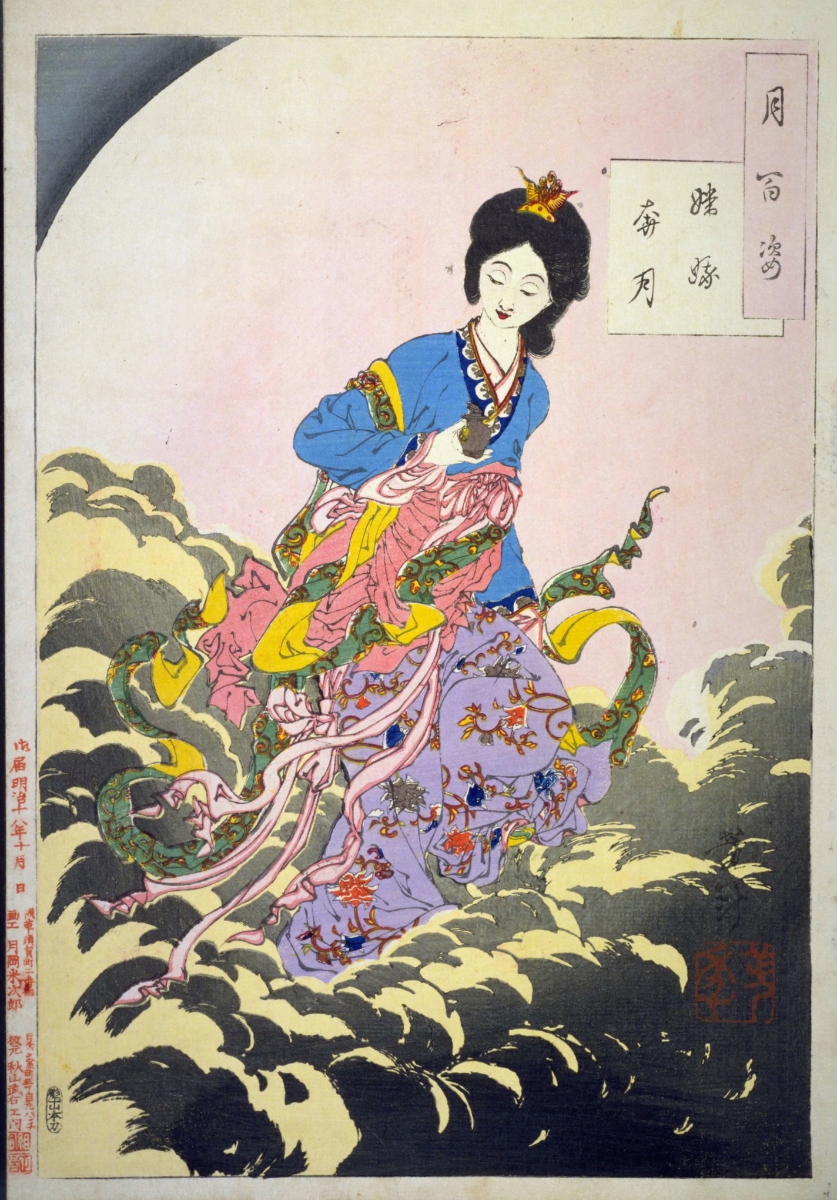
Chang’e (嫦娥), originally known as Heng’e (姮娥), is the goddess of the Moon and wife of Hou Yi, the great archer. Renowned for her beauty, Chang’e is also known for her ascending to the Moon with her pet Yu Tu, the Moon Rabbit and living in the Moon Palace (廣寒宮). She is one of the major goddesses in Chinese mythology, Chinese folk religion, Chinese Buddhism, Confucianism, and Taoism. In modern times, Chang’e is the namesake of the Chinese Lunar Exploration Program.
First Appearance Guicang, a divination text written during the Zhou Dynasty (1046 BC – 256 BC)
First Publisher ○
Appearance List Literature: “Classic of Mountains and Seas” (山海經), poem “Chang’e” (618–907) by Li Shangyin, Journey to the West (西遊記, 1592), Strange Stories from a Chinese Studio (聊齋志異, 1766).
Description Chang’e (嫦娥), originally known as Heng’e (姮娥), is the goddess of the Moon and wife of Hou Yi, the great archer. Renowned for her beauty, Chang’e is also known for her ascending to the Moon with her pet Yu Tu, the Moon Rabbit and living in the Moon Palace (廣寒宮). She is one of the major goddesses in Chinese mythology, Chinese folk religion, Chinese Buddhism, Confucianism, and Taoism. In modern times, Chang’e is the namesake of the Chinese Lunar Exploration Program.