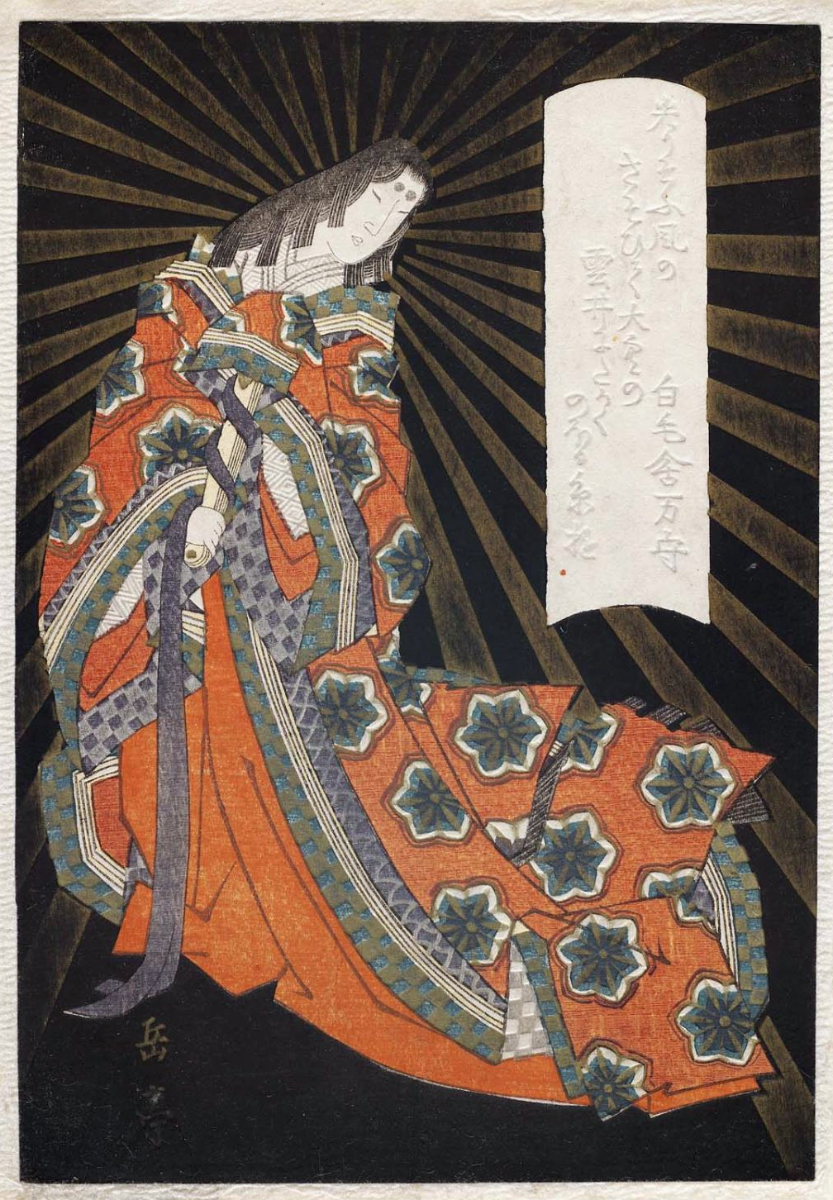
Amaterasu Ōmikami (天照大(御)神), often called Amaterasu for short, also known as Amateru Kami (天照神) and Ōhirume no Muchi (大日孁貴), is the goddess of the sun in Japanese mythology. Often considered the chief deity (kami) of the Shinto pantheon, she is also portrayed in Japan’s earliest literary texts, the Kojiki (c. 712 CE) and the Nihon Shoki (720 CE), as the ruler (or one of the rulers) of the heavenly realm Takamagahara and as the mythical ancestress of the Imperial House of Japan via her grandson Ninigi. Along with two of her siblings (the moon deity Tsukuyomi and the impetuous storm-god Susanoo) she ranks as one of the “Three Precious Children” (三貴子, mihashira no uzu no miko / sankishi), the three most important offspring of the creator god Izanagi. Amaterasu’s chief place of worship, the Grand Shrine of Ise in Ise, Mie Prefecture, is one of Shinto’s holiest sites and a major pilgrimage center and tourist spot. As with other Shinto kami, she is also enshrined in a number of Shinto shrines throughout Japan. Both the Kojiki (c. 712 CE) and the Nihon Shoki (720 CE) agree in their description of Amaterasu as the daughter of the god Izanagi and the elder sister of Tsukuyomi, the deity of the moon, and Susanoo, the god of storms and seas. The circumstances surrounding the birth of these three deities, known as the “Three Precious Children” (三貴子, mihashira no uzu no miko or sankishi), however, vary between sources. In the Kojiki, Amaterasu, Tsukuyomi and Susanoo were born when Izanagi went to “[the plain of] Awagihara by the river-mouth of Tachibana in Himuka in [the island of] Tsukushi” and bathed (misogi) in the river to purify himself after visiting Yomi, the underworld, in a failed attempt to rescue his deceased wife, Izanami. Amaterasu was born when Izanagi washed his left eye, Tsukuyomi was born when he washed his right eye, and Susanoo was born when he washed his nose. Izanagi then appoints Amaterasu to rule Takamagahara (the “Plain of High Heaven”), Tsukuyomi the night, and Susanoo the seas. The main narrative of the Nihon Shoki has Izanagi and Izanami procreating after creating the Japanese archipelago; to them were born (in the following order) Ōhirume-no-Muchi (Amaterasu), Tsukuyomi, the ‘leech-child’ Hiruko, and Susanoo…
Appearance List Kojiki (古事記, “Records of Ancient Matters” or “An Account of Ancient Matters”, 711–712), Nihon Shoki (日本書紀) or Nihongi (日本紀), sometimes translated as The Chronicles of Japan (720), etc.
Sample Read Nihon shoki (The Chronicles of Japan) [Internet Archive]
Description Amaterasu Ōmikami (天照大(御)神), often called Amaterasu for short, also known as Amateru Kami (天照神) and Ōhirume no Muchi (大日孁貴), is the goddess of the sun in Japanese mythology. Often considered the chief deity (kami) of the Shinto pantheon, she is also portrayed in Japan’s earliest literary texts, the Kojiki (c. 712 CE) and the Nihon Shoki (720 CE), as the ruler (or one of the rulers) of the heavenly realm Takamagahara and as the mythical ancestress of the Imperial House of Japan via her grandson Ninigi. Along with two of her siblings (the moon deity Tsukuyomi and the impetuous storm-god Susanoo) she ranks as one of the “Three Precious Children” (三貴子, mihashira no uzu no miko / sankishi), the three most important offspring of the creator god Izanagi. Amaterasu’s chief place of worship, the Grand Shrine of Ise in Ise, Mie Prefecture, is one of Shinto’s holiest sites and a major pilgrimage center and tourist spot. As with other Shinto kami, she is also enshrined in a number of Shinto shrines throughout Japan. Both the Kojiki (c. 712 CE) and the Nihon Shoki (720 CE) agree in their description of Amaterasu as the daughter of the god Izanagi and the elder sister of Tsukuyomi, the deity of the moon, and Susanoo, the god of storms and seas. The circumstances surrounding the birth of these three deities, known as the “Three Precious Children” (三貴子, mihashira no uzu no miko or sankishi), however, vary between sources. In the Kojiki, Amaterasu, Tsukuyomi and Susanoo were born when Izanagi went to “[the plain of] Awagihara by the river-mouth of Tachibana in Himuka in [the island of] Tsukushi” and bathed (misogi) in the river to purify himself after visiting Yomi, the underworld, in a failed attempt to rescue his deceased wife, Izanami. Amaterasu was born when Izanagi washed his left eye, Tsukuyomi was born when he washed his right eye, and Susanoo was born when he washed his nose. Izanagi then appoints Amaterasu to rule Takamagahara (the “Plain of High Heaven”), Tsukuyomi the night, and Susanoo the seas. The main narrative of the Nihon Shoki has Izanagi and Izanami procreating after creating the Japanese archipelago; to them were born (in the following order) Ōhirume-no-Muchi (Amaterasu), Tsukuyomi, the ‘leech-child’ Hiruko, and Susanoo…