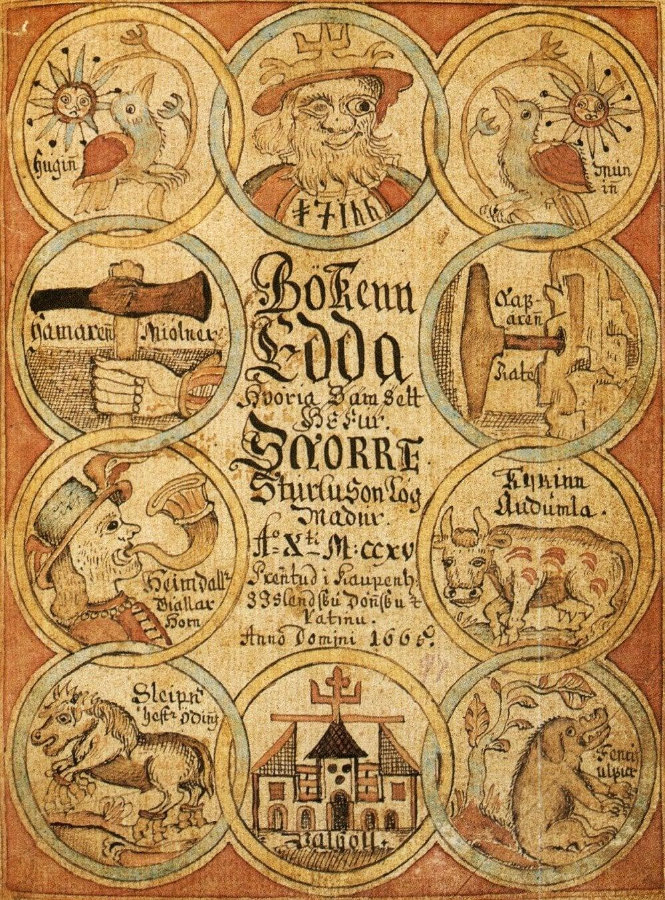
Æsir or ēse are gods in Germanic paganism. In Old Nordic religion and mythology, the precise meaning of the term Æsir is debated, as it can refer either to the gods in general or specifically to one of the main families of gods, in contrast to the Vanir, with whom the Æsir waged war, ultimately leading to a joining of the families. The term can further be applied to local gods that were believed to live in specific features in the landscape – such as fells. The Old English medical text Wið færstice refers to the Ēse, along with elves, as harmful beings that could cause a stabbing pain, although exactly how they were conceived of by the author of the text is unclear… Snorri Sturluson’s Prose Edda contains two lists of Æsir, one in Gylfaginning and one in the þulur. Though these sources largely agree, they are not identical. Gylfaginning lists the male Æsir as Odin, Thor, Njörðr, Freyr, Týr, Heimdallr, Bragi, Víðarr, Váli, Ullr, Forseti and Loki and the ásynjur as Frigg, Sága, Eir, Gefjon, Fulla, Freyja, Sjöfn, Lofn, Vár, Vör, Syn, Hlín, Snotra, Gná, Sól, Bil. The þulur add to this the ásynjur Skaði, Sigyn, Hnoss, Gerðr, Jörð, Iðunn, Ilmr, Njörun, Nanna, Rindr, Þrúðr, Rán.
Appearance List Literary: Prose Edda (c. 1220 CE) by Snorri Sturluson; Poetic Edda (c. 1270 CE); Northern Mythology (1851–1852) by Benjamin Thorpe [Internet Archive]; Asgard Stories: Tales from Norse Mythology (1901) by Mary H. Foster and Mabel H. Cummings [Internet Archive]; In the Days of Giants: A Book of Norse Tales by Abbie Farwell Brown (1902) [Internet Archive]; The Elder or Poetic Edda (1908) [Internet Archive]; The Heroes of Asgard: Tales from Scandinavian Mythology by Keary and Keary (1909) [Internet Archive]; Teutonic Myths and Legends (1912) by Donald A. Mackenzie [Internet Archive]; The Children of Odin (1920) by Padraic Colum [Internet Archive].
Sample Read The Children Of Odin by Padraic Colum, with illustrations by Willy Pogany (1920) [Internet Archive]
Description Æsir or ēse are gods in Germanic paganism. In Old Nordic religion and mythology, the precise meaning of the term Æsir is debated, as it can refer either to the gods in general or specifically to one of the main families of gods, in contrast to the Vanir, with whom the Æsir waged war, ultimately leading to a joining of the families. The term can further be applied to local gods that were believed to live in specific features in the landscape – such as fells. The Old English medical text Wið færstice refers to the Ēse, along with elves, as harmful beings that could cause a stabbing pain, although exactly how they were conceived of by the author of the text is unclear… Snorri Sturluson’s Prose Edda contains two lists of Æsir, one in Gylfaginning and one in the þulur. Though these sources largely agree, they are not identical. Gylfaginning lists the male Æsir as Odin, Thor, Njörðr, Freyr, Týr, Heimdallr, Bragi, Víðarr, Váli, Ullr, Forseti and Loki and the ásynjur as Frigg, Sága, Eir, Gefjon, Fulla, Freyja, Sjöfn, Lofn, Vár, Vör, Syn, Hlín, Snotra, Gná, Sól, Bil. The þulur add to this the ásynjur Skaði, Sigyn, Hnoss, Gerðr, Jörð, Iðunn, Ilmr, Njörun, Nanna, Rindr, Þrúðr, Rán.
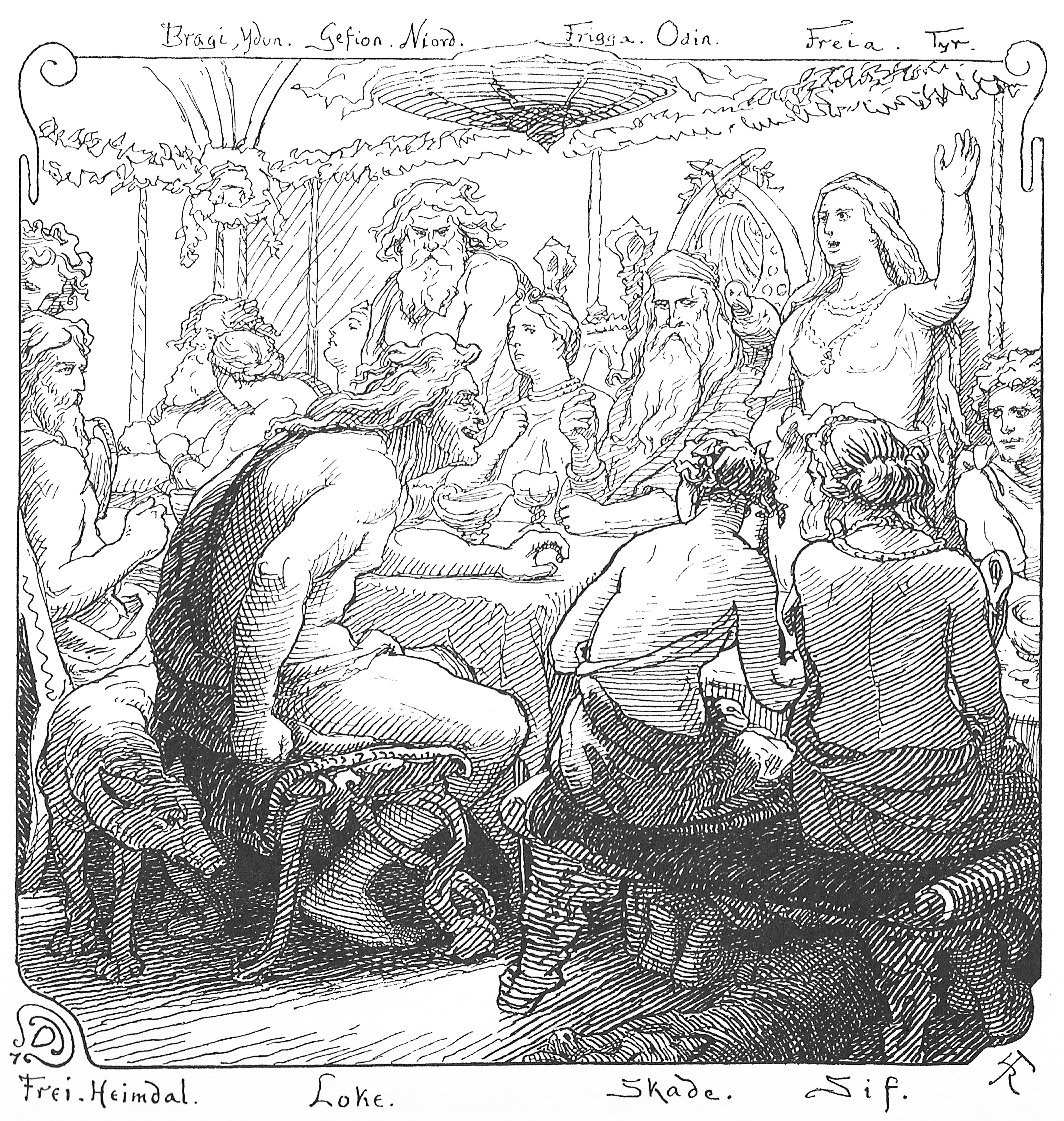

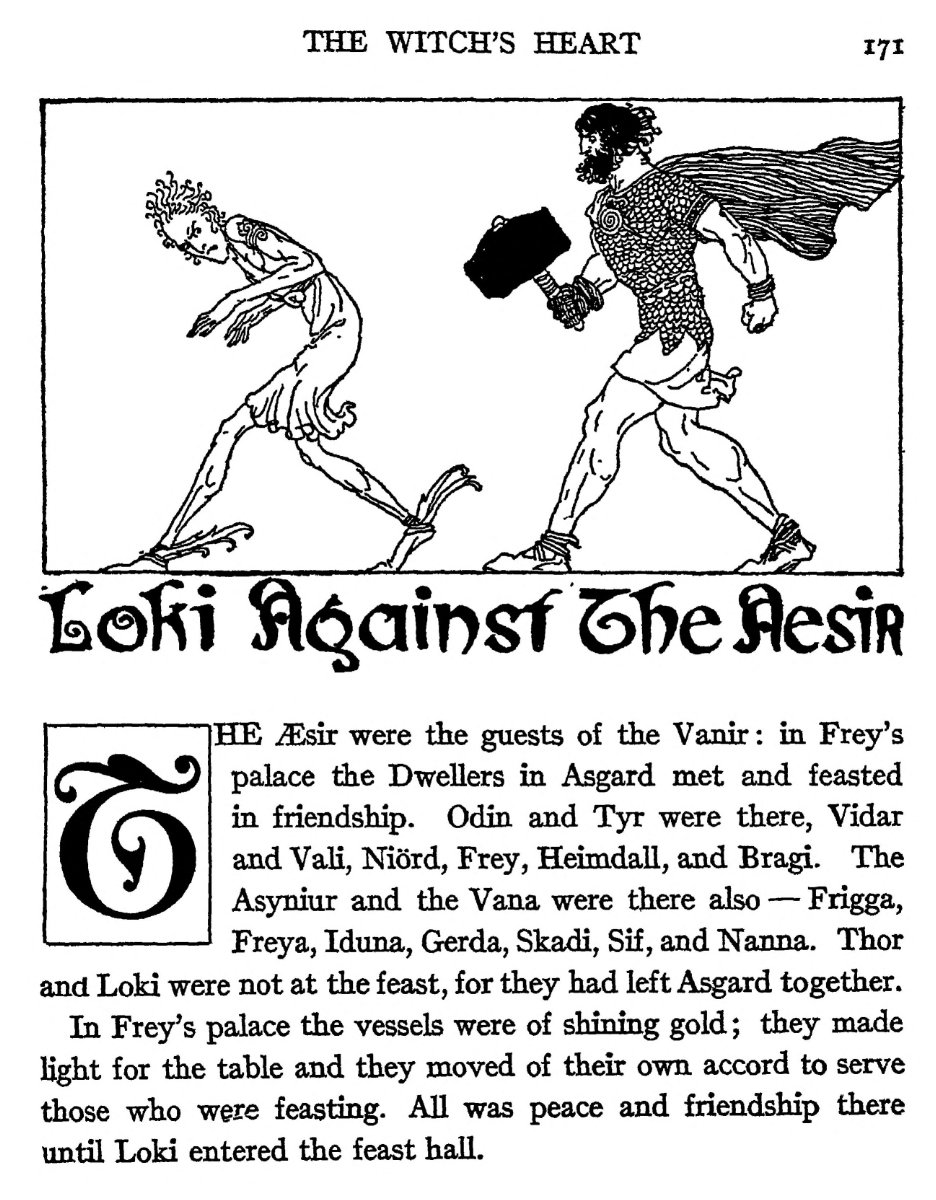 ,
, 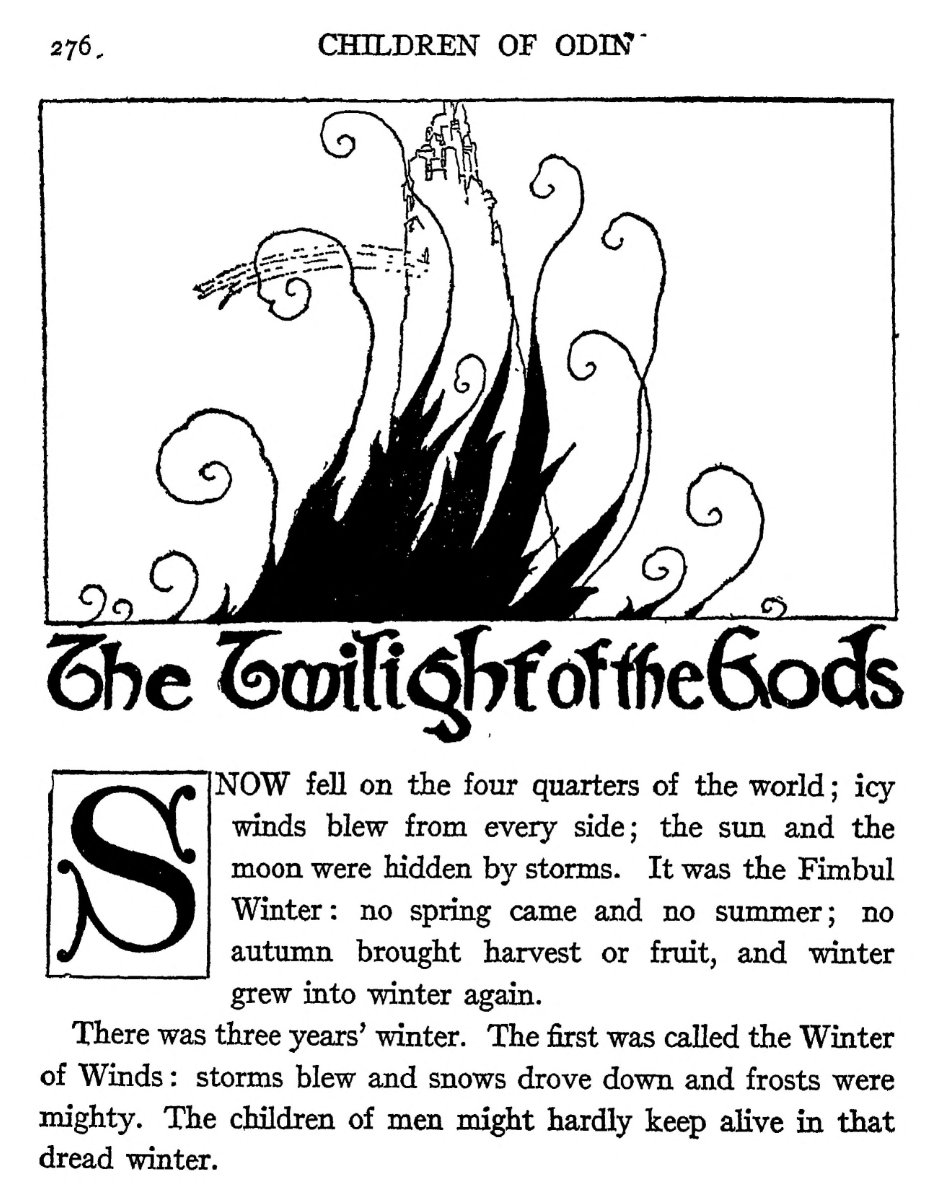 ,
,  ,
,