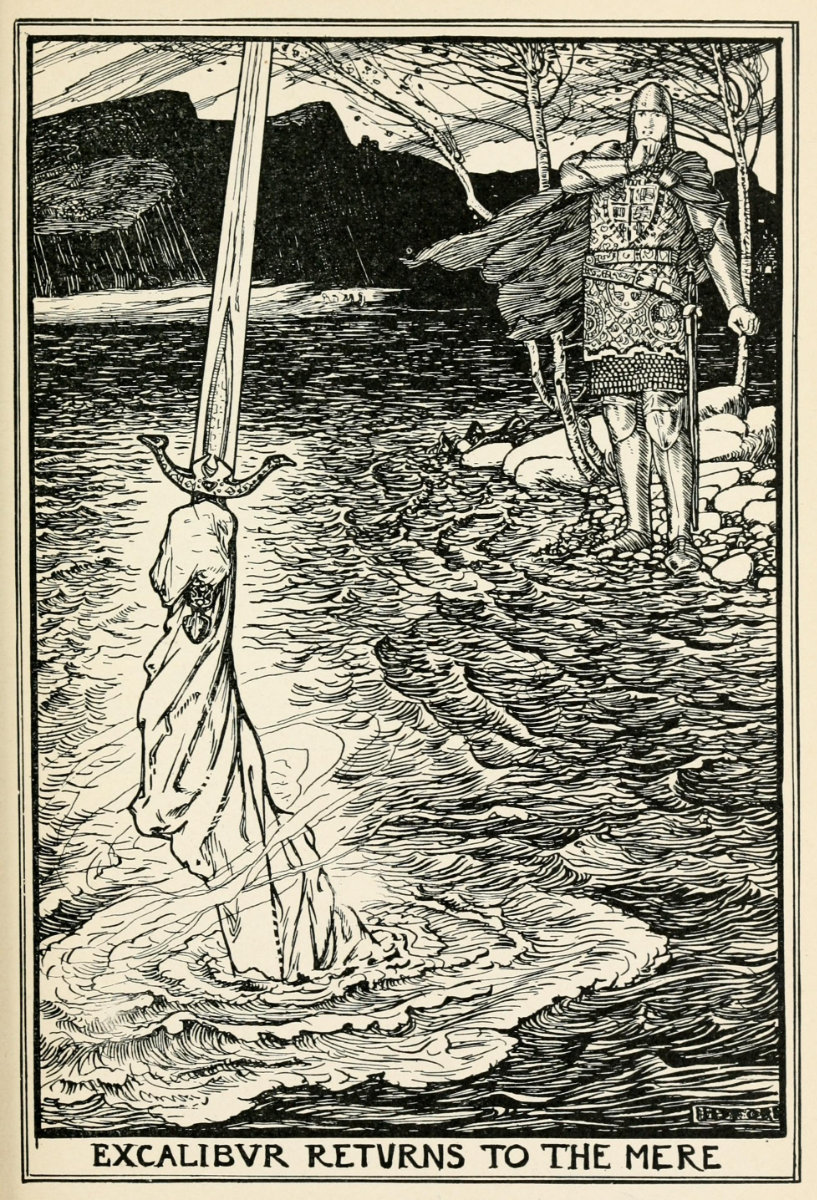
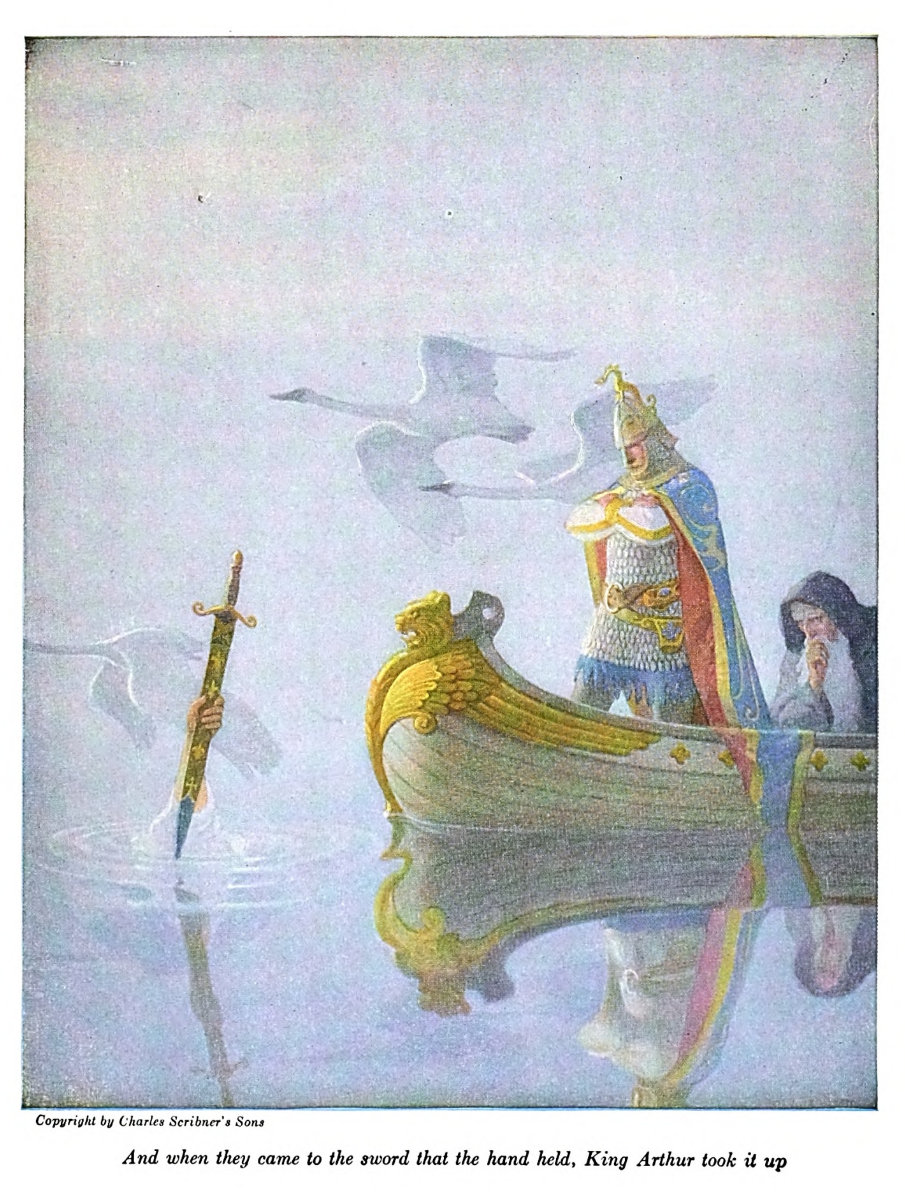
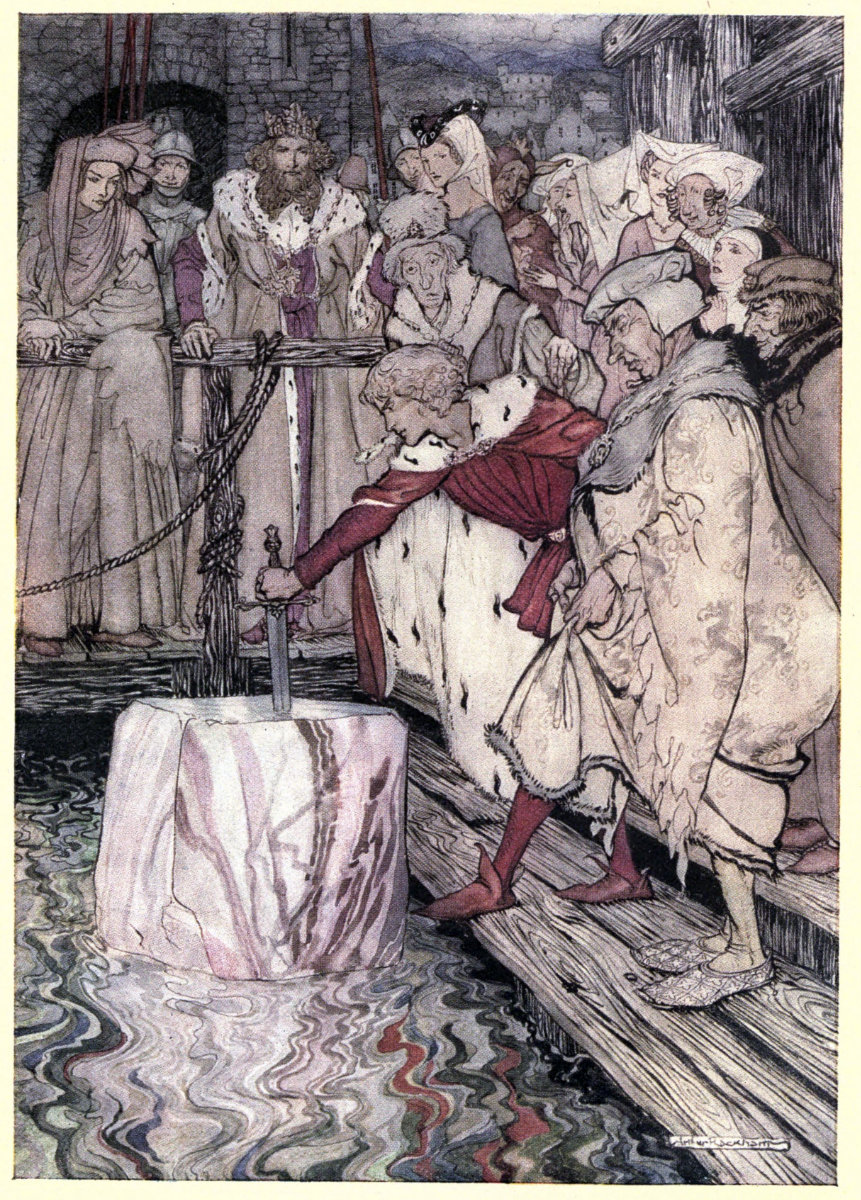
Excalibur is the mythical sword of King Arthur that may possess magical powers or be associated with the rightful sovereignty of Britain. Its first reliably datable appearance is found in Geoffrey of Monmouth’s Historia Regum Britanniae. Excalibur as the “sword in the stone” functioning as the proof of Arthur’s lineage is an iconic motif featured throughout most works dealing with Arthur’s youth since its introduction in Robert de Boron’s Merlin. The sword given to the young Arthur by the Lady of the Lake in the tradition that began soon afterwards with the Post-Vulgate Cycle is not the same weapon, but in Thomas Malory’s Le Morte d’Arthur both of them share the name of Excalibur. Several similar swords and other weapons also appear within Arthurian texts, as well as in other legends.
Appearance List Annales Cambriae (10th century); Historia Regum Britanniae (1136); Merlin by Robert de Boron (late 12th–early 13th c.); The Vulgate Lancelot (13th c.); Le Morte d’Arthur (1485) by Thomas Malory; Ballads of Bravery (1877); The Boy’s King Arthur: Sir Thomas Malory’s History of King Arthur and His Knights of the Round Table by Sidney Lanier (Charles Scribner’s Sons, 1880); The Story of King Arthur and His Knights (1903) by Howard Pyle [Internet Archive]; The Story of the Champions of the Round Table (1905, 1911) by Howard Pyle [Internet Archive]; The Story of Sir Launcelot and His Companions (1907) by Howard Pyle [Internet Archive]; The Story of the Grail and the Passing of King Arthur (1910) by Howard Pyle [Internet Archive]; Tales of the Round Table (1908) by Andrew Lang [Internet Archive]; Myths and Legends of the Celtic Race (1910) by T. W. Rolleston [Internet Archive]; The Legends of King Arthur and His Knights (1912) [Internet Archive]; Idylls of the King (1859) by Alfred Lord Tennyson – 1913 illustrated edition: [Internet Archive]; Legends and Romances of Brittany (1917) by Lewis Spence. Film: Knights of the Round Table (1926) by Rex Ingram (silent, partially lost); Knights of the Round Table (1953) by Richard Thorpe; Lancelot and Guinevere (1963) by Cornel Wilde; The Sword in the Stone (1963) by Walt Disney Productions; Camelot (1967) by Joshua Logan; Excalibur (1981).
Description Excalibur is the mythical sword of King Arthur that may possess magical powers or be associated with the rightful sovereignty of Britain. Its first reliably datable appearance is found in Geoffrey of Monmouth’s Historia Regum Britanniae. Excalibur as the “sword in the stone” functioning as the proof of Arthur’s lineage is an iconic motif featured throughout most works dealing with Arthur’s youth since its introduction in Robert de Boron’s Merlin. The sword given to the young Arthur by the Lady of the Lake in the tradition that began soon afterwards with the Post-Vulgate Cycle is not the same weapon, but in Thomas Malory’s Le Morte d’Arthur both of them share the name of Excalibur. Several similar swords and other weapons also appear within Arthurian texts, as well as in other legends.
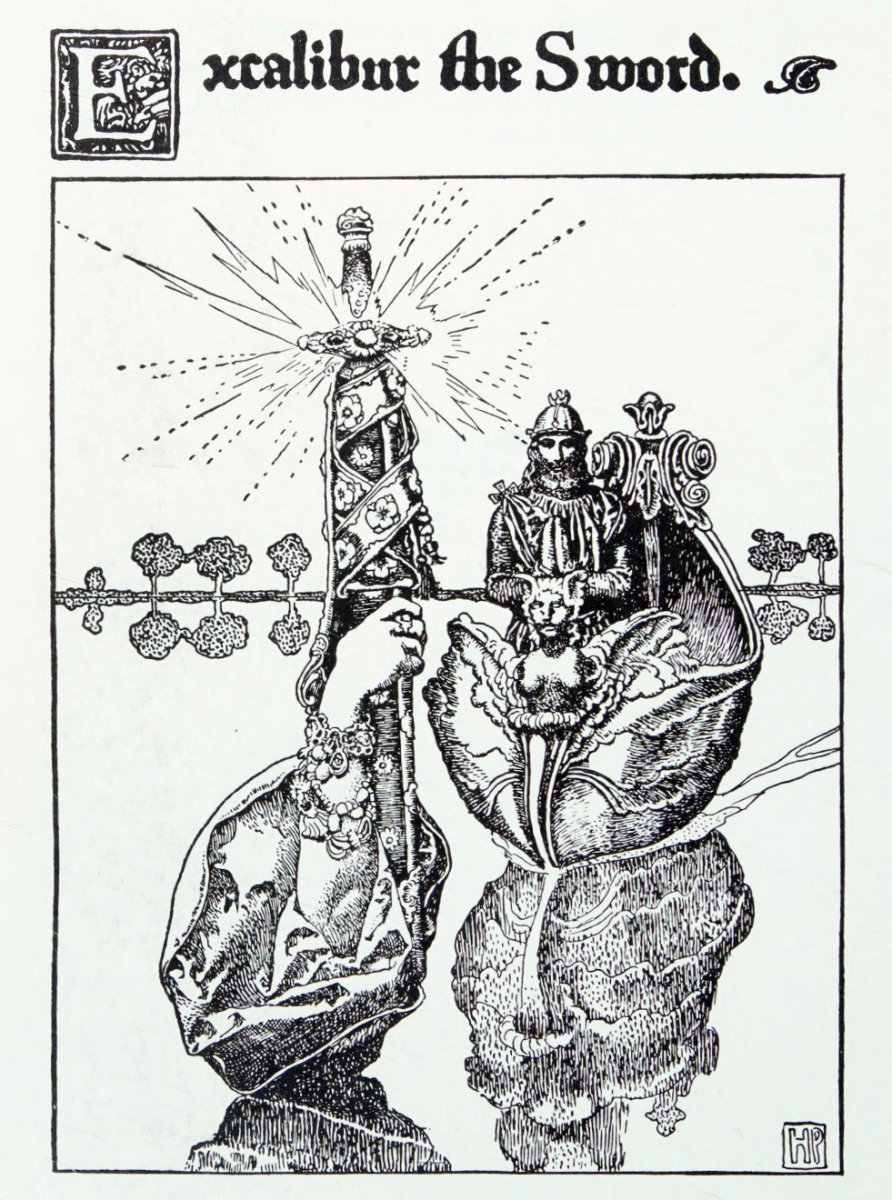

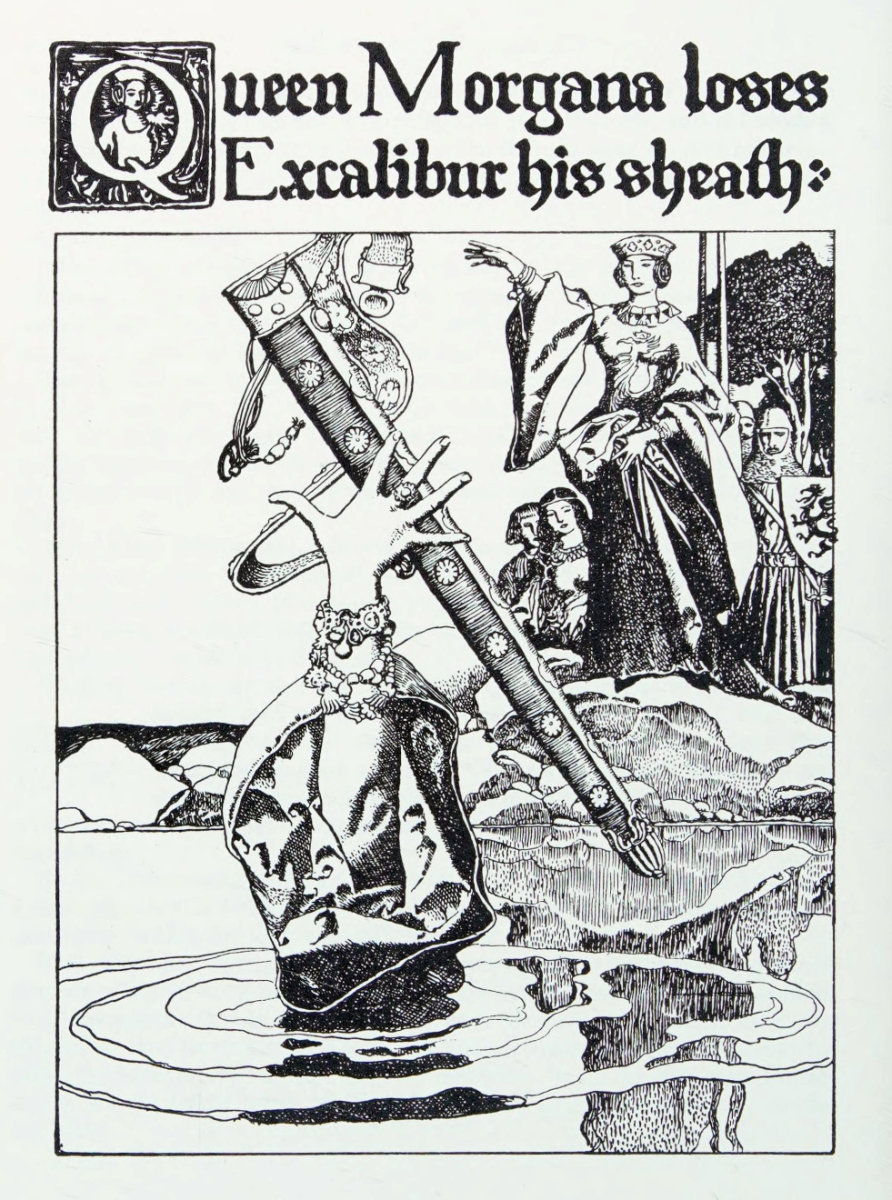 ,
, 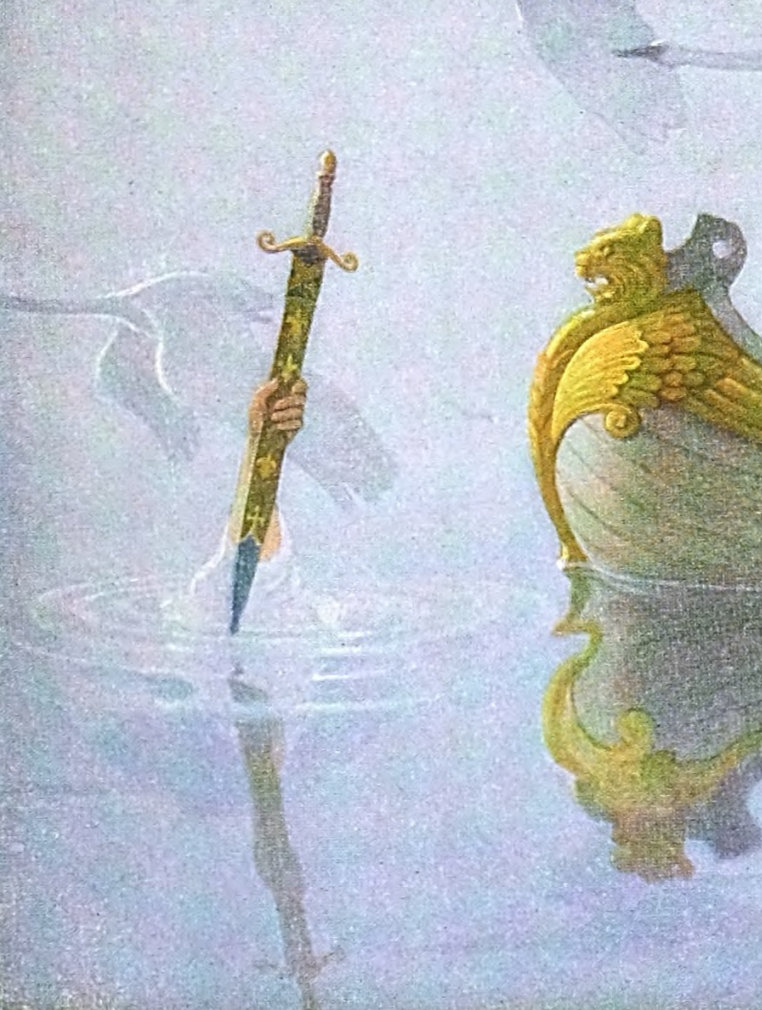 ,
,  ,
,  ,
,  ,
,