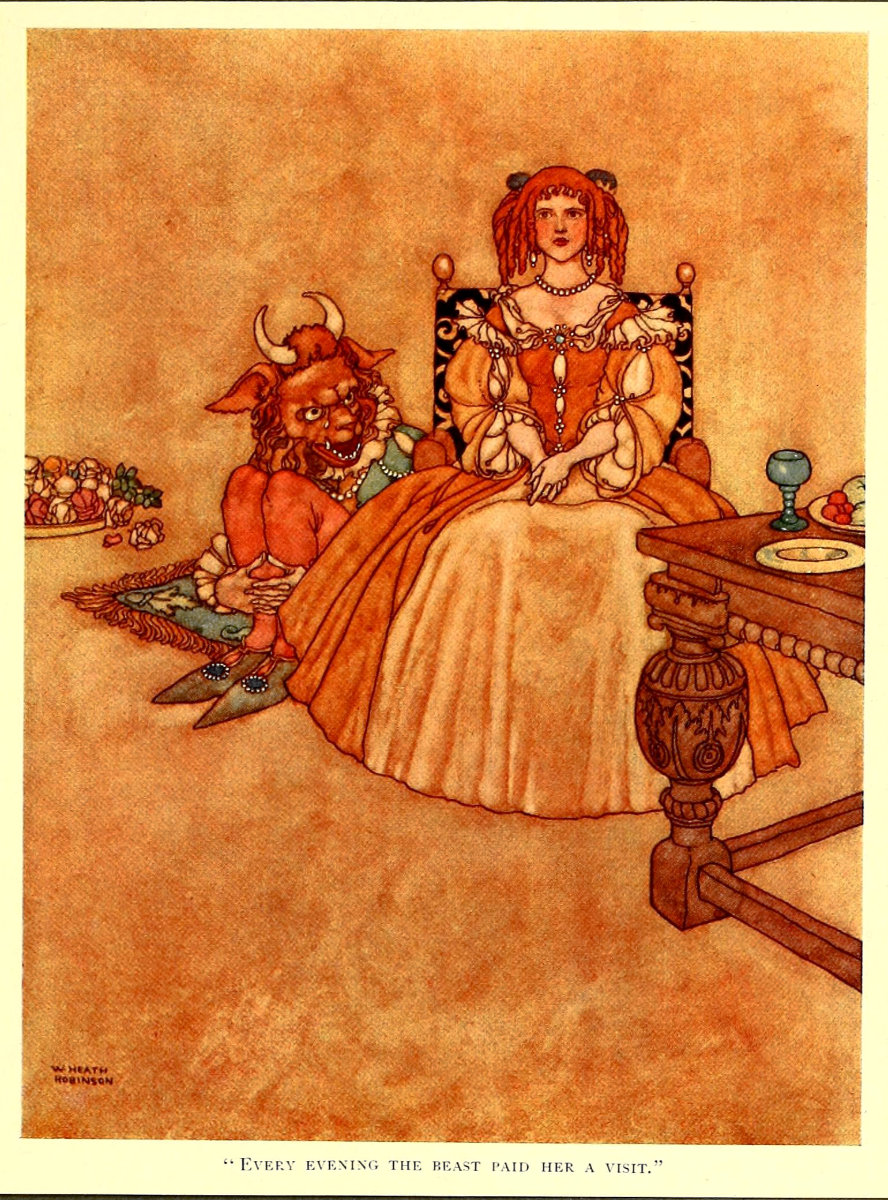
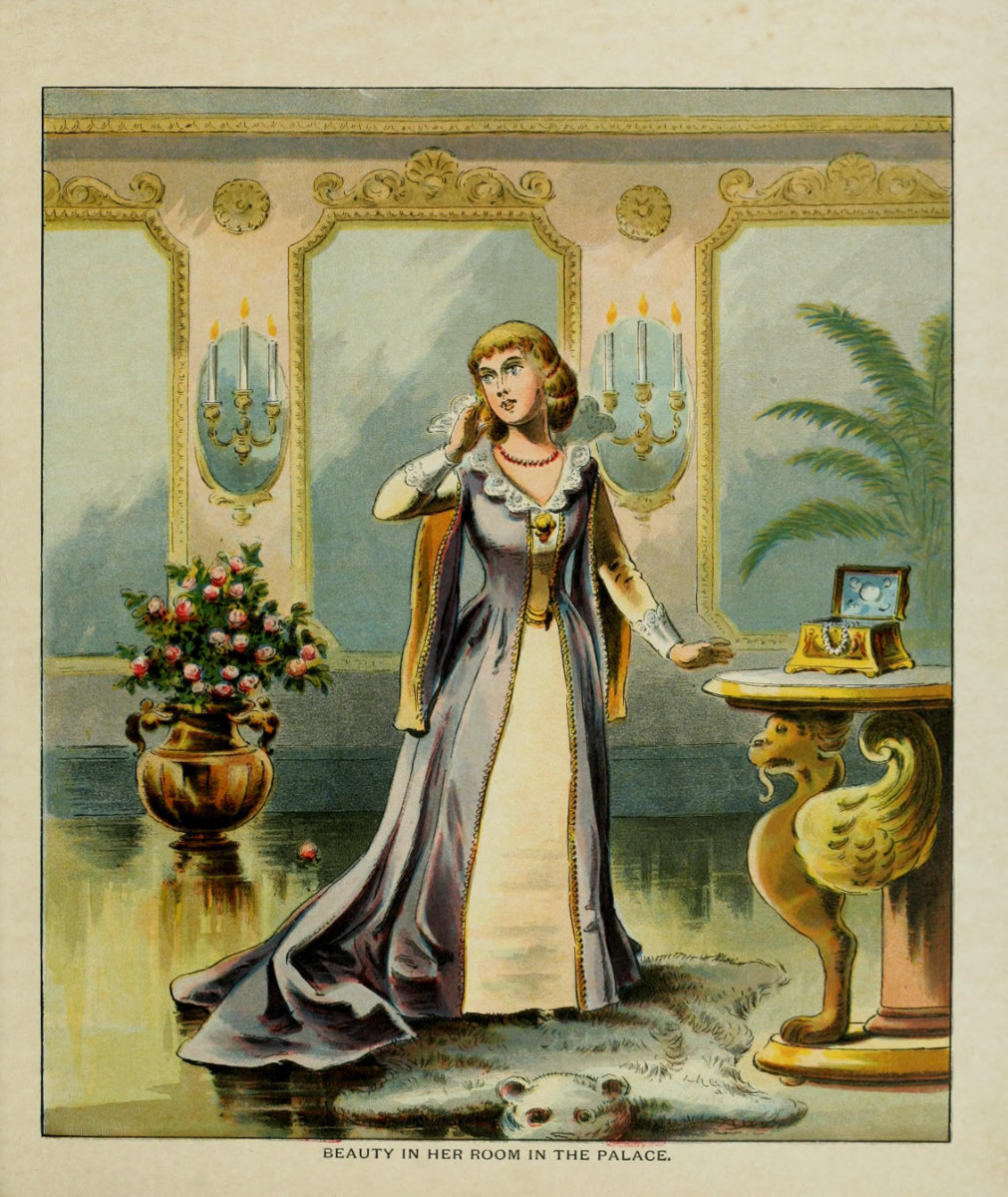
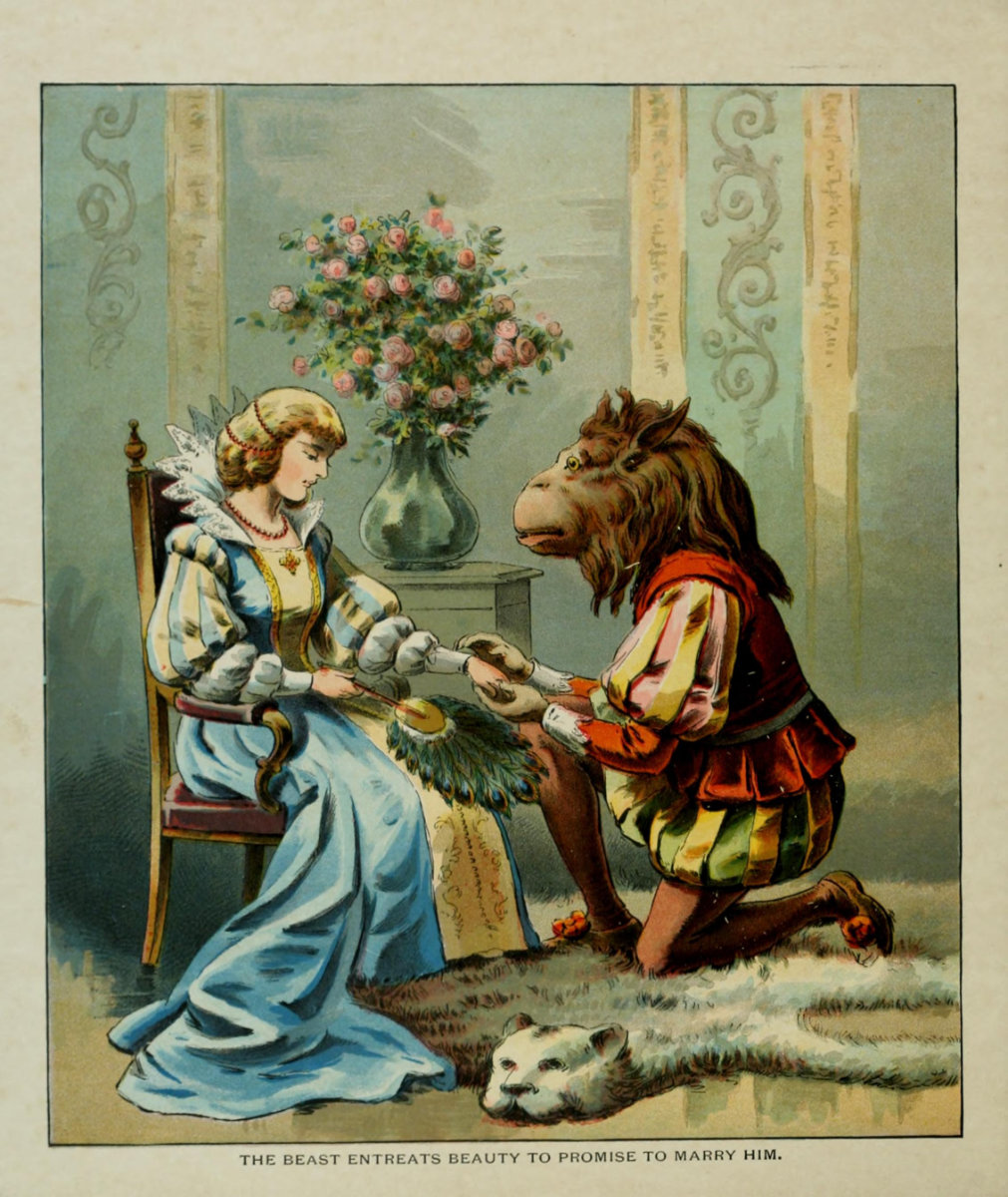
“Beauty and the Beast” is a fairy tale written by the French novelist Gabrielle-Suzanne Barbot de Villeneuve and published anonymously in 1740 in La Jeune Américaine et les contes marins (The Young American and Marine Tales). Villeneuve’s original story was abridged, revised, and published by French novelist Jeanne-Marie Leprince de Beaumont in 1756 in Magasin des enfants (Children’s Collection) which became the most commonly retold version. Later, Andrew Lang retold the story in Blue Fairy Book, a part of the Fairy Book series, in 1889. The fairy-tale was influenced by the story of Petrus Gonsalvus as well as Ancient Latin stories such as “Cupid and Psyche” from The Golden Ass, written by Lucius Apuleius Madaurensis in the second century AD, and “The Pig King”, an Italian fairy-tale published by Giovanni Francesco Straparola in The Facetious Nights of Straparola around 1550… The tale is classified in the Aarne–Thompson–Uther Index as type ATU 425C, “Beauty and the Beast”. It is related to the general type ATU 425, “The Search for the Lost Husband” and subtypes. In a study about the myth of Cupid and Psyche, Danish folklorist Inger Margrethe Boberg argued that “Beauty and the Beast” was “an older form” of the animal husband narrative, and that subtypes 425A, “Animal as Bridegroom”, and 425B, “The Disenchanted Husband: The Witch’s Tasks”, were secondary developments, with motifs incorporated into the narrative…
Alias Beauty
Real Names/Alt Names Belle, Bellindia, Zelinda, Rozina, Nettchen, Basia
First Appearance “La Belle et la Bête” in La Jeune Américaine et les contes marins (1740) by Gabrielle-Suzanne Barbot de Villeneuve
First Publisher ○
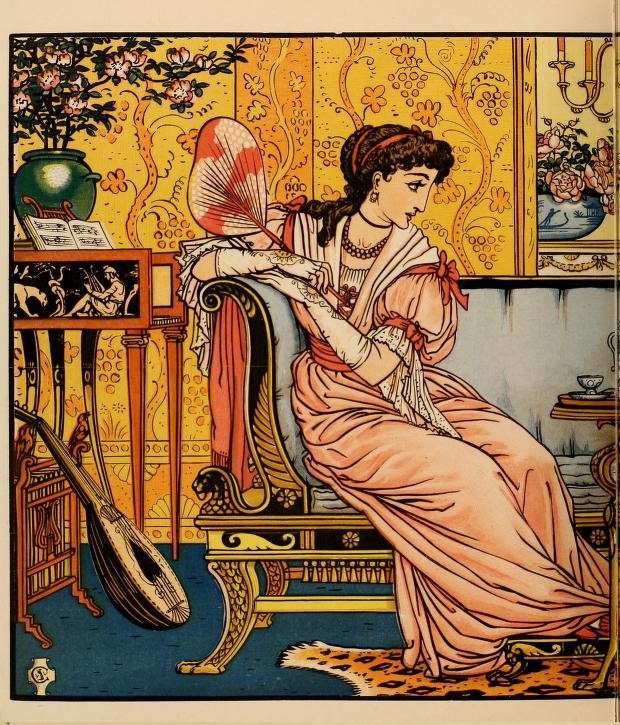
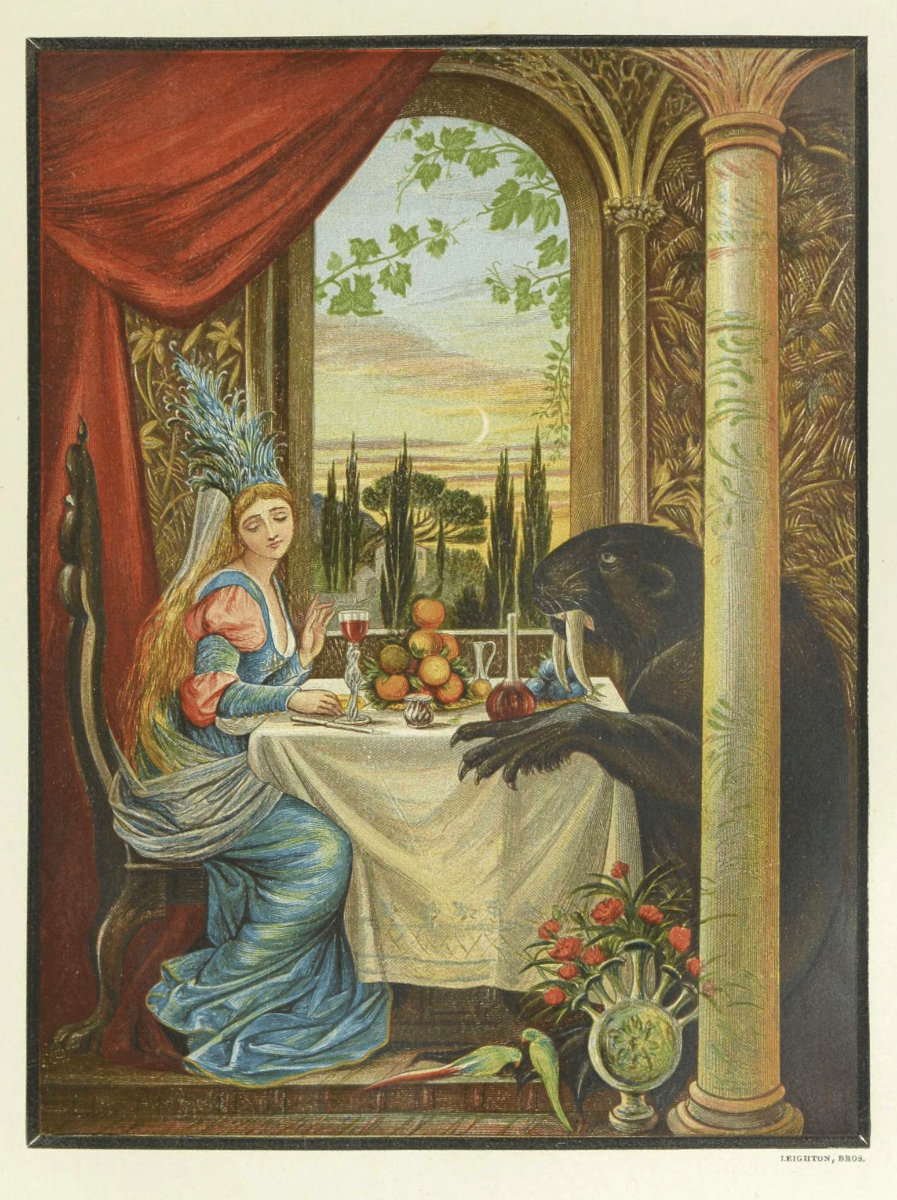
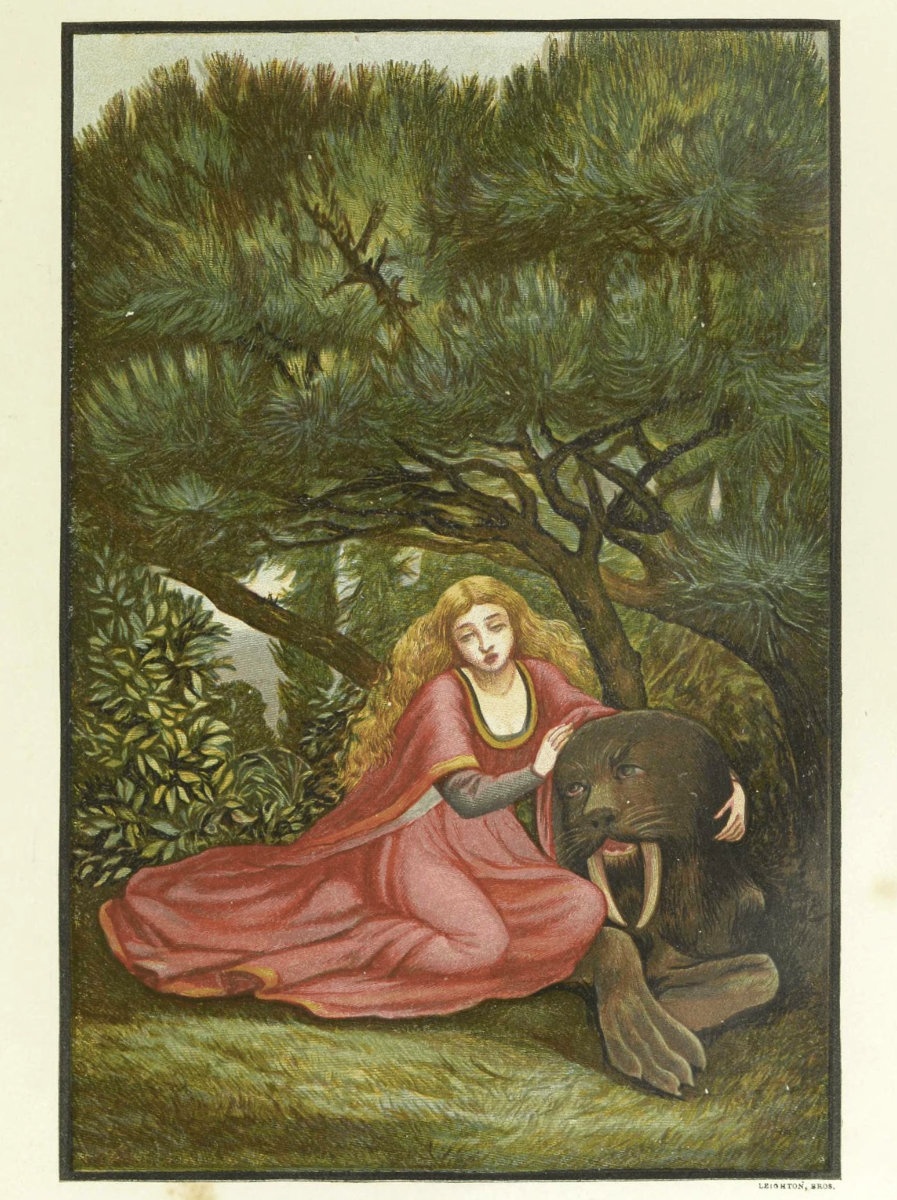
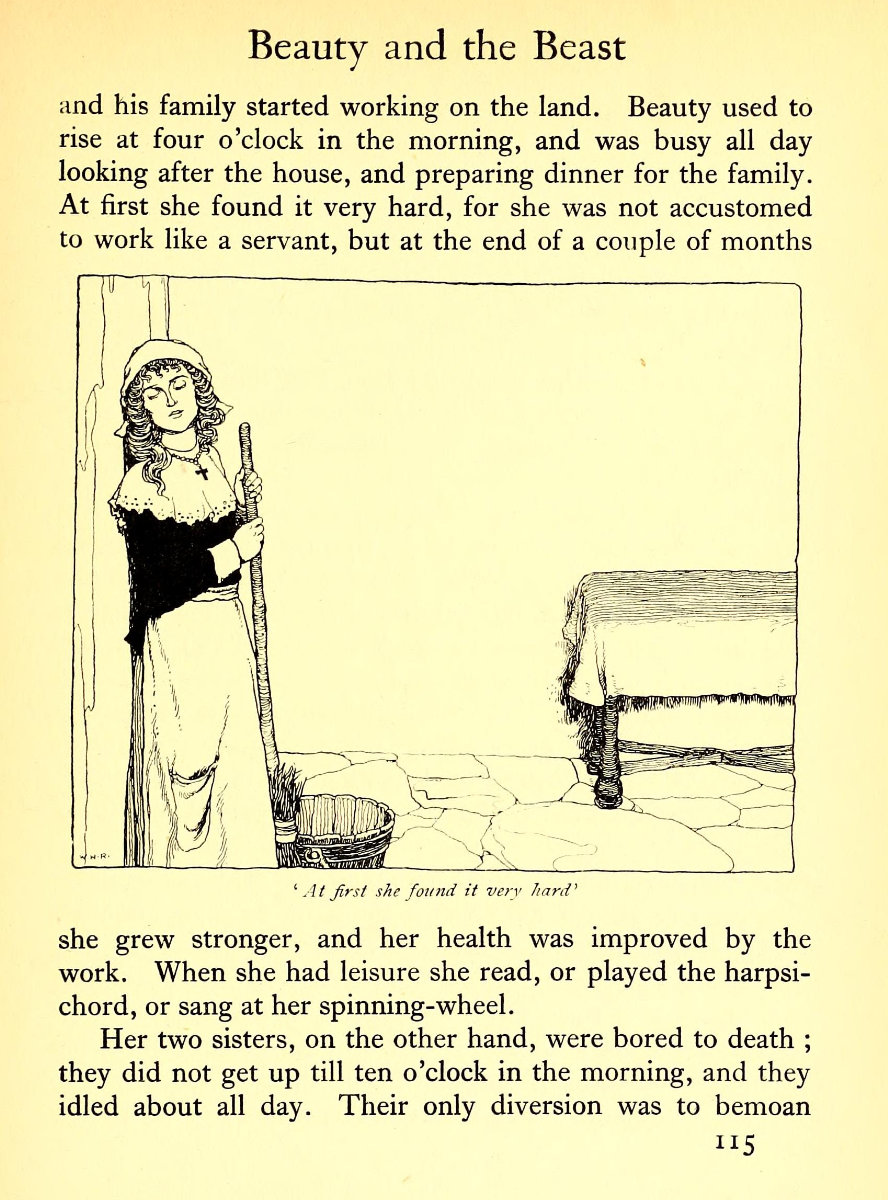
Appearance List “Cupid and Psyche” in The Golden Ass (Metamorphoses, 2nd century CE) by Apuleius — Classical antecedent of the “animal bridegroom” motif; “La Belle et la Bête” in La Jeune Américaine et les contes marins (1740) by Gabrielle-Suzanne Barbot de Villeneuve; “La Belle et la Bête” in Le Magasin des enfants (1757) by Jeanne-Marie Leprince de Beaumont; Beauty and the Beast (1840s–1860s English editions); Beauty and the Beast (1874 ed.), illustrated by Walter Crane; Old-Time Stories Told by Master Charles Perrault (1921), trans. A. E. Johnson, ill. W. Heath Robinson [Internet Archive]. Film: Beauty and the Beast (1909) dir. J. Searle Dawley (Edison); Beauty and the Beast (1946) dir. Jean Cocteau; Beauty and the Beast (1962) dir. Edward L. Cahn.
Sample Read Old-Time Stories Told by Master Charles Perrault (1921) [Internet Archive]
Description “Beauty and the Beast” is a fairy tale written by the French novelist Gabrielle-Suzanne Barbot de Villeneuve and published anonymously in 1740 in La Jeune Américaine et les contes marins (The Young American and Marine Tales). Villeneuve’s original story was abridged, revised, and published by French novelist Jeanne-Marie Leprince de Beaumont in 1756 in Magasin des enfants (Children’s Collection) which became the most commonly retold version. Later, Andrew Lang retold the story in Blue Fairy Book, a part of the Fairy Book series, in 1889. The fairy-tale was influenced by the story of Petrus Gonsalvus as well as Ancient Latin stories such as “Cupid and Psyche” from The Golden Ass, written by Lucius Apuleius Madaurensis in the second century AD, and “The Pig King”, an Italian fairy-tale published by Giovanni Francesco Straparola in The Facetious Nights of Straparola around 1550… The tale is classified in the Aarne–Thompson–Uther Index as type ATU 425C, “Beauty and the Beast”. It is related to the general type ATU 425, “The Search for the Lost Husband” and subtypes. In a study about the myth of Cupid and Psyche, Danish folklorist Inger Margrethe Boberg argued that “Beauty and the Beast” was “an older form” of the animal husband narrative, and that subtypes 425A, “Animal as Bridegroom”, and 425B, “The Disenchanted Husband: The Witch’s Tasks”, were secondary developments, with motifs incorporated into the narrative…

 ,
,  ,
,  ,
,  ,
,  ,
,