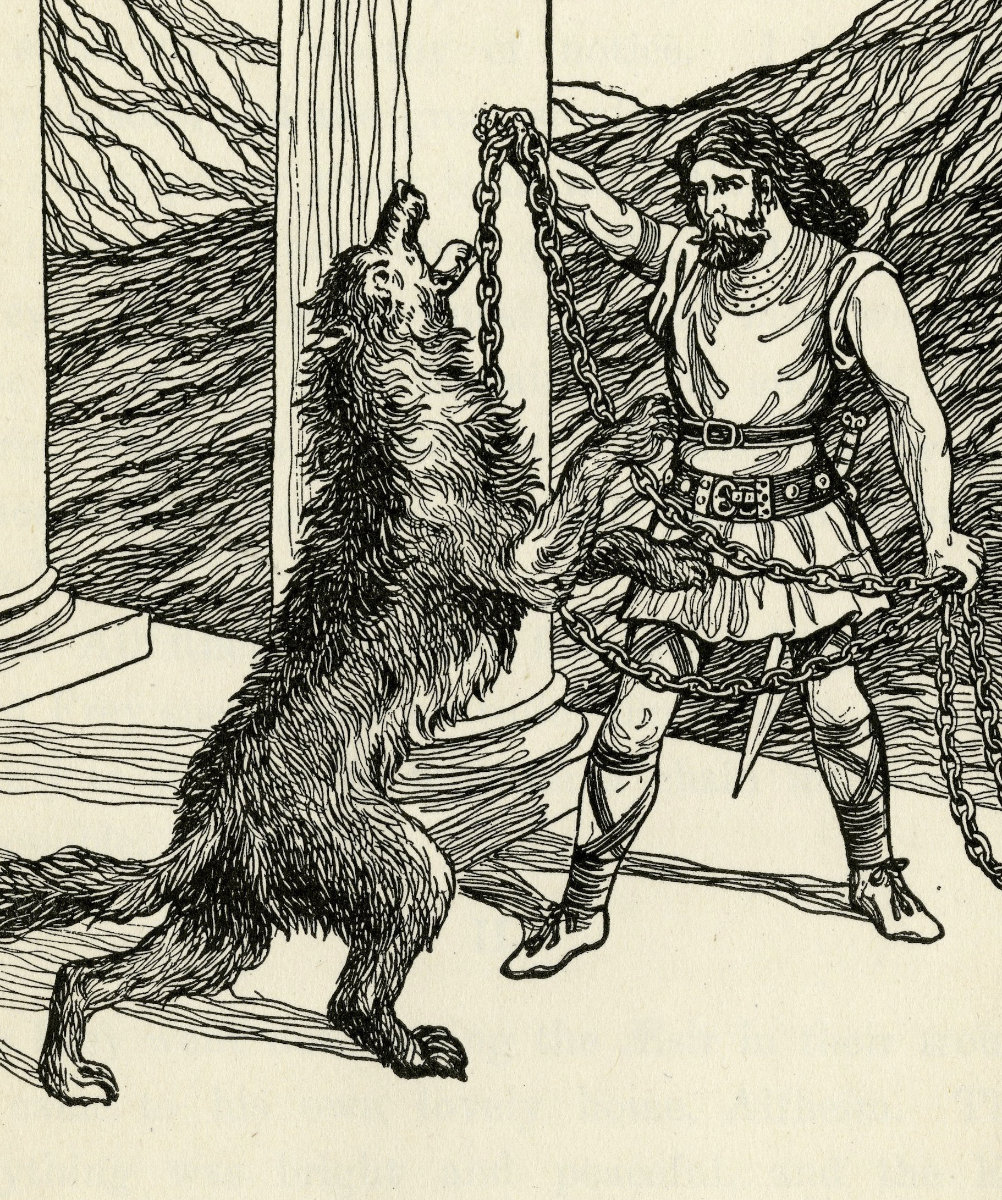
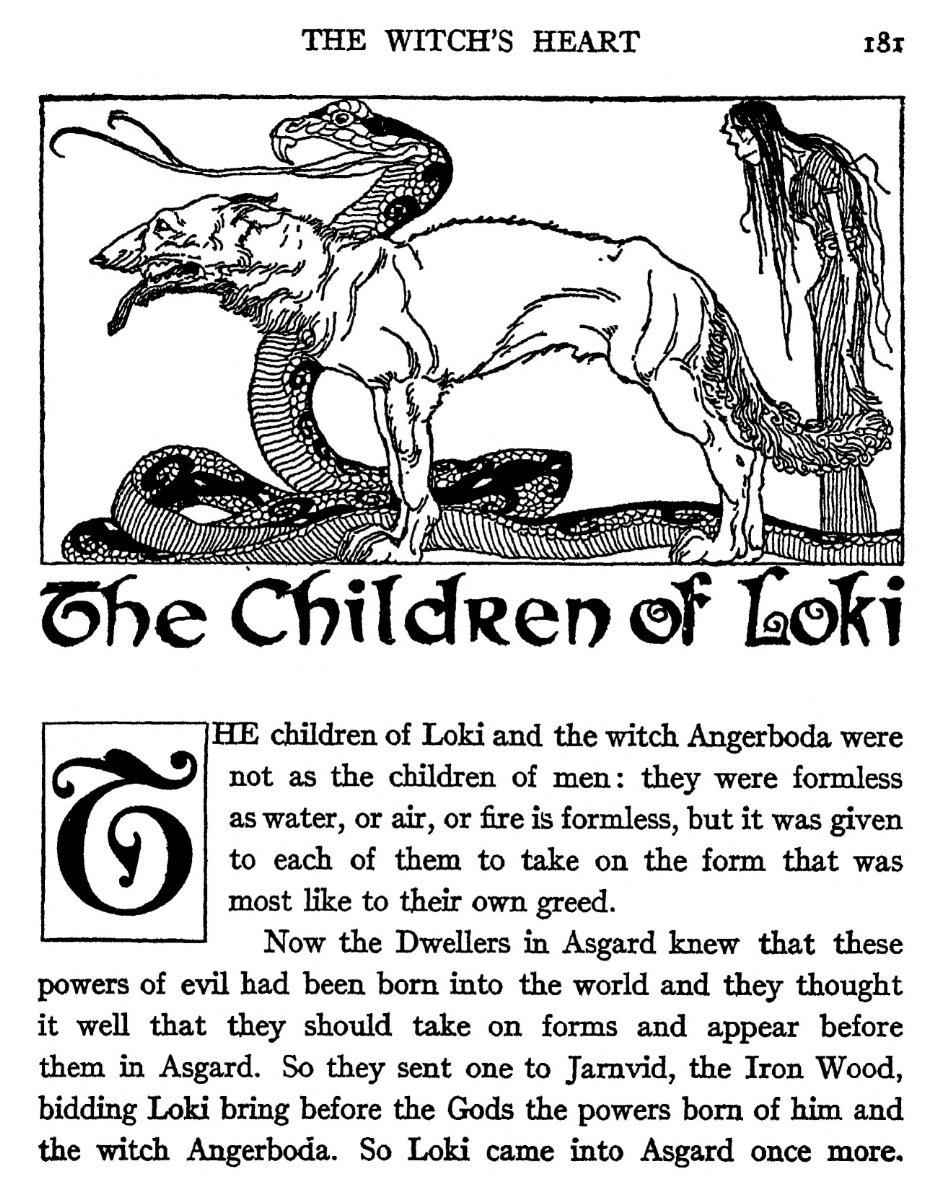
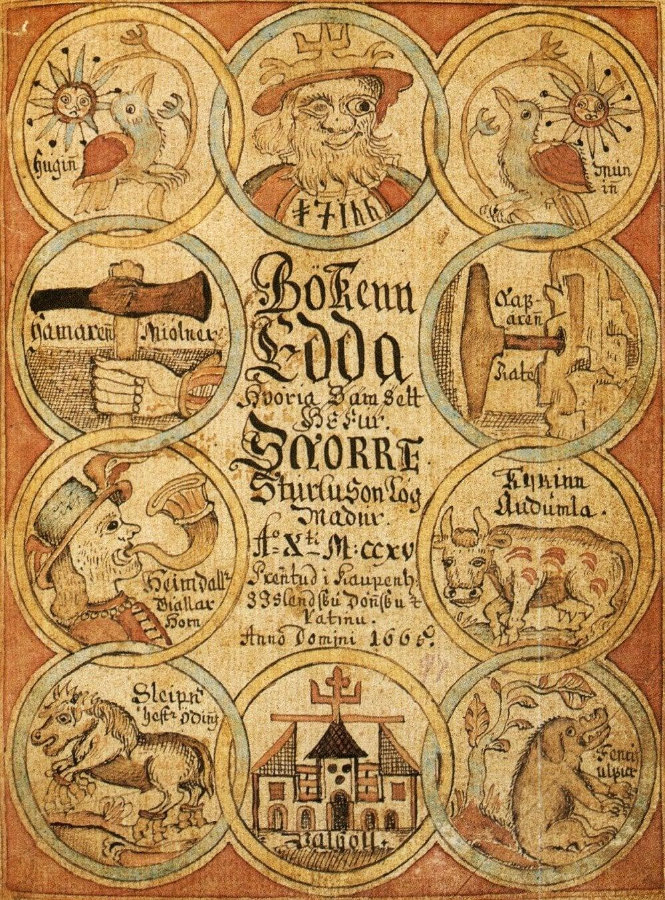
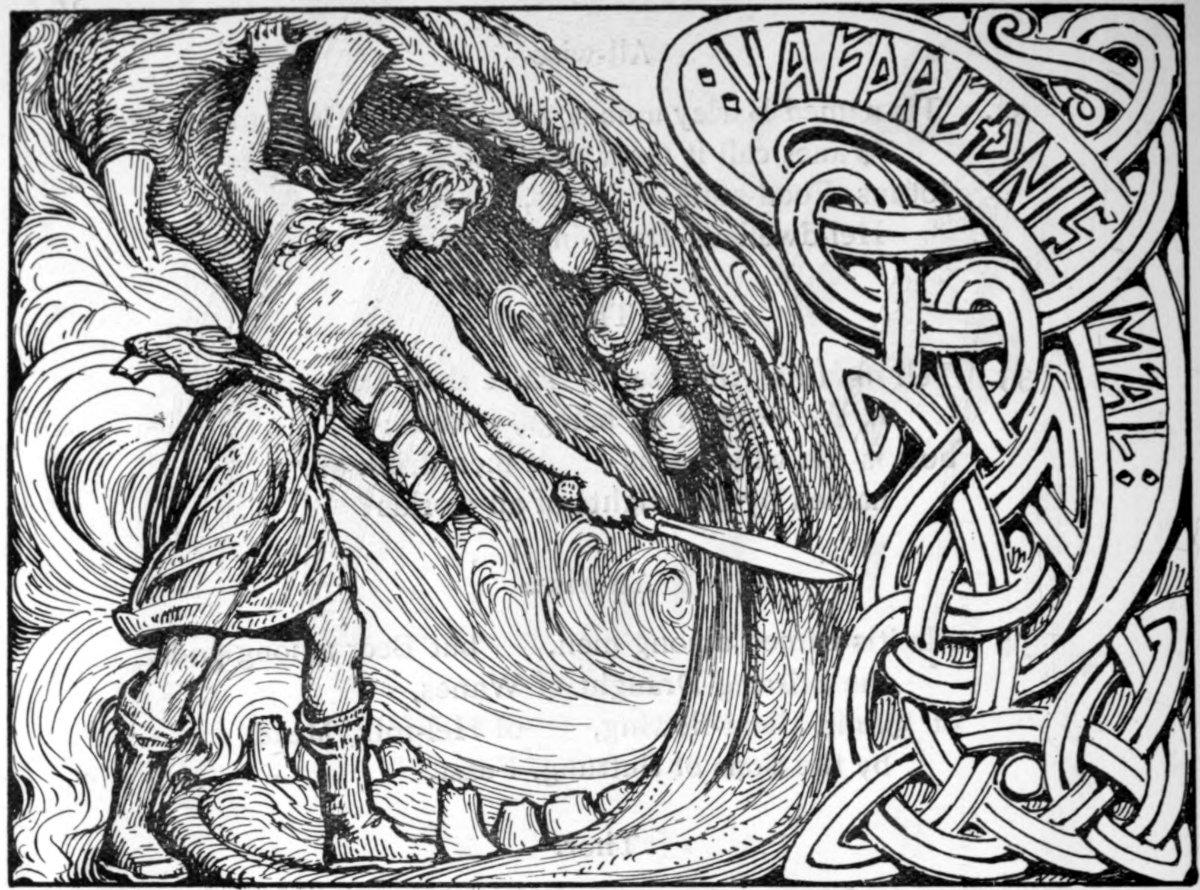
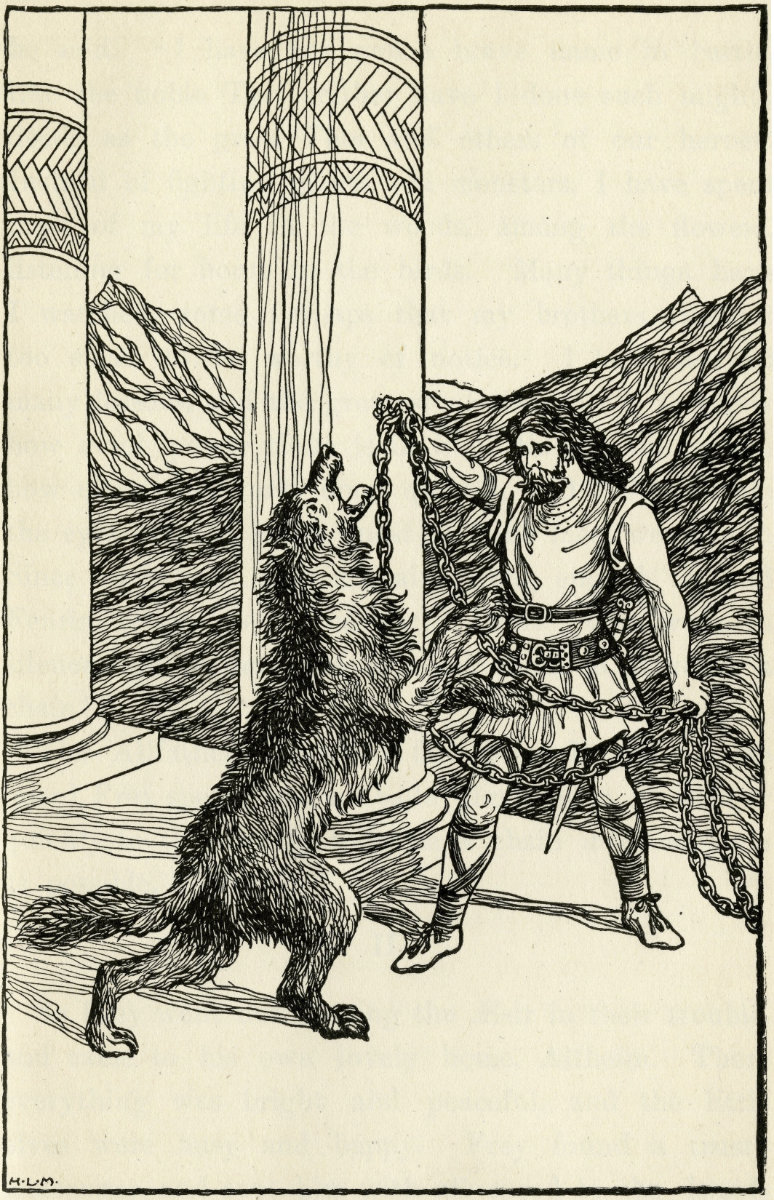
Fenrir is a monstrous wolf in Norse mythology. In Old Norse texts, Fenrir plays a key role during the events of Ragnarök, where he is foretold to assist in setting the world aflame, resulting in the collapse of humanity and society, and killing the god Odin. Fenrir, along with Hel and Jörmungandr, is a child of Loki and female jötunn Angrboða. He is attested in the Poetic Edda, compiled in the 13th century from earlier traditional sources, and the Prose Edda and Heimskringla, composed in the 13th century. In both the Poetic Edda and Prose Edda, Fenrir is the father of the wolves Sköll and Hati Hróðvitnisson, is a son of Loki and is foretold to kill the god Odin during the events of Ragnarök, but will in turn be killed by Odin’s son Víðarr. In the Prose Edda, additional information is given about Fenrir, including that, due to the gods’ knowledge of prophecies foretelling great trouble from Fenrir and his rapid growth, the gods bound him and as a result Fenrir bit off the right hand of the god Týr. Depictions of Fenrir have been identified on various objects and scholarly theories have been proposed regarding Fenrir’s relation to other canine beings in Norse mythology. Fenrir has been the subject of artistic depictions and he appears in literature.
Alias Fenrir
Real Names/Alt Names Fen-dweller, Fenrisúlfr, Fenrir’s wolf, Fenris-wolf, Hróðvitnir, fame-wolf, Vánagandr, monster of the [River] Ván
Appearance List Literary: Prose Edda (c. 1220 CE) by Snorri Sturluson; Poetic Edda (c. 1270 CE); Northern Mythology (1851–1852) by Benjamin Thorpe [Internet Archive]; Asgard Stories: Tales from Norse Mythology (1901) by Mary H. Foster and Mabel H. Cummings [Internet Archive]; In the Days of Giants: A Book of Norse Tales by Abbie Farwell Brown (1902) [Internet Archive]; The Elder or Poetic Edda (1908) [Internet Archive]; The Heroes of Asgard: Tales from Scandinavian Mythology by Keary and Keary (1909) [Internet Archive]; Teutonic Myths and Legends (1912) by Donald A. Mackenzie [Internet Archive]; The Children of Odin (1920) by Padraic Colum [Internet Archive].
Sample Read The Heroes of Asgard: Tales from Scandinavian Mythology [Internet Archive]
Description Fenrir is a monstrous wolf in Norse mythology. In Old Norse texts, Fenrir plays a key role during the events of Ragnarök, where he is foretold to assist in setting the world aflame, resulting in the collapse of humanity and society, and killing the god Odin. Fenrir, along with Hel and Jörmungandr, is a child of Loki and female jötunn Angrboða. He is attested in the Poetic Edda, compiled in the 13th century from earlier traditional sources, and the Prose Edda and Heimskringla, composed in the 13th century. In both the Poetic Edda and Prose Edda, Fenrir is the father of the wolves Sköll and Hati Hróðvitnisson, is a son of Loki and is foretold to kill the god Odin during the events of Ragnarök, but will in turn be killed by Odin’s son Víðarr. In the Prose Edda, additional information is given about Fenrir, including that, due to the gods’ knowledge of prophecies foretelling great trouble from Fenrir and his rapid growth, the gods bound him and as a result Fenrir bit off the right hand of the god Týr. Depictions of Fenrir have been identified on various objects and scholarly theories have been proposed regarding Fenrir’s relation to other canine beings in Norse mythology. Fenrir has been the subject of artistic depictions and he appears in literature.

 ,
,  ,
,  ,
,