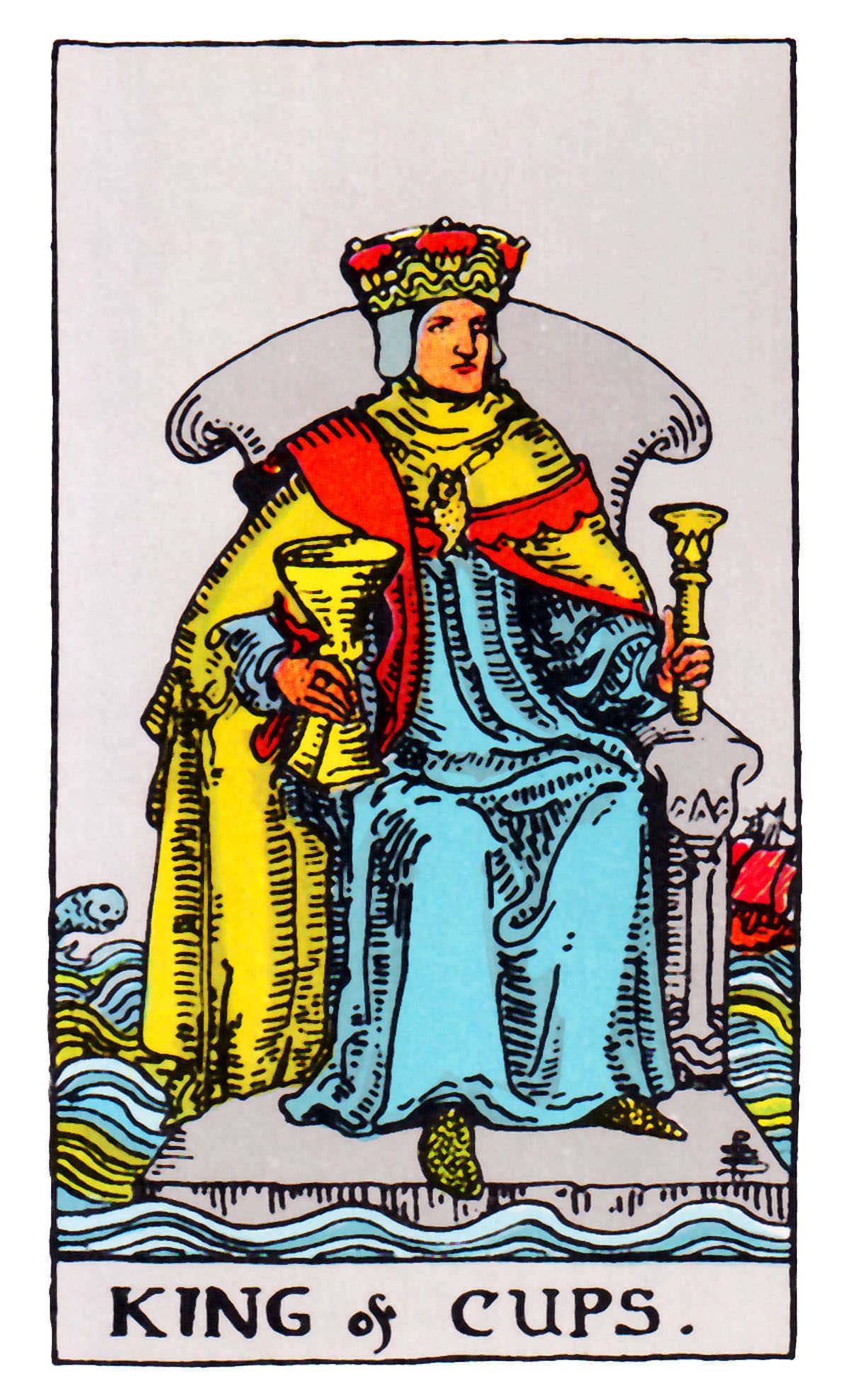
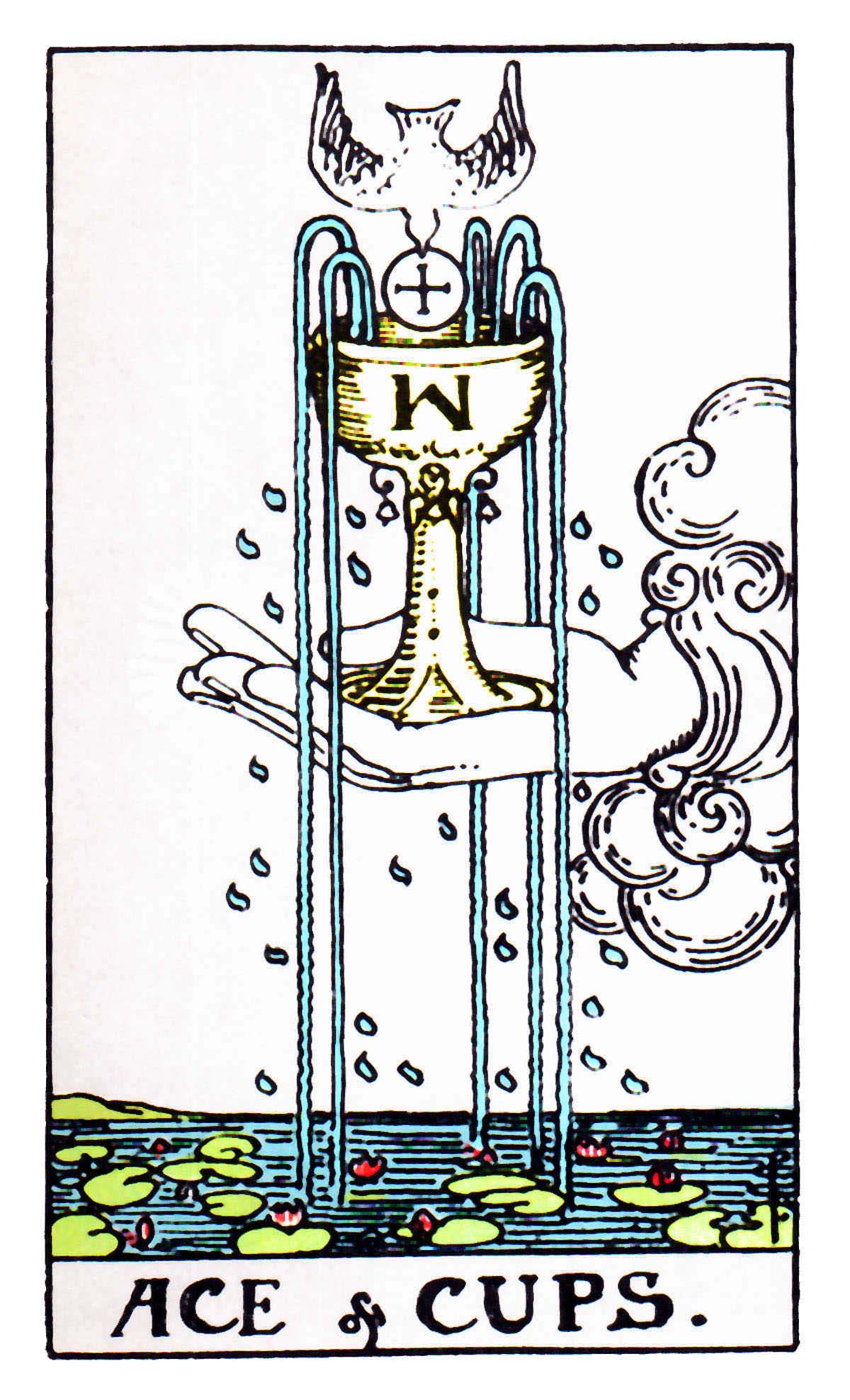
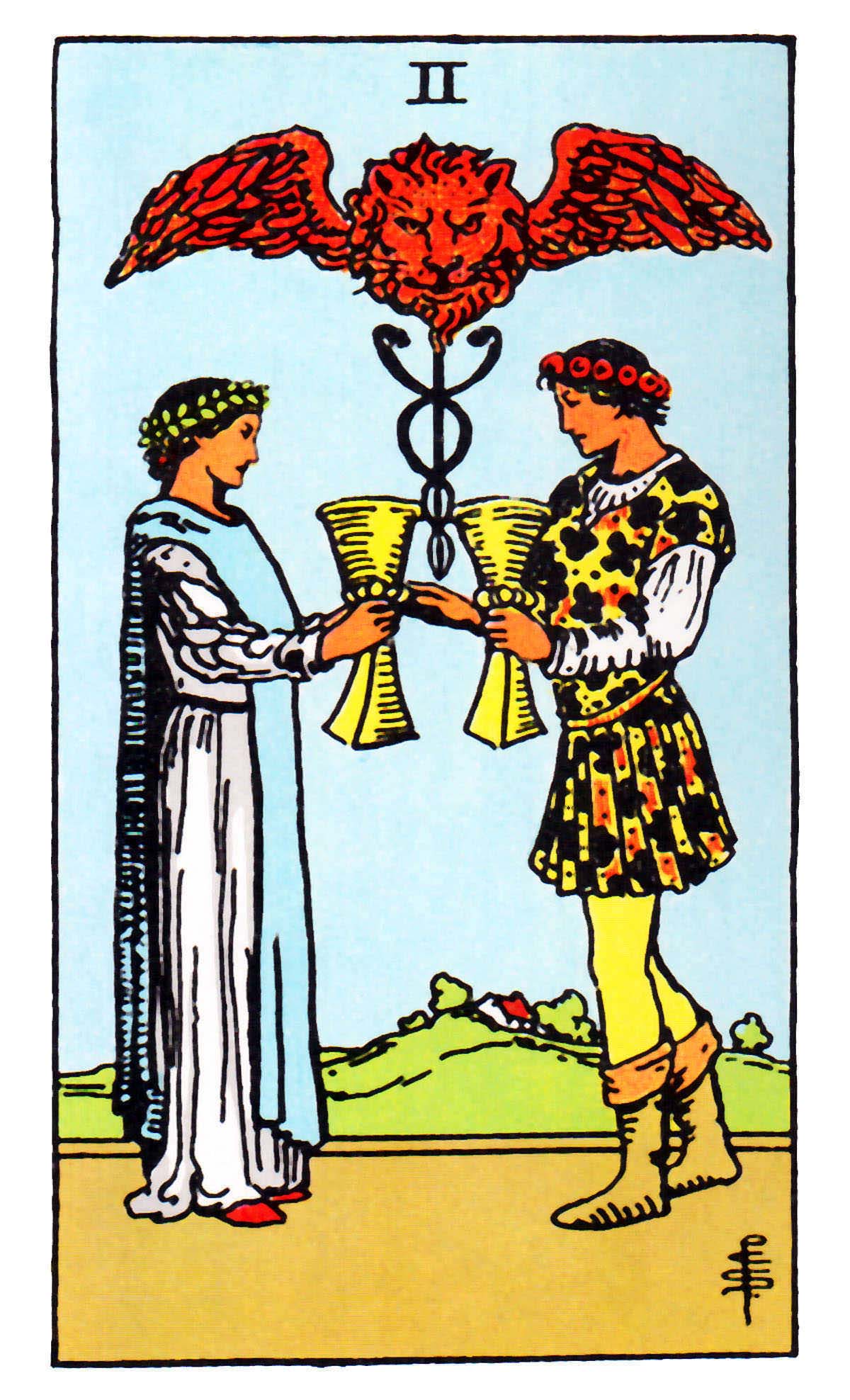
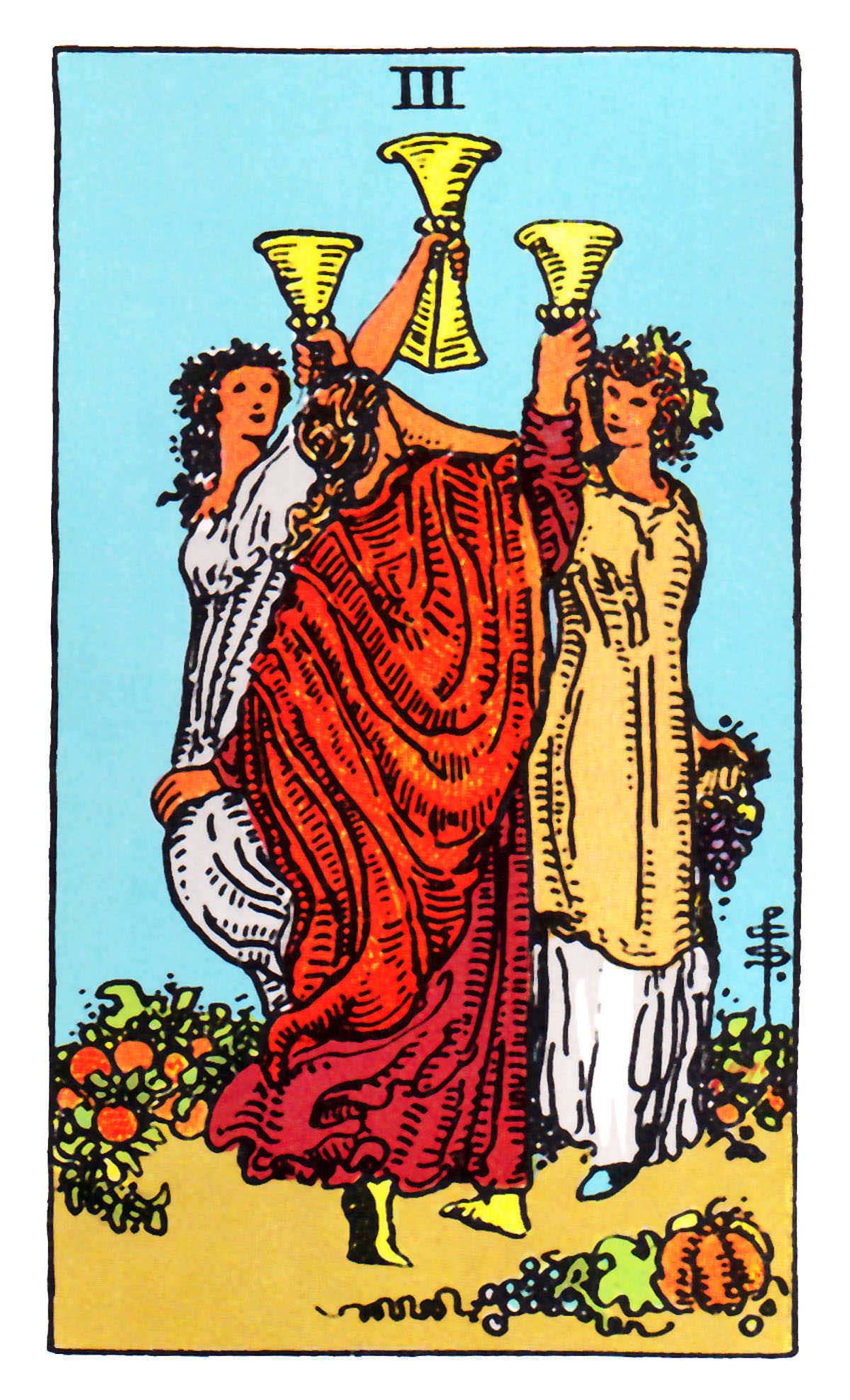
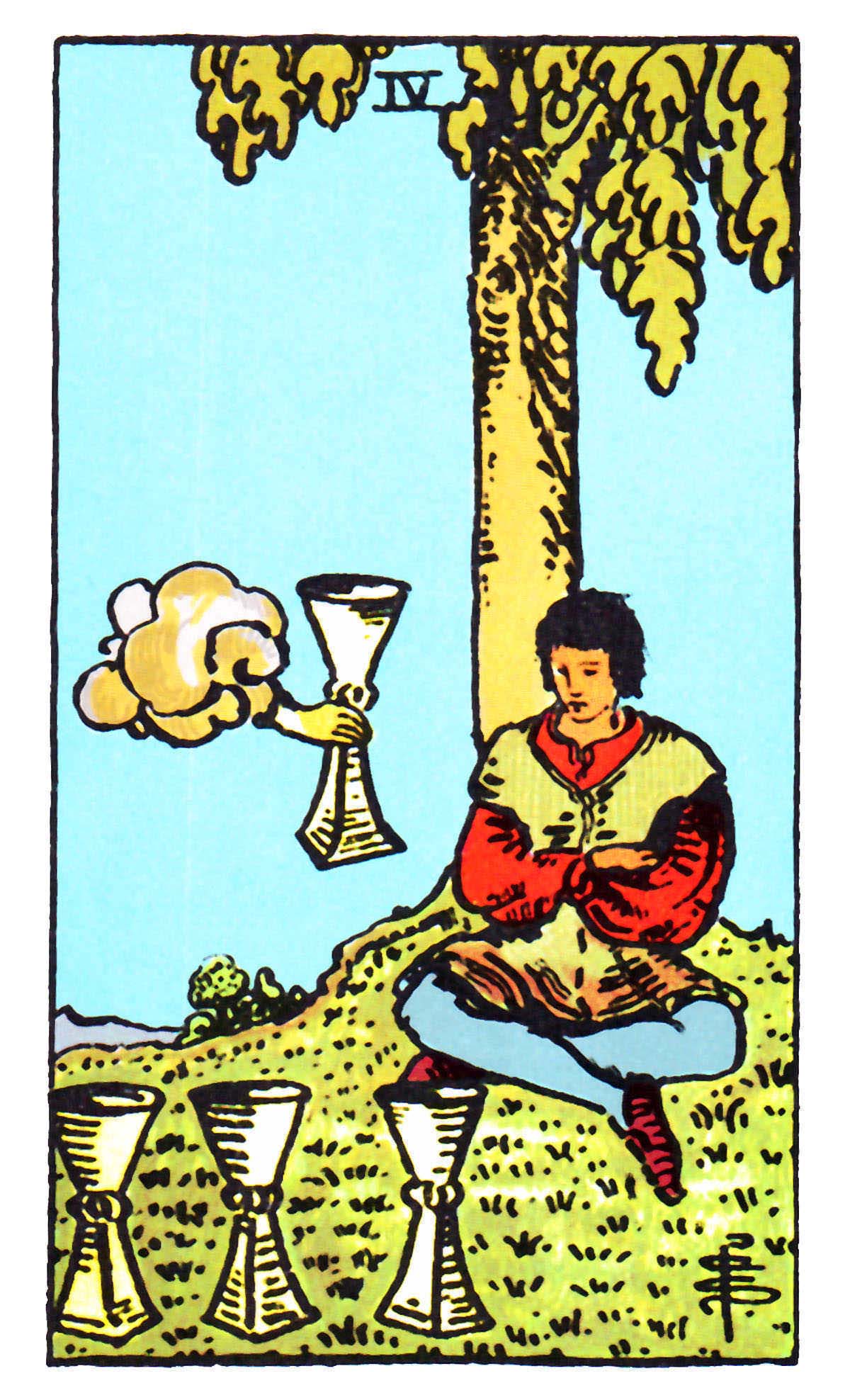
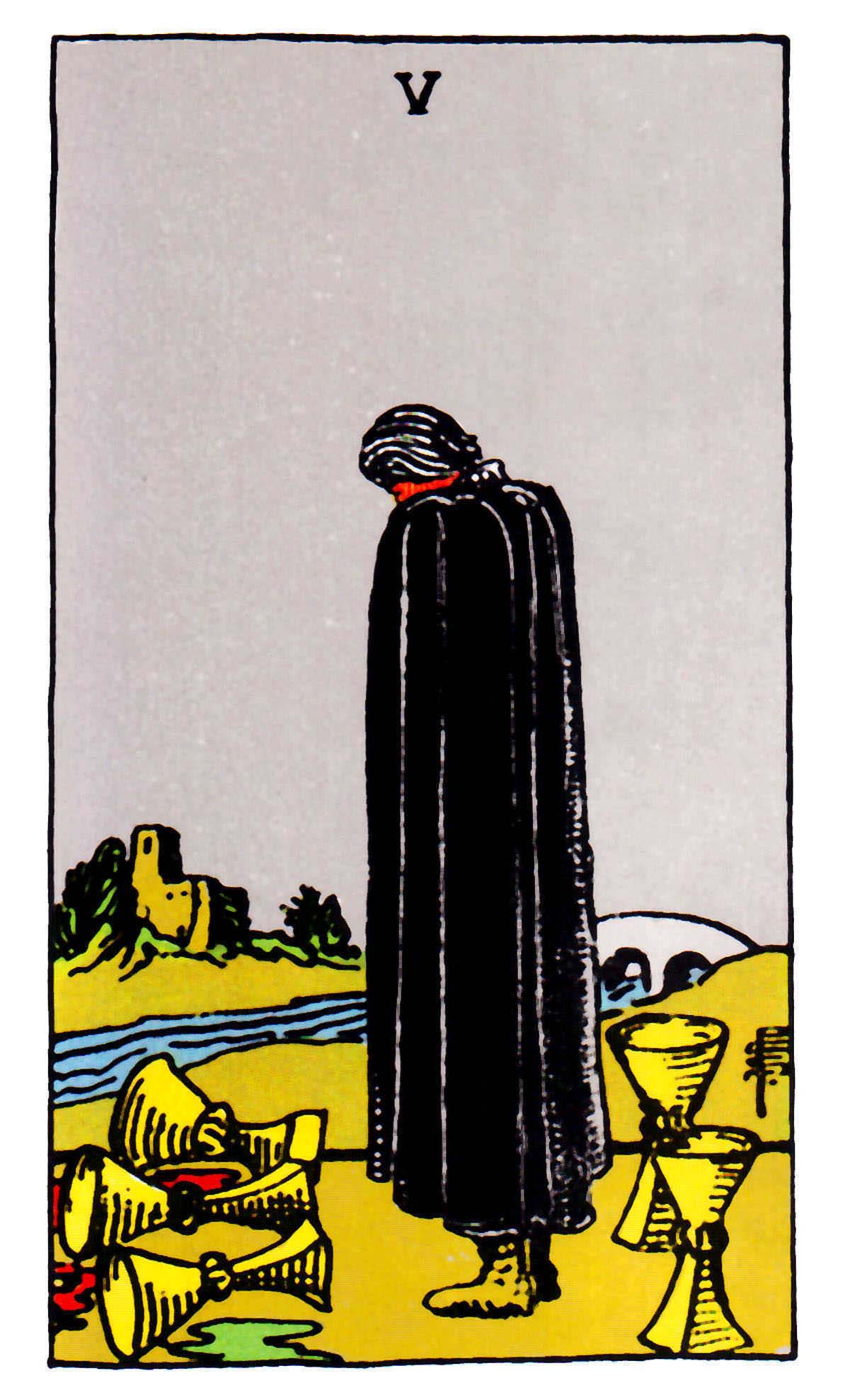
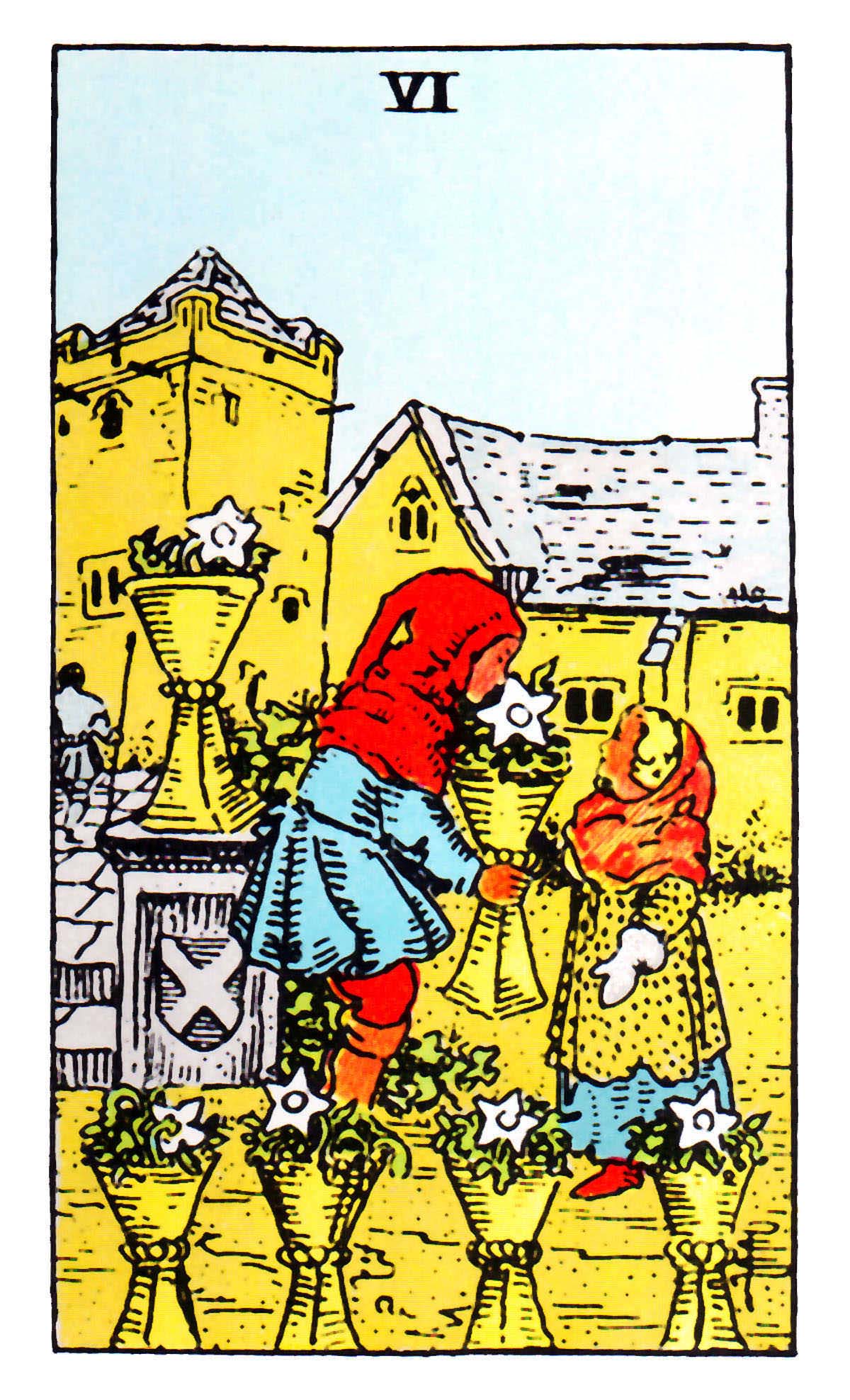
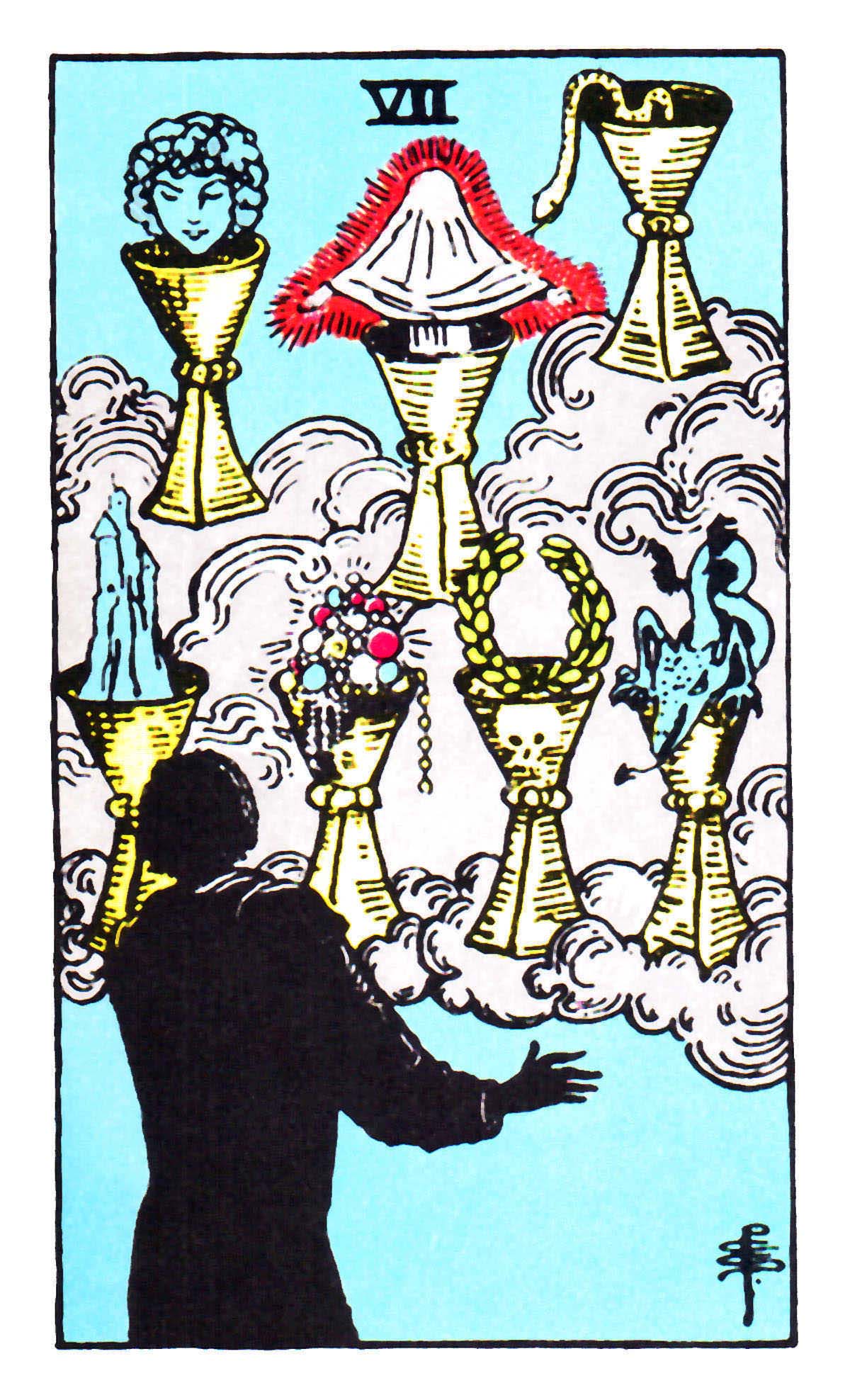
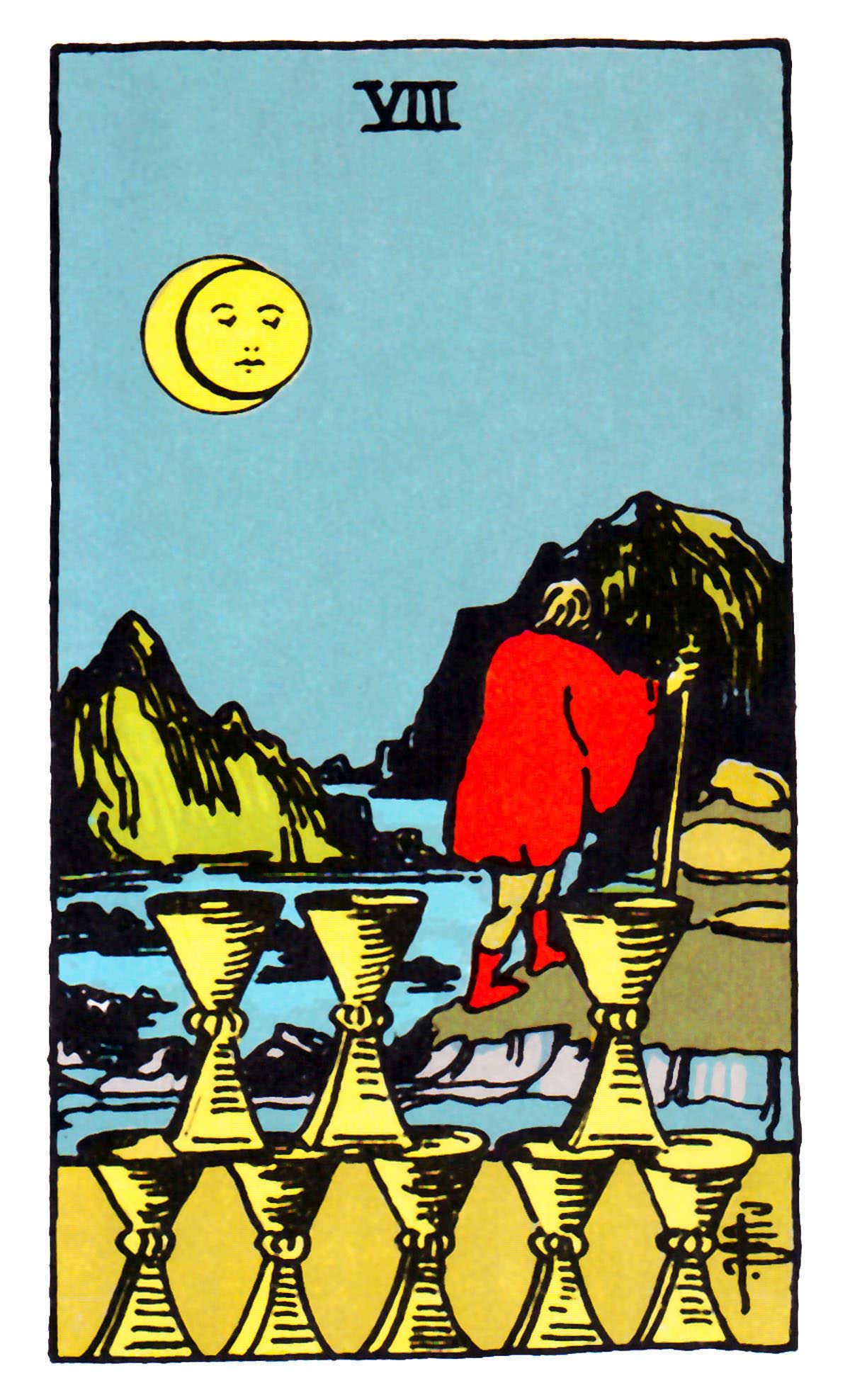
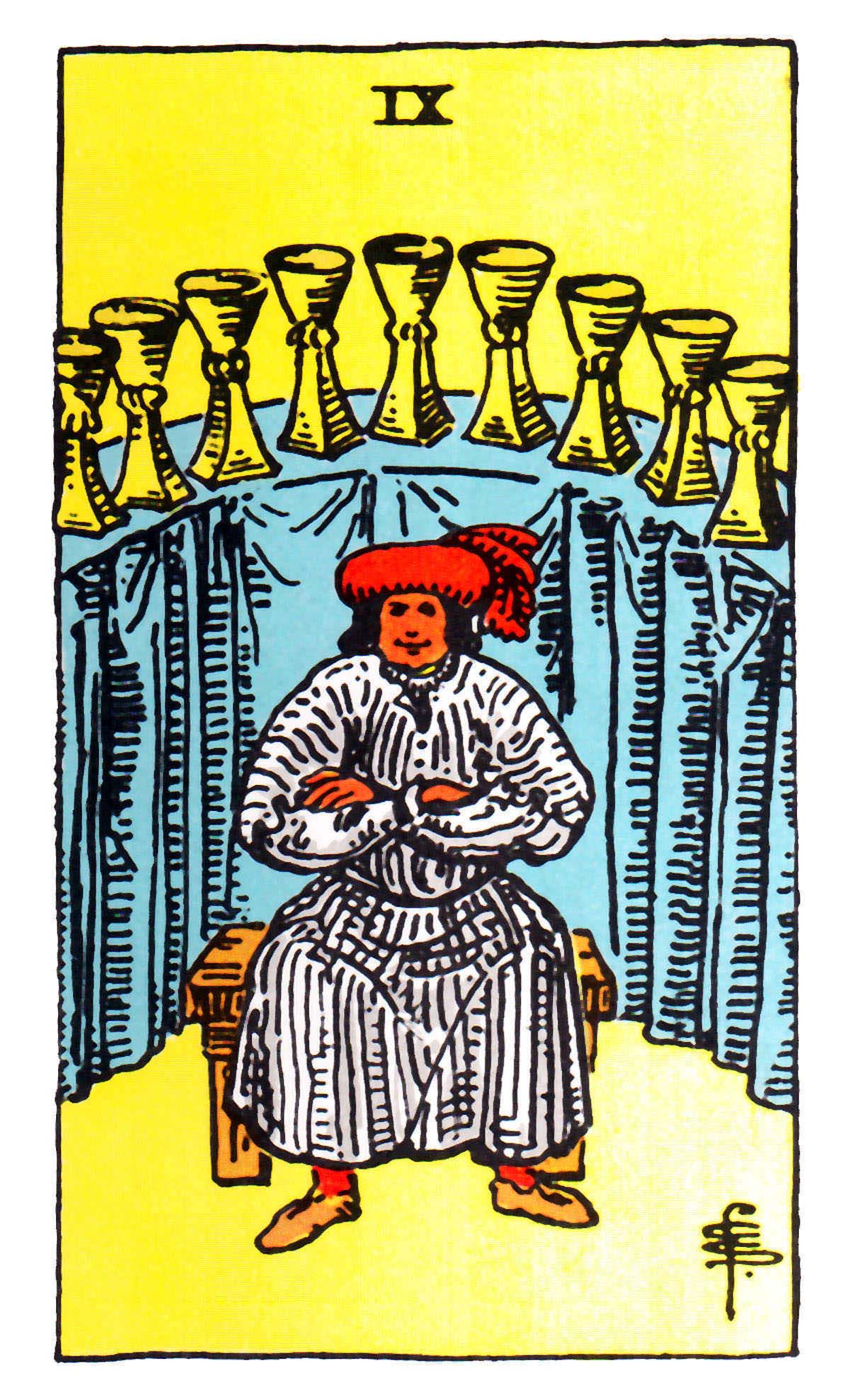
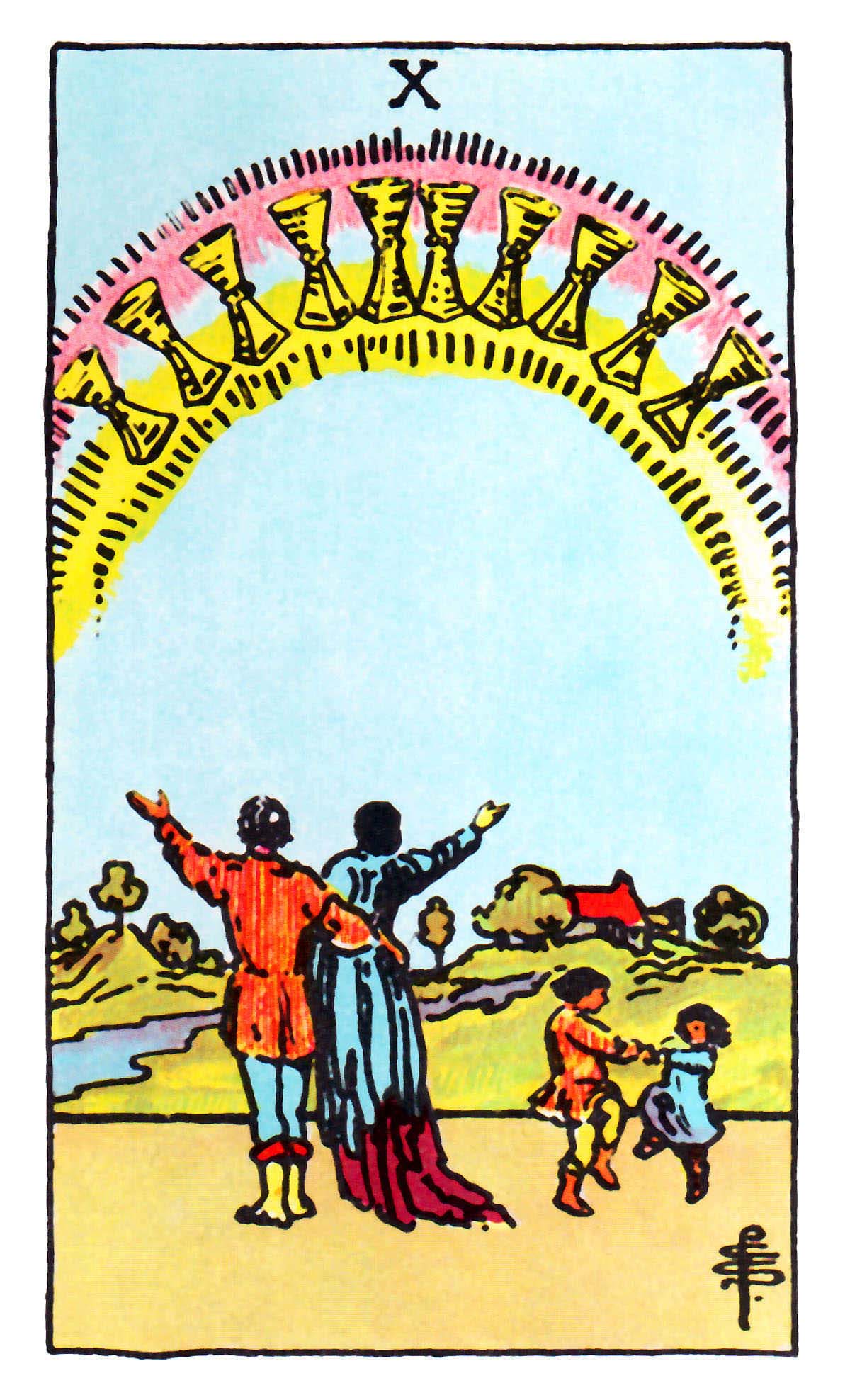
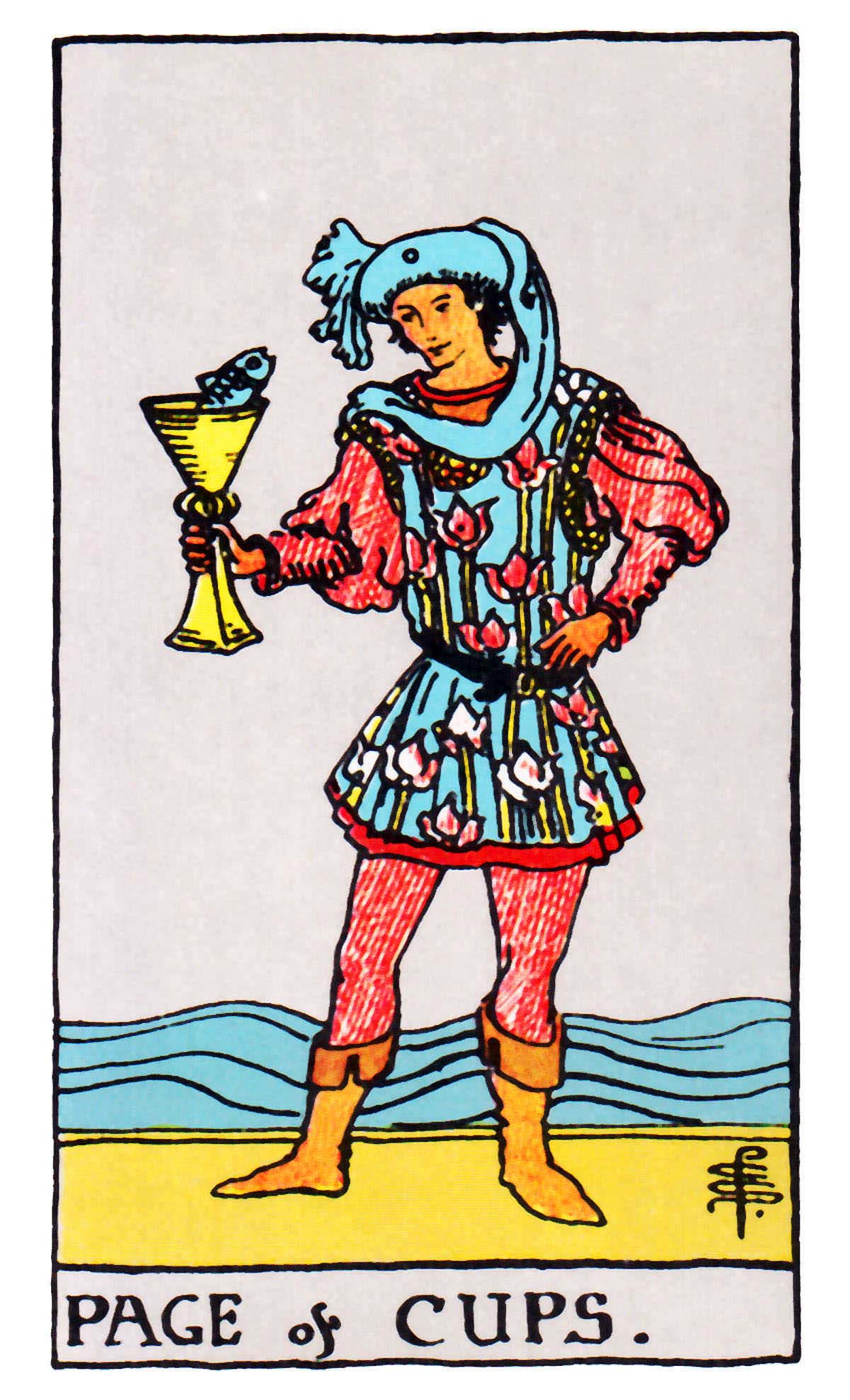
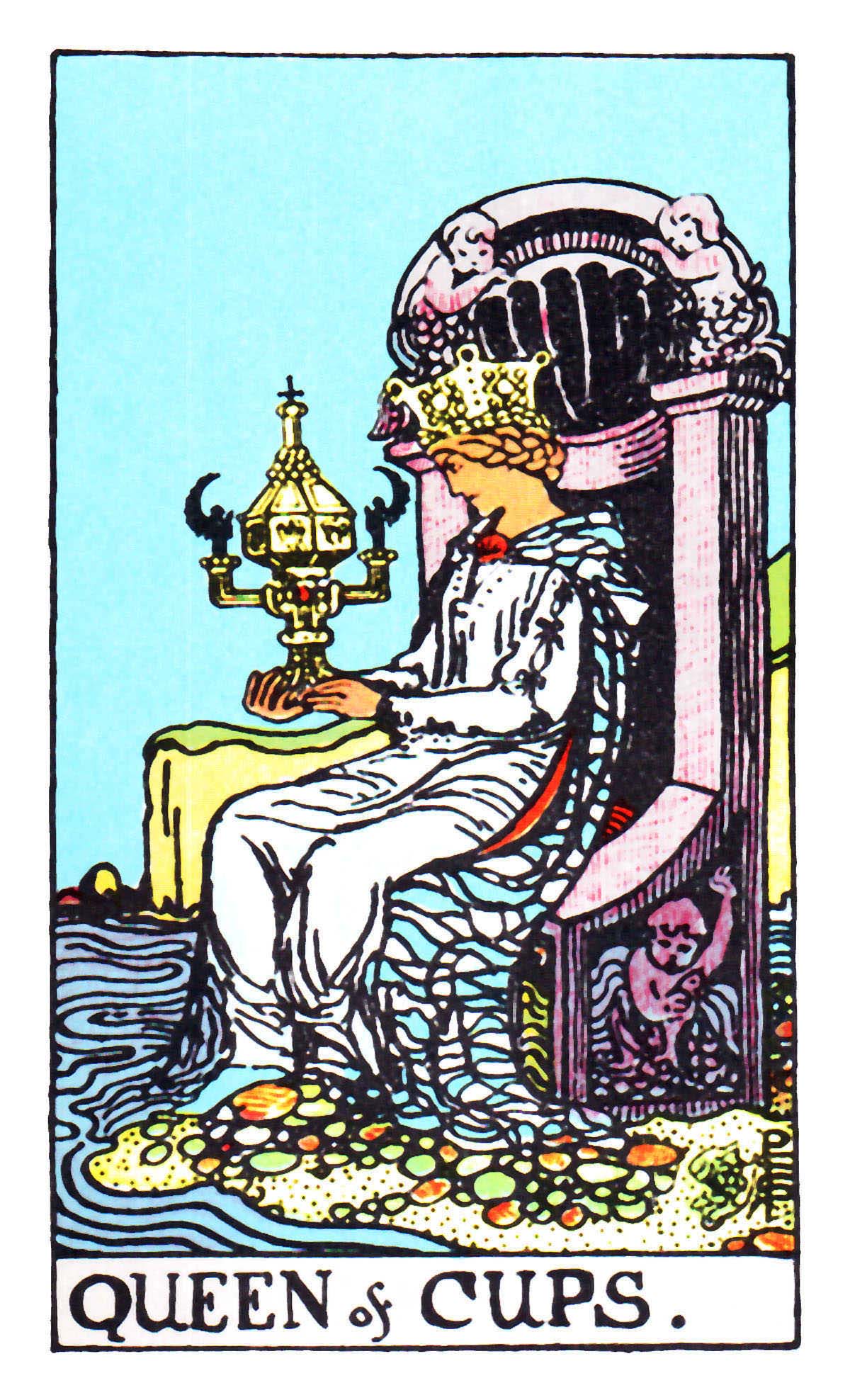
Cups correspond to Hearts in a regular deck of cards. Their Greek element is water. They stand for everything emotional — what we feel, whether or not we actually live it. In the four classes of feudal society, this suit is linked to that of the clergy, since the church and religion is all about emotions. When a Cups card appears in a reading, its message is always about things of an emotional nature: Worries, delights, temptations, hopes, affections, disappointments, and so on. Events or situations that primarily affect the heart. The 14 cards of the Cups suit are: Ace of Cups, Two of Cups, Three of Cups, Four of Cups, Five of Cups, Six of Cups, Seven of Cups, Eight of Cups, Nine of Cups, Ten of Cups, Page of Cups, Knight of Cups, Queen of Cups, and King of Cups.
First Appearance Ducal courts of northern Italy (c. 1440)
First Publisher ○
Appearance List Sola Busca (1490s) — earliest surviving deck [Open Culture] [WaiteSmith.org]; Monde primitif… (Vol. 8: “Du Jeu des Tarots”) (1781) by Antoine Court de Gébelin; Manière de se récréer avec le jeu de cartes nommées Tarots (1783–1785) by Etteilla (Jean-Baptiste Alliette); Dogme et rituel de la haute magie (1856) by Éliphas Lévi; The Tarot: Its Occult Signification, Use in Fortune-Telling, and Method of Play (1888) by S. L. MacGregor Mathers; Le Tarot des Bohémiens (1889) by Papus (Gérard Encausse); Rider Waite Tarot (1909) by A. E. Waite and Pamela Colman Smith [WaiteSmith.org]; The Tarot of the Bohemians (1910) by A. P Morton [Internet Archive]; The Pictorial Key to the Tarot (1911, 1959) by A. E. Waite and Pamela Colman Smith; Le tarot des imagiers du moyen âge (1926) by Oswald Wirth; The Book of Thoth: A Short Essay on the Tarot of the Egyptians (1944) by Aleister Crowley; Le Tarot de Marseille (1949) by Paul Marteau; The Tarot Revealed (1960) by Eden Gray; Tarot Cards for Fun and Fortune Telling (1970) by Stuart R. Kaplan; The Encyclopedia of Tarot (Vol. 1) (1978) by Stuart R. Kaplan.
Sample Read The Pictorial Key to the Tarot (1911, 1959) by A. E. Waite and Pamela Colman Smith [Internet Archive]
Description Cups correspond to Hearts in a regular deck of cards. Their Greek element is water. They stand for everything emotional — what we feel, whether or not we actually live it. In the four classes of feudal society, this suit is linked to that of the clergy, since the church and religion is all about emotions. When a Cups card appears in a reading, its message is always about things of an emotional nature: Worries, delights, temptations, hopes, affections, disappointments, and so on. Events or situations that primarily affect the heart. The 14 cards of the Cups suit are: Ace of Cups, Two of Cups, Three of Cups, Four of Cups, Five of Cups, Six of Cups, Seven of Cups, Eight of Cups, Nine of Cups, Ten of Cups, Page of Cups, Knight of Cups, Queen of Cups, and King of Cups.


 ,
,  ,
,  ,
,  ,
,  ,
,  ,
,  ,
,  ,
,  ,
,  ,
,  ,
,  ,
,