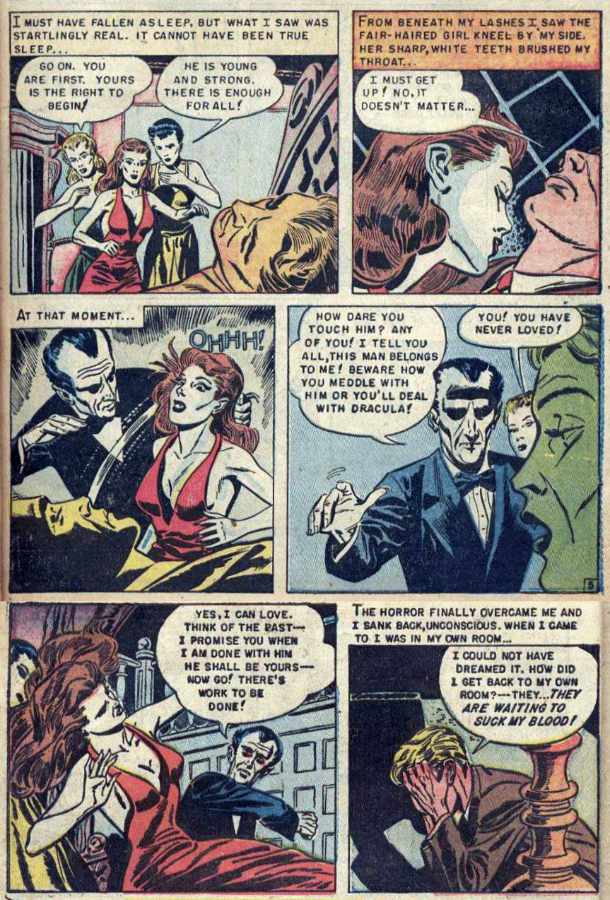
In the novel Dracula (1897), the three vampire women are not individually named. Collectively, they are known as the “sisters”, and are at one point described as the “weird sisters”. Although the three vampire women in Dracula are generally referred to as the “Brides of Dracula” in popular culture and media, they are never referred to as such in the novel. Whether they are married to Dracula is not mentioned in the novel, nor are they described as having any other relation to him. The origin and identity of the Sisters, as well as the true nature of their relationship with Count Dracula, is never revealed. One of the three may have been identified in the short story “Dracula’s Guest”, as the vampire named Countess Dolengen of Gratz. The protagonist of the story, who is never identified, but presumed to be Jonathan Harker, encounters her at her tomb in Munich. Just as she is about to bite him, a great wolf who is presumed to be Dracula intervenes and destroys her. The wolf keeps the protagonist warm from the cold and yelps for nearby soldiers to come to their location. In the novel, Harker writes about one of the female vampires in the moment he is with them, stating, “I seemed somehow to know her face and to know it in connection with some dreamy fear, but I could not recollect at the moment how or where.” The two dark-haired vampire women are described as facially resembling the Count, in that the three have aquiline noses. It has been suggested from this that it may have been Stoker’s intent that these two are Dracula’s daughters, extending the sexuality metaphor of vampirism to incest. When the brides first discover Harker, the blonde vampire is encouraged to feed on him first, with one of the others stating, “Yours is the right to begin”, signifying that she has some status over the others. This could imply that the blonde vampire is Dracula’s wife or consort, and the mother of the two dark-haired women if they are indeed his daughters. Harker describes the women as “ladies by their dress and manner”, indicating that the vampires are of high lineage, further suggesting the idea that they are Dracula’s family. The blonde vampire is shown to act in a mildly rebellious manner toward Dracula when he scolds her for attempting to feed on Harker; Dracula’s reaction upon discovering the sisters with Harker is both that of a jealous husband and an angry father. The vampire women claim that Dracula does not love them, nor has he ever loved them, but Dracula insists he does love them and shows he cares for them by providing them with victims to feed upon. However, it is not explained why he left them behind in Transylvania rather than taking them to London with him. Even though it is never specified, it is possible that the term “sister” was not meant in the literal sense and is, instead, more comparable to the relationship of the women and not as they are to Dracula. They are also depicted in the novel calling Mina Harker their sister after she is forced to drink Dracula’s blood, afflicting her with vampirism. Mina and her best friend (and Dracula’s future victim) Lucy Westenra also call each other sisters in the novel despite not having any blood relation. The vampire women may be his wives throughout his lifetime, descendants of his whom he turned into vampires or simply nonspecific women he killed and turned into vampires to create more of his kind. As vampires, the sisters are powerful in their own right; their beauty and seductive charm belie lethal, predatory interiors. Their beauty and flirtatious manner appear to be their greatest power when it comes to bewitching their victims into a trance-like state. Harker and Van Helsing are both attracted to and yet repulsed by them. They can seemingly appear out of nowhere and are inhumanly strong, as shown when they kill Van Helsing’s horses. They also have the power of flight, as seen when they fly in the air with their dresses trailing behind them. The vampires serve as foreshadowing for the threat of vampirism in the story which, as seen with Lucy, later on, includes Dracula’s power of corruption over his victims once he has drained their blood and transformed them into vampires.
Alias Weird Sisters
Real Names/Alt Names Unknown (one may be “Countess Dolengen”)
First Publisher Archibald Constable and Company (UK)
Appearance List Eerie #12, Dracula (play) and Dracula (novel). Bram Stoker’s Dracula originally appeared as a stage play on May 18, 1897 (which only two people attended). The (much-more famous) novel was released eight days later.
Description In the novel Dracula (1897), the three vampire women are not individually named. Collectively, they are known as the “sisters”, and are at one point described as the “weird sisters”. Although the three vampire women in Dracula are generally referred to as the “Brides of Dracula” in popular culture and media, they are never referred to as such in the novel. Whether they are married to Dracula is not mentioned in the novel, nor are they described as having any other relation to him. The origin and identity of the Sisters, as well as the true nature of their relationship with Count Dracula, is never revealed. One of the three may have been identified in the short story “Dracula’s Guest”, as the vampire named Countess Dolengen of Gratz. The protagonist of the story, who is never identified, but presumed to be Jonathan Harker, encounters her at her tomb in Munich. Just as she is about to bite him, a great wolf who is presumed to be Dracula intervenes and destroys her. The wolf keeps the protagonist warm from the cold and yelps for nearby soldiers to come to their location. In the novel, Harker writes about one of the female vampires in the moment he is with them, stating, “I seemed somehow to know her face and to know it in connection with some dreamy fear, but I could not recollect at the moment how or where.” The two dark-haired vampire women are described as facially resembling the Count, in that the three have aquiline noses. It has been suggested from this that it may have been Stoker’s intent that these two are Dracula’s daughters, extending the sexuality metaphor of vampirism to incest. When the brides first discover Harker, the blonde vampire is encouraged to feed on him first, with one of the others stating, “Yours is the right to begin”, signifying that she has some status over the others. This could imply that the blonde vampire is Dracula’s wife or consort, and the mother of the two dark-haired women if they are indeed his daughters. Harker describes the women as “ladies by their dress and manner”, indicating that the vampires are of high lineage, further suggesting the idea that they are Dracula’s family. The blonde vampire is shown to act in a mildly rebellious manner toward Dracula when he scolds her for attempting to feed on Harker; Dracula’s reaction upon discovering the sisters with Harker is both that of a jealous husband and an angry father. The vampire women claim that Dracula does not love them, nor has he ever loved them, but Dracula insists he does love them and shows he cares for them by providing them with victims to feed upon. However, it is not explained why he left them behind in Transylvania rather than taking them to London with him. Even though it is never specified, it is possible that the term “sister” was not meant in the literal sense and is, instead, more comparable to the relationship of the women and not as they are to Dracula. They are also depicted in the novel calling Mina Harker their sister after she is forced to drink Dracula’s blood, afflicting her with vampirism. Mina and her best friend (and Dracula’s future victim) Lucy Westenra also call each other sisters in the novel despite not having any blood relation. The vampire women may be his wives throughout his lifetime, descendants of his whom he turned into vampires or simply nonspecific women he killed and turned into vampires to create more of his kind. As vampires, the sisters are powerful in their own right; their beauty and seductive charm belie lethal, predatory interiors. Their beauty and flirtatious manner appear to be their greatest power when it comes to bewitching their victims into a trance-like state. Harker and Van Helsing are both attracted to and yet repulsed by them. They can seemingly appear out of nowhere and are inhumanly strong, as shown when they kill Van Helsing’s horses. They also have the power of flight, as seen when they fly in the air with their dresses trailing behind them. The vampires serve as foreshadowing for the threat of vampirism in the story which, as seen with Lucy, later on, includes Dracula’s power of corruption over his victims once he has drained their blood and transformed them into vampires.