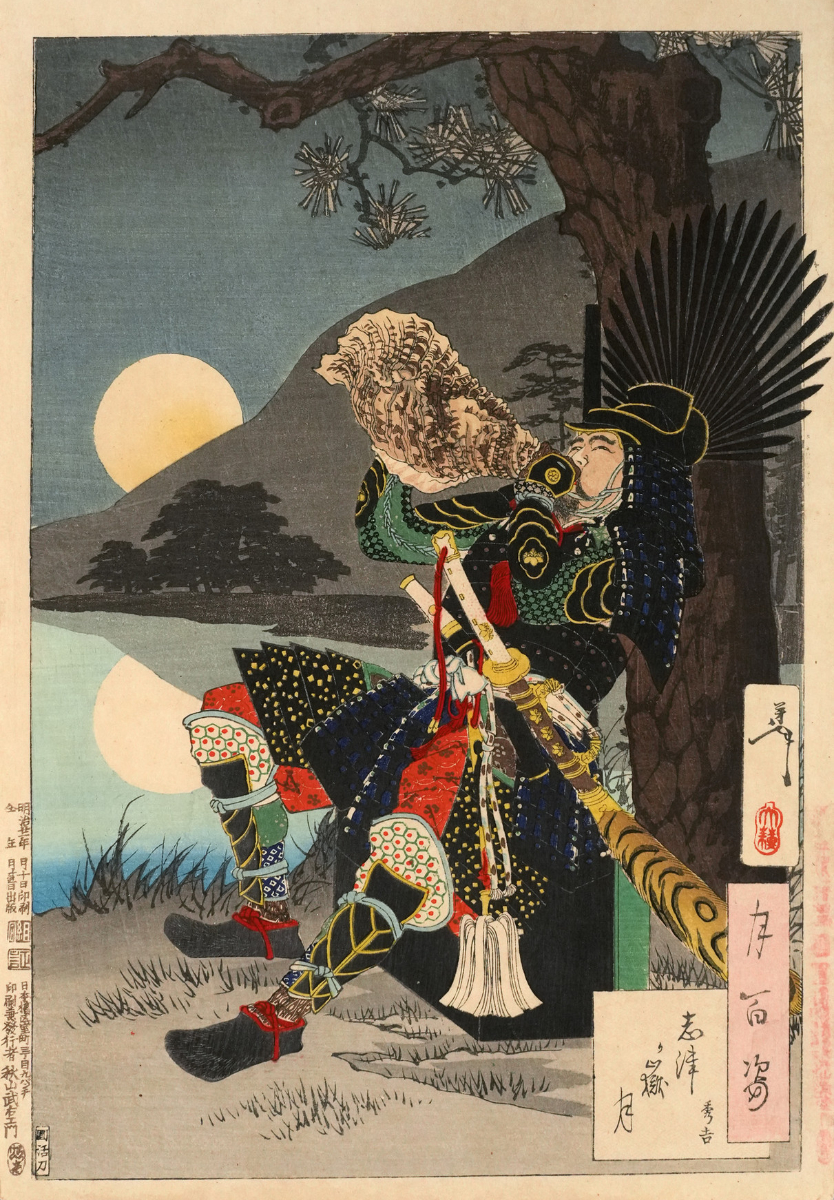
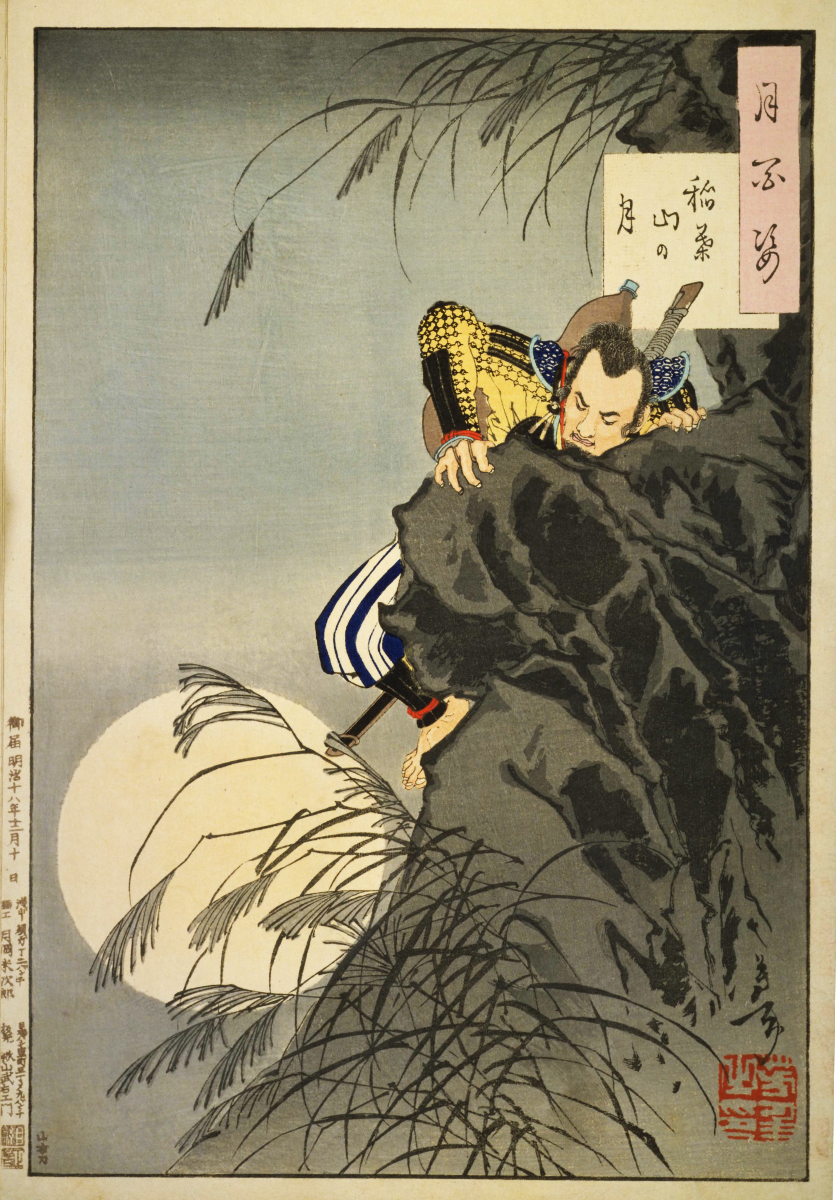
Toyotomi Hideyoshi (March 27, 1537 – September 18, 1598) was a Japanese samurai and daimyō (feudal lord) of the late Sengoku and Azuchi-Momoyama periods and regarded as the second “Great Unifier” of Japan. Although he came from a peasant background, his immense power earned him the rank and title of Kampaku (関白, Imperial Regent) and Daijō-daijin (太政大臣, Chancellor of the Realm), the highest official position and title in the nobility class. He was the first person in history to become a Kampaku who was not born a noble. He then passed the position and title of Kampaku to his nephew, Toyotomi Hidetsugu. He remained in power as Taikō (太閤), the title of retired Kampaku, until his death. It is believed, but not certain, that the reason he refused or could not obtain the title of shogun (征夷大将軍), the leader of the warrior class, was because he was of peasant origin.
First Appearance Historical figure (b. 1537 – d. 1598)
First Publisher ○
Appearance List Taikōki (c. 1626) by Oze Hoan; Ehon Taikōki (1797–1802; 1914 ed. pictured edition) by Takeuchi Kakusai (text) & Okada Gyokuzan (illustrations); The Life of Toyotomi Hideyoshi (1888) by Walter Dening; Shinsho Taikōki (1939–45; collected ed. 1967) by Eiji Yoshikawa; The Christian Century in Japan, 1549–1650 (1951) by C. R. Boxer; Sources of Japanese Tradition, Vol. 1 (From Earliest Times to 1600) (1958) ed. R. Tsunoda, Wm. Theodore de Bary, Donald Keene — includes Hideyoshi documents (e.g., 1587 anti-missionary edict, 1588 sword-hunt); A History of Japan, 1334–1615 (1961) by George B. Sansom; Taikōki (1965, NHK Taiga drama; adaptation of Yoshikawa’s novel); 101 Letters of Hideyoshi: The Private Correspondence of Toyotomi Hideyoshi (1975) ed./trans. Adriana Boscaro; Pictorial Biography of Toyotomi Hideyoshi: Ehon Toyotomi Kunkōki (From the woodblock edition of 1855–1884) (1975) by Utagawa Kuniyoshi; The Samurai: A Military History (1977) by Stephen Turnbull — standard military context for Hideyoshi’s rise and Osaka campaigns; War Diary of Admiral Yi Sun-sin (Nanjung Ilgi) (1977, English translation) — contemporaneous Korean perspective on Hideyoshi’s invasions.
Description Toyotomi Hideyoshi (March 27, 1537 – September 18, 1598) was a Japanese samurai and daimyō (feudal lord) of the late Sengoku and Azuchi-Momoyama periods and regarded as the second “Great Unifier” of Japan. Although he came from a peasant background, his immense power earned him the rank and title of Kampaku (関白, Imperial Regent) and Daijō-daijin (太政大臣, Chancellor of the Realm), the highest official position and title in the nobility class. He was the first person in history to become a Kampaku who was not born a noble. He then passed the position and title of Kampaku to his nephew, Toyotomi Hidetsugu. He remained in power as Taikō (太閤), the title of retired Kampaku, until his death. It is believed, but not certain, that the reason he refused or could not obtain the title of shogun (征夷大将軍), the leader of the warrior class, was because he was of peasant origin.