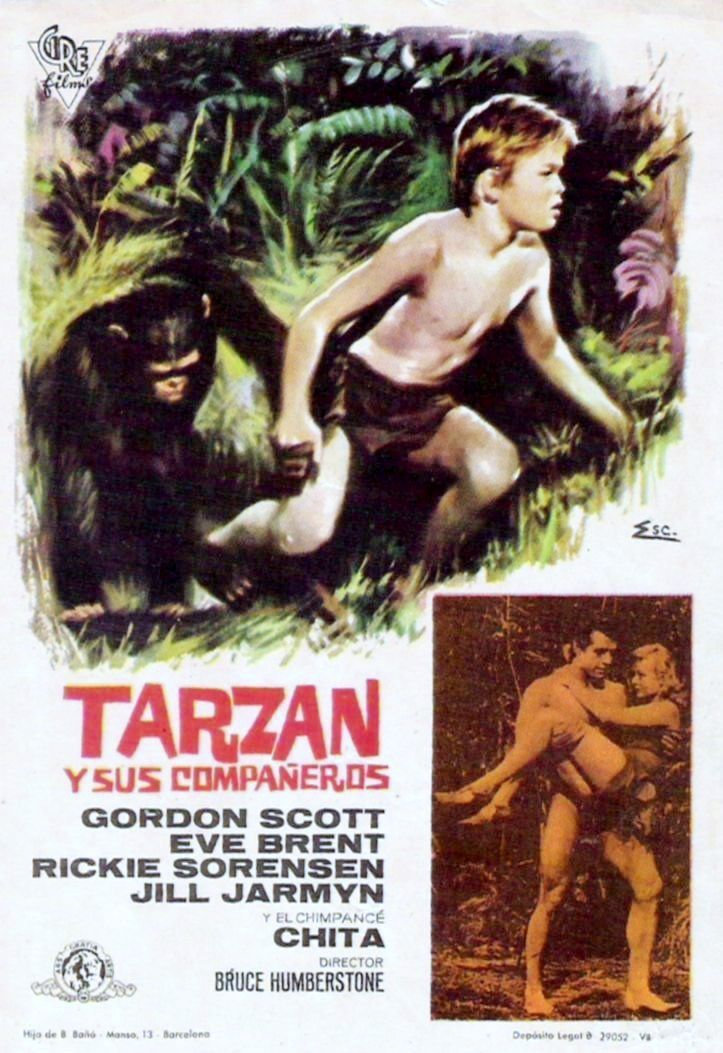
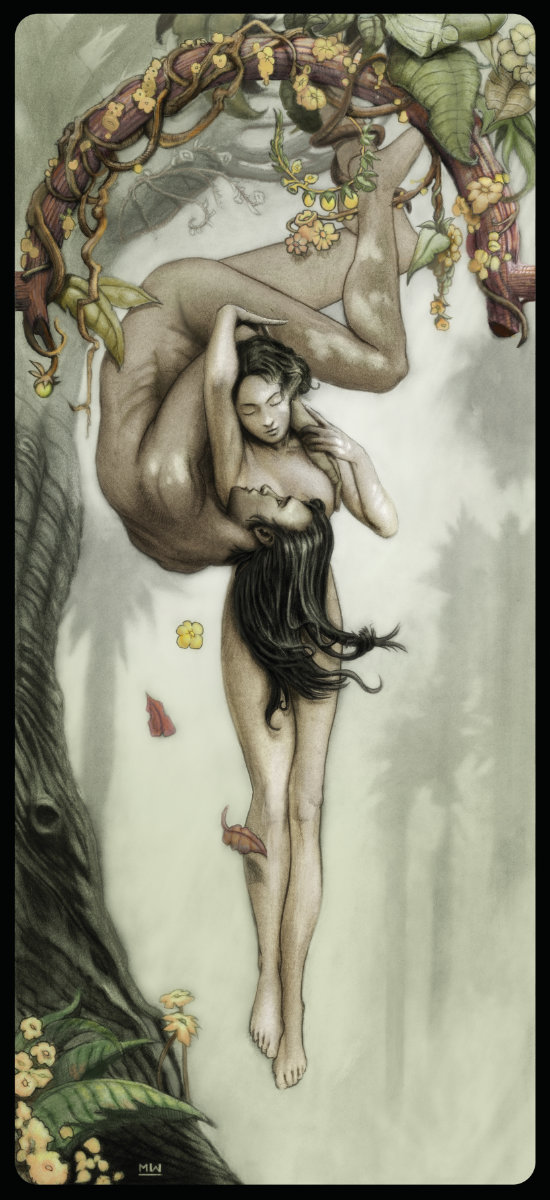
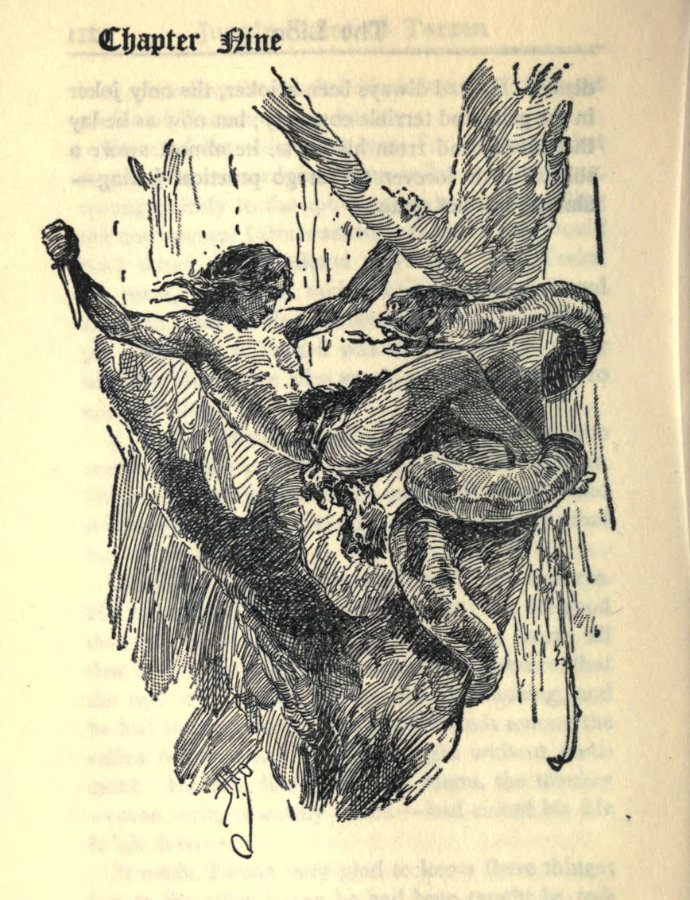
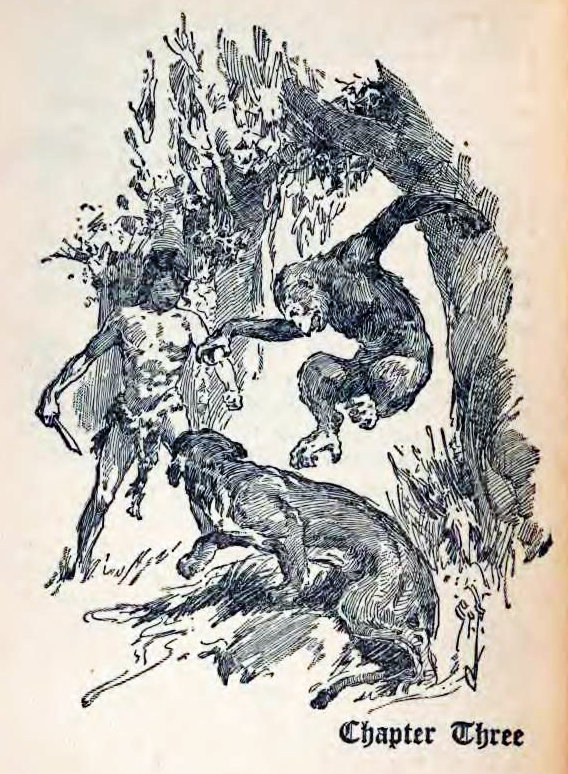
Tarzan is the son of a British lord and lady who were marooned on the coast of Africa by mutineers. When Tarzan was an infant, his mother died, and his father was killed by Kerchak, leader of the ape tribe by whom Tarzan was adopted. Soon after his parents’ death, Tarzan became a feral child, and his tribe of apes is known as the Mangani, great apes of a species unknown to science. Kala is his ape mother. As an 18-year-old, Tarzan meets a young American woman named Jane Porter. She, her father, and others of their party are marooned on the same coastal jungle area where Tarzan’s human parents were 20 years earlier. When Jane returns to the United States, Tarzan leaves the jungle in search of her, his one true love. “Tarzan” is the ape-name of John Clayton, Viscount Greystoke, according to Edgar Rice Burroughs’s Tarzan, Lord of the Jungle. Tarzan’s jungle upbringing gives him abilities far beyond those of ordinary humans. These include climbing, clinging, and leaping as well as any great ape. He uses branches, swings from vines to travel at great speed, and can use his feet like hands (he prefers going barefoot because he relies on the flexibility of bare feet), a skill acquired among the anthropoid apes. His strength, speed, stamina, agility, reflexes, and swimming skills are extraordinary; he has wrestled not just full-grown apes, but also gorillas, lions, rhinos, crocodiles, pythons, leopards, sharks, tigers, giant seahorses, and even dinosaurs (when he visited Pellucidar). Tarzan is a skilled tracker, and uses his exceptional hearing and keen sense of smell to follow prey or avoid predators. As originally depicted, Tarzan/John Clayton is very intelligent and articulate. He can communicate with many species of jungle animals, and has been shown to be a skilled impressionist, able to mimic the sound of a gunshot perfectly. Tarzan is literate in English before he first encounters other English-speaking people. His literacy is self-taught after several years in his early teens by visiting the log cabin of his infancy and looking at children’s primer/picture books. He eventually reads every book in his father’s portable book collection, and is fully aware of geography, basic world history, and his family tree. He is “found” by traveling Frenchman Paul d’Arnot, who teaches him the basics of human speech and returns with him to civilization. When Tarzan first encounters d’Arnot, he tells him (in writing): “I speak only the language of my tribe—the great apes who were Kerchak’s; and a little of the languages of Tantor, the elephant, and Numa, the lion, and of the other folks of the jungle I understand.” Tarzan can learn a new language in days, ultimately speaking many languages, including that of the great apes, French, Finnish, English, Dutch, German, Swahili, many other Bantu languages, Arabic, Ancient Greek, Ancient Latin, and Mayan, as well as the languages of the Ant Men and of Pellucidar. The Tarzan books and movies employ extensive stereotyping. With changing social views and customs this has led to criticism, including charges of racism since the early 1970s. The early books give a pervasively negative and stereotypical portrayal of native Africans, including Arabs. In The Return of Tarzan, Arabs are “surly looking” and call Christians “dogs”, while black Africans are “lithe, ebon warriors, gesticulating and jabbering”. In regards to race, a superior–inferior relationship with valuation is implied in virtually all interactions between white and black people in the Tarzan stories, and similar relationships and valuations can be seen in most other interactions between differing people.
Alias Tarzan
Real Names/Alt Names John Clayton II, Viscount Greystoke
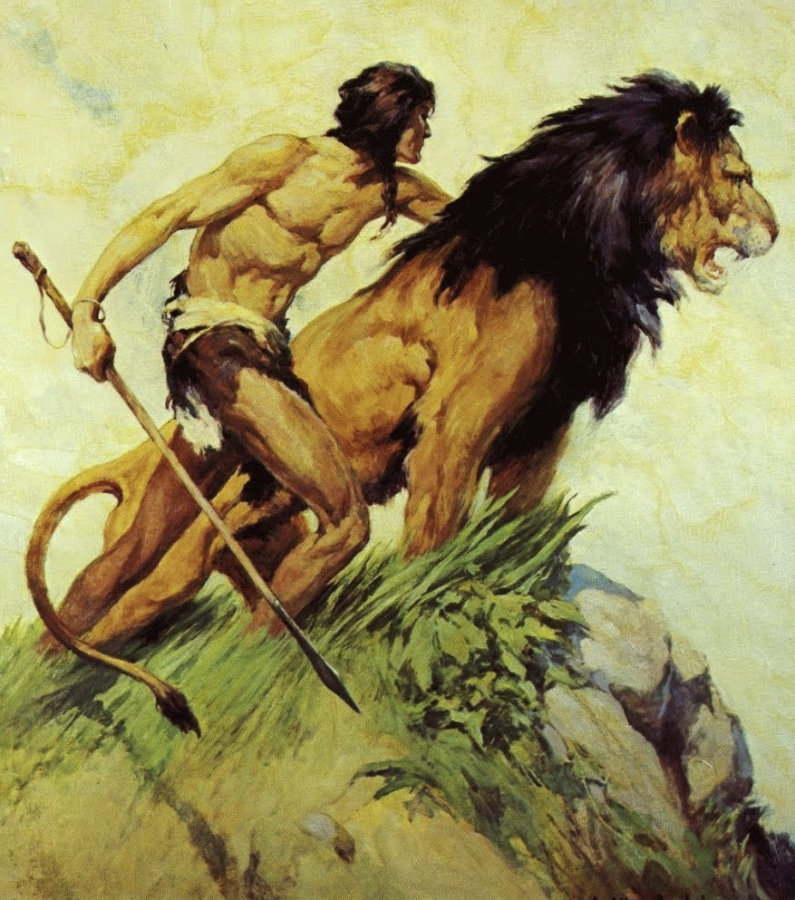
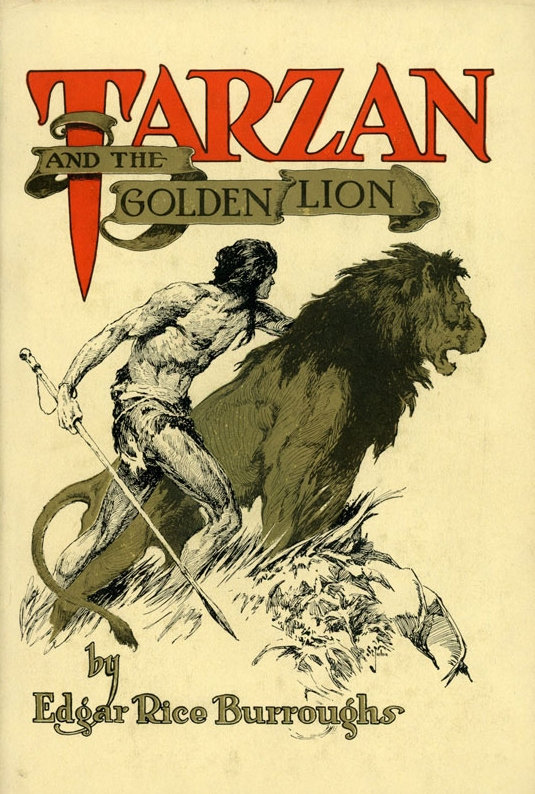
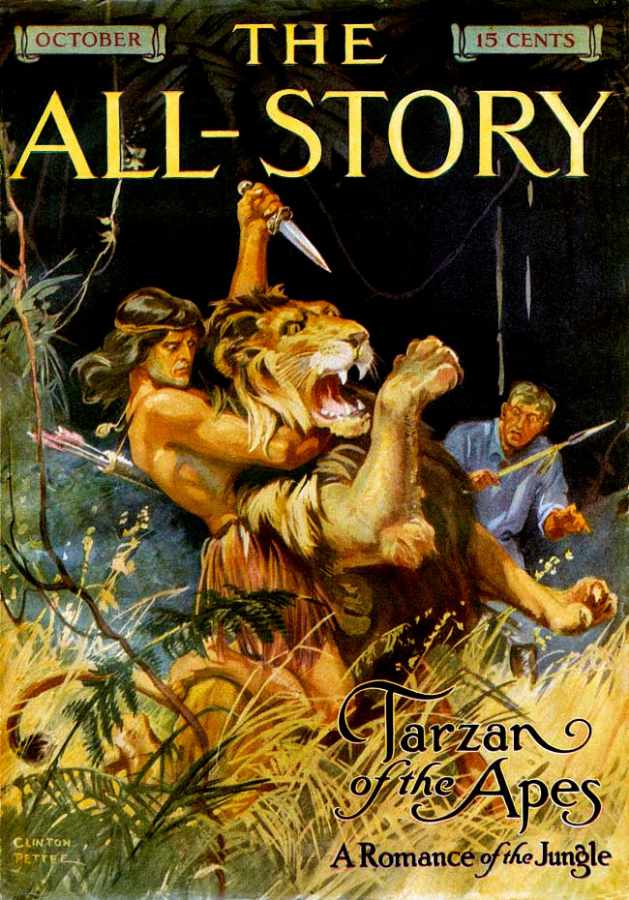
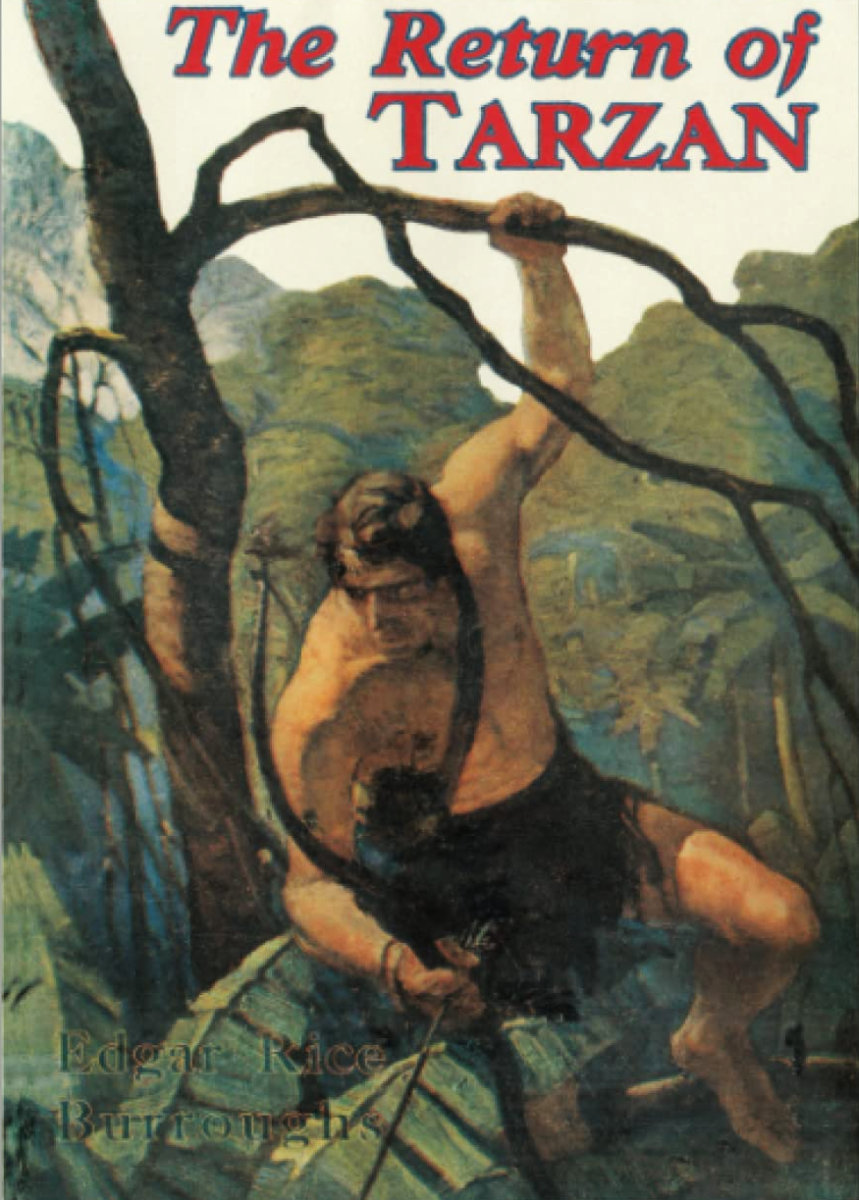
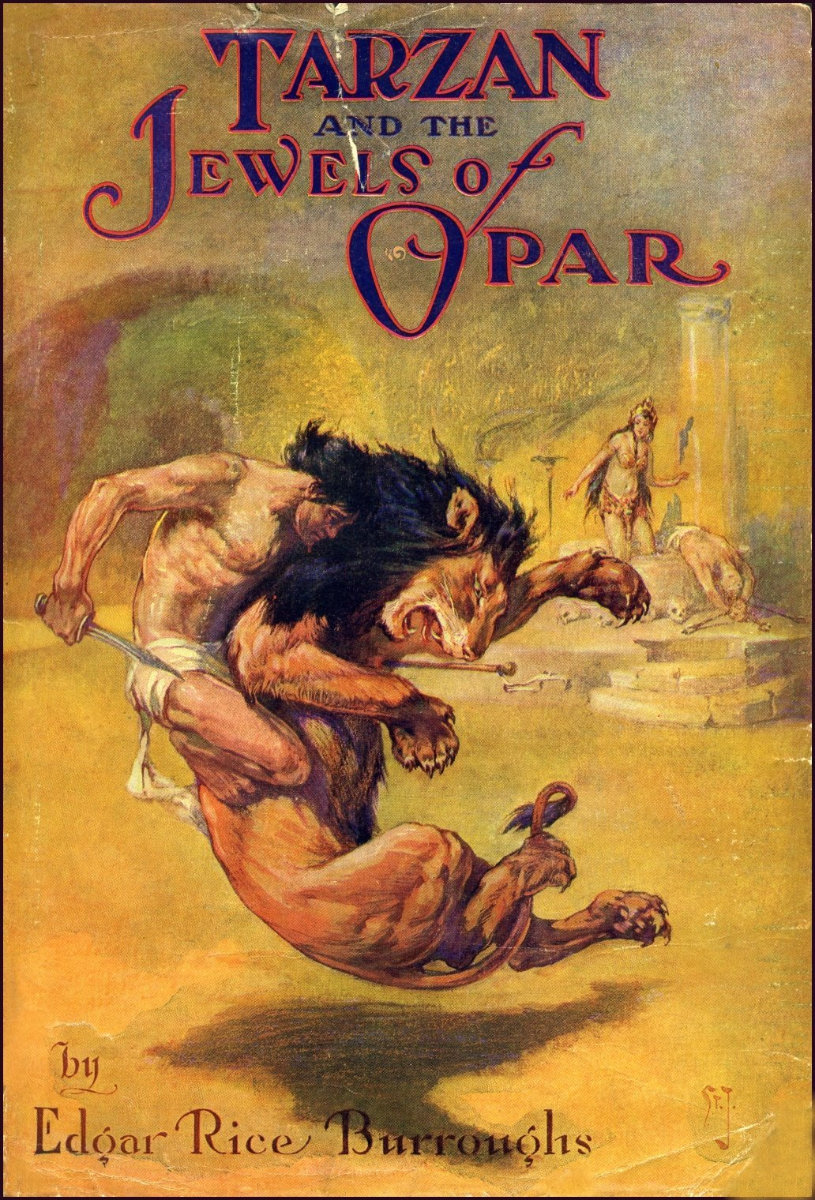
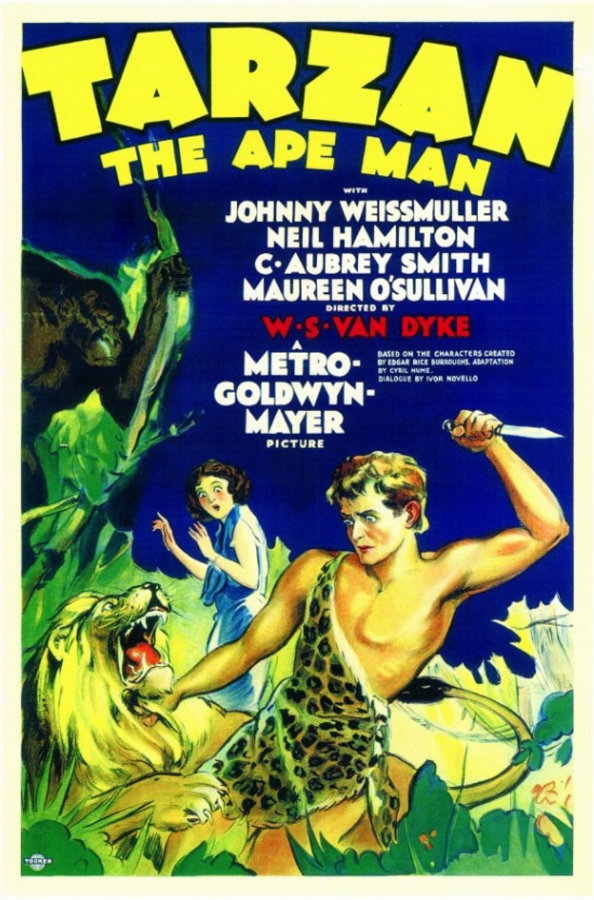
Appearance List Pulp: “Tarzan of the Apes” in The All‐Story vol. 24 no. 2 (serialized beg. Oct 1912), “The Return of Tarzan” in New Story Magazine (serialized Jun-Dec 1913), “The Beasts of Tarzan” in All-Story Cavalier (serialized in 1914), “The Son of Tarzan” in All-Story Weekly (serialized Dec 4 1915 to Jan 8 1916), “Tarzan and the Jewels of Opar” in All-Story Cavalier Weekly (serialized Nov-Dec 1916), “Jungle Tales of Tarzan” in Blue Book (Sep 1916 to Aug 1917), “Tarzan the Untamed” (also known as “Tarzan and the Huns”) in Redbook (Mar-Aug 1919), “Tarzan and the Valley of Luna” in All-Story Weekly (Mar-Apr 1920), “Tarzan the Terrible” in Argosy All-Story Weekly (Feb-Mar 1921), “Tarzan and the Golden Lion” in Argosy All-Story Weekly (serialized beg. Dec 1922), “Tarzan and the Ant Men” in Argosy All-Story Weekly (Feb-Mar 1924). More than 24 novels, including Tarzan of the Apes (1914), The Return of Tarzan (1915), The Beasts of Tarzan (1916), The Son of Tarzan (1917), Tarzan and the Jewels of Opar (1918), Jungle Tales of Tarzan (1919), Tarzan the Untamed (1920), Tarzan the Terrible (1921), Tarzan and the Golden Lion (1923), Tarzan and the Ant Men (1924). Film: Seven silent films, beginning with Tarzan of the Apes (1918). First talkie was Tarzan the Ape Man (1932) starring Johnny Weissmuller. Three serials beginning with Tarzan the Fearless (1933) starring Buster Crabbe. Also radio and TV.
Description Tarzan is the son of a British lord and lady who were marooned on the coast of Africa by mutineers. When Tarzan was an infant, his mother died, and his father was killed by Kerchak, leader of the ape tribe by whom Tarzan was adopted. Soon after his parents’ death, Tarzan became a feral child, and his tribe of apes is known as the Mangani, great apes of a species unknown to science. Kala is his ape mother. As an 18-year-old, Tarzan meets a young American woman named Jane Porter. She, her father, and others of their party are marooned on the same coastal jungle area where Tarzan’s human parents were 20 years earlier. When Jane returns to the United States, Tarzan leaves the jungle in search of her, his one true love. “Tarzan” is the ape-name of John Clayton, Viscount Greystoke, according to Edgar Rice Burroughs’s Tarzan, Lord of the Jungle. Tarzan’s jungle upbringing gives him abilities far beyond those of ordinary humans. These include climbing, clinging, and leaping as well as any great ape. He uses branches, swings from vines to travel at great speed, and can use his feet like hands (he prefers going barefoot because he relies on the flexibility of bare feet), a skill acquired among the anthropoid apes. His strength, speed, stamina, agility, reflexes, and swimming skills are extraordinary; he has wrestled not just full-grown apes, but also gorillas, lions, rhinos, crocodiles, pythons, leopards, sharks, tigers, giant seahorses, and even dinosaurs (when he visited Pellucidar). Tarzan is a skilled tracker, and uses his exceptional hearing and keen sense of smell to follow prey or avoid predators. As originally depicted, Tarzan/John Clayton is very intelligent and articulate. He can communicate with many species of jungle animals, and has been shown to be a skilled impressionist, able to mimic the sound of a gunshot perfectly. Tarzan is literate in English before he first encounters other English-speaking people. His literacy is self-taught after several years in his early teens by visiting the log cabin of his infancy and looking at children’s primer/picture books. He eventually reads every book in his father’s portable book collection, and is fully aware of geography, basic world history, and his family tree. He is “found” by traveling Frenchman Paul d’Arnot, who teaches him the basics of human speech and returns with him to civilization. When Tarzan first encounters d’Arnot, he tells him (in writing): “I speak only the language of my tribe—the great apes who were Kerchak’s; and a little of the languages of Tantor, the elephant, and Numa, the lion, and of the other folks of the jungle I understand.” Tarzan can learn a new language in days, ultimately speaking many languages, including that of the great apes, French, Finnish, English, Dutch, German, Swahili, many other Bantu languages, Arabic, Ancient Greek, Ancient Latin, and Mayan, as well as the languages of the Ant Men and of Pellucidar. The Tarzan books and movies employ extensive stereotyping. With changing social views and customs this has led to criticism, including charges of racism since the early 1970s. The early books give a pervasively negative and stereotypical portrayal of native Africans, including Arabs. In The Return of Tarzan, Arabs are “surly looking” and call Christians “dogs”, while black Africans are “lithe, ebon warriors, gesticulating and jabbering”. In regards to race, a superior–inferior relationship with valuation is implied in virtually all interactions between white and black people in the Tarzan stories, and similar relationships and valuations can be seen in most other interactions between differing people.

 ,
,  ,
,  ,
,  ,
,  ,
,  ,
,  ,
,  ,
,  ,
,  ,
,  ,
,  ,
,  ,
,