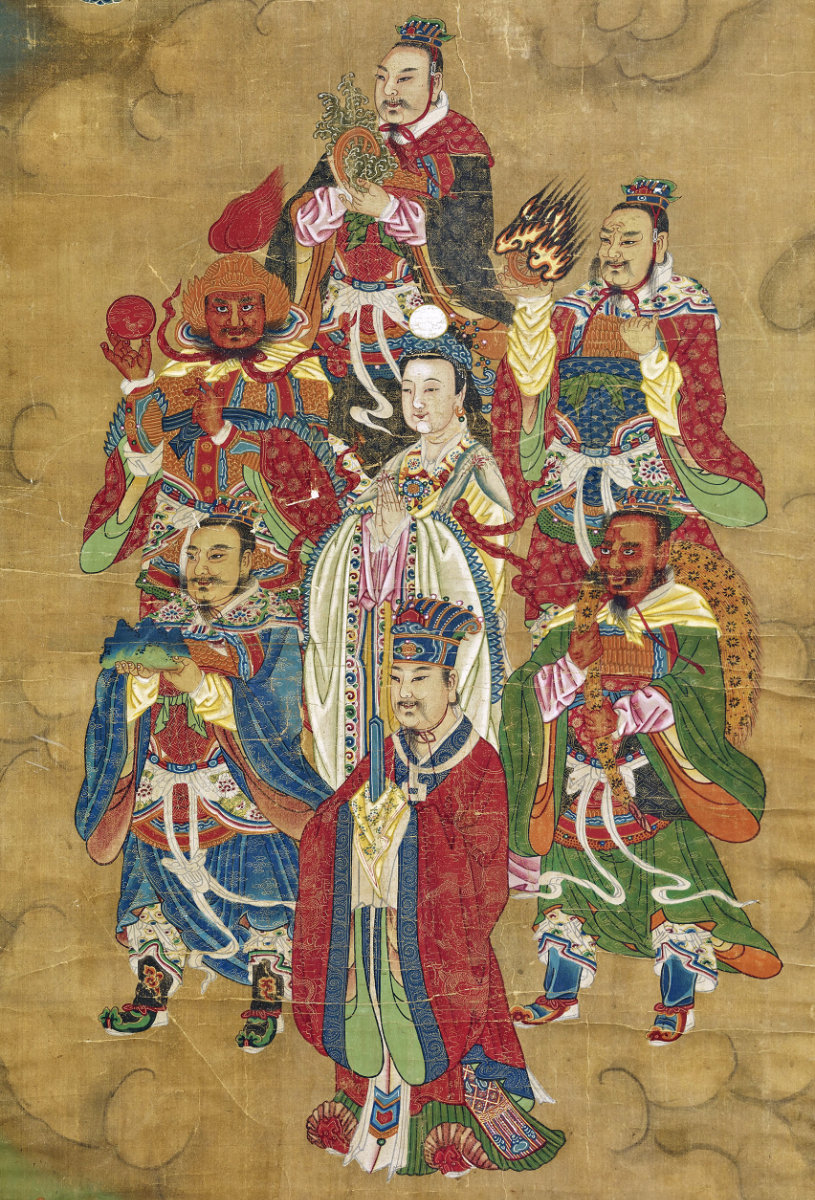
The classic Chinese novel Investiture of the Gods (also commonly known as Fengshen Yanyi) contains a register of deities. According to Fengshen Yanyi, Yuanshi Tianzun (“Primeval Lord of Heaven”) bestows upon Jiang Ziya the Fengshen bang (Register of Deities), a list that empowers him to invest in the gods of heaven. Through this power, he elevates the heroes of Zhou and some of their fallen enemies from Shang to heavenly rank, essentially making them gods. This act of deification serves as the central event and inspiration for the novel’s title. In Chinese folk religion, the register of deities was left by the primordial goddess Nüwa. The register includes 365 gods among the Eight Divisions of Heaven. These figures, upon entering the Fengshen Bang, are granted godhood and are still worshipped in the Taoist pantheon of modern times.
Description The classic Chinese novel Investiture of the Gods (also commonly known as Fengshen Yanyi) contains a register of deities. According to Fengshen Yanyi, Yuanshi Tianzun (“Primeval Lord of Heaven”) bestows upon Jiang Ziya the Fengshen bang (Register of Deities), a list that empowers him to invest in the gods of heaven. Through this power, he elevates the heroes of Zhou and some of their fallen enemies from Shang to heavenly rank, essentially making them gods. This act of deification serves as the central event and inspiration for the novel’s title. In Chinese folk religion, the register of deities was left by the primordial goddess Nüwa. The register includes 365 gods among the Eight Divisions of Heaven. These figures, upon entering the Fengshen Bang, are granted godhood and are still worshipped in the Taoist pantheon of modern times.