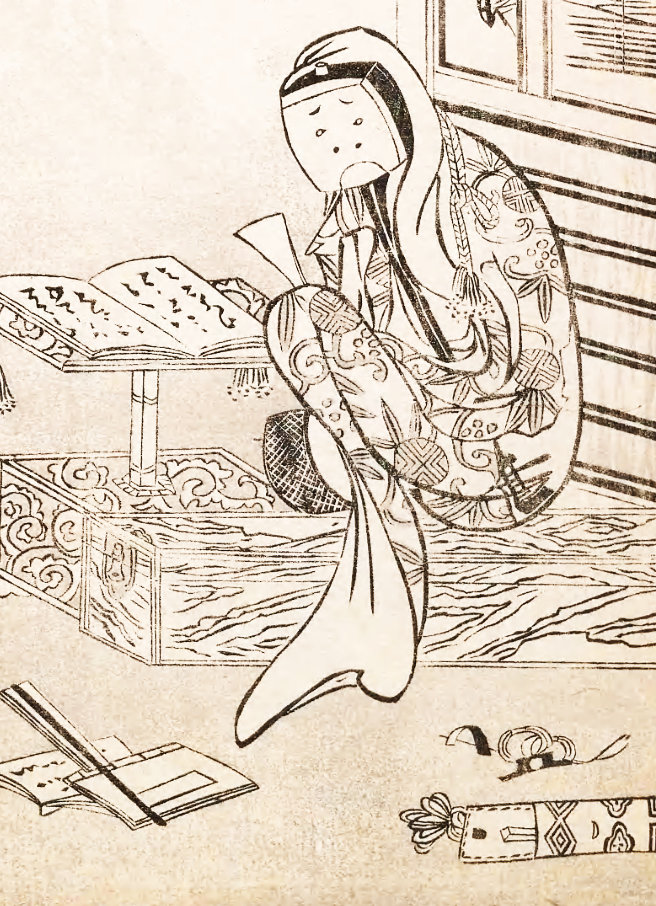
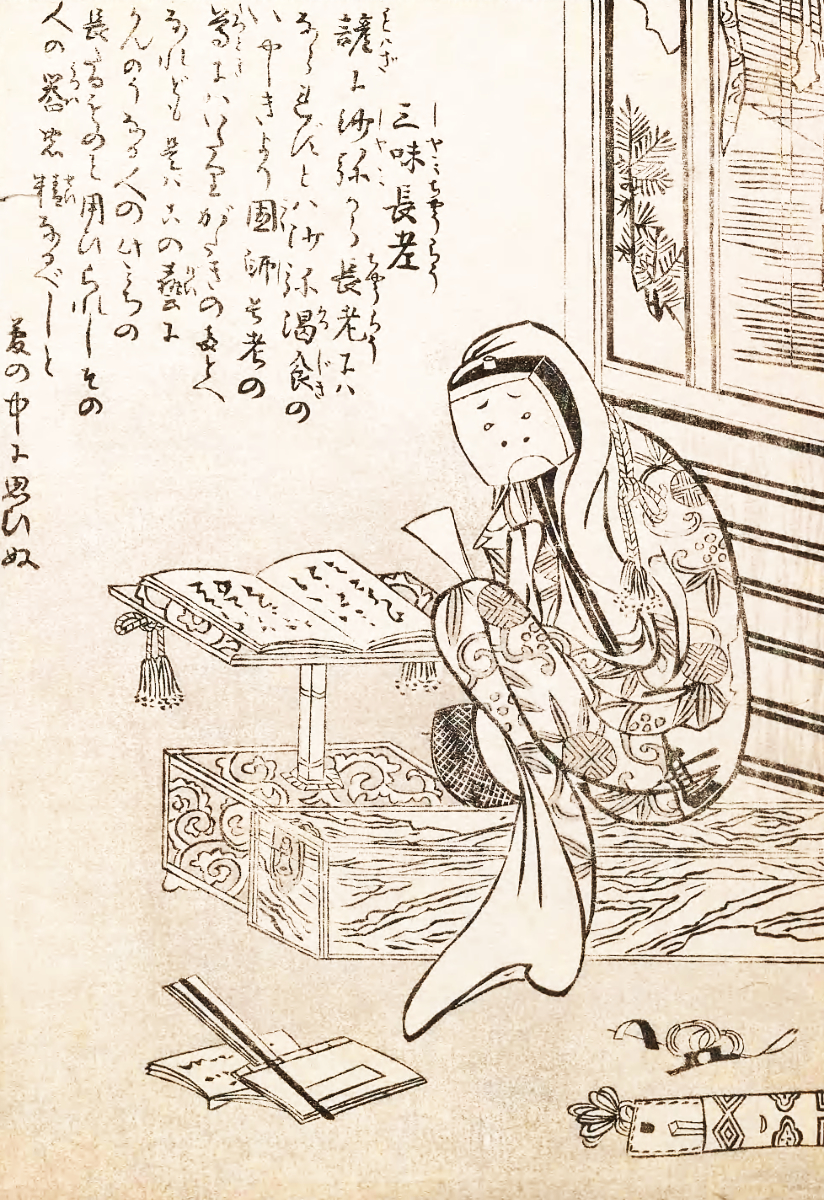
A shami chōrō looks exactly like the shamisen it transformed from, a three-stringed guitar-like instrument. Musical instruments, because of their high value, are often kept around long enough to turn into tsukumogami. Instruments which were once played by masters are the most likely to develop into yōkai. These instruments no longer receive any use—either because their master died or because they started using other instruments—and transform into yōkai, longing to be played again. Shami chōrō’s name is a play on words, written with characters meaning shamisen master. The name also invokes the old Japanese proverb, “Shami kara chōrō ni wa nararezu,” meaning, “One cannot skip from novice to senior.” In other words, only through many years of practice can one become a master.
Description A shami chōrō looks exactly like the shamisen it transformed from, a three-stringed guitar-like instrument. Musical instruments, because of their high value, are often kept around long enough to turn into tsukumogami. Instruments which were once played by masters are the most likely to develop into yōkai. These instruments no longer receive any use—either because their master died or because they started using other instruments—and transform into yōkai, longing to be played again. Shami chōrō’s name is a play on words, written with characters meaning shamisen master. The name also invokes the old Japanese proverb, “Shami kara chōrō ni wa nararezu,” meaning, “One cannot skip from novice to senior.” In other words, only through many years of practice can one become a master.