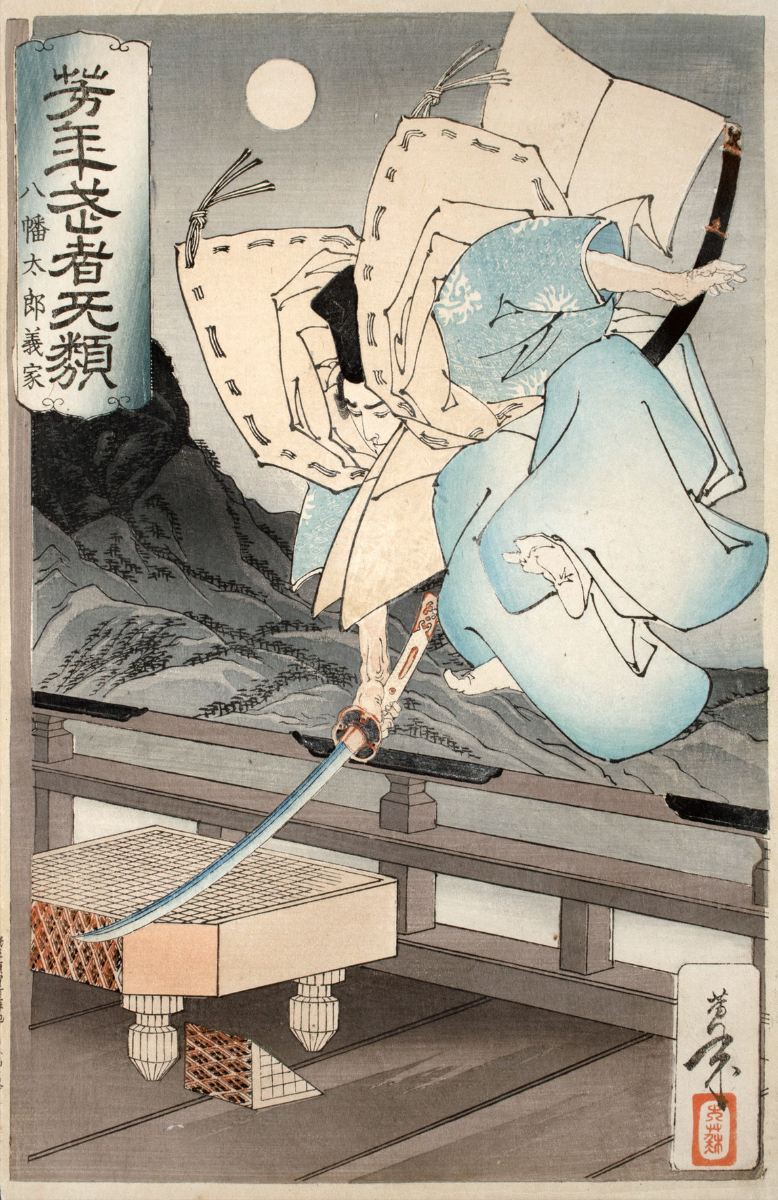
As sung in the Ryōjin Hishō, Hachimantarō — or Minamoto no Yoshiie — was known for his exceptional skills as a warrior and was highly regarded as a hero of the Heian period. By other countless famous figures from Minamoto no Yoritomo to Tokugawa Ieyasu, Yoshiie was considered to be the model of an ideal military commander. Ashikaga Takauji, the first and founding shogun of the Ashikaga shogunate, had reportedly considered Yoshiie to be of a “world-renowned” military commander and revered him as such.
Alias Minamoto no Yoshiie (源 義家)
Real Names/Alt Names Hachimantarō Yoshiie (八幡太郎義家), “Most Valorous Warrior in the Land” (天下第一武勇之士)
First Appearance Historical figure (b. 1039 – d. 1106)
First Publisher ○
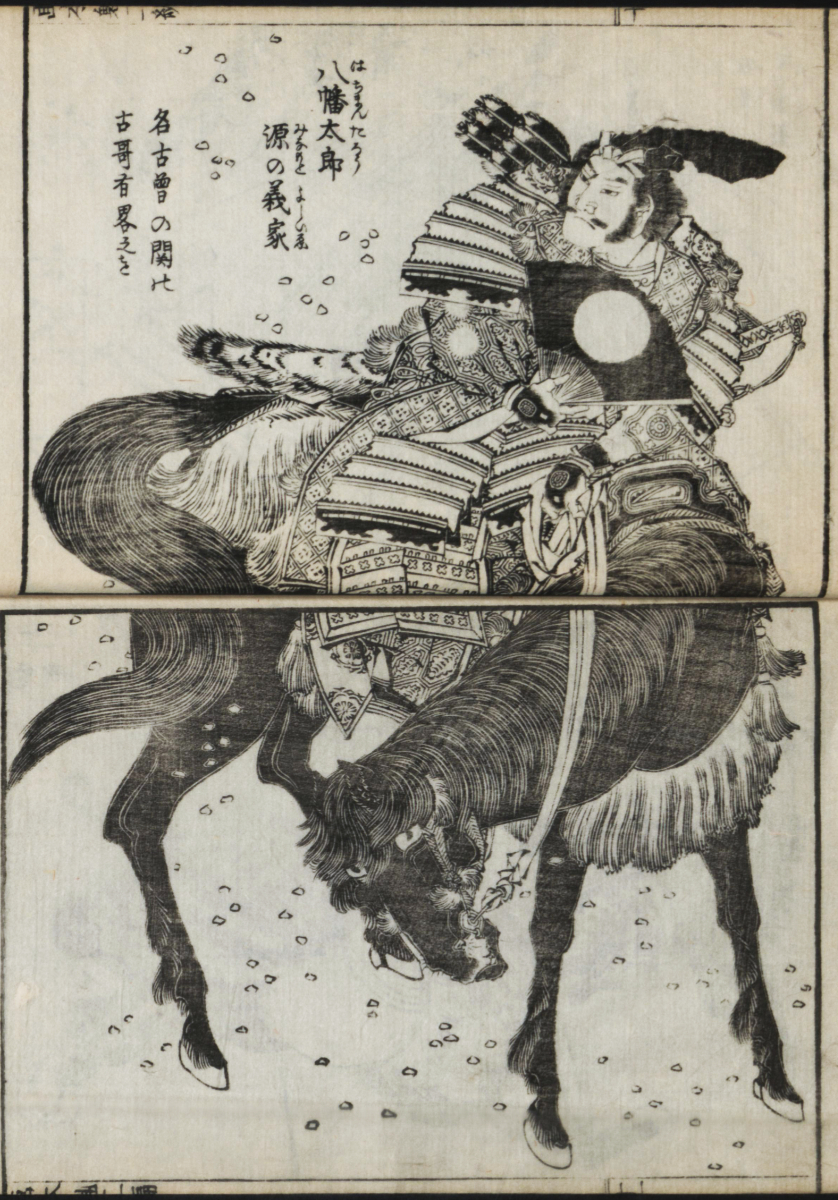
Appearance List Ryōjin Hishō (梁塵秘抄, Songs to Make the Dust Dance on the Beams, 12th c), Gosannen Kassen (Later Three Years’ War tales, 12th–13th c.), Heike Monogatari (c. 1330), Taiheiki (c. 1390), Ehon Musashi Abumi (1836) by Katsushika Hokusai, A History of Japan, Vol. 1 (1910) by James Murdoch
Sample Read The Taiheiki: a Chronicle of Medieval Japan (Translated 1959) [Internet Archive]
Description As sung in the Ryōjin Hishō, Hachimantarō — or Minamoto no Yoshiie — was known for his exceptional skills as a warrior and was highly regarded as a hero of the Heian period. By other countless famous figures from Minamoto no Yoritomo to Tokugawa Ieyasu, Yoshiie was considered to be the model of an ideal military commander. Ashikaga Takauji, the first and founding shogun of the Ashikaga shogunate, had reportedly considered Yoshiie to be of a “world-renowned” military commander and revered him as such.