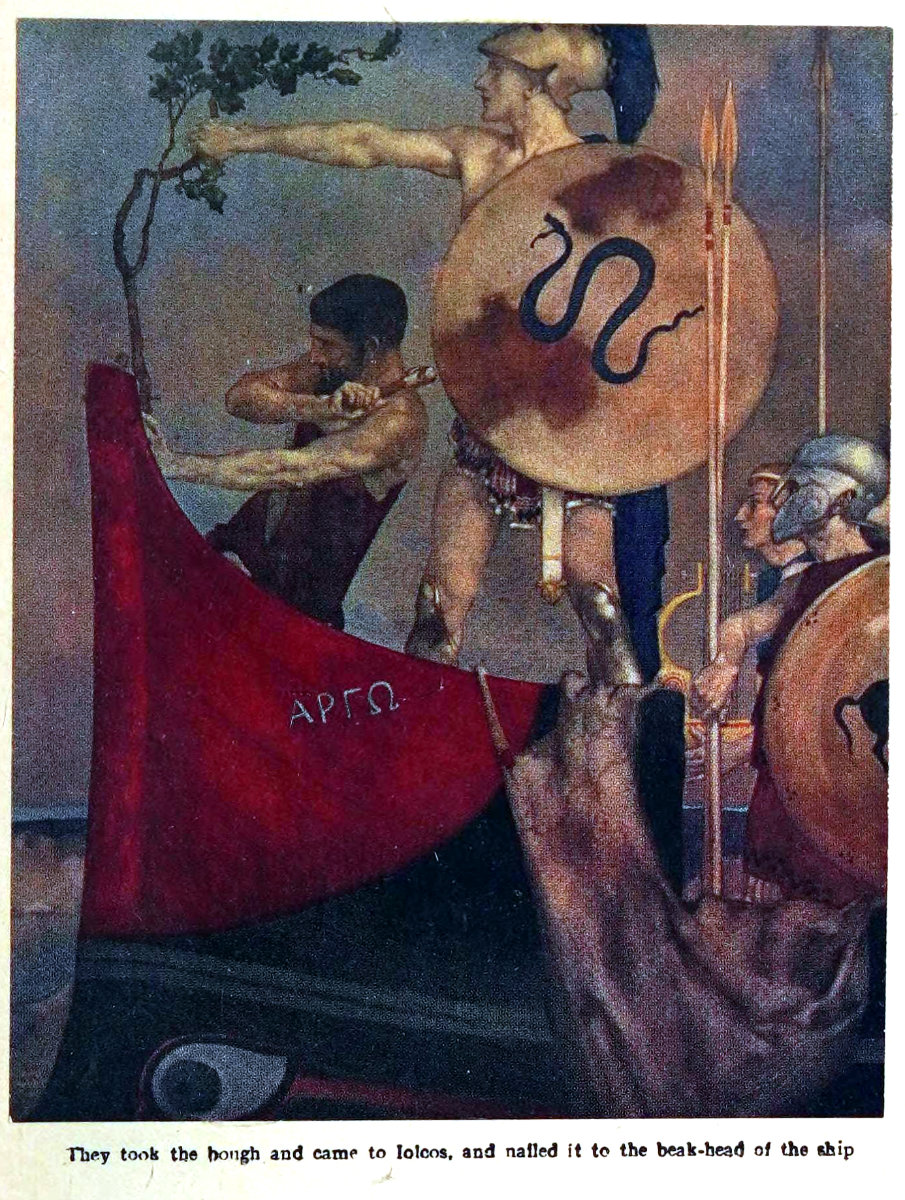
In Greek mythology, Euphemus was counted among the Calydonian hunters and the Argonauts, and was connected with the legend of the foundation of Cyrene. Euphemus was a son of Poseidon, granted by his father the power to walk on water. Euphemus joined the voyage of the Argonauts, and served the crew as helmsman. He let a dove fly between the Symplegades to see if the ship would be able to pass as well.
Appearance List Literature: Homer’s Odyssey (mentioned, c. 8th century BCE, English 1614), Homer’s Iliad (mentioned, c. 8th century BC), Hesiod’s Theogony (c. 700 BCE), Medea by Euripides (431 BC), poetry by Appolonius, Diodorus, Valerius, Apollodorus, Ptolemy, Pausanias, Hyginus, Tzetzes, Apollonius of Rhodes’ epic poem Argonautica (late 3rd century BC), The Argonautica by Gaius Valerius Flaccus (late 1st century AD), Argonautica Orphica, Dante’s Divine Comedy (briefly, 1308–1320), William Morris’ epic poem The Life and Death of Jason (1867). Film: Jason and the Argonauts (1963).
Description In Greek mythology, Euphemus was counted among the Calydonian hunters and the Argonauts, and was connected with the legend of the foundation of Cyrene. Euphemus was a son of Poseidon, granted by his father the power to walk on water. Euphemus joined the voyage of the Argonauts, and served the crew as helmsman. He let a dove fly between the Symplegades to see if the ship would be able to pass as well.