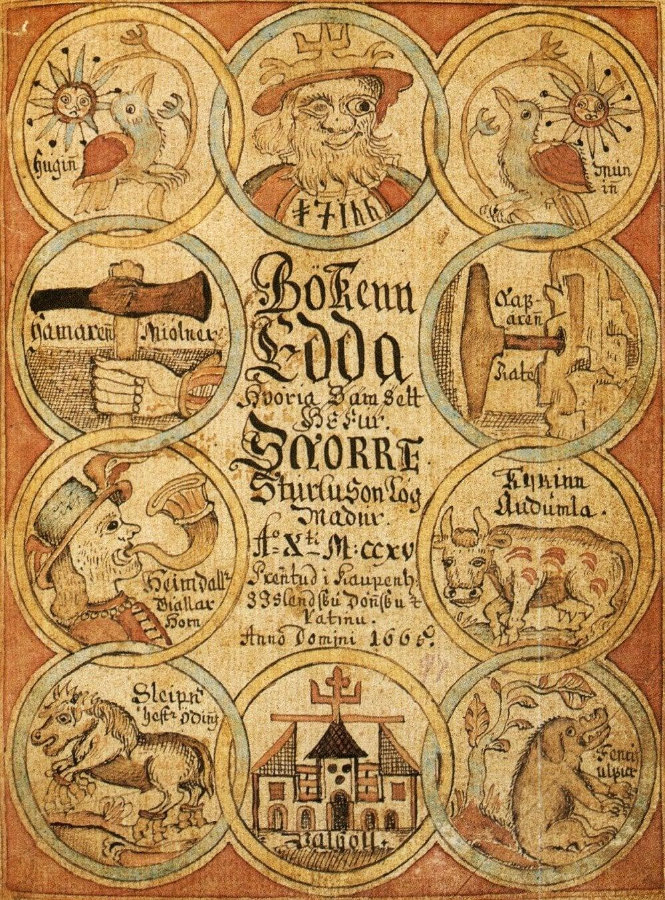
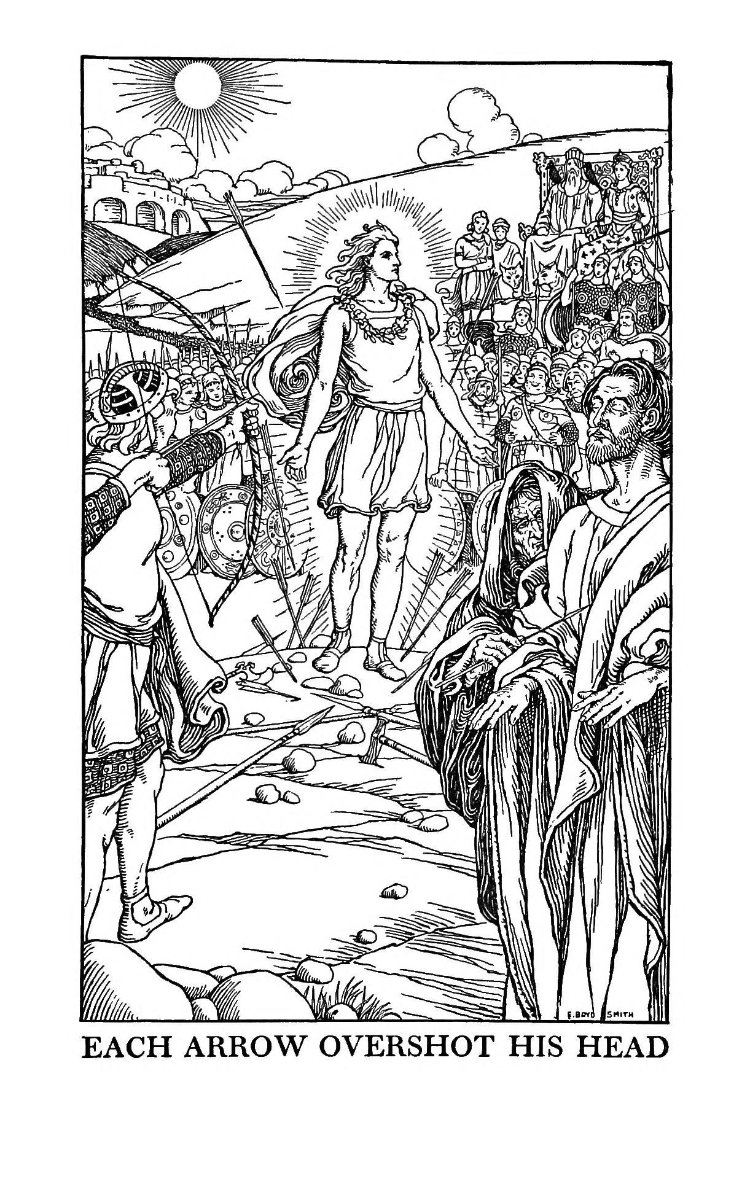
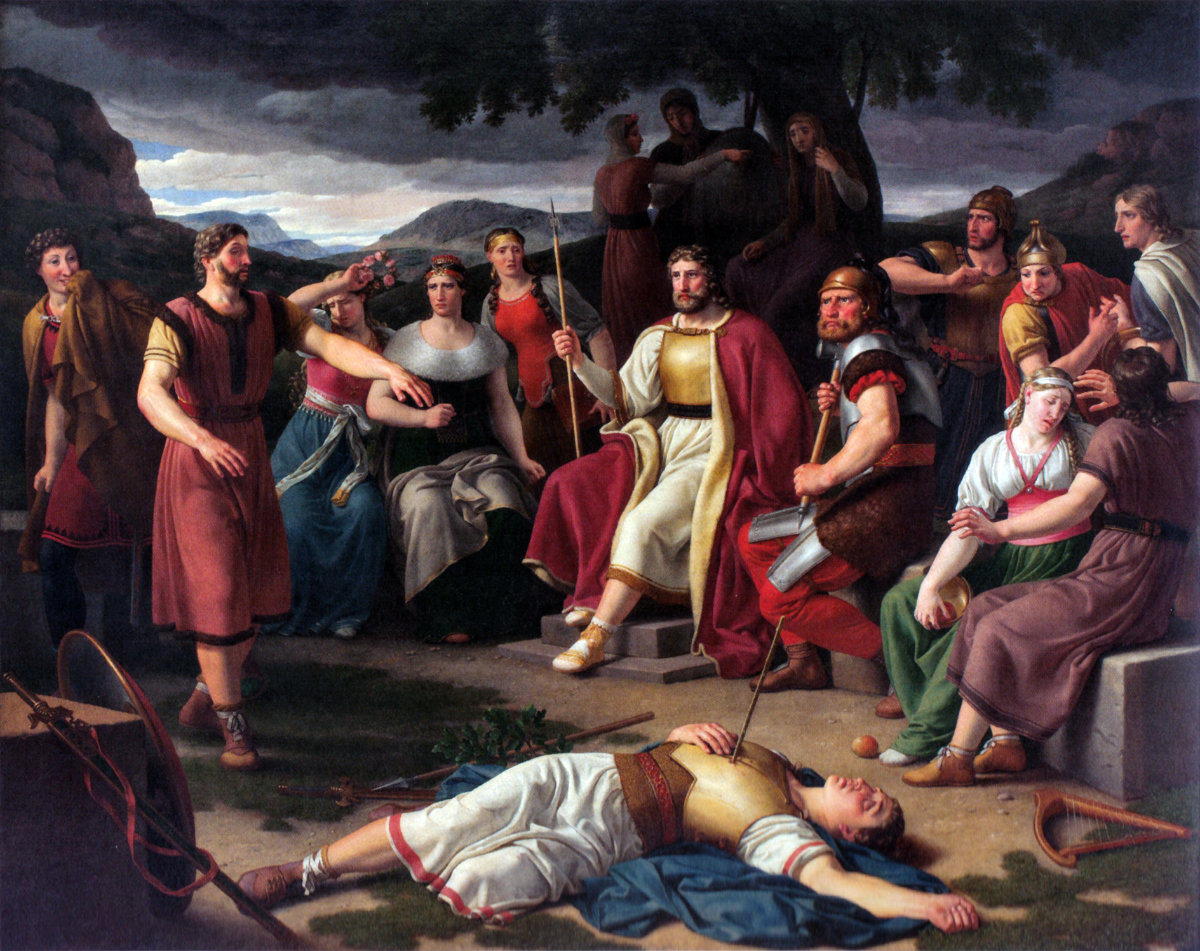
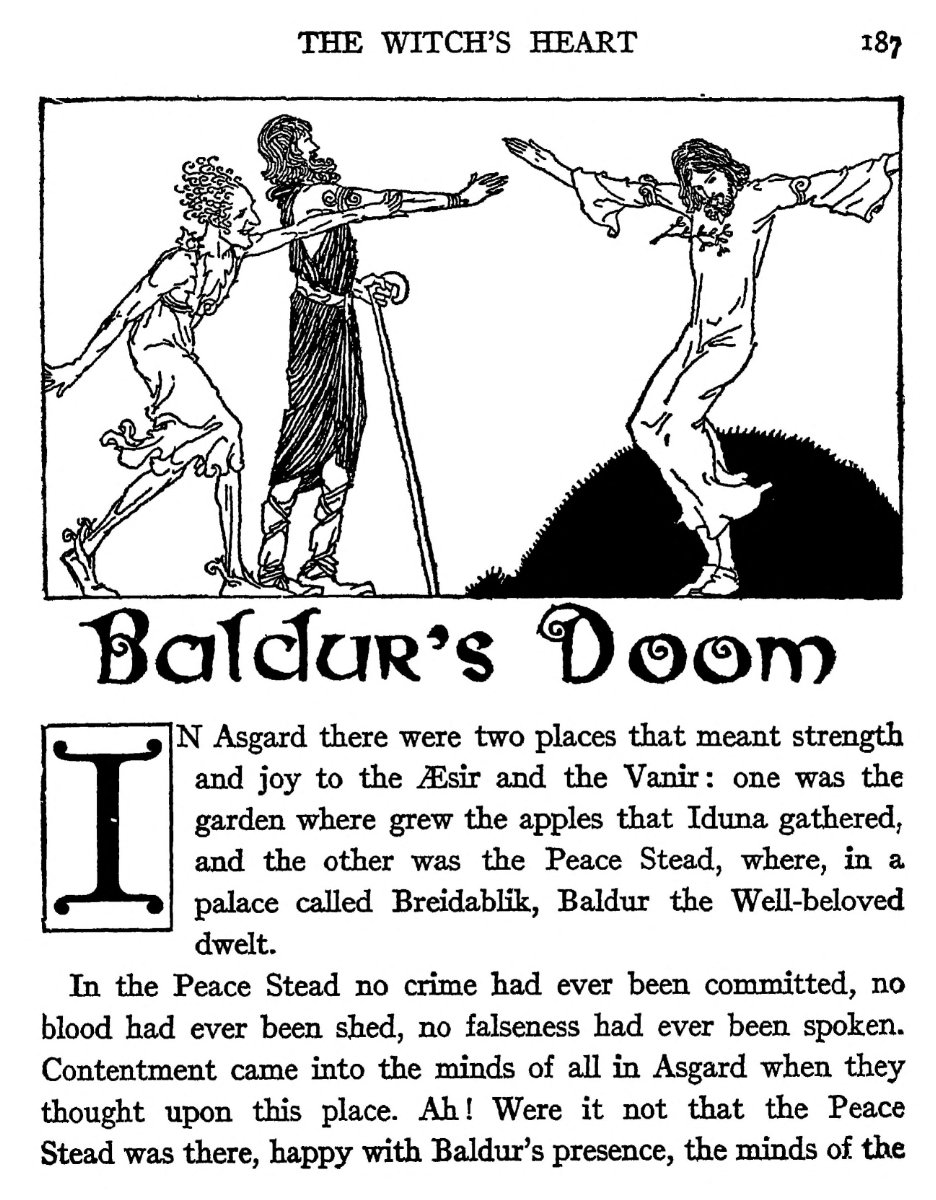
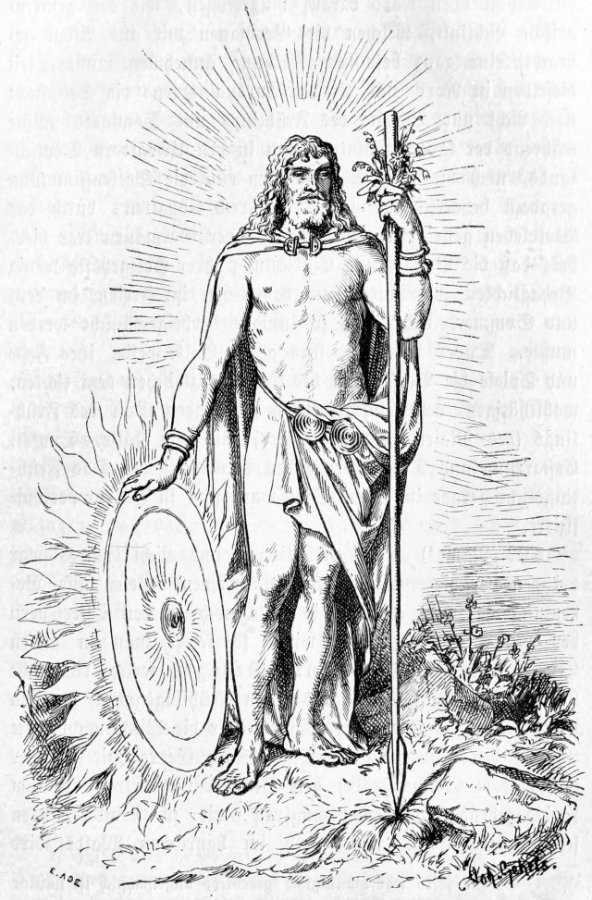
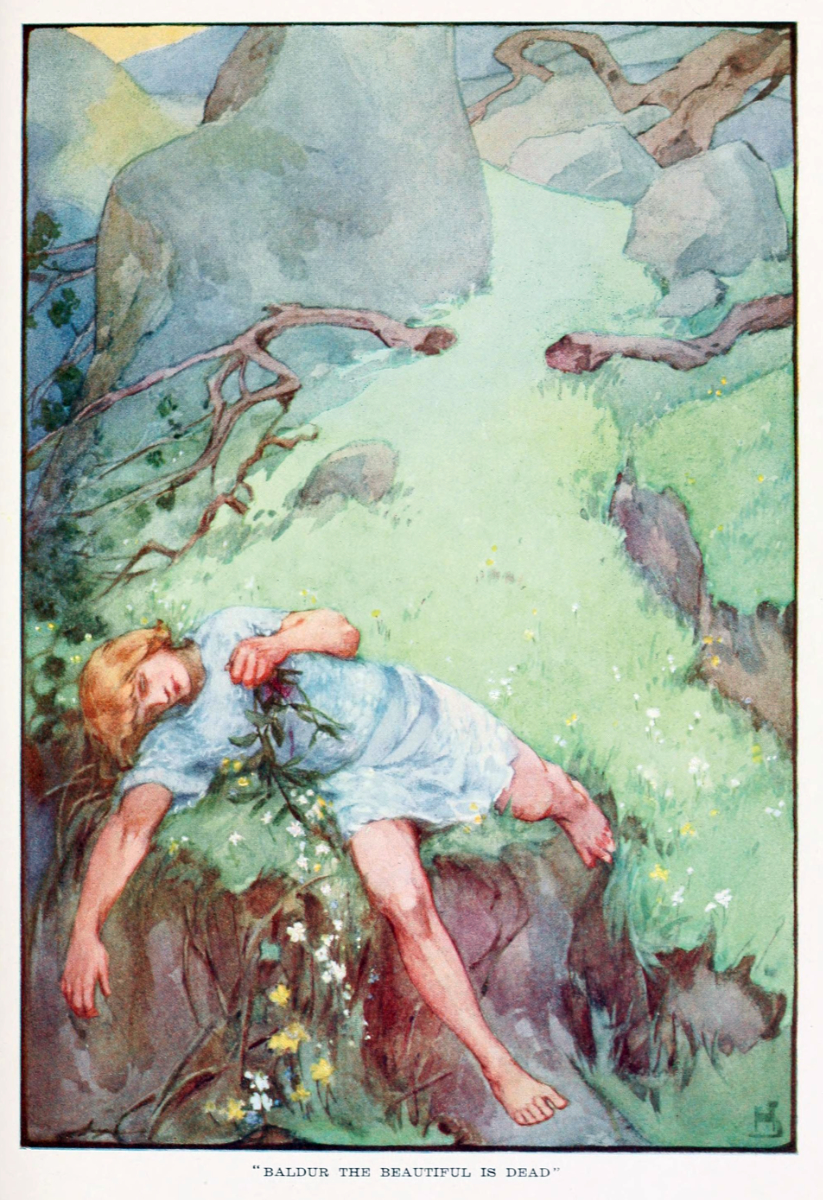
Baldr (Old Norse also Balder, Baldur) is a god in Germanic mythology. In Norse mythology, he is a son of the god Odin and the goddess Frigg, and has numerous brothers, such as Thor and Váli. During the 12th century, Danish accounts by Saxo Grammaticus and other Danish Latin chroniclers recorded a euhemerized account of his story. Compiled in Iceland during the 13th century, but based on older Old Norse poetry, the Poetic Edda and the Prose Edda contain numerous references to the death of Baldr as both a great tragedy to the Æsir and a harbinger of Ragnarök. According to Gylfaginning, a book of Snorri Sturluson’s Prose Edda, Baldr’s wife is Nanna and their son is Forseti. Baldr had the greatest ship ever built, Hringhorni, and there is no place more beautiful than his hall, Breidablik. “The second son of Odin is Baldr, and good things are to be said of him. He is best, and all praise him; he is so fair of feature, and so bright, that light shines from him. A certain herb is so white that it is likened to Baldr’s brow; of all grasses it is whitest, and by it thou mayest judge his fairness, both in hair and in body. He is the wisest of the Æsir, and the fairest-spoken and most gracious; and that quality attends him, that none may gainsay his judgments. He dwells in the place called Breidablik, which is in heaven; in that place may nothing unclean be[.]” Apart from this description, Baldr is known primarily for the story of his death, which is seen as the first in a chain of events that will ultimately lead to the destruction of the gods at Ragnarök.
Alias Baldur
Real Names/Alt Names Balder, Baldr, Bældæġ, Baldur the Beautiful
Appearance List Literary: Prose Edda (c. 1220 CE) by Snorri Sturluson; Poetic Edda (c. 1270 CE); Northern Mythology (1851–1852) by Benjamin Thorpe [Internet Archive]; Asgard Stories: Tales from Norse Mythology (1901) by Mary H. Foster and Mabel H. Cummings [Internet Archive]; In the Days of Giants: A Book of Norse Tales by Abbie Farwell Brown (1902) [Internet Archive]; The Elder or Poetic Edda (1908) [Internet Archive]; The Heroes of Asgard: Tales from Scandinavian Mythology by Keary and Keary (1909) [Internet Archive]; Teutonic Myths and Legends (1912) by Donald A. Mackenzie [Internet Archive]; The Children of Odin (1920) by Padraic Colum [Internet Archive]. Comics: Jumbo Comics #139, Treasure Chest of Fun & Facts #138, A Treasury of Horses
Sample Read A Book of Myths (1915) by Jeanie Lang [Internet Archive]
Description Baldr (Old Norse also Balder, Baldur) is a god in Germanic mythology. In Norse mythology, he is a son of the god Odin and the goddess Frigg, and has numerous brothers, such as Thor and Váli. During the 12th century, Danish accounts by Saxo Grammaticus and other Danish Latin chroniclers recorded a euhemerized account of his story. Compiled in Iceland during the 13th century, but based on older Old Norse poetry, the Poetic Edda and the Prose Edda contain numerous references to the death of Baldr as both a great tragedy to the Æsir and a harbinger of Ragnarök. According to Gylfaginning, a book of Snorri Sturluson’s Prose Edda, Baldr’s wife is Nanna and their son is Forseti. Baldr had the greatest ship ever built, Hringhorni, and there is no place more beautiful than his hall, Breidablik. “The second son of Odin is Baldr, and good things are to be said of him. He is best, and all praise him; he is so fair of feature, and so bright, that light shines from him. A certain herb is so white that it is likened to Baldr’s brow; of all grasses it is whitest, and by it thou mayest judge his fairness, both in hair and in body. He is the wisest of the Æsir, and the fairest-spoken and most gracious; and that quality attends him, that none may gainsay his judgments. He dwells in the place called Breidablik, which is in heaven; in that place may nothing unclean be[.]” Apart from this description, Baldr is known primarily for the story of his death, which is seen as the first in a chain of events that will ultimately lead to the destruction of the gods at Ragnarök.

 ,
,  ,
,  ,
,  ,
,  ,
,